TheUnderstanding Group
Repeatable Magic?
Aligning Business Goals and User Needs with Information Architecture
http://understandinggroup.com/glsec                             The
                                                                Understanding
                                                                 Group
is magic
scalable?
is magic
repeatable?
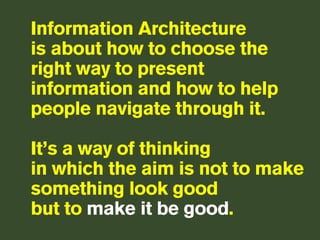
Information Architecture
is about how to choose the
right way to present
information and how to help
people navigate through it.

It’s a way of thinking
in which the aim is not to make
something look good
but to make it be good.
The Elements of User Experience                                                                                                                           Jesse James Garrett
                                                                                                                                                                   jjg@jjg.net
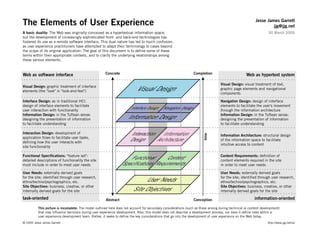
A basic duality: The Web was originally conceived as a hypertextual information space;                                                                             30 March 2000
but the development of increasingly sophisticated front- and back-end technologies has
fostered its use as a remote software interface. This dual nature has led to much confusion,
as user experience practitioners have attempted to adapt their terminology to cases beyond
the scope of its original application. The goal of this document is to define some of these
terms within their appropriate contexts, and to clarify the underlying relationships among
these various elements.


Web as software interface                             Concrete                                                   Completion                         Web as hypertext system

                                                                                                                                   Visual Design: visual treatment of text,
Visual Design: graphic treatment of interface
elements (the "look" in "look-and-feel")                                   Visual Design                                           graphic page elements and navigational
                                                                                                                                   components

Interface Design: as in traditional HCI:                                                                                           Navigation Design: design of interface
design of interface elements to facilitate                                                                                         elements to facilitate the user's movement
user interaction with functionality
                                                                       Interface Design Navigation Design                          through the information architecture
Information Design: in the Tuftean sense:
designing the presentation of information                            Information Design                                            Information Design: in the Tuftean sense:
                                                                                                                                   designing the presentation of information
to facilitate understanding                                                                                                        to facilitate understanding

Interaction Design: development of                                     Interaction Information                                     Information Architecture: structural design


                                                                                                                       time
application flows to facilitate user tasks,
defining how the user interacts with
                                                                       Design     Architecture                                     of the information space to facilitate
                                                                                                                                   intuitive access to content
site functionality

Functional Specifications: "feature set":
detailed descriptions of functionality the site
                                                                      Functional      Content                                      Content Requirements: definition of
                                                                                                                                   content elements required in the site
must include in order to meet user needs                          Specifications Requirements                                      in order to meet user needs

User Needs: externally derived goals                                                                                               User Needs: externally derived goals
for the site; identified through user research,
ethno/techno/psychographics, etc.                                              User Needs                                          for the site; identified through user research,
                                                                                                                                   ethno/techno/psychographics, etc.
Site Objectives: business, creative, or other
internally derived goals for the site                                    Site Objectives                                           Site Objectives: business, creative, or other
                                                                                                                                   internally derived goals for the site
task-oriented                                          Abstract                                                  Conception                               information-oriented

          This picture is incomplete: The model outlined here does not account for secondary considerations (such as those arising during technical or content development)
          that may influence decisions during user experience development. Also, this model does not describe a development process, nor does it define roles within a
          user experience development team. Rather, it seeks to define the key considerations that go into the development of user experience on the Web today.

© 2000 Jesse James Garrett                                                                                                                                         http://www.jjg.net/ia/
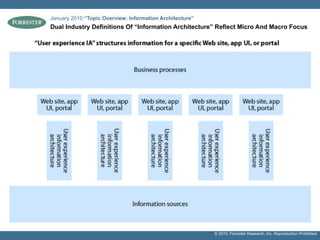
January 2010 “Topic Overview: Information Architecture”
Dual Industry Definitions Of “Information Architecture” Reflect Micro And Macro Focus


                                                          © 2010, Forrester Research, Inc. Reproduction Prohibited
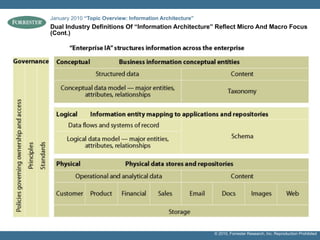
January 2010 “Topic Overview: Information Architecture”
Dual Industry Definitions Of “Information Architecture” Reflect Micro And Macro Focus
(Cont.)


                                                          © 2010, Forrester Research, Inc. Reproduction Prohibited
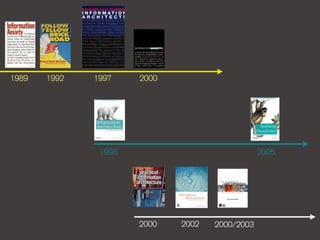
1989   1992   1997    2000


               1998                             2005


                      2000   2002   2000/2003
“...you used to be much muchier”
interpretation
  synthesis
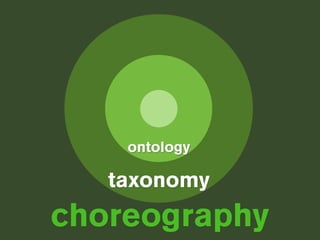
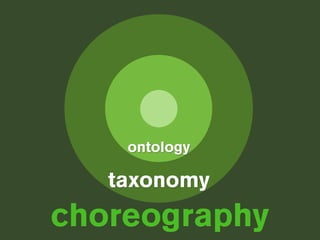
ontology

   taxonomy
choreography
ontology
ὄντος - of being
λογία - logia: science, study, theory
what we mean
when we say
what we say
13
15
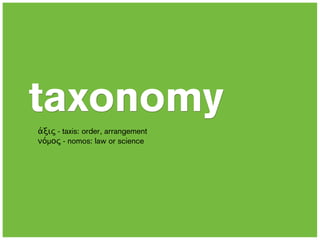
taxonomy
άξις - taxis: order, arrangement
νόµος - nomos: law or science
the system
of relationships
between
entities, labels
and categories
17
choreography
χορεία - circular dance
γραφή – writing
the instructions
and rules for how
things should
move
20
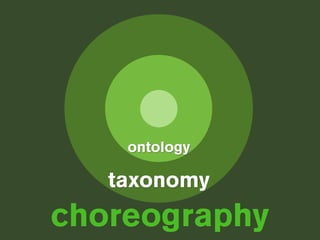
ontology

   taxonomy
choreography
how do
                            we know
                            when IA
                            is good?
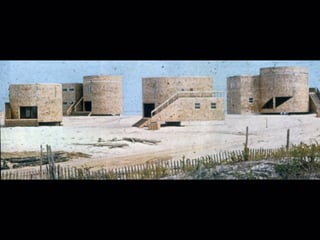
Tysen Perszyk, Photograph entitled Yummy Lemon Time (2009)
performance
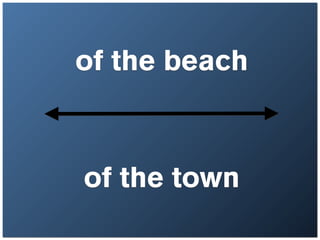
of the beach


of the town
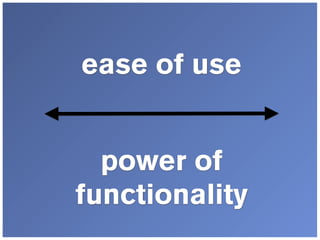
ease of use


  power of
functionality
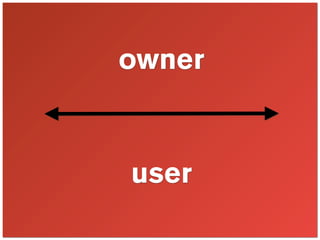
owner


user
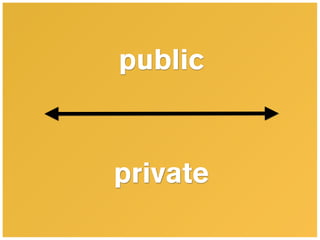
public


private
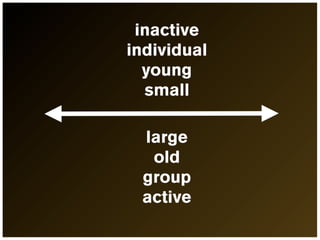
inactive
individual
  young
  small

 large
  old
 group
 active
ontology

   taxonomy
choreography
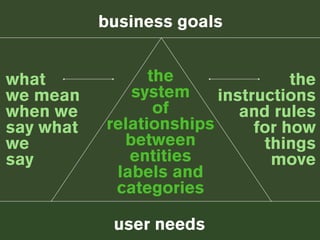
business goals


what             the               the
we mean       system     instructions
when we           of        and rules
say what   relationships      for how
we           between           things
say           entities          move
            labels and
            categories

            user needs
make things
be good
TheUnderstanding Group

Thanks!
http://understandinggroup.com/glsec             The
                                                Understanding
                                                Group


                                                  The
                                                Understanding

Dk glsec

  • 1.
    TheUnderstanding Group Repeatable Magic? AligningBusiness Goals and User Needs with Information Architecture http://understandinggroup.com/glsec The Understanding Group
  • 3.
  • 4.
  • 6.
    Information Architecture is abouthow to choose the right way to present information and how to help people navigate through it. It’s a way of thinking in which the aim is not to make something look good but to make it be good.
  • 14.
    The Elements ofUser Experience Jesse James Garrett jjg@jjg.net A basic duality: The Web was originally conceived as a hypertextual information space; 30 March 2000 but the development of increasingly sophisticated front- and back-end technologies has fostered its use as a remote software interface. This dual nature has led to much confusion, as user experience practitioners have attempted to adapt their terminology to cases beyond the scope of its original application. The goal of this document is to define some of these terms within their appropriate contexts, and to clarify the underlying relationships among these various elements. Web as software interface Concrete Completion Web as hypertext system Visual Design: visual treatment of text, Visual Design: graphic treatment of interface elements (the "look" in "look-and-feel") Visual Design graphic page elements and navigational components Interface Design: as in traditional HCI: Navigation Design: design of interface design of interface elements to facilitate elements to facilitate the user's movement user interaction with functionality Interface Design Navigation Design through the information architecture Information Design: in the Tuftean sense: designing the presentation of information Information Design Information Design: in the Tuftean sense: designing the presentation of information to facilitate understanding to facilitate understanding Interaction Design: development of Interaction Information Information Architecture: structural design time application flows to facilitate user tasks, defining how the user interacts with Design Architecture of the information space to facilitate intuitive access to content site functionality Functional Specifications: "feature set": detailed descriptions of functionality the site Functional Content Content Requirements: definition of content elements required in the site must include in order to meet user needs Specifications Requirements in order to meet user needs User Needs: externally derived goals User Needs: externally derived goals for the site; identified through user research, ethno/techno/psychographics, etc. User Needs for the site; identified through user research, ethno/techno/psychographics, etc. Site Objectives: business, creative, or other internally derived goals for the site Site Objectives Site Objectives: business, creative, or other internally derived goals for the site task-oriented Abstract Conception information-oriented This picture is incomplete: The model outlined here does not account for secondary considerations (such as those arising during technical or content development) that may influence decisions during user experience development. Also, this model does not describe a development process, nor does it define roles within a user experience development team. Rather, it seeks to define the key considerations that go into the development of user experience on the Web today. © 2000 Jesse James Garrett http://www.jjg.net/ia/
  • 19.
    January 2010 “TopicOverview: Information Architecture” Dual Industry Definitions Of “Information Architecture” Reflect Micro And Macro Focus © 2010, Forrester Research, Inc. Reproduction Prohibited
  • 20.
    January 2010 “TopicOverview: Information Architecture” Dual Industry Definitions Of “Information Architecture” Reflect Micro And Macro Focus (Cont.) © 2010, Forrester Research, Inc. Reproduction Prohibited
  • 21.
    1989 1992 1997 2000 1998 2005 2000 2002 2000/2003
  • 22.
    “...you used tobe much muchier”
  • 23.
  • 24.
    ontology taxonomy choreography
  • 25.
    ontology ὄντος - ofbeing λογία - logia: science, study, theory
  • 26.
    what we mean whenwe say what we say
  • 29.
  • 30.
  • 36.
    taxonomy άξις - taxis:order, arrangement νόµος - nomos: law or science
  • 37.
  • 38.
  • 42.
    choreography χορεία - circulardance γραφή – writing
  • 43.
    the instructions and rulesfor how things should move
  • 44.
  • 53.
    ontology taxonomy choreography
  • 54.
    how do we know when IA is good? Tysen Perszyk, Photograph entitled Yummy Lemon Time (2009)
  • 55.
  • 59.
  • 61.
    ease of use power of functionality
  • 63.
  • 66.
  • 69.
    inactive individual young small large old group active
  • 70.
    ontology taxonomy choreography
  • 71.
    business goals what the the we mean system instructions when we of and rules say what relationships for how we between things say entities move labels and categories user needs
  • 72.
  • 73.