By Raju Lama
18 June, 2014
HOW DOES DIVERSITY AFFECT
GROUP AND THEIR
EFFECTIVENESS OVER TIME ?
DEFINITION :
DIVERSITY
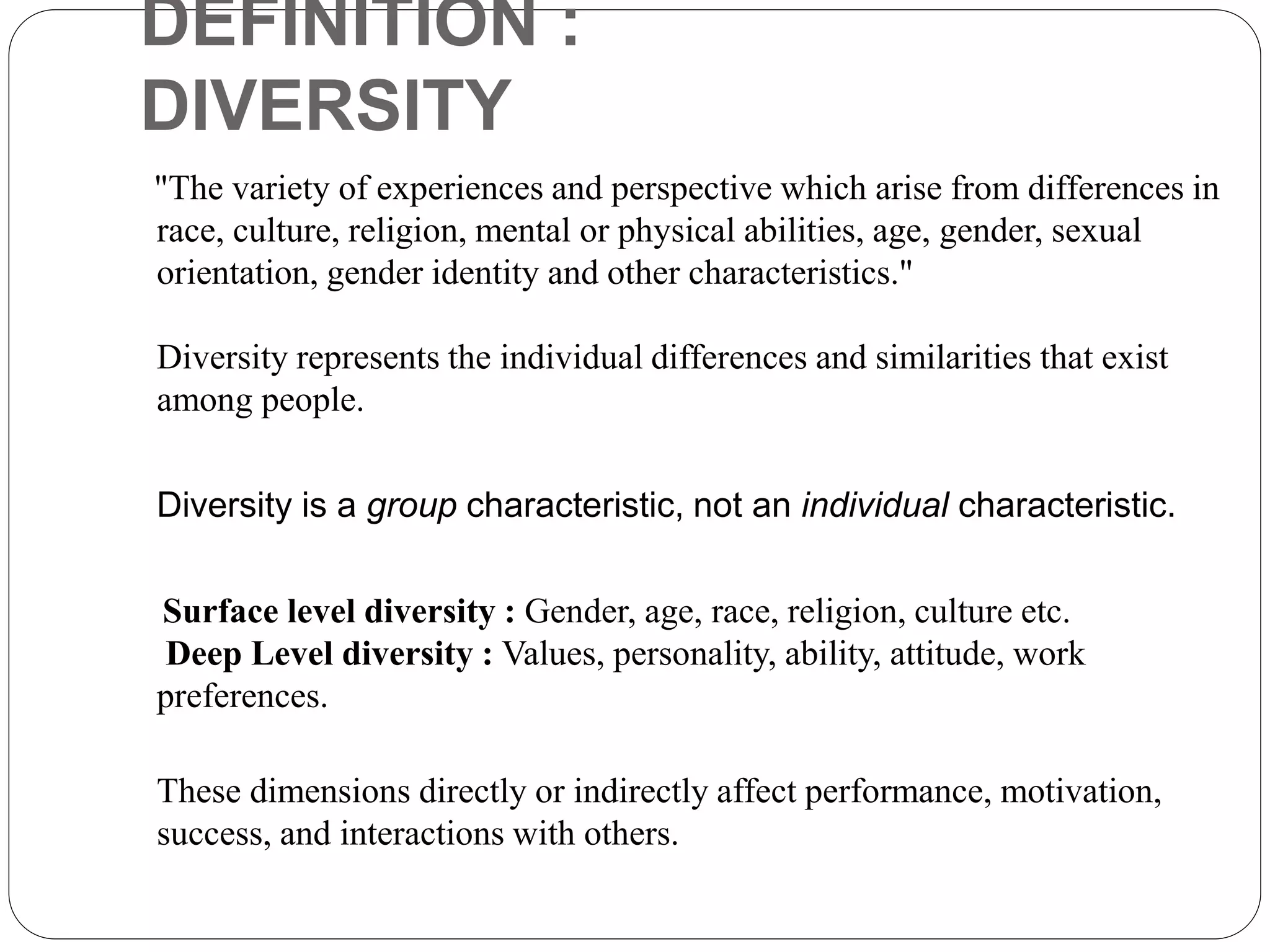
"The variety of experiences and perspective which arise from differences in
race, culture, religion, mental or physical abilities, age, gender, sexual
orientation, gender identity and other characteristics."
Diversity represents the individual differences and similarities that exist
among people.
Diversity is a group characteristic, not an individual characteristic.
Surface level diversity : Gender, age, race, religion, culture etc.
Deep Level diversity : Values, personality, ability, attitude, work
preferences.
These dimensions directly or indirectly affect performance, motivation,
success, and interactions with others.
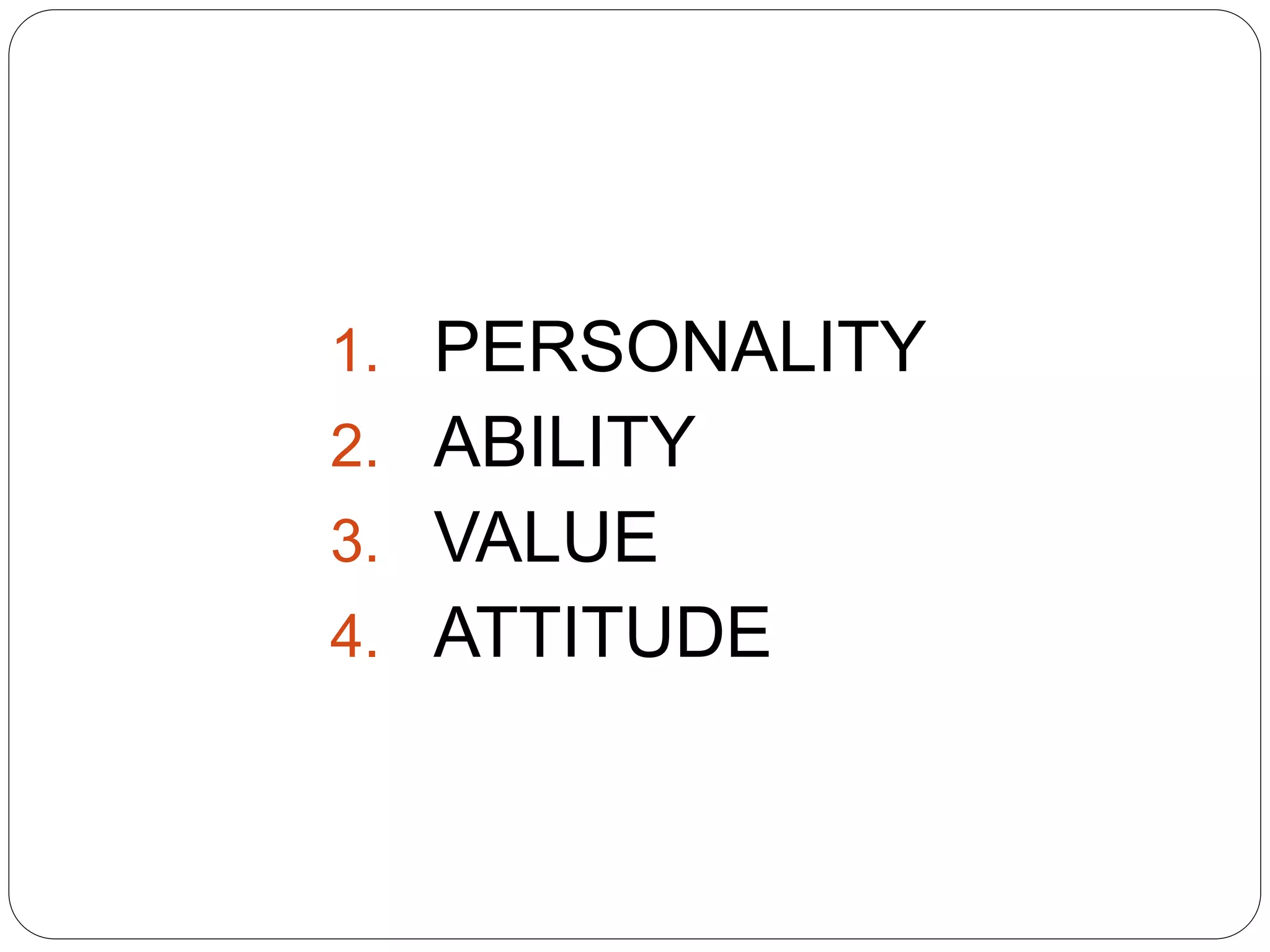
1. PERSONALITY
2. ABILITY
3. VALUE
4. ATTITUDE
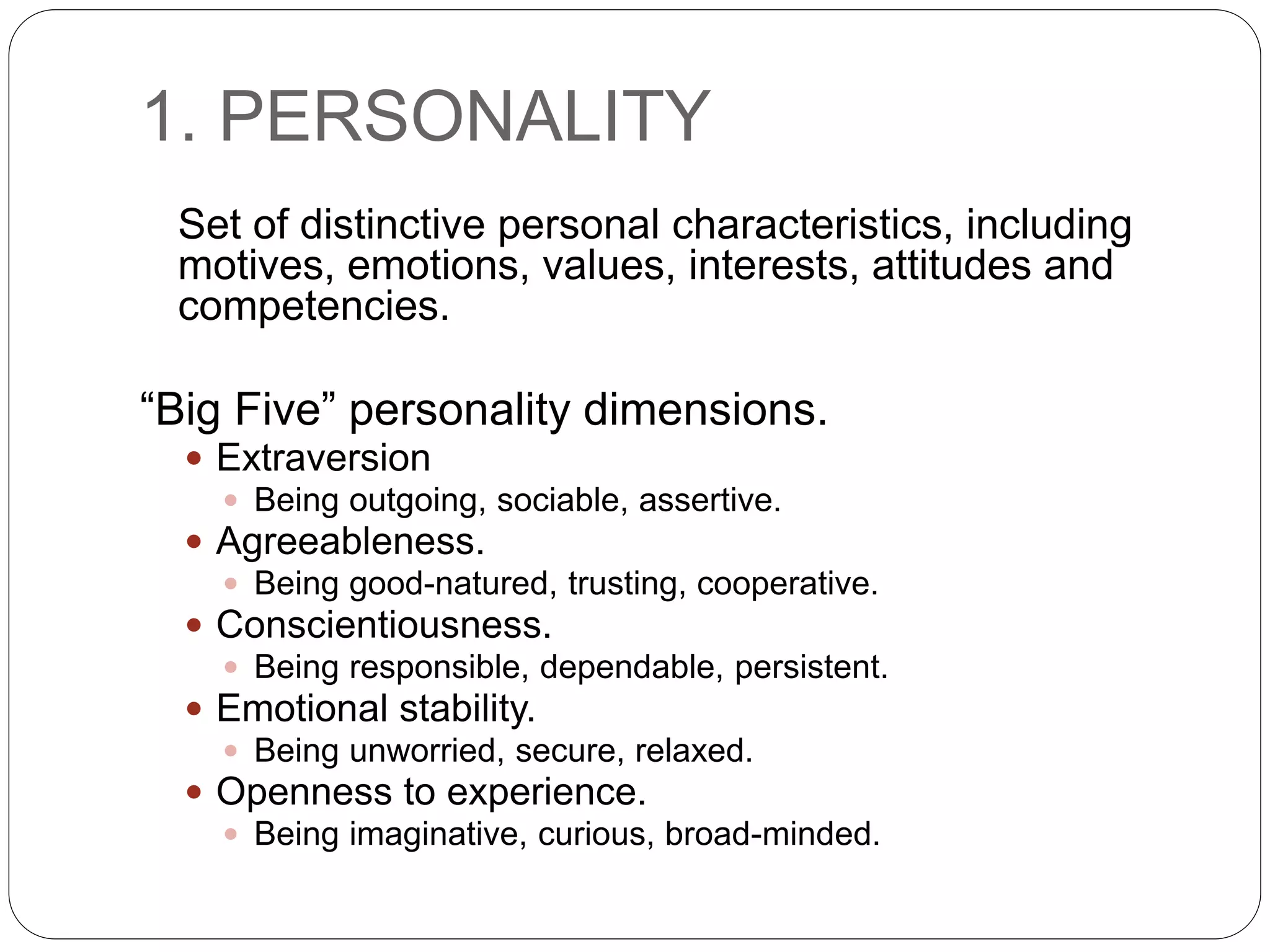
1. PERSONALITY
Set of distinctive personal characteristics, including
motives, emotions, values, interests, attitudes and
competencies.
“Big Five” personality dimensions.
 Extraversion
 Being outgoing, sociable, assertive.
 Agreeableness.
 Being good-natured, trusting, cooperative.
 Conscientiousness.
 Being responsible, dependable, persistent.
 Emotional stability.
 Being unworried, secure, relaxed.
 Openness to experience.
 Being imaginative, curious, broad-minded.
2.
Ability
Individual capacity to perform various tasks in a job.
Two types of abilities
Intellectual : Needed to perform mental activities.
Such as : Number aptitude(accountant), verbal
comprehension(plant manager), perceptual
speed(CBI), inductive reasoning (Researcher),
deductive reasoning (Supervisor), spatial
visualization(interior designer), memory (scientist,
sales person).
etc.
Physical : Capacity to do task demanding stamina.
Such as : dynamic strength, Body coordination,
balance, stamina etc.
Area : Teaching(long standing), labor(stamina,
3. VALUES
- Basic principles and factor that guide persons
belief, attitudes & behaviors.
- Values can influence beliefs about money, social
interaction, importance of work etc.
For eg : people who demonstrate work ethic,
believes that they should “do a good day’s work
for a good day’s pay” and live simple life.
4. ATTITUDE
- Evaluative statements or judgment concerning
objects, people or situation.
- It is person statements about their beliefs and
feelings, what they say, what they do, and how they
react.
- For eg :
Situation : promotion to less deserve employee.
Supervisor is unfair.
Attitude : I dislike my supervisor, I am quitting my job.
I am complaining to anyone who would listen.
ADVANTAGE OF DIVERSITY
 Diverse Experience
Co-workers with diverse cultural backgrounds brings unique
experiences and perceptions in group, strengthening teams'
productivity and responsiveness to changing conditions.
 Learning And Growth
Being exposed to new ideas, cultures and perspectives can help
individuals to be intellectual and gain a clearer view of future
providing opportunity for employees' personal growth.
Improves
 Corporate culture
 Relationships with clients and customers
Builds competitive advantage
 Understand and serve diverse customer base
 More commitment to organization’s mission
DISADVANTAGE OF
DIVERSITY
- Conflicts: people often feel confused or even annoyed
by individuals with views and backgrounds from
different from their own.
- Bureaucracy: decision-making can be delayed due to
diverging views and opinions, thus corporate decisions
and actions take time.
- Un-productivity: Dis-similar cultural identities, values
lacks things in common and could negatively affect the
overall team spirit hindering productivity.
- Disunity: Different opinion from different background
effects unity. The company might have people doing
their own thing, especially if there is no protocol and
authority to ensure common practices.
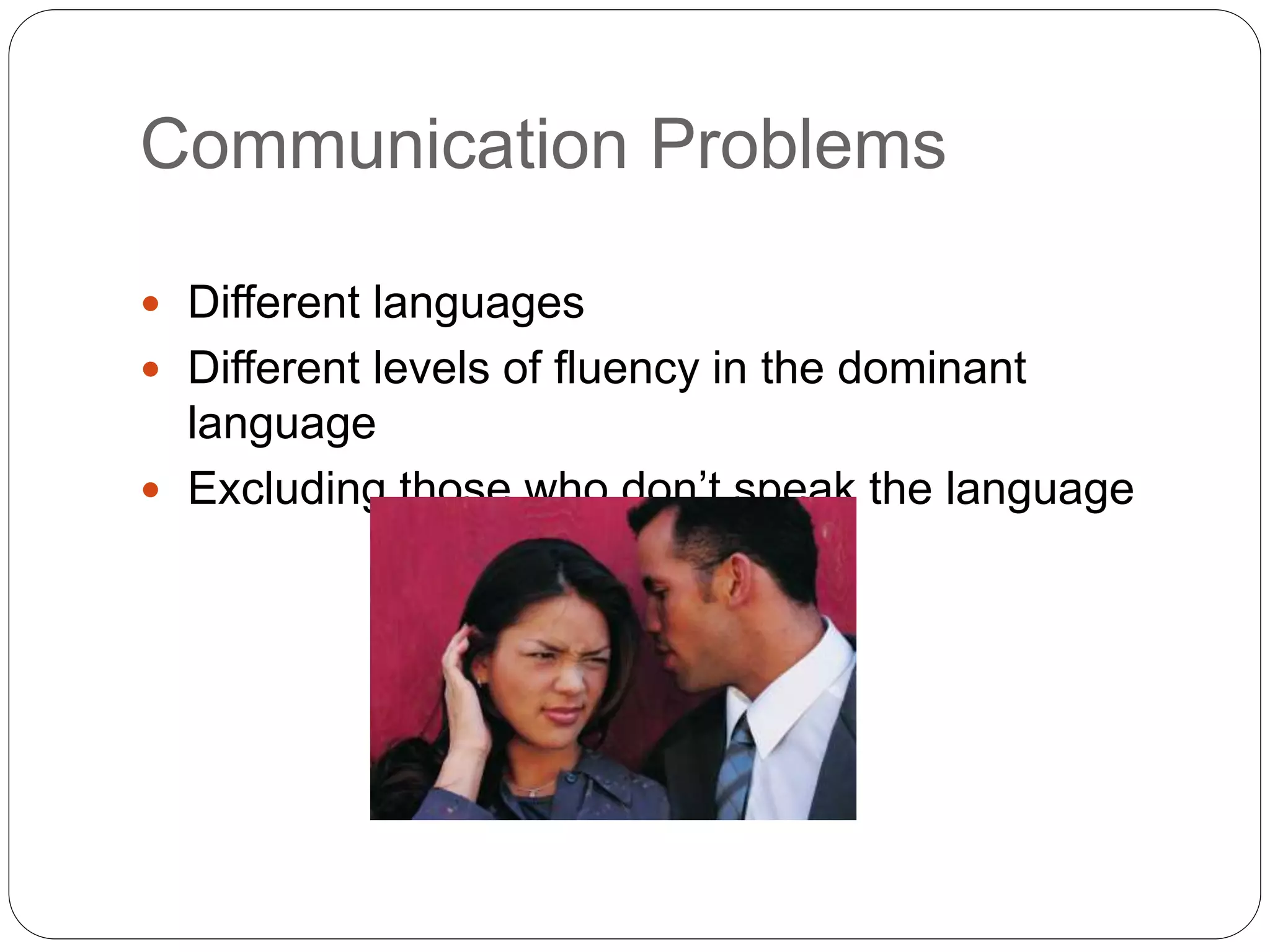
Communication Problems
 Different languages
 Different levels of fluency in the dominant
language
 Excluding those who don’t speak the language
Consequences of Ignoring
Diversity
- Costs time, money, and efficiency.
- include unhealthy tensions; loss of productivity
because of increased conflict.
- inability to attract and retain talented people of all
kinds.
- inability to retain valuable employees, resulting in
lost investments in recruitment and training.
MANAGING DIVERSITY
“Planning and implementing organizational
systems and practices to manage people so
that the potential advantages of diversity are
maximized while its potential disadvantages
are minimized." - Taylor Cox
MANAGING
DIVERSITY
 Golden rule:
“Treat others as you want to be treated.”
It is assumption that how you want to be treated is how
others want to be treated.
 Respect for individual and cultural differences.
 a legal system that values equal opportunity and
nondiscrimination in the workplace.
 realize that flexibility is a competitive issue and
management tool.
flexible work arrangements (part time), parental
leaves(maternity), dependent care services (day care),
work family stress management(private counseling).
 measure performance based on value added, not
hours worked.
 meet business objectives by helping employees meet
personal needs.
CONCLUSION
Each employee in a diverse workplace possesses
unique strengths and weaknesses derived from
their culture in addition to their individuality.
When managed properly, diversity in the
workplace can influence the strengths and
complement the weaknesses of each worker to
make the impact of the workforce greater than the
sum of its parts.
Diversity organizational behaviour

Diversity organizational behaviour

  • 1.
    By Raju Lama 18June, 2014 HOW DOES DIVERSITY AFFECT GROUP AND THEIR EFFECTIVENESS OVER TIME ?
  • 2.
    DEFINITION : DIVERSITY "The varietyof experiences and perspective which arise from differences in race, culture, religion, mental or physical abilities, age, gender, sexual orientation, gender identity and other characteristics." Diversity represents the individual differences and similarities that exist among people. Diversity is a group characteristic, not an individual characteristic. Surface level diversity : Gender, age, race, religion, culture etc. Deep Level diversity : Values, personality, ability, attitude, work preferences. These dimensions directly or indirectly affect performance, motivation, success, and interactions with others.
  • 3.
  • 4.
    1. PERSONALITY Set ofdistinctive personal characteristics, including motives, emotions, values, interests, attitudes and competencies. “Big Five” personality dimensions.  Extraversion  Being outgoing, sociable, assertive.  Agreeableness.  Being good-natured, trusting, cooperative.  Conscientiousness.  Being responsible, dependable, persistent.  Emotional stability.  Being unworried, secure, relaxed.  Openness to experience.  Being imaginative, curious, broad-minded.
  • 5.
    2. Ability Individual capacity toperform various tasks in a job. Two types of abilities Intellectual : Needed to perform mental activities. Such as : Number aptitude(accountant), verbal comprehension(plant manager), perceptual speed(CBI), inductive reasoning (Researcher), deductive reasoning (Supervisor), spatial visualization(interior designer), memory (scientist, sales person). etc. Physical : Capacity to do task demanding stamina. Such as : dynamic strength, Body coordination, balance, stamina etc. Area : Teaching(long standing), labor(stamina,
  • 6.
    3. VALUES - Basicprinciples and factor that guide persons belief, attitudes & behaviors. - Values can influence beliefs about money, social interaction, importance of work etc. For eg : people who demonstrate work ethic, believes that they should “do a good day’s work for a good day’s pay” and live simple life.
  • 7.
    4. ATTITUDE - Evaluativestatements or judgment concerning objects, people or situation. - It is person statements about their beliefs and feelings, what they say, what they do, and how they react. - For eg : Situation : promotion to less deserve employee. Supervisor is unfair. Attitude : I dislike my supervisor, I am quitting my job. I am complaining to anyone who would listen.
  • 8.
    ADVANTAGE OF DIVERSITY Diverse Experience Co-workers with diverse cultural backgrounds brings unique experiences and perceptions in group, strengthening teams' productivity and responsiveness to changing conditions.  Learning And Growth Being exposed to new ideas, cultures and perspectives can help individuals to be intellectual and gain a clearer view of future providing opportunity for employees' personal growth. Improves  Corporate culture  Relationships with clients and customers Builds competitive advantage  Understand and serve diverse customer base  More commitment to organization’s mission
  • 9.
    DISADVANTAGE OF DIVERSITY - Conflicts:people often feel confused or even annoyed by individuals with views and backgrounds from different from their own. - Bureaucracy: decision-making can be delayed due to diverging views and opinions, thus corporate decisions and actions take time. - Un-productivity: Dis-similar cultural identities, values lacks things in common and could negatively affect the overall team spirit hindering productivity. - Disunity: Different opinion from different background effects unity. The company might have people doing their own thing, especially if there is no protocol and authority to ensure common practices.
  • 10.
    Communication Problems  Differentlanguages  Different levels of fluency in the dominant language  Excluding those who don’t speak the language
  • 11.
    Consequences of Ignoring Diversity -Costs time, money, and efficiency. - include unhealthy tensions; loss of productivity because of increased conflict. - inability to attract and retain talented people of all kinds. - inability to retain valuable employees, resulting in lost investments in recruitment and training.
  • 12.
    MANAGING DIVERSITY “Planning andimplementing organizational systems and practices to manage people so that the potential advantages of diversity are maximized while its potential disadvantages are minimized." - Taylor Cox
  • 13.
    MANAGING DIVERSITY  Golden rule: “Treatothers as you want to be treated.” It is assumption that how you want to be treated is how others want to be treated.  Respect for individual and cultural differences.  a legal system that values equal opportunity and nondiscrimination in the workplace.  realize that flexibility is a competitive issue and management tool. flexible work arrangements (part time), parental leaves(maternity), dependent care services (day care), work family stress management(private counseling).  measure performance based on value added, not hours worked.  meet business objectives by helping employees meet personal needs.
  • 14.
    CONCLUSION Each employee ina diverse workplace possesses unique strengths and weaknesses derived from their culture in addition to their individuality. When managed properly, diversity in the workplace can influence the strengths and complement the weaknesses of each worker to make the impact of the workforce greater than the sum of its parts.