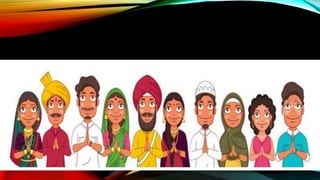
DIVERSITY IN INDIA
LEARNING OBJECTIVES:
•To understand the diverse nature of our
country. To know that diversity nature’s
way of grooming us to adjust, learn and
exist.
DIVERSITY
Diversity is the range of many people or
things very different from each other.
•India is a country
known for unity in
diversity.
REASONS BEHIND DIVERSITY
• Geography:
India has mountains rivers, thick forests and oceans and
means of transport or communication were almost absent.
As result people settled in a region and stayed there for a
long period of time. They developed their language,
culture, traditions and food habits. Similarly climate also
gives rise to diversity. Climate influences clothing, food,
dances, music, etc.
• Economic Difference:
Difference in amount of money or wealth people have. The
difference in amount of money are visible in differences in
clothes, lifestyle and even food habits.
• Social Differences
Caste system and gender bias.
Inequality based on caste
Gender Bias- Discrimination against the girl child and she is
treated liked a burden.
UNITY IN DIVERSITY
How
RISE IN MIXED INFLUENCES
•Natural Disasters or wars forced people to
leave their homes and settle down in new
places. A new place gave them a new
lifestyle and challenges. But they adjusted
well giving rise to a mixed bag of new
cultures.
INFLUENCE OF FOREIGNERS
•Indian history tells us about
foreign influences that added to
our diversity. They influenced our
culture and we influenced theirs.
FREEDOM STRUGGLE
• Jawaharlal Nehru gave the slogan “Unity in Diversity”. Our
national flag, national anthem, national bird and national
flower are symbols of this unity. Indians showed that
diversity was not a weakness but a source of strength.
Despite different cultural, religious and regional
background Indian men and women came together in
large numbers to fight for freedom.
GLOBALIZATION
•The 20th century has shown a great deal of
progress in communication, technology and
transport. A global network has been formed that
links economies, societies and cultures. Information
and ideas are spread across the world as result of
globalization.

Diversity in India.pptx

  • 2.
  • 3.
    LEARNING OBJECTIVES: •To understandthe diverse nature of our country. To know that diversity nature’s way of grooming us to adjust, learn and exist.
  • 4.
    DIVERSITY Diversity is therange of many people or things very different from each other.
  • 5.
    •India is acountry known for unity in diversity.
  • 6.
    REASONS BEHIND DIVERSITY •Geography: India has mountains rivers, thick forests and oceans and means of transport or communication were almost absent. As result people settled in a region and stayed there for a long period of time. They developed their language, culture, traditions and food habits. Similarly climate also gives rise to diversity. Climate influences clothing, food, dances, music, etc.
  • 7.
    • Economic Difference: Differencein amount of money or wealth people have. The difference in amount of money are visible in differences in clothes, lifestyle and even food habits. • Social Differences Caste system and gender bias. Inequality based on caste Gender Bias- Discrimination against the girl child and she is treated liked a burden.
  • 8.
  • 9.
    RISE IN MIXEDINFLUENCES •Natural Disasters or wars forced people to leave their homes and settle down in new places. A new place gave them a new lifestyle and challenges. But they adjusted well giving rise to a mixed bag of new cultures.
  • 10.
    INFLUENCE OF FOREIGNERS •Indianhistory tells us about foreign influences that added to our diversity. They influenced our culture and we influenced theirs.
  • 11.
    FREEDOM STRUGGLE • JawaharlalNehru gave the slogan “Unity in Diversity”. Our national flag, national anthem, national bird and national flower are symbols of this unity. Indians showed that diversity was not a weakness but a source of strength. Despite different cultural, religious and regional background Indian men and women came together in large numbers to fight for freedom.
  • 12.
    GLOBALIZATION •The 20th centuryhas shown a great deal of progress in communication, technology and transport. A global network has been formed that links economies, societies and cultures. Information and ideas are spread across the world as result of globalization.