Grade : 6
Social Science
History
Chapter : 2
From Hunting-Gathering
To Growing Food
The earliest people
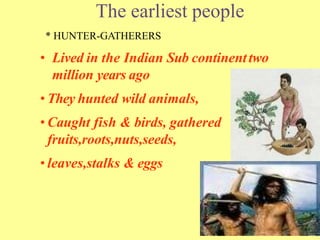
* HUNTER-GATHERERS
• Lived in the Indian Sub continenttwo
million years ago
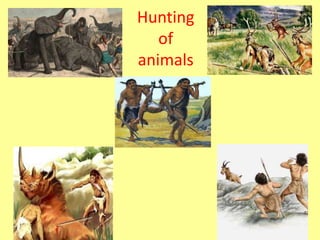
• They hunted wild animals,
• Caught fish & birds, gathered
fruits,roots,nuts,seeds,
• leaves,stalks & eggs
REASONS OF HUNTER-GATHERERS
MOVED FROM PLACE TO PLACE
* In search of food
*Tohuntanimals
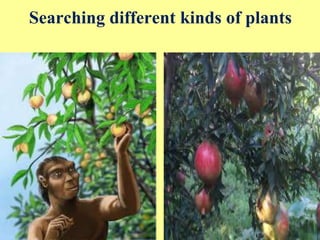
* In searchof different typesof plants
* In search of water
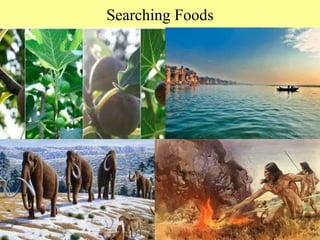
Searching Foods
Hunting
of
animals
Searching different kinds of plants
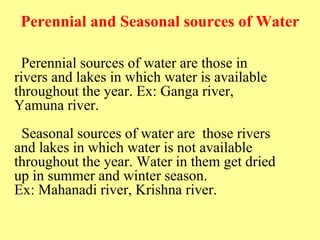
Perennial and Seasonal sources of Water
Perennial sources of water are those in
rivers and lakes in which water is available
throughout the year. Ex: Ganga river,
Yamuna river.
Seasonal sources of water are those rivers
and lakes in which water is not available
throughout the year. Water in them get dried
up in summer and winter season.
Ex: Mahanadi river, Krishna river.
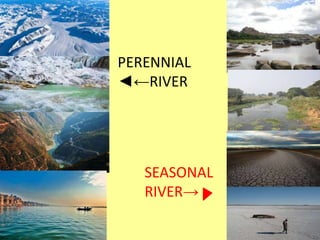
PERENNIAL
◄←RIVER
SEASONAL
RIVER→
How do we know about these
people?
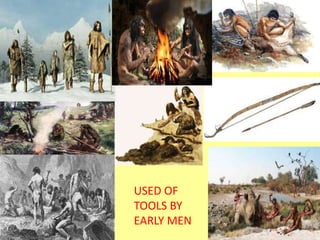
* Archaeologists have found tools of stone,
wood and bone, used by early people. Stone
tools were used for cutting bone and meet,
chop fruits, digging roots and stitching
clothes of animal skin.
* Bone or wood tools used to make spears,
arrows for hunting and chop wood.
* People also used to chop wood for making
fire.
USED OF
TOOLS BY
EARLY MEN
Prehistoric Periods
* Palaeolithic Period (Old Stone Age)
* Greek words, ‘palaeo’ means old and
‘lithos’ means stone.
* Mesolithic Period (Middle Stone Age)
* Neolithic Period (New Stone Age)
Choosing a place to live in
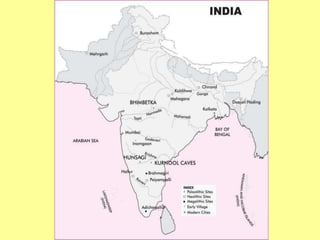
Bhimbetka, Hunsgi, Kurnool Caves are
Palaeolithic sites from which archaeologists
have found evidence of hunter-gatherers.
Bhimbetka:
* In present day it is Madhya Pradesh.
* Caves and rock shelters.
* Rock shelters are close to the Narmada
Valley.
* Paintings on the walls.
Hunsgi:
* Tools made of Limestone.
* It is a town in the Shorapur taluk of Yadgir
district in Karnataka.
* A large number of tools used for all sorts of
activities were found.
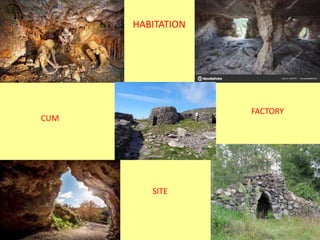
* These were probably habitation cum
factory sites.
Kurnool Caves:
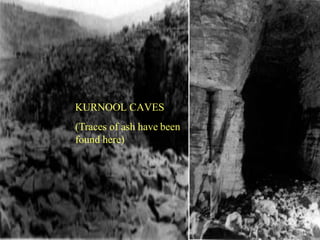
* Traces of ash have been found here.
* Finding out about fire.
* Fire: Source of light, roast meat and scare
HABITATION
CUM
FACTORY
SITE
KURNOOL CAVES
(Traces of ash have been
found here)
CHANGING ENVIRONMENT
(Mesolithic Period)
(AROUND 12000 YRS AGO)
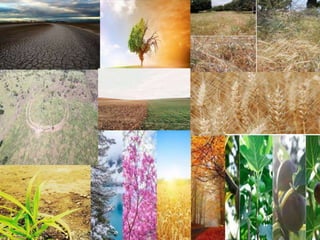
* Warm climate
*Development of grasslands
* Increase in the numberof deer, goat, sheep.
* Herdingand rearingof animals and fishing.
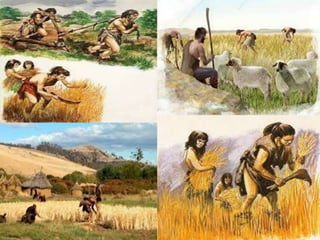
The beginning of farming and herding
* Grain bearing grasses , like wheat, Barley,
Rice grow naturally in different parts of the
world.
* People learnt about them and found them
as an easy way to use them as Meal.
* Thus they started to grow crops.
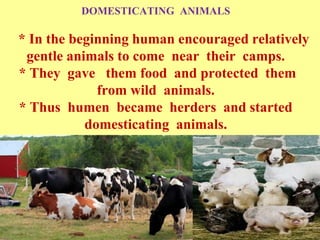
DOMESTICATING ANIMALS
* In the beginning human encouraged relatively
gentle animals to come near their camps.
* They gave them food and protected them
from wild animals.
* Thus humen became herders and started
domesticating animals.
A NEW WAY OF LIFE
(Neolithic Period)
Growing food brought some changes in the lives of
early human:
1. They had to stay at a place for a long duration
to look after the crop.
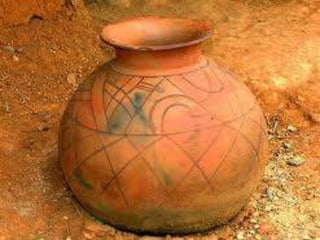
2. They Began To Make Large Clay Pots And
Woven Baskets And Dug Pits Into The Ground For
Storing Extra Grains.
3. Animals Were Reared To Provide Milk And Meat.
Animals Multiply Naturally And Can Be Used As
Store Of Foods.
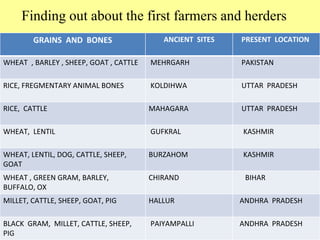
GRAINS AND BONES ANCIENT SITES PRESENT LOCATION
WHEAT , BARLEY , SHEEP, GOAT , CATTLE MEHRGARH PAKISTAN
RICE, FREGMENTARY ANIMAL BONES KOLDIHWA UTTAR PRADESH
RICE, CATTLE MAHAGARA UTTAR PRADESH
WHEAT, LENTIL GUFKRAL KASHMIR
WHEAT, LENTIL, DOG, CATTLE, SHEEP,
GOAT
BURZAHOM KASHMIR
WHEAT , GREEN GRAM, BARLEY,
BUFFALO, OX
CHIRAND BIHAR
MILLET, CATTLE, SHEEP, GOAT, PIG HALLUR ANDHRA PRADESH
BLACK GRAM, MILLET, CATTLE, SHEEP,
PIG
PAIYAMPALLI ANDHRA PRADESH
Finding out about the first farmers and herders
Towards a settled life
1. In Burzhom traces of pit houses have been found.
These houses were dug into the ground with steps.
Cooking hearths have also been found inside and
outside the pits.
2. On many sites new type of refined and polished
stone tools have been found. these tools are called
Neolithic tools.
3. Different types of earthen pots have also been
found. those were used for storing grains and
cooking foods.
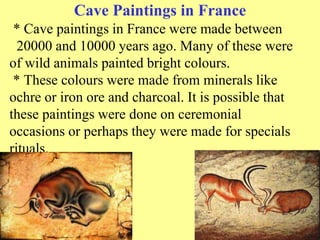
* Cave paintings in France were made between
20000 and 10000 years ago. Many of these were
of wild animals painted bright colours.
* These colours were made from minerals like
ochre or iron ore and charcoal. It is possible that
these paintings were done on ceremonial
occasions or perhaps they were made for specials
rituals.
Cave Paintings in France
Turkey
• One of the most famous Neolithic sites, Catal
Huyuk, was found in Turkey.
• Several things were brought from great distances.
• Flint from Syria.
• Cowries from the Red Sea.
• Shells from the Mediterranean Sea.

Grade 6 History Chapter 2 PPT.pptx

  • 1.
    Grade : 6 SocialScience History
  • 2.
    Chapter : 2 FromHunting-Gathering To Growing Food
  • 3.
    The earliest people *HUNTER-GATHERERS • Lived in the Indian Sub continenttwo million years ago • They hunted wild animals, • Caught fish & birds, gathered fruits,roots,nuts,seeds, • leaves,stalks & eggs
  • 4.
    REASONS OF HUNTER-GATHERERS MOVEDFROM PLACE TO PLACE * In search of food *Tohuntanimals * In searchof different typesof plants * In search of water
  • 5.
  • 6.
  • 7.
  • 8.
    Perennial and Seasonalsources of Water Perennial sources of water are those in rivers and lakes in which water is available throughout the year. Ex: Ganga river, Yamuna river. Seasonal sources of water are those rivers and lakes in which water is not available throughout the year. Water in them get dried up in summer and winter season. Ex: Mahanadi river, Krishna river.
  • 9.
  • 10.
    How do weknow about these people? * Archaeologists have found tools of stone, wood and bone, used by early people. Stone tools were used for cutting bone and meet, chop fruits, digging roots and stitching clothes of animal skin. * Bone or wood tools used to make spears, arrows for hunting and chop wood. * People also used to chop wood for making fire.
  • 11.
  • 12.
    Prehistoric Periods * PalaeolithicPeriod (Old Stone Age) * Greek words, ‘palaeo’ means old and ‘lithos’ means stone. * Mesolithic Period (Middle Stone Age) * Neolithic Period (New Stone Age)
  • 14.
    Choosing a placeto live in Bhimbetka, Hunsgi, Kurnool Caves are Palaeolithic sites from which archaeologists have found evidence of hunter-gatherers. Bhimbetka: * In present day it is Madhya Pradesh. * Caves and rock shelters. * Rock shelters are close to the Narmada Valley. * Paintings on the walls.
  • 15.
    Hunsgi: * Tools madeof Limestone. * It is a town in the Shorapur taluk of Yadgir district in Karnataka. * A large number of tools used for all sorts of activities were found. * These were probably habitation cum factory sites. Kurnool Caves: * Traces of ash have been found here. * Finding out about fire. * Fire: Source of light, roast meat and scare
  • 16.
  • 17.
    KURNOOL CAVES (Traces ofash have been found here)
  • 18.
    CHANGING ENVIRONMENT (Mesolithic Period) (AROUND12000 YRS AGO) * Warm climate *Development of grasslands * Increase in the numberof deer, goat, sheep. * Herdingand rearingof animals and fishing.
  • 20.
    The beginning offarming and herding * Grain bearing grasses , like wheat, Barley, Rice grow naturally in different parts of the world. * People learnt about them and found them as an easy way to use them as Meal. * Thus they started to grow crops.
  • 22.
    DOMESTICATING ANIMALS * Inthe beginning human encouraged relatively gentle animals to come near their camps. * They gave them food and protected them from wild animals. * Thus humen became herders and started domesticating animals.
  • 23.
    A NEW WAYOF LIFE (Neolithic Period) Growing food brought some changes in the lives of early human: 1. They had to stay at a place for a long duration to look after the crop. 2. They Began To Make Large Clay Pots And Woven Baskets And Dug Pits Into The Ground For Storing Extra Grains. 3. Animals Were Reared To Provide Milk And Meat. Animals Multiply Naturally And Can Be Used As Store Of Foods.
  • 24.
    GRAINS AND BONESANCIENT SITES PRESENT LOCATION WHEAT , BARLEY , SHEEP, GOAT , CATTLE MEHRGARH PAKISTAN RICE, FREGMENTARY ANIMAL BONES KOLDIHWA UTTAR PRADESH RICE, CATTLE MAHAGARA UTTAR PRADESH WHEAT, LENTIL GUFKRAL KASHMIR WHEAT, LENTIL, DOG, CATTLE, SHEEP, GOAT BURZAHOM KASHMIR WHEAT , GREEN GRAM, BARLEY, BUFFALO, OX CHIRAND BIHAR MILLET, CATTLE, SHEEP, GOAT, PIG HALLUR ANDHRA PRADESH BLACK GRAM, MILLET, CATTLE, SHEEP, PIG PAIYAMPALLI ANDHRA PRADESH Finding out about the first farmers and herders
  • 25.
    Towards a settledlife 1. In Burzhom traces of pit houses have been found. These houses were dug into the ground with steps. Cooking hearths have also been found inside and outside the pits. 2. On many sites new type of refined and polished stone tools have been found. these tools are called Neolithic tools. 3. Different types of earthen pots have also been found. those were used for storing grains and cooking foods.
  • 28.
    * Cave paintingsin France were made between 20000 and 10000 years ago. Many of these were of wild animals painted bright colours. * These colours were made from minerals like ochre or iron ore and charcoal. It is possible that these paintings were done on ceremonial occasions or perhaps they were made for specials rituals. Cave Paintings in France
  • 29.
    Turkey • One ofthe most famous Neolithic sites, Catal Huyuk, was found in Turkey. • Several things were brought from great distances. • Flint from Syria. • Cowries from the Red Sea. • Shells from the Mediterranean Sea.