DEEPAK
KU.HANSDAH
211020073
B.PLANNING
2ND YEAR,3RD SEM
DIFFERENT
  TYPES OF
DISTRIBUTION
 SYSTEM LAY
     OUT

    ď‚§   DEAD END SYSTEM
    ď‚§   GRID-IRON SYSTEM
    ď‚§   RING SYSTEM
    ď‚§   RADIAL SYSTEM
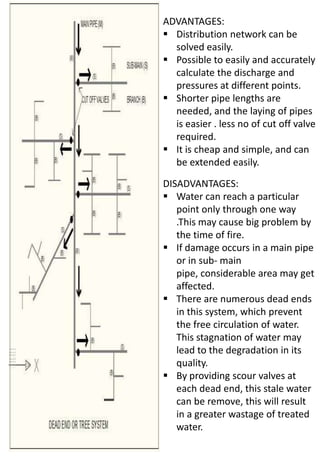
ADVANTAGES:
ď‚§ Distribution network can be
  solved easily.
ď‚§ Possible to easily and accurately
  calculate the discharge and
  pressures at different points.
ď‚§ Shorter pipe lengths are
  needed, and the laying of pipes
  is easier . less no of cut off valve
  required.
ď‚§ It is cheap and simple, and can
  be extended easily.

DISADVANTAGES:
ď‚§ Water can reach a particular
   point only through one way
   .This may cause big problem by
   the time of fire.
ď‚§ If damage occurs in a main pipe
   or in sub- main
   pipe, considerable area may get
   affected.
ď‚§ There are numerous dead ends
   in this system, which prevent
   the free circulation of water.
   This stagnation of water may
   lead to the degradation in its
   quality.
ď‚§ By providing scour valves at
   each dead end, this stale water
   can be remove, this will result
   in a greater wastage of treated
   water.
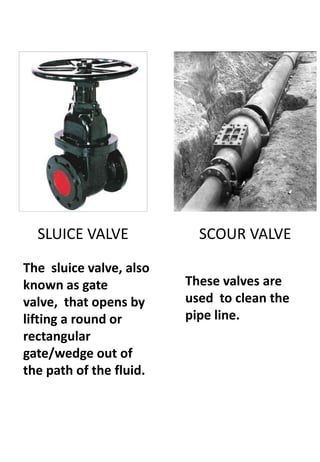
SLUICE VALVE             SCOUR VALVE

The sluice valve, also
known as gate            These valves are
valve, that opens by     used to clean the
lifting a round or       pipe line.
rectangular
gate/wedge out of
the path of the fluid.
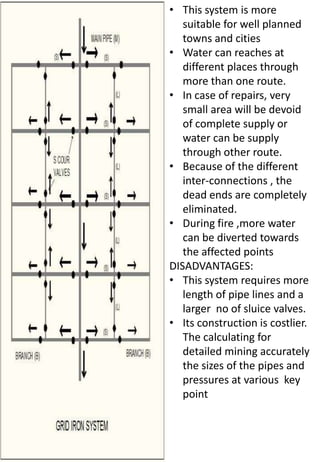
• This system is more
   suitable for well planned
   towns and cities
• Water can reaches at
   different places through
   more than one route.
• In case of repairs, very
   small area will be devoid
   of complete supply or
   water can be supply
   through other route.
• Because of the different
   inter-connections , the
   dead ends are completely
   eliminated.
• During fire ,more water
   can be diverted towards
   the affected points
DISADVANTAGES:
• This system requires more
   length of pipe lines and a
   larger no of sluice valves.
• Its construction is costlier.
   The calculating for
   detailed mining accurately
   the sizes of the pipes and
   pressures at various key
   point
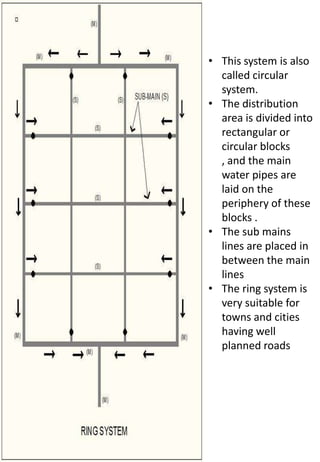
• This system is also
  called circular
  system.
• The distribution
  area is divided into
  rectangular or
  circular blocks
  , and the main
  water pipes are
  laid on the
  periphery of these
  blocks .
• The sub mains
  lines are placed in
  between the main
  lines
• The ring system is
  very suitable for
  towns and cities
  having well
  planned roads
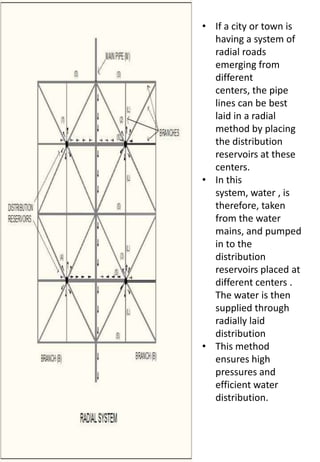
• If a city or town is
  having a system of
  radial roads
  emerging from
  different
  centers, the pipe
  lines can be best
  laid in a radial
  method by placing
  the distribution
  reservoirs at these
  centers.
• In this
  system, water , is
  therefore, taken
  from the water
  mains, and pumped
  in to the
  distribution
  reservoirs placed at
  different centers .
  The water is then
  supplied through
  radially laid
  distribution
• This method
  ensures high
  pressures and
  efficient water
  distribution.
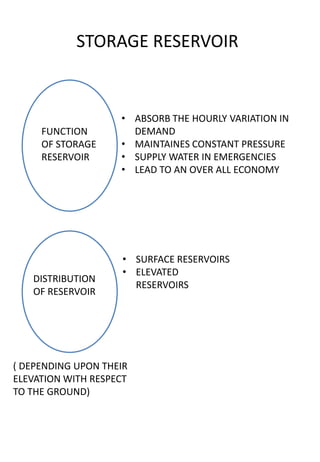
STORAGE RESERVOIR


                    • ABSORB THE HOURLY VARIATION IN
     FUNCTION         DEMAND
     OF STORAGE     • MAINTAINES CONSTANT PRESSURE
     RESERVOIR      • SUPPLY WATER IN EMERGENCIES
                    • LEAD TO AN OVER ALL ECONOMY


                     • SURFACE RESERVOIRS
                     • ELEVATED
   DISTRIBUTION
                       RESERVOIRS
   OF RESERVOIR


( DEPENDING UPON THEIR
ELEVATION WITH RESPECT
TO THE GROUND)
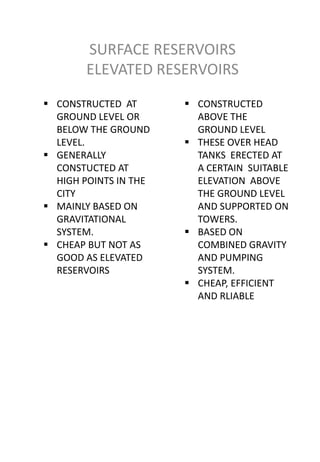
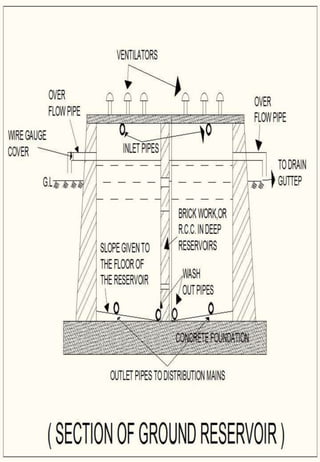
SURFACE RESERVOIRS
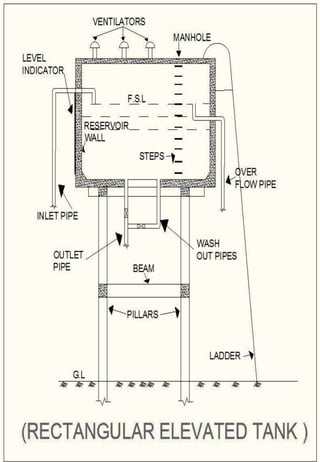
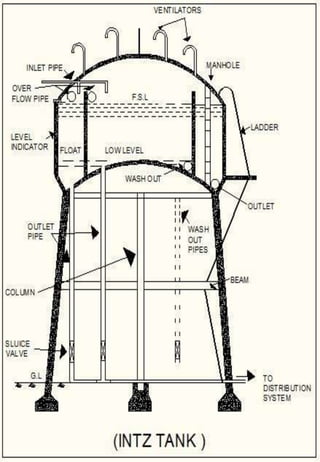
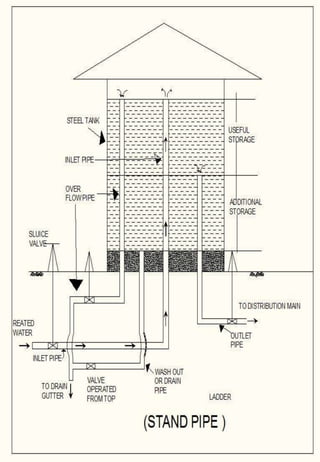
        ELEVATED RESERVOIRS
ď‚§ CONSTRUCTED AT       ď‚§ CONSTRUCTED
  GROUND LEVEL OR        ABOVE THE
  BELOW THE GROUND       GROUND LEVEL
  LEVEL.               ď‚§ THESE OVER HEAD
ď‚§ GENERALLY              TANKS ERECTED AT
  CONSTUCTED AT          A CERTAIN SUITABLE
  HIGH POINTS IN THE     ELEVATION ABOVE
  CITY                   THE GROUND LEVEL
ď‚§ MAINLY BASED ON        AND SUPPORTED ON
  GRAVITATIONAL          TOWERS.
  SYSTEM.              ď‚§ BASED ON
ď‚§ CHEAP BUT NOT AS       COMBINED GRAVITY
  GOOD AS ELEVATED       AND PUMPING
  RESERVOIRS             SYSTEM.
                       ď‚§ CHEAP, EFFICIENT
                         AND RLIABLE
Distribution system(deepak hansdah)

Distribution system(deepak hansdah)

  • 1.
  • 2.
    DIFFERENT TYPESOF DISTRIBUTION SYSTEM LAY OUT ď‚§ DEAD END SYSTEM ď‚§ GRID-IRON SYSTEM ď‚§ RING SYSTEM ď‚§ RADIAL SYSTEM
  • 3.
    ADVANTAGES: ď‚§ Distribution networkcan be solved easily. ď‚§ Possible to easily and accurately calculate the discharge and pressures at different points. ď‚§ Shorter pipe lengths are needed, and the laying of pipes is easier . less no of cut off valve required. ď‚§ It is cheap and simple, and can be extended easily. DISADVANTAGES: ď‚§ Water can reach a particular point only through one way .This may cause big problem by the time of fire. ď‚§ If damage occurs in a main pipe or in sub- main pipe, considerable area may get affected. ď‚§ There are numerous dead ends in this system, which prevent the free circulation of water. This stagnation of water may lead to the degradation in its quality. ď‚§ By providing scour valves at each dead end, this stale water can be remove, this will result in a greater wastage of treated water.
  • 4.
    SLUICE VALVE SCOUR VALVE The sluice valve, also known as gate These valves are valve, that opens by used to clean the lifting a round or pipe line. rectangular gate/wedge out of the path of the fluid.
  • 5.
    • This systemis more suitable for well planned towns and cities • Water can reaches at different places through more than one route. • In case of repairs, very small area will be devoid of complete supply or water can be supply through other route. • Because of the different inter-connections , the dead ends are completely eliminated. • During fire ,more water can be diverted towards the affected points DISADVANTAGES: • This system requires more length of pipe lines and a larger no of sluice valves. • Its construction is costlier. The calculating for detailed mining accurately the sizes of the pipes and pressures at various key point
  • 6.
    • This systemis also called circular system. • The distribution area is divided into rectangular or circular blocks , and the main water pipes are laid on the periphery of these blocks . • The sub mains lines are placed in between the main lines • The ring system is very suitable for towns and cities having well planned roads
  • 7.
    • If acity or town is having a system of radial roads emerging from different centers, the pipe lines can be best laid in a radial method by placing the distribution reservoirs at these centers. • In this system, water , is therefore, taken from the water mains, and pumped in to the distribution reservoirs placed at different centers . The water is then supplied through radially laid distribution • This method ensures high pressures and efficient water distribution.
  • 8.
    STORAGE RESERVOIR • ABSORB THE HOURLY VARIATION IN FUNCTION DEMAND OF STORAGE • MAINTAINES CONSTANT PRESSURE RESERVOIR • SUPPLY WATER IN EMERGENCIES • LEAD TO AN OVER ALL ECONOMY • SURFACE RESERVOIRS • ELEVATED DISTRIBUTION RESERVOIRS OF RESERVOIR ( DEPENDING UPON THEIR ELEVATION WITH RESPECT TO THE GROUND)
  • 9.
    SURFACE RESERVOIRS ELEVATED RESERVOIRS ď‚§ CONSTRUCTED AT ď‚§ CONSTRUCTED GROUND LEVEL OR ABOVE THE BELOW THE GROUND GROUND LEVEL LEVEL. ď‚§ THESE OVER HEAD ď‚§ GENERALLY TANKS ERECTED AT CONSTUCTED AT A CERTAIN SUITABLE HIGH POINTS IN THE ELEVATION ABOVE CITY THE GROUND LEVEL ď‚§ MAINLY BASED ON AND SUPPORTED ON GRAVITATIONAL TOWERS. SYSTEM. ď‚§ BASED ON ď‚§ CHEAP BUT NOT AS COMBINED GRAVITY GOOD AS ELEVATED AND PUMPING RESERVOIRS SYSTEM. ď‚§ CHEAP, EFFICIENT AND RLIABLE