CS 603 
Distributed Transactions 
February 18, 2002
What is a Transaction? 
• Atomic 
– The external view is that either everything in the 
transaction happened, or nothing did 
• Consistent 
– If the start state is valid, the end state is valid 
• Isolated 
– A transaction in process is not affected by and does 
not affect any other transaction 
• Durable 
– Once complete, the effects of a transaction are 
permanent, even in the event of failure.
Distributed Transactions 
• What is the difference with Distributed 
Transactions? 
– NOTHING! 
– Must still support ACID properties 
– Important for all the same reasons 
• Why do we study Distributed 
Transactions? 
– Some properties harder to implement 
– Basic single-system techniques not sufficient
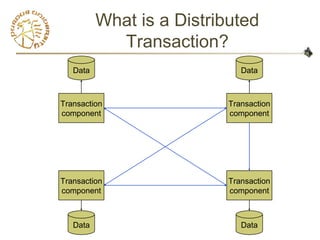
What is a Distributed 
Transaction? 
Data 
Transaction 
component 
Transaction 
component 
Data 
Data 
Transaction 
component 
Transaction 
component 
Data
Why are Distributed 
Transactions Hard? 
• Atomic 
– Different parts of a transaction may be at different 
sites 
– How do we ensure all or none committed? 
• Consistent 
– Failure may affect only part of transaction 
• Isolated 
– Commitment must occur “simultaneously” at all sites 
• Durable 
– Not much different when other problems solved 
– Makes “delayed commit” difficult
Key Issues 
• Commitment 
– Standard techniques preserve properties 
when commit occurs 
– Distributed systems need commit protocols so 
we know when commit has occurred 
• Failures 
– Standard techniques support durability for 
commit/abort 
– What happens if a site fails during 
commitment?
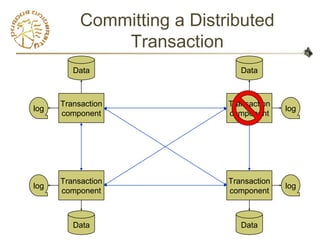
Committing a Distributed 
Transaction 
Data 
Transaction 
component 
log 
Transaction 
component 
Data 
log 
Data 
Transaction 
component 
log 
Transaction 
component 
Data 
log
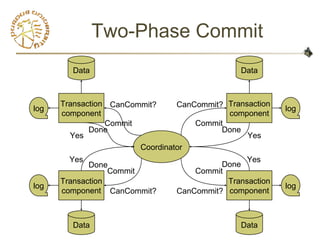
Two-Phase Commit 
(Lamport ’76, Gray ’79) 
• Assumes central coordinator 
– Coordinator initiates protocol 
– Participants: entities with actions to be 
committed/aborted 
• Phase 1: 
– Coordinator asks if participants can commit 
– Participants respond yes/no 
• Phase 2: 
– If all votes yes, coordinator sends Commit 
• Otherwise send Abort 
– Participants send Have Committed / Have Aborted
Two-Phase Commit 
Data 
Transaction 
component 
log 
Done Done 
Done 
Transaction 
component 
Data 
log 
Data 
Transaction 
component 
log 
Done 
Transaction 
component 
Data 
log 
CanCommit? CanCommit? 
Coordinator 
Commit 
CanCommit? CanCommit? 
Yes 
Yes 
Yes 
Yes 
Commit 
Commit Commit
Two-Phase Commit: 
Fault Tolerance 
• Participant fails in Phase 1: 
– Coordinator doesn’t get unanimous yes 
– Abort 
• Participant fails in Phase 2: 
– On reawakening, can ask coordinator if it 
should commit or abort 
– Requires that both commit and abort states 
be durable before sending “yes” vote
Two-Phase Commit: 
Problems 
• Blocks on failure 
– Timeout before abort if participant fails 
– All participants must wait for recovery if 
coordinator fails 
• While blocked, transaction must remain 
Isolated 
– Hold locks on data items touched 
– Prevents other transactions from completing 
• Solution: Wednesday

Distributed Transaction

  • 1.
    CS 603 DistributedTransactions February 18, 2002
  • 2.
    What is aTransaction? • Atomic – The external view is that either everything in the transaction happened, or nothing did • Consistent – If the start state is valid, the end state is valid • Isolated – A transaction in process is not affected by and does not affect any other transaction • Durable – Once complete, the effects of a transaction are permanent, even in the event of failure.
  • 3.
    Distributed Transactions •What is the difference with Distributed Transactions? – NOTHING! – Must still support ACID properties – Important for all the same reasons • Why do we study Distributed Transactions? – Some properties harder to implement – Basic single-system techniques not sufficient
  • 4.
    What is aDistributed Transaction? Data Transaction component Transaction component Data Data Transaction component Transaction component Data
  • 5.
    Why are Distributed Transactions Hard? • Atomic – Different parts of a transaction may be at different sites – How do we ensure all or none committed? • Consistent – Failure may affect only part of transaction • Isolated – Commitment must occur “simultaneously” at all sites • Durable – Not much different when other problems solved – Makes “delayed commit” difficult
  • 6.
    Key Issues •Commitment – Standard techniques preserve properties when commit occurs – Distributed systems need commit protocols so we know when commit has occurred • Failures – Standard techniques support durability for commit/abort – What happens if a site fails during commitment?
  • 7.
    Committing a Distributed Transaction Data Transaction component log Transaction component Data log Data Transaction component log Transaction component Data log
  • 8.
    Two-Phase Commit (Lamport’76, Gray ’79) • Assumes central coordinator – Coordinator initiates protocol – Participants: entities with actions to be committed/aborted • Phase 1: – Coordinator asks if participants can commit – Participants respond yes/no • Phase 2: – If all votes yes, coordinator sends Commit • Otherwise send Abort – Participants send Have Committed / Have Aborted
  • 9.
    Two-Phase Commit Data Transaction component log Done Done Done Transaction component Data log Data Transaction component log Done Transaction component Data log CanCommit? CanCommit? Coordinator Commit CanCommit? CanCommit? Yes Yes Yes Yes Commit Commit Commit
  • 10.
    Two-Phase Commit: FaultTolerance • Participant fails in Phase 1: – Coordinator doesn’t get unanimous yes – Abort • Participant fails in Phase 2: – On reawakening, can ask coordinator if it should commit or abort – Requires that both commit and abort states be durable before sending “yes” vote
  • 11.
    Two-Phase Commit: Problems • Blocks on failure – Timeout before abort if participant fails – All participants must wait for recovery if coordinator fails • While blocked, transaction must remain Isolated – Hold locks on data items touched – Prevents other transactions from completing • Solution: Wednesday