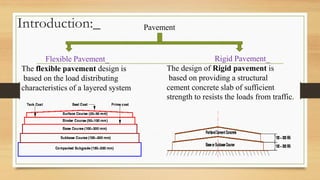
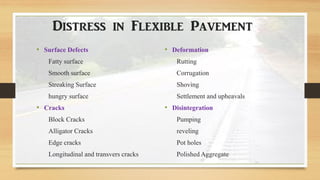
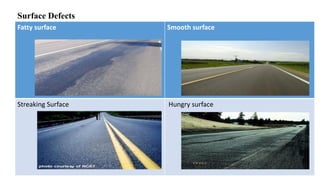
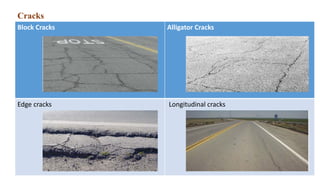
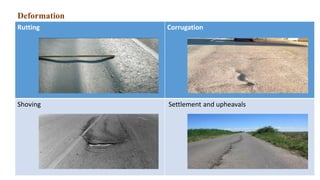
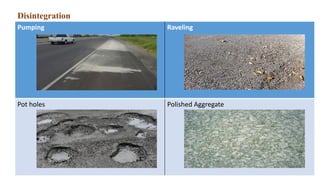
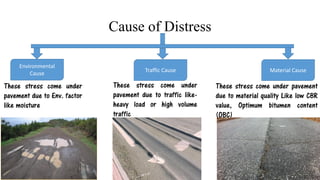
This document summarizes flexible pavement design and common types of distress that can occur. Flexible pavement is designed based on a layered system to distribute loads through the subgrade. It has advantages like adaptability and ease of repair but higher maintenance costs and shorter lifespan than rigid pavement. Distress in flexible pavement includes surface defects like fatty, smooth or streaked surfaces; cracks like block, alligator or edge cracks; deformation like rutting or corrugation; and disintegration like pumping or potholes. Causes of distress can be environmental factors, heavy traffic loads, or issues with material quality.