
Performance Pulsation Control
Discharge Dampeners
We put performance in our products
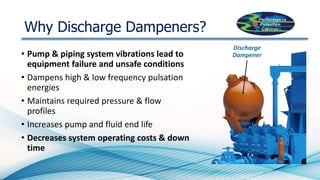
Why Discharge Dampeners?
• Pump & piping system vibrations lead to
equipment failure and unsafe conditions
• Dampens high & low frequency pulsation
energies
• Maintains required pressure & flow
profiles
• Increases pump and fluid end life
• Decreases system operating costs & down
time
Discharge
Dampener
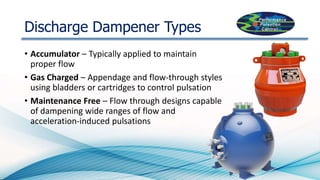
Discharge Dampener Types
• Accumulator – Typically applied to maintain
proper flow
• Gas Charged – Appendage and flow-through styles
using bladders or cartridges to control pulsation
• Maintenance Free – Flow through designs capable
of dampening wide ranges of flow and
acceleration-induced pulsations
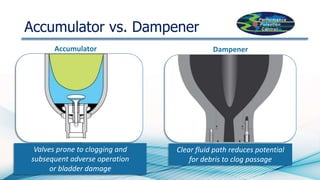
Accumulator vs. Dampener
Accumulator Dampener
Valves prone to clogging and
subsequent adverse operation
or bladder damage
Clear fluid path reduces potential
for debris to clog passage
Dampeners – Gas Charged
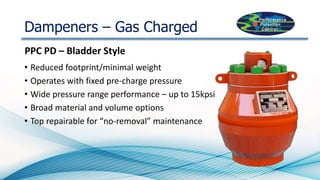
• Reduced footprint/minimal weight
• Operates with fixed pre-charge pressure
• Wide pressure range performance – up to 15kpsi
• Broad material and volume options
• Top repairable for “no-removal” maintenance
PPC PD – Bladder Style
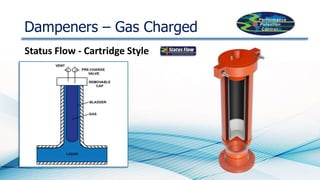
Dampeners – Gas Charged
Status Flow - Cartridge Style
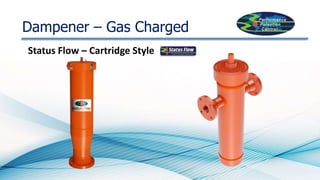
Dampener – Gas Charged
Status Flow – Cartridge Style
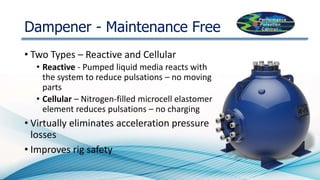
Dampener - Maintenance Free
• Two Types – Reactive and Cellular
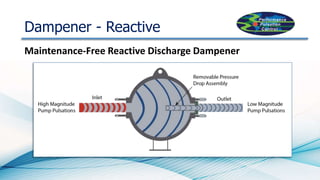
• Reactive - Pumped liquid media reacts with
the system to reduce pulsations – no moving
parts
• Cellular – Nitrogen-filled microcell elastomer
element reduces pulsations – no charging
• Virtually eliminates acceleration pressure
losses
• Improves rig safety
Maintenance-Free Reactive Discharge Dampener
Dampener - Reactive
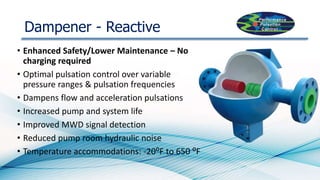
Dampener - Reactive
• Enhanced Safety/Lower Maintenance – No
charging required
• Optimal pulsation control over variable
pressure ranges & pulsation frequencies
• Dampens flow and acceleration pulsations
• Increased pump and system life
• Improved MWD signal detection
• Reduced pump room hydraulic noise
• Temperature accommodations: -20⁰F to 650 ⁰F
We put performance in our products
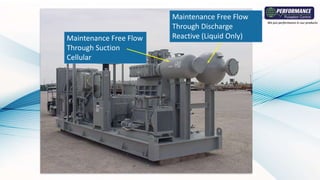
Maintenance Free Flow
Through Discharge
Reactive (Liquid Only)Maintenance Free Flow
Through Suction
Cellular
Maintenance Free Flow
Through Suction Cellular
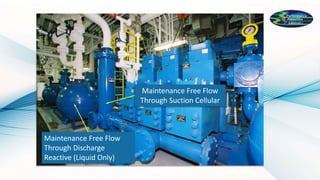
Maintenance Free Flow
Through Discharge
Reactive (Liquid Only)
Things to Remember
• Suction Stabilizers - Critical to your fluid delivery and ultimate
discharge performance
• Discharge Dampeners – Reduction of acceleration and flow-induced
pulsations
• Maintenance Free Options – Initially more expensive, but long-term
costs lower
• PPC Value – “Worry-Free Customer Experience”
• Durable, High-Performance Solutions
• Engineering expertise to customize designs and predict pulsation
performance
• Expert project management for a “worry-free customer experience”
Contact Us
sales@performancepulsation.com
Richardson: 972.699.8600
Odessa: 432.580.3017
Linked

Discharge Dampeners for Pulsation Control

  • 1.
    Performance Pulsation Control DischargeDampeners We put performance in our products
  • 2.
    Why Discharge Dampeners? •Pump & piping system vibrations lead to equipment failure and unsafe conditions • Dampens high & low frequency pulsation energies • Maintains required pressure & flow profiles • Increases pump and fluid end life • Decreases system operating costs & down time Discharge Dampener
  • 3.
    Discharge Dampener Types •Accumulator – Typically applied to maintain proper flow • Gas Charged – Appendage and flow-through styles using bladders or cartridges to control pulsation • Maintenance Free – Flow through designs capable of dampening wide ranges of flow and acceleration-induced pulsations
  • 4.
    Accumulator vs. Dampener AccumulatorDampener Valves prone to clogging and subsequent adverse operation or bladder damage Clear fluid path reduces potential for debris to clog passage
  • 5.
    Dampeners – GasCharged • Reduced footprint/minimal weight • Operates with fixed pre-charge pressure • Wide pressure range performance – up to 15kpsi • Broad material and volume options • Top repairable for “no-removal” maintenance PPC PD – Bladder Style
  • 6.
    Dampeners – GasCharged Status Flow - Cartridge Style
  • 7.
    Dampener – GasCharged Status Flow – Cartridge Style
  • 8.
    Dampener - MaintenanceFree • Two Types – Reactive and Cellular • Reactive - Pumped liquid media reacts with the system to reduce pulsations – no moving parts • Cellular – Nitrogen-filled microcell elastomer element reduces pulsations – no charging • Virtually eliminates acceleration pressure losses • Improves rig safety
  • 9.
    Maintenance-Free Reactive DischargeDampener Dampener - Reactive
  • 10.
    Dampener - Reactive •Enhanced Safety/Lower Maintenance – No charging required • Optimal pulsation control over variable pressure ranges & pulsation frequencies • Dampens flow and acceleration pulsations • Increased pump and system life • Improved MWD signal detection • Reduced pump room hydraulic noise • Temperature accommodations: -20⁰F to 650 ⁰F
  • 11.
    We put performancein our products Maintenance Free Flow Through Discharge Reactive (Liquid Only)Maintenance Free Flow Through Suction Cellular
  • 12.
    Maintenance Free Flow ThroughSuction Cellular Maintenance Free Flow Through Discharge Reactive (Liquid Only)
  • 13.
    Things to Remember •Suction Stabilizers - Critical to your fluid delivery and ultimate discharge performance • Discharge Dampeners – Reduction of acceleration and flow-induced pulsations • Maintenance Free Options – Initially more expensive, but long-term costs lower • PPC Value – “Worry-Free Customer Experience” • Durable, High-Performance Solutions • Engineering expertise to customize designs and predict pulsation performance • Expert project management for a “worry-free customer experience”
  • 14.