What is a Pneumatic
Actuator and How Do
They Work?
xinming 2025-05-15
Cont. • Introduction to Pneumatic Actuators
• Types of Pneumatic Actuators
• Working Principle of Pneumatic Actuators
• Advantages and Disadvantages
• Selection Criteria for Pneumatic Actuators
• Maintenance and Troubleshooting
• Future Trends in Pneumatic Actuator Technology
01
Introduction to Pneumatic
Actuators
PART
Definition and Basic Concept
Based on Pascal's principle, compressed air enters the cylinder and pushes the piston to move. By adjusting
the pressure and direction, the output force and motion speed are controlled. It is commonly used in industrial
scenarios that require rapid reciprocating motion.
Working principle
A pneumatic actuator is a device that converts compressed air energy into mechanical motion. It drives a
piston or diaphragm to produce linear or rotational motion by controlling changes in air pressure. It has the
characteristics of fast response, simple structure, and low maintenance cost.
Definition of pneumatic actuator
Pneumatic actuators belong to "clean energy" driving equipment, with air as the working medium, pollution-
free and recyclable. The energy conversion efficiency can reach 70% -90%, suitable for use in explosion-
proof environments.
Energy conversion characteristics
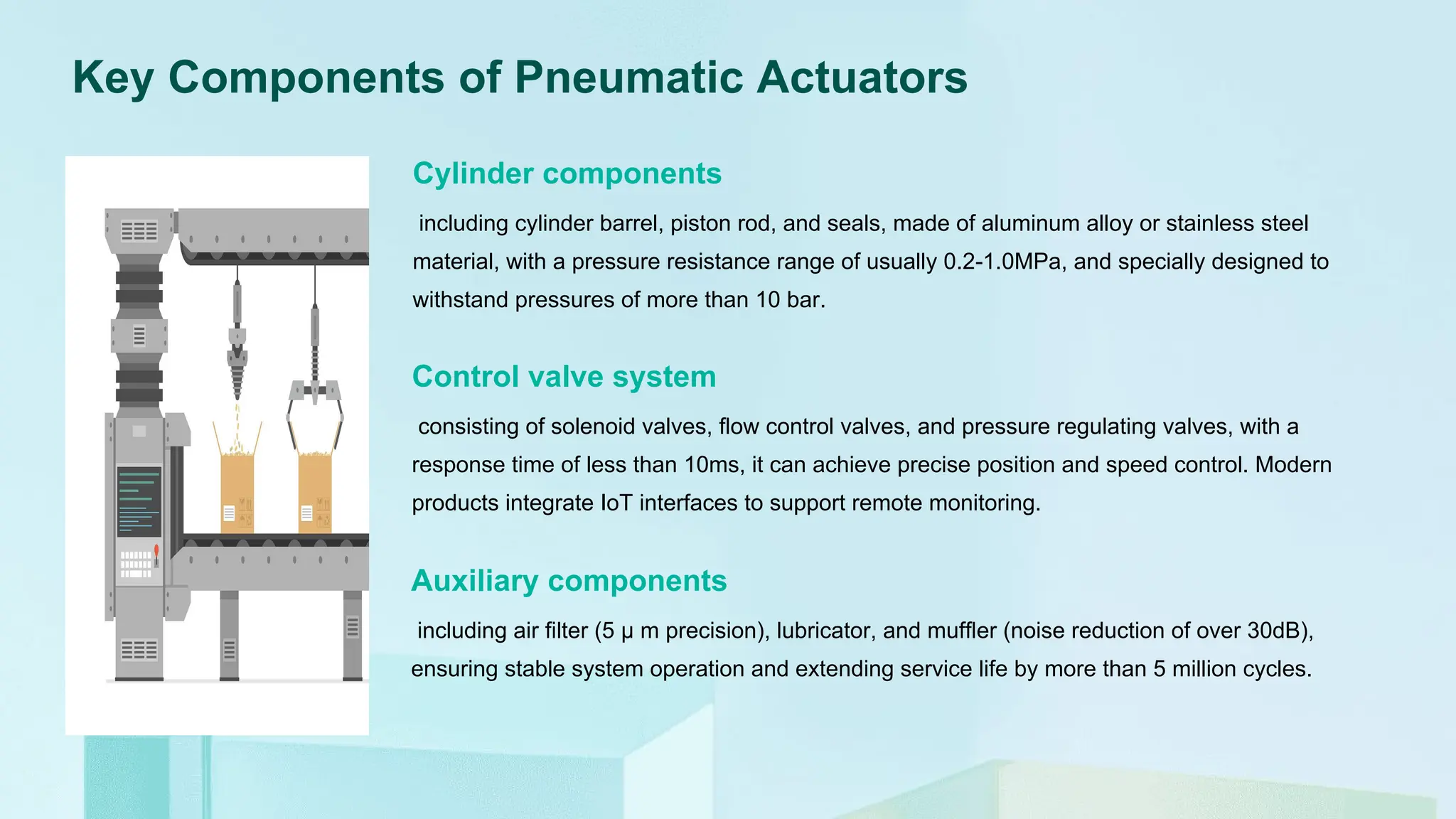
Key Components of Pneumatic Actuators
including cylinder barrel, piston rod, and seals, made of aluminum alloy or stainless steel
material, with a pressure resistance range of usually 0.2-1.0MPa, and specially designed to
withstand pressures of more than 10 bar.
Cylinder components
consisting of solenoid valves, flow control valves, and pressure regulating valves, with a
response time of less than 10ms, it can achieve precise position and speed control. Modern
products integrate IoT interfaces to support remote monitoring.
Control valve system
including air filter (5 μ m precision), lubricator, and muffler (noise reduction of over 30dB),
ensuring stable system operation and extending service life by more than 5 million cycles.
Auxiliary components
Common Applications in Industry
• In the field of process control, valve drives are widely used in the petrochemical industry, such as the 90 ° quick
opening and closing of ball valves/butterfly valves. Corrosion resistant models can handle chemical media with pH
2-12.
• Automated production line: used in automotive manufacturing for welding robot end effectors (with a repeat
positioning accuracy of ± 0.1mm) and stamping machine feeding mechanisms (with a beat speed of up to 120
times/minute).
• Packaging Machinery: Completed high-speed labeling (300 pieces/minute), filling (accuracy ± 0.5ml) and other
processes. Food grade actuators comply with FDA standards and can withstand working temperatures ranging from
-40 ℃ to 150 ℃.
• Medical equipment: Drive the lifting of the operating table (silent design<45dB), adjust the dental chair (safe load
500kg), and adopt a sterile design to meet the ISO 13485 medical device certification requirements.
02
Types of Pneumatic
Actuators
PART
Linear Actuators (Piston Type)
01 The piston is driven by compressed air on one side to produce linear motion, and the spring is reset;
Suitable for situations that require unidirectional force and limited space, such as clamping devices and
simple valve controls.
Single acting piston actuator
02 using bidirectional compressed air to alternately act on both sides of the piston to achieve reciprocating
motion; High output power and fast response, widely used in high-frequency opening and closing valves and
material pushing systems in industrial automation.
Double acting piston actuator
03 using lightweight materials and integrated structure, suitable for scenarios with compact space but high
thrust, such as precise positioning of medical equipment or small robotic arms.
Compact design
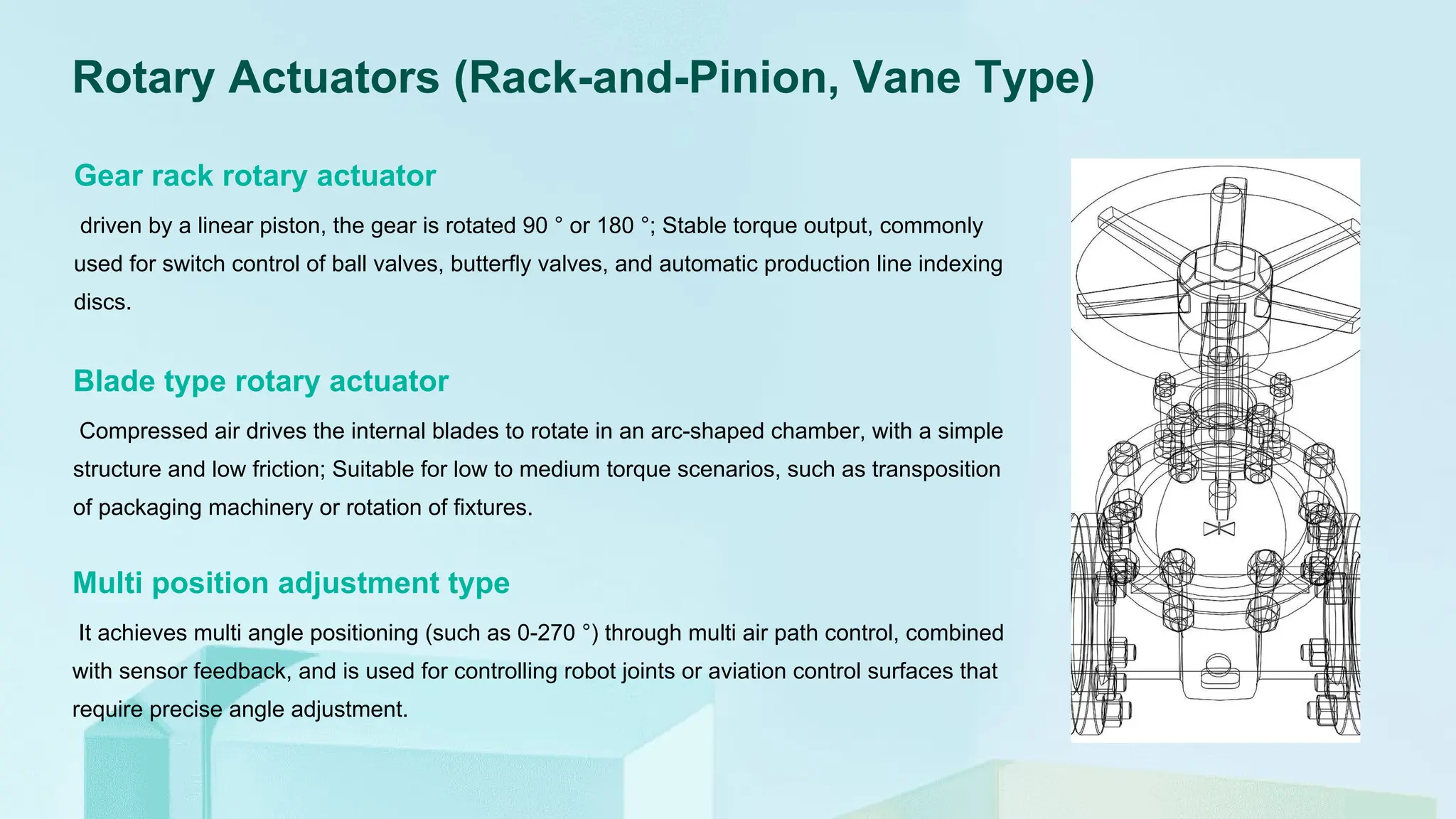
driven by a linear piston, the gear is rotated 90 ° or 180 °; Stable torque output, commonly
used for switch control of ball valves, butterfly valves, and automatic production line indexing
discs.
Rotary Actuators (Rack-and-Pinion, Vane Type)
Gear rack rotary actuator
Compressed air drives the internal blades to rotate in an arc-shaped chamber, with a simple
structure and low friction; Suitable for low to medium torque scenarios, such as transposition
of packaging machinery or rotation of fixtures.
Blade type rotary actuator
It achieves multi angle positioning (such as 0-270 °) through multi air path control, combined
with sensor feedback, and is used for controlling robot joints or aviation control surfaces that
require precise angle adjustment.
Multi position adjustment type
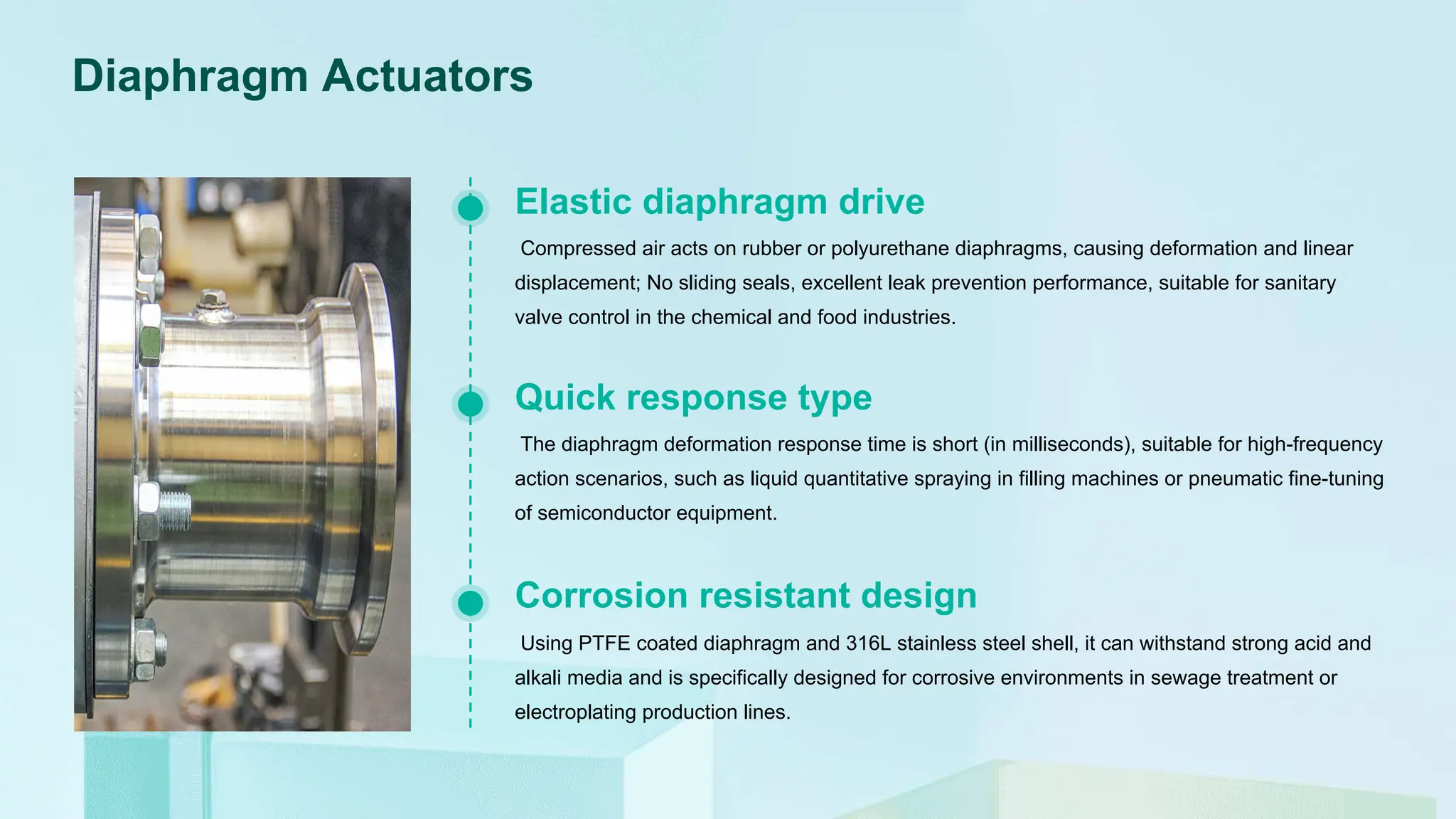
Diaphragm Actuators
Compressed air acts on rubber or polyurethane diaphragms, causing deformation and linear
displacement; No sliding seals, excellent leak prevention performance, suitable for sanitary
valve control in the chemical and food industries.
Elastic diaphragm drive
The diaphragm deformation response time is short (in milliseconds), suitable for high-frequency
action scenarios, such as liquid quantitative spraying in filling machines or pneumatic fine-tuning
of semiconductor equipment.
Quick response type
Using PTFE coated diaphragm and 316L stainless steel shell, it can withstand strong acid and
alkali media and is specifically designed for corrosive environments in sewage treatment or
electroplating production lines.
Corrosion resistant design
03
Working Principle of
Pneumatic Actuators
PART
Compressed Air as the Power Source
• High pressure gas storage and transportation: The core power source of pneumatic actuators is compressed air,
usually generated by an air compressor and stored in a gas storage tank, which is transported to the actuator
chamber through a pipeline system. Compressed air needs to maintain a stable pressure (usually 4-7 bar) to
ensure the reliability and repeatability of actuator actions.
• Cleaning and drying requirements: If the compressed air contains moisture or impurities, it may damage the internal
seals of the actuator. Therefore, filters and dryers are required to ensure that the gas purity meets the ISO 8573-1
standard and extend the service life of the equipment.
• Energy efficiency advantages: Compared to hydraulic or electric systems, compressed air does not require complex
recovery devices, and there is no pollution risk in case of leakage, making it suitable for industrial scenarios with
strict environmental requirements.
Conversion of Air Pressure to Mechanical Motion
• Piston type linear motion: In a single acting or double acting cylinder, compressed air pushes the piston to move
linearly inside the cylinder, and the force is transmitted to the load through the piston rod. The double acting type
achieves bidirectional motion through alternating intake/exhaust, with a stroke accuracy of ± 0.1mm.
• Gear and rack rotational motion: Some actuators use compressed air to drive the gear and rack mechanism,
converting linear motion into rotational output (such as 90 ° or 180 ° angular stroke), with a torque range of over
20000 Nm, suitable for large valve control.
• Diaphragm flexible transmission: In low-pressure scenarios, the elastic diaphragm undergoes displacement due to
pressure deformation, making it suitable for explosion-proof and high-frequency applications (such as chemical
process control), but the stroke is usually short (<50mm).
Control Mechanisms (Valves and Regulators)
The pressure reducing valve ensures a constant inlet pressure of the actuator to avoid overload; The throttle
valve controls the actuator speed by adjusting the airflow rate to prevent end impact, and a typical
configuration includes a quick release valve to accelerate the return stroke.
Pressure regulation and flow control
Two position three-way or five position three-way solenoid valves control the direction of airflow through
electrical signals, with a response time as low as 10ms, and can be used in conjunction with PLC to achieve
high-speed sequence control, such as sorting actions in packaging machinery.
Precise switching of solenoid valves
Advanced system integrates position sensors (such as magnetostrictive or LVDT) and proportional valves to
achieve closed-loop control, with a positioning accuracy of ± 0.5% of the full stroke, suitable for high-precision
applications such as semiconductor equipment.
Intelligent positioning feedback
04
Advantages and
Disadvantages
PART
1
2
3
Benefits: Simplicity, Speed, and Safety
Simplicity of Design
Pneumatic actuators utilize compressed air as their power source, which eliminates the need for
complex electrical components or hydraulic fluids. This makes them easier to install, maintain,
and repair, reducing downtime and operational costs.
High-Speed Operation
Due to the compressibility of air, pneumatic actuators can achieve rapid movement and quick
response times, making them ideal for applications requiring fast cycling or repetitive motions,
such as in assembly lines or packaging machinery.
Intrinsic Safety
Since pneumatic systems do not involve electricity or flammable fluids, they are inherently safer
in hazardous environments, such as those with explosive gases or dust, reducing the risk of
sparks or fires.
Limitations: Force Output and Precision
01 Pneumatic actuators generate force based on air pressure and piston area, which restricts their maximum
force compared to hydraulic systems. This makes them less suitable for high-load applications where
substantial force is required.
Limited Force Output
02 The compressibility of air can lead to less precise positioning and speed control compared to electric
actuators. This limitation makes pneumatics less ideal for tasks requiring fine-tuned movements or exact
positioning, such as in robotics or CNC machinery.
Lower Precision Control
03 Compressed air systems can suffer from energy losses due to leaks and the need for continuous air
compression, leading to higher operational costs over time compared to electric alternatives.
Energy Efficiency Concerns
Comparison with Hydraulic/Electric Actuators
Versus Hydraulic Actuators
Hybrid Solutions
Versus Electric Actuators
Pneumatic systems are cleaner and require less maintenance since they avoid hydraulic fluid leaks and
contamination. However, hydraulics excel in high-force applications and offer smoother, more precise control due to
the incompressibility of hydraulic fluids.
Electric actuators provide superior precision, programmability, and energy efficiency, making them ideal for
automation and robotics. Pneumatics, on the other hand, outperform electric actuators in terms of speed, durability in
harsh environments, and cost-effectiveness for high-cycle applications.
In some cases, combining pneumatic speed with electric precision (e.g., using servo-pneumatic systems) can offer a
balanced solution, leveraging the strengths of both technologies for optimized performance.
05
Selection Criteria for
Pneumatic Actuators
PART
When selecting pneumatic actuators, the required thrust and tension should be calculated based on the actual load requirements to ensure
that the actuator can provide sufficient force to overcome mechanical resistance or external loads. For example, high load applications may
require dual acting cylinders or large-diameter piston designs.
Load matching
Different applications have different requirements for the accuracy of travel length. Precision machining or positioning scenarios require the
selection of models with buffering or position feedback, while standard stroke actuators can be used in general industrial scenarios to reduce
costs.
Travel accuracy
High frequency reciprocating motion requires consideration of the response speed of the actuator. For example, short stroke cylinders are
more suitable for fast action, while long stroke cylinders may require the use of high-speed solenoid valves to reduce delay.
Dynamic response
Force and Stroke Requirements
Environmental Conditions (Temperature, Humidity)
• Extreme temperature adaptability: In high-temperature environments (such as the metallurgical industry), actuators
with heat-resistant sealing materials (such as fluororubber) should be selected; Low temperature scenarios (such
as cold storage) require antifreeze lubricants and special coatings to prevent condensation and freezing.
• Anti corrosion design: High humidity or corrosive environments (chemical, marine) require the actuator housing to
be made of stainless steel or anodized aluminum material, and equipped with a protection level of IP67 or above to
prevent moisture and chemical substances from entering.
• Dust and particulate matter protection: In places with high dust levels (such as wood processing), dust covers
should be installed or guide mechanisms with self-cleaning functions should be selected to avoid particle wear on
seals.
Integration with Control Systems
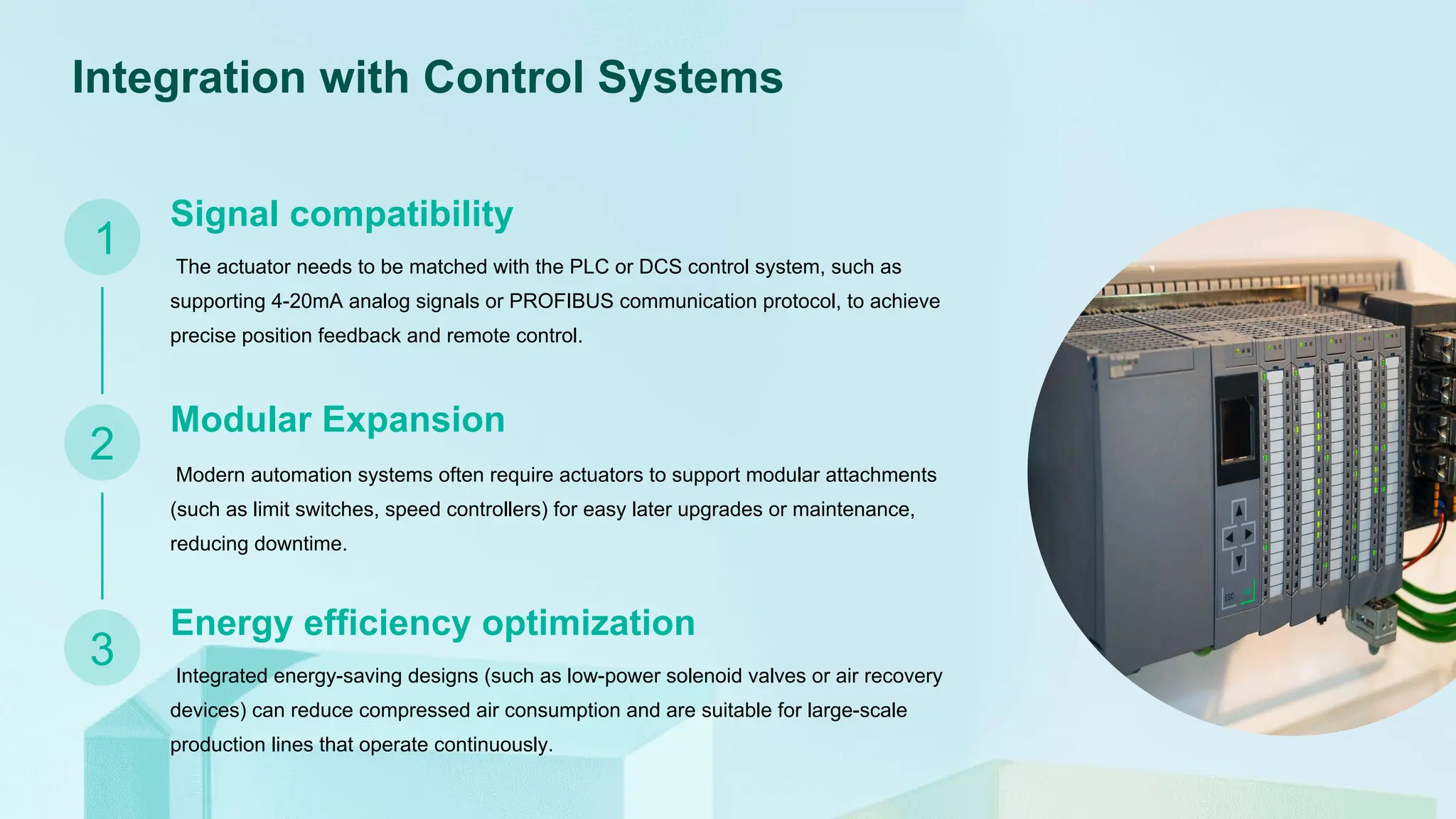
Signal compatibility
The actuator needs to be matched with the PLC or DCS control system, such as
supporting 4-20mA analog signals or PROFIBUS communication protocol, to achieve
precise position feedback and remote control.
Modular Expansion
Energy efficiency optimization
Modern automation systems often require actuators to support modular attachments
(such as limit switches, speed controllers) for easy later upgrades or maintenance,
reducing downtime.
Integrated energy-saving designs (such as low-power solenoid valves or air recovery
devices) can reduce compressed air consumption and are suitable for large-scale
production lines that operate continuously.
1
2
3
06
Maintenance and
Troubleshooting
PART
Common Failure Modes
Rubber or polyurethane seals are prone to hardening and cracking after long-term use, causing pressure
loss. Manifested as insufficient actuator output or delayed response, the sealing components need to be
replaced periodically according to the manufacturer's recommendations.
Aging and leakage of seals
Moisture, oil, or particulate matter in compressed air may block the air path of the actuator, causing slow
movement or jamming. Regularly check the filter and ensure that the air source cleanliness meets ISO 8573-
1 standard.
Air source pollution leading to blockage
Moving parts such as piston rods, gears, and racks experience metal fatigue due to friction, leading to a
decrease in positioning accuracy. It is recommended to check the wear amount every 5000 working hours
and perform surface hardening treatment or replacement if necessary.
Mechanical component wear
Lubrication and Seal Replacement
01 ISO VG32 grade pneumatic tool lubricant should be used, which has low viscosity characteristics to reduce
low-temperature starting resistance and avoid grease oxidation and scaling. Mixing lubricants of different
brands is prohibited to prevent chemical reactions.
Special lubricant selection
02 For high-frequency application scenarios, it is recommended to use PTFE composite material sealing rings,
which have three times higher wear resistance than traditional NBR materials and an extended working
temperature range of -40 ℃ to 200 ℃.
Sealing system upgrade plan
03 When disassembling the piston, a guiding tool should be used to protect the sealing lip. Before installation,
apply silicone grease and test the sealing performance using a stepped boosting method to ensure no local
deformation.
Dynamic sealing maintenance process
Diagnostic Tips for Optimal Performance
Ultrasonic probes are used to capture the airflow whistling during the switching of solenoid valves. Abnormal
frequency increase often indicates valve core wear or unstable supply pressure, and calibration of the
pressure reducing valve setting is required.
Acoustic vibration detection
By recording the pressure fluctuations throughout the actuator's full stroke through sensors, abnormal peak
values may indicate scratches on the cylinder wall or load exceeding limits, and FMEA (Failure Mode
Analysis) needs to be combined to identify the root cause.
Pressure displacement curve analysis
Use an infrared camera to scan the temperature distribution of the actuator housing. Local overheating areas
(temperature difference>15 ℃) indicate increased internal friction, and preventive maintenance should be
arranged in advance.
Thermal imaging pre maintenance
07
Future Trends in Pneumatic
Actuator Technology
PART
Smart Actuators with IoT Integration
01 Intelligent actuators integrate sensors through Internet of Things (IoT) technology to monitor parameters
such as pressure, temperature, and position in real time, and transmit data to the cloud for analysis,
achieving predictive maintenance and fault diagnosis, and reducing downtime.
Real time monitoring and data analysis
02 Combined with the Industrial Internet of Things (IIoT) platform, intelligent actuators support remote
configuration and parameter adjustment, adapt to complex working conditions, and enhance the automation
level and flexibility of production lines.
Remote control and automation
03 Through machine learning algorithms, intelligent actuators can automatically optimize response speed and
force output based on load changes, improving system accuracy and energy utilization.
Adaptive feedback system
Energy Efficiency Improvements
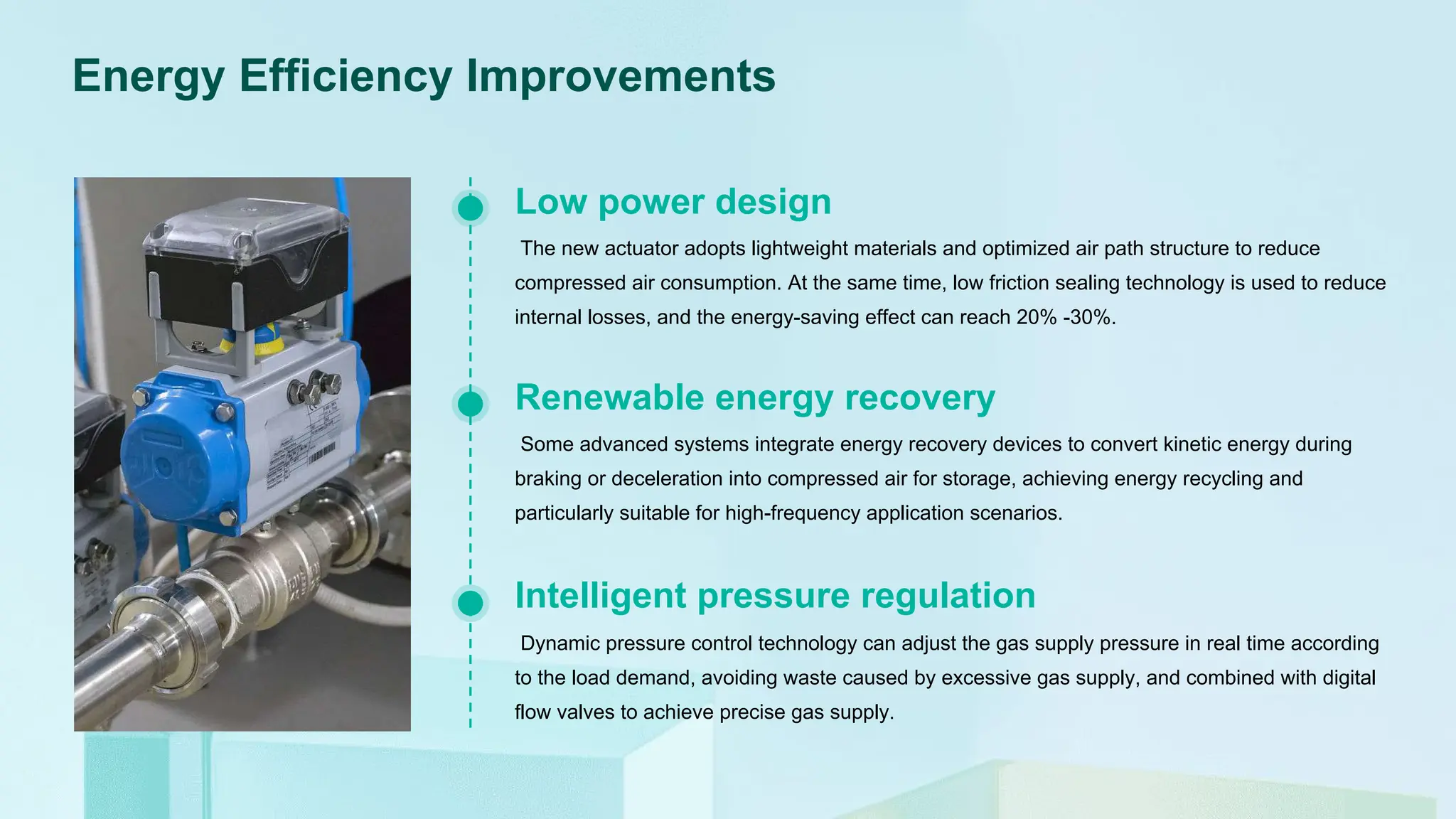
The new actuator adopts lightweight materials and optimized air path structure to reduce
compressed air consumption. At the same time, low friction sealing technology is used to reduce
internal losses, and the energy-saving effect can reach 20% -30%.
Low power design
Some advanced systems integrate energy recovery devices to convert kinetic energy during
braking or deceleration into compressed air for storage, achieving energy recycling and
particularly suitable for high-frequency application scenarios.
Renewable energy recovery
Dynamic pressure control technology can adjust the gas supply pressure in real time according
to the load demand, avoiding waste caused by excessive gas supply, and combined with digital
flow valves to achieve precise gas supply.
Intelligent pressure regulation
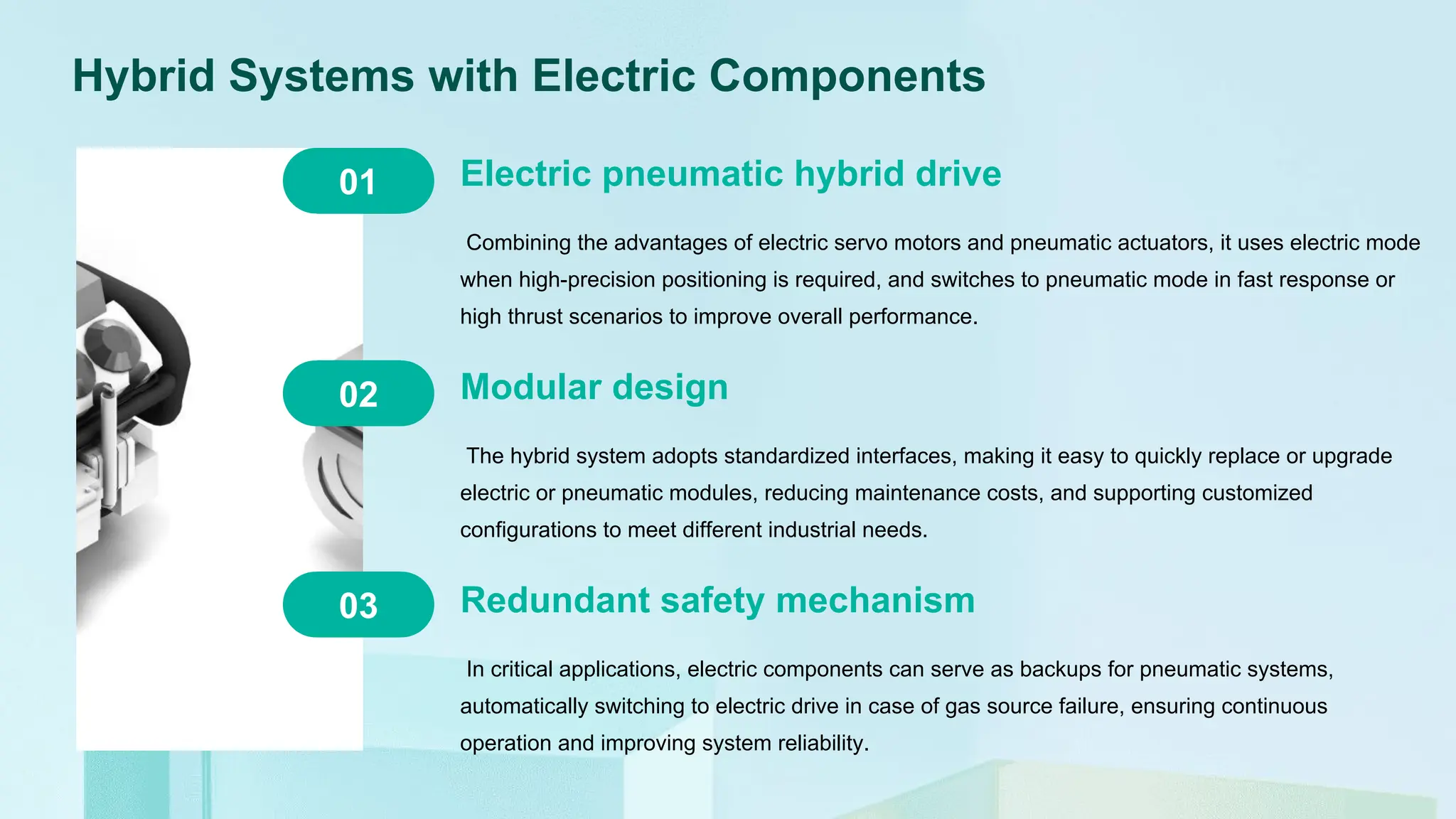
Hybrid Systems with Electric Components
Electric pneumatic hybrid drive
Combining the advantages of electric servo motors and pneumatic actuators, it uses electric mode
when high-precision positioning is required, and switches to pneumatic mode in fast response or
high thrust scenarios to improve overall performance.
03
02
01
Modular design
The hybrid system adopts standardized interfaces, making it easy to quickly replace or upgrade
electric or pneumatic modules, reducing maintenance costs, and supporting customized
configurations to meet different industrial needs.
Redundant safety mechanism
In critical applications, electric components can serve as backups for pneumatic systems,
automatically switching to electric drive in case of gas source failure, ensuring continuous
operation and improving system reliability.
THANKS
Q&A

What is a pneumatic actuator: Principles, Types, and Industrial Applications

  • 1.
    What is aPneumatic Actuator and How Do They Work? xinming 2025-05-15
  • 2.
    Cont. • Introductionto Pneumatic Actuators • Types of Pneumatic Actuators • Working Principle of Pneumatic Actuators • Advantages and Disadvantages • Selection Criteria for Pneumatic Actuators • Maintenance and Troubleshooting • Future Trends in Pneumatic Actuator Technology
  • 3.
  • 4.
    Definition and BasicConcept Based on Pascal's principle, compressed air enters the cylinder and pushes the piston to move. By adjusting the pressure and direction, the output force and motion speed are controlled. It is commonly used in industrial scenarios that require rapid reciprocating motion. Working principle A pneumatic actuator is a device that converts compressed air energy into mechanical motion. It drives a piston or diaphragm to produce linear or rotational motion by controlling changes in air pressure. It has the characteristics of fast response, simple structure, and low maintenance cost. Definition of pneumatic actuator Pneumatic actuators belong to "clean energy" driving equipment, with air as the working medium, pollution- free and recyclable. The energy conversion efficiency can reach 70% -90%, suitable for use in explosion- proof environments. Energy conversion characteristics
  • 5.
    Key Components ofPneumatic Actuators including cylinder barrel, piston rod, and seals, made of aluminum alloy or stainless steel material, with a pressure resistance range of usually 0.2-1.0MPa, and specially designed to withstand pressures of more than 10 bar. Cylinder components consisting of solenoid valves, flow control valves, and pressure regulating valves, with a response time of less than 10ms, it can achieve precise position and speed control. Modern products integrate IoT interfaces to support remote monitoring. Control valve system including air filter (5 μ m precision), lubricator, and muffler (noise reduction of over 30dB), ensuring stable system operation and extending service life by more than 5 million cycles. Auxiliary components
  • 6.
    Common Applications inIndustry • In the field of process control, valve drives are widely used in the petrochemical industry, such as the 90 ° quick opening and closing of ball valves/butterfly valves. Corrosion resistant models can handle chemical media with pH 2-12. • Automated production line: used in automotive manufacturing for welding robot end effectors (with a repeat positioning accuracy of ± 0.1mm) and stamping machine feeding mechanisms (with a beat speed of up to 120 times/minute). • Packaging Machinery: Completed high-speed labeling (300 pieces/minute), filling (accuracy ± 0.5ml) and other processes. Food grade actuators comply with FDA standards and can withstand working temperatures ranging from -40 ℃ to 150 ℃. • Medical equipment: Drive the lifting of the operating table (silent design<45dB), adjust the dental chair (safe load 500kg), and adopt a sterile design to meet the ISO 13485 medical device certification requirements.
  • 7.
  • 8.
    Linear Actuators (PistonType) 01 The piston is driven by compressed air on one side to produce linear motion, and the spring is reset; Suitable for situations that require unidirectional force and limited space, such as clamping devices and simple valve controls. Single acting piston actuator 02 using bidirectional compressed air to alternately act on both sides of the piston to achieve reciprocating motion; High output power and fast response, widely used in high-frequency opening and closing valves and material pushing systems in industrial automation. Double acting piston actuator 03 using lightweight materials and integrated structure, suitable for scenarios with compact space but high thrust, such as precise positioning of medical equipment or small robotic arms. Compact design
  • 9.
    driven by alinear piston, the gear is rotated 90 ° or 180 °; Stable torque output, commonly used for switch control of ball valves, butterfly valves, and automatic production line indexing discs. Rotary Actuators (Rack-and-Pinion, Vane Type) Gear rack rotary actuator Compressed air drives the internal blades to rotate in an arc-shaped chamber, with a simple structure and low friction; Suitable for low to medium torque scenarios, such as transposition of packaging machinery or rotation of fixtures. Blade type rotary actuator It achieves multi angle positioning (such as 0-270 °) through multi air path control, combined with sensor feedback, and is used for controlling robot joints or aviation control surfaces that require precise angle adjustment. Multi position adjustment type
  • 10.
    Diaphragm Actuators Compressed airacts on rubber or polyurethane diaphragms, causing deformation and linear displacement; No sliding seals, excellent leak prevention performance, suitable for sanitary valve control in the chemical and food industries. Elastic diaphragm drive The diaphragm deformation response time is short (in milliseconds), suitable for high-frequency action scenarios, such as liquid quantitative spraying in filling machines or pneumatic fine-tuning of semiconductor equipment. Quick response type Using PTFE coated diaphragm and 316L stainless steel shell, it can withstand strong acid and alkali media and is specifically designed for corrosive environments in sewage treatment or electroplating production lines. Corrosion resistant design
  • 11.
  • 12.
    Compressed Air asthe Power Source • High pressure gas storage and transportation: The core power source of pneumatic actuators is compressed air, usually generated by an air compressor and stored in a gas storage tank, which is transported to the actuator chamber through a pipeline system. Compressed air needs to maintain a stable pressure (usually 4-7 bar) to ensure the reliability and repeatability of actuator actions. • Cleaning and drying requirements: If the compressed air contains moisture or impurities, it may damage the internal seals of the actuator. Therefore, filters and dryers are required to ensure that the gas purity meets the ISO 8573-1 standard and extend the service life of the equipment. • Energy efficiency advantages: Compared to hydraulic or electric systems, compressed air does not require complex recovery devices, and there is no pollution risk in case of leakage, making it suitable for industrial scenarios with strict environmental requirements.
  • 13.
    Conversion of AirPressure to Mechanical Motion • Piston type linear motion: In a single acting or double acting cylinder, compressed air pushes the piston to move linearly inside the cylinder, and the force is transmitted to the load through the piston rod. The double acting type achieves bidirectional motion through alternating intake/exhaust, with a stroke accuracy of ± 0.1mm. • Gear and rack rotational motion: Some actuators use compressed air to drive the gear and rack mechanism, converting linear motion into rotational output (such as 90 ° or 180 ° angular stroke), with a torque range of over 20000 Nm, suitable for large valve control. • Diaphragm flexible transmission: In low-pressure scenarios, the elastic diaphragm undergoes displacement due to pressure deformation, making it suitable for explosion-proof and high-frequency applications (such as chemical process control), but the stroke is usually short (<50mm).
  • 14.
    Control Mechanisms (Valvesand Regulators) The pressure reducing valve ensures a constant inlet pressure of the actuator to avoid overload; The throttle valve controls the actuator speed by adjusting the airflow rate to prevent end impact, and a typical configuration includes a quick release valve to accelerate the return stroke. Pressure regulation and flow control Two position three-way or five position three-way solenoid valves control the direction of airflow through electrical signals, with a response time as low as 10ms, and can be used in conjunction with PLC to achieve high-speed sequence control, such as sorting actions in packaging machinery. Precise switching of solenoid valves Advanced system integrates position sensors (such as magnetostrictive or LVDT) and proportional valves to achieve closed-loop control, with a positioning accuracy of ± 0.5% of the full stroke, suitable for high-precision applications such as semiconductor equipment. Intelligent positioning feedback
  • 15.
  • 16.
    1 2 3 Benefits: Simplicity, Speed,and Safety Simplicity of Design Pneumatic actuators utilize compressed air as their power source, which eliminates the need for complex electrical components or hydraulic fluids. This makes them easier to install, maintain, and repair, reducing downtime and operational costs. High-Speed Operation Due to the compressibility of air, pneumatic actuators can achieve rapid movement and quick response times, making them ideal for applications requiring fast cycling or repetitive motions, such as in assembly lines or packaging machinery. Intrinsic Safety Since pneumatic systems do not involve electricity or flammable fluids, they are inherently safer in hazardous environments, such as those with explosive gases or dust, reducing the risk of sparks or fires.
  • 17.
    Limitations: Force Outputand Precision 01 Pneumatic actuators generate force based on air pressure and piston area, which restricts their maximum force compared to hydraulic systems. This makes them less suitable for high-load applications where substantial force is required. Limited Force Output 02 The compressibility of air can lead to less precise positioning and speed control compared to electric actuators. This limitation makes pneumatics less ideal for tasks requiring fine-tuned movements or exact positioning, such as in robotics or CNC machinery. Lower Precision Control 03 Compressed air systems can suffer from energy losses due to leaks and the need for continuous air compression, leading to higher operational costs over time compared to electric alternatives. Energy Efficiency Concerns
  • 18.
    Comparison with Hydraulic/ElectricActuators Versus Hydraulic Actuators Hybrid Solutions Versus Electric Actuators Pneumatic systems are cleaner and require less maintenance since they avoid hydraulic fluid leaks and contamination. However, hydraulics excel in high-force applications and offer smoother, more precise control due to the incompressibility of hydraulic fluids. Electric actuators provide superior precision, programmability, and energy efficiency, making them ideal for automation and robotics. Pneumatics, on the other hand, outperform electric actuators in terms of speed, durability in harsh environments, and cost-effectiveness for high-cycle applications. In some cases, combining pneumatic speed with electric precision (e.g., using servo-pneumatic systems) can offer a balanced solution, leveraging the strengths of both technologies for optimized performance.
  • 19.
  • 20.
    When selecting pneumaticactuators, the required thrust and tension should be calculated based on the actual load requirements to ensure that the actuator can provide sufficient force to overcome mechanical resistance or external loads. For example, high load applications may require dual acting cylinders or large-diameter piston designs. Load matching Different applications have different requirements for the accuracy of travel length. Precision machining or positioning scenarios require the selection of models with buffering or position feedback, while standard stroke actuators can be used in general industrial scenarios to reduce costs. Travel accuracy High frequency reciprocating motion requires consideration of the response speed of the actuator. For example, short stroke cylinders are more suitable for fast action, while long stroke cylinders may require the use of high-speed solenoid valves to reduce delay. Dynamic response Force and Stroke Requirements
  • 21.
    Environmental Conditions (Temperature,Humidity) • Extreme temperature adaptability: In high-temperature environments (such as the metallurgical industry), actuators with heat-resistant sealing materials (such as fluororubber) should be selected; Low temperature scenarios (such as cold storage) require antifreeze lubricants and special coatings to prevent condensation and freezing. • Anti corrosion design: High humidity or corrosive environments (chemical, marine) require the actuator housing to be made of stainless steel or anodized aluminum material, and equipped with a protection level of IP67 or above to prevent moisture and chemical substances from entering. • Dust and particulate matter protection: In places with high dust levels (such as wood processing), dust covers should be installed or guide mechanisms with self-cleaning functions should be selected to avoid particle wear on seals.
  • 22.
    Integration with ControlSystems Signal compatibility The actuator needs to be matched with the PLC or DCS control system, such as supporting 4-20mA analog signals or PROFIBUS communication protocol, to achieve precise position feedback and remote control. Modular Expansion Energy efficiency optimization Modern automation systems often require actuators to support modular attachments (such as limit switches, speed controllers) for easy later upgrades or maintenance, reducing downtime. Integrated energy-saving designs (such as low-power solenoid valves or air recovery devices) can reduce compressed air consumption and are suitable for large-scale production lines that operate continuously. 1 2 3
  • 23.
  • 24.
    Common Failure Modes Rubberor polyurethane seals are prone to hardening and cracking after long-term use, causing pressure loss. Manifested as insufficient actuator output or delayed response, the sealing components need to be replaced periodically according to the manufacturer's recommendations. Aging and leakage of seals Moisture, oil, or particulate matter in compressed air may block the air path of the actuator, causing slow movement or jamming. Regularly check the filter and ensure that the air source cleanliness meets ISO 8573- 1 standard. Air source pollution leading to blockage Moving parts such as piston rods, gears, and racks experience metal fatigue due to friction, leading to a decrease in positioning accuracy. It is recommended to check the wear amount every 5000 working hours and perform surface hardening treatment or replacement if necessary. Mechanical component wear
  • 25.
    Lubrication and SealReplacement 01 ISO VG32 grade pneumatic tool lubricant should be used, which has low viscosity characteristics to reduce low-temperature starting resistance and avoid grease oxidation and scaling. Mixing lubricants of different brands is prohibited to prevent chemical reactions. Special lubricant selection 02 For high-frequency application scenarios, it is recommended to use PTFE composite material sealing rings, which have three times higher wear resistance than traditional NBR materials and an extended working temperature range of -40 ℃ to 200 ℃. Sealing system upgrade plan 03 When disassembling the piston, a guiding tool should be used to protect the sealing lip. Before installation, apply silicone grease and test the sealing performance using a stepped boosting method to ensure no local deformation. Dynamic sealing maintenance process
  • 26.
    Diagnostic Tips forOptimal Performance Ultrasonic probes are used to capture the airflow whistling during the switching of solenoid valves. Abnormal frequency increase often indicates valve core wear or unstable supply pressure, and calibration of the pressure reducing valve setting is required. Acoustic vibration detection By recording the pressure fluctuations throughout the actuator's full stroke through sensors, abnormal peak values may indicate scratches on the cylinder wall or load exceeding limits, and FMEA (Failure Mode Analysis) needs to be combined to identify the root cause. Pressure displacement curve analysis Use an infrared camera to scan the temperature distribution of the actuator housing. Local overheating areas (temperature difference>15 ℃) indicate increased internal friction, and preventive maintenance should be arranged in advance. Thermal imaging pre maintenance
  • 27.
    07 Future Trends inPneumatic Actuator Technology PART
  • 28.
    Smart Actuators withIoT Integration 01 Intelligent actuators integrate sensors through Internet of Things (IoT) technology to monitor parameters such as pressure, temperature, and position in real time, and transmit data to the cloud for analysis, achieving predictive maintenance and fault diagnosis, and reducing downtime. Real time monitoring and data analysis 02 Combined with the Industrial Internet of Things (IIoT) platform, intelligent actuators support remote configuration and parameter adjustment, adapt to complex working conditions, and enhance the automation level and flexibility of production lines. Remote control and automation 03 Through machine learning algorithms, intelligent actuators can automatically optimize response speed and force output based on load changes, improving system accuracy and energy utilization. Adaptive feedback system
  • 29.
    Energy Efficiency Improvements Thenew actuator adopts lightweight materials and optimized air path structure to reduce compressed air consumption. At the same time, low friction sealing technology is used to reduce internal losses, and the energy-saving effect can reach 20% -30%. Low power design Some advanced systems integrate energy recovery devices to convert kinetic energy during braking or deceleration into compressed air for storage, achieving energy recycling and particularly suitable for high-frequency application scenarios. Renewable energy recovery Dynamic pressure control technology can adjust the gas supply pressure in real time according to the load demand, avoiding waste caused by excessive gas supply, and combined with digital flow valves to achieve precise gas supply. Intelligent pressure regulation
  • 30.
    Hybrid Systems withElectric Components Electric pneumatic hybrid drive Combining the advantages of electric servo motors and pneumatic actuators, it uses electric mode when high-precision positioning is required, and switches to pneumatic mode in fast response or high thrust scenarios to improve overall performance. 03 02 01 Modular design The hybrid system adopts standardized interfaces, making it easy to quickly replace or upgrade electric or pneumatic modules, reducing maintenance costs, and supporting customized configurations to meet different industrial needs. Redundant safety mechanism In critical applications, electric components can serve as backups for pneumatic systems, automatically switching to electric drive in case of gas source failure, ensuring continuous operation and improving system reliability.
  • 31.