DiSC Model in Practice 
How To Deal With People You Can’t 
Stand
Background 
• William Marston: theory, 1920s 
• Walter Clarke, John Geier: assessment tool, 
1950s 
• More behavior-oriented than MBTI and 
similar models. 
• Used for industrial assessments.
High D: Dominant 
• Also: Drive 
• Achieves success by taking decisive actions 
towards their goal. 
• Strengths: comfortable in a leadership role, 
problem solver, can make tough decisions, not 
afraid to confront issues, sees change as a 
challenge, stays focused on the mission. 
• Limitations (Others may see): intimidating, 
insensitive, brusque, impatient, intolerant, 
unapproachable 
• Margaret Thatcher
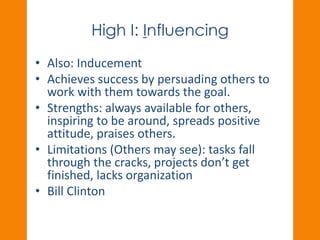
High I: Influencing 
• Also: Inducement 
• Achieves success by persuading others to 
work with them towards the goal. 
• Strengths: always available for others, 
inspiring to be around, spreads positive 
attitude, praises others. 
• Limitations (Others may see): tasks fall 
through the cracks, projects don’t get 
finished, lacks organization 
• Bill Clinton
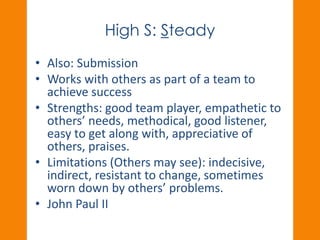
High S: Steady 
• Also: Submission 
• Works with others as part of a team to 
achieve success 
• Strengths: good team player, empathetic to 
others’ needs, methodical, good listener, 
easy to get along with, appreciative of 
others, praises. 
• Limitations (Others may see): indecisive, 
indirect, resistant to change, sometimes 
worn down by others’ problems. 
• John Paul II
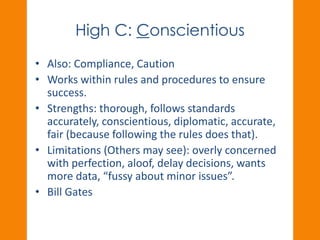
High C: Conscientious 
• Also: Compliance, Caution 
• Works within rules and procedures to ensure 
success. 
• Strengths: thorough, follows standards 
accurately, conscientious, diplomatic, accurate, 
fair (because following the rules does that). 
• Limitations (Others may see): overly concerned 
with perfection, aloof, delay decisions, wants 
more data, “fussy about minor issues”. 
• Bill Gates
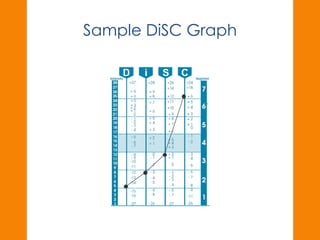
Sample DiSC Graph
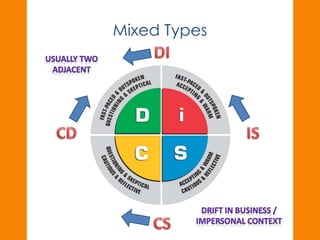
Mixed Types
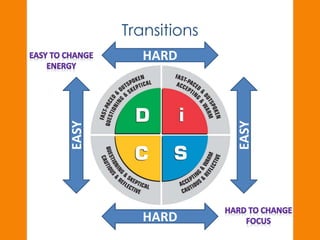
Transitions 
HARD 
EASY 
HARD 
EASY
How to Detect Them 
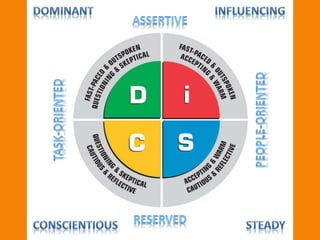
• Assertive vs. Reserved; People vs. Task 
• Assertive: Move Fast, Talk Louder, Talk Fast, 
Interrupt (D & I) 
• Reserved: Speak Slower, Less Loudly, Never 
Interrupt (S & C) 
• People Focused: Talk About Themselves Or 
Others, Friendly, Warm, Smiling (I & S) 
• Task Focused: Focus On Tasks, Work, 
Processes, Systems, Seldom Smile (D & C)
How to Deal with Them 
• Focus On Behavior 
• Be Less Of Yourself 
• Do Like They Do 
• Do Not Judge Or “Read Their Minds” 
• Avoid Emotional Reactions 
• Adjust Your Energy 
• Learn To Imitate Outward Behaviors
Assertiveness: Interrupt or Pause 
• When You’re Talking, Pay Attention To 
How Quickly They Speak 
• Do They Start Talking Before You’re Done 
Or Wait For You To Finish? 
• If Someone Interrupts And You Do Not, 
Interrupt More To Reduce Differences 
• If You Interrupt And You’re Talking To 
Someone Who Pauses, Slow Down
People/Task: Smile or Not 
• People Focused People Tend To Smile 
More 
• Count Their Smiles 
• Compliment Them And See If They Smile 
In Reaction 
• Smile More With People Who Smile At 
You 
• Smile Less With Those Who Do Not
How to Detect by Email 
• Assertive: too quick for attachments. 
• Reserved: take time to read and write. 
• People-oriented: names, salutations, 
signatures. 
• Task-oriented: rarely use names. 
• NB: Very hard to diagnose if sent from 
smartphone.
Email from Other People 
• High D: doesn’t use names, very brief. 
• High I: emotional typography, smileys, 
uses names a lot, informal. 
• High S: long, personal, uses names. 
• High C: precise, structured, thorough, 
uses bullets.
Email to Other People 
• High D: brief, BLUF, begin with questions, 
no attachments or explicit reference. 
• High I: greet them by name, ask how 
they’re doing, compliment them, no 
attachments or explicit reference. 
• High S: same as High I, attachments OK. 
• High C: include all details, state deadlines, 
tell them you’re OK with imperfect answer / 
guess, names unnecessary.
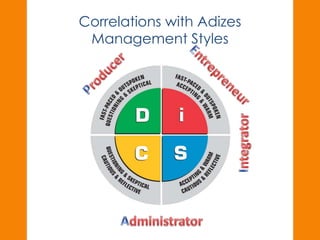
Correlations with Adizes 
Management Styles
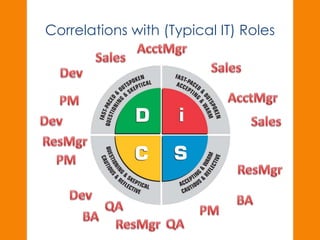
Correlations with (Typical IT) Roles
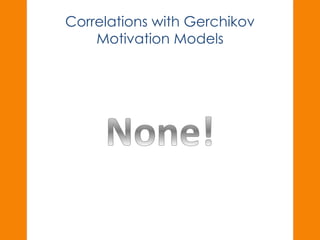
Correlations with Gerchikov 
Motivation Models
Further Resources / Special Thanks 
To 
Mark Horstman 
http://manager-tools.com/

DiSC Model in Practice

  • 1.
    DiSC Model inPractice How To Deal With People You Can’t Stand
  • 3.
    Background • WilliamMarston: theory, 1920s • Walter Clarke, John Geier: assessment tool, 1950s • More behavior-oriented than MBTI and similar models. • Used for industrial assessments.
  • 4.
    High D: Dominant • Also: Drive • Achieves success by taking decisive actions towards their goal. • Strengths: comfortable in a leadership role, problem solver, can make tough decisions, not afraid to confront issues, sees change as a challenge, stays focused on the mission. • Limitations (Others may see): intimidating, insensitive, brusque, impatient, intolerant, unapproachable • Margaret Thatcher
  • 5.
    High I: Influencing • Also: Inducement • Achieves success by persuading others to work with them towards the goal. • Strengths: always available for others, inspiring to be around, spreads positive attitude, praises others. • Limitations (Others may see): tasks fall through the cracks, projects don’t get finished, lacks organization • Bill Clinton
  • 6.
    High S: Steady • Also: Submission • Works with others as part of a team to achieve success • Strengths: good team player, empathetic to others’ needs, methodical, good listener, easy to get along with, appreciative of others, praises. • Limitations (Others may see): indecisive, indirect, resistant to change, sometimes worn down by others’ problems. • John Paul II
  • 7.
    High C: Conscientious • Also: Compliance, Caution • Works within rules and procedures to ensure success. • Strengths: thorough, follows standards accurately, conscientious, diplomatic, accurate, fair (because following the rules does that). • Limitations (Others may see): overly concerned with perfection, aloof, delay decisions, wants more data, “fussy about minor issues”. • Bill Gates
  • 8.
  • 9.
  • 10.
  • 11.
    How to DetectThem • Assertive vs. Reserved; People vs. Task • Assertive: Move Fast, Talk Louder, Talk Fast, Interrupt (D & I) • Reserved: Speak Slower, Less Loudly, Never Interrupt (S & C) • People Focused: Talk About Themselves Or Others, Friendly, Warm, Smiling (I & S) • Task Focused: Focus On Tasks, Work, Processes, Systems, Seldom Smile (D & C)
  • 12.
    How to Dealwith Them • Focus On Behavior • Be Less Of Yourself • Do Like They Do • Do Not Judge Or “Read Their Minds” • Avoid Emotional Reactions • Adjust Your Energy • Learn To Imitate Outward Behaviors
  • 13.
    Assertiveness: Interrupt orPause • When You’re Talking, Pay Attention To How Quickly They Speak • Do They Start Talking Before You’re Done Or Wait For You To Finish? • If Someone Interrupts And You Do Not, Interrupt More To Reduce Differences • If You Interrupt And You’re Talking To Someone Who Pauses, Slow Down
  • 14.
    People/Task: Smile orNot • People Focused People Tend To Smile More • Count Their Smiles • Compliment Them And See If They Smile In Reaction • Smile More With People Who Smile At You • Smile Less With Those Who Do Not
  • 15.
    How to Detectby Email • Assertive: too quick for attachments. • Reserved: take time to read and write. • People-oriented: names, salutations, signatures. • Task-oriented: rarely use names. • NB: Very hard to diagnose if sent from smartphone.
  • 16.
    Email from OtherPeople • High D: doesn’t use names, very brief. • High I: emotional typography, smileys, uses names a lot, informal. • High S: long, personal, uses names. • High C: precise, structured, thorough, uses bullets.
  • 17.
    Email to OtherPeople • High D: brief, BLUF, begin with questions, no attachments or explicit reference. • High I: greet them by name, ask how they’re doing, compliment them, no attachments or explicit reference. • High S: same as High I, attachments OK. • High C: include all details, state deadlines, tell them you’re OK with imperfect answer / guess, names unnecessary.
  • 18.
    Correlations with Adizes Management Styles
  • 19.
  • 20.
    Correlations with Gerchikov Motivation Models
  • 21.
    Further Resources /Special Thanks To Mark Horstman http://manager-tools.com/