Disaster Information Collecting/Providing Service for
                       Local Residents

                 Yuichi Takahashi1, Daiji Kobayashi2, Sakae Yamamoto1,
1
    Department of Management Science, Tokyo University of Science, 1-3 Kagurazaka Shinjuku
                                          Tokyo Japan
                         {yt, sakae}@hci.ms.kagu.tus.ac.jp
     2
       Faculty of Photonics Science Department of Global System Design, Chitose Institute of
                   Science and Technology, 758-65 Bibi Chitose Hokkaido Japan
                            d-kobaya@photon.chitose.ac.jp


         Abstract. It has been pointed out that when people lack the information needed
         in the event of a disaster, such as a disastrous earthquake, this could lead to
         social chaos, including unwanted rumors and outrages, or could disrupt rescue
         and relief activities1, 2. In Japan, by law in principle, self-help or mutual
         assistance is required immediately after a disaster, and local residents are
         required to make judgments for action on their own. Although disaster
         information systems are gradually being organized at the municipal level, actual
         emergency evacuation areas and essential information for local citizens are still
         not sufficiently ready for provision at this stage.3 In this study, we established
         and evaluated a service infrastructure with an autonomous wireless network,
         aiming at providing services to collect and deliver disaster information, which
         will be required by local residents.

         Keywords: earthquake, disaster victims, distributed autonomous system,
         wireless network


1       Introduction

   In the event of a disaster, such as a disastrous earthquake, information provision is
effective in preventing chaos at the scene. Therefore, timely and accurate information
collection and delivery services are essential. These services allow prompt rescue and
relief activities and appropriate information delivery to local residents. Thus, it is
urgent to establish a system to enable these services. The systems proposed so far are
ones with Internet or mobile phone connections or with ad-hoc wireless LAN
networks4, 5. We call such systems communication channel dependent systems, which
require communication channels or establish communication channels between clients
and servers via an ad-hoc network. From the perspective of an information service,
such systems that accumulate information in PDAs and send it via an ad-hoc network
when a communication channel is established are also regarded as communication
channel dependent systems.
2      Yuichi Takahashi1, Daiji Kobayashi2, Sakae Yamamoto1,


   There are two issues of concern regarding this system: 1) the system is not
available until a communication channel is established, and 2) as users access the
server to gain information, the intense access may lower server performance or cause
communication channel congestion. In this study, we would like to propose an
approach to resolve these issues. As it is difficult to generalize the situations of
earthquake disasters, we set the following assumptions: (a) assuming a strong
earthquake of approximate magnitude 7 in a residential area, (b) all the lifelines
including electricity and communication channels stopped functioning, (c) lines for
land phones and mobiles are congested and not working, and (d) the proposed system
(hereafter called “the system”) can be preliminarily placed.


2    Method

   In order to resolve the above issues, we placed servers, which store information,
closed to users in this study. By doing this, the system can run without a
communication channel established, and the service can be continuously provided
even with a narrow bandwidth. Since disaster information system users, such as local
residents, shelter authorities, rescue and relief crews, and municipal employees are
diverse and geographically dispersed, multiple servers are required to meet the
condition in which servers must be placed close to users. Each server must hold
information and be synchronized with each other. Also, they must independently run,
communicate with each other, and dynamically detect others in case some are dam-
aged in a disaster.

   The service infrastructure consists of many small sub-systems. Each of these
systems independently provides information collection and delivery services. Also,
these sub-systems can autonomously work together with other sub-systems to
exchange information. By appropriately allocating sub-systems within a region,
regional information is continuously shared, which can solve the issue of information
shortages in a disaster. We adopted general consumer hardware products that are
supposed to work approximately 72 hours with batteries. Though each hardware
product itself is not robust, they are all independent so even if some of them are
damaged, they do not affect others. Also, as it is allowed to dynamically add sub-
systems, damaged ones can be easily replaced to immediately recover the entire
service.

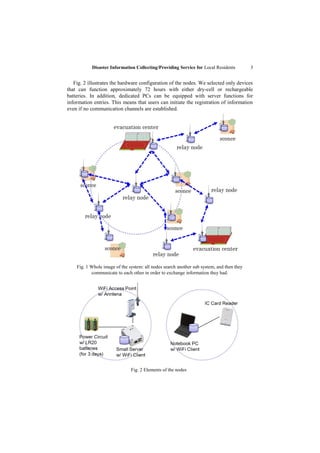
   The network configuration of this system is illustrated in the Fig. 1. The system is
formed by a group of small servers (hereafter called nodes) with server abilities and
dynamic communication functions. Each node can function as a web server and
allows clients (e.g. PCs and PDA) to connect to register or browse information. Nodes
also detect others within the communication range to synchronize information. With
these functions, the system can still work as an integrated unit even when part of the
hardware is damaged in a disaster.
Disaster Information Collecting/Providing Service for Local Residents           3


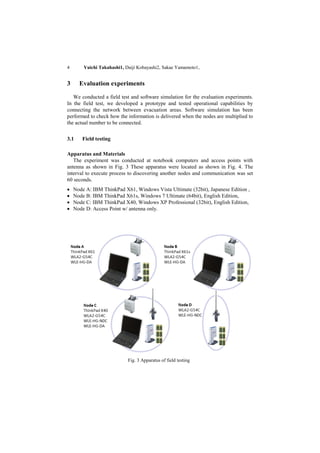
   Fig. 2 illustrates the hardware configuration of the nodes. We selected only devices
that can function approximately 72 hours with either dry-cell or rechargeable
batteries. In addition, dedicated PCs can be equipped with server functions for
information entries. This means that users can initiate the registration of information
even if no communication channels are established.


    Fig. 1 Whole image of the system: all nodes search another sub system, and then they
           communicate to each other in order to exchange information they had.


                               Fig. 2 Elements of the nodes
4       Yuichi Takahashi1, Daiji Kobayashi2, Sakae Yamamoto1,


3     Evaluation experiments

   We conducted a field test and software simulation for the evaluation experiments.
In the field test, we developed a prototype and tested operational capabilities by
connecting the network between evacuation areas. Software simulation has been
performed to check how the information is delivered when the nodes are multiplied to
the actual number to be connected.


3.1    Field testing

Apparatus and Materials
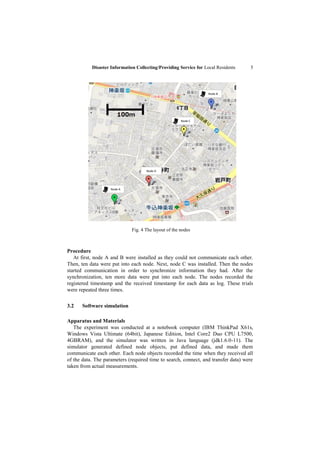
   The experiment was conducted at notebook computers and access points with
antenna as shown in Fig. 3 These apparatus were located as shown in Fig. 4. The
interval to execute process to discovering another nodes and communication was set
60 seconds.
   Node A: IBM ThinkPad X61, Windows Vista Ultimate (32bit), Japanese Edition ,
   Node B: IBM ThinkPad X61s, Windows 7 Ultimate (64bit), English Edition,
   Node C: IBM ThinkPad X40, Windows XP Professional (32bit), English Edition,
   Node D: Access Point w/ antenna only.


                            Fig. 3 Apparatus of field testing
Disaster Information Collecting/Providing Service for Local Residents    5


                                                                   Node B


                                                       Node C


                                     Node D


                    Node A


                              Fig. 4 The layout of the nodes


Procedure
   At first, node A and B were installed as they could not communicate each other.
Then, ten data were put into each node. Next, node C was installed. Then the nodes
started communication in order to synchronize information they had. After the
synchronization, ten more data were put into each node. The nodes recorded the
registered timestamp and the received timestamp for each data as log. These trials
were repeated three times.

3.2    Software simulation

Apparatus and Materials
   The experiment was conducted at a notebook computer (IBM ThinkPad X61s,
Windows Vista Ultimate (64bit), Japanese Edition, Intel Core2 Duo CPU L7500,
4GBRAM), and the simulator was written in Java language (jdk1.6.0-11). The
simulator generated defined node objects, put defined data, and made them
communicate each other. Each node objects recorded the time when they received all
of the data. The parameters (required time to search, connect, and transfer data) were
taken from actual measurements.
6      Yuichi Takahashi1, Daiji Kobayashi2, Sakae Yamamoto1,


Procedure
   At first, the node objects and data were defined in text files that contained comma
separated values, and then the parameters were defined in properties file of Java
language. Next, the simulator was executed ten times.


4     Result and Discussion

4.1    Field testing

   At first, node A and B accepted user input without any other external network
connection. These show the sub-systems have a feature of autonomous controllability.
All of the former data were synchronized, after node C was installed. Node C was
dynamically detected by Node A and B, then they communicated each other. This
shows the system has a feature of autonomous coordinability. These two features are
important to our system.

   Table 1 shows the average of required period to synchronize the latter 10 data.
Logically, it takes maximum 240 seconds to synchronize the data. There were 3
nodes in the network, thus, node C received data within 120 seconds, and then sent
them within 120 seconds. It depended on the delay between input timing and
invocation timing of synchronization process. The result was nearly half of maximum
period. The information synchronize periods were reasonable.

                 Table 1 the average of required period to transfer 10 data

                                    1st 10 data[sec] next 10 data[sec]
       Node A->C                                 96.3             90.7
       Node C->B                                102.4             95.9
       Node A->B                                138.2            125.3

4.2    Software simulation

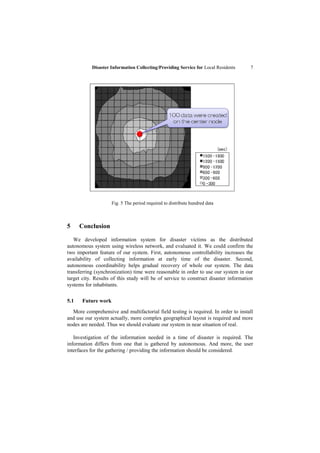
   Fig. 5 shows the period required to distribute hundred data from the center node. It
indicates the performance is well to far nodes; however, to the nearby nodes of the
center node is not satisfied. This caused the communication was serialized; the center
node could not communicate to the others, when the number of the nearby nodes was
three or more. This point of the system should be improved. Anyway, our target city
requires two hundred nodes in order to cover the city, thus, the result indicates the
information will be shared in the city within thirty minutes.
Disaster Information Collecting/Providing Service for Local Residents     7


                     Fig. 5 The period required to distribute hundred data


5     Conclusion

   We developed information system for disaster victims as the distributed
autonomous system using wireless network, and evaluated it. We could confirm the
two important feature of our system. First, autonomous controllability increases the
availability of collecting information at early time of the disaster. Second,
autonomous coordinability helps gradual recovery of whole our system. The data
transferring (synchronization) time were reasonable in order to use our system in our
target city. Results of this study will be of service to construct disaster information
systems for inhabitants.

5.1    Future work

  More comprehensive and multifactorial field testing is required. In order to install
and use our system actually, more complex geographical layout is required and more
nodes are needed. Thus we should evaluate our system in near situation of real.

   Investigation of the information needed in a time of disaster is required. The
information differs from one that is gathered by autonomous. And more, the user
interfaces for the gathering / providing the information should be considered.
8       Yuichi Takahashi1, Daiji Kobayashi2, Sakae Yamamoto1,


References
1. Osamu, H. et.al: Disaster information and social psychology, Hokuju Shuppan, p.177,
   2004
2. Osamu, H.: Hanshin-Awaji (Kobe) Earthquake investigation report in 1995-1, Institute of
   Socio-Information and Communication Studies, the University of Tokyo, 1996
3. Sakae Y.: The Providing Disaster Information Services in Ubiquitous Days, Journal of the
   Society of Instrument and Control Engineers, vol.47, no.2, pp.125-131, 2008
4. Nobuo, F. et.al: Intercommunications system “AnSHIn-system” and mobile disaster
   information unit “AnSHIn-Kun”, AIJ J. Technol. Des. No.12, pp.227-232, 2001
5. Yusuke, T. et.al: “A wireless mesh network testbed in rural mountain areas,” The Second
   ACM International Workshop on Wireless Network Testbeds, Experimental Evaluation and
   Characterization, pp.91-92, 2007
6. The Headquarters for Earthquake Research Promotion, http://www.jishin.go.jp
7. Cabinet Office, Government of Japan, http://www.bousai.go.jp

DIS for LR

  • 1.
    Disaster Information Collecting/ProvidingService for Local Residents Yuichi Takahashi1, Daiji Kobayashi2, Sakae Yamamoto1, 1 Department of Management Science, Tokyo University of Science, 1-3 Kagurazaka Shinjuku Tokyo Japan {yt, sakae}@hci.ms.kagu.tus.ac.jp 2 Faculty of Photonics Science Department of Global System Design, Chitose Institute of Science and Technology, 758-65 Bibi Chitose Hokkaido Japan d-kobaya@photon.chitose.ac.jp Abstract. It has been pointed out that when people lack the information needed in the event of a disaster, such as a disastrous earthquake, this could lead to social chaos, including unwanted rumors and outrages, or could disrupt rescue and relief activities1, 2. In Japan, by law in principle, self-help or mutual assistance is required immediately after a disaster, and local residents are required to make judgments for action on their own. Although disaster information systems are gradually being organized at the municipal level, actual emergency evacuation areas and essential information for local citizens are still not sufficiently ready for provision at this stage.3 In this study, we established and evaluated a service infrastructure with an autonomous wireless network, aiming at providing services to collect and deliver disaster information, which will be required by local residents. Keywords: earthquake, disaster victims, distributed autonomous system, wireless network 1 Introduction In the event of a disaster, such as a disastrous earthquake, information provision is effective in preventing chaos at the scene. Therefore, timely and accurate information collection and delivery services are essential. These services allow prompt rescue and relief activities and appropriate information delivery to local residents. Thus, it is urgent to establish a system to enable these services. The systems proposed so far are ones with Internet or mobile phone connections or with ad-hoc wireless LAN networks4, 5. We call such systems communication channel dependent systems, which require communication channels or establish communication channels between clients and servers via an ad-hoc network. From the perspective of an information service, such systems that accumulate information in PDAs and send it via an ad-hoc network when a communication channel is established are also regarded as communication channel dependent systems.
  • 2.
    2 Yuichi Takahashi1, Daiji Kobayashi2, Sakae Yamamoto1, There are two issues of concern regarding this system: 1) the system is not available until a communication channel is established, and 2) as users access the server to gain information, the intense access may lower server performance or cause communication channel congestion. In this study, we would like to propose an approach to resolve these issues. As it is difficult to generalize the situations of earthquake disasters, we set the following assumptions: (a) assuming a strong earthquake of approximate magnitude 7 in a residential area, (b) all the lifelines including electricity and communication channels stopped functioning, (c) lines for land phones and mobiles are congested and not working, and (d) the proposed system (hereafter called “the system”) can be preliminarily placed. 2 Method In order to resolve the above issues, we placed servers, which store information, closed to users in this study. By doing this, the system can run without a communication channel established, and the service can be continuously provided even with a narrow bandwidth. Since disaster information system users, such as local residents, shelter authorities, rescue and relief crews, and municipal employees are diverse and geographically dispersed, multiple servers are required to meet the condition in which servers must be placed close to users. Each server must hold information and be synchronized with each other. Also, they must independently run, communicate with each other, and dynamically detect others in case some are dam- aged in a disaster. The service infrastructure consists of many small sub-systems. Each of these systems independently provides information collection and delivery services. Also, these sub-systems can autonomously work together with other sub-systems to exchange information. By appropriately allocating sub-systems within a region, regional information is continuously shared, which can solve the issue of information shortages in a disaster. We adopted general consumer hardware products that are supposed to work approximately 72 hours with batteries. Though each hardware product itself is not robust, they are all independent so even if some of them are damaged, they do not affect others. Also, as it is allowed to dynamically add sub- systems, damaged ones can be easily replaced to immediately recover the entire service. The network configuration of this system is illustrated in the Fig. 1. The system is formed by a group of small servers (hereafter called nodes) with server abilities and dynamic communication functions. Each node can function as a web server and allows clients (e.g. PCs and PDA) to connect to register or browse information. Nodes also detect others within the communication range to synchronize information. With these functions, the system can still work as an integrated unit even when part of the hardware is damaged in a disaster.
  • 3.
    Disaster Information Collecting/ProvidingService for Local Residents 3 Fig. 2 illustrates the hardware configuration of the nodes. We selected only devices that can function approximately 72 hours with either dry-cell or rechargeable batteries. In addition, dedicated PCs can be equipped with server functions for information entries. This means that users can initiate the registration of information even if no communication channels are established. Fig. 1 Whole image of the system: all nodes search another sub system, and then they communicate to each other in order to exchange information they had. Fig. 2 Elements of the nodes
  • 4.
    4 Yuichi Takahashi1, Daiji Kobayashi2, Sakae Yamamoto1, 3 Evaluation experiments We conducted a field test and software simulation for the evaluation experiments. In the field test, we developed a prototype and tested operational capabilities by connecting the network between evacuation areas. Software simulation has been performed to check how the information is delivered when the nodes are multiplied to the actual number to be connected. 3.1 Field testing Apparatus and Materials The experiment was conducted at notebook computers and access points with antenna as shown in Fig. 3 These apparatus were located as shown in Fig. 4. The interval to execute process to discovering another nodes and communication was set 60 seconds.  Node A: IBM ThinkPad X61, Windows Vista Ultimate (32bit), Japanese Edition ,  Node B: IBM ThinkPad X61s, Windows 7 Ultimate (64bit), English Edition,  Node C: IBM ThinkPad X40, Windows XP Professional (32bit), English Edition,  Node D: Access Point w/ antenna only. Fig. 3 Apparatus of field testing
  • 5.
    Disaster Information Collecting/ProvidingService for Local Residents 5 Node B Node C Node D Node A Fig. 4 The layout of the nodes Procedure At first, node A and B were installed as they could not communicate each other. Then, ten data were put into each node. Next, node C was installed. Then the nodes started communication in order to synchronize information they had. After the synchronization, ten more data were put into each node. The nodes recorded the registered timestamp and the received timestamp for each data as log. These trials were repeated three times. 3.2 Software simulation Apparatus and Materials The experiment was conducted at a notebook computer (IBM ThinkPad X61s, Windows Vista Ultimate (64bit), Japanese Edition, Intel Core2 Duo CPU L7500, 4GBRAM), and the simulator was written in Java language (jdk1.6.0-11). The simulator generated defined node objects, put defined data, and made them communicate each other. Each node objects recorded the time when they received all of the data. The parameters (required time to search, connect, and transfer data) were taken from actual measurements.
  • 6.
    6 Yuichi Takahashi1, Daiji Kobayashi2, Sakae Yamamoto1, Procedure At first, the node objects and data were defined in text files that contained comma separated values, and then the parameters were defined in properties file of Java language. Next, the simulator was executed ten times. 4 Result and Discussion 4.1 Field testing At first, node A and B accepted user input without any other external network connection. These show the sub-systems have a feature of autonomous controllability. All of the former data were synchronized, after node C was installed. Node C was dynamically detected by Node A and B, then they communicated each other. This shows the system has a feature of autonomous coordinability. These two features are important to our system. Table 1 shows the average of required period to synchronize the latter 10 data. Logically, it takes maximum 240 seconds to synchronize the data. There were 3 nodes in the network, thus, node C received data within 120 seconds, and then sent them within 120 seconds. It depended on the delay between input timing and invocation timing of synchronization process. The result was nearly half of maximum period. The information synchronize periods were reasonable. Table 1 the average of required period to transfer 10 data 1st 10 data[sec] next 10 data[sec] Node A->C 96.3 90.7 Node C->B 102.4 95.9 Node A->B 138.2 125.3 4.2 Software simulation Fig. 5 shows the period required to distribute hundred data from the center node. It indicates the performance is well to far nodes; however, to the nearby nodes of the center node is not satisfied. This caused the communication was serialized; the center node could not communicate to the others, when the number of the nearby nodes was three or more. This point of the system should be improved. Anyway, our target city requires two hundred nodes in order to cover the city, thus, the result indicates the information will be shared in the city within thirty minutes.
  • 7.
    Disaster Information Collecting/ProvidingService for Local Residents 7 Fig. 5 The period required to distribute hundred data 5 Conclusion We developed information system for disaster victims as the distributed autonomous system using wireless network, and evaluated it. We could confirm the two important feature of our system. First, autonomous controllability increases the availability of collecting information at early time of the disaster. Second, autonomous coordinability helps gradual recovery of whole our system. The data transferring (synchronization) time were reasonable in order to use our system in our target city. Results of this study will be of service to construct disaster information systems for inhabitants. 5.1 Future work More comprehensive and multifactorial field testing is required. In order to install and use our system actually, more complex geographical layout is required and more nodes are needed. Thus we should evaluate our system in near situation of real. Investigation of the information needed in a time of disaster is required. The information differs from one that is gathered by autonomous. And more, the user interfaces for the gathering / providing the information should be considered.
  • 8.
    8 Yuichi Takahashi1, Daiji Kobayashi2, Sakae Yamamoto1, References 1. Osamu, H. et.al: Disaster information and social psychology, Hokuju Shuppan, p.177, 2004 2. Osamu, H.: Hanshin-Awaji (Kobe) Earthquake investigation report in 1995-1, Institute of Socio-Information and Communication Studies, the University of Tokyo, 1996 3. Sakae Y.: The Providing Disaster Information Services in Ubiquitous Days, Journal of the Society of Instrument and Control Engineers, vol.47, no.2, pp.125-131, 2008 4. Nobuo, F. et.al: Intercommunications system “AnSHIn-system” and mobile disaster information unit “AnSHIn-Kun”, AIJ J. Technol. Des. No.12, pp.227-232, 2001 5. Yusuke, T. et.al: “A wireless mesh network testbed in rural mountain areas,” The Second ACM International Workshop on Wireless Network Testbeds, Experimental Evaluation and Characterization, pp.91-92, 2007 6. The Headquarters for Earthquake Research Promotion, http://www.jishin.go.jp 7. Cabinet Office, Government of Japan, http://www.bousai.go.jp