Direct Speech
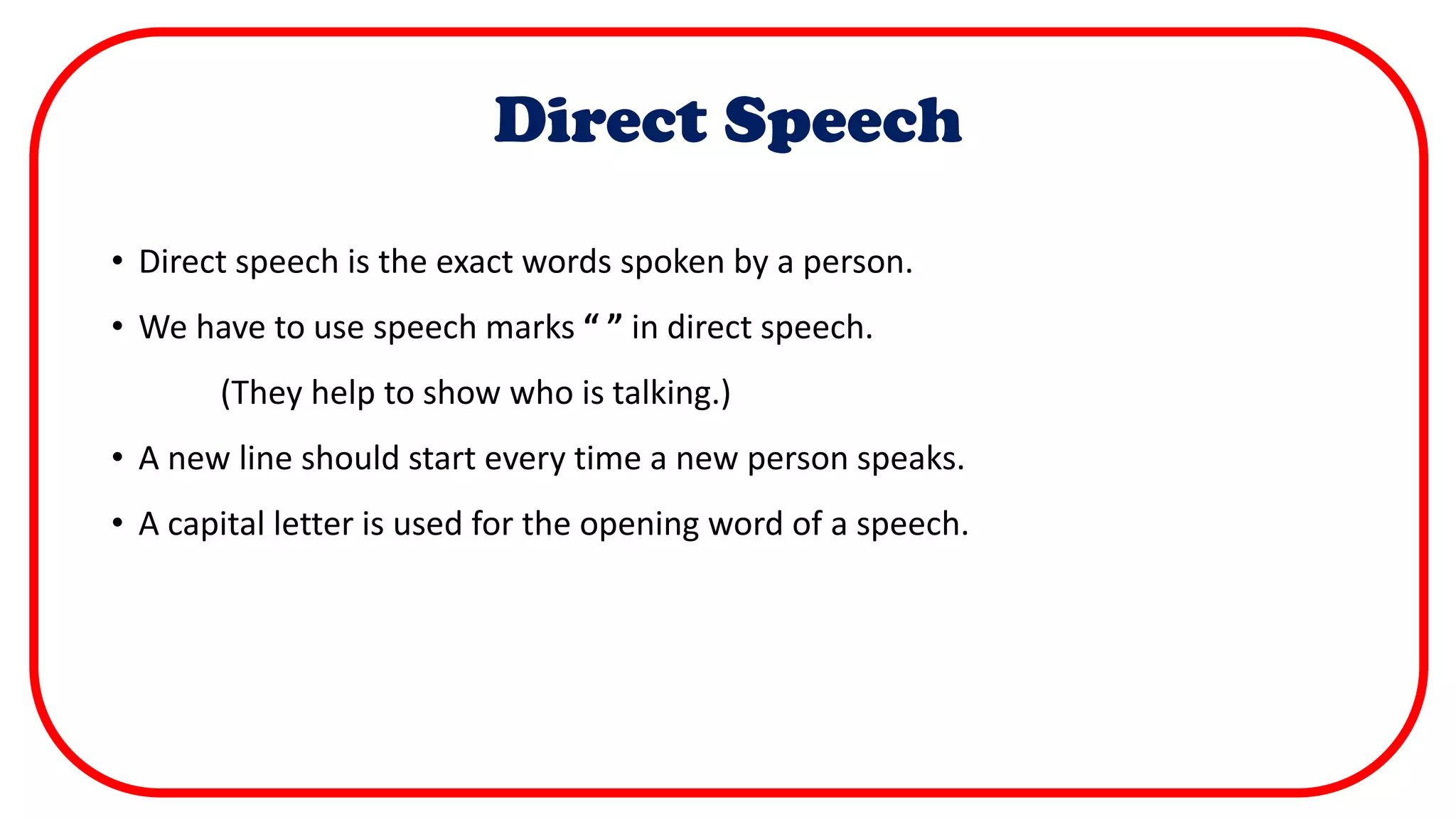
• Direct speech is the exact words spoken by a person.
• We have to use speech marks “ ” in direct speech.
(They help to show who is talking.)
• A new line should start every time a new person speaks.
• A capital letter is used for the opening word of a speech.
Direct Speech
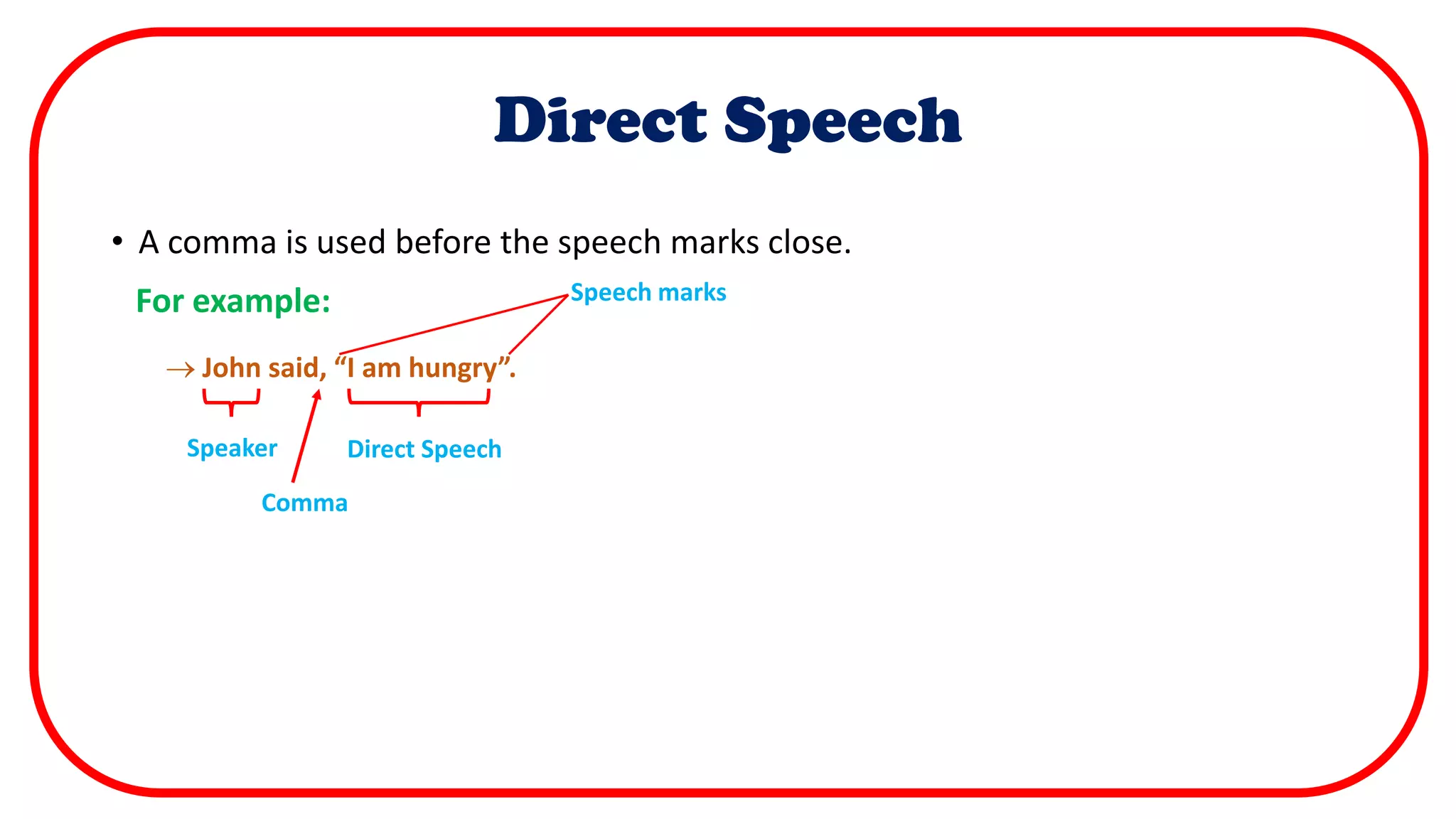
• A comma is used before the speech marks close.
For example:
 John said, “I am hungry”.
Speech marks
Speaker Direct Speech
Comma
Direct Speech
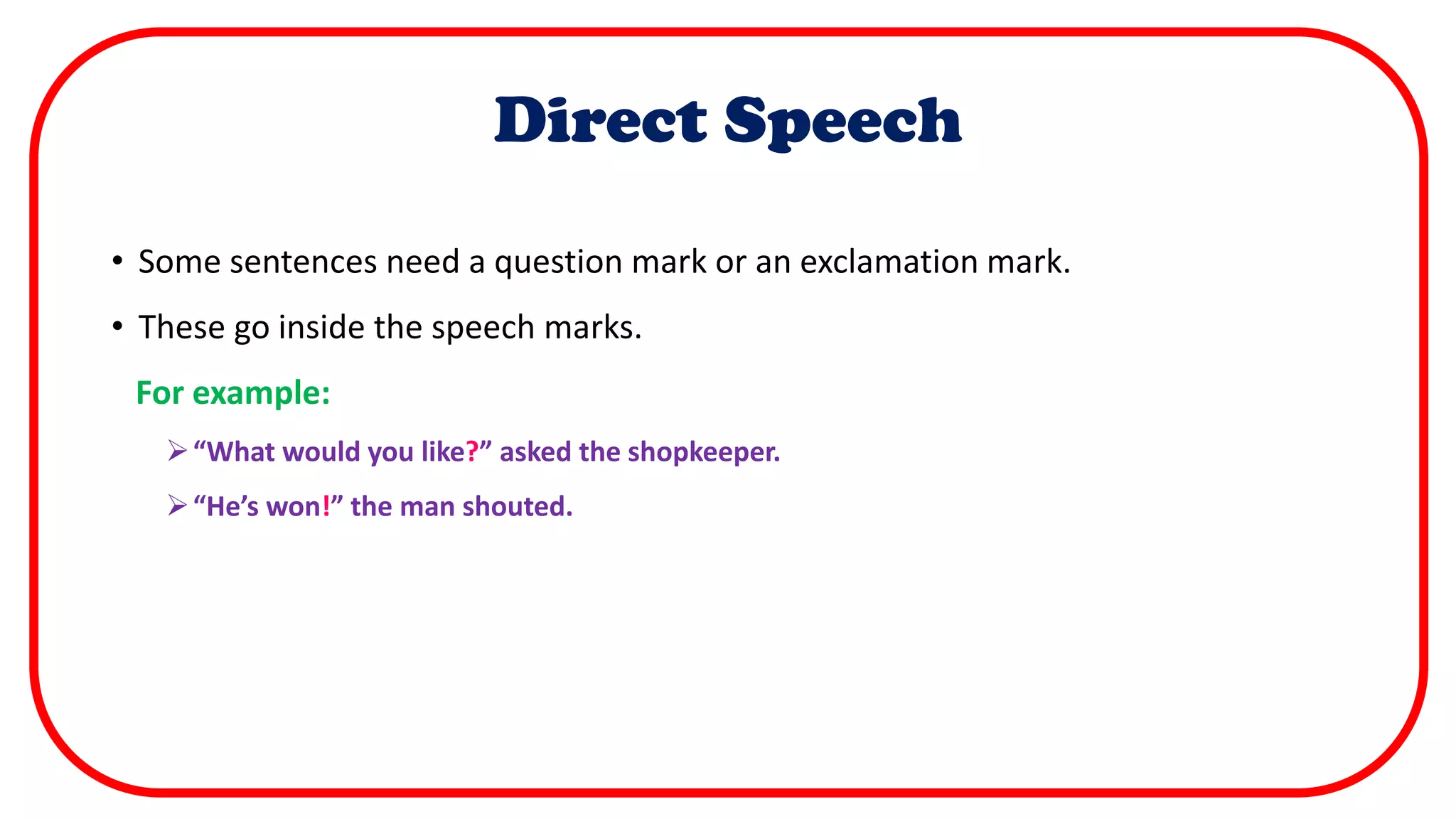
• Some sentences need a question mark or an exclamation mark.
• These go inside the speech marks.
For example:
“What would you like?” asked the shopkeeper.
“He’s won!” the man shouted.
Direct Speech
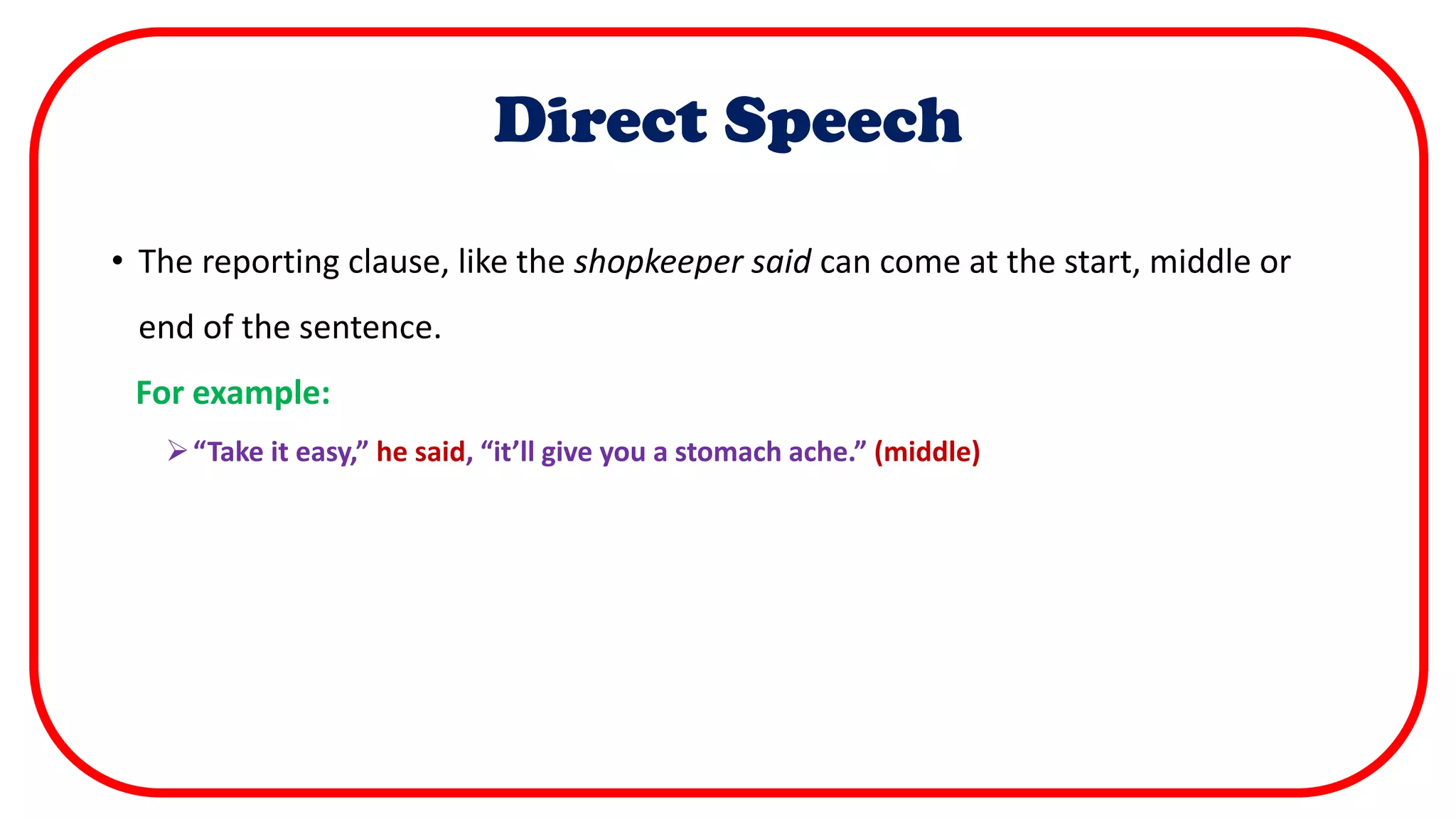
• The reporting clause, like the shopkeeper said can come at the start, middle or
end of the sentence.
For example:
“Take it easy,” he said, “it’ll give you a stomach ache.” (middle)
Reported Speech
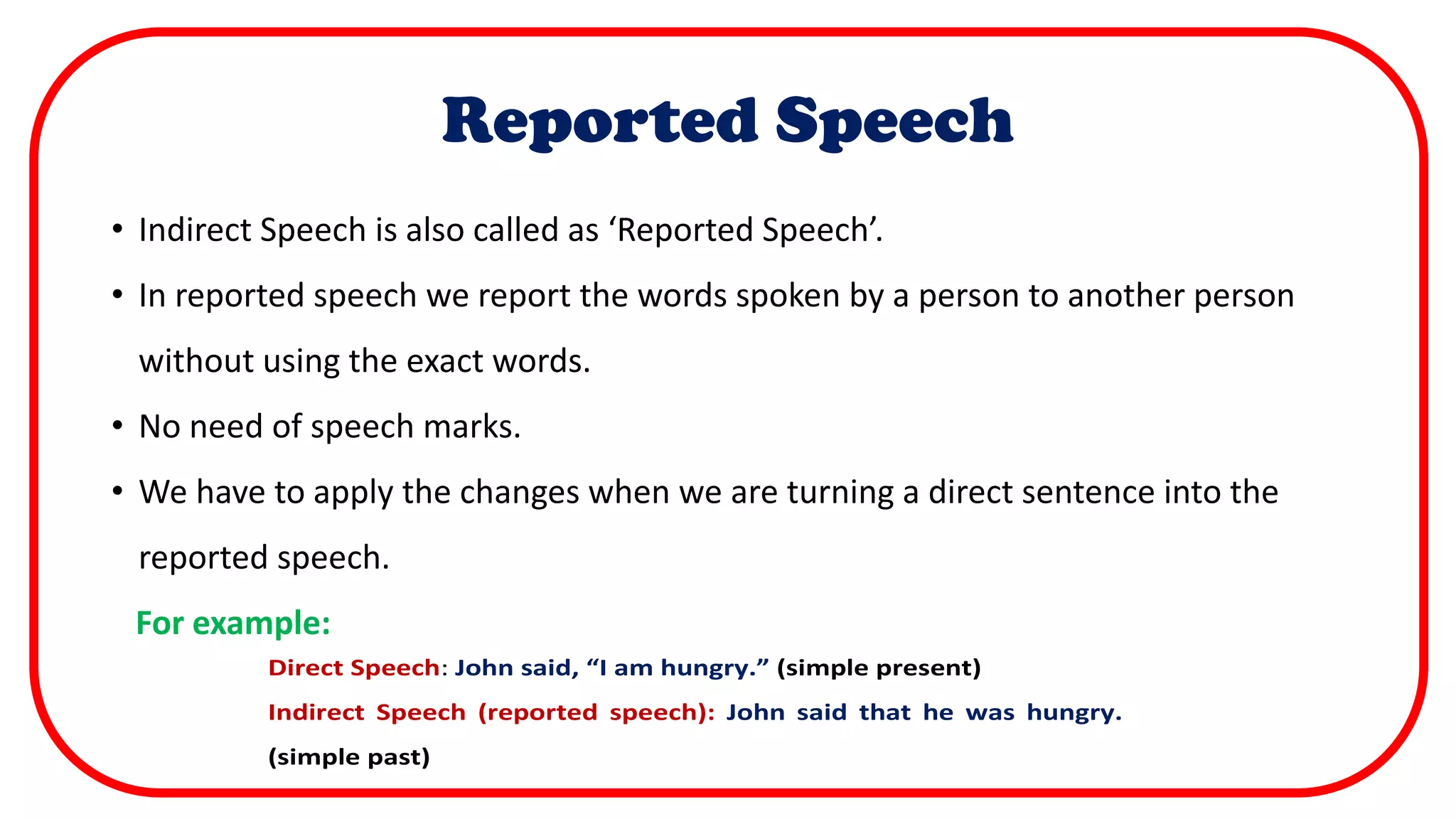
• Indirect Speech is also called as ‘Reported Speech’.
• In reported speech we report the words spoken by a person to another person
without using the exact words.
• No need of speech marks.
• We have to apply the changes when we are turning a direct sentence into the
reported speech.
For example:
 We have to apply the changes when we are turning a direct sentence
into the reported speech.
For example:
Direct Speech: John said, “I am hungry.” (simple present)
Indirect Speech (reported speech): John said that he was hungry.
(simple past)
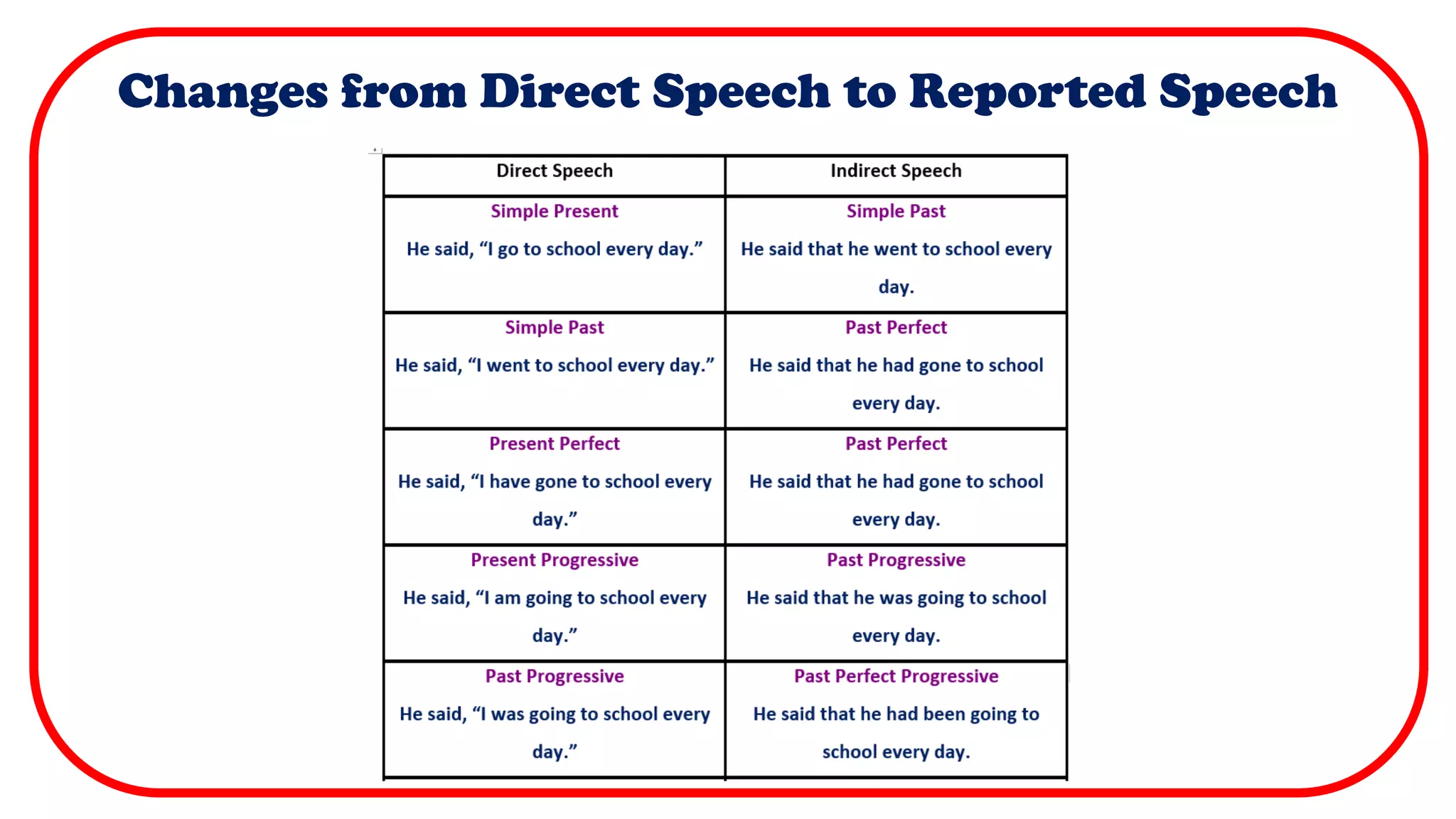
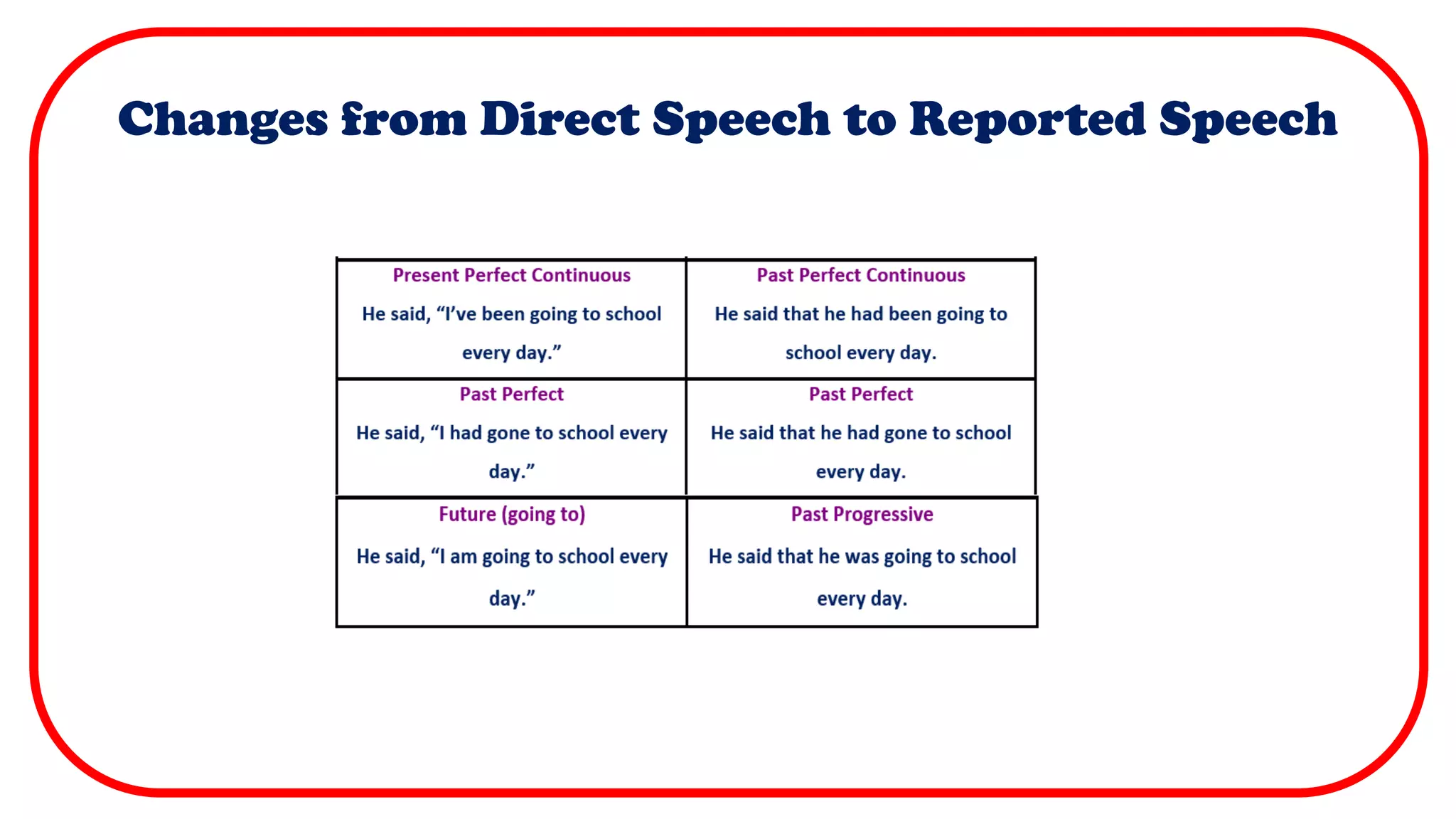
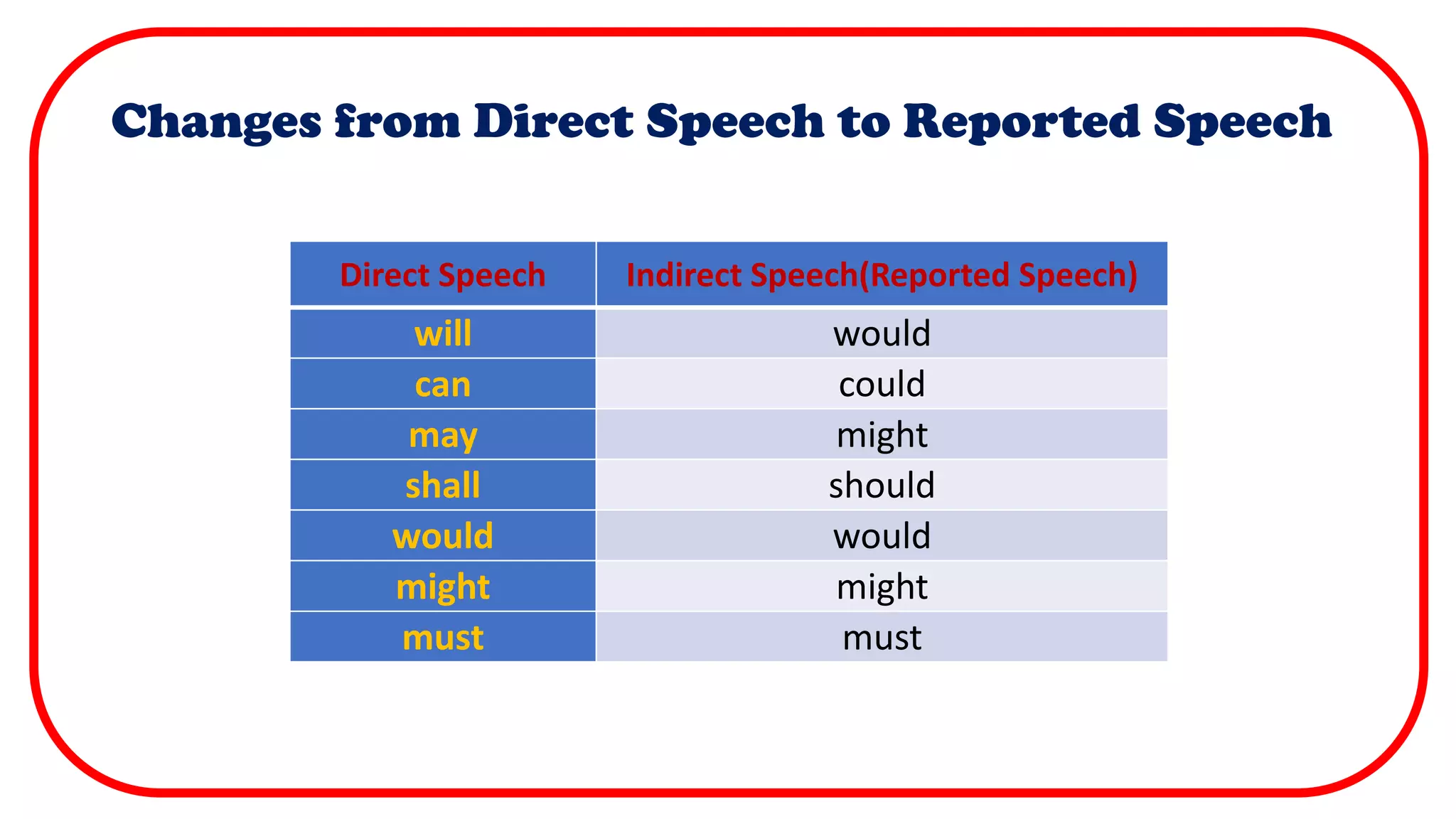
Changes from Direct Speech to Reported Speech
Direct Speech Indirect Speech(Reported Speech)
will would
can could
may might
shall should
would would
might might
must must
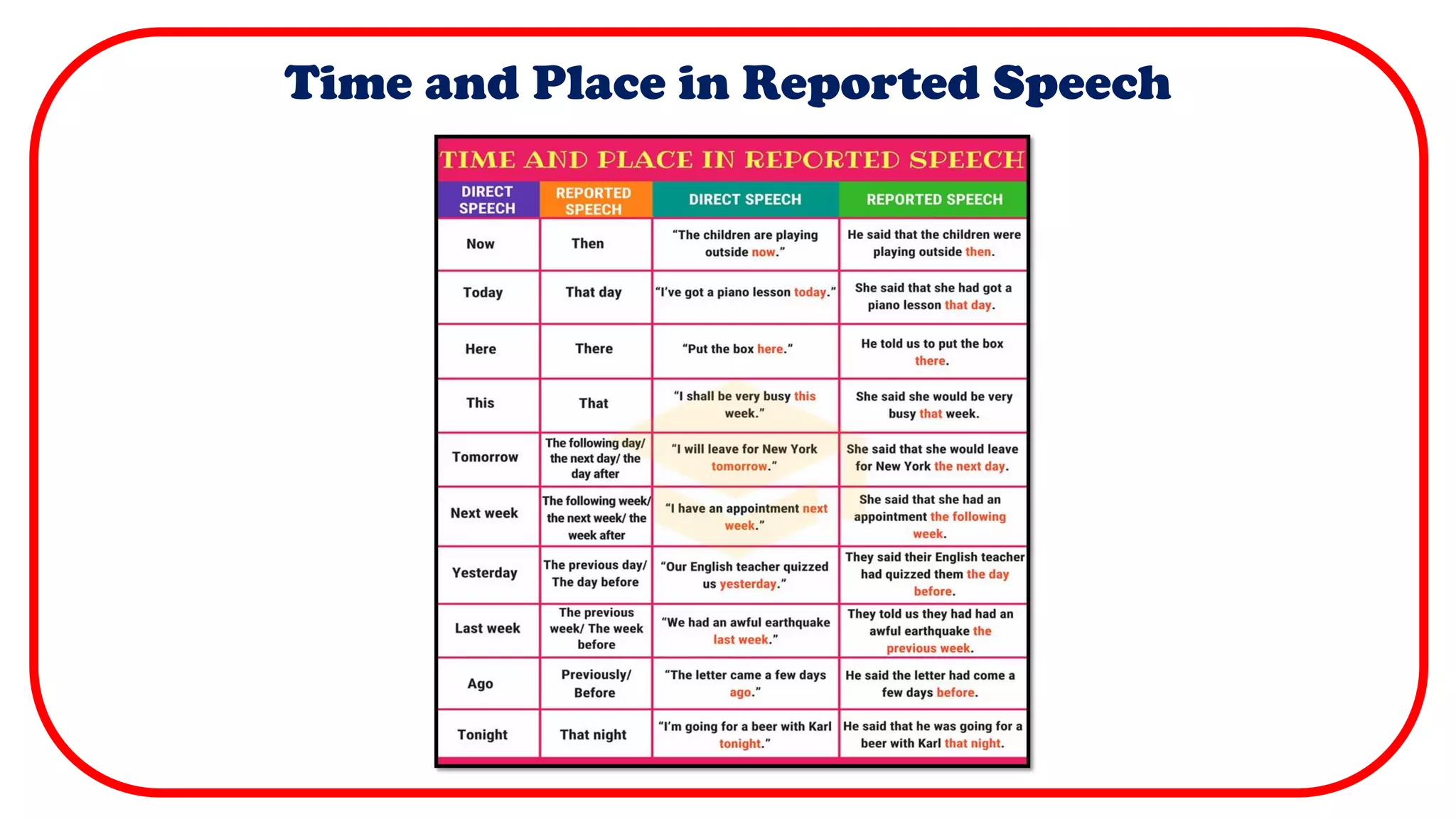
Time and Place in Reported Speech
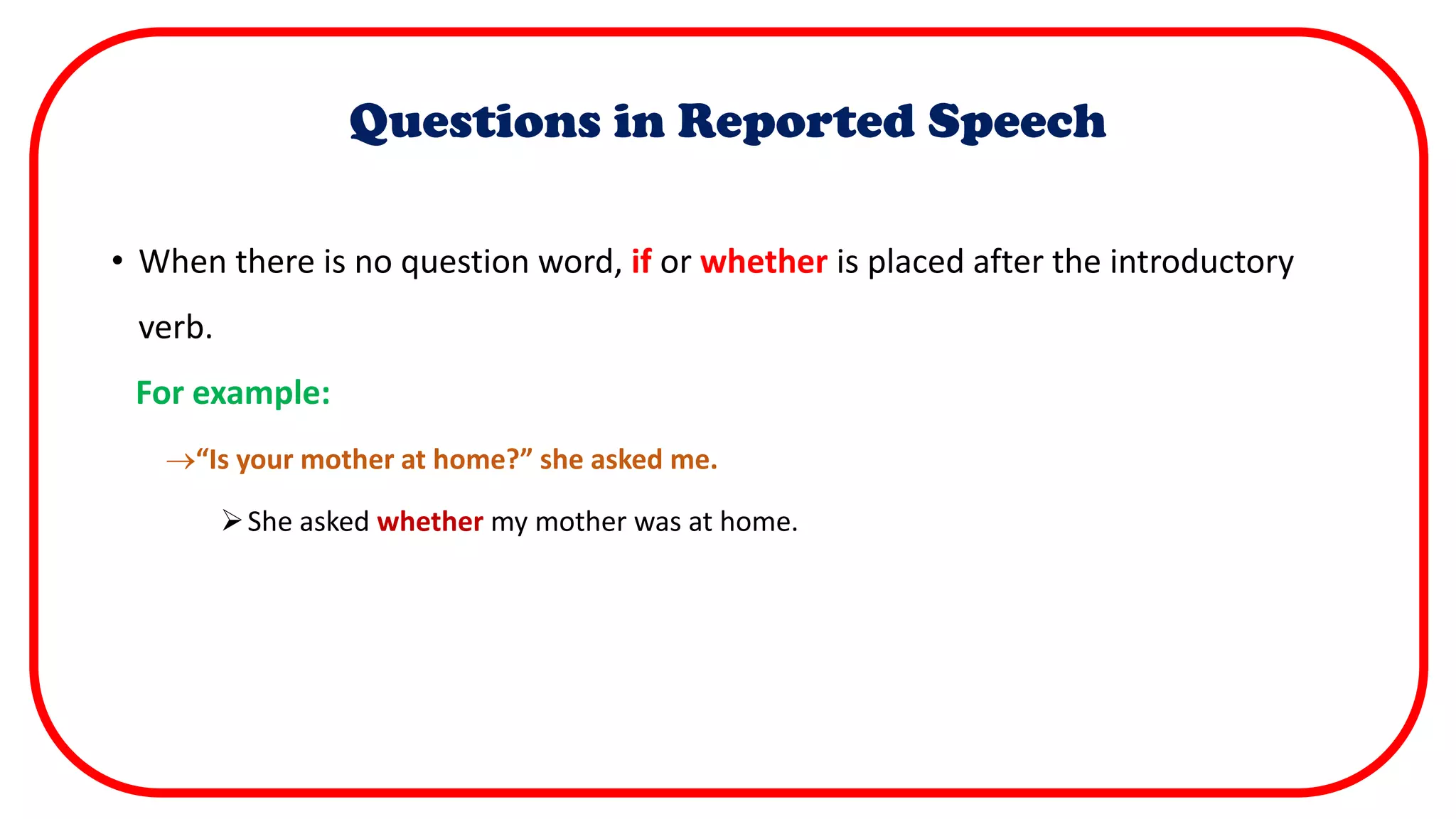
Questions in Reported Speech
• When there is no question word, if or whether is placed after the introductory
verb.
For example:
“Is your mother at home?” she asked me.
She asked whether my mother was at home.
Direct and Reported Speech - Note

Direct and Reported Speech - Note

  • 2.
    Direct Speech • Directspeech is the exact words spoken by a person. • We have to use speech marks “ ” in direct speech. (They help to show who is talking.) • A new line should start every time a new person speaks. • A capital letter is used for the opening word of a speech.
  • 3.
    Direct Speech • Acomma is used before the speech marks close. For example:  John said, “I am hungry”. Speech marks Speaker Direct Speech Comma
  • 4.
    Direct Speech • Somesentences need a question mark or an exclamation mark. • These go inside the speech marks. For example: “What would you like?” asked the shopkeeper. “He’s won!” the man shouted.
  • 5.
    Direct Speech • Thereporting clause, like the shopkeeper said can come at the start, middle or end of the sentence. For example: “Take it easy,” he said, “it’ll give you a stomach ache.” (middle)
  • 6.
    Reported Speech • IndirectSpeech is also called as ‘Reported Speech’. • In reported speech we report the words spoken by a person to another person without using the exact words. • No need of speech marks. • We have to apply the changes when we are turning a direct sentence into the reported speech. For example:  We have to apply the changes when we are turning a direct sentence into the reported speech. For example: Direct Speech: John said, “I am hungry.” (simple present) Indirect Speech (reported speech): John said that he was hungry. (simple past)
  • 7.
    Changes from DirectSpeech to Reported Speech
  • 8.
    Changes from DirectSpeech to Reported Speech
  • 9.
    Changes from DirectSpeech to Reported Speech Direct Speech Indirect Speech(Reported Speech) will would can could may might shall should would would might might must must
  • 10.
    Time and Placein Reported Speech
  • 11.
    Questions in ReportedSpeech • When there is no question word, if or whether is placed after the introductory verb. For example: “Is your mother at home?” she asked me. She asked whether my mother was at home.