DANNY F. MARIBAO
HIGH SCHOOL – FACULTY
BLWC - 2013
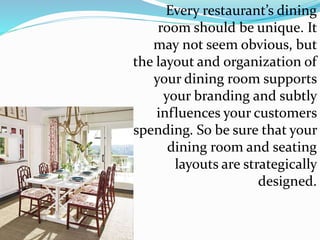
Every restaurant’s dining
room should be unique. It
may not seem obvious, but
the layout and organization of
your dining room supports
your branding and subtly
influences your customers
spending. So be sure that your
dining room and seating
layouts are strategically
designed.
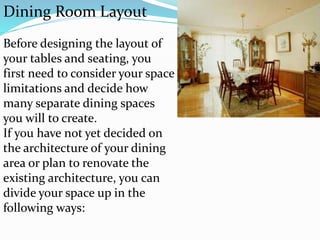
Dining Room Layout
Before designing the layout of
your tables and seating, you
first need to consider your space
limitations and decide how
many separate dining spaces
you will to create.
If you have not yet decided on
the architecture of your dining
area or plan to renovate the
existing architecture, you can
divide your space up in the
following ways:
Multiple main dining areas.
You can create multiple dining
rooms that flow into each other.
Dividing up your dining areas with
walls will make it easier to anchor
tables. To add an individual charm
to each space, you can design each
room differently
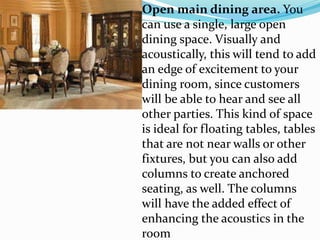
Open main dining area. You
can use a single, large open
dining space. Visually and
acoustically, this will tend to add
an edge of excitement to your
dining room, since customers
will be able to hear and see all
other parties. This kind of space
is ideal for floating tables, tables
that are not near walls or other
fixtures, but you can also add
columns to create anchored
seating, as well. The columns
will have the added effect of
enhancing the acoustics in the
room
Private dining rooms.
You can close off a section or two
of your room with double doors,
and designate that space as a
private dining area. You can use
one of the rooms as a smoking
area, if local laws allow it. You
can also rent out private dining
rooms to large groups that want
to hold private parties or
meetings at your restaurant. If
the rooms are not reserved, you
can open the double doors and
free up the space for walk-in
customers.
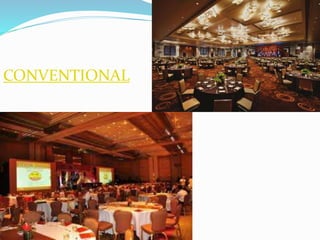
CONVENTIONAL
Caters to large number of guests; needs more
waiters to set and serve
CONVENTIONAL
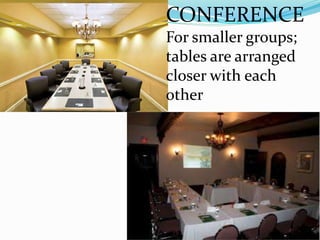
CONFERENCE
For smaller groups;
tables are arranged
closer with each
other
CONFERENCE
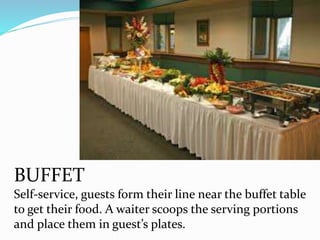
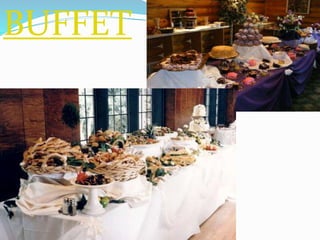
BUFFET
Self-service, guests form their line near the buffet table
to get their food. A waiter scoops the serving portions
and place them in guest’s plates.
BUFFET
Dining room layout

Dining room layout

  • 1.
    DANNY F. MARIBAO HIGHSCHOOL – FACULTY BLWC - 2013
  • 2.
    Every restaurant’s dining roomshould be unique. It may not seem obvious, but the layout and organization of your dining room supports your branding and subtly influences your customers spending. So be sure that your dining room and seating layouts are strategically designed.
  • 3.
    Dining Room Layout Beforedesigning the layout of your tables and seating, you first need to consider your space limitations and decide how many separate dining spaces you will to create. If you have not yet decided on the architecture of your dining area or plan to renovate the existing architecture, you can divide your space up in the following ways:
  • 4.
    Multiple main diningareas. You can create multiple dining rooms that flow into each other. Dividing up your dining areas with walls will make it easier to anchor tables. To add an individual charm to each space, you can design each room differently
  • 5.
    Open main diningarea. You can use a single, large open dining space. Visually and acoustically, this will tend to add an edge of excitement to your dining room, since customers will be able to hear and see all other parties. This kind of space is ideal for floating tables, tables that are not near walls or other fixtures, but you can also add columns to create anchored seating, as well. The columns will have the added effect of enhancing the acoustics in the room
  • 6.
    Private dining rooms. Youcan close off a section or two of your room with double doors, and designate that space as a private dining area. You can use one of the rooms as a smoking area, if local laws allow it. You can also rent out private dining rooms to large groups that want to hold private parties or meetings at your restaurant. If the rooms are not reserved, you can open the double doors and free up the space for walk-in customers.
  • 7.
    CONVENTIONAL Caters to largenumber of guests; needs more waiters to set and serve
  • 8.
  • 9.
    CONFERENCE For smaller groups; tablesare arranged closer with each other
  • 10.
  • 11.
    BUFFET Self-service, guests formtheir line near the buffet table to get their food. A waiter scoops the serving portions and place them in guest’s plates.
  • 12.