www.oeclib.in
Submitted By:
Odisha Electronics Control Library
Seminar
On
Digital Cinema
CONTENT
 History
 What is Digital cinema
 Why go digital
 Components of digital cinema
 Types of Digital cinema
 Digital cinema configuration
 Projection techniques
 Advantage
 Disadvantage
 Application
 Future scope
 Conclusion
HISTORY
 June 18, 1999 DLP cinema projection in North
America
 February 2, 2000 Digital cinema projection in Europe
 March 2002, Digital cinema initiatives was formed a
joint project of many motion picture studios
 April 2004, testing of compression technology
 August 2006, first Indian digital cinema was released
HISTORY
 January, 2007 “Guru” became the first Indian movie in Jpeg
format
 March, 2009 4K projector start
 June, 2010 there are 16000 digital screen
 And of 2012 80% of word wide cinema screen would be
converted to digital
DIGITAL CINEMA
 Digital Cinema means the transmission and delivery of films to
theatres electronically where the image is stored in a computer
server and beamed onto the theatre screens.
DIGITAL CINEMA…
 It uses Digital Media instead of analogue media
(Prints).
 Digital Cinema uses digital projectors instead of
analogue projectors.
WHY GO DIGITAL
 Vision can now actually be seen by audiences
 Duplication costs removed
 Larger numbers of theatres can now view
simultaneously
 Transportation costs can be replaced by much
lower transmission costs
WHY GO DIGITAL…
 More flexible scheduling
 New entertainment ideas
 Higher quality entertainment (better picture and sound)
 Easier access to screenings
COMPONENTS OF DIGITAL
CINEMA
 Fiber optics
 Satellite transmission
 Projector
 Theater management system
 Speaker
TYPES OF DIGITAL CINEMA
 2D Digital Cinema
 3D Digital Cinema
 4D Digital Cinema
 5D Digital Cinema
2D DIGITAL CINEMA
 Pictures can not jump off the screen
 Feel is behind on the scene
 Low switching speed of images
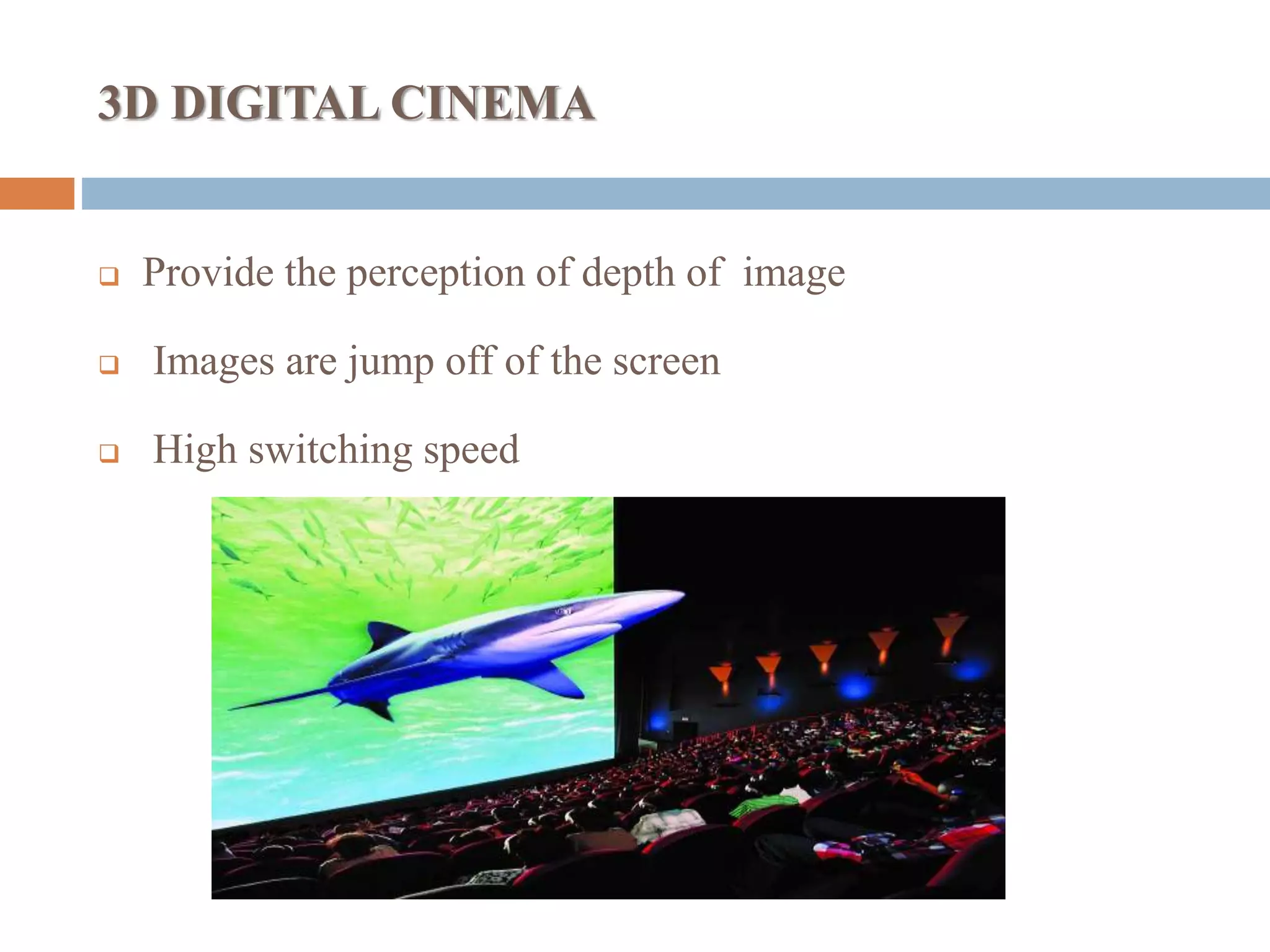
3D DIGITAL CINEMA
 Provide the perception of depth of image
 Images are jump off of the screen
 High switching speed
4D DIGITAL CINEMA
 3D View
 4D Effects
 Some seat movements
5D CINEMA
 Seats move in synchronization with motion in movie
 At least six directional seat movement is required
 Short duration movies
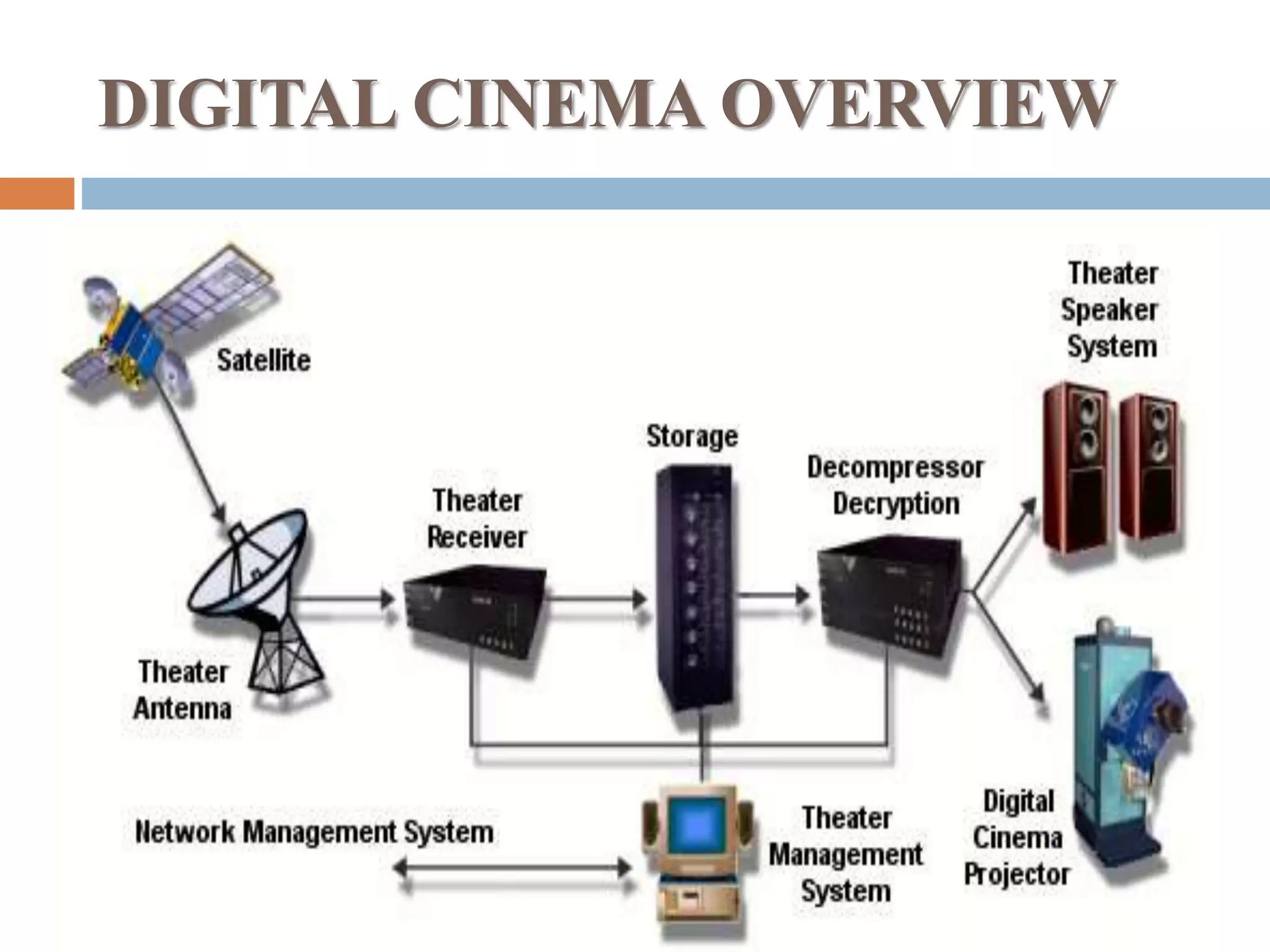
DIGITAL CINEMA OVERVIEW
DIGITAL CINEMA CONFIGURATION
Film Print
Compression
Encryption
Movie and License
Upload to Satellite
Standard Geo-synchronous
Ku-band Satellite
Cine
Blaster
Projector
Movie and License
Download from Satellite
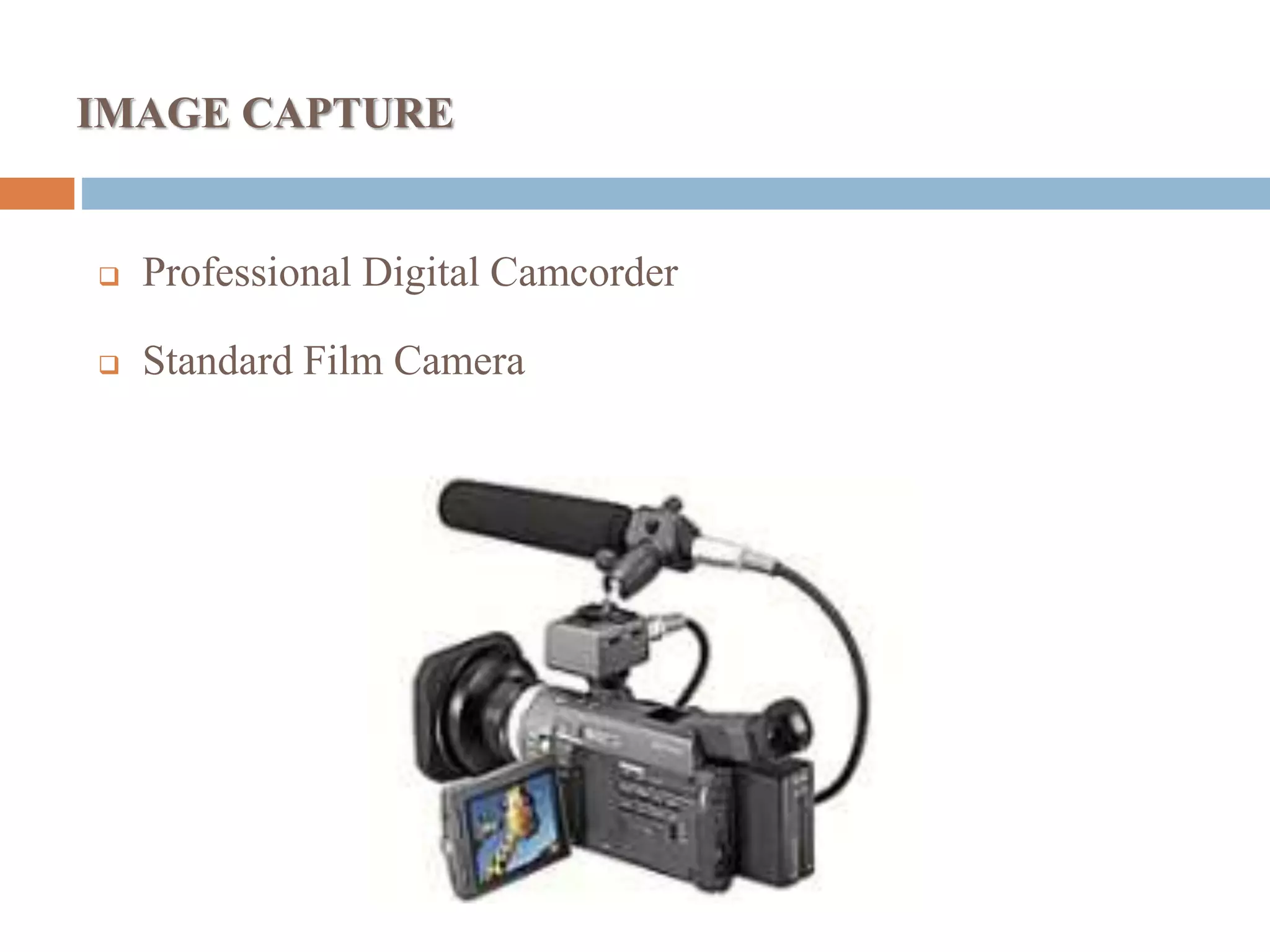
IMAGE CAPTURE
 Professional Digital Camcorder
 Standard Film Camera
SINGLE DMD SYSTEM
 Color images can be made by shining colored light onto DMD
grayscale image
 Light from source bulb is filtered using spinning color wheel
 Combination of red, green or blue light is then reflected to
optics from DMD
3 DMD SYSTEM
 Light from source bulb is diffracted using filtering prism
 Each color component (red, green and blue) is reflected from
its own dedicated DMD
 Reflected R,G and B light combined (reflected
Along same axis) and passed through optics to display
3 DMD SYSTEM….
 Reduced mechanics (no spinning wheel) means the
system is more reliable
 Dedicated mirrors also mean higher quality pictures
AN EARLY HISTORY OF DIGITAL CINEMA
DIGITAL CINEMAAFFECTS THREE MAJOR AREAS OF
MOVIE-MAKING:
 Production
 Distribution
 Projection
ADVANTAGE OF DIGITAL
CINEMA
Occupy
less space
Introduce
special
effect
Automatic
schedule
Limited
man power
Broadcasting of
live conferences
Low budget
cinema
Colour of
image is not
corrupted
MORE ADVANTAGES…
Addition/ deletion of scene
easier
Simple to handle
Images are not degrade Fast
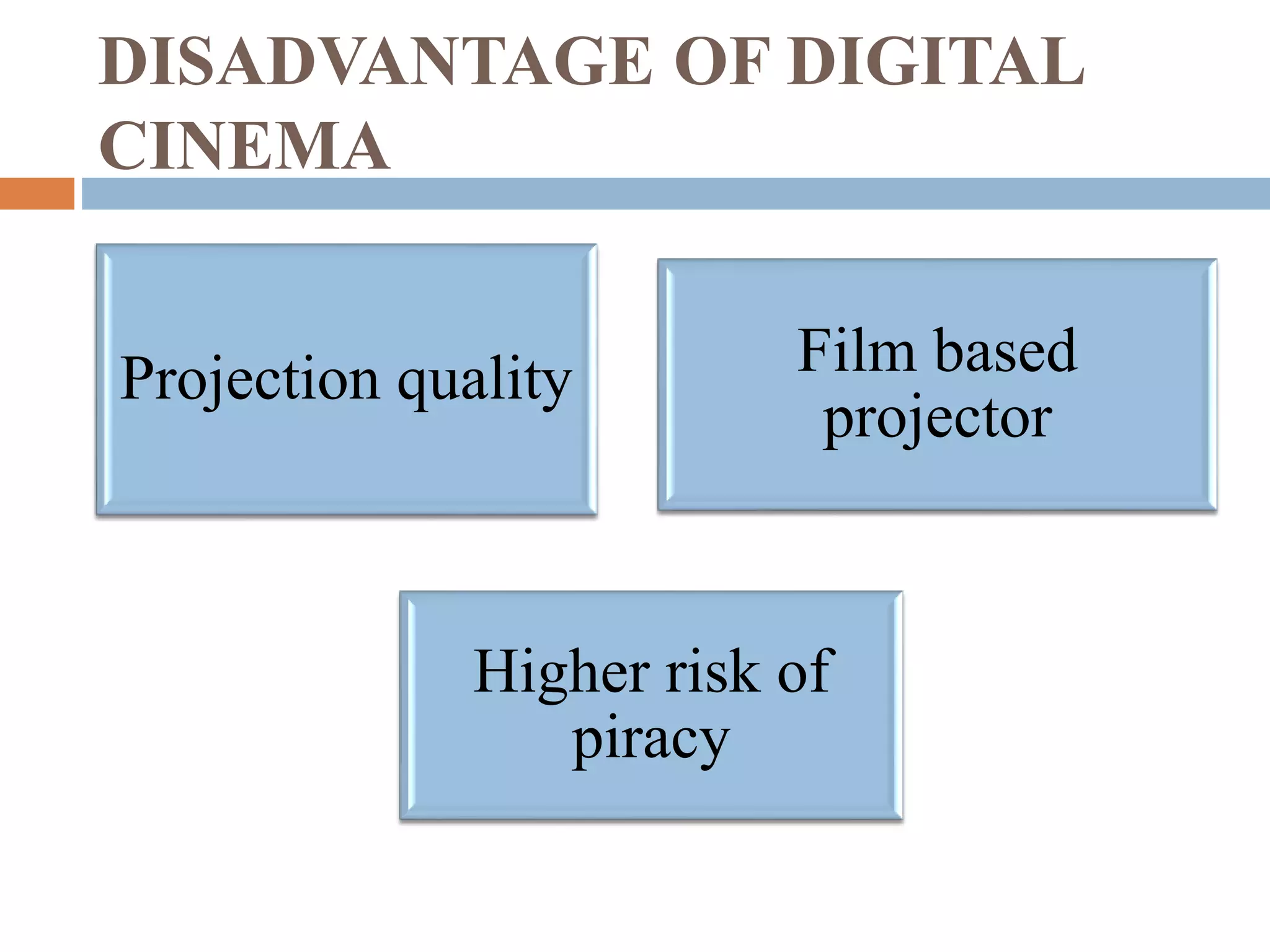
DISADVANTAGE OF DIGITAL
CINEMA
Projection quality Film based
projector
Higher risk of
piracy
APPLICATION OF DIGITAL
CINEMA
IN
THEATRE
LIVE
BRODCAS
TING OF
MOVIES
IN
TELECOM
MUNICATI
ON
FUTURE SCOPE
6 D Digital
cinema
7 D Digital
cinema
REFERENCE
 www.google.com
 www.wikipedia.org
 www.oeclib.in
THANKS

Digital Cinema ppt

  • 1.
    www.oeclib.in Submitted By: Odisha ElectronicsControl Library Seminar On Digital Cinema
  • 2.
    CONTENT  History  Whatis Digital cinema  Why go digital  Components of digital cinema  Types of Digital cinema  Digital cinema configuration  Projection techniques  Advantage  Disadvantage  Application  Future scope  Conclusion
  • 3.
    HISTORY  June 18,1999 DLP cinema projection in North America  February 2, 2000 Digital cinema projection in Europe  March 2002, Digital cinema initiatives was formed a joint project of many motion picture studios  April 2004, testing of compression technology  August 2006, first Indian digital cinema was released
  • 4.
    HISTORY  January, 2007“Guru” became the first Indian movie in Jpeg format  March, 2009 4K projector start  June, 2010 there are 16000 digital screen  And of 2012 80% of word wide cinema screen would be converted to digital
  • 5.
    DIGITAL CINEMA  DigitalCinema means the transmission and delivery of films to theatres electronically where the image is stored in a computer server and beamed onto the theatre screens.
  • 6.
    DIGITAL CINEMA…  Ituses Digital Media instead of analogue media (Prints).  Digital Cinema uses digital projectors instead of analogue projectors.
  • 7.
    WHY GO DIGITAL Vision can now actually be seen by audiences  Duplication costs removed  Larger numbers of theatres can now view simultaneously  Transportation costs can be replaced by much lower transmission costs
  • 8.
    WHY GO DIGITAL… More flexible scheduling  New entertainment ideas  Higher quality entertainment (better picture and sound)  Easier access to screenings
  • 9.
    COMPONENTS OF DIGITAL CINEMA Fiber optics  Satellite transmission  Projector  Theater management system  Speaker
  • 10.
    TYPES OF DIGITALCINEMA  2D Digital Cinema  3D Digital Cinema  4D Digital Cinema  5D Digital Cinema
  • 11.
    2D DIGITAL CINEMA Pictures can not jump off the screen  Feel is behind on the scene  Low switching speed of images
  • 12.
    3D DIGITAL CINEMA Provide the perception of depth of image  Images are jump off of the screen  High switching speed
  • 13.
    4D DIGITAL CINEMA 3D View  4D Effects  Some seat movements
  • 14.
    5D CINEMA  Seatsmove in synchronization with motion in movie  At least six directional seat movement is required  Short duration movies
  • 15.
  • 16.
    DIGITAL CINEMA CONFIGURATION FilmPrint Compression Encryption Movie and License Upload to Satellite Standard Geo-synchronous Ku-band Satellite Cine Blaster Projector Movie and License Download from Satellite
  • 17.
    IMAGE CAPTURE  ProfessionalDigital Camcorder  Standard Film Camera
  • 18.
    SINGLE DMD SYSTEM Color images can be made by shining colored light onto DMD grayscale image  Light from source bulb is filtered using spinning color wheel  Combination of red, green or blue light is then reflected to optics from DMD
  • 19.
    3 DMD SYSTEM Light from source bulb is diffracted using filtering prism  Each color component (red, green and blue) is reflected from its own dedicated DMD  Reflected R,G and B light combined (reflected Along same axis) and passed through optics to display
  • 20.
    3 DMD SYSTEM…. Reduced mechanics (no spinning wheel) means the system is more reliable  Dedicated mirrors also mean higher quality pictures
  • 21.
    AN EARLY HISTORYOF DIGITAL CINEMA
  • 22.
    DIGITAL CINEMAAFFECTS THREEMAJOR AREAS OF MOVIE-MAKING:  Production  Distribution  Projection
  • 23.
    ADVANTAGE OF DIGITAL CINEMA Occupy lessspace Introduce special effect Automatic schedule Limited man power Broadcasting of live conferences Low budget cinema Colour of image is not corrupted
  • 24.
    MORE ADVANTAGES… Addition/ deletionof scene easier Simple to handle Images are not degrade Fast
  • 25.
    DISADVANTAGE OF DIGITAL CINEMA Projectionquality Film based projector Higher risk of piracy
  • 26.
  • 27.
    FUTURE SCOPE 6 DDigital cinema 7 D Digital cinema
  • 28.
  • 29.