SCIENCE
4
QUARTER 1 WEEK
2
• Describe the chemical properties of
materials, such as they can be burnt,
react with other materials, or are
degradable or biodegradable.
DAY 1
Learning
Objectives:
At the end of the lesson, the
learners should be able to
describe the chemical properties
of materials such as they can be
burnt.
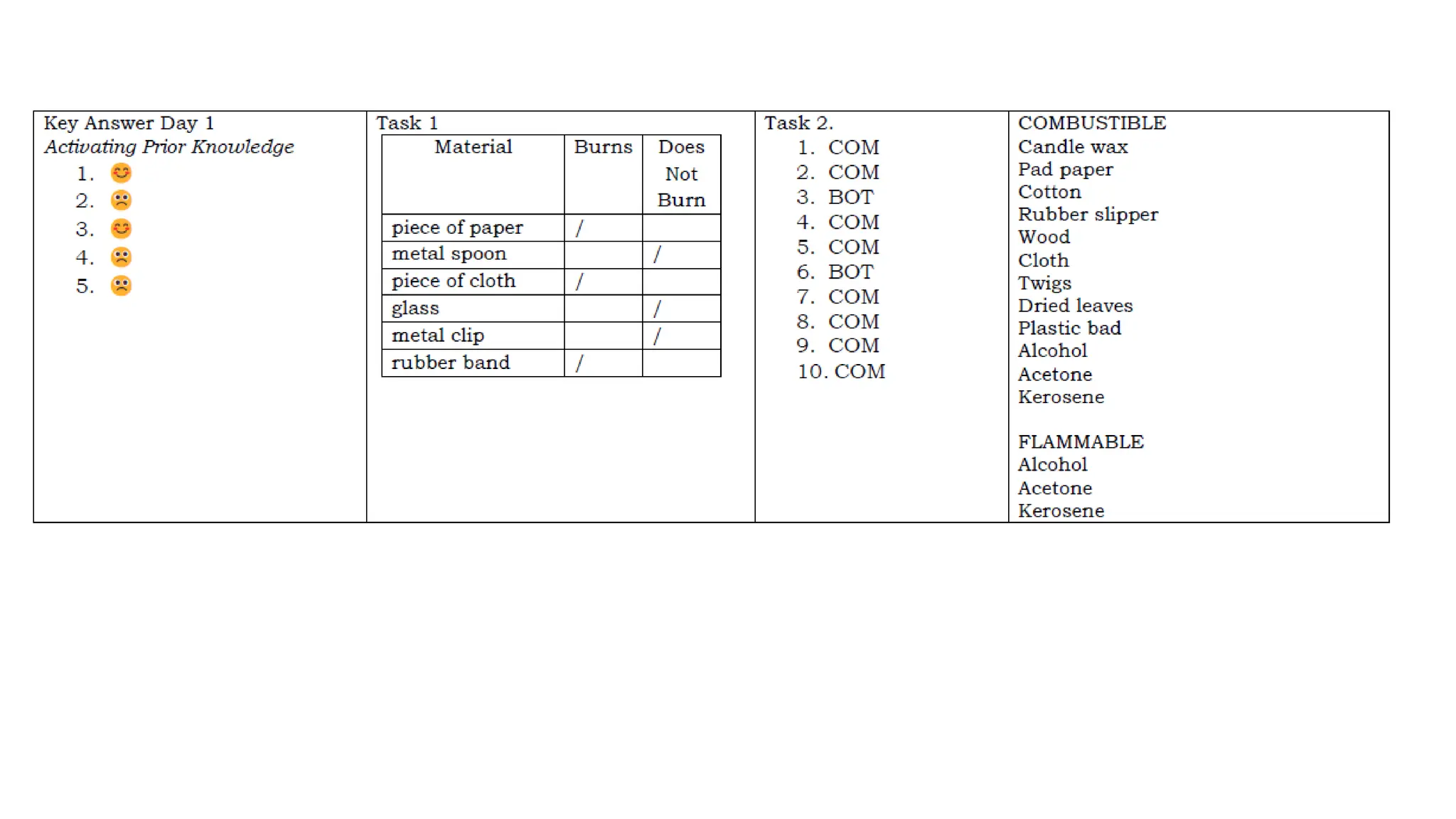
Directions: Draw a happy face if the following pictures show
chemical change and a sad face if it is not.
Describe the chemical properties of materials
such as they can be burnt.
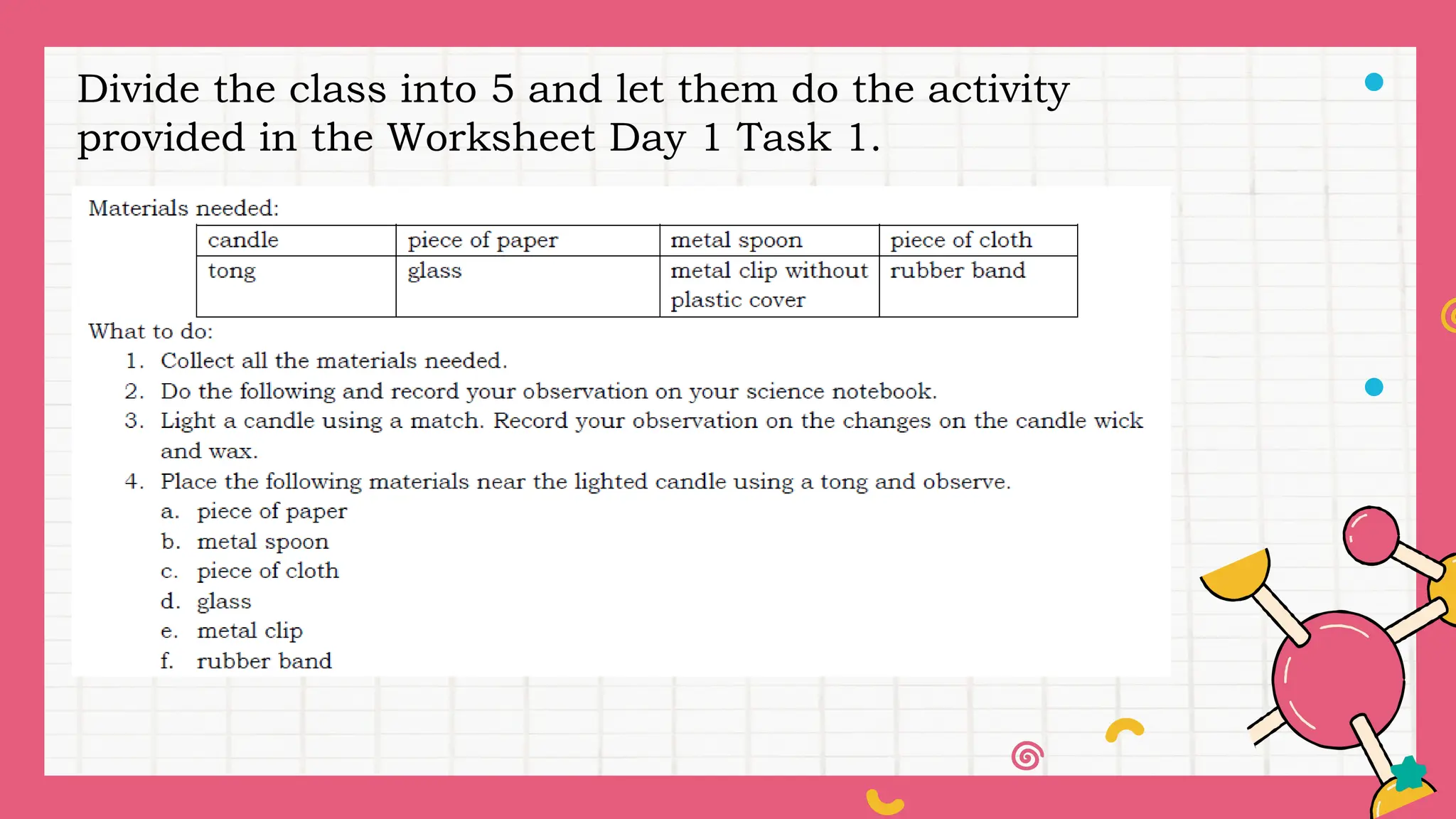
Divide the class into 5 and let them do the activity
provided in the Worksheet Day 1 Task 1.
A chemical property of a material is observed
when one material reacts with other material
chemically.
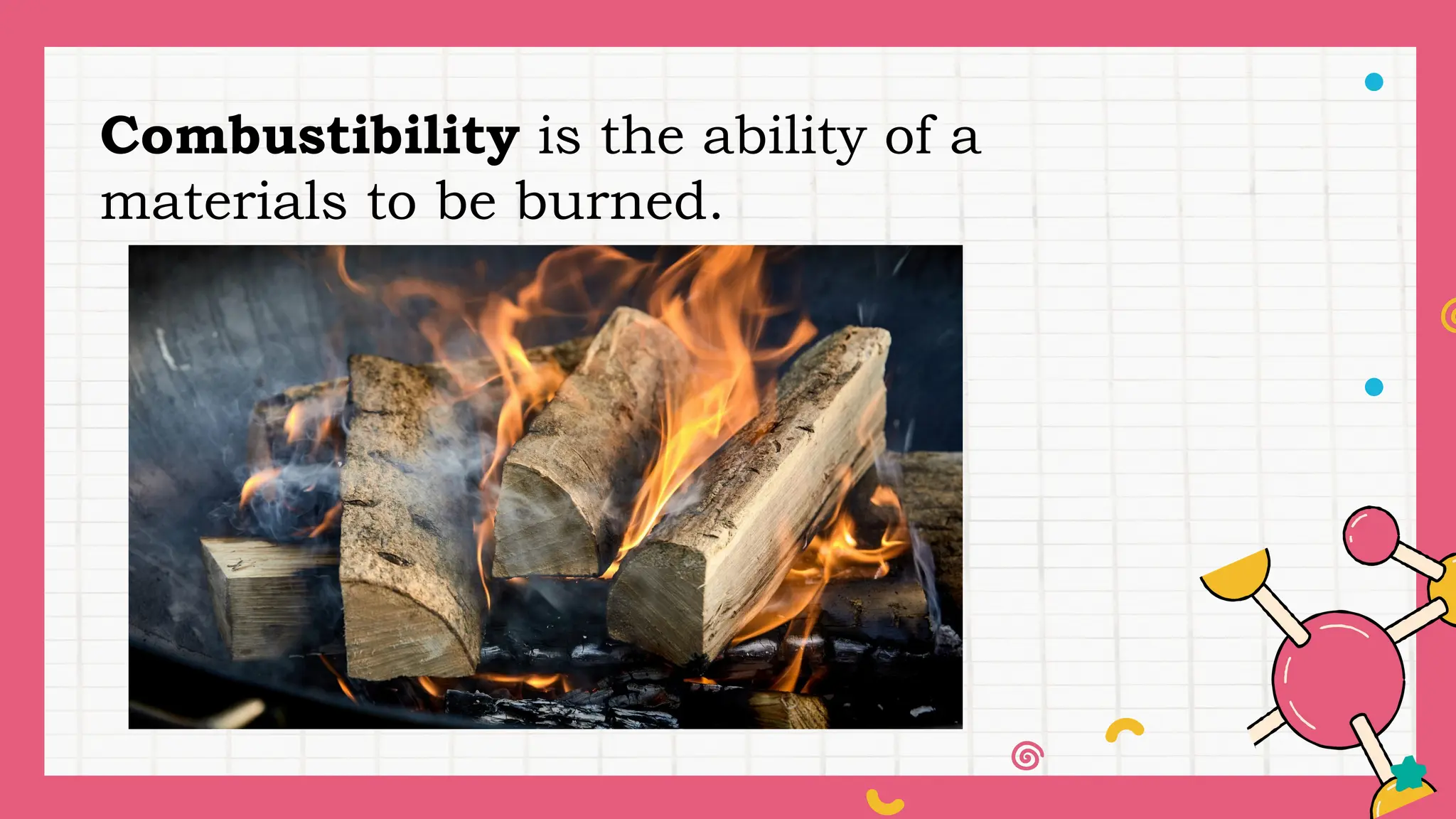
Combustibility is the ability of a
materials to be burned.
Flammability is the ability of a
material to ignite or catch fire easily.
Examples of combustible materials:
paper, cloth, dried leaves, wax, saw dust,
rubber band.
Alcohol and kerosene are combustible
materials. They are also flammable
because they catch fire easily which
make them burn so fast. Emphasize
that not all combustible materials are
flammable.
Combustible and flammable materials
should be properly handled when
using them because they are highly
reactive when exposed to heat or fire.
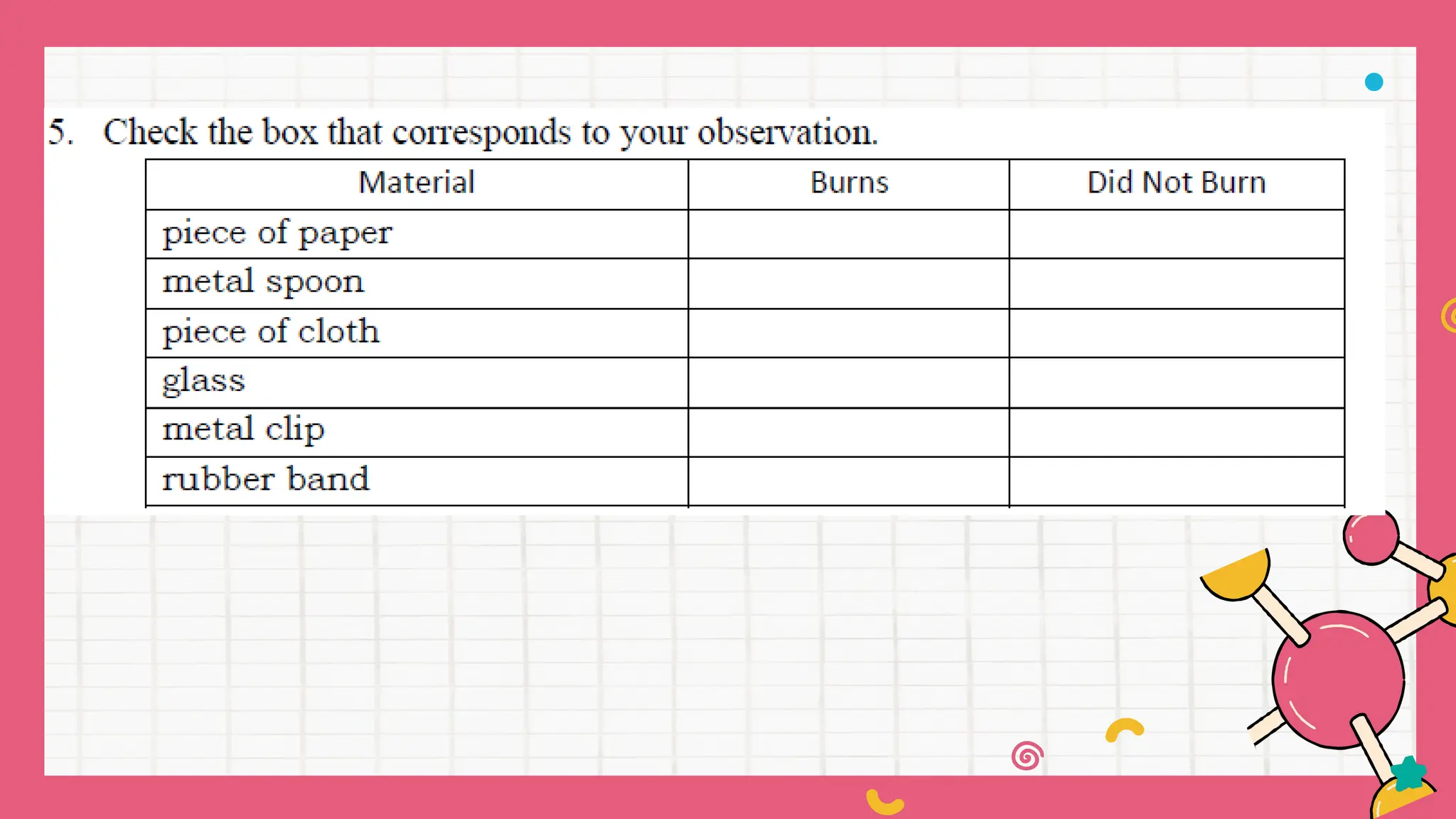
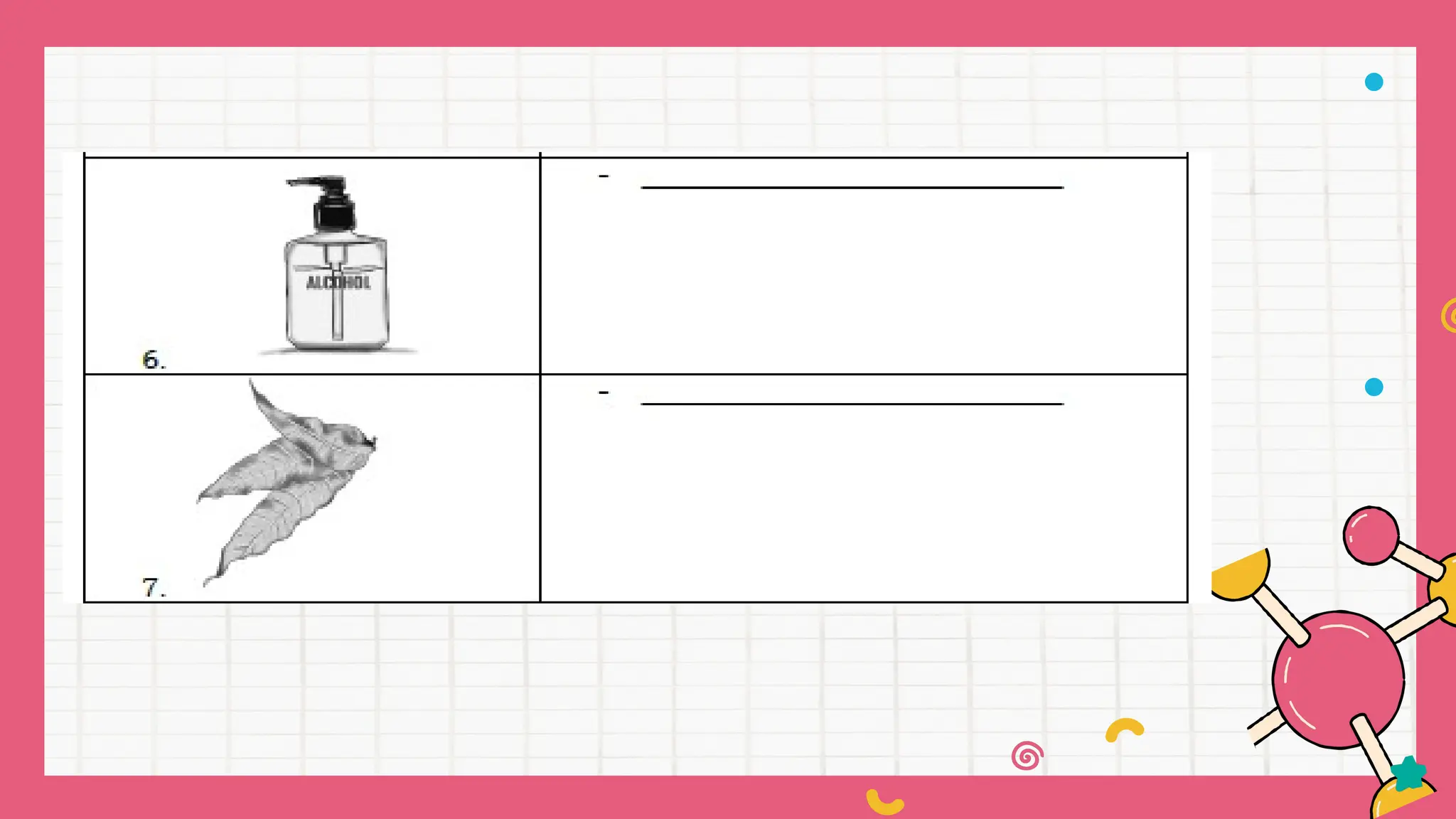
Describe the properties of the following materials. In your Science notebook,
write COM if it burns, FLA if it catches fire easily and BOT if both.
Describe the chemical
properties of materials such
as they can be burnt.
Classify the following materials according to
their chemical properties. Write your answer
on your science notebook.
EVALUATION:
DAY 2
Learning
Objectives:
At the end of the lesson, the
learners should be able to
describe the chemical properties
of materials as they react with
other materials.
Why iron nails form rust?
The lesson today is all about the
chemical properties of materials
as they react with other
materials.
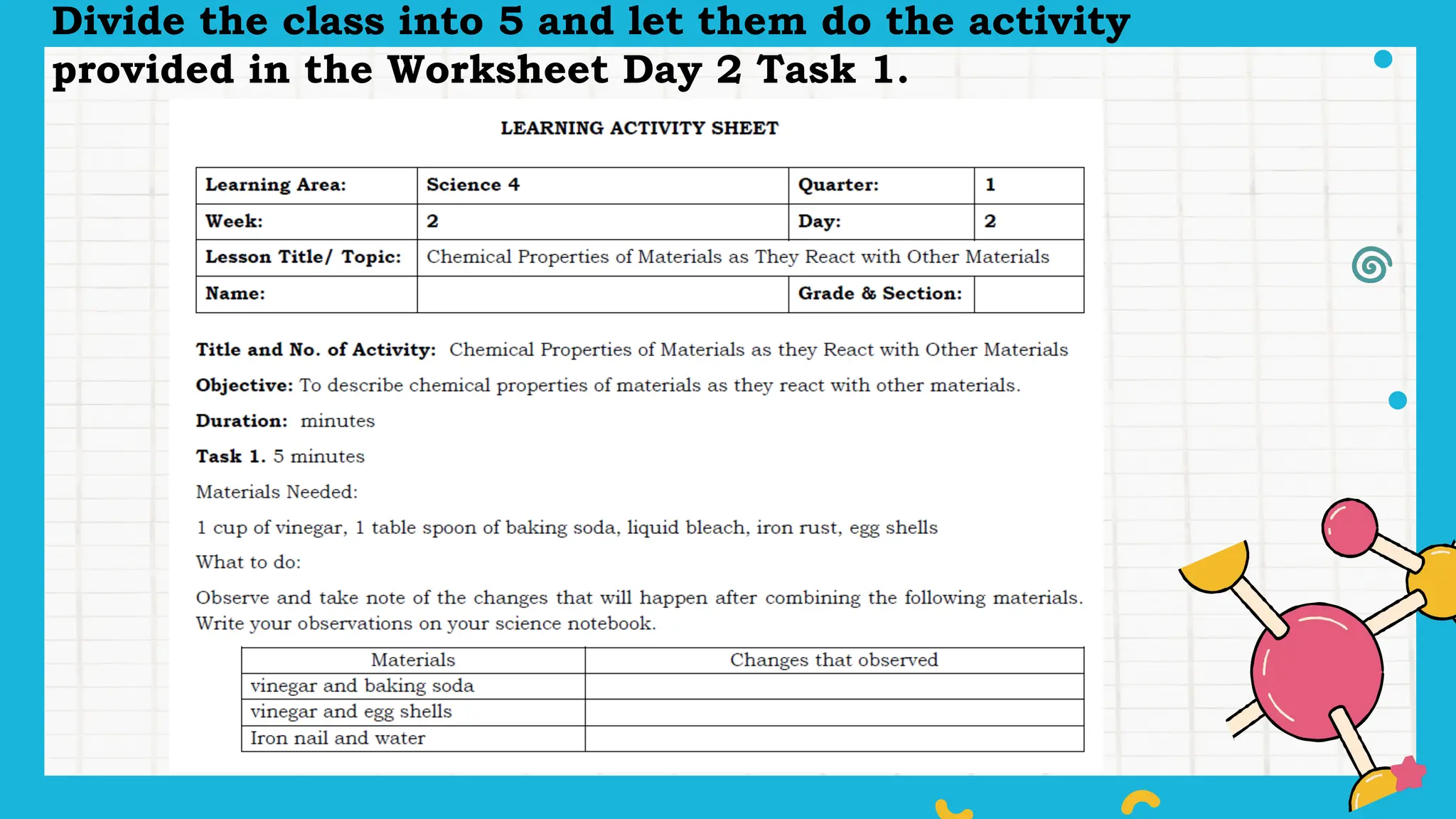
Divide the class into 5 and let them do the activity
provided in the Worksheet Day 2 Task 1.
Chemical property is a property of materials
wherein the composition has to change first
before a certain property can be observed.
Chemical Properties of Materials
1. Formation of a new product. When an iron nail is
exposed to air (oxygen and water), rust will form.
2. Formation of gas. When baking soda is mixed
with vinegar, bubbles are formed that indicate gas
formation.
3. Formation of precipitate. When milk spoils,
precipitate formed. Precipitate is the solid
particles that settle in the spoiled milk.
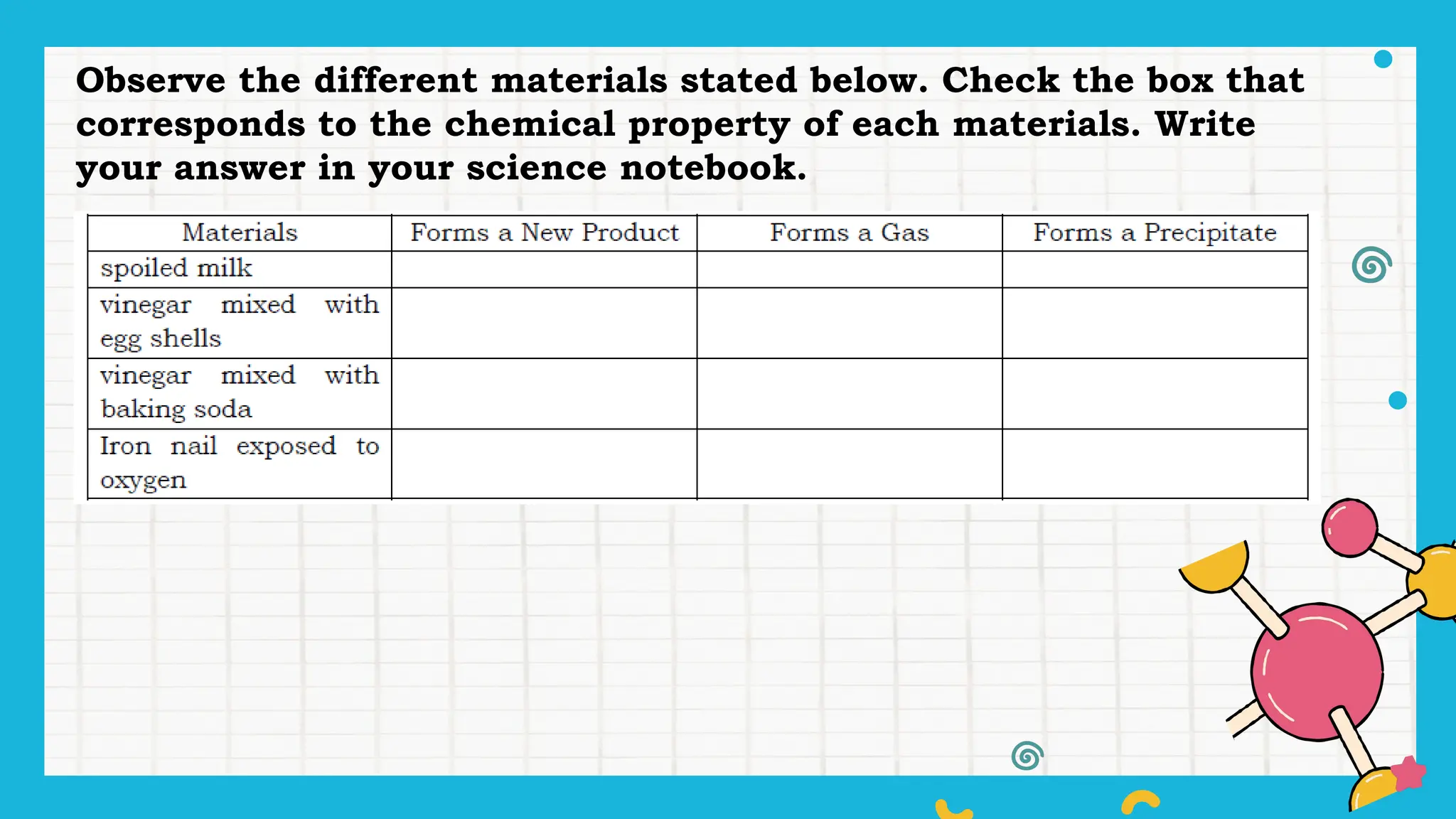
Observe the different materials stated below. Check the box that
corresponds to the chemical property of each materials. Write
your answer in your science notebook.
The teacher will highlight the
different chemical properties of
materials.
Assessment: 5 minutes
Answer the following questions. Write your
answer in your science notebook.
Why is it important to know the chemical
properties of materials?
DAY 3
Learning
Objectives:
At the end of the lesson, the
learners should be able to
describe the chemical properties
of materials as degradable or
biodegradable.
Classify them as to materials that decay
easily and materials that do not decay
easily.
paper
Banana peeling
malunggay leaves
plastic bottles
disposable spoon
twigs
Task/Question 1. Complete the graphic organizer.
Identify materials that decays easily at home and at
school. Write your answer in your science notebook.
Degradability is the property of a
material to decompose chemically or
biologically.
Biodegradability is a chemical property of
materials that easily decompose or decay through
the actions of bacteria or other living organisms in
the soil. When materials decay their materials
return to the soil.
Materials like plastics and cellophanes are also
biodegradable since their chemical composition
allows them to decay but it will take them years
to decay or decompose fully.
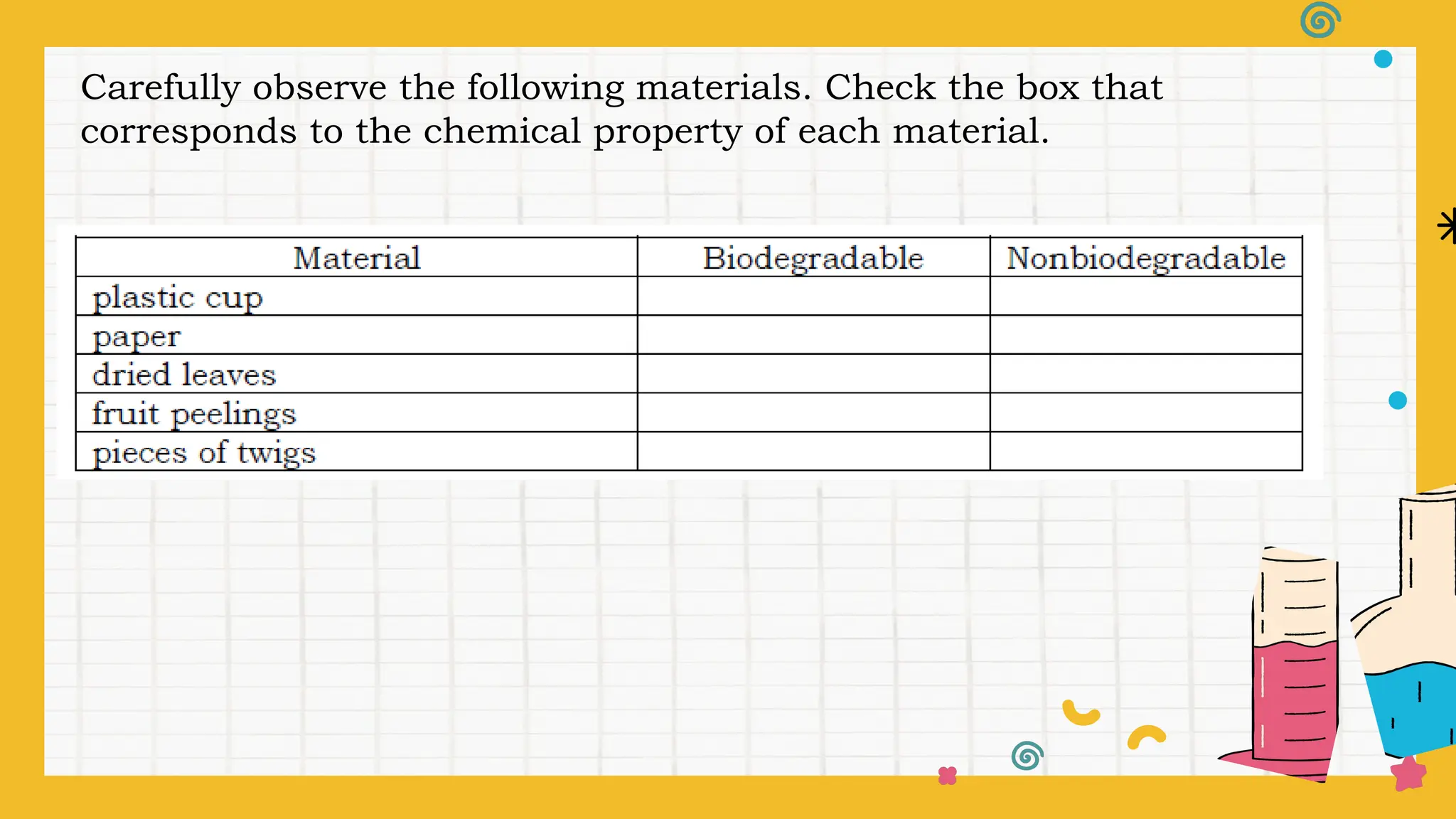
Carefully observe the following materials. Check the box that
corresponds to the chemical property of each material.
The teacher will highlight the importance of
describing the chemical properties of materials as
to biodegradability and nonbiodegradability.
Reflection:
Complete the following sentences based on your
experiences while doing the activities.
1. The part of the activity that I enjoyed doing was
_________________________________.
2. The part of the activity that I find challenging was
______________________________
3. I believe I need more activities because
_____________________________.
5. I am now confident to describe the biodegradable and
nonbiodegradable because ___________.
DAY 4
Learning
Objectives:
At the end of the lesson, the
learners should be able to
describe the chemical properties
of materials, such as they can be
burnt, react with other materials,
or are degradable or
biodegradable.
Give the word formed from the following
jumbled words.
BUSBITILITYCOM
MAFLAMTYLIBI
DAGRADEBIOLIBITY
GRANONBIOLIDEDALITY
Divide the class into. Conduct a school environment
scanning. List the materials that are commonly disposed
inside and outside the classrooms. Classify them as
combustible, flammable, biodegradable and
nonbiodegradable. Write the list in your notebook.
Describe the chemical properties of
materials.
Combustibility
Flammability
Biodegradability
Nonbiodegradability
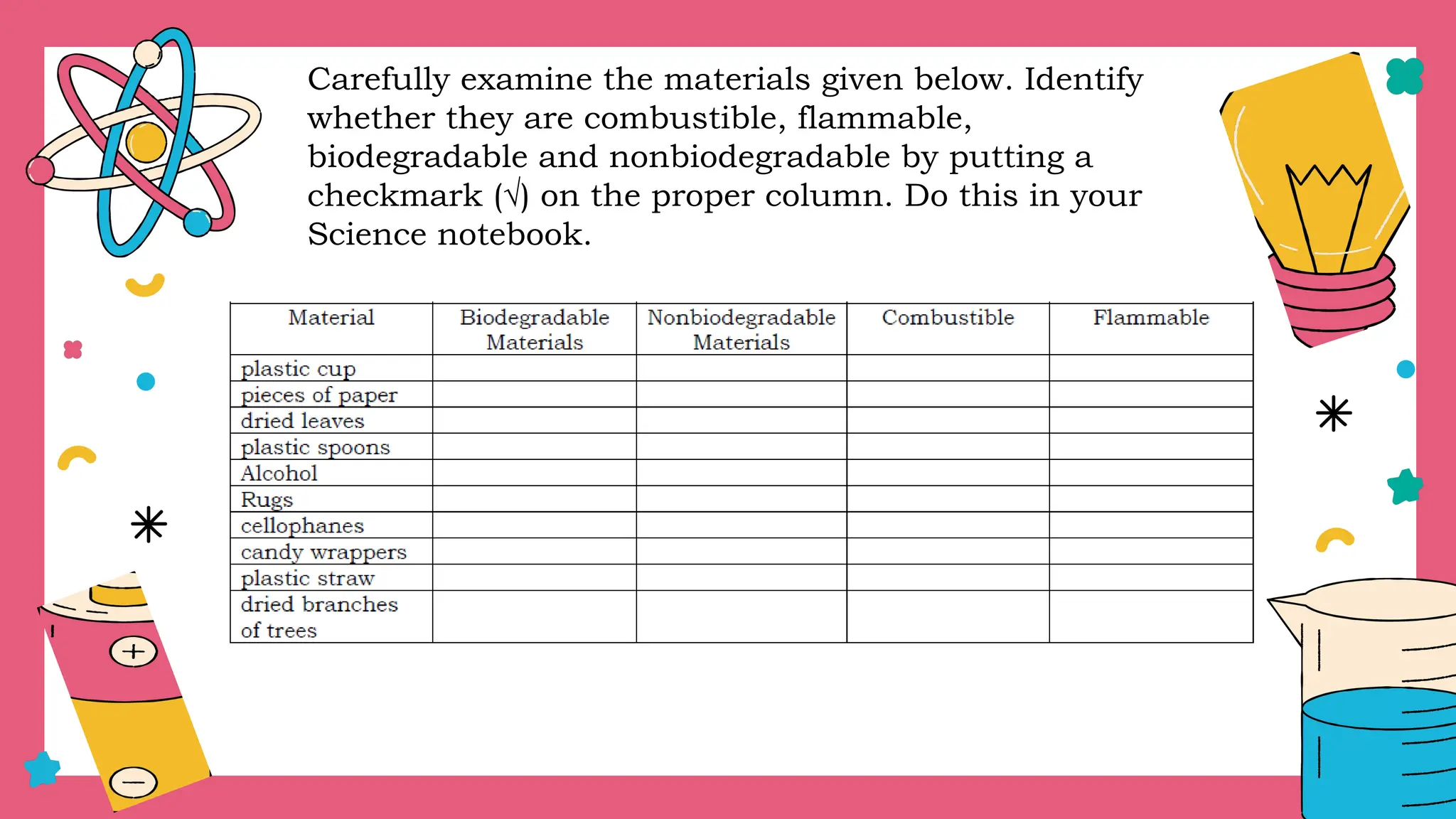
Carefully examine the materials given below. Identify
whether they are combustible, flammable,
biodegradable and nonbiodegradable by putting a
checkmark (√) on the proper column. Do this in your
Science notebook.
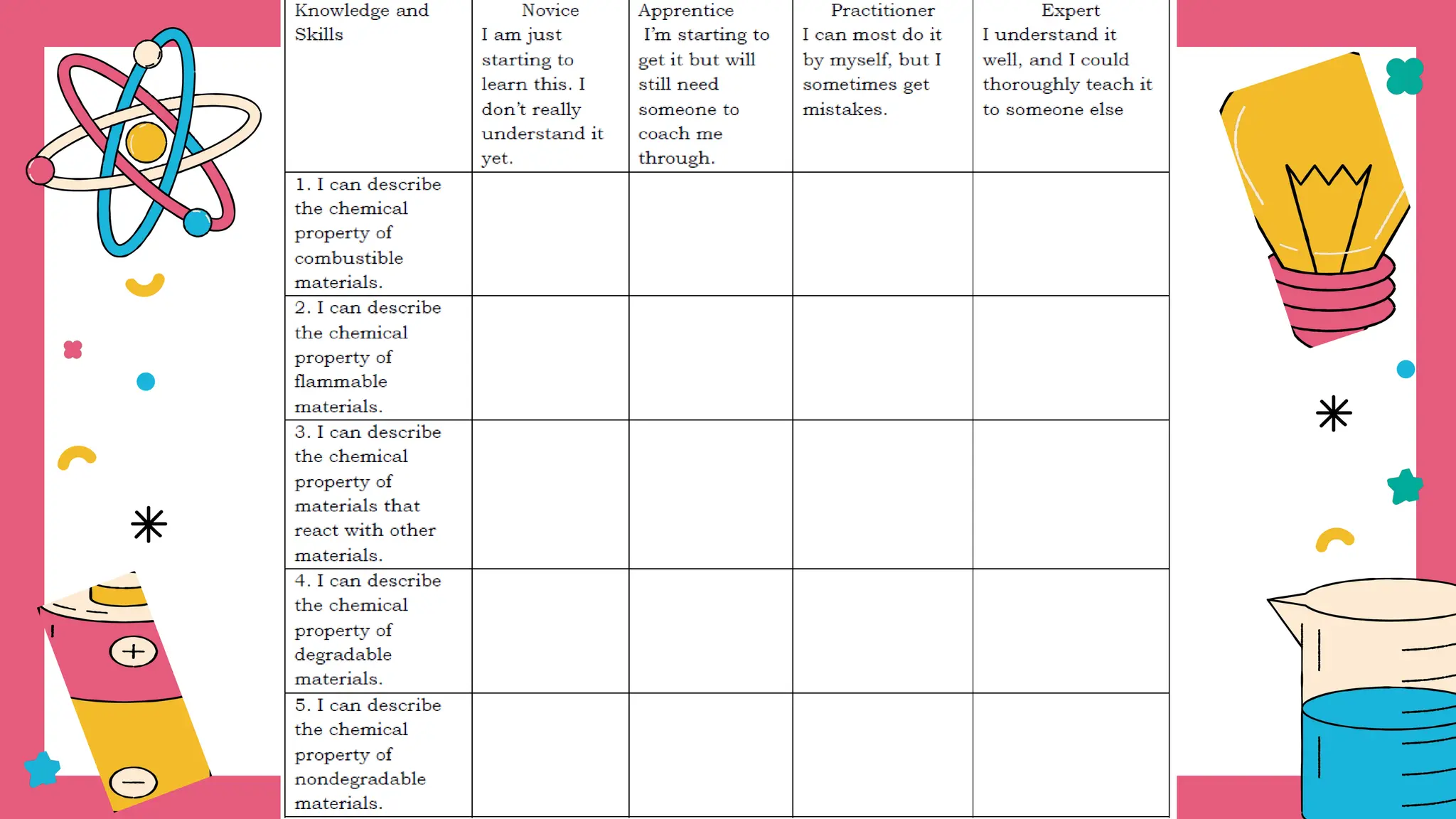
Reflection:
Read the statements carefully. Rate the
knowledge and skills you acquired and
developed after going through the different
tasks. Check the appropriate column that
best describes the level of your knowledge
and skill. Write your score at the last
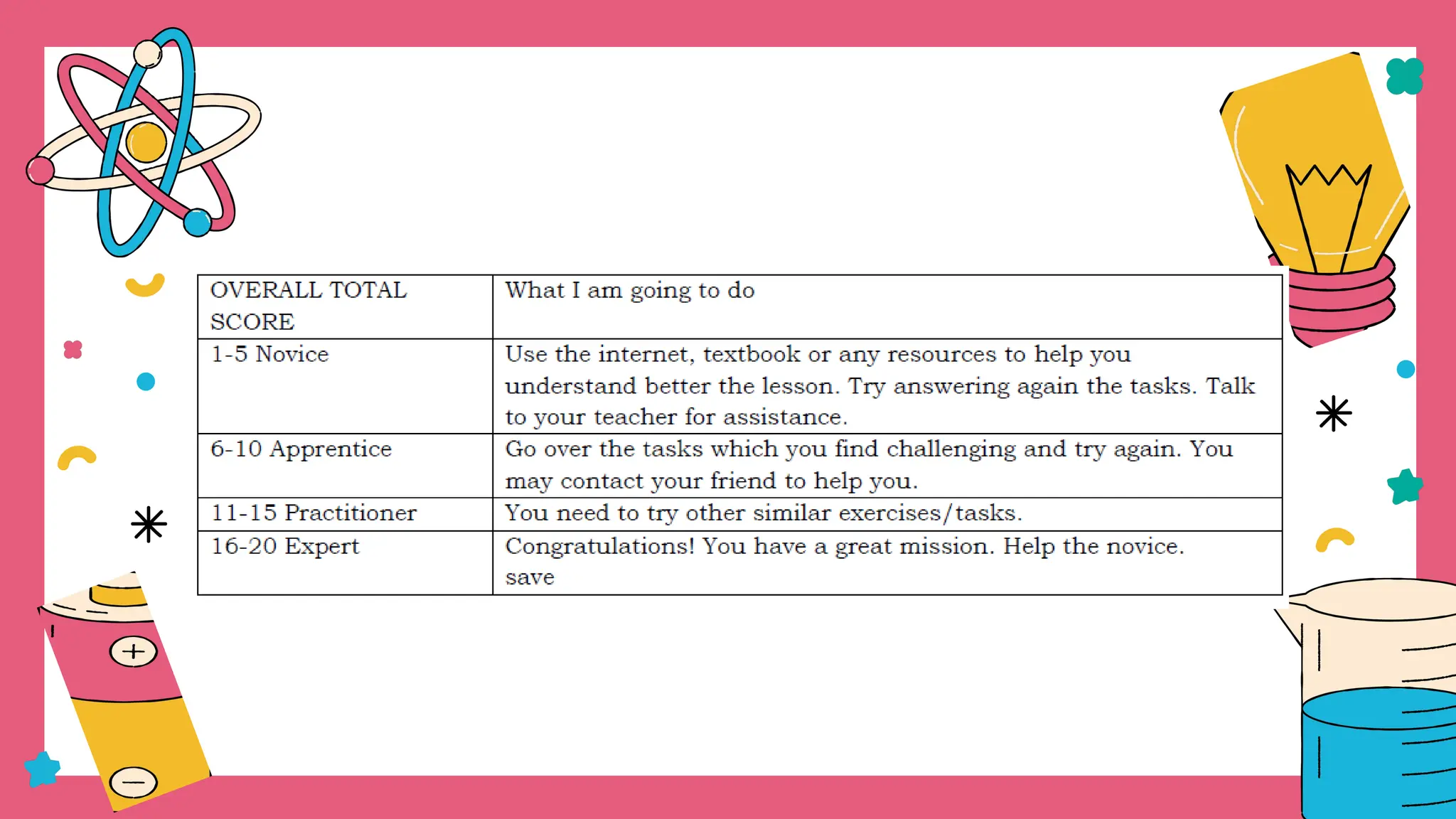
column, then give your total score. Reflect on
the interpretation of your score.
Science4 Q1 grade Week2 PPT MATATAG.pptx

Science4 Q1 grade Week2 PPT MATATAG.pptx

  • 1.
    SCIENCE 4 QUARTER 1 WEEK 2 •Describe the chemical properties of materials, such as they can be burnt, react with other materials, or are degradable or biodegradable.
  • 2.
    DAY 1 Learning Objectives: At theend of the lesson, the learners should be able to describe the chemical properties of materials such as they can be burnt.
  • 3.
    Directions: Draw ahappy face if the following pictures show chemical change and a sad face if it is not.
  • 4.
    Describe the chemicalproperties of materials such as they can be burnt.
  • 5.
    Divide the classinto 5 and let them do the activity provided in the Worksheet Day 1 Task 1.
  • 7.
    A chemical propertyof a material is observed when one material reacts with other material chemically.
  • 8.
    Combustibility is theability of a materials to be burned.
  • 9.
    Flammability is theability of a material to ignite or catch fire easily.
  • 10.
    Examples of combustiblematerials: paper, cloth, dried leaves, wax, saw dust, rubber band.
  • 11.
    Alcohol and keroseneare combustible materials. They are also flammable because they catch fire easily which make them burn so fast. Emphasize that not all combustible materials are flammable.
  • 12.
    Combustible and flammablematerials should be properly handled when using them because they are highly reactive when exposed to heat or fire.
  • 13.
    Describe the propertiesof the following materials. In your Science notebook, write COM if it burns, FLA if it catches fire easily and BOT if both.
  • 16.
    Describe the chemical propertiesof materials such as they can be burnt.
  • 17.
    Classify the followingmaterials according to their chemical properties. Write your answer on your science notebook. EVALUATION:
  • 18.
    DAY 2 Learning Objectives: At theend of the lesson, the learners should be able to describe the chemical properties of materials as they react with other materials.
  • 19.
    Why iron nailsform rust?
  • 20.
    The lesson todayis all about the chemical properties of materials as they react with other materials.
  • 21.
    Divide the classinto 5 and let them do the activity provided in the Worksheet Day 2 Task 1.
  • 22.
    Chemical property isa property of materials wherein the composition has to change first before a certain property can be observed.
  • 23.
    Chemical Properties ofMaterials 1. Formation of a new product. When an iron nail is exposed to air (oxygen and water), rust will form. 2. Formation of gas. When baking soda is mixed with vinegar, bubbles are formed that indicate gas formation.
  • 24.
    3. Formation ofprecipitate. When milk spoils, precipitate formed. Precipitate is the solid particles that settle in the spoiled milk.
  • 25.
    Observe the differentmaterials stated below. Check the box that corresponds to the chemical property of each materials. Write your answer in your science notebook.
  • 26.
    The teacher willhighlight the different chemical properties of materials.
  • 27.
    Assessment: 5 minutes Answerthe following questions. Write your answer in your science notebook. Why is it important to know the chemical properties of materials?
  • 28.
    DAY 3 Learning Objectives: At theend of the lesson, the learners should be able to describe the chemical properties of materials as degradable or biodegradable.
  • 29.
    Classify them asto materials that decay easily and materials that do not decay easily. paper Banana peeling malunggay leaves plastic bottles disposable spoon twigs
  • 30.
    Task/Question 1. Completethe graphic organizer. Identify materials that decays easily at home and at school. Write your answer in your science notebook.
  • 31.
    Degradability is theproperty of a material to decompose chemically or biologically.
  • 32.
    Biodegradability is achemical property of materials that easily decompose or decay through the actions of bacteria or other living organisms in the soil. When materials decay their materials return to the soil.
  • 34.
    Materials like plasticsand cellophanes are also biodegradable since their chemical composition allows them to decay but it will take them years to decay or decompose fully.
  • 35.
    Carefully observe thefollowing materials. Check the box that corresponds to the chemical property of each material.
  • 36.
    The teacher willhighlight the importance of describing the chemical properties of materials as to biodegradability and nonbiodegradability.
  • 37.
    Reflection: Complete the followingsentences based on your experiences while doing the activities. 1. The part of the activity that I enjoyed doing was _________________________________. 2. The part of the activity that I find challenging was ______________________________ 3. I believe I need more activities because _____________________________. 5. I am now confident to describe the biodegradable and nonbiodegradable because ___________.
  • 38.
    DAY 4 Learning Objectives: At theend of the lesson, the learners should be able to describe the chemical properties of materials, such as they can be burnt, react with other materials, or are degradable or biodegradable.
  • 39.
    Give the wordformed from the following jumbled words. BUSBITILITYCOM MAFLAMTYLIBI DAGRADEBIOLIBITY GRANONBIOLIDEDALITY
  • 40.
    Divide the classinto. Conduct a school environment scanning. List the materials that are commonly disposed inside and outside the classrooms. Classify them as combustible, flammable, biodegradable and nonbiodegradable. Write the list in your notebook.
  • 41.
    Describe the chemicalproperties of materials. Combustibility Flammability Biodegradability Nonbiodegradability
  • 42.
    Carefully examine thematerials given below. Identify whether they are combustible, flammable, biodegradable and nonbiodegradable by putting a checkmark (√) on the proper column. Do this in your Science notebook.
  • 43.
    Reflection: Read the statementscarefully. Rate the knowledge and skills you acquired and developed after going through the different tasks. Check the appropriate column that best describes the level of your knowledge and skill. Write your score at the last column, then give your total score. Reflect on the interpretation of your score.