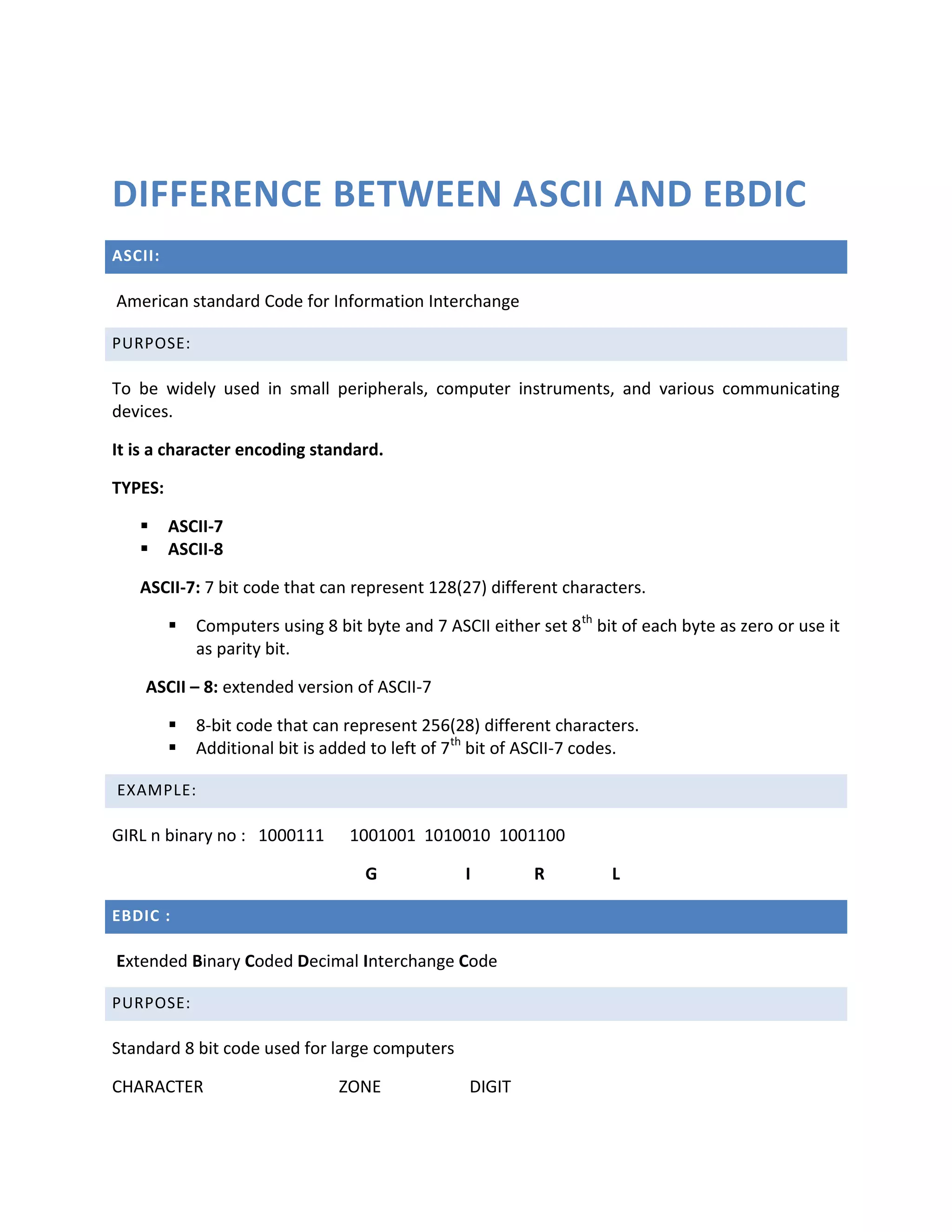
Difference between ASCII and EBDIC<br />ASCII:<br /> American standard Code for Information Interchange<br />PURPOSE: <br />To be widely used in small peripherals, computer instruments, and various communicating devices.<br />It is a character encoding standard.<br />TYPES:<br />ASCII-7
ASCII-8ASCII-7: 7 bit code that can represent 128(27) different characters.<br />Computers using 8 bit byte and 7 ASCII either set 8th bit of each byte as zero or use it as parity bit.         ASCII – 8: extended version of ASCII-7<br />8-bit code that can represent 256(28) different characters.

Difference between ascii and ebdic

  • 1.
    Difference between ASCIIand EBDIC<br />ASCII:<br /> American standard Code for Information Interchange<br />PURPOSE: <br />To be widely used in small peripherals, computer instruments, and various communicating devices.<br />It is a character encoding standard.<br />TYPES:<br />ASCII-7
  • 2.
    ASCII-8ASCII-7: 7 bitcode that can represent 128(27) different characters.<br />Computers using 8 bit byte and 7 ASCII either set 8th bit of each byte as zero or use it as parity bit. ASCII – 8: extended version of ASCII-7<br />8-bit code that can represent 256(28) different characters.
  • 3.
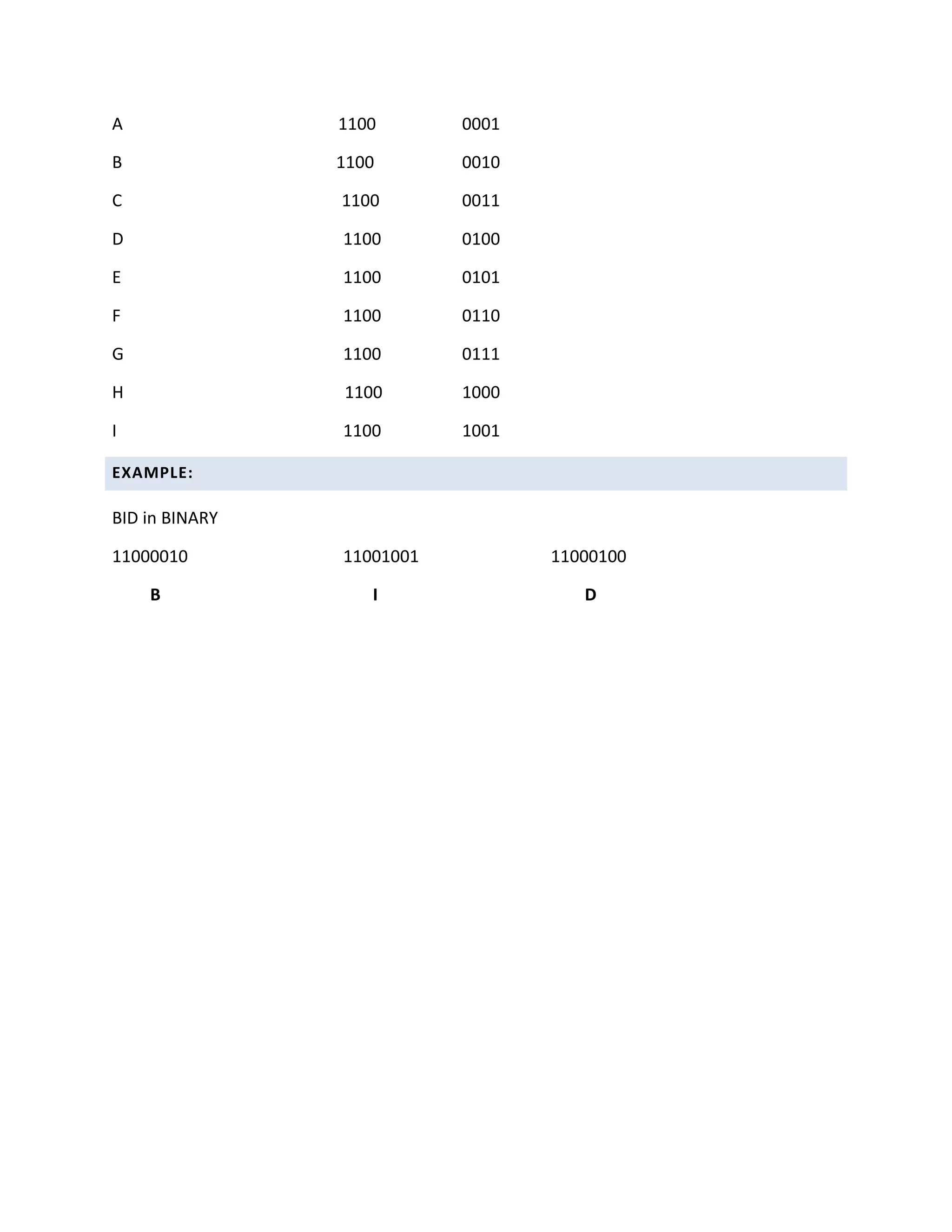
    Additional bit isadded to left of 7th bit of ASCII-7 codes. EXAMPLE: <br />GIRL n binary no : 1000111 1001001 1010010 1001100<br /> G I R L<br />EBDIC :<br /> Extended Binary Coded Decimal Interchange Code<br />PURPOSE: <br />Standard 8 bit code used for large computers<br />CHARACTER ZONE DIGIT<br />A 11000001<br />B11000010<br />C 11000011<br />D11000100<br />E11000101<br />F11000110<br />G11000111<br />H 11001000<br />I 11001001<br />EXAMPLE: <br />BID in BINARY<br />1100001011001001 11000100<br /> B I D<br />