Downloaded 21 times
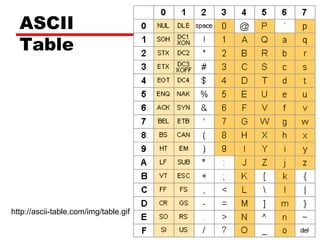
![ASCII CHART
0000
0001
0010
0011
0100
0101
0110
0111
1000
1001
1010
1011
1100
1101
1110
1111
000
NULL
SOH
STX
ETX
EDT
ENQ
ACK
BEL
BS
HT
LF
VT
FF
CR
SO
SI
001
DLE
DC1
DC2
DC3
DC4
NAK
SYN
ETB
CAN
EM
SUB
ESC
FS
GS
RS
US
010
!
"
#
$
%
&
'
(
)
*
+
,
.
/
011
0
1
2
3
4
5
6
7
8
9
:
;
<
=
>
?
100
@
A
B
C
D
E
F
G
H
I
J
K
L
M
N
O
101
P
Q
R
S
T
U
V
W
X
Y
Z
[
]
^
_
110
`
a
b
c
d
e
f
g
h
i
j
k
l
m
n
o
111
p
q
r
s
t
u
v
w
x
y
z
{
|
}
~
DEL](https://image.slidesharecdn.com/appliedphysicsiiilecture3digitalcodes-140304141437-phpapp01/85/Applied-physics-iii-lecture3-digital_codes-23-320.jpg)
![000
001
0000
NULL
DLE
0001
SOH
DC1
0010
STX
DC2
0011
ETX
DC3
0100
EDT
DC4
0101
ENQ
NAK
0110
ACK
SYN
0111
BEL
ETB
1000
BS
CAN
1001
HT
EM
1010
LF
SUB
1011
VT
Least significantESC
bit
1100
FF
FS
1101
CR
GS
1110
SO
RS
1111
SI
US
010
011
0
!
1
"
2
#
3
Most significant bit
$
4
%
5
&
6
'
7
(
8
)
9
*
:
+
;
,
<
=
.
>
/
?
100
@
A
B
C
D
E
F
G
H
I
J
K
L
M
N
O
101
P
Q
R
S
T
U
V
W
X
Y
Z
[
]
^
_
110
`
a
b
c
d
e
f
g
h
i
j
k
l
m
n
o
111
p
q
r
s
t
u
v
w
x
y
z
{
|
}
~
DEL](https://image.slidesharecdn.com/appliedphysicsiiilecture3digitalcodes-140304141437-phpapp01/85/Applied-physics-iii-lecture3-digital_codes-24-320.jpg)
![e.g., ‘a’ = 1100001
0000
0001
0010
0011
0100
0101
0110
0111
1000
1001
1010
1011
1100
1101
1110
1111
000
NULL
SOH
STX
ETX
EDT
ENQ
ACK
BEL
BS
HT
LF
VT
FF
CR
SO
SI
001
DLE
DC1
DC2
DC3
DC4
NAK
SYN
ETB
CAN
EM
SUB
ESC
FS
GS
RS
US
010
!
"
#
$
%
&
'
(
)
*
+
,
.
/
011
0
1
2
3
4
5
6
7
8
9
:
;
<
=
>
?
100
@
A
B
C
D
E
F
G
H
I
J
K
L
M
N
O
101
P
Q
R
S
T
U
V
W
X
Y
Z
[
]
^
_
110
`
a
b
c
d
e
f
g
h
i
j
k
l
m
n
o
111
p
q
r
s
t
u
v
w
x
y
z
{
|
}
~
DEL](https://image.slidesharecdn.com/appliedphysicsiiilecture3digitalcodes-140304141437-phpapp01/85/Applied-physics-iii-lecture3-digital_codes-25-320.jpg)
![95 Graphic codes
0000
0001
0010
0011
0100
0101
0110
0111
1000
1001
1010
1011
1100
1101
1110
1111
000
NULL
SOH
STX
ETX
EDT
ENQ
ACK
BEL
BS
HT
LF
VT
FF
CR
SO
SI
001
DLE
DC1
DC2
DC3
DC4
NAK
SYN
ETB
CAN
EM
SUB
ESC
FS
GS
RS
US
010
!
"
#
$
%
&
'
(
)
*
+
,
.
/
011
0
1
2
3
4
5
6
7
8
9
:
;
<
=
>
?
100
@
A
B
C
D
E
F
G
H
I
J
K
L
M
N
O
101
P
Q
R
S
T
U
V
W
X
Y
Z
[
]
^
_
110
`
a
b
c
d
e
f
g
h
i
j
k
l
m
n
o
111
p
q
r
s
t
u
v
w
x
y
z
{
|
}
~
DEL](https://image.slidesharecdn.com/appliedphysicsiiilecture3digitalcodes-140304141437-phpapp01/85/Applied-physics-iii-lecture3-digital_codes-26-320.jpg)
![33 Control codes
0000
0001
0010
0011
0100
0101
0110
0111
1000
1001
1010
1011
1100
1101
1110
1111
000
NULL
SOH
STX
ETX
EDT
ENQ
ACK
BEL
BS
HT
LF
VT
FF
CR
SO
SI
001
DLE
DC1
DC2
DC3
DC4
NAK
SYN
ETB
CAN
EM
SUB
ESC
FS
GS
RS
US
010
!
"
#
$
%
&
'
(
)
*
+
,
.
/
011
0
1
2
3
4
5
6
7
8
9
:
;
<
=
>
?
100
@
A
B
C
D
E
F
G
H
I
J
K
L
M
N
O
101
P
Q
R
S
T
U
V
W
X
Y
Z
[
]
^
_
110
`
a
b
c
d
e
f
g
h
i
j
k
l
m
n
o
111
p
q
r
s
t
u
v
w
x
y
z
{
|
}
~
DEL](https://image.slidesharecdn.com/appliedphysicsiiilecture3digitalcodes-140304141437-phpapp01/85/Applied-physics-iii-lecture3-digital_codes-27-320.jpg)
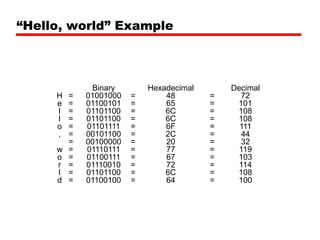
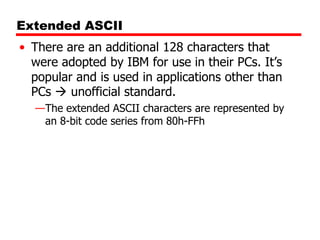
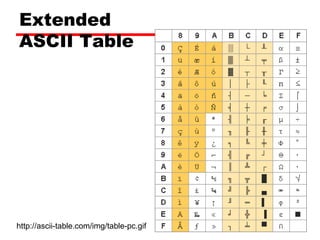
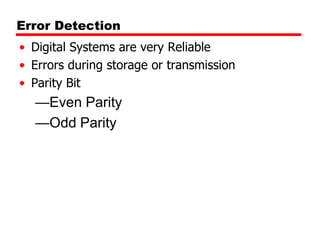
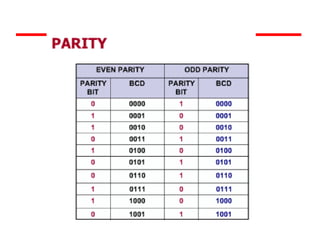
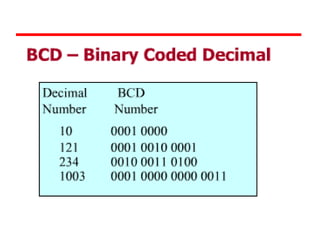

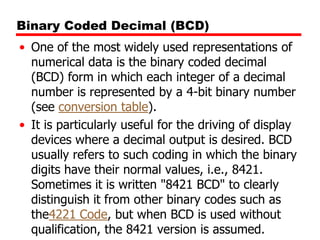
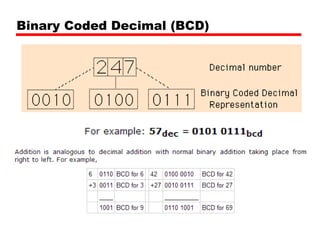
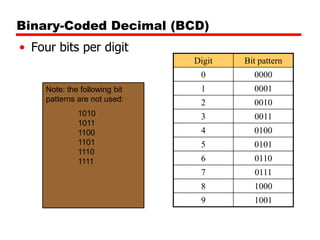
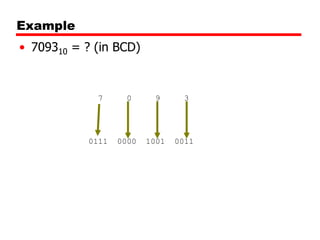
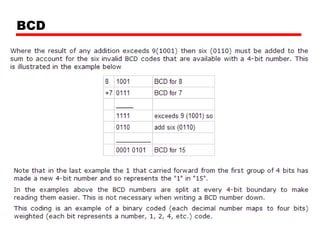
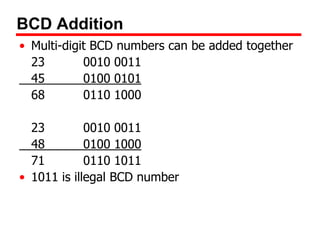
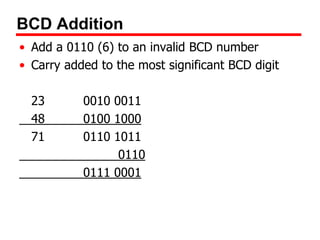
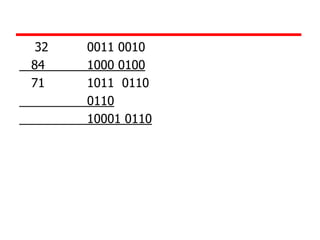
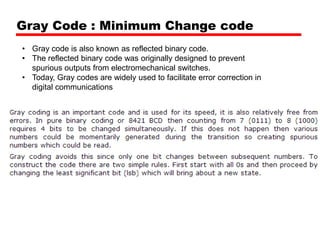
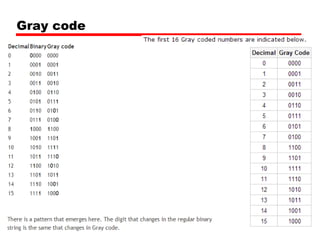
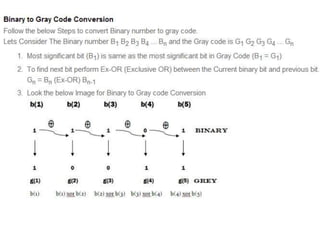
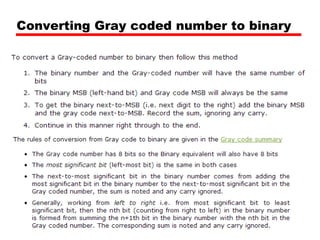
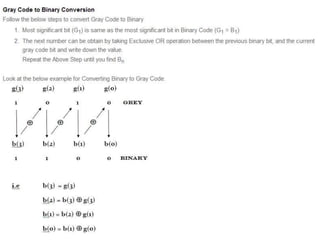
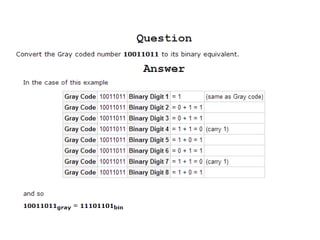
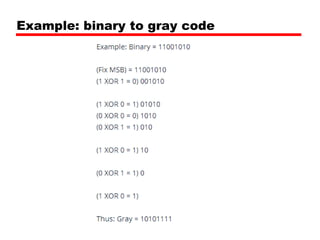
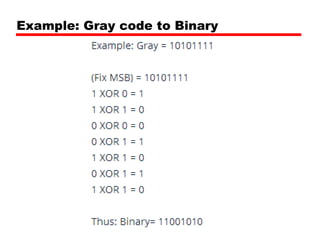
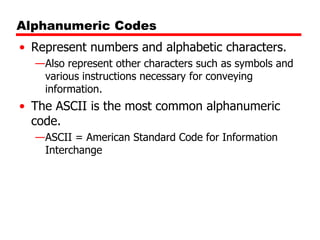
The document discusses different types of digital codes including binary coded decimal (BCD), Gray code, and alphanumeric codes like ASCII. BCD represents each decimal digit with a 4-bit binary pattern. Gray code minimizes bit changes between consecutive codes to reduce errors. ASCII is the most common alphanumeric code that assigns numbers to letters, punctuation, and controls. It uses 7-bit codes with the 8th bit sometimes used for parity.


