07/06/10Body  //  SpacePeople = KnowledgeDiagramming Learning
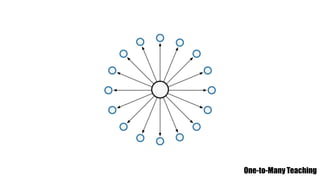
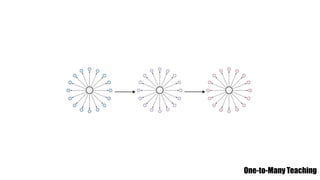
Teaching and EducationTraditionally (and generally) One-to-Many(with occasional group learning, peer-to-peer dialogue)Work through in linear fashion:nursery – infants – primary – secondary – further – higher
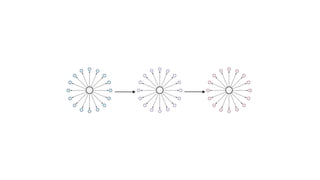
One-to-Many Teaching
Life is not Linear. It is Organic.“We create our lives symbiotically as we explore our talents in relation to the circumstances they help to create for us.”Sir Ken Robinson, “Bring on the Learning Revolution!” TED 2010(http://www.ted.com/talks/sir_ken_robinson_bring_on_the_revolution.html)
Transforming Learning“Human communities depend upon a diversity of talent, not a singular conception of ability.”Sir Ken Robinson, “Bring on the Learning Revolution!” TED 2010Rather than molding the child to learning procedure, let the individual mold their own learning experience.Customised and Quality Assured – Michelin Star, not McDonalds!
Requires a move from Mechanical Production model to Agricultural model“We have to recognise that human flourishing, it’s not a mechanical process; its an organic process. And you cannot predict the outcome of human development. All you can do is (like a farmer) create the conditions under which they will begin to flourish.”“…customising to your circumstances… people develop their own solutions… with external support”Sir Ken Robinson, “Bring on the Learning Revolution!” TED 2010
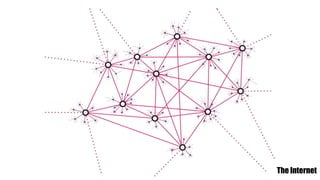
Web 2.0First Generation Broadband.Could not predict development or evolution of applications.Developed organically, and customised by the users.iPhone/iPadCustomise your own device to suit your needs, using externally developed open source applications.
The Internet
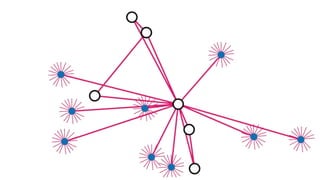
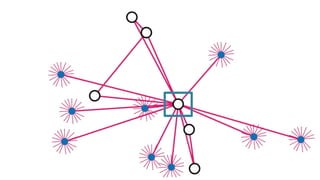
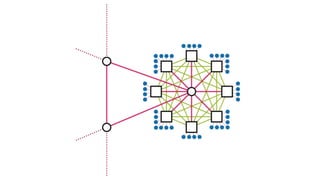
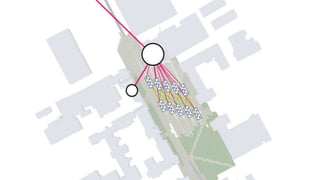
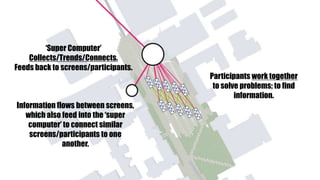
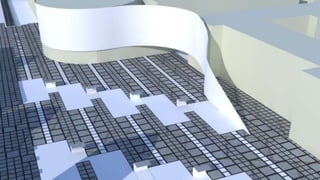
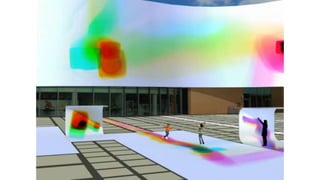
‘Super Computer’Collects/Trends/Connects.Feeds back to screens/participants.Participants work together to solve problems; to find information.Information flows between screens, which also feed into the ‘super computer’ to connect similar screens/participants to one another.
Praxis “…you do something because you want to do it, and after you’ve done it, you find out all the reasons why you did it…”Tony Wilson, in “New Order: Play at Home”, Channel 4 documentary, 1984
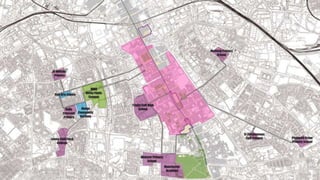
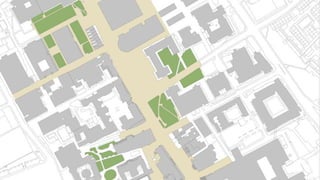
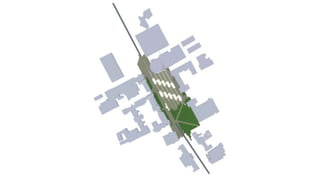
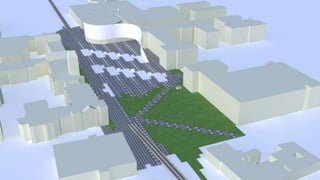
Learning PlazaProvides the platform. Creates the conditions…Allows user configuration.Open source, user generated.Play games, interact with each other, work together.Information from activities is collected, trended, recombined and fed back to participants.Leads to an understanding of what they have just been doing; provides information on how and where to continue gathering relevant information; suggests other groups or individuals on the plaza to team up with…
Active Learning: Ambient LearningTeaching yourself and learning from others without realising that you are doing so.
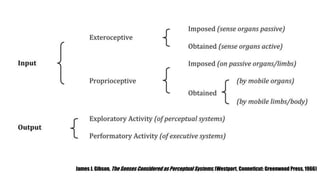
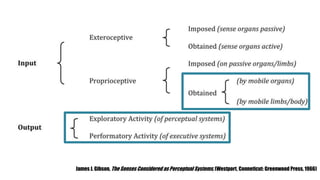
James J. Gibson, The Senses Considered as Perceptual Systems, (Westport, Conneticut: Greenwood Press, 1966)
Obtained InputThrough movement, consciousness and teamwork.“What happens if..?”Exploration. Discovery. Information Gathering.
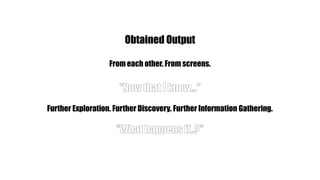
Obtained OutputFrom each other. From screens.“Now that I know…”Further Exploration. Further Discovery. Further Information Gathering.“What happens if..?”

Diagramming learning compressed

  • 1.
    07/06/10Body // SpacePeople = KnowledgeDiagramming Learning
  • 2.
    Teaching and EducationTraditionally(and generally) One-to-Many(with occasional group learning, peer-to-peer dialogue)Work through in linear fashion:nursery – infants – primary – secondary – further – higher
  • 3.
  • 4.
  • 5.
    Life is notLinear. It is Organic.“We create our lives symbiotically as we explore our talents in relation to the circumstances they help to create for us.”Sir Ken Robinson, “Bring on the Learning Revolution!” TED 2010(http://www.ted.com/talks/sir_ken_robinson_bring_on_the_revolution.html)
  • 6.
    Transforming Learning“Human communitiesdepend upon a diversity of talent, not a singular conception of ability.”Sir Ken Robinson, “Bring on the Learning Revolution!” TED 2010Rather than molding the child to learning procedure, let the individual mold their own learning experience.Customised and Quality Assured – Michelin Star, not McDonalds!
  • 7.
    Requires a movefrom Mechanical Production model to Agricultural model“We have to recognise that human flourishing, it’s not a mechanical process; its an organic process. And you cannot predict the outcome of human development. All you can do is (like a farmer) create the conditions under which they will begin to flourish.”“…customising to your circumstances… people develop their own solutions… with external support”Sir Ken Robinson, “Bring on the Learning Revolution!” TED 2010
  • 8.
    Web 2.0First GenerationBroadband.Could not predict development or evolution of applications.Developed organically, and customised by the users.iPhone/iPadCustomise your own device to suit your needs, using externally developed open source applications.
  • 9.
  • 18.
    ‘Super Computer’Collects/Trends/Connects.Feeds backto screens/participants.Participants work together to solve problems; to find information.Information flows between screens, which also feed into the ‘super computer’ to connect similar screens/participants to one another.
  • 24.
    Praxis “…you dosomething because you want to do it, and after you’ve done it, you find out all the reasons why you did it…”Tony Wilson, in “New Order: Play at Home”, Channel 4 documentary, 1984
  • 25.
    Learning PlazaProvides theplatform. Creates the conditions…Allows user configuration.Open source, user generated.Play games, interact with each other, work together.Information from activities is collected, trended, recombined and fed back to participants.Leads to an understanding of what they have just been doing; provides information on how and where to continue gathering relevant information; suggests other groups or individuals on the plaza to team up with…
  • 26.
    Active Learning: AmbientLearningTeaching yourself and learning from others without realising that you are doing so.
  • 27.
    James J. Gibson,The Senses Considered as Perceptual Systems, (Westport, Conneticut: Greenwood Press, 1966)
  • 28.
    James J. Gibson,The Senses Considered as Perceptual Systems, (Westport, Conneticut: Greenwood Press, 1966)
  • 29.
    Obtained InputThrough movement,consciousness and teamwork.“What happens if..?”Exploration. Discovery. Information Gathering.
  • 30.
    Obtained OutputFrom eachother. From screens.“Now that I know…”Further Exploration. Further Discovery. Further Information Gathering.“What happens if..?”