Diabetes mellitus  is a chronic disease characterized by derangement in carbohydrates, fat and protein metabolism
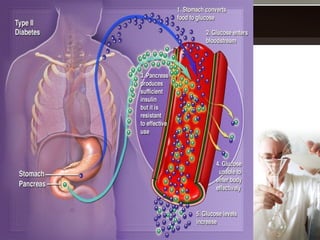
Type 2 diabetes mellitus comprises an array of dysfunctions resulting from:  the combination of resistance to insulin action inadequate insulin secretion. It is disorders are  characterized  by  hyperglycemia  and associated with microvascular (ie, retinal, renal, possibly neuropathic), macrovascular (ie, coronary, peripheral vascular), and neuropathic (ie, autonomic, peripheral) complications.
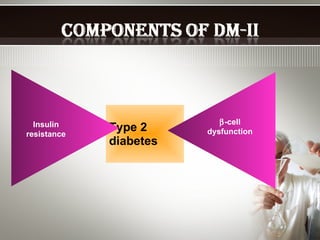
Type 2 diabetes Insulin resistance  -cell dysfunction
Obesity Insulin resistance Abnormal insulin secretion Excess glucose production Beta-cell failure
 
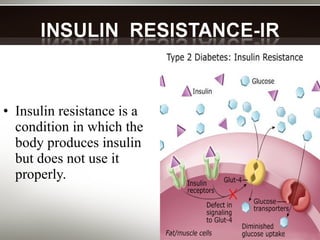
Insulin resistance is a condition in which the body produces insulin but does not use it properly.
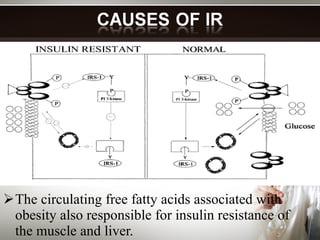
The circulating free fatty acids associated with obesity also responsible for insulin resistance of the muscle and liver.
Decreased glucose uptake by skeletal muscle and adipose tissue. Increased glucose output by Liver-Gluconeogenesis. In the early stages of obesity the pancreas compensates for the IR by overproducing insulin so that glucose homeostasis is maintained. This leads to  HYPERGLYCEMIA & HYPER INSULINEMIA
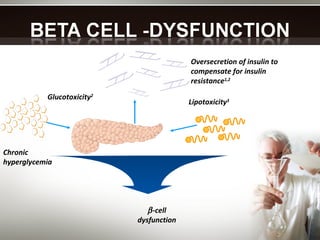
Chronic  hyperglycemia Glucotoxicity 2 Lipotoxicity 3 Oversecretion of insulin to compensate for insulin resistance 1,2  -cell dysfunction
The elevated levels of free fatty acids and or cytokines lead to gradual loss of the ability of the pancreas to overproduce  insulin , a process called decompensation- Lipotoxity Glucose, the main regulator of insulin secretion and production, exerts negative effects on beta-cell function when present in excessive amounts over a prolonged period- glucotoxicity .
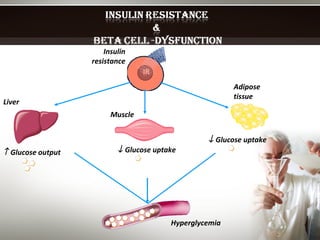
IR Insulin resistance Liver Muscle Adipose tissue    Glucose output    Glucose uptake    Glucose uptake Hyperglycemia
It rarely develops in DM-II Insulin present in DM-II is enough to prevent uncontrollable release of fatty acids from adipocytes and fattyacids reaching the liver or synthesized  de novo are directed to triacyglycerol.
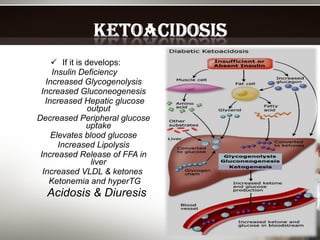
If it is develops: Insulin Deficiency  Increased Glycogenolysis Increased Gluconeogenesis Increased Hepatic glucose output Decreased Peripheral glucose uptake Elevates blood glucose Increased Lipolysis Increased Release of FFA in liver Increased VLDL & ketones  Ketonemia and hyperTG Acidosis & Diuresis
It is a characteristics of DM-II Results  from an increase in VLDL without hyperchylomicronemia. This happens by hepatic synthesis of fatty acids and diversion of free fatty acids reaching the liver in to triacylglycerol and VLDL.
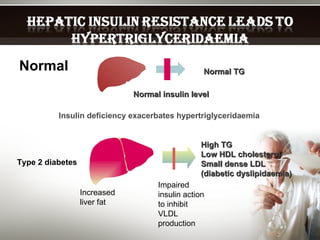
Normal Normal TG Type 2 diabetes High TG Low HDL cholesterol Small dense LDL (diabetic dyslipidaemia) Normal insulin level Impaired insulin action to inhibit VLDL production Increased  liver fat Insulin deficiency exacerbates hypertriglyceridaemia
Chronic complications –    Microvascular-  retinopathy ,    nephropathy,   neuropathy.    Macrovascular - cardiovascular,   cerebrovascular,   peripheral vascular   diseases.    Acute complications – diabetic ketoacidosis,   hyperosmalor coma.
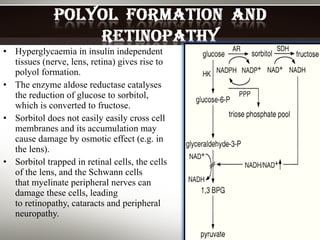
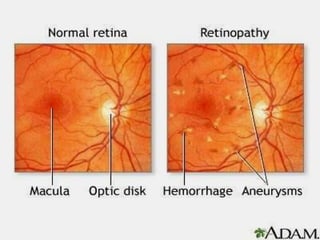
Hyperglycaemia in insulin independent tissues (nerve, lens, retina) gives rise to polyol formation. The enzyme aldose reductase catalyses the reduction of glucose to sorbitol, which is converted to fructose. Sorbitol does not easily easily cross cell membranes and its accumulation may cause damage by osmotic effect (e.g. in the lens). Sorbitol trapped in retinal cells, the cells of the lens, and the Schwann cells that myelinate peripheral nerves can damage these cells, leading to retinopathy, cataracts and peripheral neuropathy.
 
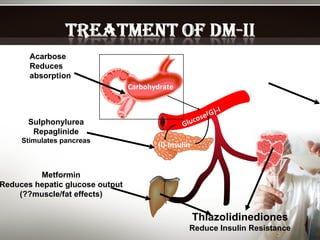
Carbohydrate Glucose(G)-I (I)-Insulin Carbohydrate Acarbose Reduces  absorption Sulphonylurea Repaglinide Stimulates pancreas Metformin Reduces hepatic glucose output (??muscle/fat effects) Thiazolidinediones Reduce Insulin Resistance


Diabetes mellitus type 2

  • 1.
  • 2.
    Diabetes mellitus is a chronic disease characterized by derangement in carbohydrates, fat and protein metabolism
  • 3.
    Type 2 diabetesmellitus comprises an array of dysfunctions resulting from: the combination of resistance to insulin action inadequate insulin secretion. It is disorders are characterized by hyperglycemia and associated with microvascular (ie, retinal, renal, possibly neuropathic), macrovascular (ie, coronary, peripheral vascular), and neuropathic (ie, autonomic, peripheral) complications.
  • 4.
    Type 2 diabetesInsulin resistance  -cell dysfunction
  • 5.
    Obesity Insulin resistanceAbnormal insulin secretion Excess glucose production Beta-cell failure
  • 6.
  • 7.
    Insulin resistance isa condition in which the body produces insulin but does not use it properly.
  • 8.
    The circulating freefatty acids associated with obesity also responsible for insulin resistance of the muscle and liver.
  • 9.
    Decreased glucose uptakeby skeletal muscle and adipose tissue. Increased glucose output by Liver-Gluconeogenesis. In the early stages of obesity the pancreas compensates for the IR by overproducing insulin so that glucose homeostasis is maintained. This leads to HYPERGLYCEMIA & HYPER INSULINEMIA
  • 10.
    Chronic hyperglycemiaGlucotoxicity 2 Lipotoxicity 3 Oversecretion of insulin to compensate for insulin resistance 1,2  -cell dysfunction
  • 11.
    The elevated levelsof free fatty acids and or cytokines lead to gradual loss of the ability of the pancreas to overproduce insulin , a process called decompensation- Lipotoxity Glucose, the main regulator of insulin secretion and production, exerts negative effects on beta-cell function when present in excessive amounts over a prolonged period- glucotoxicity .
  • 12.
    IR Insulin resistanceLiver Muscle Adipose tissue  Glucose output  Glucose uptake  Glucose uptake Hyperglycemia
  • 13.
    It rarely developsin DM-II Insulin present in DM-II is enough to prevent uncontrollable release of fatty acids from adipocytes and fattyacids reaching the liver or synthesized de novo are directed to triacyglycerol.
  • 14.
    If it isdevelops: Insulin Deficiency Increased Glycogenolysis Increased Gluconeogenesis Increased Hepatic glucose output Decreased Peripheral glucose uptake Elevates blood glucose Increased Lipolysis Increased Release of FFA in liver Increased VLDL & ketones Ketonemia and hyperTG Acidosis & Diuresis
  • 15.
    It is acharacteristics of DM-II Results from an increase in VLDL without hyperchylomicronemia. This happens by hepatic synthesis of fatty acids and diversion of free fatty acids reaching the liver in to triacylglycerol and VLDL.
  • 16.
    Normal Normal TGType 2 diabetes High TG Low HDL cholesterol Small dense LDL (diabetic dyslipidaemia) Normal insulin level Impaired insulin action to inhibit VLDL production Increased liver fat Insulin deficiency exacerbates hypertriglyceridaemia
  • 17.
    Chronic complications – Microvascular- retinopathy , nephropathy, neuropathy.  Macrovascular - cardiovascular, cerebrovascular, peripheral vascular diseases.  Acute complications – diabetic ketoacidosis, hyperosmalor coma.
  • 18.
    Hyperglycaemia in insulinindependent tissues (nerve, lens, retina) gives rise to polyol formation. The enzyme aldose reductase catalyses the reduction of glucose to sorbitol, which is converted to fructose. Sorbitol does not easily easily cross cell membranes and its accumulation may cause damage by osmotic effect (e.g. in the lens). Sorbitol trapped in retinal cells, the cells of the lens, and the Schwann cells that myelinate peripheral nerves can damage these cells, leading to retinopathy, cataracts and peripheral neuropathy.
  • 19.
  • 20.
    Carbohydrate Glucose(G)-I (I)-InsulinCarbohydrate Acarbose Reduces absorption Sulphonylurea Repaglinide Stimulates pancreas Metformin Reduces hepatic glucose output (??muscle/fat effects) Thiazolidinediones Reduce Insulin Resistance
  • 21.
  • 22.