Definition
Some imp Terms
Types
Adaptations
Pollinating Agents
Significance
Advantage &
disadvantage of self
& cross pollination
SOME IMPORTANAT TERMINOLOGY
1. MONOCIOUS PLANTS:-When a flower contains
both stamens and pistils, the flower is said to be
perfect. The plant which contains perfect flowers is
known as a monoecious plant because it has both
male and female reproductive organs in the same
plant
2. DIOCIOUS PLANTS:-When a plant bears either
staminate flowers or pistillate flowers, the plant is
known as a dioecious plant.
 You can find only one type of flowers from a dioecious
plant.
 Male and female reproductive organs are located in
separate plants.
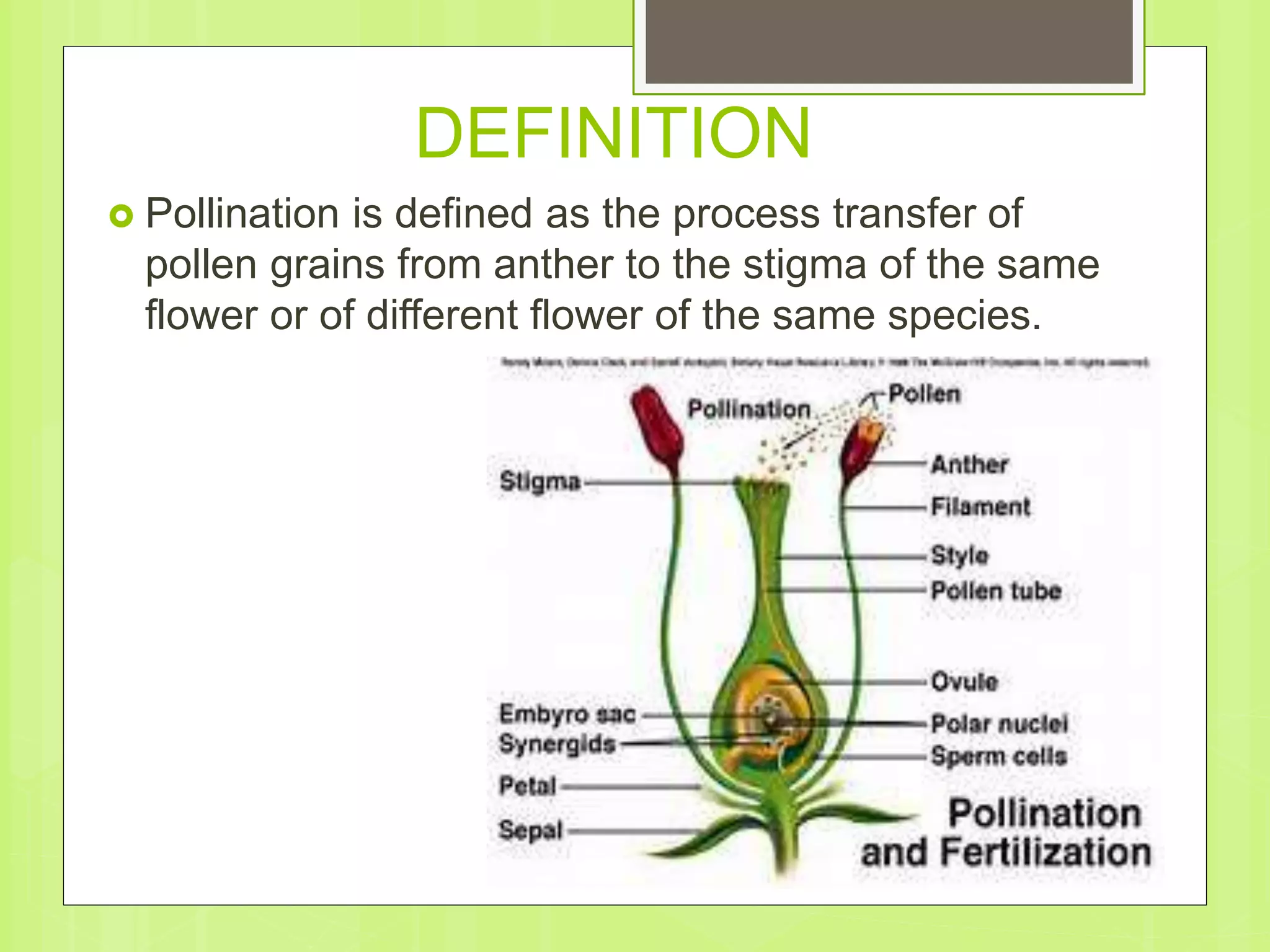
DEFINITION
 Pollination is defined as the process transfer of
pollen grains from anther to the stigma of the same
flower or of different flower of the same species.
TYPES OF POLLINATION
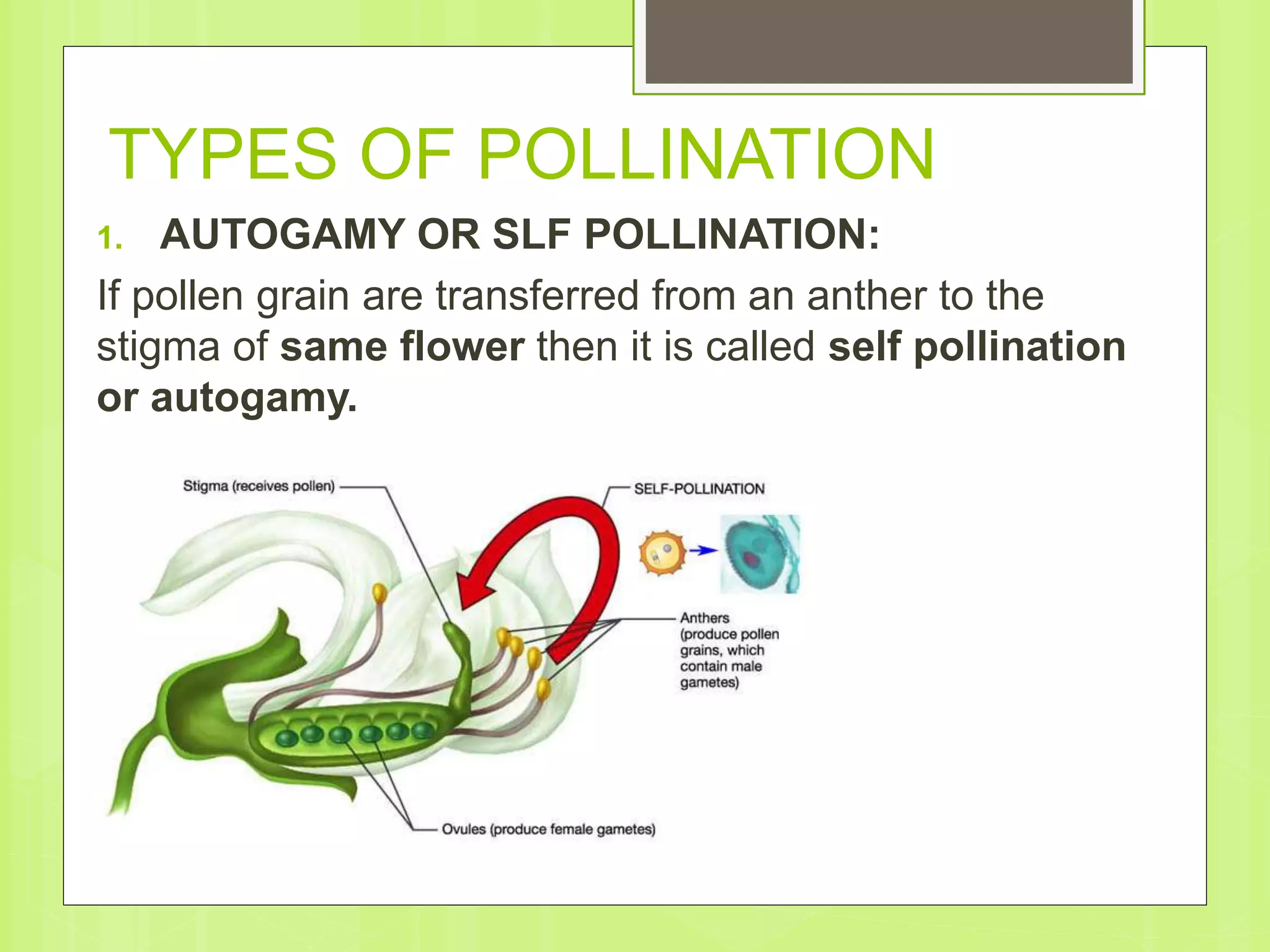
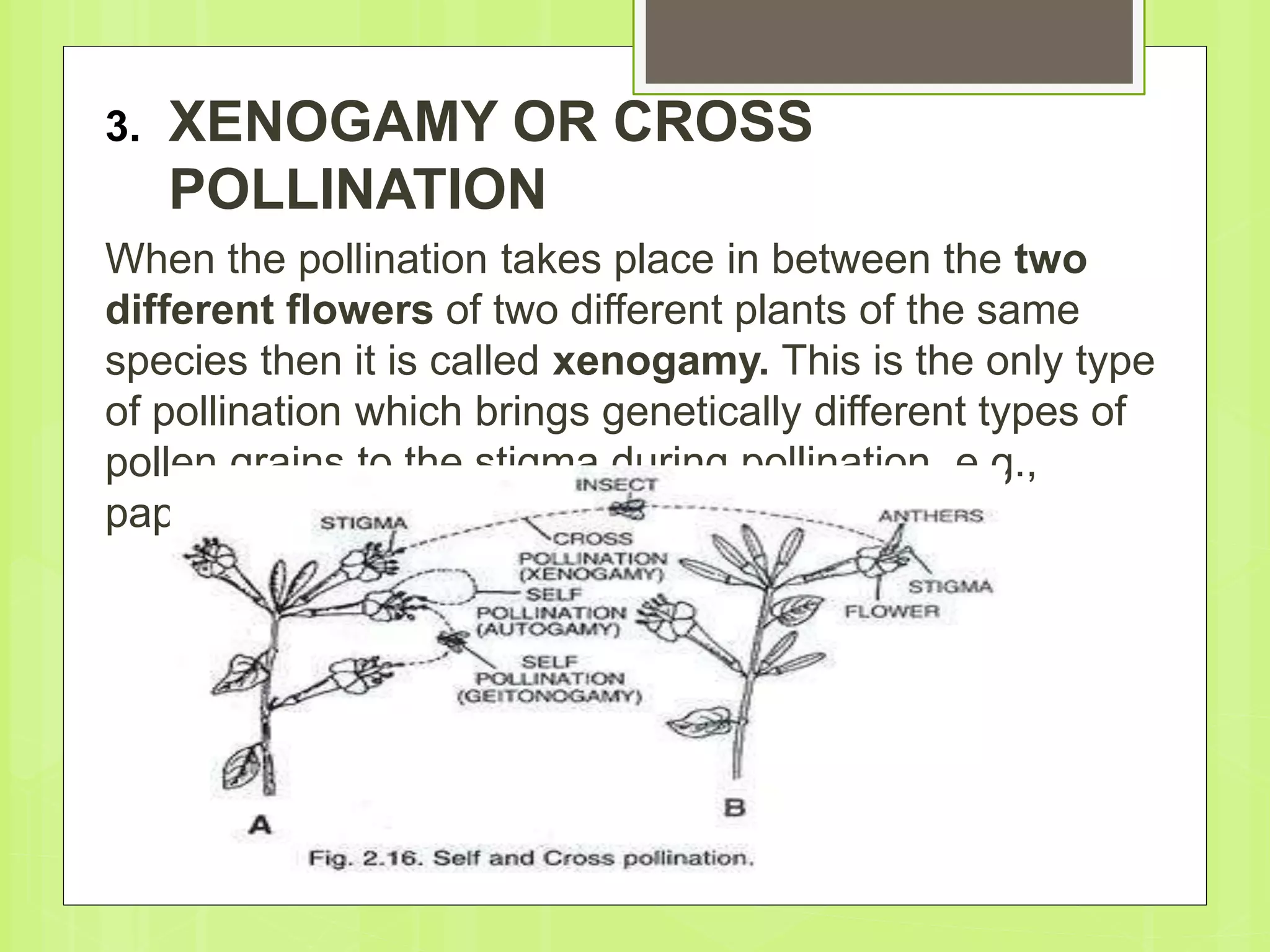
1. AUTOGAMY OR SLF POLLINATION:
If pollen grain are transferred from an anther to the
stigma of same flower then it is called self pollination
or autogamy.
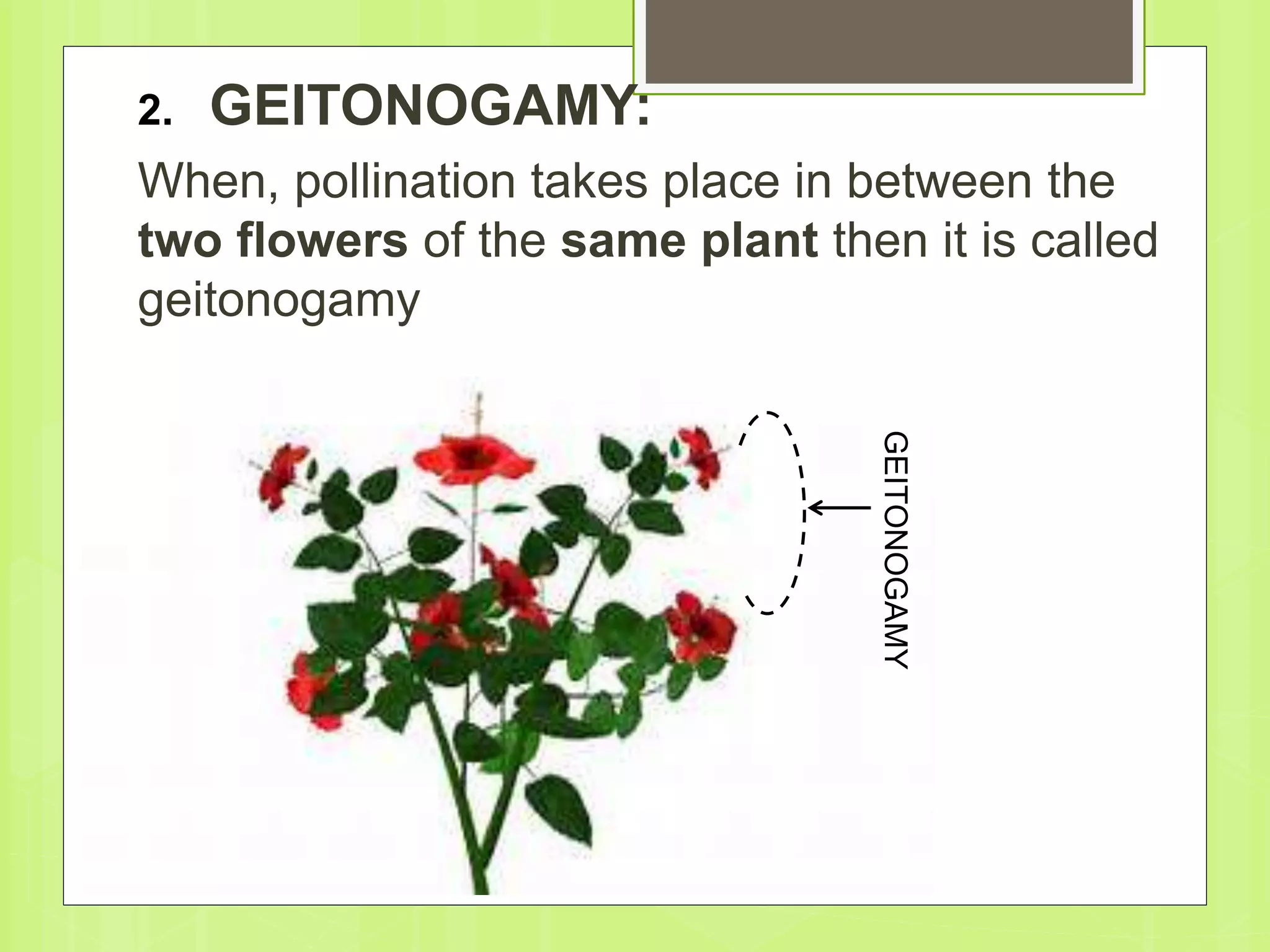
2. GEITONOGAMY:
When, pollination takes place in between the
two flowers of the same plant then it is called
geitonogamy
GEITONOGAMY
3. XENOGAMY OR CROSS
POLLINATION
When the pollination takes place in between the two
different flowers of two different plants of the same
species then it is called xenogamy. This is the only type
of pollination which brings genetically different types of
pollen grains to the stigma during pollination, e.g.,
papaya, maize, etc.
CONTRIVENCE OR ADAPTAION FOR
SELF POLLINATION
1. MONOCLINY (Bisexuality):- It means flowers are
bisexual
2. Homogamy:- when both the sex organs of flower
mature at the same time. Ex mirabilis
3. Cleistogamy :-In some plants, flowers never open up
and the anthers dehisce inside these closed flowers
to ensure pollination. Thus, cleistogamous flowers
are invariably autogamous as there is no chance of
cross-pollination. These flowers produce assured
seed sets even in the absence of pollinators, e.g.,
Oxalis
Adaptations for cross pollination
1. Dicliny(Unisexuality):-presence of unisexual
flower.
2. Dichogamy :-stamens and carpels of flower do
not mature at same time
• Protandry :-Anther of flower mature earlier than
carpel. ex salvia & sun flower
• Protogyny:-the carpel of flower mature earlier
than stamens.
3. Chasmogamy or anthesis:-opening of floral
bud in the form of a flower.
 Herkogamy:- In some plants morphological barriers are
formed in between the anther and stigma of the same
flower so self pollination can not occurs and pollen grains
from the anthers are unable to reach the stigma of the
same flower . Ex Gloriosa
 Heterostyly:- There is difference in between the length of
the filaments of stamens and length of style in flowers of
some plants. Ex primrose
 Self incompatibility :- when a pollen grain produced in a
plant reaches a stigma of the same plant or another plant
with a similar genotype, the process of pollen germination,
pollen-tube
growth, ovule fertilization and embryo development is
halted at one of its stages and consequently no seeds are
produced.
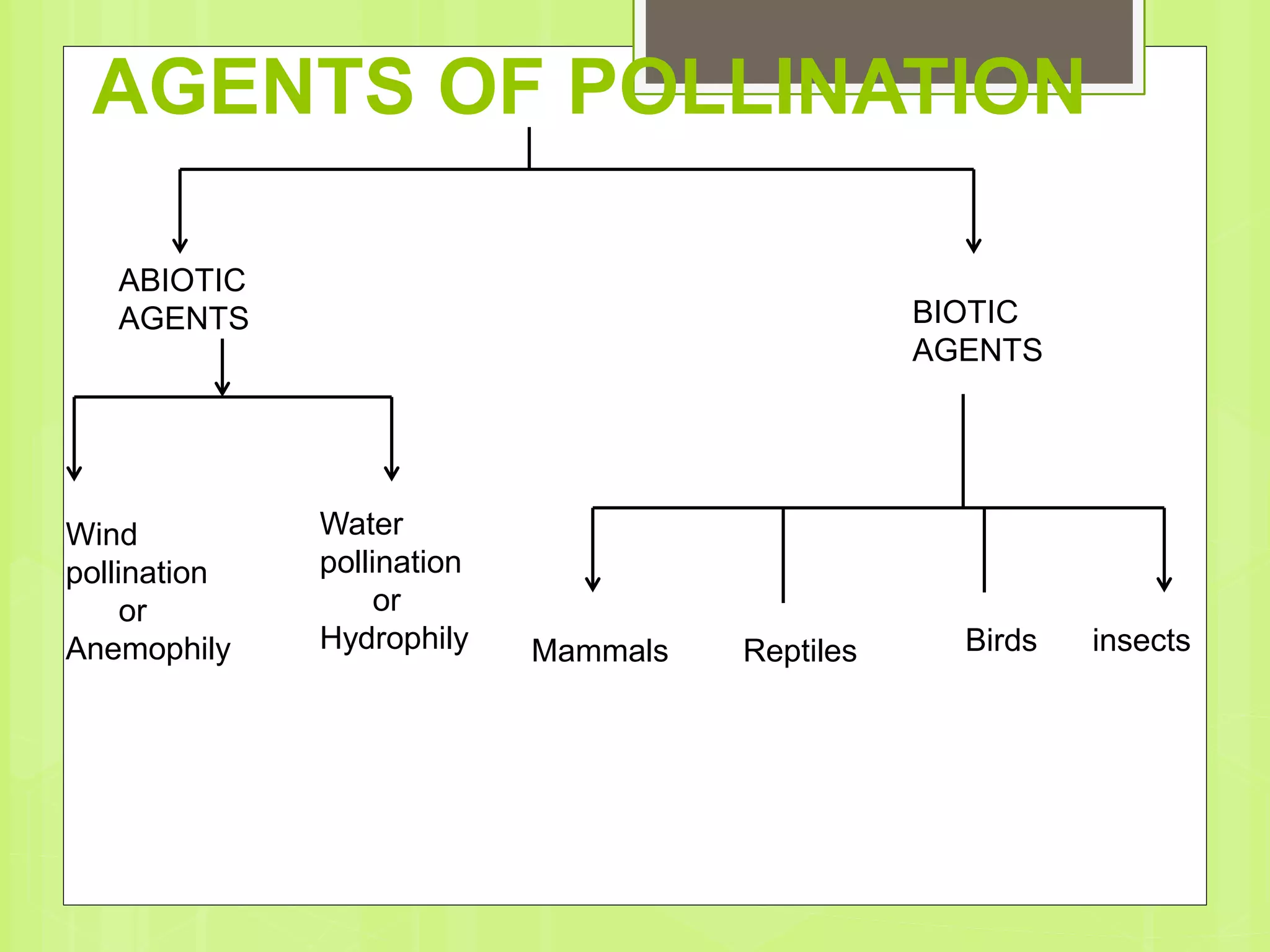
AGENTS OF POLLINATION
ABIOTIC
AGENTS BIOTIC
AGENTS
Mammals Reptiles Birds insects
Water
pollination
or
Hydrophily
Wind
pollination
or
Anemophily
 Pollination is a vital process of nature.
 It is estimated that ¾ of our staple crops, and 1/3 of all food
crops require pollination.
 For the fruit seeds to develop, pollen has to be transferred
between two flowers of the same species, which then
fertilizes the flower and allows the production of healthy
seeds on the plant.
 Pollinators play an essential role in pollination as they work
as medium for pollination to be occur.
 he most widely known pollinators are honey bees. Honey
bees are responsible for the pollination and thus production
of $19 billion worth of food crops each year, just in the
United States alone!
 There are many other pollinators that are just as vital to
food crop productions and plant reproduction as honey
bees, but aren’t as well known such as wasps, moths, flies,
butterflies, beetles, bats, birds, and ants.
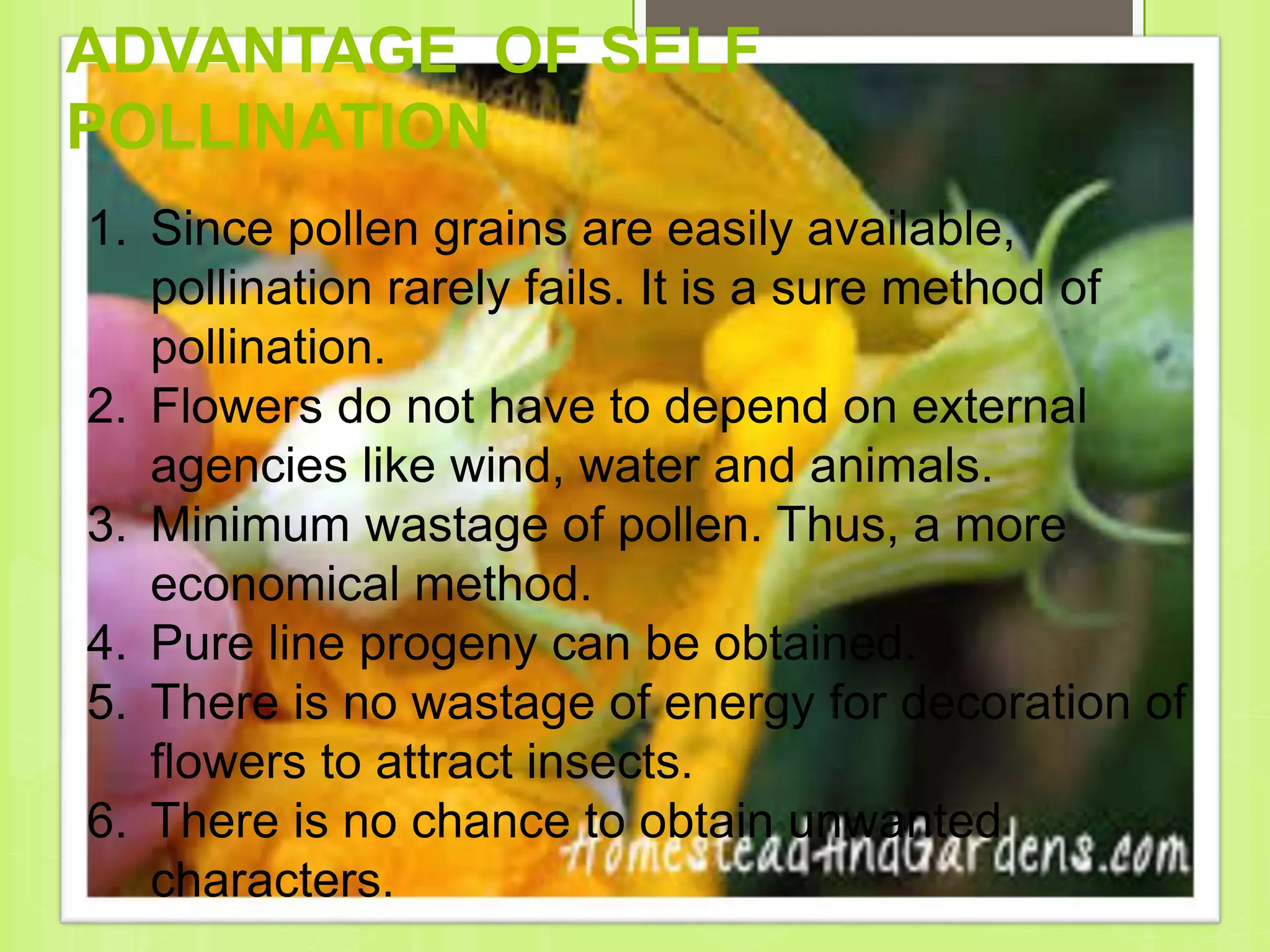
ADVANTAGE OF SELF
POLLINATION
1. Since pollen grains are easily available,
pollination rarely fails. It is a sure method of
pollination.
2. Flowers do not have to depend on external
agencies like wind, water and animals.
3. Minimum wastage of pollen. Thus, a more
economical method.
4. Pure line progeny can be obtained.
5. There is no wastage of energy for decoration of
flowers to attract insects.
6. There is no chance to obtain unwanted
characters.
1. Progeny shows less vigor due to
continued self pollination.
2. No possibility of introduction of new
desirable characters
3. Undesirable characters cannot be
eliminated.
4. It does not help in evolution.
5. Disease resistant capacity becomes
less.
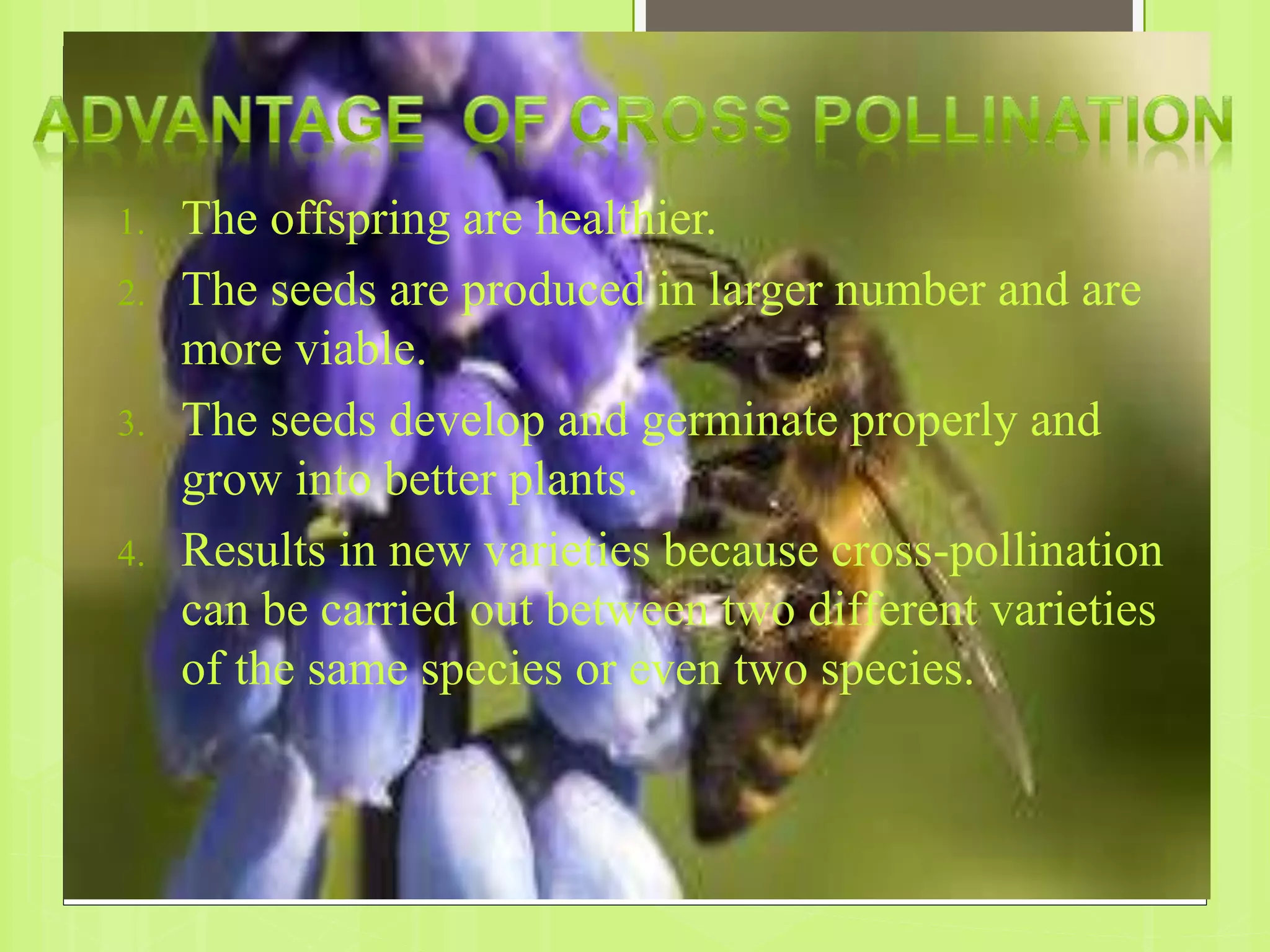
1. The offspring are healthier.
2. The seeds are produced in larger number and are
more viable.
3. The seeds develop and germinate properly and
grow into better plants.
4. Results in new varieties because cross-pollination
can be carried out between two different varieties
of the same species or even two species.
1. It is not always certain as a pollinating agent is
always required, and it may or may not be
available at the suitable time.
2. Pollen grains have to be produced in abundance
to ensure chances of pollination. This results in
lot of wastage of pollen.
3. It is uneconomical for plants as they have to
produce flowers that are large, perfumed and
with nectar to attract insects.
Developmental.ppt

Developmental.ppt

  • 1.
    Definition Some imp Terms Types Adaptations PollinatingAgents Significance Advantage & disadvantage of self & cross pollination
  • 2.
    SOME IMPORTANAT TERMINOLOGY 1.MONOCIOUS PLANTS:-When a flower contains both stamens and pistils, the flower is said to be perfect. The plant which contains perfect flowers is known as a monoecious plant because it has both male and female reproductive organs in the same plant 2. DIOCIOUS PLANTS:-When a plant bears either staminate flowers or pistillate flowers, the plant is known as a dioecious plant.  You can find only one type of flowers from a dioecious plant.  Male and female reproductive organs are located in separate plants.
  • 3.
    DEFINITION  Pollination isdefined as the process transfer of pollen grains from anther to the stigma of the same flower or of different flower of the same species.
  • 4.
    TYPES OF POLLINATION 1.AUTOGAMY OR SLF POLLINATION: If pollen grain are transferred from an anther to the stigma of same flower then it is called self pollination or autogamy.
  • 5.
    2. GEITONOGAMY: When, pollinationtakes place in between the two flowers of the same plant then it is called geitonogamy GEITONOGAMY
  • 6.
    3. XENOGAMY ORCROSS POLLINATION When the pollination takes place in between the two different flowers of two different plants of the same species then it is called xenogamy. This is the only type of pollination which brings genetically different types of pollen grains to the stigma during pollination, e.g., papaya, maize, etc.
  • 7.
    CONTRIVENCE OR ADAPTAIONFOR SELF POLLINATION 1. MONOCLINY (Bisexuality):- It means flowers are bisexual 2. Homogamy:- when both the sex organs of flower mature at the same time. Ex mirabilis 3. Cleistogamy :-In some plants, flowers never open up and the anthers dehisce inside these closed flowers to ensure pollination. Thus, cleistogamous flowers are invariably autogamous as there is no chance of cross-pollination. These flowers produce assured seed sets even in the absence of pollinators, e.g., Oxalis
  • 8.
    Adaptations for crosspollination 1. Dicliny(Unisexuality):-presence of unisexual flower. 2. Dichogamy :-stamens and carpels of flower do not mature at same time • Protandry :-Anther of flower mature earlier than carpel. ex salvia & sun flower • Protogyny:-the carpel of flower mature earlier than stamens. 3. Chasmogamy or anthesis:-opening of floral bud in the form of a flower.
  • 9.
     Herkogamy:- Insome plants morphological barriers are formed in between the anther and stigma of the same flower so self pollination can not occurs and pollen grains from the anthers are unable to reach the stigma of the same flower . Ex Gloriosa  Heterostyly:- There is difference in between the length of the filaments of stamens and length of style in flowers of some plants. Ex primrose  Self incompatibility :- when a pollen grain produced in a plant reaches a stigma of the same plant or another plant with a similar genotype, the process of pollen germination, pollen-tube growth, ovule fertilization and embryo development is halted at one of its stages and consequently no seeds are produced.
  • 10.
    AGENTS OF POLLINATION ABIOTIC AGENTSBIOTIC AGENTS Mammals Reptiles Birds insects Water pollination or Hydrophily Wind pollination or Anemophily
  • 11.
     Pollination isa vital process of nature.  It is estimated that ¾ of our staple crops, and 1/3 of all food crops require pollination.  For the fruit seeds to develop, pollen has to be transferred between two flowers of the same species, which then fertilizes the flower and allows the production of healthy seeds on the plant.  Pollinators play an essential role in pollination as they work as medium for pollination to be occur.  he most widely known pollinators are honey bees. Honey bees are responsible for the pollination and thus production of $19 billion worth of food crops each year, just in the United States alone!  There are many other pollinators that are just as vital to food crop productions and plant reproduction as honey bees, but aren’t as well known such as wasps, moths, flies, butterflies, beetles, bats, birds, and ants.
  • 12.
    ADVANTAGE OF SELF POLLINATION 1.Since pollen grains are easily available, pollination rarely fails. It is a sure method of pollination. 2. Flowers do not have to depend on external agencies like wind, water and animals. 3. Minimum wastage of pollen. Thus, a more economical method. 4. Pure line progeny can be obtained. 5. There is no wastage of energy for decoration of flowers to attract insects. 6. There is no chance to obtain unwanted characters.
  • 13.
    1. Progeny showsless vigor due to continued self pollination. 2. No possibility of introduction of new desirable characters 3. Undesirable characters cannot be eliminated. 4. It does not help in evolution. 5. Disease resistant capacity becomes less.
  • 14.
    1. The offspringare healthier. 2. The seeds are produced in larger number and are more viable. 3. The seeds develop and germinate properly and grow into better plants. 4. Results in new varieties because cross-pollination can be carried out between two different varieties of the same species or even two species.
  • 15.
    1. It isnot always certain as a pollinating agent is always required, and it may or may not be available at the suitable time. 2. Pollen grains have to be produced in abundance to ensure chances of pollination. This results in lot of wastage of pollen. 3. It is uneconomical for plants as they have to produce flowers that are large, perfumed and with nectar to attract insects.