Developing Literacy through
Mobile Phones: Malaysia’s
Perspective
FADZLIATON ZAINUDIN
UNESCO Asia & the Pacific Regional
Consultation Workshop
27-28 November 2012
Bangkok, Thailand
Malaysia Basic Indicators
Source: Malaysian Communications and
Multimedia Commission
Literacy at A Glance
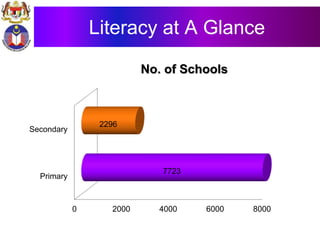
0 2000 4000 6000 8000
Primary
Secondary
7723
2296
No. of Schools
Literacy at A Glance
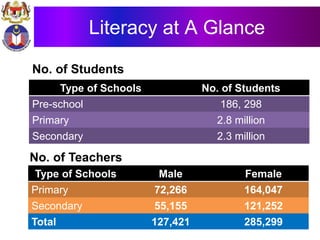
Type of Schools No. of Students
Pre-school 186, 298
Primary 2.8 million
Secondary 2.3 million
No. of Students
No. of Teachers
Type of Schools Male Female
Primary 72,266 164,047
Secondary 55,155 121,252
Total 127,421 285,299
Literacy at A Glance
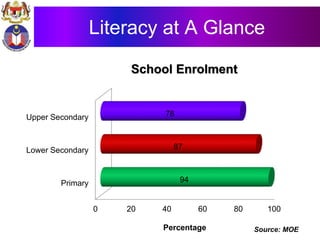
0 20 40 60 80 100
Primary
Lower Secondary
Upper Secondary
94
87
78
School Enrolment
Percentage Source: MOE
Literacy at A Glance
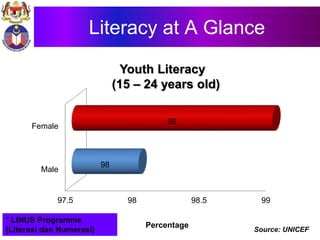
97.5 98 98.5 99
Male
Female
98
99
Youth Literacy
(15 – 24 years old)
Source: UNICEF
Percentage
* LINUS Programme
(Literasi dan Numerasi)
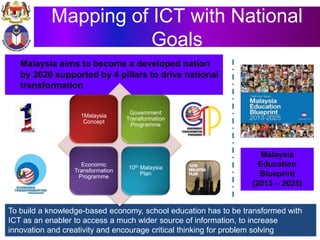
To build a knowledge-based economy, school education has to be transformed with
ICT as an enabler to access a much wider source of information, to increase
innovation and creativity and encourage critical thinking for problem solving
Mapping of ICT with National
Goals
Malaysia aims to become a developed nation
by 2020 supported by 4 pillars to drive national
transformation
Malaysia
Education
Blueprint
(2013 – 2025)
1Malaysia
Concept
Government
Transformation
Programme
Economic
Transformation
Programme
10th Malaysia
Plan
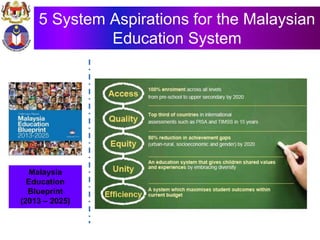
5 System Aspirations for the Malaysian
Education System
Malaysia
Education
Blueprint
(2013 – 2025)
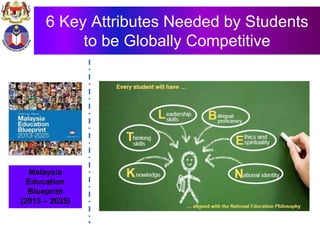
6 Key Attributes Needed by Students
to be Globally Competitive
Malaysia
Education
Blueprint
(2013 – 2025)
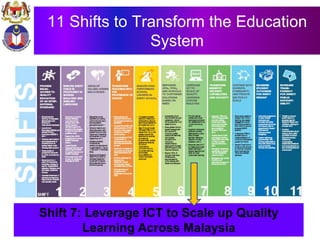
11 Shifts to Transform the Education
System
Shift 7: Leverage ICT to Scale up Quality
Learning Across Malaysia
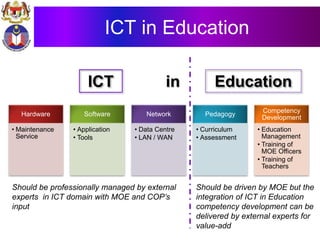
ICT in Education
Hardware
• Maintenance
Service
Software
• Application
• Tools
Network
• Data Centre
• LAN / WAN
Pedagogy
• Curriculum
• Assessment
Competency
Development
• Education
Management
• Training of
MOE Officers
• Training of
Teachers
ICT in Education
Should be professionally managed by external
experts in ICT domain with MOE and COP’s
input
Should be driven by MOE but the
integration of ICT in Education
competency development can be
delivered by external experts for
value-add
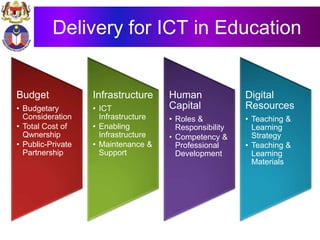
Delivery for ICT in Education
Budget
• Budgetary
Consideration
• Total Cost of
Qwnership
• Public-Private
Partnership
Infrastructure
• ICT
Infrastructure
• Enabling
Infrastructure
• Maintenance &
Support
Human
Capital
• Roles &
Responsibility
• Competency &
Professional
Development
Digital
Resources
• Teaching &
Learning
Strategy
• Teaching &
Learning
Materials
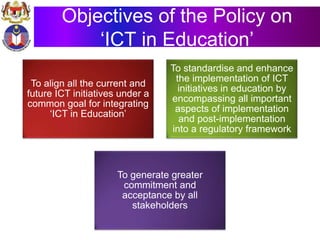
Objectives of the Policy on
‘ICT in Education’
To align all the current and
future ICT initiatives under a
common goal for integrating
‘ICT in Education’
To standardise and enhance
the implementation of ICT
initiatives in education by
encompassing all important
aspects of implementation
and post-implementation
into a regulatory framework
To generate greater
commitment and
acceptance by all
stakeholders
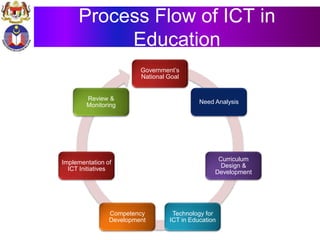
Process Flow of ICT in
Education
Government’s
National Goal
Need Analysis
Curriculum
Design &
Development
Technology for
ICT in Education
Competency
Development
Implementation of
ICT Initiatives
Review &
Monitoring
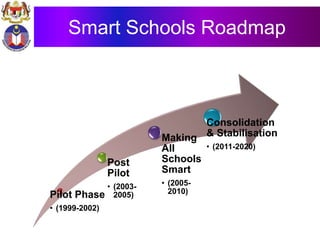
Smart Schools Roadmap
Pilot Phase
• (1999-2002)
Post
Pilot
• (2003-
2005)
Making
All
Schools
Smart
• (2005-
2010)
Consolidation
& Stabilisation
• (2011-2020)
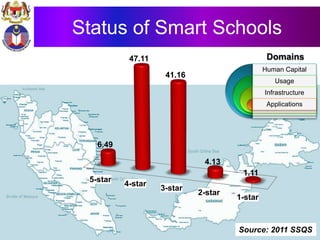
Status of Smart Schools
5-star
4-star
3-star
2-star
1-star
6.49
47.11
41.16
4.13
1.11
Source: 2011 SSQS
Human Capital
Usage
Infrastructure
Applications
Domains
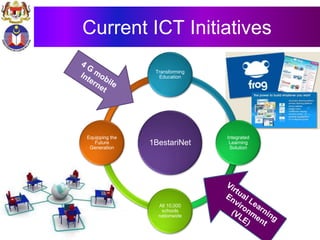
Current ICT Initiatives
1BestariNet
Transforming
Education
Integrated
Learning
Solution
All 10,000
schools
nationwide
Equipping the
Future
Generation
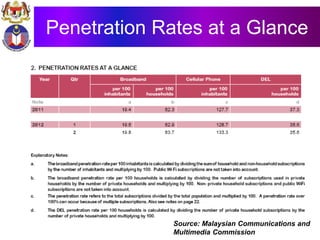
Penetration Rates at a Glance
Source: Malaysian Communications and
Multimedia Commission
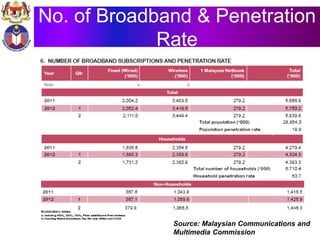
No. of Broadband & Penetration
Rate
Source: Malaysian Communications and
Multimedia Commission
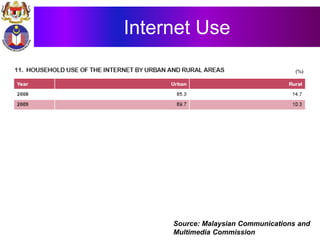
Internet Use
Source: Malaysian Communications and
Multimedia Commission
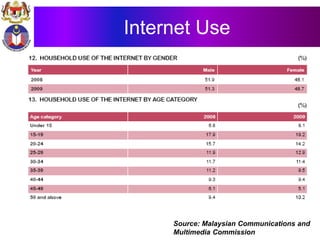
Internet Use
Source: Malaysian Communications and
Multimedia Commission
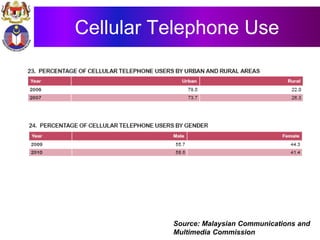
Cellular Telephone Use
Source: Malaysian Communications and
Multimedia Commission
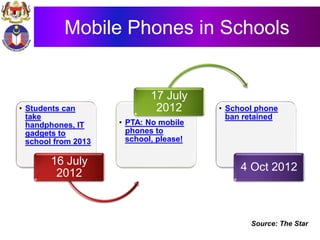
Mobile Phones in Schools
Source: The Star
• Students can
take
handphones, IT
gadgets to
school from 2013
16 July
2012
• PTA: No mobile
phones to
school, please!
17 July
2012 • School phone
ban retained
4 Oct 2012
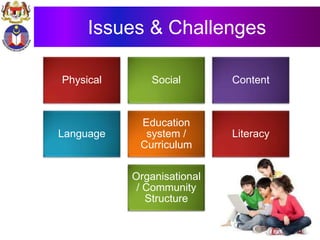
Issues & Challenges
Physical Social Content
Language
Education
system /
Curriculum
Literacy
Organisational
/ Community
Structure
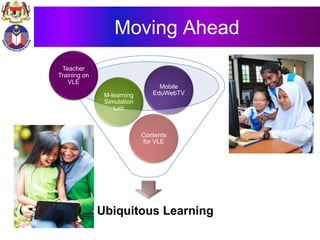
Moving Ahead
Ubiquitous Learning
Contents
for VLE
M-learning
Simulation
Lab
Mobile
EduWebTV
Teacher
Training on
VLE

Developing Literacy through Mobile Phones: Malaysia’s Perspective

  • 1.
    Developing Literacy through MobilePhones: Malaysia’s Perspective FADZLIATON ZAINUDIN UNESCO Asia & the Pacific Regional Consultation Workshop 27-28 November 2012 Bangkok, Thailand
  • 2.
    Malaysia Basic Indicators Source:Malaysian Communications and Multimedia Commission
  • 3.
    Literacy at AGlance 0 2000 4000 6000 8000 Primary Secondary 7723 2296 No. of Schools
  • 4.
    Literacy at AGlance Type of Schools No. of Students Pre-school 186, 298 Primary 2.8 million Secondary 2.3 million No. of Students No. of Teachers Type of Schools Male Female Primary 72,266 164,047 Secondary 55,155 121,252 Total 127,421 285,299
  • 5.
    Literacy at AGlance 0 20 40 60 80 100 Primary Lower Secondary Upper Secondary 94 87 78 School Enrolment Percentage Source: MOE
  • 6.
    Literacy at AGlance 97.5 98 98.5 99 Male Female 98 99 Youth Literacy (15 – 24 years old) Source: UNICEF Percentage * LINUS Programme (Literasi dan Numerasi)
  • 7.
    To build aknowledge-based economy, school education has to be transformed with ICT as an enabler to access a much wider source of information, to increase innovation and creativity and encourage critical thinking for problem solving Mapping of ICT with National Goals Malaysia aims to become a developed nation by 2020 supported by 4 pillars to drive national transformation Malaysia Education Blueprint (2013 – 2025) 1Malaysia Concept Government Transformation Programme Economic Transformation Programme 10th Malaysia Plan
  • 8.
    5 System Aspirationsfor the Malaysian Education System Malaysia Education Blueprint (2013 – 2025)
  • 9.
    6 Key AttributesNeeded by Students to be Globally Competitive Malaysia Education Blueprint (2013 – 2025)
  • 10.
    11 Shifts toTransform the Education System Shift 7: Leverage ICT to Scale up Quality Learning Across Malaysia
  • 11.
    ICT in Education Hardware •Maintenance Service Software • Application • Tools Network • Data Centre • LAN / WAN Pedagogy • Curriculum • Assessment Competency Development • Education Management • Training of MOE Officers • Training of Teachers ICT in Education Should be professionally managed by external experts in ICT domain with MOE and COP’s input Should be driven by MOE but the integration of ICT in Education competency development can be delivered by external experts for value-add
  • 12.
    Delivery for ICTin Education Budget • Budgetary Consideration • Total Cost of Qwnership • Public-Private Partnership Infrastructure • ICT Infrastructure • Enabling Infrastructure • Maintenance & Support Human Capital • Roles & Responsibility • Competency & Professional Development Digital Resources • Teaching & Learning Strategy • Teaching & Learning Materials
  • 13.
    Objectives of thePolicy on ‘ICT in Education’ To align all the current and future ICT initiatives under a common goal for integrating ‘ICT in Education’ To standardise and enhance the implementation of ICT initiatives in education by encompassing all important aspects of implementation and post-implementation into a regulatory framework To generate greater commitment and acceptance by all stakeholders
  • 14.
    Process Flow ofICT in Education Government’s National Goal Need Analysis Curriculum Design & Development Technology for ICT in Education Competency Development Implementation of ICT Initiatives Review & Monitoring
  • 15.
    Smart Schools Roadmap PilotPhase • (1999-2002) Post Pilot • (2003- 2005) Making All Schools Smart • (2005- 2010) Consolidation & Stabilisation • (2011-2020)
  • 16.
    Status of SmartSchools 5-star 4-star 3-star 2-star 1-star 6.49 47.11 41.16 4.13 1.11 Source: 2011 SSQS Human Capital Usage Infrastructure Applications Domains
  • 17.
  • 18.
    Penetration Rates ata Glance Source: Malaysian Communications and Multimedia Commission
  • 19.
    No. of Broadband& Penetration Rate Source: Malaysian Communications and Multimedia Commission
  • 20.
    Internet Use Source: MalaysianCommunications and Multimedia Commission
  • 21.
    Internet Use Source: MalaysianCommunications and Multimedia Commission
  • 22.
    Cellular Telephone Use Source:Malaysian Communications and Multimedia Commission
  • 23.
    Mobile Phones inSchools Source: The Star • Students can take handphones, IT gadgets to school from 2013 16 July 2012 • PTA: No mobile phones to school, please! 17 July 2012 • School phone ban retained 4 Oct 2012
  • 24.
    Issues & Challenges PhysicalSocial Content Language Education system / Curriculum Literacy Organisational / Community Structure
  • 25.
    Moving Ahead Ubiquitous Learning Contents forVLE M-learning Simulation Lab Mobile EduWebTV Teacher Training on VLE