






Developing and executing an
     effective strategy


    by Toronto Training and HR

            May 2012
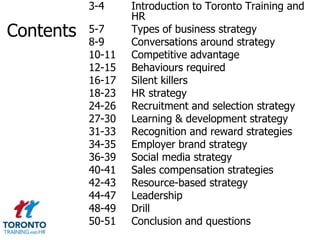
3-4     Introduction to Toronto Training and
                   HR
Contents   5-7
           8-9
                   Types of business strategy
                   Conversations around strategy
           10-11   Competitive advantage
           12-15   Behaviours required
           16-17   Silent killers
           18-23   HR strategy
           24-26   Recruitment and selection strategy
           27-30   Learning & development strategy
           31-33   Recognition and reward strategies
           34-35   Employer brand strategy
           36-39   Social media strategy
           40-41   Sales compensation strategies
           42-43   Resource-based strategy
           44-47   Leadership
           48-49   Drill
           50-51   Conclusion and questions
Introduction


     Page 3
Introduction to Toronto Training
            and HR
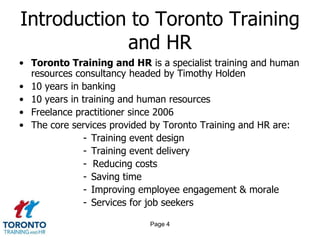
โ€ข Toronto Training and HR is a specialist training and human
  resources consultancy headed by Timothy Holden
โ€ข 10 years in banking
โ€ข 10 years in training and human resources
โ€ข Freelance practitioner since 2006
โ€ข The core services provided by Toronto Training and HR are:
              - Training event design
              - Training event delivery
              - Reducing costs
              - Saving time
              - Improving employee engagement & morale
              - Services for job seekers

                            Page 4
Types of business strategy


            Page 5
Types of business strategy
              1 of 2
Defender
Prospector
Analyser

Reactor


               Page 6
Types of business strategy
              2 of 2
Cost leadership
Differentiation


                  Page 7
Conversations around
      strategy


         Page 8
Conversations around strategy
What is strategy and how do you create it?
What roles should employees at different
levels play in strategy?


                      Page 9
Competitive intelligence


          Page 10
Competitive intelligence
Be proactive
Whatโ€™s it for?
Make it action-based
Start with whatโ€™s published
Find primary sources
Listen and observe
Build a picture
Be timely
Keep your nose clean
Think counter-intelligence

                      Page 11
Behaviours required


        Page 12
Behaviours required 1 of 3
LEADERS; CREATE STRATEGY
Aspire
Evaluate
Integrate
Optimize
Uphold


                  Page 13
Behaviours required 2 of 3
MANAGERS; RESPONSIBILITY FOR STRATEGY
Align
Educate
Inform
Organize
Utilize


                  Page 14
Behaviours required 3 of 3
FRONT-LINE EMPLOYEES; SUCCESSFUL
EXECUTION OF STRATEGY
Apply
Engage
Innovate
Own
Understand


                  Page 15
Silent killers


     Page 16
Silent killers
Quality of direction
Quality of learning
Quality of implementation


                     Page 17
HR strategy


    Page 18
HR strategy 1 of 5
Recruitment and retention
Compensation
Performance management
Training and development
Succession planning


                     Page 19
HR strategy 2 of 5
SOCIAL HR INITIATIVES
Identifying your purpose
Engagement
Research
Alerting
Support


                      Page 20
HR strategy 3 of 5
HR PLANNING
Scanning the horizon to see what likely changes
are coming up and what are the implications for
staffing
Examining the supply of labour within the
organization in terms of age, experience,
qualifications, pay, conditions and performance of
existing employees
Making a comparison between the demand and
supply of applicants

                      Page 21
HR strategy 4 of 5
HR PLANNING-QUESTIONS TO ASK
Accommodation
Costs
Culture
Development
Industrial relations
Layoffs
Organization development
Outplacement


                 Page 22
HR strategy 5 of 5
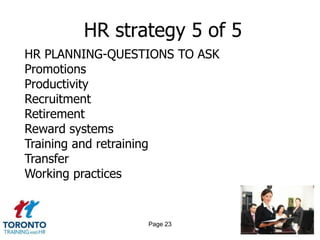
HR PLANNING-QUESTIONS TO ASK
Promotions
Productivity
Recruitment
Retirement
Reward systems
Training and retraining
Transfer
Working practices


                 Page 23
Recruitment and selection
        strategy


           Page 24
Recruitment and selection
         strategy 1 of 2
PRIMARY FEATURES
Recruitment and selection practices should reflect
the organizationโ€™s strategic plans
A long-term focus should be apparent
A bridging mechanism for translating long-term
plans and organizational priorities into practical
recruitment and selection policies/practices


                      Page 25
Recruitment and selection
         strategy 2 of 2
SECONDARY FEATURES
Sophisticated and complex approach to
recruitment and selection with a wide array of
methods used
Recruitment and selection processes which are
accorded high status as activities within the
organization
The use of practices which are clearly sensitive to
the impact on candidates


                       Page 26
Learning & development
       strategy


         Page 27
Learning & development
          strategy 1 of 3
Horizontal integration
Vertical integration


                         Page 28
Learning & development
         strategy 2 of 3
Corporate strategic level
Business unit/managerial level
Operational level


                      Page 29
Learning & development
         strategy 3 of 3
HOW TO GO ABOUT IT:
Allocate responsibility for L&D strategy
development
Clarify organizational mission
Explore core organizational identity and values
Carry out SWOT or PESTLE analysis to identify the
strategic issues facing the organization
Agree a strategy
Produce a strategic plan


                     Page 30
Recognition and reward
      strategies


         Page 31
Recognition and reward
         strategies 1 of 2
RECOGNIZE AND REWARD PEOPLE THAT:
Particularly demonstrate or contribute to core
values/attributes
Come up with outstanding ideas for improvement
or that impact significantly on revenue or cost-
saving
Share relevant knowledge and best practice with
other members of the team that leads to marked
improvements in performance


                     Page 32
Recognition and reward
         strategies 2 of 2
RECOGNIZE AND REWARD PEOPLE THAT:
Achieve professional qualifications etc. that
enhance their ability to deliver projects


                       Page 33
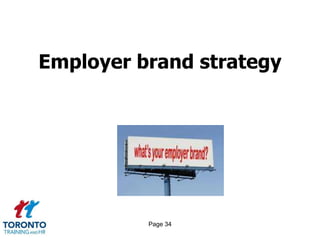
Employer brand strategy


          Page 34
Employer brand strategy
HOW IS IT DEVELOPED?
Market research
Product research
Marketing method research
Motivational research
Attitude surveys


                    Page 35
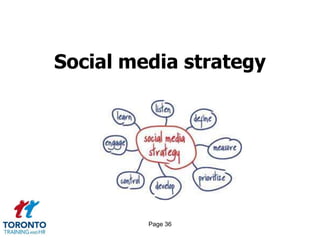
Social media strategy


         Page 36
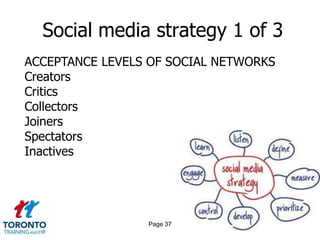
Social media strategy 1 of 3
ACCEPTANCE LEVELS OF SOCIAL NETWORKS
Creators
Critics
Collectors
Joiners
Spectators
Inactives


                 Page 37
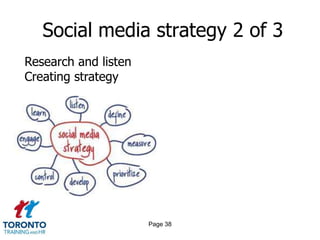
Social media strategy 2 of 3
Research and listen
Creating strategy


                      Page 38
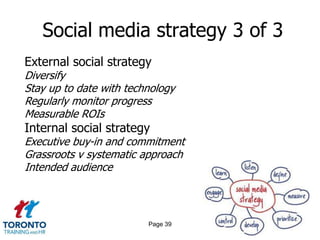
Social media strategy 3 of 3
External social strategy
Diversify
Stay up to date with technology
Regularly monitor progress
Measurable ROIs
Internal social strategy
Executive buy-in and commitment
Grassroots v systematic approach
Intended audience


                         Page 39
Sales compensation
     strategies


       Page 40
Sales compensation strategies
Clarify business/strategic objectives
Assess current plans
Define objectives of sales plan
Assess eligibility of jobs
Establish compensation levels
Select performance measures and weightings
Develop the formula(s)


                    Page 41
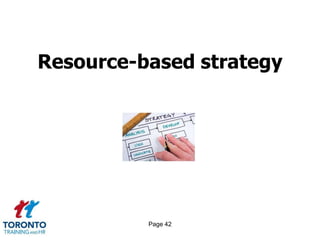
Resource-based strategy


          Page 42
Resource-based strategy
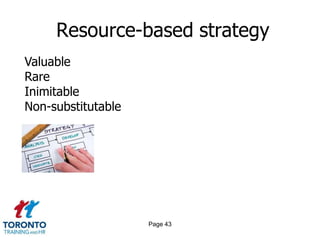
Valuable
Rare
Inimitable
Non-substitutable


                    Page 43
Leadership


   Page 44
Leadership 1 of 3
DEFINE A CLEAR SET OF KNOWLEDGE, SKILLS AND
BEHAVIOURS:
A common โ€˜standardโ€™ of what an effective leader of
people looks like, understood at all levels across
the organization, which could then contribute to a
continued consistent approach to leading others
and continuing development


                      Page 45
Leadership 2 of 3
DEFINE A CLEAR SET OF KNOWLEDGE, SKILLS AND
BEHAVIOURS:
A fair and transparent approach to the
recruitment, selection and development of future
leadership roles, as there would be a list of specific
leadership skills against which to select and
develop people


                       Page 46
Leadership 3 of 3
DEFINE A CLEAR SET OF KNOWLEDGE, SKILLS AND
BEHAVIOURS:
Development of effective processes to support
leadership training, learning and development in
these areas, and identification of learning and
development needs which can then feed into
future training plans
Increased effectiveness of performance evaluation
and development of leaders


                     Page 47
Drill


 Page 48
Drill


Page 49
Conclusion and questions


          Page 50
Conclusion and questions
Summary
Videos
Questions


               Page 51

Developing and executing an effective business strategy May 2012

  • 1.
    Developing and executingan effective strategy by Toronto Training and HR May 2012
  • 2.
    3-4 Introduction to Toronto Training and HR Contents 5-7 8-9 Types of business strategy Conversations around strategy 10-11 Competitive advantage 12-15 Behaviours required 16-17 Silent killers 18-23 HR strategy 24-26 Recruitment and selection strategy 27-30 Learning & development strategy 31-33 Recognition and reward strategies 34-35 Employer brand strategy 36-39 Social media strategy 40-41 Sales compensation strategies 42-43 Resource-based strategy 44-47 Leadership 48-49 Drill 50-51 Conclusion and questions
  • 3.
  • 4.
    Introduction to TorontoTraining and HR โ€ข Toronto Training and HR is a specialist training and human resources consultancy headed by Timothy Holden โ€ข 10 years in banking โ€ข 10 years in training and human resources โ€ข Freelance practitioner since 2006 โ€ข The core services provided by Toronto Training and HR are: - Training event design - Training event delivery - Reducing costs - Saving time - Improving employee engagement & morale - Services for job seekers Page 4
  • 5.
    Types of businessstrategy Page 5
  • 6.
    Types of businessstrategy 1 of 2 Defender Prospector Analyser Reactor Page 6
  • 7.
    Types of businessstrategy 2 of 2 Cost leadership Differentiation Page 7
  • 8.
    Conversations around strategy Page 8
  • 9.
    Conversations around strategy Whatis strategy and how do you create it? What roles should employees at different levels play in strategy? Page 9
  • 10.
  • 11.
    Competitive intelligence Be proactive Whatโ€™sit for? Make it action-based Start with whatโ€™s published Find primary sources Listen and observe Build a picture Be timely Keep your nose clean Think counter-intelligence Page 11
  • 12.
  • 13.
    Behaviours required 1of 3 LEADERS; CREATE STRATEGY Aspire Evaluate Integrate Optimize Uphold Page 13
  • 14.
    Behaviours required 2of 3 MANAGERS; RESPONSIBILITY FOR STRATEGY Align Educate Inform Organize Utilize Page 14
  • 15.
    Behaviours required 3of 3 FRONT-LINE EMPLOYEES; SUCCESSFUL EXECUTION OF STRATEGY Apply Engage Innovate Own Understand Page 15
  • 16.
  • 17.
    Silent killers Quality ofdirection Quality of learning Quality of implementation Page 17
  • 18.
    HR strategy Page 18
  • 19.
    HR strategy 1of 5 Recruitment and retention Compensation Performance management Training and development Succession planning Page 19
  • 20.
    HR strategy 2of 5 SOCIAL HR INITIATIVES Identifying your purpose Engagement Research Alerting Support Page 20
  • 21.
    HR strategy 3of 5 HR PLANNING Scanning the horizon to see what likely changes are coming up and what are the implications for staffing Examining the supply of labour within the organization in terms of age, experience, qualifications, pay, conditions and performance of existing employees Making a comparison between the demand and supply of applicants Page 21
  • 22.
    HR strategy 4of 5 HR PLANNING-QUESTIONS TO ASK Accommodation Costs Culture Development Industrial relations Layoffs Organization development Outplacement Page 22
  • 23.
    HR strategy 5of 5 HR PLANNING-QUESTIONS TO ASK Promotions Productivity Recruitment Retirement Reward systems Training and retraining Transfer Working practices Page 23
  • 24.
  • 25.
    Recruitment and selection strategy 1 of 2 PRIMARY FEATURES Recruitment and selection practices should reflect the organizationโ€™s strategic plans A long-term focus should be apparent A bridging mechanism for translating long-term plans and organizational priorities into practical recruitment and selection policies/practices Page 25
  • 26.
    Recruitment and selection strategy 2 of 2 SECONDARY FEATURES Sophisticated and complex approach to recruitment and selection with a wide array of methods used Recruitment and selection processes which are accorded high status as activities within the organization The use of practices which are clearly sensitive to the impact on candidates Page 26
  • 27.
    Learning & development strategy Page 27
  • 28.
    Learning & development strategy 1 of 3 Horizontal integration Vertical integration Page 28
  • 29.
    Learning & development strategy 2 of 3 Corporate strategic level Business unit/managerial level Operational level Page 29
  • 30.
    Learning & development strategy 3 of 3 HOW TO GO ABOUT IT: Allocate responsibility for L&D strategy development Clarify organizational mission Explore core organizational identity and values Carry out SWOT or PESTLE analysis to identify the strategic issues facing the organization Agree a strategy Produce a strategic plan Page 30
  • 31.
    Recognition and reward strategies Page 31
  • 32.
    Recognition and reward strategies 1 of 2 RECOGNIZE AND REWARD PEOPLE THAT: Particularly demonstrate or contribute to core values/attributes Come up with outstanding ideas for improvement or that impact significantly on revenue or cost- saving Share relevant knowledge and best practice with other members of the team that leads to marked improvements in performance Page 32
  • 33.
    Recognition and reward strategies 2 of 2 RECOGNIZE AND REWARD PEOPLE THAT: Achieve professional qualifications etc. that enhance their ability to deliver projects Page 33
  • 34.
  • 35.
    Employer brand strategy HOWIS IT DEVELOPED? Market research Product research Marketing method research Motivational research Attitude surveys Page 35
  • 36.
  • 37.
    Social media strategy1 of 3 ACCEPTANCE LEVELS OF SOCIAL NETWORKS Creators Critics Collectors Joiners Spectators Inactives Page 37
  • 38.
    Social media strategy2 of 3 Research and listen Creating strategy Page 38
  • 39.
    Social media strategy3 of 3 External social strategy Diversify Stay up to date with technology Regularly monitor progress Measurable ROIs Internal social strategy Executive buy-in and commitment Grassroots v systematic approach Intended audience Page 39
  • 40.
    Sales compensation strategies Page 40
  • 41.
    Sales compensation strategies Clarifybusiness/strategic objectives Assess current plans Define objectives of sales plan Assess eligibility of jobs Establish compensation levels Select performance measures and weightings Develop the formula(s) Page 41
  • 42.
  • 43.
  • 44.
    Leadership Page 44
  • 45.
    Leadership 1 of3 DEFINE A CLEAR SET OF KNOWLEDGE, SKILLS AND BEHAVIOURS: A common โ€˜standardโ€™ of what an effective leader of people looks like, understood at all levels across the organization, which could then contribute to a continued consistent approach to leading others and continuing development Page 45
  • 46.
    Leadership 2 of3 DEFINE A CLEAR SET OF KNOWLEDGE, SKILLS AND BEHAVIOURS: A fair and transparent approach to the recruitment, selection and development of future leadership roles, as there would be a list of specific leadership skills against which to select and develop people Page 46
  • 47.
    Leadership 3 of3 DEFINE A CLEAR SET OF KNOWLEDGE, SKILLS AND BEHAVIOURS: Development of effective processes to support leadership training, learning and development in these areas, and identification of learning and development needs which can then feed into future training plans Increased effectiveness of performance evaluation and development of leaders Page 47
  • 48.
  • 49.
  • 50.
  • 51.