Soran University
Faculty of Engineering
Department of Petroleum Engineering
Reservoir Rock Properties
Experiment name: Determining an unknown Density of a Rock
Experiment Number: 1
Name: Raboon Redar Muhammed
Group: B (II)
Date of lab: 29/09/2019
Supervisors: Mr. Fuad Yusefi
Ms. Meriam
Aim: The main aim of this experiment is to find out the density of a rock
using two basic ways.
Introduction: Density is defined as the mass of a substance per unit
volume, and is highly variable in crustal rocks. Rock density is a physical
characteristic that is governed by the chemical composition and pore
spaces of a specific rock or rock type. Rock densities are useful to
engineers, of course. They're also essential for geophysicists who must
model the rocks of the Earth's crust for calculations of local gravity. In
most cases, denser objects are also heavier.
Materials to use:
1- An electronic mass balance
2- Beaker
3- Ruler
Procedure: You need to find out the mass of each rock using the electronic
balance, then the change of volume is calculated in 2 ways.
 1st way: Pour 200ml of water in a beaker. Put the first Rock in the
beaker and measure the new increasing volume, subtract the new
volume by 200ml to get the volume of the first rock . Divide the first
rock's mass by its volume to get its density. Do the same procedure
for the 2nd, 3rd and 4th rock.
 2nd way: Have 200ml of water in a beaker just like the 1st way.
Measure the height of the water (better to be in cm) using a ruler.
Put the first rock inside the beaker and measure the height again.
The difference between the heights (h2-h1) can be shown as Δh.
Measure the diameter of the beaker and divide by two, to get its
radius. Volume of the rock is equal to 𝝅𝒓𝟐
Δh . As usual divide the
rock's mass by its volume to get its density. Same procedure for the
2nd, 3rd and 4th rock.
Results:
Rock number Rock 1 Rock 2 Rock 3 Rock 4
Mass 60.49g 37.16g 45.32g 58.9g
Volume (𝚫𝐯) 25ml 20ml 23ml 25ml
Density 2.419g/ml 1.858g/ml 1.970g/ml 2.356g/ml
Table 1: Results for the 1st way procedure for all 4 rocks.
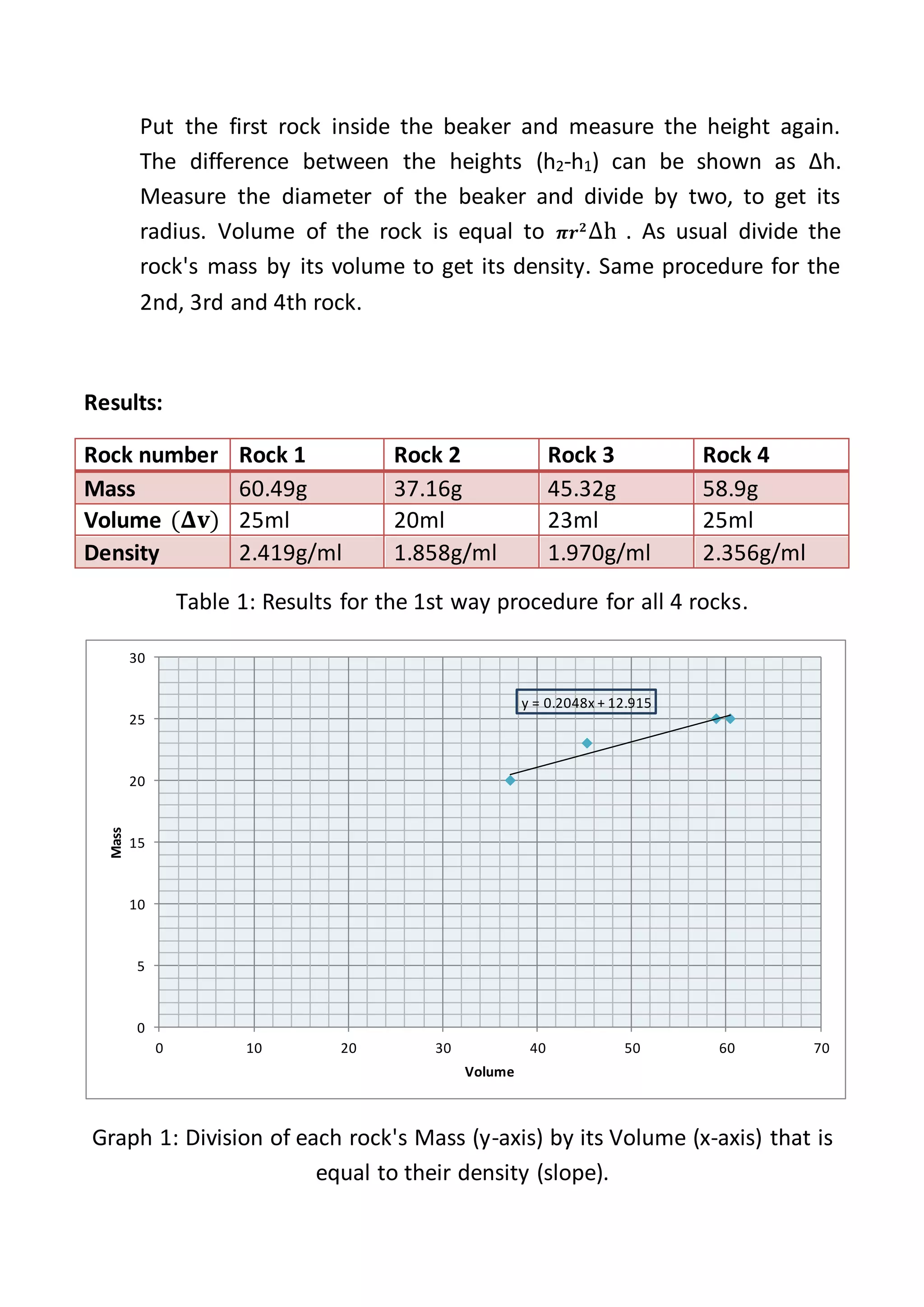
Graph 1: Division of each rock's Mass (y-axis) by its Volume (x-axis) that is
equal to their density (slope).
y = 0.2048x + 12.915
0
5
10
15
20
25
30
0 10 20 30 40 50 60 70
Mass
Volume
Rock number Rock 1 Rock 2 Rock 3 Rock 4
Mass 60.49g 37.16g 45.32g 58.9g
Volume (𝝅𝒓
𝟐
𝚫𝐡) 30.78cm2
15.39cm2
19.24cm2
25.01cm2
Density 1.964g/ cm2
2.41g/ cm2
2.35/ cm2
2.35/ cm2
Table 2: Results for the 2nd way procedure for all 4 rocks. Note that the
beaker's radius is 3.5cm
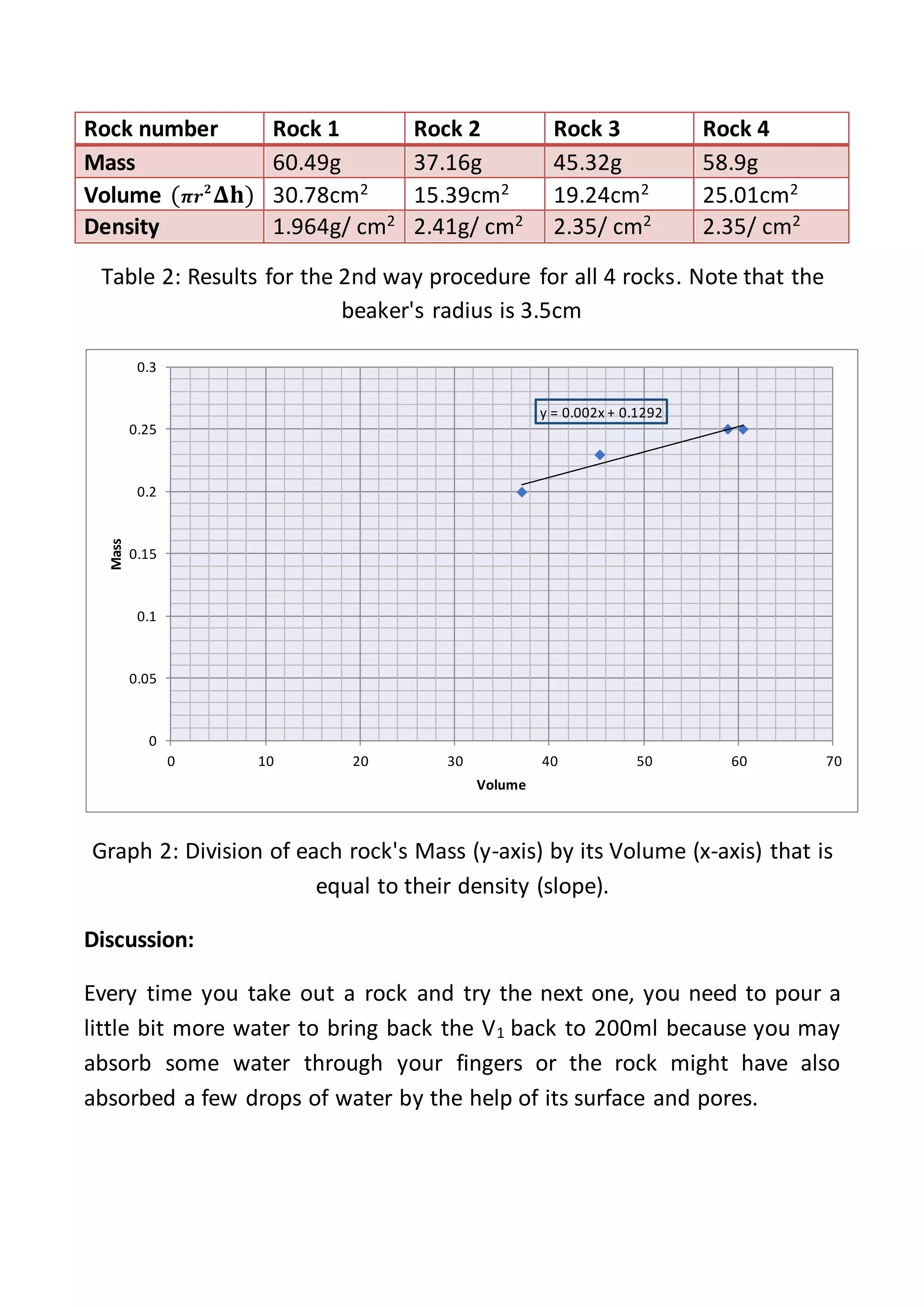
Graph 2: Division of each rock's Mass (y-axis) by its Volume (x-axis) that is
equal to their density (slope).
Discussion:
Every time you take out a rock and try the next one, you need to pour a
little bit more water to bring back the V1 back to 200ml because you may
absorb some water through your fingers or the rock might have also
absorbed a few drops of water by the help of its surface and pores.
y = 0.002x + 0.1292
0
0.05
0.1
0.15
0.2
0.25
0.3
0 10 20 30 40 50 60 70
Mass
Volume
Conclusion:
These 2 ways are probably the easiest 2 ways for finding a small rock's
density. There is always a difference in the results by trying something in
different ways, so does in finding the density of a rock in different ways. It
is called an Error, which may be because of how bad you focused or how
accurate your equipments and your readings to them are.
References:
1- Alden, A. (2019). The Density of Common Rocks and Minerals. [online]
ThoughtCo. Available at: https://www.thoughtco.com/densities-of-
common-rocks-and-minerals-1439119 [Accessed 5 Oct. 2019].
2- Wood, D. (2019). How to Calculate the Density of Solids or Liquids -
Video & Lesson Transcript | Study.com. [online] Study.com. Available at:
https://study.com/academy/lesson/how-to-calculate-the-density-of-
solids-or-liquids.html [Accessed 5 Oct. 2019].

Determining an unknown Density of a Rock

  • 1.
    Soran University Faculty ofEngineering Department of Petroleum Engineering Reservoir Rock Properties Experiment name: Determining an unknown Density of a Rock Experiment Number: 1 Name: Raboon Redar Muhammed Group: B (II) Date of lab: 29/09/2019 Supervisors: Mr. Fuad Yusefi Ms. Meriam
  • 2.
    Aim: The mainaim of this experiment is to find out the density of a rock using two basic ways. Introduction: Density is defined as the mass of a substance per unit volume, and is highly variable in crustal rocks. Rock density is a physical characteristic that is governed by the chemical composition and pore spaces of a specific rock or rock type. Rock densities are useful to engineers, of course. They're also essential for geophysicists who must model the rocks of the Earth's crust for calculations of local gravity. In most cases, denser objects are also heavier. Materials to use: 1- An electronic mass balance 2- Beaker 3- Ruler Procedure: You need to find out the mass of each rock using the electronic balance, then the change of volume is calculated in 2 ways.  1st way: Pour 200ml of water in a beaker. Put the first Rock in the beaker and measure the new increasing volume, subtract the new volume by 200ml to get the volume of the first rock . Divide the first rock's mass by its volume to get its density. Do the same procedure for the 2nd, 3rd and 4th rock.  2nd way: Have 200ml of water in a beaker just like the 1st way. Measure the height of the water (better to be in cm) using a ruler.
  • 3.
    Put the firstrock inside the beaker and measure the height again. The difference between the heights (h2-h1) can be shown as Δh. Measure the diameter of the beaker and divide by two, to get its radius. Volume of the rock is equal to 𝝅𝒓𝟐 Δh . As usual divide the rock's mass by its volume to get its density. Same procedure for the 2nd, 3rd and 4th rock. Results: Rock number Rock 1 Rock 2 Rock 3 Rock 4 Mass 60.49g 37.16g 45.32g 58.9g Volume (𝚫𝐯) 25ml 20ml 23ml 25ml Density 2.419g/ml 1.858g/ml 1.970g/ml 2.356g/ml Table 1: Results for the 1st way procedure for all 4 rocks. Graph 1: Division of each rock's Mass (y-axis) by its Volume (x-axis) that is equal to their density (slope). y = 0.2048x + 12.915 0 5 10 15 20 25 30 0 10 20 30 40 50 60 70 Mass Volume
  • 4.
    Rock number Rock1 Rock 2 Rock 3 Rock 4 Mass 60.49g 37.16g 45.32g 58.9g Volume (𝝅𝒓 𝟐 𝚫𝐡) 30.78cm2 15.39cm2 19.24cm2 25.01cm2 Density 1.964g/ cm2 2.41g/ cm2 2.35/ cm2 2.35/ cm2 Table 2: Results for the 2nd way procedure for all 4 rocks. Note that the beaker's radius is 3.5cm Graph 2: Division of each rock's Mass (y-axis) by its Volume (x-axis) that is equal to their density (slope). Discussion: Every time you take out a rock and try the next one, you need to pour a little bit more water to bring back the V1 back to 200ml because you may absorb some water through your fingers or the rock might have also absorbed a few drops of water by the help of its surface and pores. y = 0.002x + 0.1292 0 0.05 0.1 0.15 0.2 0.25 0.3 0 10 20 30 40 50 60 70 Mass Volume
  • 5.
    Conclusion: These 2 waysare probably the easiest 2 ways for finding a small rock's density. There is always a difference in the results by trying something in different ways, so does in finding the density of a rock in different ways. It is called an Error, which may be because of how bad you focused or how accurate your equipments and your readings to them are. References: 1- Alden, A. (2019). The Density of Common Rocks and Minerals. [online] ThoughtCo. Available at: https://www.thoughtco.com/densities-of- common-rocks-and-minerals-1439119 [Accessed 5 Oct. 2019]. 2- Wood, D. (2019). How to Calculate the Density of Solids or Liquids - Video & Lesson Transcript | Study.com. [online] Study.com. Available at: https://study.com/academy/lesson/how-to-calculate-the-density-of- solids-or-liquids.html [Accessed 5 Oct. 2019].