DESIGN OF CANAL
DEFINITION
An artificial channel filled with waterand designed
for navigation , or irrigating land,etc.
An artificial water course or extensivelymodified
natural channel used for inland water transport
and/or the control and diversion of water for
drainage or irrigation
TYPESOFCANAL
(BASEDONUSE)
There are two types ofcanals:
Aqueduct: water supply canals that are used forthe
conveyance and delivery of portable for human
consumption, municipal uses, and agriculture
irrigation
Water ways: navigable transportation canalsused
for carrying ships and boats shipping goods and
conveying people.
TYPESOFCANALS
(BASEDONDISCHARGES)
MAIN CANAL
BRANCHCANAL
MAJORDISTRIBUTORYCANAL
MINORDISTRIBUTORYCANAL
WATERCOURSEORFIELDCHANNEL
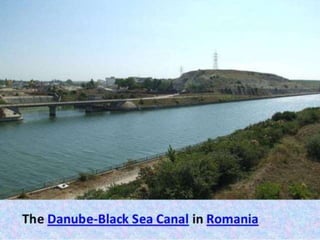
MAIN CANALS
Main canal takes of directly from the
upstream side of weir head works ordam.
Usually no direct cultivation isproposed.
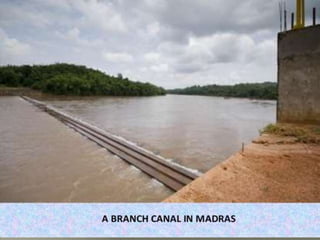
BRANCHCANAL
All off takes from main canal withhead discharge of
14-15 cumecsand above are termed asbranch
canals.
Acts asfeeder channel for major distributaries.
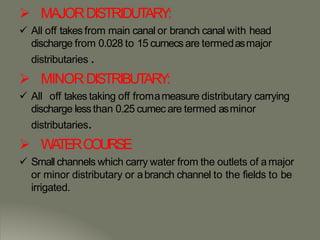
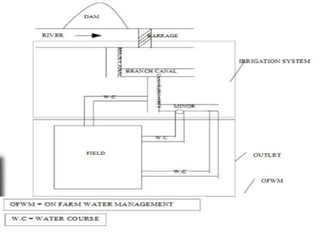
 MAJORDISTRIDUTARY:
 All off takes from main canal or branch canal with head
discharge from 0.028 to 15 cumecsare termedasmajor
distributaries .
 MINORDISTRIBUTARY:
 All off takes taking off fromameasure distributary carrying
discharge lessthan 0.25 cumec are termed asminor
distributaries.
 WATERCOURSE
 Small channels which carry water from the outlets of amajor
or minor distributary or abranch channel to the fields to be
irrigated.
TYPESOFCANALS
(Basedon lining being provided ornot)
1.Lined canals
2.Unlined canals
SHAPESOFCANAL
1. CIRCULAR SHAPE
2. TRIANGULAR SHAPE
3. TRIPEZOIDAL SHAPE
4. PARABOLIC SHAPE
5. RECTANGULAR SHAPE
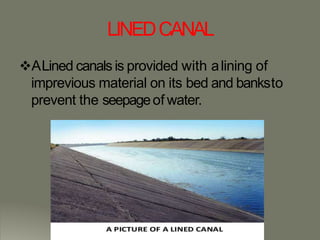
LINEDCANAL
ALined canals is provided with alining of
imprevious material on its bed and banksto
prevent the seepageof water.
Typesof canallining
1. Concrete lining
2. Short crete lining
3. Brick or burnt clay tilelining
4. Boulder lining
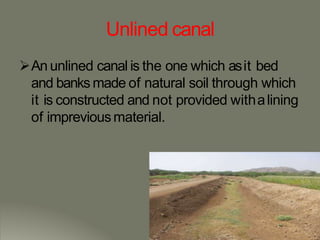
Unlined canal
An unlined canal is the one which asit bed
and banks made of natural soil through which
it is constructed and not provided withalining
of impreviousmaterial.
Disadvantages of unlined canal
• Water velocities higher then 0.7m/sec or not tolerable
becauseof erosion . Thelow operating velocitiesrequires
large cross-sectionarea.
• High seepage and conveyance water lossesresult in water
logging of adjacentland.
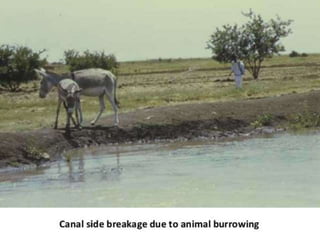
• Danger of canal bank breakage causedby overtopping ,
erosion and animal burrowing.
• Profuse growth of aquatic weeds retards the flowand causes
heavy maintenances cost.
ILL-EFFECTOFWATERLOGGING
• Water seeping from canal down to the soil below may , head
times , raise the ground water very close to the ground level .
• This may result in blocking all the voids in the soil and
obstructing the plant roots tobreathe.
• Normal cultivation operations , such astilling , ploughing,etc.
cannot be easily carried out in wet soils.
Irrigation canallayout
• Asfor apossible, curves should be avoided in the alignment
of canals.
• The curves lead to disturbance of flow and atendency to silt
on the inner bend and scour the toe of the outer bend.
• If curves have to be provided ;theyshould be asgentle as
possible.
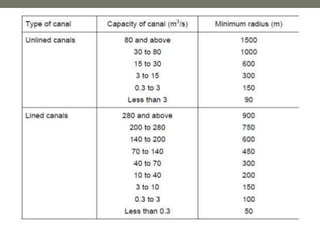
• Thepermissible minimum radius of curvature for achannel
curve is shorter for lined canals than unlinedones
• Thealignment should be such thatthe cutting and filling of
earth rock should be balanced , asfar aspossible.
TYPESOFDRAINAGESYSTEM
Surface drainage
Theseconstitute open ditches , field drains,
proper land grading and relatedstructures.
Landgrading , or properly sloping theland
towards the field drains, is an important
method for effecting surfacedrainage.
TYPESOFDRAINAGESYSTEM
Subsurface drainage
Theseare installed to lower thewater table
Consistof underground pipes whichcollect
water and remove it through anetwork of
such pipes.
conclusions
Explicit design equation and
sections shape co efficient havebeen
present for the minimum cost design
of lined canal of triangular,
rectangular trapezoidal& circular
shapes.
Theseequation &co efficient have
been obtained by applying the
nonlinear optimization technique
Designed CANAL

Designed CANAL

  • 1.
  • 2.
    DEFINITION An artificial channelfilled with waterand designed for navigation , or irrigating land,etc. An artificial water course or extensivelymodified natural channel used for inland water transport and/or the control and diversion of water for drainage or irrigation
  • 3.
    TYPESOFCANAL (BASEDONUSE) There are twotypes ofcanals: Aqueduct: water supply canals that are used forthe conveyance and delivery of portable for human consumption, municipal uses, and agriculture irrigation Water ways: navigable transportation canalsused for carrying ships and boats shipping goods and conveying people.
  • 4.
  • 5.
    MAIN CANALS Main canaltakes of directly from the upstream side of weir head works ordam. Usually no direct cultivation isproposed.
  • 7.
    BRANCHCANAL All off takesfrom main canal withhead discharge of 14-15 cumecsand above are termed asbranch canals. Acts asfeeder channel for major distributaries.
  • 9.
     MAJORDISTRIDUTARY:  Alloff takes from main canal or branch canal with head discharge from 0.028 to 15 cumecsare termedasmajor distributaries .  MINORDISTRIBUTARY:  All off takes taking off fromameasure distributary carrying discharge lessthan 0.25 cumec are termed asminor distributaries.  WATERCOURSE  Small channels which carry water from the outlets of amajor or minor distributary or abranch channel to the fields to be irrigated.
  • 11.
    TYPESOFCANALS (Basedon lining beingprovided ornot) 1.Lined canals 2.Unlined canals
  • 12.
    SHAPESOFCANAL 1. CIRCULAR SHAPE 2.TRIANGULAR SHAPE 3. TRIPEZOIDAL SHAPE 4. PARABOLIC SHAPE 5. RECTANGULAR SHAPE
  • 13.
    LINEDCANAL ALined canals isprovided with alining of imprevious material on its bed and banksto prevent the seepageof water.
  • 14.
    Typesof canallining 1. Concretelining 2. Short crete lining 3. Brick or burnt clay tilelining 4. Boulder lining
  • 15.
    Unlined canal An unlinedcanal is the one which asit bed and banks made of natural soil through which it is constructed and not provided withalining of impreviousmaterial.
  • 16.
    Disadvantages of unlinedcanal • Water velocities higher then 0.7m/sec or not tolerable becauseof erosion . Thelow operating velocitiesrequires large cross-sectionarea. • High seepage and conveyance water lossesresult in water logging of adjacentland. • Danger of canal bank breakage causedby overtopping , erosion and animal burrowing. • Profuse growth of aquatic weeds retards the flowand causes heavy maintenances cost.
  • 18.
    ILL-EFFECTOFWATERLOGGING • Water seepingfrom canal down to the soil below may , head times , raise the ground water very close to the ground level . • This may result in blocking all the voids in the soil and obstructing the plant roots tobreathe. • Normal cultivation operations , such astilling , ploughing,etc. cannot be easily carried out in wet soils.
  • 19.
    Irrigation canallayout • Asforapossible, curves should be avoided in the alignment of canals. • The curves lead to disturbance of flow and atendency to silt on the inner bend and scour the toe of the outer bend. • If curves have to be provided ;theyshould be asgentle as possible. • Thepermissible minimum radius of curvature for achannel curve is shorter for lined canals than unlinedones • Thealignment should be such thatthe cutting and filling of earth rock should be balanced , asfar aspossible.
  • 21.
    TYPESOFDRAINAGESYSTEM Surface drainage Theseconstitute openditches , field drains, proper land grading and relatedstructures. Landgrading , or properly sloping theland towards the field drains, is an important method for effecting surfacedrainage.
  • 22.
    TYPESOFDRAINAGESYSTEM Subsurface drainage Theseare installedto lower thewater table Consistof underground pipes whichcollect water and remove it through anetwork of such pipes.
  • 23.
    conclusions Explicit design equationand sections shape co efficient havebeen present for the minimum cost design of lined canal of triangular, rectangular trapezoidal& circular shapes. Theseequation &co efficient have been obtained by applying the nonlinear optimization technique