– S A M I R E H M A N
Desalination - ‘Exploring Future Trends &
Challenges’
D E S A L I N A T I O N
• The process of removing salt from seawater
• Typical example is water and brine system
M E T H O D S U S E D F O R D E S A L I N A T I N G
W A T E R
• Sea Water Reverse Osmosis (SWRO)
• Forward Osmosis (FO)
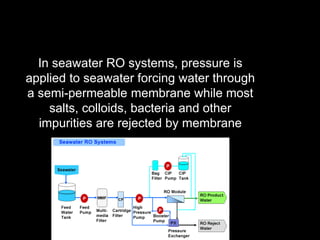
In seawater RO systems, pressure is
applied to seawater forcing water through
a semi-permeable membrane while most
salts, colloids, bacteria and other
impurities are rejected by membrane
R O
T E C H N I C A L
A D V A N T A G E S
• Versatile - treats all types of water
brackish-seawater
• Adaptable to all sizes of installation and
energy sources eg electricity, steam
• Setting up in all geographic zones
possible
• Minimal environmental impact
• Flexibility - plant sizes;can increase
production and hence plant size to
accommodate requirement
• Operation costs proportional to flow
variations
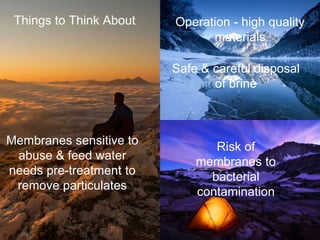
Things to Think About
Membranes sensitive to
abuse & feed water
needs pre-treatment to
remove particulates
Operation - high quality
materials
Safe & careful disposal
of brine
Risk of
membranes to
bacterial
contamination
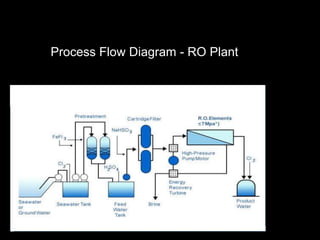
Process Flow Diagram - RO Plant
T Y P I C A L F E A T U R E S O N A N R O
P L A N T
• Standard features of RO systems inc. major components such
as cartridge filter, pressure vessels, membrane elements, high
pressure pumps and control instrumentation w/failsafe devices
• Energy Recovery Devices comprises pressure exchanger and
booster pump
• Cleaning In Place (CIP Unit) comprises cleaning pump,
cleaning tank, bag filter, instrument control panel
• Post-Treatment System comprises chemical dosing units
(neutralisation or chlorination)
- Membrane biofouling
- Protecting SWRO from red blossom
algae
- Need to drive down energy costs
- Treating brine reject for beneficial use
eg as salts/road salts, providing
feedstock to chemical industry
- The need for driving down capital
costs for thermal desalination units
- Environmental impact concerns for
large scale desalination
C H A N G E S O N T H E H O R I Z O N
• Use of Forward Osmosis technology - developments in
stand alone systems or combination technologies use
with RO => lower energy consumption
• Using waste heat in desalination => lower energy
costs
S U M M A R Y
• Reverse Osmosis been established
a mature and sustainable
technology for seawater treatment
• New technologies platforms such
as Forward Osmosis (FO) aim to
improve RO, and are applicable
with multiple benefits
• These process focus on reducing
energy consumption and prevent
scaling/biofouling commonly
associated with membrane
technology

Desalination Future Trends and Challenges

  • 1.
    – S AM I R E H M A N Desalination - ‘Exploring Future Trends & Challenges’
  • 2.
    D E SA L I N A T I O N • The process of removing salt from seawater • Typical example is water and brine system
  • 3.
    M E TH O D S U S E D F O R D E S A L I N A T I N G W A T E R • Sea Water Reverse Osmosis (SWRO) • Forward Osmosis (FO)
  • 4.
    In seawater ROsystems, pressure is applied to seawater forcing water through a semi-permeable membrane while most salts, colloids, bacteria and other impurities are rejected by membrane
  • 5.
    R O T EC H N I C A L A D V A N T A G E S • Versatile - treats all types of water brackish-seawater • Adaptable to all sizes of installation and energy sources eg electricity, steam • Setting up in all geographic zones possible • Minimal environmental impact • Flexibility - plant sizes;can increase production and hence plant size to accommodate requirement • Operation costs proportional to flow variations
  • 6.
    Things to ThinkAbout Membranes sensitive to abuse & feed water needs pre-treatment to remove particulates Operation - high quality materials Safe & careful disposal of brine Risk of membranes to bacterial contamination
  • 7.
  • 8.
    T Y PI C A L F E A T U R E S O N A N R O P L A N T • Standard features of RO systems inc. major components such as cartridge filter, pressure vessels, membrane elements, high pressure pumps and control instrumentation w/failsafe devices • Energy Recovery Devices comprises pressure exchanger and booster pump • Cleaning In Place (CIP Unit) comprises cleaning pump, cleaning tank, bag filter, instrument control panel • Post-Treatment System comprises chemical dosing units (neutralisation or chlorination)
  • 10.
    - Membrane biofouling -Protecting SWRO from red blossom algae - Need to drive down energy costs - Treating brine reject for beneficial use eg as salts/road salts, providing feedstock to chemical industry - The need for driving down capital costs for thermal desalination units - Environmental impact concerns for large scale desalination
  • 11.
    C H AN G E S O N T H E H O R I Z O N • Use of Forward Osmosis technology - developments in stand alone systems or combination technologies use with RO => lower energy consumption • Using waste heat in desalination => lower energy costs
  • 12.
    S U MM A R Y • Reverse Osmosis been established a mature and sustainable technology for seawater treatment • New technologies platforms such as Forward Osmosis (FO) aim to improve RO, and are applicable with multiple benefits • These process focus on reducing energy consumption and prevent scaling/biofouling commonly associated with membrane technology