Deployment of the nanoCDN solution
with an operator

Broadpeak property – All rights reserved
Objective of the operator
Deliver multi-screen video Internet
services
►Efficiently
►Quickly
►Cost-effectively

Support live events
which generate
audience peaks

We Deliver the Future of Television
Needs
► Efficiency of bandwidth usage
 Transfer of media content to the home
network in RF

► Scalability
 Increase of usage according to peaks

► Users’ Quality of Experience
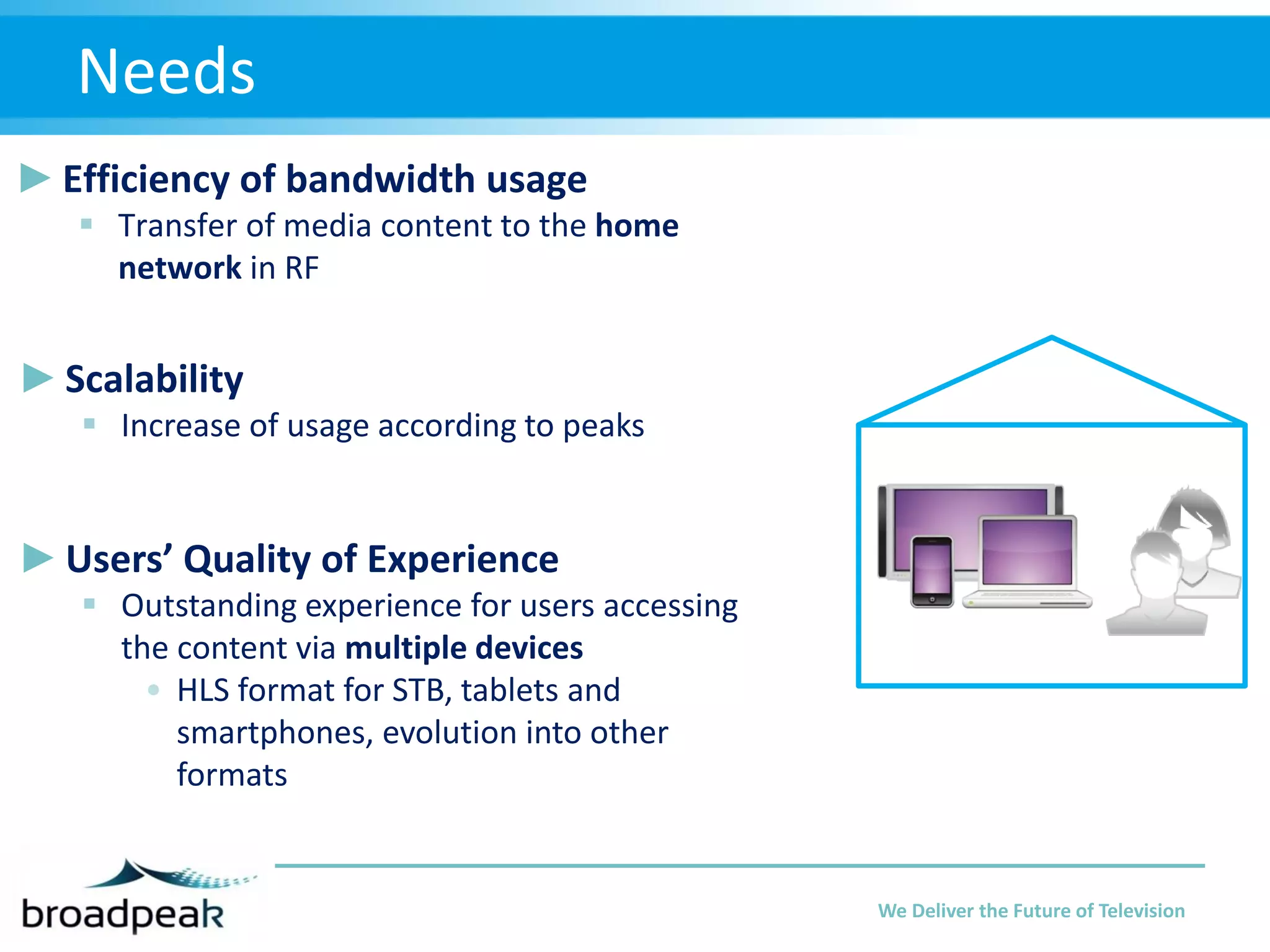
 Outstanding experience for users accessing
the content via multiple devices
• HLS format for STB, tablets and
smartphones, evolution into other
formats

We Deliver the Future of Television
Past experiences
►Flexibility
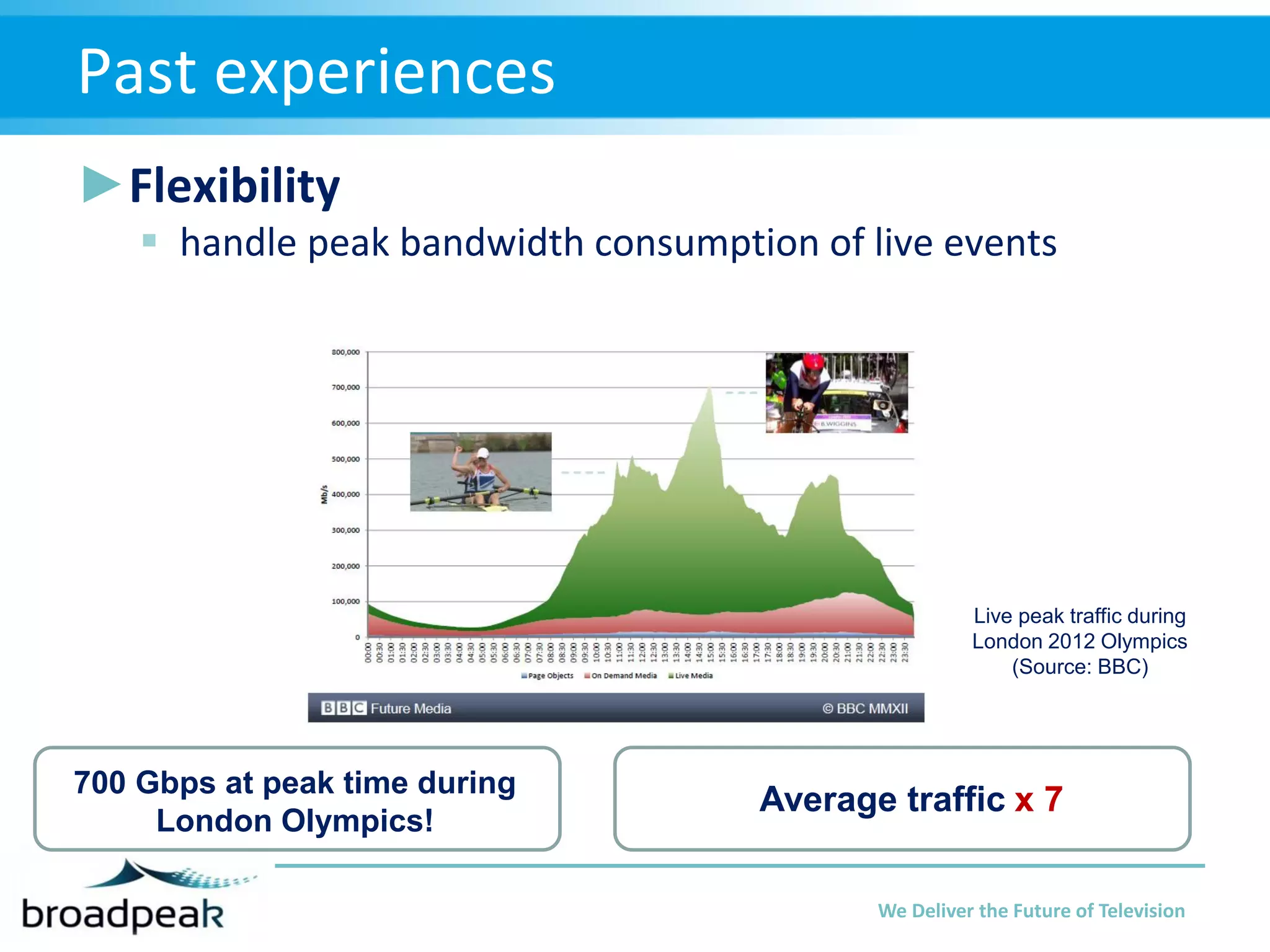
 handle peak bandwidth consumption of live events

Live peak traffic during
London 2012 Olympics
(Source: BBC)

700 Gbps at peak time during
London Olympics!

Average traffic x 7
We Deliver the Future of Television
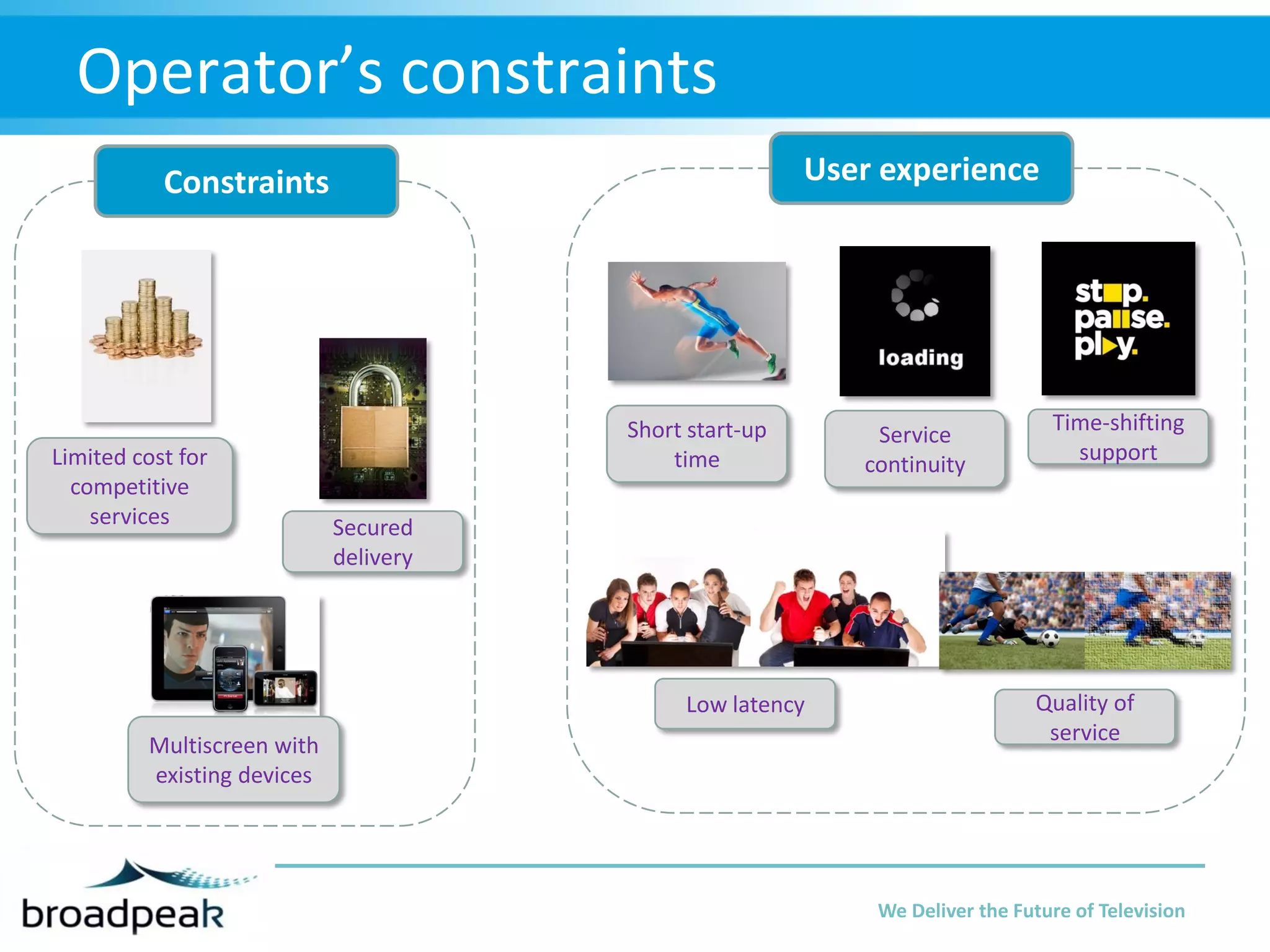
Operator’s constraints
User experience

Constraints

Limited cost for
competitive
services

Short start-up
time

Time-shifting
support

Secured
delivery

Low latency
Multiscreen with
existing devices

Service
continuity

Quality of
service

We Deliver the Future of Television
Why Broadpeak ?
►Broadpeak nanoCDN out-of-box solution allows the
use of the CDN to deliver multicast streams

►No need to use more expensive and consuming
unicast streams

We Deliver the Future of Television
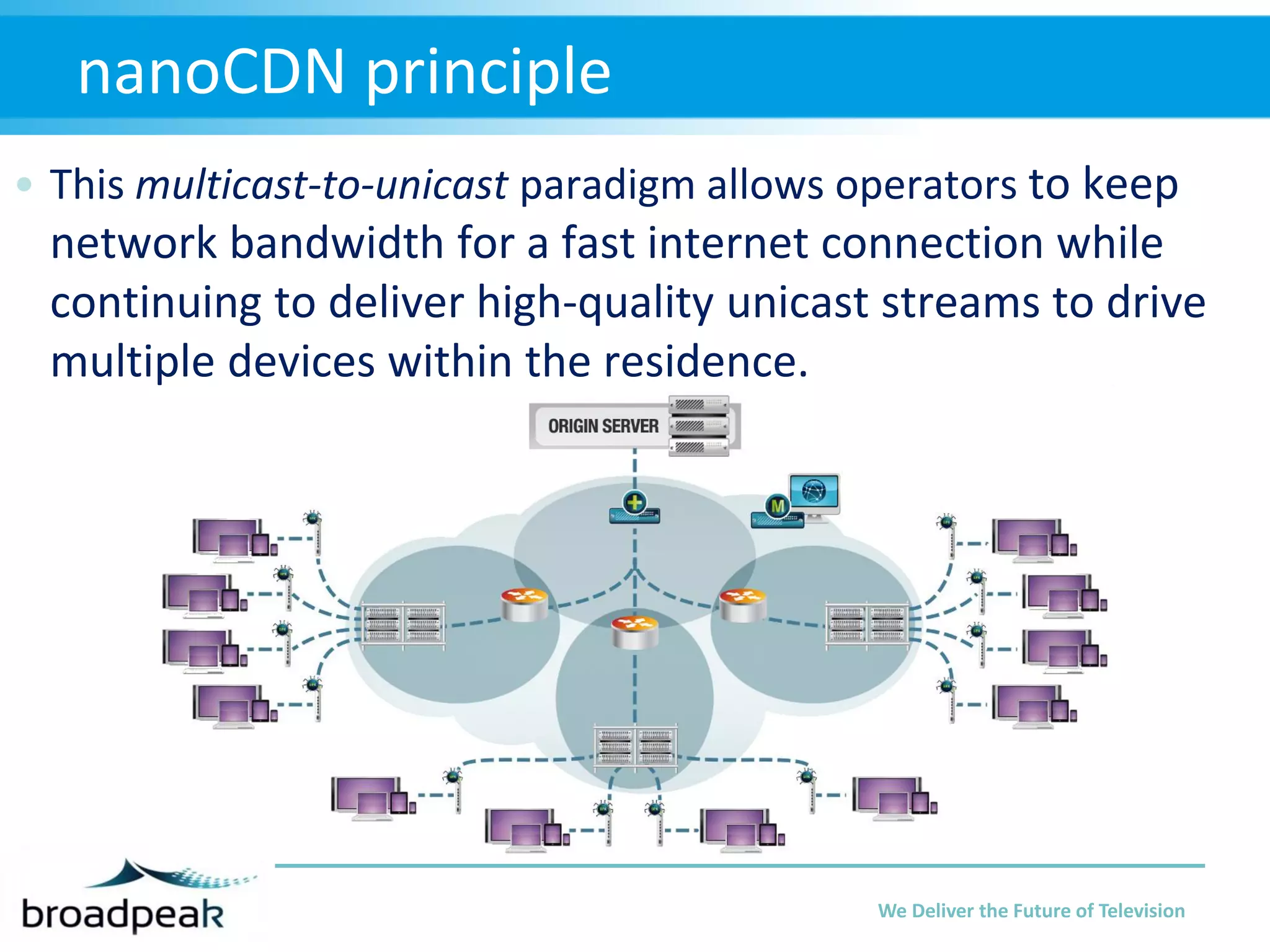
nanoCDN principle
►The nanoCDN relies on the home gateways deployed
in the home network
→ To receive and transform multicast streams into unicast
in order to deliver videos to different devices across the
residential environment with no impact on the devices

We Deliver the Future of Television
nanoCDN principle
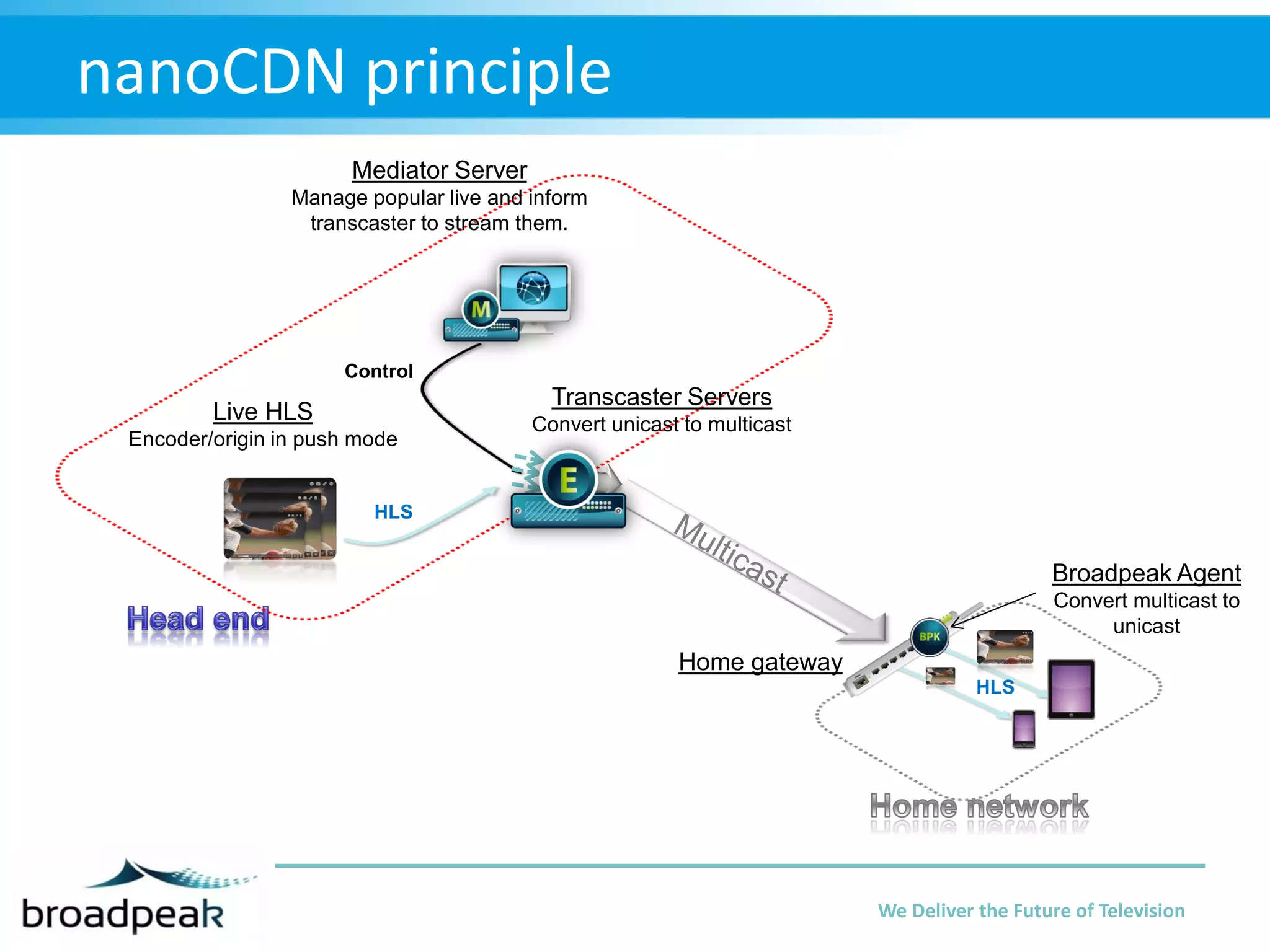
Mediator Server
Manage popular live and inform
transcaster to stream them.

Control

Transcaster Servers

Live HLS
Encoder/origin in push mode

Convert unicast to multicast

HLS

Broadpeak Agent
Convert multicast to
unicast

Home gateway
HLS

We Deliver the Future of Television
nanoCDN principle
• This multicast-to-unicast paradigm allows operators to keep

network bandwidth for a fast internet connection while
continuing to deliver high-quality unicast streams to drive
multiple devices within the residence.

We Deliver the Future of Television
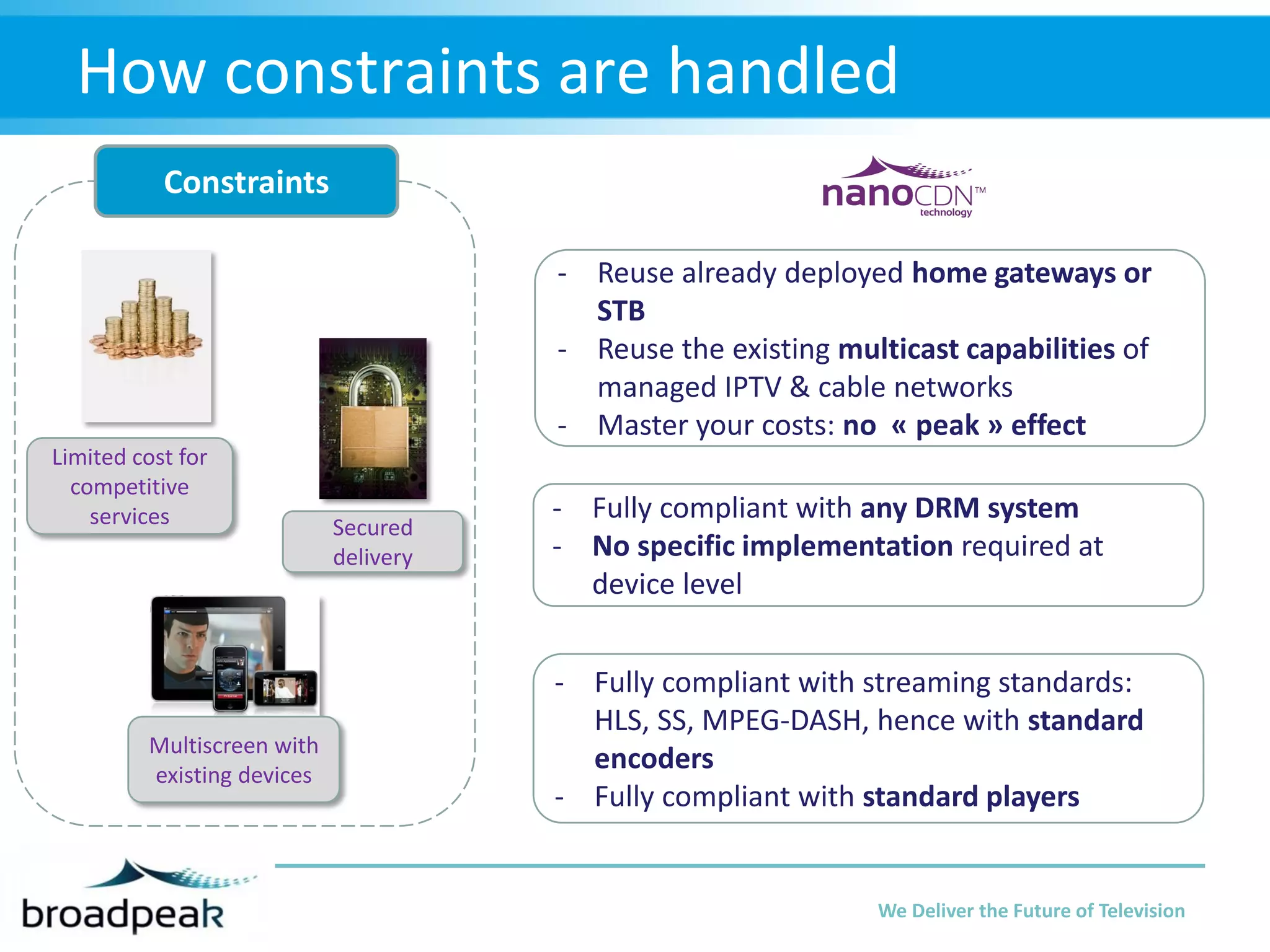
How constraints are handled
Constraints
- Reuse already deployed home gateways or
STB
- Reuse the existing multicast capabilities of
managed IPTV & cable networks
- Master your costs: no « peak » effect
Limited cost for
competitive
services

Multiscreen with
existing devices

Secured
delivery

- Fully compliant with any DRM system
- No specific implementation required at
device level
- Fully compliant with streaming standards:
HLS, SS, MPEG-DASH, hence with standard
encoders
- Fully compliant with standard players

We Deliver the Future of Television
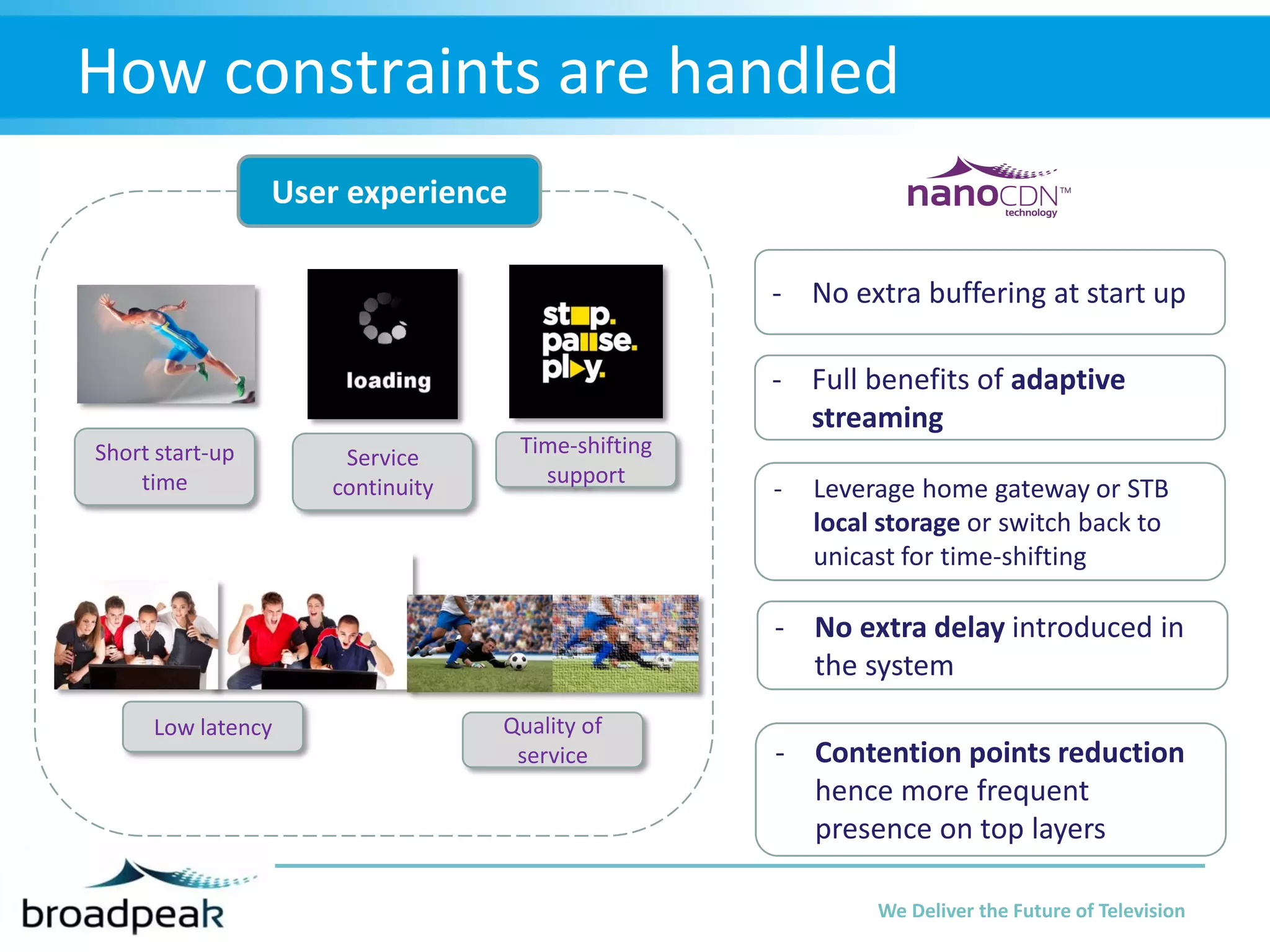
How constraints are handled
User experience
- No extra buffering at start up

Short start-up
time

Service
continuity

Time-shifting
support

- Full benefits of adaptive
streaming
-

Leverage home gateway or STB
local storage or switch back to
unicast for time-shifting

- No extra delay introduced in
the system
Low latency

Quality of
service

- Contention points reduction
hence more frequent
presence on top layers
We Deliver the Future of Television
Benefits for the operator
► The operator can ensure thousand streams without
additional investments on frequencies
► The solution is fully compliant with:
• Streaming standards
–

It maintains the benefits of adaptive streaming technology for
a superior QoE

• Standard players and devices
–

No need for additional proprietary equipment or software

► Broadpeak solution handles the DRM content providers
demand for signal security
We Deliver the Future of Television
Benefits for the operator
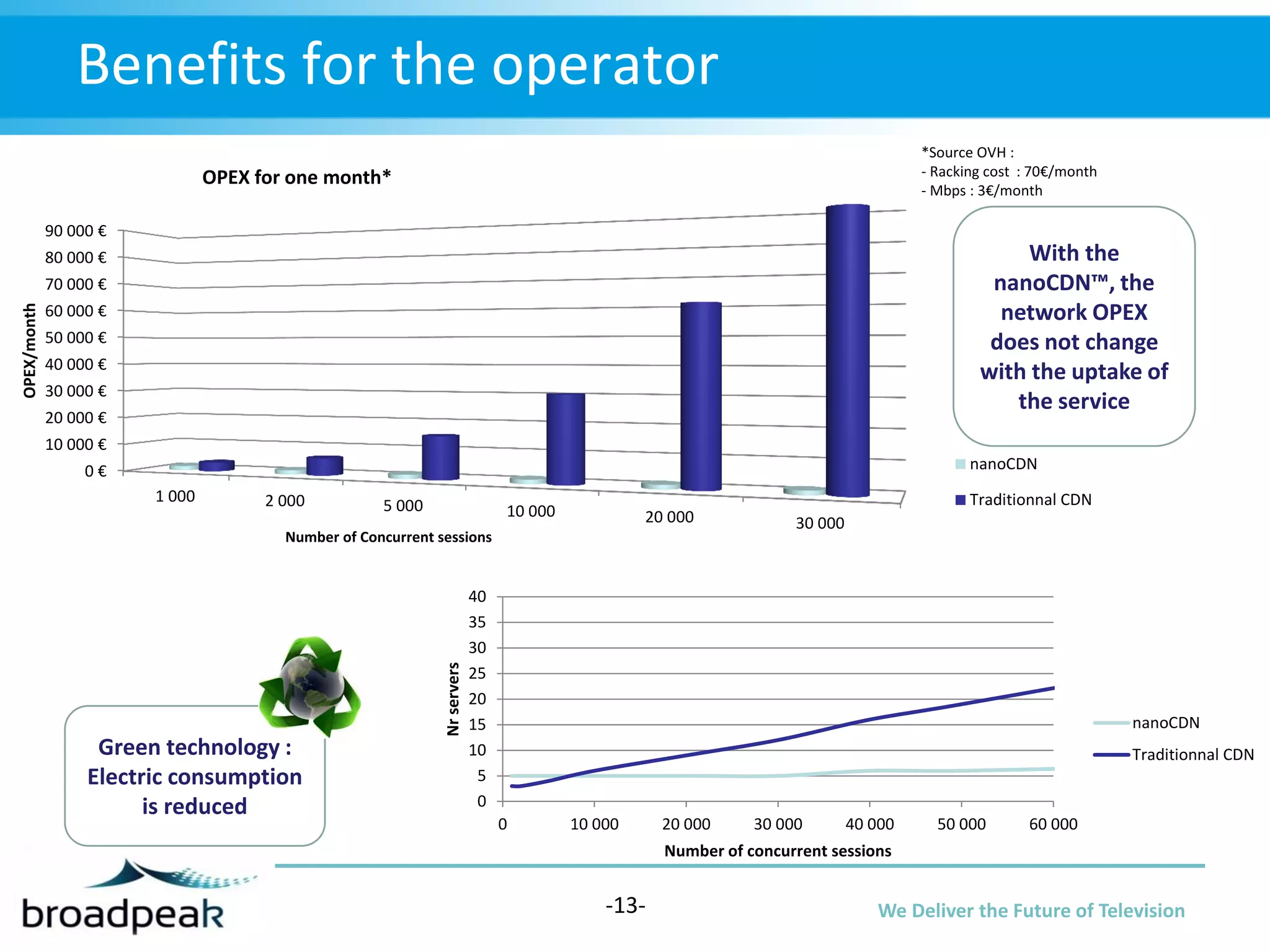
*Source OVH :
- Racking cost : 70€/month
- Mbps : 3€/month

OPEX for one month*
90 000 €

With the
nanoCDN™, the
network OPEX
does not change
with the uptake of
the service

80 000 €
60 000 €
50 000 €
40 000 €
30 000 €
20 000 €
10 000 €

nanoCDN

0€
1 000

2 000

5 000

10 000

20 000

Number of Concurrent sessions

Green technology :
Electric consumption
is reduced

Nr servers

OPEX/month

70 000 €

Traditionnal CDN
30 000

40
35
30
25
20
15
10
5
0

nanoCDN

Traditionnal CDN

0

10 000

20 000

30 000

40 000

50 000

60 000

Number of concurrent sessions

-13-

We Deliver the Future of Television
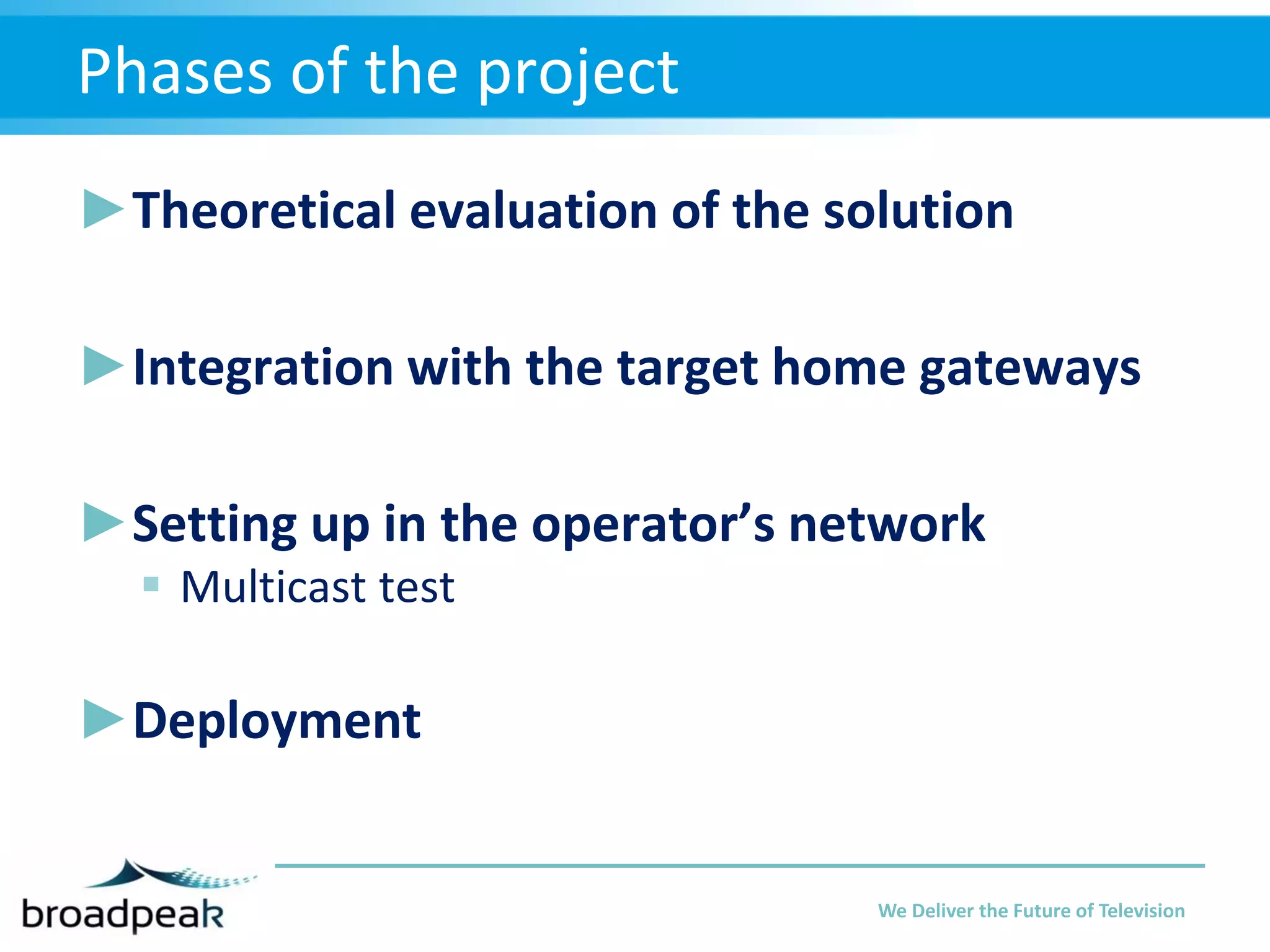
Phases of the project
►Theoretical evaluation of the solution
►Integration with the target home gateways
►Setting up in the operator’s network
 Multicast test

►Deployment

We Deliver the Future of Television
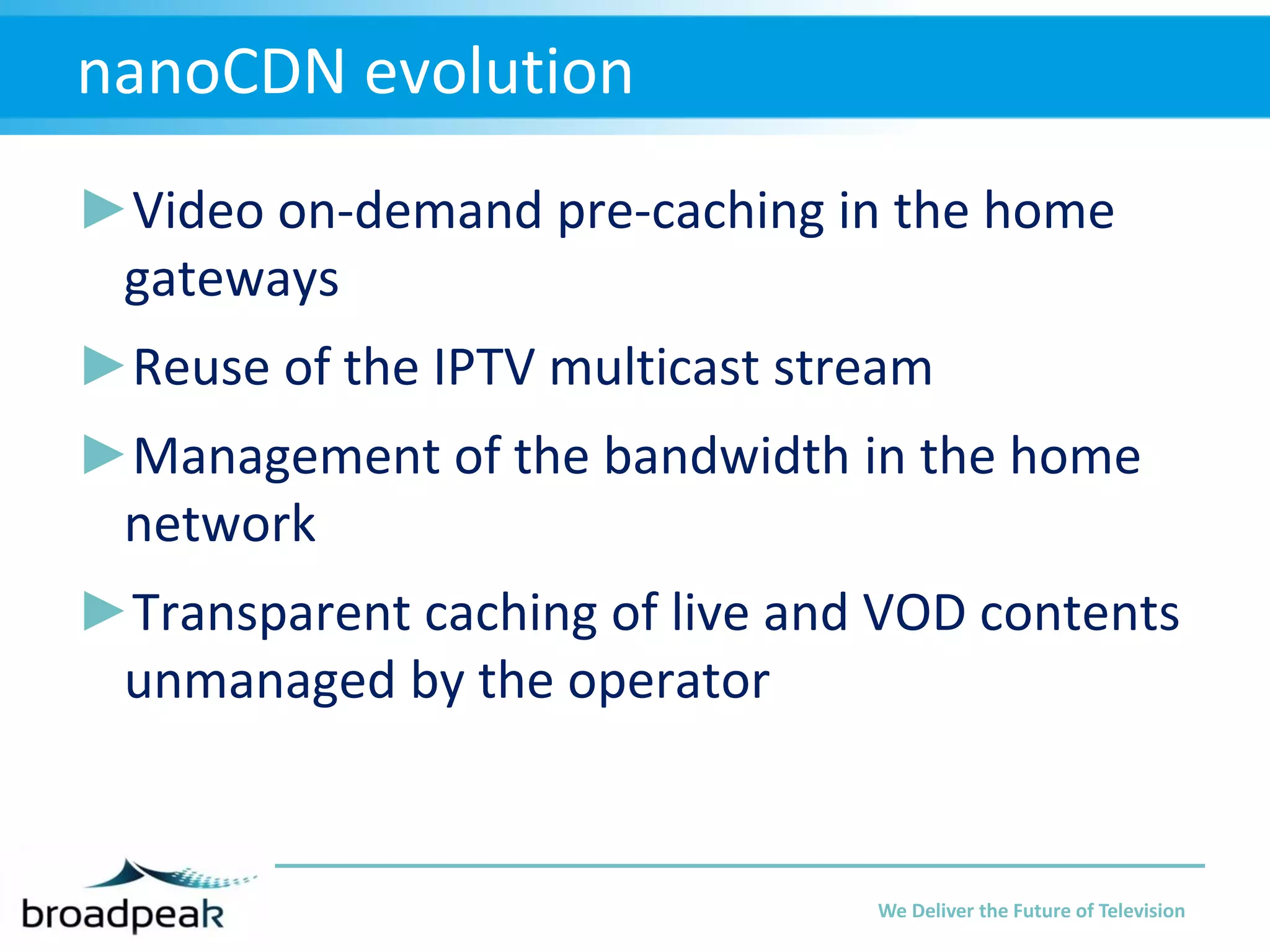
nanoCDN evolution
►Video on-demand pre-caching in the home
gateways
►Reuse of the IPTV multicast stream
►Management of the bandwidth in the home
network
►Transparent caching of live and VOD contents
unmanaged by the operator

We Deliver the Future of Television
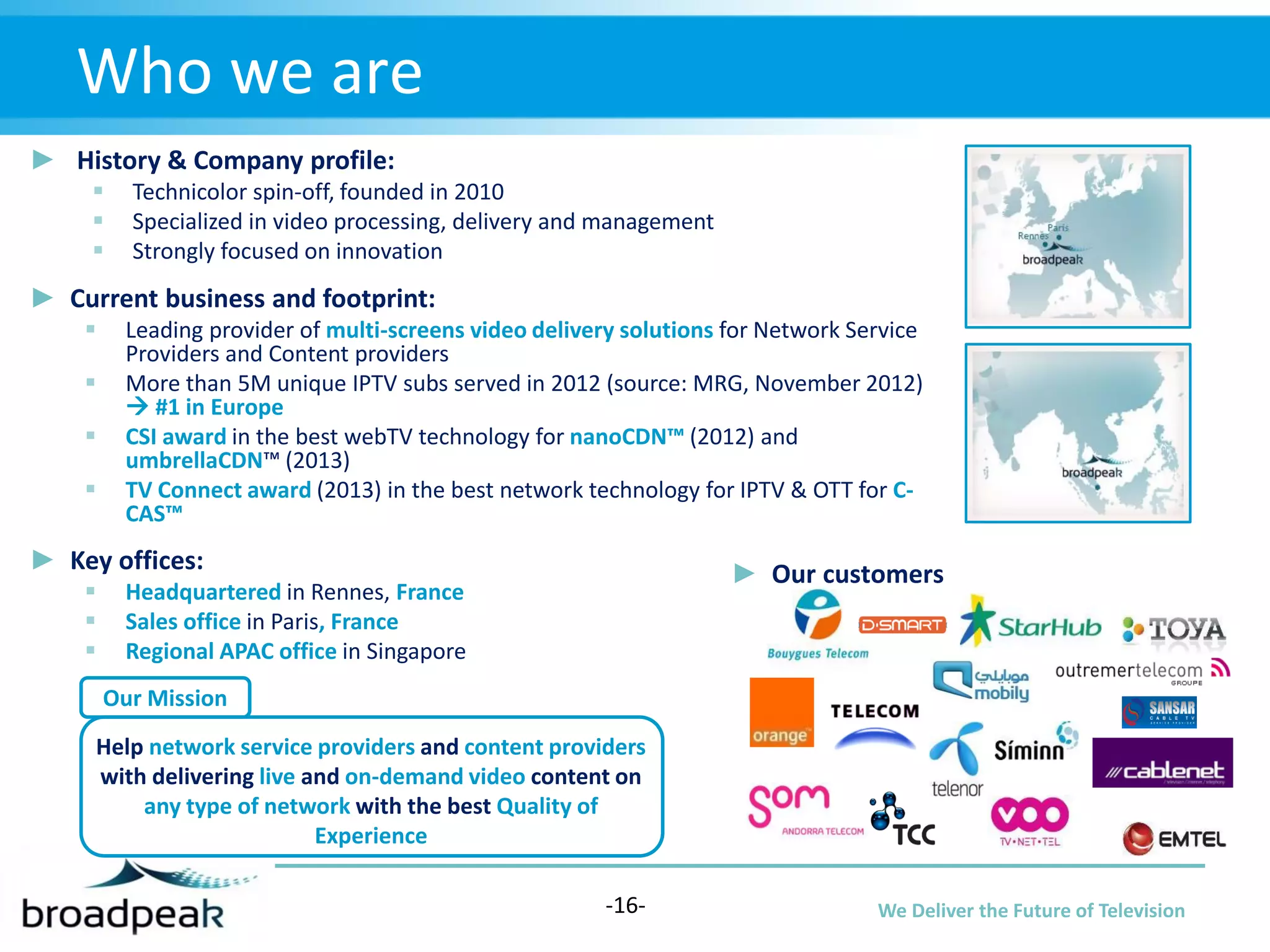
Who we are
► History & Company profile:




Technicolor spin-off, founded in 2010
Specialized in video processing, delivery and management
Strongly focused on innovation

► Current business and footprint:





Leading provider of multi-screens video delivery solutions for Network Service
Providers and Content providers
More than 5M unique IPTV subs served in 2012 (source: MRG, November 2012)
 #1 in Europe
CSI award in the best webTV technology for nanoCDN™ (2012) and
umbrellaCDN™ (2013)
TV Connect award (2013) in the best network technology for IPTV & OTT for CCAS™

► Key offices:




► Our customers

Headquartered in Rennes, France
Sales office in Paris, France
Regional APAC office in Singapore
Our Mission

Help network service providers and content providers
with delivering live and on-demand video content on
any type of network with the best Quality of
Experience
-16-

We Deliver the Future of Television
Thank you

contact@broadpeak.tv

Deployment of the nanoCDN solution with an operator

  • 1.
    Deployment of thenanoCDN solution with an operator Broadpeak property – All rights reserved
  • 2.
    Objective of theoperator Deliver multi-screen video Internet services ►Efficiently ►Quickly ►Cost-effectively Support live events which generate audience peaks We Deliver the Future of Television
  • 3.
    Needs ► Efficiency ofbandwidth usage  Transfer of media content to the home network in RF ► Scalability  Increase of usage according to peaks ► Users’ Quality of Experience  Outstanding experience for users accessing the content via multiple devices • HLS format for STB, tablets and smartphones, evolution into other formats We Deliver the Future of Television
  • 4.
    Past experiences ►Flexibility  handlepeak bandwidth consumption of live events Live peak traffic during London 2012 Olympics (Source: BBC) 700 Gbps at peak time during London Olympics! Average traffic x 7 We Deliver the Future of Television
  • 5.
    Operator’s constraints User experience Constraints Limitedcost for competitive services Short start-up time Time-shifting support Secured delivery Low latency Multiscreen with existing devices Service continuity Quality of service We Deliver the Future of Television
  • 6.
    Why Broadpeak ? ►BroadpeaknanoCDN out-of-box solution allows the use of the CDN to deliver multicast streams ►No need to use more expensive and consuming unicast streams We Deliver the Future of Television
  • 7.
    nanoCDN principle ►The nanoCDNrelies on the home gateways deployed in the home network → To receive and transform multicast streams into unicast in order to deliver videos to different devices across the residential environment with no impact on the devices We Deliver the Future of Television
  • 8.
    nanoCDN principle Mediator Server Managepopular live and inform transcaster to stream them. Control Transcaster Servers Live HLS Encoder/origin in push mode Convert unicast to multicast HLS Broadpeak Agent Convert multicast to unicast Home gateway HLS We Deliver the Future of Television
  • 9.
    nanoCDN principle • Thismulticast-to-unicast paradigm allows operators to keep network bandwidth for a fast internet connection while continuing to deliver high-quality unicast streams to drive multiple devices within the residence. We Deliver the Future of Television
  • 10.
    How constraints arehandled Constraints - Reuse already deployed home gateways or STB - Reuse the existing multicast capabilities of managed IPTV & cable networks - Master your costs: no « peak » effect Limited cost for competitive services Multiscreen with existing devices Secured delivery - Fully compliant with any DRM system - No specific implementation required at device level - Fully compliant with streaming standards: HLS, SS, MPEG-DASH, hence with standard encoders - Fully compliant with standard players We Deliver the Future of Television
  • 11.
    How constraints arehandled User experience - No extra buffering at start up Short start-up time Service continuity Time-shifting support - Full benefits of adaptive streaming - Leverage home gateway or STB local storage or switch back to unicast for time-shifting - No extra delay introduced in the system Low latency Quality of service - Contention points reduction hence more frequent presence on top layers We Deliver the Future of Television
  • 12.
    Benefits for theoperator ► The operator can ensure thousand streams without additional investments on frequencies ► The solution is fully compliant with: • Streaming standards – It maintains the benefits of adaptive streaming technology for a superior QoE • Standard players and devices – No need for additional proprietary equipment or software ► Broadpeak solution handles the DRM content providers demand for signal security We Deliver the Future of Television
  • 13.
    Benefits for theoperator *Source OVH : - Racking cost : 70€/month - Mbps : 3€/month OPEX for one month* 90 000 € With the nanoCDN™, the network OPEX does not change with the uptake of the service 80 000 € 60 000 € 50 000 € 40 000 € 30 000 € 20 000 € 10 000 € nanoCDN 0€ 1 000 2 000 5 000 10 000 20 000 Number of Concurrent sessions Green technology : Electric consumption is reduced Nr servers OPEX/month 70 000 € Traditionnal CDN 30 000 40 35 30 25 20 15 10 5 0 nanoCDN Traditionnal CDN 0 10 000 20 000 30 000 40 000 50 000 60 000 Number of concurrent sessions -13- We Deliver the Future of Television
  • 14.
    Phases of theproject ►Theoretical evaluation of the solution ►Integration with the target home gateways ►Setting up in the operator’s network  Multicast test ►Deployment We Deliver the Future of Television
  • 15.
    nanoCDN evolution ►Video on-demandpre-caching in the home gateways ►Reuse of the IPTV multicast stream ►Management of the bandwidth in the home network ►Transparent caching of live and VOD contents unmanaged by the operator We Deliver the Future of Television
  • 16.
    Who we are ►History & Company profile:    Technicolor spin-off, founded in 2010 Specialized in video processing, delivery and management Strongly focused on innovation ► Current business and footprint:     Leading provider of multi-screens video delivery solutions for Network Service Providers and Content providers More than 5M unique IPTV subs served in 2012 (source: MRG, November 2012)  #1 in Europe CSI award in the best webTV technology for nanoCDN™ (2012) and umbrellaCDN™ (2013) TV Connect award (2013) in the best network technology for IPTV & OTT for CCAS™ ► Key offices:    ► Our customers Headquartered in Rennes, France Sales office in Paris, France Regional APAC office in Singapore Our Mission Help network service providers and content providers with delivering live and on-demand video content on any type of network with the best Quality of Experience -16- We Deliver the Future of Television
  • 17.