Monoblock
obturation
technique
successful root canal
treatment is based on:
Diagnosis and treatment planning
 knowledge of anatomy and
Morphology
 The traditional concepts of (CLEAN),
(SHAPE) , (FILL obturate ), and the
prober coronal restoration.
Introduction:
The shaped and cleaned
canal space represents an
environment in which
microbial communities
have been eliminated or
seriously disrupted and
can no longer promote
peri-radicular disease .
But how is this condition
preserved?
reliance on a coronal seal is probably
unacceptable without first filling the
canal system with materials that control
infection:
1.Directly: by actively killing
microorganisms which remain or
which gain later entry to the pulp
space
2.Ecologically: by
denying nutrition, space
to multiply, and conditions
for the establishment of
significant biomass of microbes
They should do so long-term
and without damaging host
tissues.
Many materials have been used for
obturation Gutta percha is the most
successful one which has a number of
advantages include:
• Biocompatibility
• Flexibility of technique
• Thermoplastic
• Easily removed
Gutta-percha only satisfy the
secondary requirements of an ideal
obturating material RATHER THAN
which are not satisfied by gutta-percha.
The primary requirements of :
 Being an antimicrobial material

Sealing all the portals of exit in the
root canal system
Some other shortcomings of gutta-percha
 lack adhesive ability chemically bond
no bond to dentin, or any sealers
 Potential for voids, Lack rigidity , shrinks upon
cooling, approximately 5 to 7% , easily distorted
its inability to reinforce
endodontically treated tooth
For years endodontic sealers have been
considered the weak link in obturation
because
• they shrink the sealer tends to pull away
from GP
• solubility
• Some do not bond to dentin & and none
chemically to GP.
• Etc…
For this reason various compaction
techniques have been developed to help
minimize the sealer interface.
Monoblock concept
The literal meaning
of the word
monobloc is ‘Single
unit’.
The introduction
of the word ‘monobloc’
to dentistry can be traced
back to 1902, in the field
of orthodontics, by
Dr. Pierre Robin.
A monoblock obturation
system is the unit in which the
core material, sealing agent, and
the root canal dentin form a
single cohesive unit.
With the application of adhesive technology to
endodontics, the term MONOBLOCK has
become familiar
The monoblocks created in the root
canal spaces were classified as:
 primary
 secondary
 tertiary
Depending on the number of the interfaces
present between the
bonding substrate and the bulk core
material (Tay & Pashley 2007)
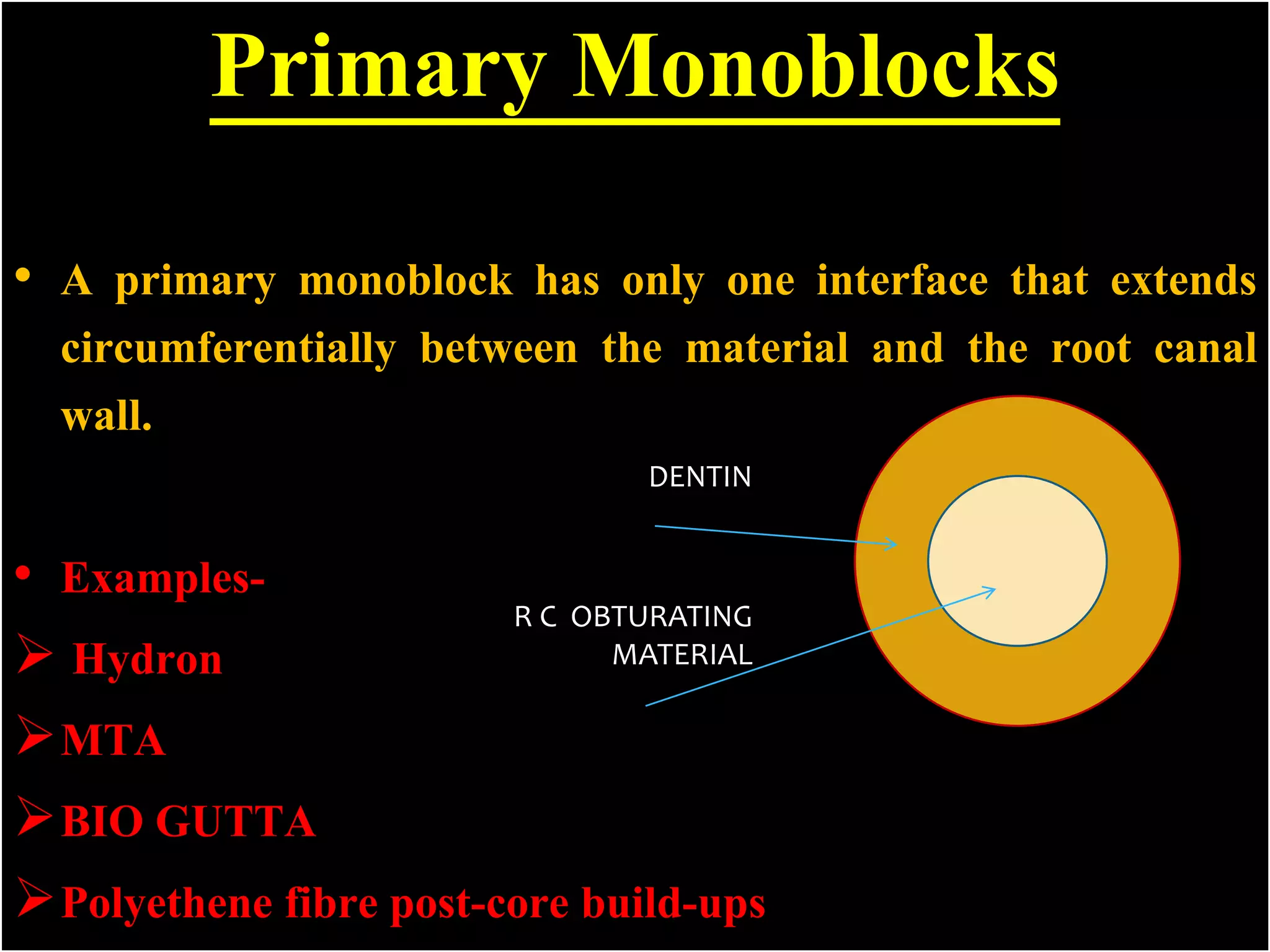
Primary Monoblocks
• A primary monoblock has only one interface that extends
circumferentially between the material and the root canal
wall.
• Examples-
 Hydron
MTA
BIO GUTTA
Polyethene fibre post-core build-ups
R C OBTURATING
MATERIAL
DENTIN
Secondary Monoblocks
 Secondary monoblocks are those that have two
circumferential interfaces, one between the sealer and
primed dentine and the other between the sealer and the
core material
 Examples-
Resilon
Propoint (C Point)/hyseal bio
Prefabricated post systems
bonded to root canal dentin via resin cements
CORE
SEALER
DENTIN
Tertiary monoblocks
 are those that have 3 circumferential interfaces
1. one between the sealer and primed dentine
2. second interface between the sealer and the coating that have
been applied over the non-bondable gutta-percha points to
make them bondable to the root canal sealers
3. third between coating and core material
Examples-
• EndoREZ - coating gutta-percha cones with a
polybutadiene-diisocyanate-methacrylate adhesive.
• ActiV GP- conventional gutta-percha cones that are
surface coated with glass ionomer fillers using a
proprietary technique
CORE
COATING
SEALER
DENTIN
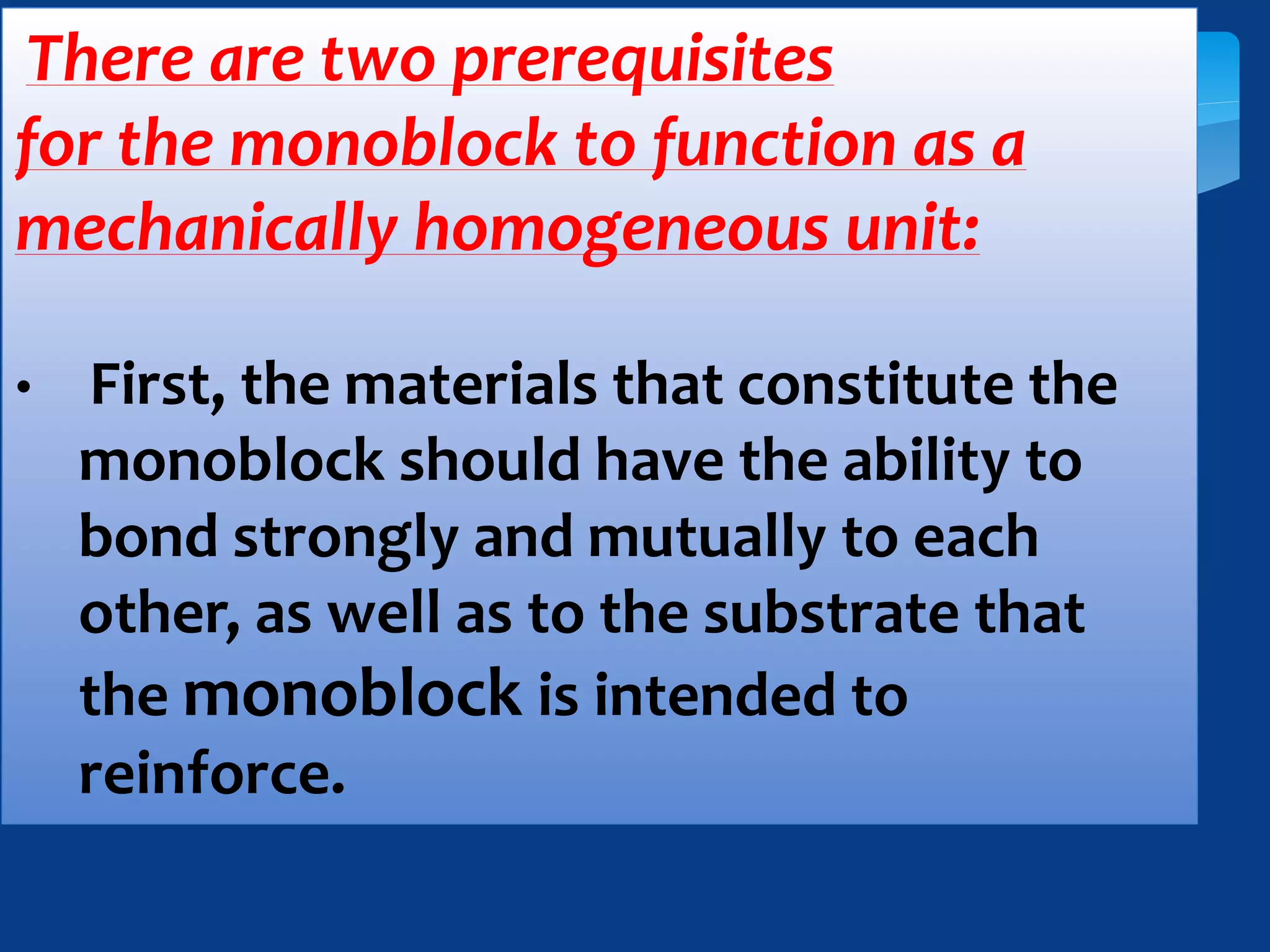
There are two prerequisites
for the monoblock to function as a
mechanically homogeneous unit:
• First, the materials that constitute the
monoblock should have the ability to
bond strongly and mutually to each
other, as well as to the substrate that
the monoblock is intended to
reinforce.
Purported reasons for microgaps and subsequent
leakage between GP and sealer include:
• poor adhesion and wetting,
• polymerization shrinkage,
• thermal stresses
• occlusal loading
• water sorption.
increased efforts have been directed
towards the development of
bonded obturating materials.
Sealability
Teeth with significant loss of
structure require posts in the
interest of retaining the core.
Since the currently favored
fibre posts are passively
retained into the root canal, an
adhesive cement is important
for a good seal.
Sealability
• Second ,
Monoblock materials should
have a modulus of elasticity
that is similar to that of the
substrate , that the
monoblock is intended to
reinforce. (dentin) &
restoration ????
•
Teeth which are root canal filled are
prone to biomechanical failure due to:
loss of tooth structure and integrity
+
masticatory forces
fatigue stress.
MOE OF DENTIN (i.e 14.0–18.6
GPa)
Methacrylate resin
• hydrophilic properties,
which enable them to wet the canal walls and
penetrate dentinal tubules.
• bondability to the radicular dentin
and root canal materials is also superior compared to
other cements.
Four generations have been introduced.
1-The first generation;
contained poly [2-hydroxyethylmethacrylate] HEMA as major
ingredient was marketed as Hydron.
2-The second generation:
are hydrophilic and does not require etching to the adjunctive use of
a dentin adhesive Eg; ENDOREZ.
3-The third generation :
involve the use of a self-etching primer and dual-cured resin
composite Sealer Eg; RESILON/EPIPHANY.
4-The fourth generation sealers:
where in the etchant, primer and sealer were incorporated into an
all-in-one self-etching, self-adhesive sealer Eg; METASEAL.
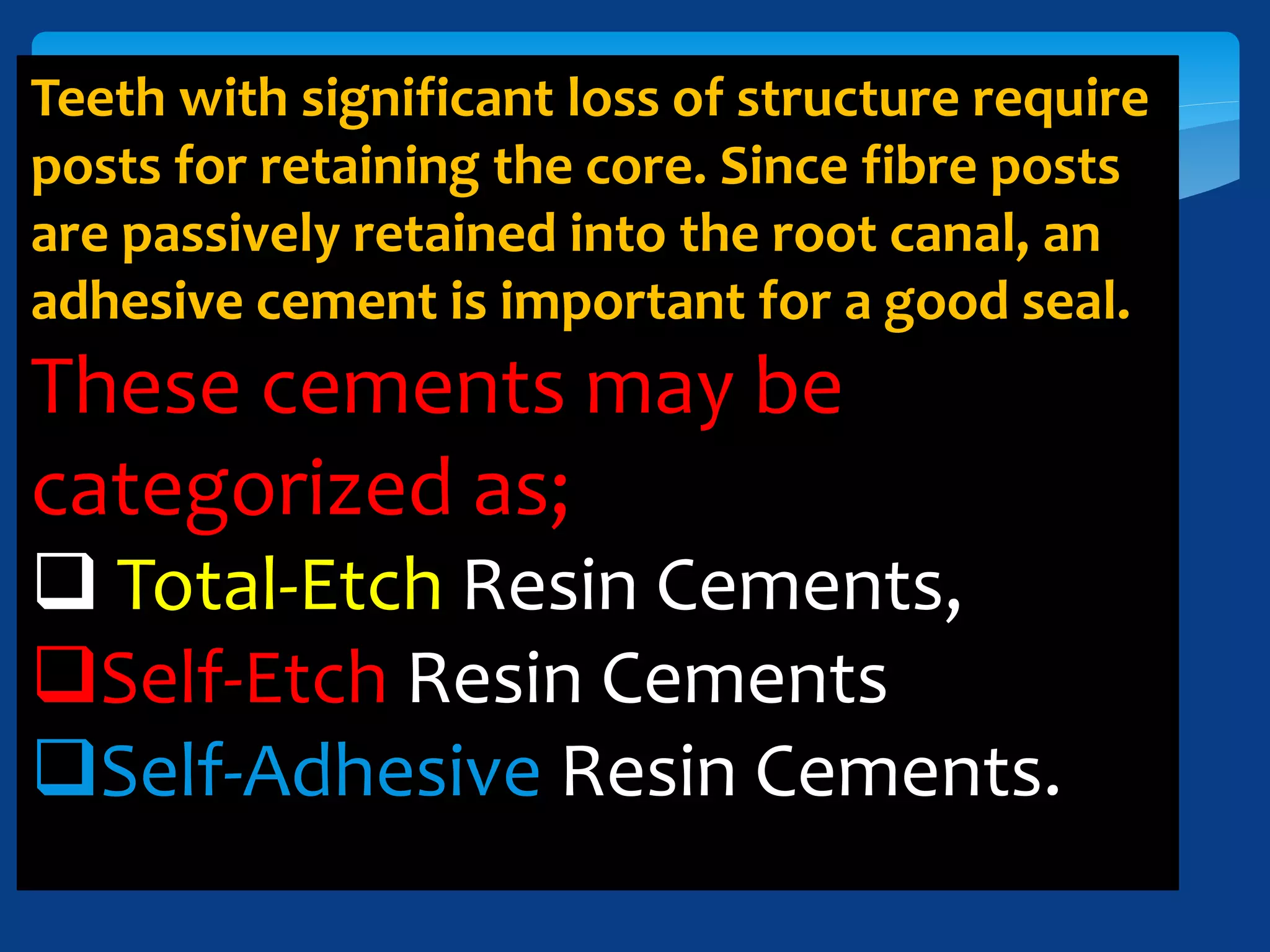
Teeth with significant loss of structure require
posts for retaining the core. Since fibre posts
are passively retained into the root canal, an
adhesive cement is important for a good seal.
These cements may be
categorized as;
 Total-Etch Resin Cements,
Self-Etch Resin Cements
Self-Adhesive Resin Cements.
Hydron (Hydron technologies,Inc.
Pompano Beach, FL, USA)
 is is an example of a primary monoblock .
 Used to fill the root canals extensively in the late
1970s.
 it demonstrated ease of application , no core
injectable

It consists of 2-hydroxy ethyl methacrylate
(HEMA).
it was not stiff enough to strengthen
the canal surfaces.

poor antibacterial properties.
Poor adaptability to the canal wall.
advers inflammatory reactions .
 leakage issues were also observed.
MTA (Mineral Trioxide Aggregate)
In 1993 Torabinejad introduced MTA, a calcium-based
material,
MTA is composed principally of
Portland cement 75%
GYPSUM 5%
with the addition of bismuth
trioxide 20% to render it
radiopaque.
The main reaction between the tricalcium and
dicalcium silicate and water resulted in the
production of calcium silicate hydrate gel, which
is poorly crystalline, and calcium hydroxide
Compounds
• Tricalcium Silicate (C3S)
• Dicalcium Silicate (C2S)
• Tricalcium Aluminate (C3A)
• Tetracalcium Aluminoferrite
(C4AF)
Advantages
•
Compatible and stimulates mineralization
•
Antimicrobial
•
Forms hydroxyapatite on the surface and
provides a biological seal Bioactive; i.e., it
encourages differentiation and migration of
hard tissue producing cells
•
Exhibits high adhesiveness to dentin as
compared to other conventional sealers
• Sealing ability is similar to that of epoxy resin–
based sealers
•
Forms calcium hydroxide that releases calcium
ions
•
Nontoxic and nonmutagenic
•
Provides effective seal against dentin and
cementum and promotes biological
• repair and regeneration of the periodontal
ligament
• Disadvantages
•
Can cause discoloration due to the release of
the ferrous ions
•
Long setting time
•
Short working time of less than 4 minutes
•
Inadequate compressive strength
•
Improper handling characteristics
•
No known solvent is available
Bioactive gutta-percha
(Bio-Gutta Smartodon Smartodont
llc Zurich - Switzerland)
All-in-one root filling material that
forms a true monoblock in the root
canal system without any sealer.
• contains bioactive glass incorporated into
polyisoprene.
• The material is self-adhesive with immediate
sealing of the canal system through formation
of Calcium Phosphate crystals on the
material’s surface in a wet environment.
• studies report good push out bond strength to
the canal dentin when compared with
conventional gutta percha.
(Bio-Gutta Smartodon Smartodont llc
Zurich - Switzerland)
Polyethylene fibre post-core
systems
(Ribbond Inc., Seattle, WA,USA)
made of ultra-high
molecular weight
polyethylene fibers
(UHMWP)
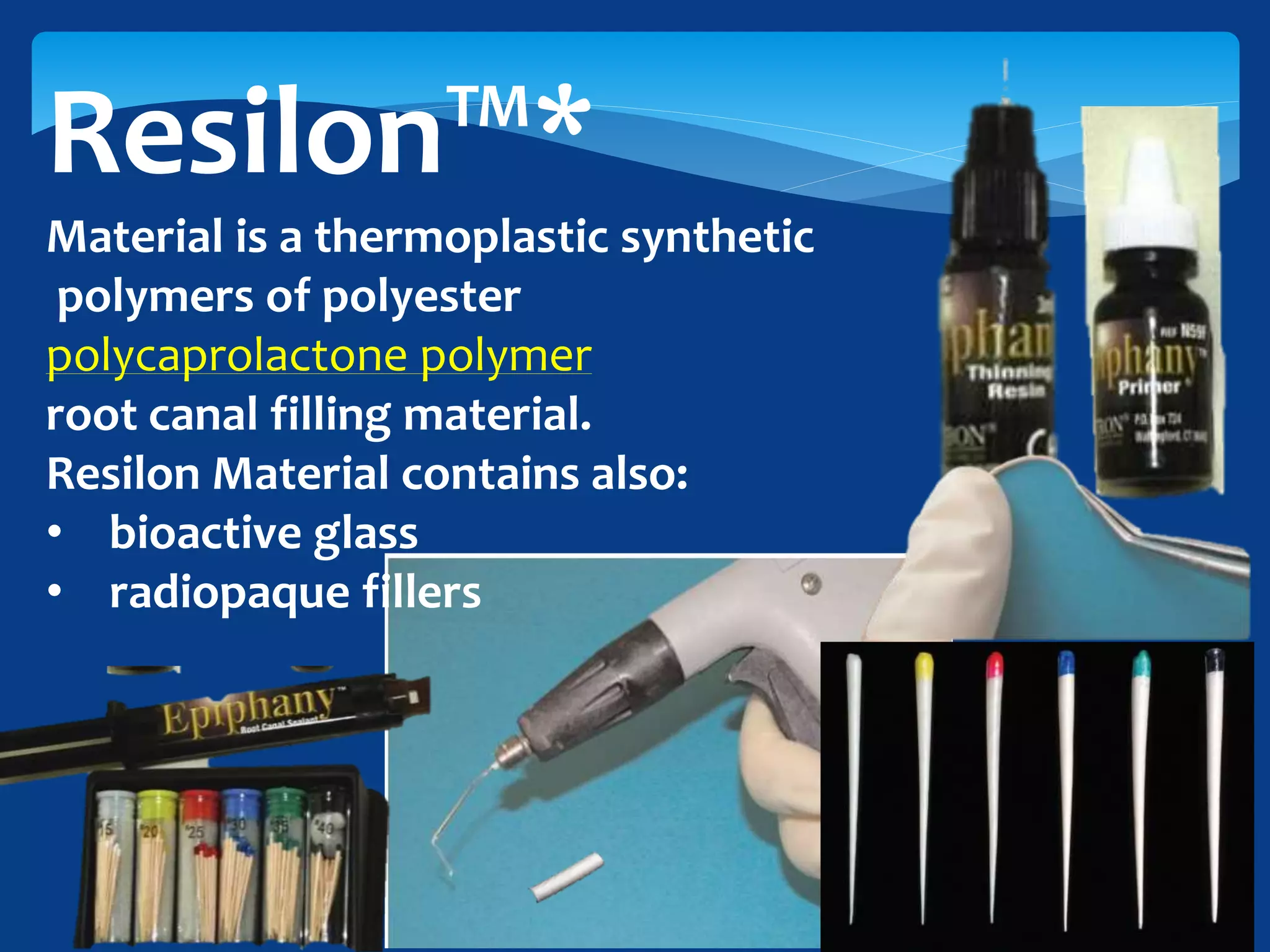
Resilon™*
Material is a thermoplastic synthetic
polymers of polyester
polycaprolactone polymer
root canal filling material.
Resilon Material contains also:
• bioactive glass
• radiopaque fillers
Resilon Core material:-
Organic part: thermoplastic synthetic polymer –
Polycaprolactone (50%) .• Methacrylate co-
polymer(10%)helps in bonding chemically
with methacrylate based sealers,
Inorganic part: bioactive glass, bismuth oxychloride,
barium sulphate(40%)•
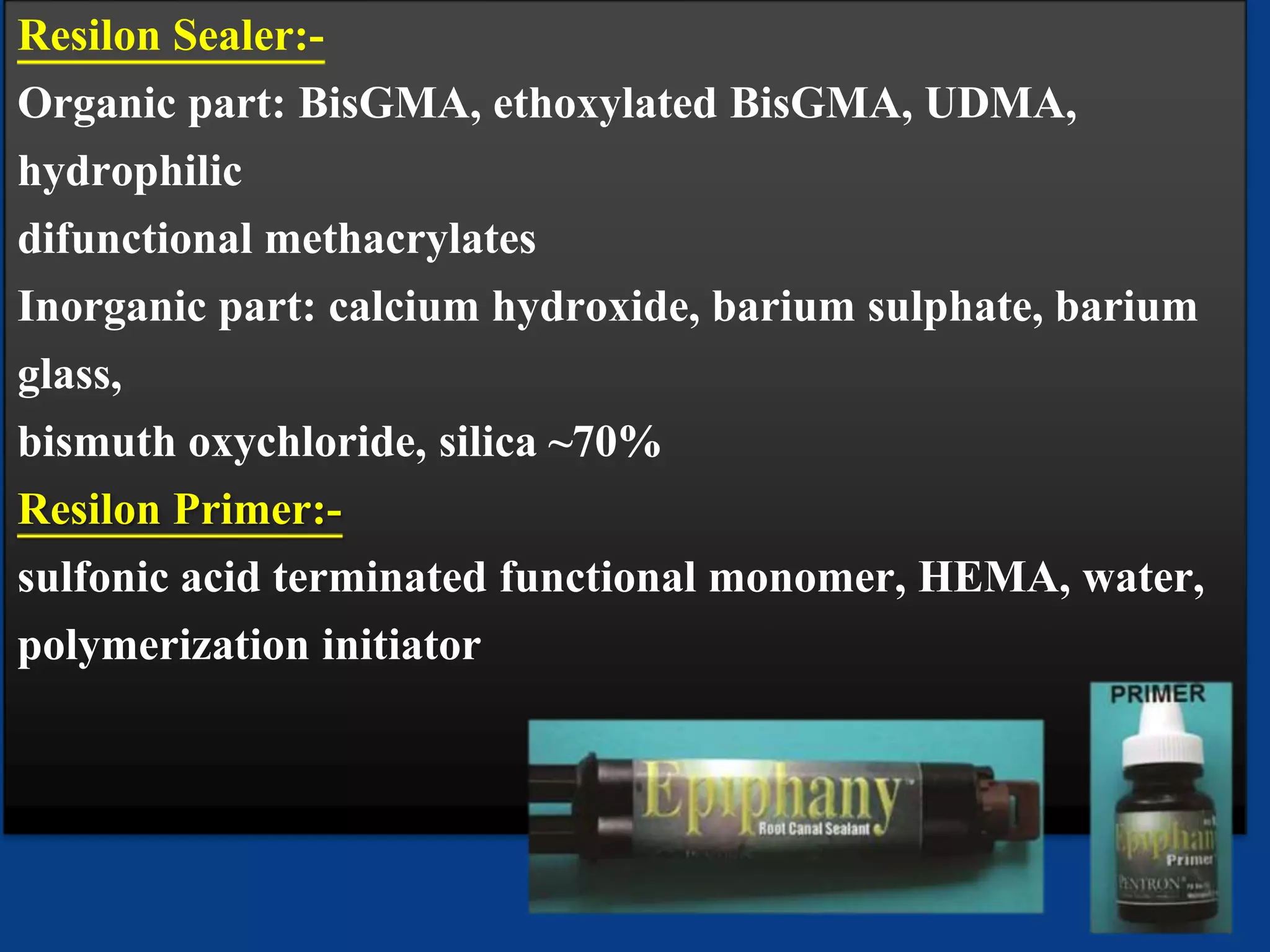
Resilon Sealer:-
Organic part: BisGMA, ethoxylated BisGMA, UDMA,
hydrophilic
difunctional methacrylates
Inorganic part: calcium hydroxide, barium sulphate, barium
glass,
bismuth oxychloride, silica ~70%
Resilon Primer:-
sulfonic acid terminated functional monomer, HEMA, water,
polymerization initiator
PROPERTIES :
• CYTOTOXICITY : Resilon is same as
biocompatible as G.P.
• MELTING POINT : 60.50 C.
• REMOVAL FOR RETREATMENT : heat or
solvents like chloroform can be used for removal
of the resilon points.
• REINFORCEMENT OF TOOTH STRUCTURE : it
can provide 20% more that of the G.P points
provide.
• Resilon has low melting point than G.P
• Resilon has higher molecular weight that G.P
Resilon Delivery System
MetaSEAL® Endodontic Sealer
Figure 1
In this micrograph of a cross-sectioned
point, you can see where MetaSEAL
penetrated the gutta percha to create a
hybrid bond. The strength of this bond
actually exceeds the cohesive strength of
the point.
Advantages of Resilon are:
• Decreased incidence of root fracture
• Better radiopacity than gutta-percha
• Dual cure capabilities for immediate
coronal seal, Elimination or considerable
reduction in microbial leakage
• Less irritation than epoxy or ZOE
sealers
Modulus of elasticity of dentin – 16000 Mpa
Material to reinforce dentin Should have the same
elasticity Modulus of elasticity – G.P – 74.22 Mpa,
Resilon – 129.16
Franklin Tay et al (2006):Weak chemical
union between resilon and methacrylate
sealerCause – Phase separation due to
insufficient dimethacrylate inresilon and
absence of free radicals within resilon for
coupling alternative
Is Resilon the Solution?
Dr Franklin Tay
• recognized the presence of the
configuration factor or C-factor that is seen
in bonded restorations in cavities and
concluded that the high C-factors in root
canals impose challenges in creating
endodontic monoblocks.
• His research on polymer constituents
of Resilon has shown degradation by
bacterial and salivary enzymes.
METHOD OF USE :• After the canal preparation is
done, irrigation is done with 5.25% sodium hypo
chloride solution and final rinse is done with 17%
EDTA• Canal is dried with the paper points.• Self-
etch primer is brought into the canal by insertion
of a saturated fitted paper point.• Excess is
removed with a dry paper point.• Epiphany resin
sealer is then express into the canal using a auto
mix syringe.• The fitted master cone was coated
with the sealer and is placed into the canal.•
Obturation is completed using Downpack and
Back fill technique.
The C Point
(EndoTechnologies, LLC,
Shrewsbury, MA, USA)
Fibre posts
EndoreEndoREZ® -
Ultradentz
Activ GP Precision Obturation System
(single cone technique) (Endosequence
and Brasseler USA)
Brasseler bioceramic sealer
Fiber posts that contain
an external silicate coating or
nonpolymerized resin
( anatomic posts)
and fibre posts that contain an
extra silicon coating such as
• DT Light (VDW GmbH, Munich,
German)
ceramic posts that require a silane
coating such as
• Cosmopost (Ivoclar, Vivadent, AG,
Schaan, Liechtenstein)
can be considered as tertiary
monoblocks
CONCLUSION
First and foremost currently available resin
based root canal filling available have a
modulus of elasticity far less compared to
dentin.Under these circumstances it seems
highly unlikely that these materials contribute
towards root reinforcement.
• Secondly the idea of monobloc is built on the
assumption that improved bonding within
the canals would lead to good sealing.Yet it
has already been proven that the good bond
strengths of adhesive materials may not
imply or equate with good sealing ability.
Resin based products problems.
• Finally while designing a single unit root filling
forms the cornerstone in achieving the
‘monobloc effect’ all root filling materials
used today require additional interfaces.
dental Monoblock obturation technique or concept in endodontics

dental Monoblock obturation technique or concept in endodontics

  • 1.
  • 2.
    successful root canal treatmentis based on: Diagnosis and treatment planning  knowledge of anatomy and Morphology  The traditional concepts of (CLEAN), (SHAPE) , (FILL obturate ), and the prober coronal restoration. Introduction:
  • 3.
    The shaped andcleaned canal space represents an environment in which microbial communities have been eliminated or seriously disrupted and can no longer promote peri-radicular disease .
  • 4.
    But how isthis condition preserved? reliance on a coronal seal is probably unacceptable without first filling the canal system with materials that control infection: 1.Directly: by actively killing microorganisms which remain or which gain later entry to the pulp space
  • 5.
    2.Ecologically: by denying nutrition,space to multiply, and conditions for the establishment of significant biomass of microbes They should do so long-term and without damaging host tissues.
  • 7.
    Many materials havebeen used for obturation Gutta percha is the most successful one which has a number of advantages include: • Biocompatibility • Flexibility of technique • Thermoplastic • Easily removed
  • 8.
    Gutta-percha only satisfythe secondary requirements of an ideal obturating material RATHER THAN which are not satisfied by gutta-percha. The primary requirements of :  Being an antimicrobial material  Sealing all the portals of exit in the root canal system
  • 9.
    Some other shortcomingsof gutta-percha  lack adhesive ability chemically bond no bond to dentin, or any sealers  Potential for voids, Lack rigidity , shrinks upon cooling, approximately 5 to 7% , easily distorted its inability to reinforce endodontically treated tooth
  • 10.
    For years endodonticsealers have been considered the weak link in obturation because • they shrink the sealer tends to pull away from GP • solubility • Some do not bond to dentin & and none chemically to GP. • Etc… For this reason various compaction techniques have been developed to help minimize the sealer interface.
  • 12.
  • 13.
    The literal meaning ofthe word monobloc is ‘Single unit’.
  • 14.
    The introduction of theword ‘monobloc’ to dentistry can be traced back to 1902, in the field of orthodontics, by Dr. Pierre Robin.
  • 15.
    A monoblock obturation systemis the unit in which the core material, sealing agent, and the root canal dentin form a single cohesive unit. With the application of adhesive technology to endodontics, the term MONOBLOCK has become familiar
  • 16.
    The monoblocks createdin the root canal spaces were classified as:  primary  secondary  tertiary Depending on the number of the interfaces present between the bonding substrate and the bulk core material (Tay & Pashley 2007)
  • 17.
    Primary Monoblocks • Aprimary monoblock has only one interface that extends circumferentially between the material and the root canal wall. • Examples-  Hydron MTA BIO GUTTA Polyethene fibre post-core build-ups R C OBTURATING MATERIAL DENTIN
  • 18.
    Secondary Monoblocks  Secondarymonoblocks are those that have two circumferential interfaces, one between the sealer and primed dentine and the other between the sealer and the core material  Examples- Resilon Propoint (C Point)/hyseal bio Prefabricated post systems bonded to root canal dentin via resin cements CORE SEALER DENTIN
  • 19.
    Tertiary monoblocks  arethose that have 3 circumferential interfaces 1. one between the sealer and primed dentine 2. second interface between the sealer and the coating that have been applied over the non-bondable gutta-percha points to make them bondable to the root canal sealers 3. third between coating and core material
  • 20.
    Examples- • EndoREZ -coating gutta-percha cones with a polybutadiene-diisocyanate-methacrylate adhesive. • ActiV GP- conventional gutta-percha cones that are surface coated with glass ionomer fillers using a proprietary technique CORE COATING SEALER DENTIN
  • 23.
    There are twoprerequisites for the monoblock to function as a mechanically homogeneous unit: • First, the materials that constitute the monoblock should have the ability to bond strongly and mutually to each other, as well as to the substrate that the monoblock is intended to reinforce.
  • 24.
    Purported reasons formicrogaps and subsequent leakage between GP and sealer include: • poor adhesion and wetting, • polymerization shrinkage, • thermal stresses • occlusal loading • water sorption. increased efforts have been directed towards the development of bonded obturating materials. Sealability
  • 25.
    Teeth with significantloss of structure require posts in the interest of retaining the core. Since the currently favored fibre posts are passively retained into the root canal, an adhesive cement is important for a good seal. Sealability
  • 26.
    • Second , Monoblockmaterials should have a modulus of elasticity that is similar to that of the substrate , that the monoblock is intended to reinforce. (dentin) & restoration ???? •
  • 27.
    Teeth which areroot canal filled are prone to biomechanical failure due to: loss of tooth structure and integrity + masticatory forces fatigue stress. MOE OF DENTIN (i.e 14.0–18.6 GPa)
  • 28.
    Methacrylate resin • hydrophilicproperties, which enable them to wet the canal walls and penetrate dentinal tubules. • bondability to the radicular dentin and root canal materials is also superior compared to other cements. Four generations have been introduced.
  • 29.
    1-The first generation; containedpoly [2-hydroxyethylmethacrylate] HEMA as major ingredient was marketed as Hydron. 2-The second generation: are hydrophilic and does not require etching to the adjunctive use of a dentin adhesive Eg; ENDOREZ. 3-The third generation : involve the use of a self-etching primer and dual-cured resin composite Sealer Eg; RESILON/EPIPHANY. 4-The fourth generation sealers: where in the etchant, primer and sealer were incorporated into an all-in-one self-etching, self-adhesive sealer Eg; METASEAL.
  • 30.
    Teeth with significantloss of structure require posts for retaining the core. Since fibre posts are passively retained into the root canal, an adhesive cement is important for a good seal. These cements may be categorized as;  Total-Etch Resin Cements, Self-Etch Resin Cements Self-Adhesive Resin Cements.
  • 31.
    Hydron (Hydron technologies,Inc. PompanoBeach, FL, USA)  is is an example of a primary monoblock .  Used to fill the root canals extensively in the late 1970s.  it demonstrated ease of application , no core injectable  It consists of 2-hydroxy ethyl methacrylate (HEMA).
  • 33.
    it was notstiff enough to strengthen the canal surfaces.  poor antibacterial properties. Poor adaptability to the canal wall. advers inflammatory reactions .  leakage issues were also observed.
  • 34.
  • 35.
    In 1993 Torabinejadintroduced MTA, a calcium-based material, MTA is composed principally of Portland cement 75% GYPSUM 5% with the addition of bismuth trioxide 20% to render it radiopaque. The main reaction between the tricalcium and dicalcium silicate and water resulted in the production of calcium silicate hydrate gel, which is poorly crystalline, and calcium hydroxide
  • 36.
    Compounds • Tricalcium Silicate(C3S) • Dicalcium Silicate (C2S) • Tricalcium Aluminate (C3A) • Tetracalcium Aluminoferrite (C4AF)
  • 37.
    Advantages • Compatible and stimulatesmineralization • Antimicrobial • Forms hydroxyapatite on the surface and provides a biological seal Bioactive; i.e., it encourages differentiation and migration of hard tissue producing cells • Exhibits high adhesiveness to dentin as compared to other conventional sealers
  • 38.
    • Sealing abilityis similar to that of epoxy resin– based sealers • Forms calcium hydroxide that releases calcium ions • Nontoxic and nonmutagenic • Provides effective seal against dentin and cementum and promotes biological • repair and regeneration of the periodontal ligament
  • 39.
    • Disadvantages • Can causediscoloration due to the release of the ferrous ions • Long setting time • Short working time of less than 4 minutes • Inadequate compressive strength • Improper handling characteristics • No known solvent is available
  • 40.
    Bioactive gutta-percha (Bio-Gutta SmartodonSmartodont llc Zurich - Switzerland) All-in-one root filling material that forms a true monoblock in the root canal system without any sealer.
  • 41.
    • contains bioactiveglass incorporated into polyisoprene. • The material is self-adhesive with immediate sealing of the canal system through formation of Calcium Phosphate crystals on the material’s surface in a wet environment. • studies report good push out bond strength to the canal dentin when compared with conventional gutta percha. (Bio-Gutta Smartodon Smartodont llc Zurich - Switzerland)
  • 42.
    Polyethylene fibre post-core systems (RibbondInc., Seattle, WA,USA) made of ultra-high molecular weight polyethylene fibers (UHMWP)
  • 45.
    Resilon™* Material is athermoplastic synthetic polymers of polyester polycaprolactone polymer root canal filling material. Resilon Material contains also: • bioactive glass • radiopaque fillers
  • 46.
    Resilon Core material:- Organicpart: thermoplastic synthetic polymer – Polycaprolactone (50%) .• Methacrylate co- polymer(10%)helps in bonding chemically with methacrylate based sealers, Inorganic part: bioactive glass, bismuth oxychloride, barium sulphate(40%)•
  • 47.
    Resilon Sealer:- Organic part:BisGMA, ethoxylated BisGMA, UDMA, hydrophilic difunctional methacrylates Inorganic part: calcium hydroxide, barium sulphate, barium glass, bismuth oxychloride, silica ~70% Resilon Primer:- sulfonic acid terminated functional monomer, HEMA, water, polymerization initiator
  • 48.
    PROPERTIES : • CYTOTOXICITY: Resilon is same as biocompatible as G.P. • MELTING POINT : 60.50 C. • REMOVAL FOR RETREATMENT : heat or solvents like chloroform can be used for removal of the resilon points. • REINFORCEMENT OF TOOTH STRUCTURE : it can provide 20% more that of the G.P points provide. • Resilon has low melting point than G.P • Resilon has higher molecular weight that G.P
  • 49.
  • 50.
    MetaSEAL® Endodontic Sealer Figure1 In this micrograph of a cross-sectioned point, you can see where MetaSEAL penetrated the gutta percha to create a hybrid bond. The strength of this bond actually exceeds the cohesive strength of the point.
  • 51.
    Advantages of Resilonare: • Decreased incidence of root fracture • Better radiopacity than gutta-percha • Dual cure capabilities for immediate coronal seal, Elimination or considerable reduction in microbial leakage • Less irritation than epoxy or ZOE sealers
  • 52.
    Modulus of elasticityof dentin – 16000 Mpa Material to reinforce dentin Should have the same elasticity Modulus of elasticity – G.P – 74.22 Mpa, Resilon – 129.16 Franklin Tay et al (2006):Weak chemical union between resilon and methacrylate sealerCause – Phase separation due to insufficient dimethacrylate inresilon and absence of free radicals within resilon for coupling alternative Is Resilon the Solution?
  • 53.
    Dr Franklin Tay •recognized the presence of the configuration factor or C-factor that is seen in bonded restorations in cavities and concluded that the high C-factors in root canals impose challenges in creating endodontic monoblocks. • His research on polymer constituents of Resilon has shown degradation by bacterial and salivary enzymes.
  • 54.
    METHOD OF USE:• After the canal preparation is done, irrigation is done with 5.25% sodium hypo chloride solution and final rinse is done with 17% EDTA• Canal is dried with the paper points.• Self- etch primer is brought into the canal by insertion of a saturated fitted paper point.• Excess is removed with a dry paper point.• Epiphany resin sealer is then express into the canal using a auto mix syringe.• The fitted master cone was coated with the sealer and is placed into the canal.• Obturation is completed using Downpack and Back fill technique.
  • 55.
    The C Point (EndoTechnologies,LLC, Shrewsbury, MA, USA)
  • 56.
  • 57.
  • 58.
    Activ GP PrecisionObturation System (single cone technique) (Endosequence and Brasseler USA)
  • 59.
  • 60.
    Fiber posts thatcontain an external silicate coating or nonpolymerized resin ( anatomic posts)
  • 62.
    and fibre poststhat contain an extra silicon coating such as • DT Light (VDW GmbH, Munich, German) ceramic posts that require a silane coating such as • Cosmopost (Ivoclar, Vivadent, AG, Schaan, Liechtenstein) can be considered as tertiary monoblocks
  • 64.
    CONCLUSION First and foremostcurrently available resin based root canal filling available have a modulus of elasticity far less compared to dentin.Under these circumstances it seems highly unlikely that these materials contribute towards root reinforcement.
  • 65.
    • Secondly theidea of monobloc is built on the assumption that improved bonding within the canals would lead to good sealing.Yet it has already been proven that the good bond strengths of adhesive materials may not imply or equate with good sealing ability. Resin based products problems. • Finally while designing a single unit root filling forms the cornerstone in achieving the ‘monobloc effect’ all root filling materials used today require additional interfaces.

Editor's Notes

  • #8 Advantages The advantages of gutta-percha as a filling material are 1. It is compactible and adapts excellently to the irregularities and contour of the canal by the lateral and vertical condensation method. 2. It can be softened and made plastic by heat or by organic solvents (eucalyptol, chloroform, xylol, turpentine). 3. It is inert. 4. It has dimensional stability; when unaltered by organic solvents, it will not shrink. 5. It is tissue tolerant (nonallergenic). 6. It will not discolor the tooth structure. 7. It is radiopaque. 8. It can be easily removed from the canal when necessary. 8. 9. Recent studies have demonstrated that, in vitro, gutta-percha has activity against several different bacterial species (Staphylococcus aureus, Streptococcus mutans, S. pyogenes). They have also hypothesized that the active antibacterial element of gutta-percha cones is probably zinc oxide. 9. It is also readily sterilizable, since immersion in 5.25% sodium hypochlorite for as little as 60 seconds suffices to eliminate even the most resistant spores
  • #9 9. Disadvantages The disadvantages of gutta-percha as a filling material are as follows: 1. It lacks rigidity. The smallest, standardized gutta-percha cones are relatively more difficult to use unless canals are enlarged above size no. 25. 2. It lacks adhesive quality. Gutta-percha docs not adhere to the canal walls; consequently, sealer is required. The necessary use of a cementing agent introduces the risk of using tissue-irritating sealers. 10. 3. Gutta percha does not bond to any sealers 4. It can be easily displaced by pressure 5. Gutta percha is almost wholly dependent on a coronal seal to prevent the apical migration of bacteria if it's challenged by coronal leakage.
  • #10 one with the flow into lateral canals via warm vertical techniques. The major demerit seen with Gutta-percha is.[22] Gutta-percha does not to the dentin wall, that is, does not form the monoblock system. According to Teixeira and Trope.[22Gutta-percha does not from a monoblock even with the use of a resin-based sealer such as AH Plus because the sealer does not bind to Gutta-percha. Moreover, the sealer tends to pull away from the
  • #14 It has been variously defined as either a forging or casting made in a single piece, rather than being fabricated from separate components.
  • #15 was he who first united upper and lower acrylic removable appliances to treat certain syndromic patients. This appliance went on to emerge as the precursor of functional appliances used in orthodontics.
  • #19 A classic example of primary monoblock would be obturating the root canals with gutta-percha without using the sealer. A classic example of primary monoblock would be obturating the root canals with gutta-percha without using the sealer. The lack of sufficient strength and stiffness is the major drawback, and this led to the development of secondary monoblocks.
  • #20 Conventional sealers do not bond strongly to dentin and gutta-percha; therefore, gutta-percha does not form a monoblock, even with the use of a resin-based sealer. Although glass ionomer cements and resin-modified glass ionomer cements bond to root dentin and have been marketed as root canal sealers, they do not bond to gutta-percha [35, 36]. The combined use of a sealer and a core material introduces additional interfaces into a monoblock during obturations. Secondary monoblocks have two circumferential interfaces, one between the cement and dentin and another between cement and the core material. This is of great importance in restorative and endodontic practice. A classic example is the use of sealer for obturation, wherein one interface is between the gutta-percha point and sealer and the second one is between the sealer and the root canal wall. Examples are Resilon and iRoot SP. Reinforcing the root canals with bondable filling materials was reintroduced in 2004 as the Resilon/Epiphany system (Epiphany, Pentron Clinical Technologies, Wallingford, CT). The concept was to create a root canal monoblock to achieve a total bond and a total seal of the root canal space, which prevented by the lack of chemical union between the gutta-percha and the resin-based or glass ionomer–based sealer.
  • #29 Reinforcing roots teeth which are root canal filled and treated are more prone to biomechanical failure due to loss of tooth structure and integrity Such clinical failures are primarily attributed to physiologic masticatory forces/parafunctional forces repeated over long periods referred to as fatigue stress. due to loss of tooth structure and integrity Such clinical failures are primarily attributed to physiologic masticatory forces/parafunctional forces repeated over long periods referred to as fatigue stress. In the presence of these unavoidable forces, the modulus of elasticity (MOE) of materials replacing lost tooth structure gains paramount importance. In the biomechanical aspect restoration of root filled teeth with materials having similar MOE to dentin (i.e 14.0–18.6 GPa) can save remaining tooth structure. This justifies the current popularity of fibre posts. By virtue of allowing a slight flexure that is in union with the remaining dentin there is a favorable dissipation of stresses acting on the tooth. This in turn reduces the likelihood of irreparable damage to the root.3 Additionally, adhesive composite cements whose elastic modulus is in the same range of that of both the fibrepost and dentin contribute to the re-inforcing potential of the post system
  • #30  due to loss of tooth structure and integrity Such clinical failures are primarily attributed to physiologic masticatory forces/parafunctional forces repeated over long periods referred to as fatigue stress. In the presence of these unavoidable forces, the modulus of elasticity (MOE) of materials replacing lost tooth structure gains paramount importance. In the biomechanical aspect restoration of root filled teeth with materials having similar MOE to dentin (i.e 14.0–18.6 GPa) can save remaining tooth structure. This justifies the current popularity of fibre posts. By virtue of allowing a slight flexure that is in union with the remaining dentin there is a favorable dissipation of stresses acting on the tooth. This in turn reduces the likelihood of irreparable damage to the root.3 Additionally, adhesive composite cements whose elastic modulus is in the same range of that of both the fibrepost and dentin contribute to the re-inforcing potential of the post system
  • #31 Structural integrity and failure is an aspect of engineering which deals with the ability of a structure to support a designed load (weight, force, etc...) without breaking, tearing apart, or collapsing, and includes the study of breakage that has previously occurred in order to prevent failures in future designs.
  • #32 However surprisingly, they have significantly lower push-out strengths than gutta-percha/conventional nonbonding sealer combinations
  • #35 In the late 1970s, a Poly HEMA containing root filling material (Hydron; Hydron Technologies) was marketed for en masse filling of roots. The material garnered significant interest as a potential successor for sealer-dependent lateral and vertical gutta-percha (GP) obturation. Its purported qualities included ease of use, nonirritating nature, adaptability to walls, and ability to calcify in the event of extrusion. However this material became obsolete in the 1980s in view of discrepancies between the manufacturer’s claims and laboratory/clinical findings. Many of these lapses could be narrowed down to sub optimal polymerization of material in situ studies demonstrated, Hydron-filled root canals exhibited extensive leakages. Residual moisture within root canals notably hampered polymerization to form soft hydrogels that were extremely permeable and leachable. Manufacturer of Hydron did not infer that filling root canals with Hydron helps to strengthen roots and prevent root fractures. In any case the modulus of elasticity of porous poly (HEMA) hydrogels such as Hydron ranges from 180 to 250 MPa. On the contrary in order to reinforce roots, the modulus of elasticity of a root filling material would need to approximate that of dentin (i.e., 14,000 MPa).
  • #39 MTA (Mineral Trioxide Aggregate) MTA is a Calcium silicate based material that has been made available since 1998. Its ongoing use as an apexification material for orthograde obturation of immature teeth with open apices and reduced circumferential dentin thickness represents a primary monoblock essentially attempting to reinforce teeth. While the material is biocompatible and antimicrobial, on the downside retreatment is not possible in teeth obturated with MTA. All the same these alkaline biomaterials have gained wide acceptance in endodontic community owing to their good physico-chemical and biological properties. Ideally MTA is condensed into measured columns and carried into canals used carriers/syringes and plugged into place. On account of being hydrophilic it sets in the presence of residual moisture within the canal space. Over time it adheres to root dentine by forming a crystalline bond by biomineralization. The formation of interfacial apatite deposits is said to account for the good seal. With regard to its physical properties, the compressive elastic modulus of Portland cement increases after 14 days to 15,000 Mpa with a water powder ratio of 0.6. MTA is thus theoretically capable to strengthen roots. However a recent study which examined the fracture resistance of MTA when applied to immature sheep roots, reported no difference in teeth filled with saline versus those filled with MTA.
  • #40 Tricalcium Silicate (C3S) hardens rapidly and is largely responsible for initial set and early strength. Dicalcium Silicate (C2S) hardens slowly and contributes largely to strength increases at ages beyond 7 days. Tricalcium Aluminate (C3A) liberates heat Tetracalcium Aluminoferrite (C4AF) contributes very slightly to strength gainacts as a flux during manufacturing. Contributes to the color effects that makes cement gray.
  • #47 a customized polyethylene fibre post-core system such as Ribbond (Ribbond Inc., Seattle, WA, USA) can create a primary monoblock in a root. Before creating a post-core build-up restoration with this system, impregnation of polyethylene fibre with a dual curable adhesive system is a necessary step (Belli & Eskitascioglu 2008). Impregnated fibre is then condensed into the root canal in combination with a dual curable resin cement. A combination of polyethylene fibre, adhesive resin and dual curable cement creates a structure with an elastic modulus of 23.6 GPa (Eskitascioglu et al. 2002). Only one interface occurs between the polyethylene fibre post-core system and the root canal (Fig. 1d); therefore, polyethylene fibre post-core build-ups can be considered as a primary monoblock system
  • #48 Fibers: The same ultra-high molecular weight polyethylene fibers (UHMWP) used to make Ribbond are also used for making bulletproof vests. UHMWP fibers are extremely fracture-tough and damage tolerant. Glass fibers are strong, and have a high flexural modulus. However, because glass fibers are brittle and not fracture-tough, they are not used for making bulletproof vests.
  • #51 . It performs like gutta-percha, has the same handling properties, and for retreatment purposes may be softened with heat, or dissolved with solvents like chloroform. Similar to gutta-percha, there are master cones in all ISO sizes and accessory cones in different sizes available
  • #52  Polycaprolactone (50%) has low glass transition temperature (-62ºC). the glass transition temperature dictate whether the Polymer is hard and brittle or soft and flexible.• Methacrylate co-polymer(10%)helps in bonding chemically with methacrylate based sealers.• Glass fillers(40%)• Bismuth oxychloride is the radiopaque filler.
  • #54 so when subjected to heat resilon exhibits higher flowability than G.P
  • #59 it was concluded that Epiphany had higher polymerization stress, higher flow(lower viscosity) & lower bond strength values to dentin than AH Plus. In view of these findings it can be implied that clinically, AH Plus would provide a better interfacial seal
  • #66 composite for lining root canals that are oval or not perfectly round or wide so that the fiber post can be fitted properly are considered a tertiary monoblock
  • #71  There appears to be no adhesive root canal material that can perfectly obturate the canal space with a tight seal that consists of different interfaces, simultaneously improving the fracture resistance of the tooth. Even when the effect of dentin permeability in endodontically treated teeth is minimal, entrapment of residual moisture within the root canal can result in the permeation of this unbound water through hydrophilic adhesive layers [37, 38]. This can work as stress raisers and promote crack growth and propagation during loading along the interface. The highly unfavorable and complex geometry of the substrate, namely root canal space, also proves to be detrimental to the polymerization of the resin cements or sealers. However, continued research and development is carried out and is likely to result in improvements. Bonding within a deep and narrow root canal is a challenge due to the complex geometry of the root canal. The resin penetrates into the dentinal tubules, whereas the filler particles remain at the interface. This can result in low bond strength. In addition, penetration with a curing light is limited in a root canal system. Proper and uniform application of the adhesive and primer is critical, but it is difficult to achieve this in the apical third of the canal. Polymerization shrinkage is inherent to methacrylate resin–based sealers, which tend to produce debonding at the resin–dentin interface. Modern roo