Sivymol T
Assistant professor, University college, Trivandrum
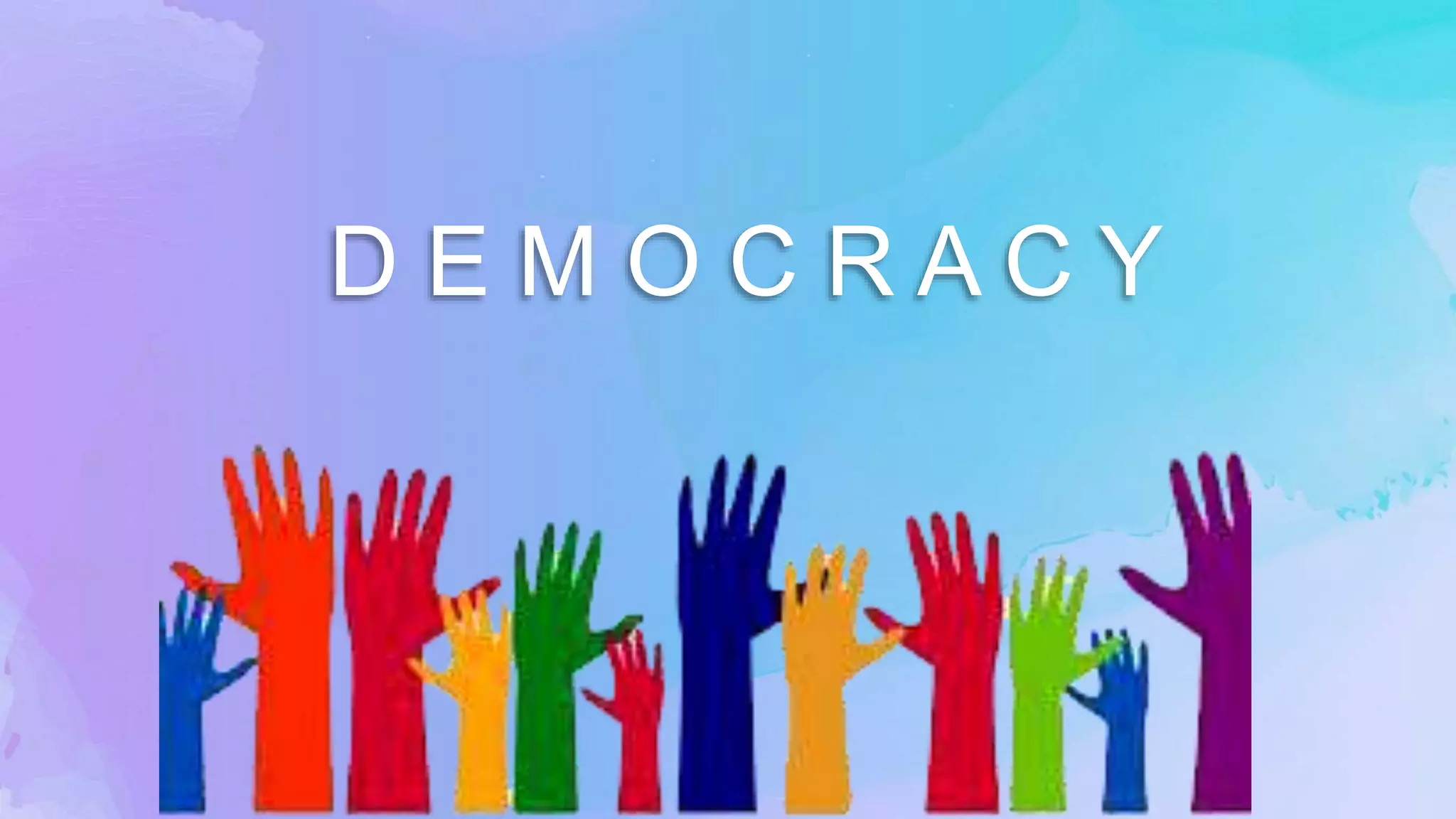
D E M O C R A C Y
The term democracy comes from the Greek word
‘demokratia’-rule of the people
Demokratia was coined from ‘demos’ and ‘kratos’
Demos means’ people’
Kratos means’ power’
Democracy emerged in Greek city states(5th 4th c) notably in
Athens
 Democracy is a government in which the supreme power is
vested in the people and exercised by them directly or
indirectly through the system of representation usually
involving periodically held free elections.
 A government by consent
 Responsive and responsible to public opinion
 Constitution guarantees basic personal and political rights
 Free and fair election & independent court of lawGuarantees
basic human rights
 Separation of powers between the institutions of state
 Freedom of opinion ,Religious liberty, Good governance,
Absence of corruption
 It is considered as the finest form of government
 People are ultimate source of power and its success and
failure depends on their wisdom, consciousness and vigilance
definitions
 Abraham Lincoln defines Democracy as the the government for the
people, by the people & of people.(Gettysburg address 1864)
 According to Bryce, “Democracy is that form of Government in which
the ruling power of a state is legally vested, not in any particular
class or classes but in the members of the community as a whole”.
Kinds of Democracy:
 1) Pure or Direct, and 2) Indirect or Representative.
 Direct Democracy--When the people themselves directly express
their will on public affairs, the type of government is called pure or
direct democracy.
 The people formulate laws in a mass meeting.
 Direct Democracy was established in ancient Greek city-states.
 This system now prevails only four Cantons of Switzerland.
Devices of direct democracy
 Referendum, meaning referring some important issue, policy
or decision to the people, such as, amendment of the
constitution. Rendering opinion by the people can be (i)
compulsory, or (ii) voluntary.
 Initiative implying that the people or a certain portion of the
citizenry can take initiative to get certain law of its choice
passed. They can send the proposal to the legislature which
may enact it on usual lines.
 Recall. By this device, the people of a constituency, by their
majority can ask the legislature to send back their
representative, and, thus, cancel his membership. Many states
of the United States empower their people to do so.
 Plebiscite indicates that the people are directly consulted on
questions of political importance.
Indirect Democracy-
 It is also called representative democracy
 In this form of democracy, people instead of directly taking any
part in government, do so by and through their elected
representatives.
 Indirect democracy too has many forms:
 (i) Parliamentary or Cabinet Form;
 (ii) Presidential Form;
 (iii) Unitary Form,
 (iv) Federal Form.
There are many mixed forms of indirect democracy.
Advantages
 Responsible and accountable government
 Democracy preaches the equality and fraternity of man
 It has infused in to the common people a sense of responsibility and
power
 Democracy ensures development and prosperity to all. Democracy
brings greatest good for the largest number of people
Disadvantages
 I n a democracy the vast majority of people who forms the electorate
are politically active only once or twice in five years
 Very often the elected representatives is power loving persons and they
ignore the interest of the people
 A large number of uneducated voters participate in the election process.
As they have very little to do in matters of government except recording
their votes. They have no political experience and become victims of
powerful people
THANK YOU

Democracy db (1)

  • 1.
    Sivymol T Assistant professor,University college, Trivandrum
  • 2.
    D E MO C R A C Y
  • 3.
    The term democracycomes from the Greek word ‘demokratia’-rule of the people Demokratia was coined from ‘demos’ and ‘kratos’ Demos means’ people’ Kratos means’ power’ Democracy emerged in Greek city states(5th 4th c) notably in Athens
  • 4.
     Democracy isa government in which the supreme power is vested in the people and exercised by them directly or indirectly through the system of representation usually involving periodically held free elections.  A government by consent  Responsive and responsible to public opinion  Constitution guarantees basic personal and political rights
  • 5.
     Free andfair election & independent court of lawGuarantees basic human rights  Separation of powers between the institutions of state  Freedom of opinion ,Religious liberty, Good governance, Absence of corruption  It is considered as the finest form of government  People are ultimate source of power and its success and failure depends on their wisdom, consciousness and vigilance
  • 6.
    definitions  Abraham Lincolndefines Democracy as the the government for the people, by the people & of people.(Gettysburg address 1864)  According to Bryce, “Democracy is that form of Government in which the ruling power of a state is legally vested, not in any particular class or classes but in the members of the community as a whole”.
  • 7.
    Kinds of Democracy: 1) Pure or Direct, and 2) Indirect or Representative.  Direct Democracy--When the people themselves directly express their will on public affairs, the type of government is called pure or direct democracy.  The people formulate laws in a mass meeting.  Direct Democracy was established in ancient Greek city-states.
  • 8.
     This systemnow prevails only four Cantons of Switzerland. Devices of direct democracy  Referendum, meaning referring some important issue, policy or decision to the people, such as, amendment of the constitution. Rendering opinion by the people can be (i) compulsory, or (ii) voluntary.
  • 9.
     Initiative implyingthat the people or a certain portion of the citizenry can take initiative to get certain law of its choice passed. They can send the proposal to the legislature which may enact it on usual lines.  Recall. By this device, the people of a constituency, by their majority can ask the legislature to send back their representative, and, thus, cancel his membership. Many states of the United States empower their people to do so.
  • 10.
     Plebiscite indicatesthat the people are directly consulted on questions of political importance. Indirect Democracy-  It is also called representative democracy  In this form of democracy, people instead of directly taking any part in government, do so by and through their elected representatives.
  • 11.
     Indirect democracytoo has many forms:  (i) Parliamentary or Cabinet Form;  (ii) Presidential Form;  (iii) Unitary Form,  (iv) Federal Form. There are many mixed forms of indirect democracy.
  • 12.
    Advantages  Responsible andaccountable government  Democracy preaches the equality and fraternity of man  It has infused in to the common people a sense of responsibility and power  Democracy ensures development and prosperity to all. Democracy brings greatest good for the largest number of people
  • 13.
    Disadvantages  I na democracy the vast majority of people who forms the electorate are politically active only once or twice in five years  Very often the elected representatives is power loving persons and they ignore the interest of the people  A large number of uneducated voters participate in the election process. As they have very little to do in matters of government except recording their votes. They have no political experience and become victims of powerful people
  • 14.