Democracy
Definitions, concepts and
classifications
Ideologies
• Democracy or the Free Market?
• Communism: Stalinism, Revisionism,
Eurocommunism or Marxism?
• Islam: Sunni, Shia, Shariat or Secular?
• Anti-colonialism, Neo-colonialism
• Feminism
• Trotskyism, Anarchism and terrorism
What is Democracy?
• Regular, contested elections
• Alternation of Governments
• Rule of Law
• freedoms: speech, association press, etc.
• pluralism/polycentrism/civil society
• Privacy
• Separation of powers/checks and
balances
Important events
• Death of Socrates: Plato blames democracy
[399BC]
• The Roman Republic [SPQR]
• Anglo-saxon and Viking ideas of warrior
community [Dark Ages]
• Magna Carta 1215
• Glorious Revolution 1688
• American Revolution 1776
• French Revolution 1789
“Modern” Events
• Chartists and 6 demands:
• Universal Suffrage [well, male]
• Equal electoral districts
• Payment for MPs
• Abolition of property qual. For MPs
• Vote by ballot
• Annual parliaments
Even more modern events
• Struggle for decolonisation
• Russian revolution 1917
• Chinese protracted revolution
• Globalisation
• United Nations
• European Union
• Collapse of Communism and Westphalian
settlement
• Idea of Universal Human rights
What sort of democracy?
• Participative
• People’s Democracy
• Representative
• Liberal
• Free market?
• Eurocommunist?
• Totalitarian /Rousseau-style General will
• Fabian one-party
Models of Democracy
• British
• American
• French
• Asian
• Islamic
Variables
• Electoral system and party system
• monarchy or republic
• uni- or bi-cameral
• fusion of executive and legislature
• separation of powers
• President and prime minister: 4th or 5th
Rep
• ministers in or out of Assembly
Choosing a system 1:
legislature and executive
• Presidential or parliamentary?
• British model?
• US model?
• French 4th Republic?
• French 5th Republic?
• Other European?
• Asian?
Choosing 2: electoral system
• PR or first past the post?
• Constituency size: whole country, German
model or multi-member?
• Qualification for representation: what
proportion of electorate?
• How do we want to fix the result? CPs
thought single-member constituencies
would benefit them. Turned out differently.
Choosing 3: Presidents
• Direct or indirect election?
• How much power?
• Relationship with Prime Minister
• Can Prexy dissolve Assembly?
The Tyranny of the Market
W[h]ither the Nation-state?
Marx [or was it Engels?]
• “The state will wither
away”
• Was this the state as
“executive committee
of the bourgeoisie”?
• Or as an instrument
of class oppression?
• Or did he really mean
what anarchists
mean?
Globalisation
• Are we moving to a
single global market?
• Does that mean
forget national and
regional markets?
• And does that
demand global
governance, rather
than regional or
national?
Would Marx agree with
Friedman and Hayek?
• Capitalism is supposed to create the
conditions necessary for socialism
• The revolution is an international one
• So capitalism must presumably create an
international state for the proletariat to
overthrow.
• “Man creates his own history but in
conditions not of his own choosing”
• So F and H may be friends of Karl!
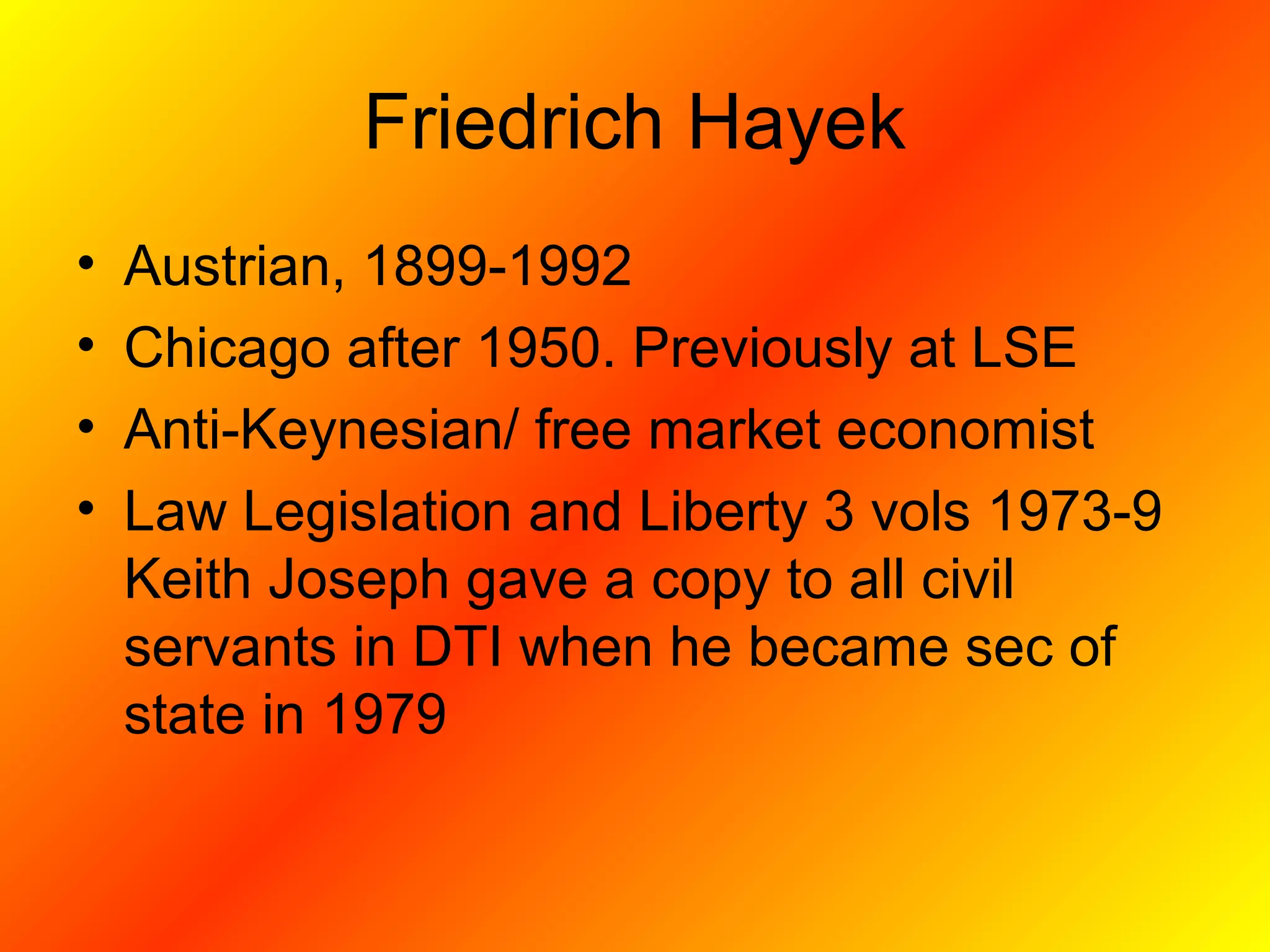
Friedrich Hayek
• Austrian, 1899-1992
• Chicago after 1950. Previously at LSE
• Anti-Keynesian/ free market economist
• Law Legislation and Liberty 3 vols 1973-9
Keith Joseph gave a copy to all civil
servants in DTI when he became sec of
state in 1979
Milton Friedman
• New Yorker 1912-
• Theoretical Economist
• Monetarist
• founder of “Chicago School”
• Governments should not intervene in the
workings of the market
• Studies in the Quantity Theory of Money
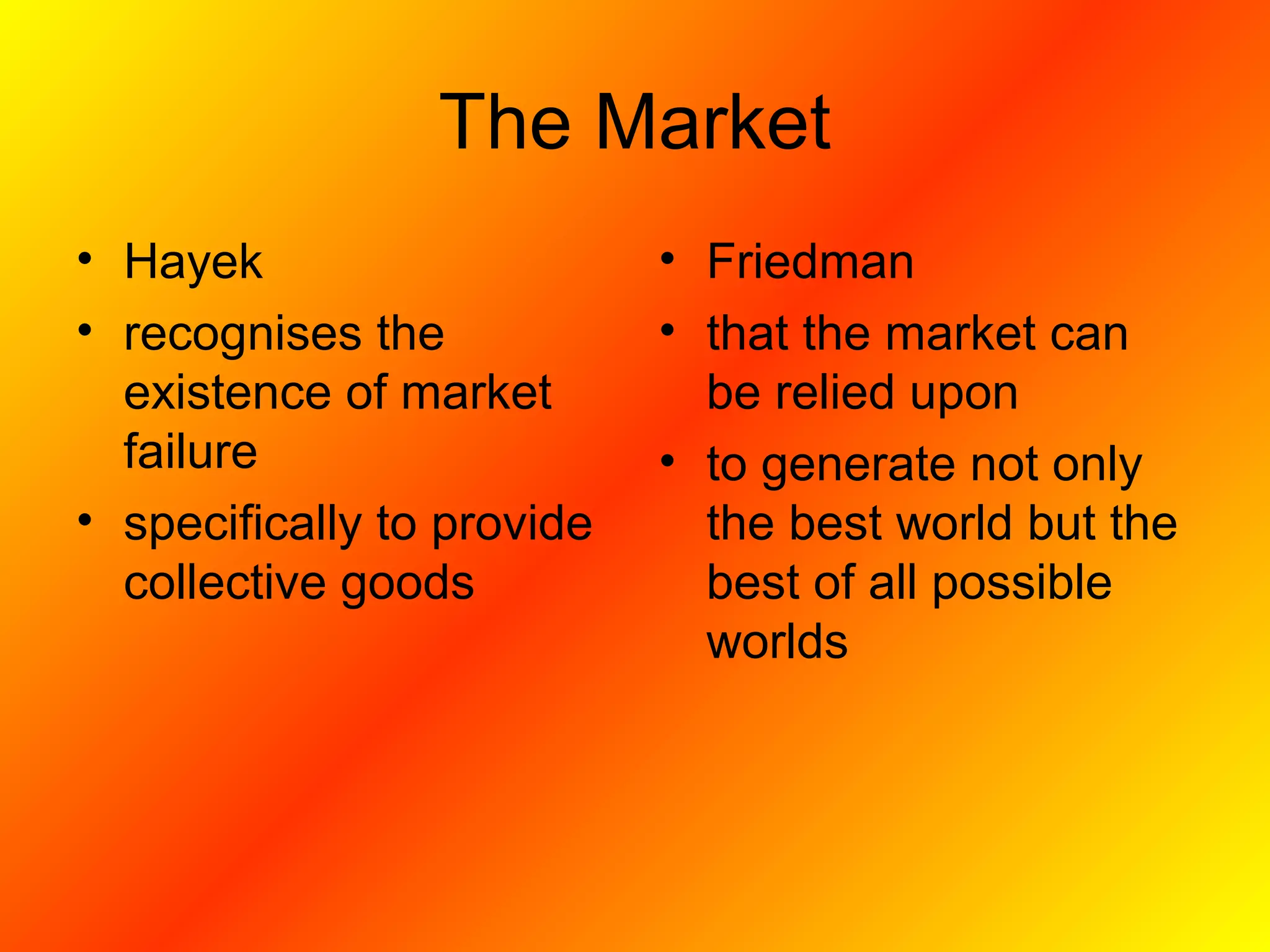
The Market
• Hayek
• recognises the
existence of market
failure
• specifically to provide
collective goods
• Friedman
• that the market can
be relied upon
• to generate not only
the best world but the
best of all possible
worlds
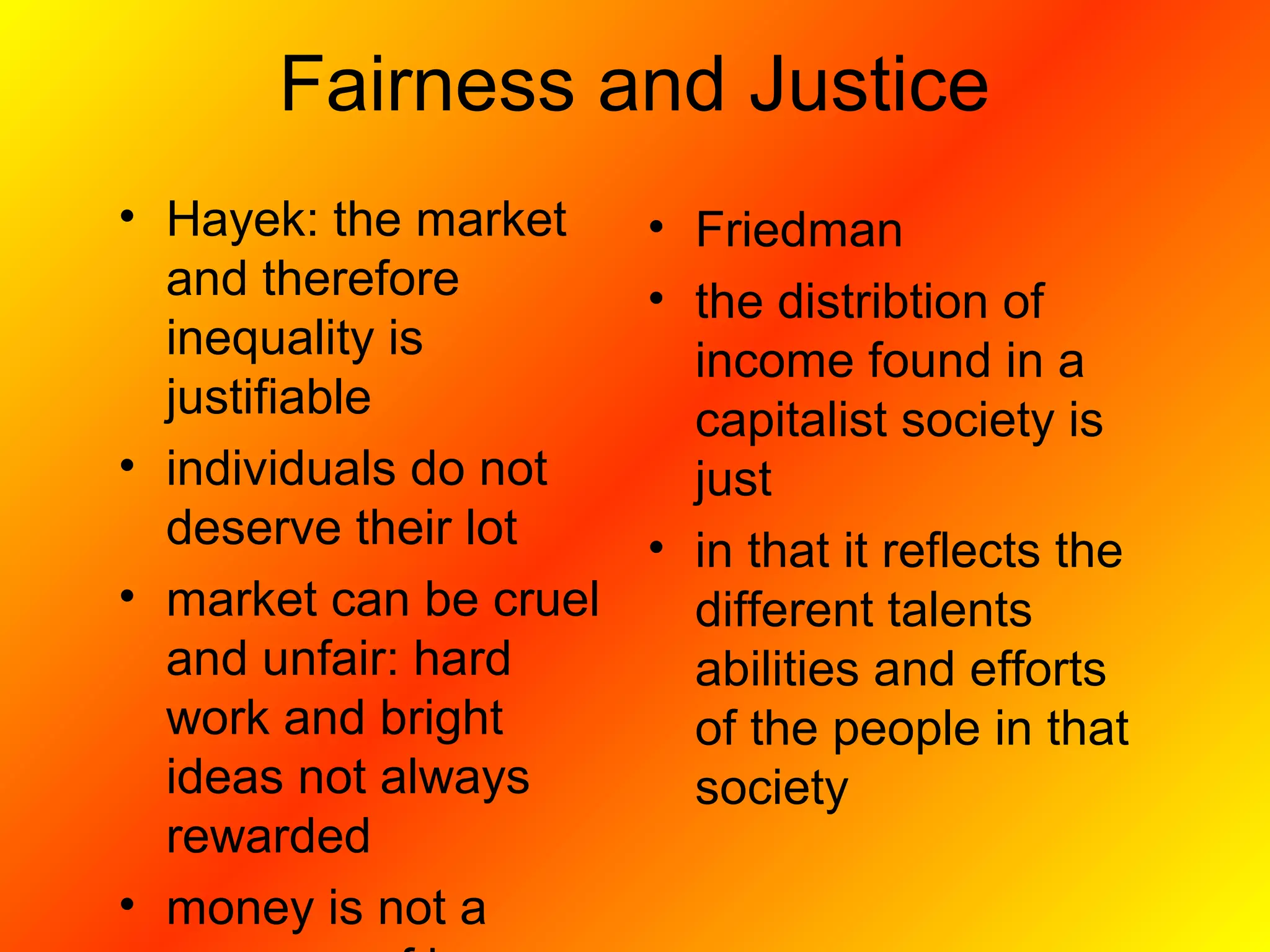
Fairness and Justice
• Hayek: the market
and therefore
inequality is
justifiable
• individuals do not
deserve their lot
• market can be cruel
and unfair: hard
work and bright
ideas not always
rewarded
• money is not a
• Friedman
• the distribtion of
income found in a
capitalist society is
just
• in that it reflects the
different talents
abilities and efforts
of the people in that
society
The State
• Hayek
• state has a role in
licensing
• quality must be
guaranteed
• services must be
contracted out
• Friedman
• State should be kept
to a minimum
• market will guarantee
quality
• services must be
privatised
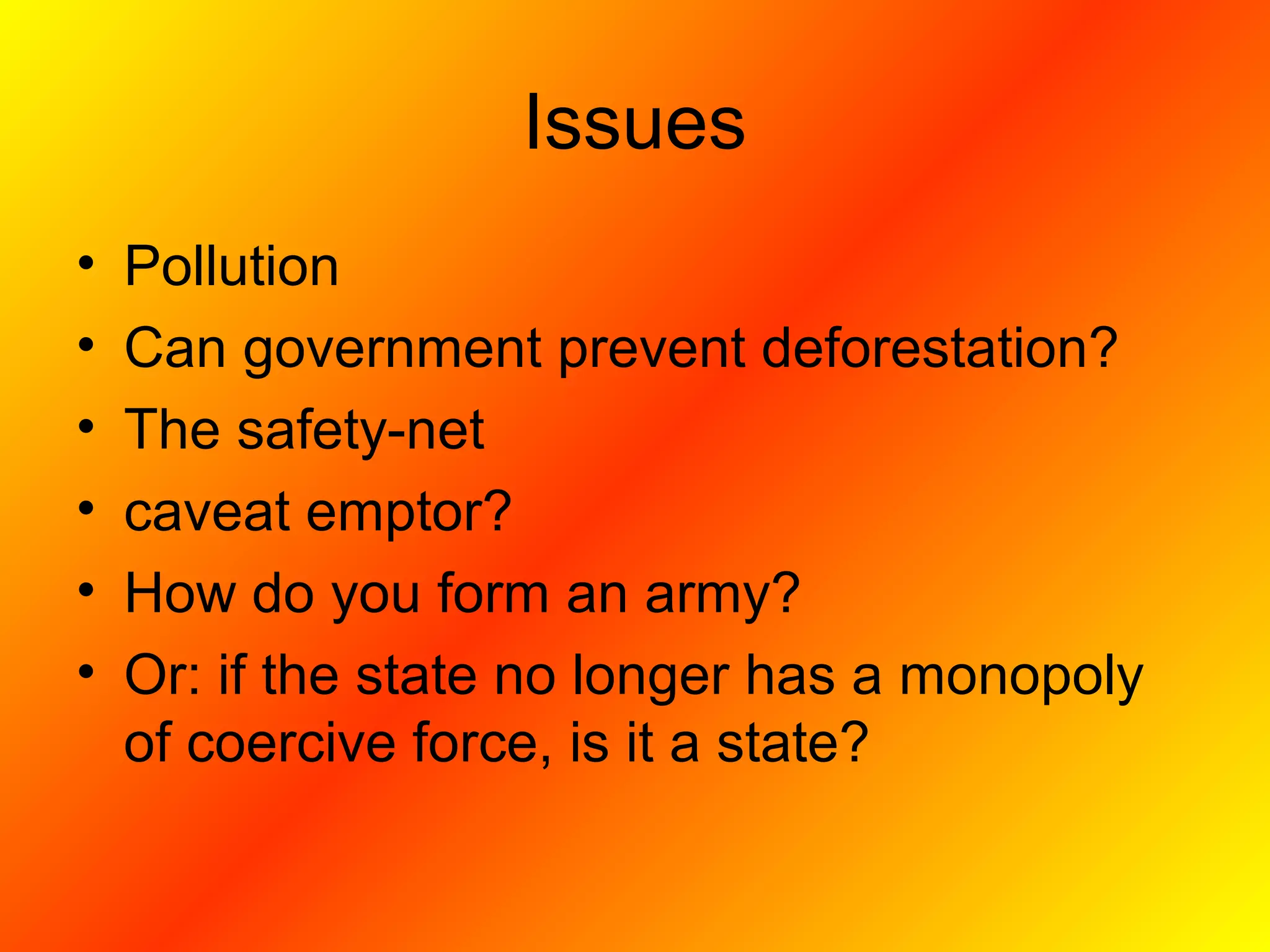
Issues
• Pollution
• Can government prevent deforestation?
• The safety-net
• caveat emptor?
• How do you form an army?
• Or: if the state no longer has a monopoly
of coercive force, is it a state?
In conclusion
• Is the nation state withering away?
• Is Marx about to make a come-back?
• Is there an era of regional superstates
around the corner, or a world state?
• Or is the term “state” redundant?
• “The executive committee of the global
corporations” what will it look like and what
power will it have?

Democracy

  • 1.
  • 2.
    Ideologies • Democracy orthe Free Market? • Communism: Stalinism, Revisionism, Eurocommunism or Marxism? • Islam: Sunni, Shia, Shariat or Secular? • Anti-colonialism, Neo-colonialism • Feminism • Trotskyism, Anarchism and terrorism
  • 3.
    What is Democracy? •Regular, contested elections • Alternation of Governments • Rule of Law • freedoms: speech, association press, etc. • pluralism/polycentrism/civil society • Privacy • Separation of powers/checks and balances
  • 4.
    Important events • Deathof Socrates: Plato blames democracy [399BC] • The Roman Republic [SPQR] • Anglo-saxon and Viking ideas of warrior community [Dark Ages] • Magna Carta 1215 • Glorious Revolution 1688 • American Revolution 1776 • French Revolution 1789
  • 5.
    “Modern” Events • Chartistsand 6 demands: • Universal Suffrage [well, male] • Equal electoral districts • Payment for MPs • Abolition of property qual. For MPs • Vote by ballot • Annual parliaments
  • 6.
    Even more modernevents • Struggle for decolonisation • Russian revolution 1917 • Chinese protracted revolution • Globalisation • United Nations • European Union • Collapse of Communism and Westphalian settlement • Idea of Universal Human rights
  • 7.
    What sort ofdemocracy? • Participative • People’s Democracy • Representative • Liberal • Free market? • Eurocommunist? • Totalitarian /Rousseau-style General will • Fabian one-party
  • 8.
    Models of Democracy •British • American • French • Asian • Islamic
  • 9.
    Variables • Electoral systemand party system • monarchy or republic • uni- or bi-cameral • fusion of executive and legislature • separation of powers • President and prime minister: 4th or 5th Rep • ministers in or out of Assembly
  • 10.
    Choosing a system1: legislature and executive • Presidential or parliamentary? • British model? • US model? • French 4th Republic? • French 5th Republic? • Other European? • Asian?
  • 11.
    Choosing 2: electoralsystem • PR or first past the post? • Constituency size: whole country, German model or multi-member? • Qualification for representation: what proportion of electorate? • How do we want to fix the result? CPs thought single-member constituencies would benefit them. Turned out differently.
  • 12.
    Choosing 3: Presidents •Direct or indirect election? • How much power? • Relationship with Prime Minister • Can Prexy dissolve Assembly?
  • 13.
    The Tyranny ofthe Market W[h]ither the Nation-state?
  • 14.
    Marx [or wasit Engels?] • “The state will wither away” • Was this the state as “executive committee of the bourgeoisie”? • Or as an instrument of class oppression? • Or did he really mean what anarchists mean?
  • 15.
    Globalisation • Are wemoving to a single global market? • Does that mean forget national and regional markets? • And does that demand global governance, rather than regional or national?
  • 16.
    Would Marx agreewith Friedman and Hayek? • Capitalism is supposed to create the conditions necessary for socialism • The revolution is an international one • So capitalism must presumably create an international state for the proletariat to overthrow. • “Man creates his own history but in conditions not of his own choosing” • So F and H may be friends of Karl!
  • 17.
    Friedrich Hayek • Austrian,1899-1992 • Chicago after 1950. Previously at LSE • Anti-Keynesian/ free market economist • Law Legislation and Liberty 3 vols 1973-9 Keith Joseph gave a copy to all civil servants in DTI when he became sec of state in 1979
  • 18.
    Milton Friedman • NewYorker 1912- • Theoretical Economist • Monetarist • founder of “Chicago School” • Governments should not intervene in the workings of the market • Studies in the Quantity Theory of Money
  • 19.
    The Market • Hayek •recognises the existence of market failure • specifically to provide collective goods • Friedman • that the market can be relied upon • to generate not only the best world but the best of all possible worlds
  • 20.
    Fairness and Justice •Hayek: the market and therefore inequality is justifiable • individuals do not deserve their lot • market can be cruel and unfair: hard work and bright ideas not always rewarded • money is not a • Friedman • the distribtion of income found in a capitalist society is just • in that it reflects the different talents abilities and efforts of the people in that society
  • 21.
    The State • Hayek •state has a role in licensing • quality must be guaranteed • services must be contracted out • Friedman • State should be kept to a minimum • market will guarantee quality • services must be privatised
  • 22.
    Issues • Pollution • Cangovernment prevent deforestation? • The safety-net • caveat emptor? • How do you form an army? • Or: if the state no longer has a monopoly of coercive force, is it a state?
  • 23.
    In conclusion • Isthe nation state withering away? • Is Marx about to make a come-back? • Is there an era of regional superstates around the corner, or a world state? • Or is the term “state” redundant? • “The executive committee of the global corporations” what will it look like and what power will it have?