DEMOCRATIC
INTERVENTIONS
Trends, Networks and Critical Thinking in the
21st Century Culture
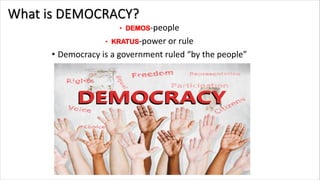
• DEMOS-people
• KRATUS-power or rule
• Democracy is a government ruled “by the people”
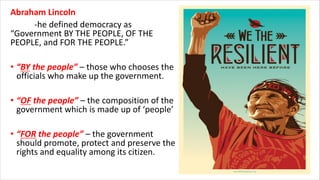
Abraham Lincoln
-he defined democracy as
“Government BY THE PEOPLE, OF THE
PEOPLE, and FOR THE PEOPLE.”
• “BY the people” – those who chooses the
officials who make up the government.
• “OF the people” – the composition of the
government which is made up of ‘people’
• “FOR the people” – the government
should promote, protect and preserve the
rights and equality among its citizen.
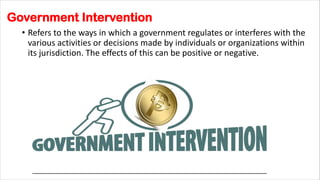
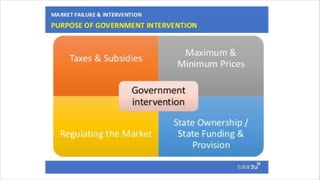
Government Intervention
• Refers to the ways in which a government regulates or interferes with the
various activities or decisions made by individuals or organizations within
its jurisdiction. The effects of this can be positive or negative.
6 Fundamental Elements of Modern Democracy
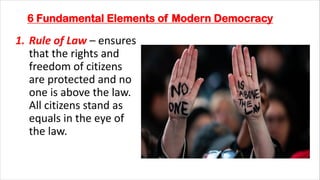
1. Rule of Law – ensures
that the rights and
freedom of citizens
are protected and no
one is above the law.
All citizens stand as
equals in the eye of
the law.
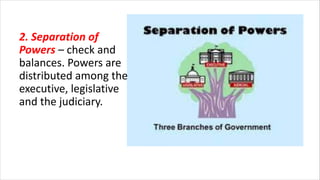
2. Separation of
Powers – check and
balances. Powers are
distributed among the
executive, legislative
and the judiciary.
3. Basic rights and freedom – a. Human Rights
b. Civil Rights c. Political Rights
Basic rights and freedom:
a. Human Rights – a right that is believed to
belong justifiably to every person.
b. Civil Rights – include the ensuring of peoples' physical and
mental integrity, life and safety.
c. Political Rights – rights that protect individual’s freedom from
infringement by government, social institution, and private individual.
d. Other right from rule of law – freedom of speech, freedom of worship,
freedom of association
4. Suffrage – civil and
political right. Every citizen.
Within the recognized legal
age, has the right to
participate in elections by
casting a vote regardless of
sex, religion, political
affiliation, educational
attainment and socio-
economic status. They are
entitled to vote one.
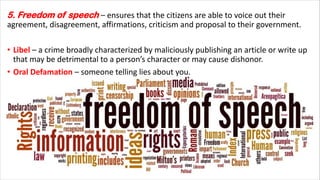
5. Freedom of speech – ensures that the citizens are able to voice out their
agreement, disagreement, affirmations, criticism and proposal to their government.
• Libel – a crime broadly characterized by maliciously publishing an article or write up
that may be detrimental to a person’s character or may cause dishonor.
• Oral Defamation – someone telling lies about you.
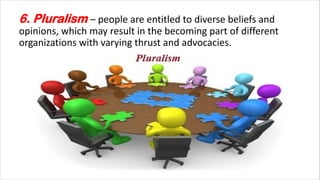
6. Pluralism – people are entitled to diverse beliefs and
opinions, which may result in the becoming part of different
organizations with varying thrust and advocacies.
Types of Democracy
1. Direct Democracy/Pure
Democracy
• Citizens come together to decide on
issues or pass laws through a vote.
• Considered as ideal democracy,
every single person is able to
participate in the voting process and
it ensures that the will of the people
is really followed.
• Being practiced in the Cantons of
Switzerland
• Philippines, practiced in provisions of
the constitution (initiative and
referendum)
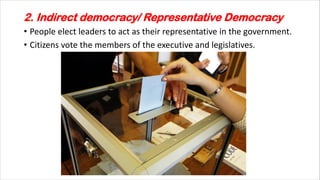
2. Indirect democracy/ Representative Democracy
• People elect leaders to act as their representative in the government.
• Citizens vote the members of the executive and legislatives.
Four DIMENSIONS of Democracy
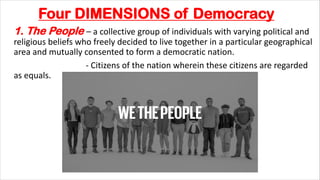
1. The People – a collective group of individuals with varying political and
religious beliefs who freely decided to live together in a particular geographical
area and mutually consented to form a democratic nation.
- Citizens of the nation wherein these citizens are regarded
as equals.
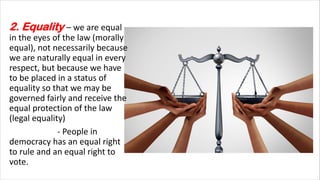
2. Equality – we are equal
in the eyes of the law (morally
equal), not necessarily because
we are naturally equal in every
respect, but because we have
to be placed in a status of
equality so that we may be
governed fairly and receive the
equal protection of the law
(legal equality)
- People in
democracy has an equal right
to rule and an equal right to
vote.
3. Common Good – what is good for the people. Every action
should be done is for the well-being of the people and not for their
personal well-being nor for the benefit of a particular majority.
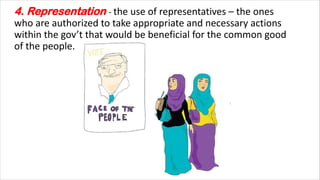
4. Representation - the use of representatives – the ones
who are authorized to take appropriate and necessary actions
within the gov’t that would be beneficial for the common good
of the people.
Democratic-Interventions.pdf

Democratic-Interventions.pdf

  • 1.
    DEMOCRATIC INTERVENTIONS Trends, Networks andCritical Thinking in the 21st Century Culture
  • 2.
    • DEMOS-people • KRATUS-poweror rule • Democracy is a government ruled “by the people”
  • 3.
    Abraham Lincoln -he defineddemocracy as “Government BY THE PEOPLE, OF THE PEOPLE, and FOR THE PEOPLE.” • “BY the people” – those who chooses the officials who make up the government. • “OF the people” – the composition of the government which is made up of ‘people’ • “FOR the people” – the government should promote, protect and preserve the rights and equality among its citizen.
  • 4.
    Government Intervention • Refersto the ways in which a government regulates or interferes with the various activities or decisions made by individuals or organizations within its jurisdiction. The effects of this can be positive or negative.
  • 6.
    6 Fundamental Elementsof Modern Democracy 1. Rule of Law – ensures that the rights and freedom of citizens are protected and no one is above the law. All citizens stand as equals in the eye of the law.
  • 7.
    2. Separation of Powers– check and balances. Powers are distributed among the executive, legislative and the judiciary.
  • 8.
    3. Basic rightsand freedom – a. Human Rights b. Civil Rights c. Political Rights
  • 9.
    Basic rights andfreedom: a. Human Rights – a right that is believed to belong justifiably to every person.
  • 10.
    b. Civil Rights– include the ensuring of peoples' physical and mental integrity, life and safety. c. Political Rights – rights that protect individual’s freedom from infringement by government, social institution, and private individual. d. Other right from rule of law – freedom of speech, freedom of worship, freedom of association
  • 11.
    4. Suffrage –civil and political right. Every citizen. Within the recognized legal age, has the right to participate in elections by casting a vote regardless of sex, religion, political affiliation, educational attainment and socio- economic status. They are entitled to vote one.
  • 12.
    5. Freedom ofspeech – ensures that the citizens are able to voice out their agreement, disagreement, affirmations, criticism and proposal to their government. • Libel – a crime broadly characterized by maliciously publishing an article or write up that may be detrimental to a person’s character or may cause dishonor. • Oral Defamation – someone telling lies about you.
  • 13.
    6. Pluralism –people are entitled to diverse beliefs and opinions, which may result in the becoming part of different organizations with varying thrust and advocacies.
  • 14.
    Types of Democracy 1.Direct Democracy/Pure Democracy • Citizens come together to decide on issues or pass laws through a vote. • Considered as ideal democracy, every single person is able to participate in the voting process and it ensures that the will of the people is really followed. • Being practiced in the Cantons of Switzerland • Philippines, practiced in provisions of the constitution (initiative and referendum)
  • 15.
    2. Indirect democracy/Representative Democracy • People elect leaders to act as their representative in the government. • Citizens vote the members of the executive and legislatives.
  • 16.
    Four DIMENSIONS ofDemocracy 1. The People – a collective group of individuals with varying political and religious beliefs who freely decided to live together in a particular geographical area and mutually consented to form a democratic nation. - Citizens of the nation wherein these citizens are regarded as equals.
  • 17.
    2. Equality –we are equal in the eyes of the law (morally equal), not necessarily because we are naturally equal in every respect, but because we have to be placed in a status of equality so that we may be governed fairly and receive the equal protection of the law (legal equality) - People in democracy has an equal right to rule and an equal right to vote.
  • 18.
    3. Common Good– what is good for the people. Every action should be done is for the well-being of the people and not for their personal well-being nor for the benefit of a particular majority.
  • 20.
    4. Representation -the use of representatives – the ones who are authorized to take appropriate and necessary actions within the gov’t that would be beneficial for the common good of the people.