Democracy
and
dictatorship
PRESENTED
NIAZ SAHIL AFGHAN
Major Aspects
 Democracy vs dictatorship
 Where did the word Democracy originate?
 What is Democracy?- Meaning and Definition.
 Features of Democracy

 Merits and Demerits of Democracy
 Difference between Democratic and Non Democratic

form government.
 Democracy- Direct & Indirect Democracy
Dictatorship
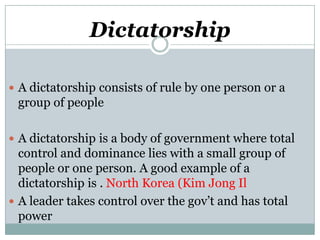
 A dictatorship consists of rule by one person or a

group of people
 A dictatorship is a body of government where total

control and dominance lies with a small group of
people or one person. A good example of a
dictatorship is . North Korea (Kim Jong Il
 A leader takes control over the gov’t and has total
power
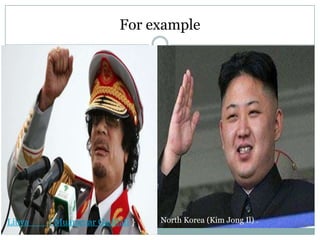
For example

Libya

{ Muammar Gaddafi }

North Korea (Kim Jong Il) .
From where the word democracy is
derived
 The word democracy is derived from the Greek word

Demos- People
Kratos- Power or rule
Meaning of Democracy
 Democracy is a form of government in which the

rulers are elected by the people.
 Abraham Linkon-

Democracy is a government of the people, by the
people and for the people.
Features of Democracy
 In a democracy the final decision making power must rest








with those who elected by the people.
A democracy must be based on a free and fair election
where those currently in power have a fair chance of
losing.
In a democracy, each adult citizen must have one vote
and each vote must have one value.
A democratic government rules within limits sets by
constitutional law and citizen’s right.
The opposition parties are allowed to function freely
before and after the elections.
The democratic governments are based on fundamental
principles of political equality.
Merits of Democracy
 A democratic government is a better government because

it is a more accountable form of government.
 Democracy improves the quality of decision making.
 Democracy provides a method to deal with differences
and conflicts. It is suitable the countries like India. India
having diversity of language, religion and cultures.
Democracy in India made it possible to keep unity in
diversity.
 In a democracy no one is a permanent winner or loser.
Merits of Democracy
 Democracy is better than other forms of government

because it allows us to correct its own mistakes.
 Democracy enhances the dignity of citizens, because
it is based on the principle of political equality, on
recognizing that the poorest and least educated have
the same status as the rich and the educated.
Demerits or Drawbacks of Democracy
 Leaders keep changing in a democracy. This leads to





instability.
Democracy is all about political competition and
power play. There is no scope for morality.
Elected leaders do not know the best interest of the
people. It leads to bad decisions.
Democracy leads to corruption for it is based on
electoral competition.
Ordinary people don’t know what is good for them;
they should not decide anything.
Distinguish between Democratic and
Non Democratic government
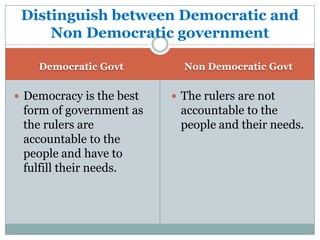
Democratic Govt

 Democracy is the best

form of government as
the rulers are
accountable to the
people and have to
fulfill their needs.

Non Democratic Govt

 The rulers are not

accountable to the
people and their needs.
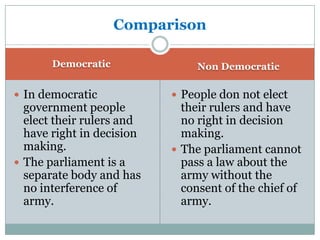
Comparison
Democratic

 In democratic

government people
elect their rulers and
have right in decision
making.
 The parliament is a
separate body and has
no interference of
army.

Non Democratic

 People don not elect

their rulers and have
no right in decision
making.
 The parliament cannot
pass a law about the
army without the
consent of the chief of
army.
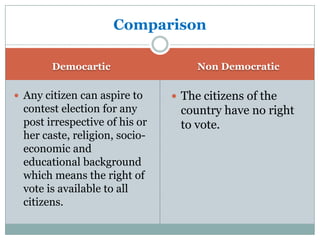
Comparison
Democartic
 Any citizen can aspire to

contest election for any
post irrespective of his or
her caste, religion, socioeconomic and
educational background
which means the right of
vote is available to all
citizens.

Non Democratic

 The citizens of the

country have no right
to vote.
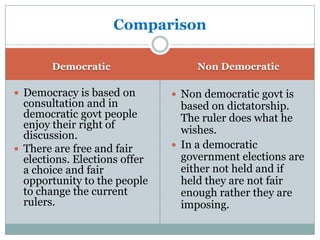
Comparison
Democratic
 Democracy is based on

consultation and in
democratic govt people
enjoy their right of
discussion.
 There are free and fair
elections. Elections offer
a choice and fair
opportunity to the people
to change the current
rulers.

Non Democratic
 Non democratic govt is

based on dictatorship.
The ruler does what he
wishes.
 In a democratic
government elections are
either not held and if
held they are not fair
enough rather they are
imposing.
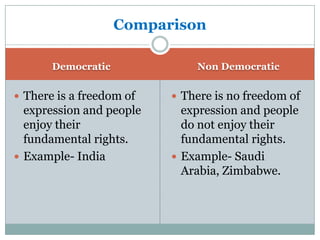
Comparison
Democratic

Non Democratic

 There is a freedom of

 There is no freedom of

expression and people
enjoy their
fundamental rights.
 Example- India

expression and people
do not enjoy their
fundamental rights.
 Example- Saudi
Arabia, Zimbabwe.
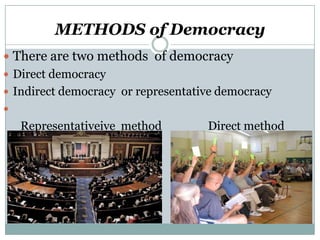
METHODS of Democracy
 There are two methods of democracy
 Direct democracy
 Indirect democracy or representative democracy


Representativeive method

Direct method
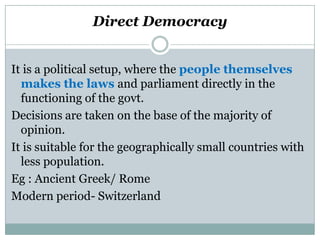
Direct Democracy
It is a political setup, where the people themselves
makes the laws and parliament directly in the
functioning of the govt.
Decisions are taken on the base of the majority of
opinion.
It is suitable for the geographically small countries with
less population.
Eg : Ancient Greek/ Rome
Modern period- Switzerland
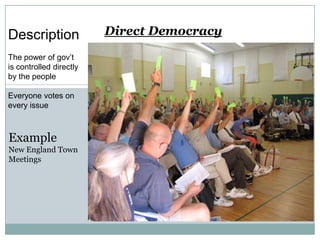
Description
The power of gov’t
is controlled directly
by the people
Everyone votes on
every issue

Example
New England Town
Meetings

Direct Democracy
In Direct Democracy
 In the modern world most of the countries are

following the in direct democracy.
 It is system, in which the representatives are
elected by the people and they act on behalf of the
people.
 They are so sensitive to cater the needs and opinion of
the people.
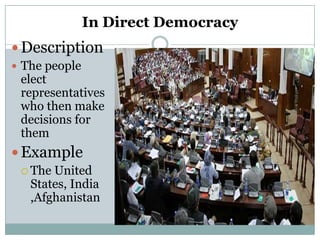
In Direct Democracy
 Description
 The people

elect
representatives
who then make
decisions for
them

 Example
 The

United
States, India
,Afghanistan
Forms of Representative Democracy
 There are two major forms of Representative

Democracies:
 Parliamentary
 Presidential
Parliamentary Democracy
 Voters elect members to a Parliament (legislature)
 Example: British Parliament

Has two Houses:
House of Commons:
House of Lords:
 The Political Party with the most votes in the House
of Commons chooses the Prime Minister, the
government’s leader with no set length of term.
Presidential Democracy
 Voters elect (directly or indirectly) the president.
 Therefore, in the presidential system voters have a

more direct say about those who serve in two
branches of the government :

Legislative

Executive
In Democracy majority of people rule
through their elected representatives- Why?

 Modern democracies involves such a large number of

people that it is physically impossible for them to sit
together and take a collective decision.
 Even if they could, the citizen does not have the time,
the desire or the skills to take part in all the decisions.
Aims of Good Democracy

 True democracy will come to this country only when

no one goes hungry to bed.
 In a democracy every citizen must be able to play
equal role in decision making. For this you don’t
need just an equal right to vote. Every citizen needs
to have equal information, basic education, equal
resources and a lot of commitment.
democracy vs dictatorship  / types of government

democracy vs dictatorship / types of government

  • 1.
  • 2.
    Major Aspects  Democracyvs dictatorship  Where did the word Democracy originate?  What is Democracy?- Meaning and Definition.  Features of Democracy  Merits and Demerits of Democracy  Difference between Democratic and Non Democratic form government.  Democracy- Direct & Indirect Democracy
  • 3.
    Dictatorship  A dictatorshipconsists of rule by one person or a group of people  A dictatorship is a body of government where total control and dominance lies with a small group of people or one person. A good example of a dictatorship is . North Korea (Kim Jong Il  A leader takes control over the gov’t and has total power
  • 4.
    For example Libya { MuammarGaddafi } North Korea (Kim Jong Il) .
  • 6.
    From where theword democracy is derived  The word democracy is derived from the Greek word Demos- People Kratos- Power or rule
  • 7.
    Meaning of Democracy Democracy is a form of government in which the rulers are elected by the people.  Abraham Linkon- Democracy is a government of the people, by the people and for the people.
  • 8.
    Features of Democracy In a democracy the final decision making power must rest      with those who elected by the people. A democracy must be based on a free and fair election where those currently in power have a fair chance of losing. In a democracy, each adult citizen must have one vote and each vote must have one value. A democratic government rules within limits sets by constitutional law and citizen’s right. The opposition parties are allowed to function freely before and after the elections. The democratic governments are based on fundamental principles of political equality.
  • 9.
    Merits of Democracy A democratic government is a better government because it is a more accountable form of government.  Democracy improves the quality of decision making.  Democracy provides a method to deal with differences and conflicts. It is suitable the countries like India. India having diversity of language, religion and cultures. Democracy in India made it possible to keep unity in diversity.  In a democracy no one is a permanent winner or loser.
  • 10.
    Merits of Democracy Democracy is better than other forms of government because it allows us to correct its own mistakes.  Democracy enhances the dignity of citizens, because it is based on the principle of political equality, on recognizing that the poorest and least educated have the same status as the rich and the educated.
  • 11.
    Demerits or Drawbacksof Democracy  Leaders keep changing in a democracy. This leads to     instability. Democracy is all about political competition and power play. There is no scope for morality. Elected leaders do not know the best interest of the people. It leads to bad decisions. Democracy leads to corruption for it is based on electoral competition. Ordinary people don’t know what is good for them; they should not decide anything.
  • 12.
    Distinguish between Democraticand Non Democratic government Democratic Govt  Democracy is the best form of government as the rulers are accountable to the people and have to fulfill their needs. Non Democratic Govt  The rulers are not accountable to the people and their needs.
  • 13.
    Comparison Democratic  In democratic governmentpeople elect their rulers and have right in decision making.  The parliament is a separate body and has no interference of army. Non Democratic  People don not elect their rulers and have no right in decision making.  The parliament cannot pass a law about the army without the consent of the chief of army.
  • 14.
    Comparison Democartic  Any citizencan aspire to contest election for any post irrespective of his or her caste, religion, socioeconomic and educational background which means the right of vote is available to all citizens. Non Democratic  The citizens of the country have no right to vote.
  • 15.
    Comparison Democratic  Democracy isbased on consultation and in democratic govt people enjoy their right of discussion.  There are free and fair elections. Elections offer a choice and fair opportunity to the people to change the current rulers. Non Democratic  Non democratic govt is based on dictatorship. The ruler does what he wishes.  In a democratic government elections are either not held and if held they are not fair enough rather they are imposing.
  • 16.
    Comparison Democratic Non Democratic  Thereis a freedom of  There is no freedom of expression and people enjoy their fundamental rights.  Example- India expression and people do not enjoy their fundamental rights.  Example- Saudi Arabia, Zimbabwe.
  • 17.
    METHODS of Democracy There are two methods of democracy  Direct democracy  Indirect democracy or representative democracy  Representativeive method Direct method
  • 18.
    Direct Democracy It isa political setup, where the people themselves makes the laws and parliament directly in the functioning of the govt. Decisions are taken on the base of the majority of opinion. It is suitable for the geographically small countries with less population. Eg : Ancient Greek/ Rome Modern period- Switzerland
  • 19.
    Description The power ofgov’t is controlled directly by the people Everyone votes on every issue Example New England Town Meetings Direct Democracy
  • 20.
    In Direct Democracy In the modern world most of the countries are following the in direct democracy.  It is system, in which the representatives are elected by the people and they act on behalf of the people.  They are so sensitive to cater the needs and opinion of the people.
  • 21.
    In Direct Democracy Description  The people elect representatives who then make decisions for them  Example  The United States, India ,Afghanistan
  • 22.
    Forms of RepresentativeDemocracy  There are two major forms of Representative Democracies:  Parliamentary  Presidential
  • 23.
    Parliamentary Democracy  Voterselect members to a Parliament (legislature)  Example: British Parliament Has two Houses: House of Commons: House of Lords:  The Political Party with the most votes in the House of Commons chooses the Prime Minister, the government’s leader with no set length of term.
  • 24.
    Presidential Democracy  Voterselect (directly or indirectly) the president.  Therefore, in the presidential system voters have a more direct say about those who serve in two branches of the government :  Legislative  Executive
  • 25.
    In Democracy majorityof people rule through their elected representatives- Why?  Modern democracies involves such a large number of people that it is physically impossible for them to sit together and take a collective decision.  Even if they could, the citizen does not have the time, the desire or the skills to take part in all the decisions.
  • 26.
    Aims of GoodDemocracy  True democracy will come to this country only when no one goes hungry to bed.  In a democracy every citizen must be able to play equal role in decision making. For this you don’t need just an equal right to vote. Every citizen needs to have equal information, basic education, equal resources and a lot of commitment.