POL 252-01
Fall 2015
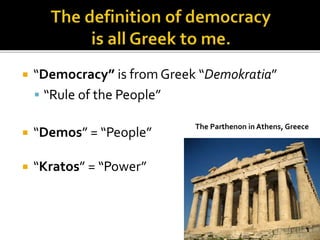
 “Democracy” is from Greek “Demokratia”
 “Rule of the People”
 “Demos” = “People”
 “Kratos” = “Power”
The Parthenon in Athens, Greece
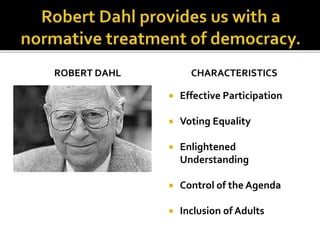
ROBERT DAHL CHARACTERISTICS
 Effective Participation
 Voting Equality
 Enlightened
Understanding
 Control of the Agenda
 Inclusion of Adults
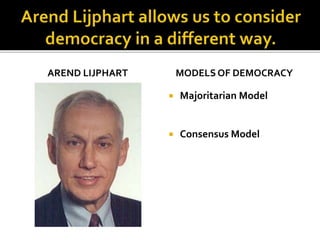
AREND LIJPHART MODELS OF DEMOCRACY
 Majoritarian Model
 Consensus Model
 Consolidation of power in hands of majority
 Characterized by:
 Exclusiveness
 Competititveness
 Adversarial Nature
 What are the model’s traditional features?
 Sharing of power for broader participation
and agreement in govt.
 Characterized by:
 Inclusiveness
 Bargaining
 Compromise
 What are the model’s traditional features?
ON DEMOCRACY BASIC CONDITIONS
 Essential
 Favorable
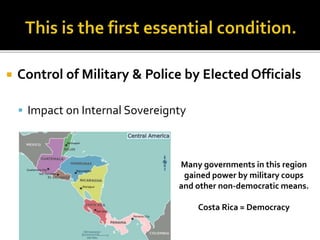
 Control of Military & Police by Elected Officials
 Impact on Internal Sovereignty
Many governments in this region
gained power by military coups
and other non-democratic means.
Costa Rica = Democracy
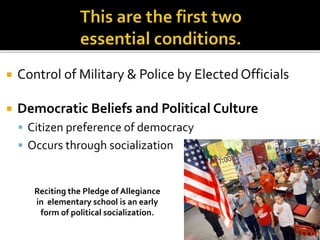
 Control of Military & Police by ElectedOfficials
 Democratic Beliefs and Political Culture
 Citizen preference of democracy
 Occurs through socialization
Reciting the Pledge of Allegiance
in elementary school is an early
form of political socialization.
 Control of Military and Police by ElectedOfficials
 Democratic Beliefs and PoliticalCulture
 No Foreign Control Hostile to Democracy
 Country cannot be influenced by non-democratic or
authoritarian entity
 Limited or No Cultural Conflict
 “Us” vs. “Them”
 Democratic Institutions amid Cultural Diversity?
▪ Assimilation
▪ Decision by Consensus
▪ Electoral Systems
▪ Separation
 Modern Market Economy and Society
 Democracy-Dictatorship Measure
 POLITY Measure
 Freedom House Measure
 Democracy-Dictatorship Measure
 Governmental Offices
▪ Chief Executive and Legislature are ELECTED
 Contestation
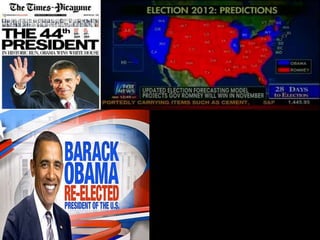
▪ Uncertainty – Outcome NOT known beforehand
▪ Irreversibility –Winner of election actually takes office
▪ Repeatability – Elections occur at regular intervals
 Democracy-Dictatorship Measure
 POLITY Measure
 Competitiveness and Openness of Executive
Recruitment
▪ Can anyone run for president? (Restrictions in U.S.)
 Regulation and Competitiveness of Political
Participation
▪ How many political parties exist?
 Democracy-Dictatorship Measure
 POLITY Measure
 Freedom House Measure
 Political Rights
▪ Electoral Process, Participation, Functioning of Govt.
 Civil Rights
▪ Freedom of Expression, Rule of Law, Personal Autonomy
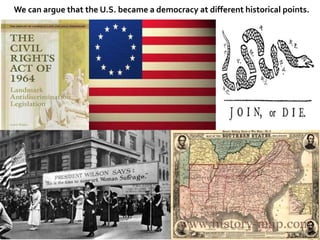
We can argue that the U.S. became a democracy at different historical points.
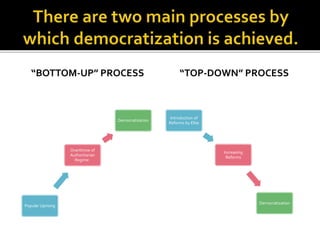
“BOTTOM-UP” PROCESS
Popular Uprising
Overthrow of
Authoritarian
Regime
Democratization
“TOP-DOWN” PROCESS
Introduction of
Reforms by Elite
Increasing
Reforms
Democratization
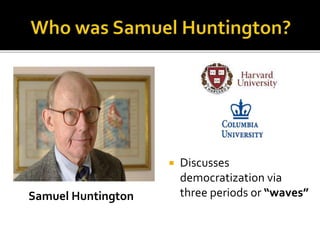
 Discusses
democratization via
three periods or “waves”Samuel Huntington
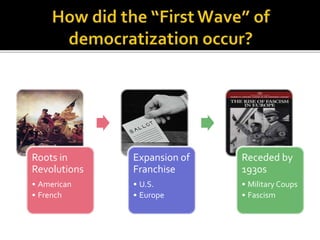
Roots in
Revolutions
• American
• French
Expansion of
Franchise
• U.S.
• Europe
Receded by
1930s
• Military Coups
• Fascism
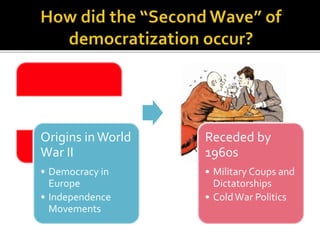
Origins inWorld
War II
• Democracy in
Europe
• Independence
Movements
Receded by
1960s
• Military Coups and
Dictatorships
• ColdWar Politics
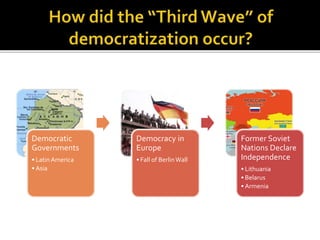
Democratic
Governments
• Latin America
• Asia
Democracy in
Europe
• Fall of BerlinWall
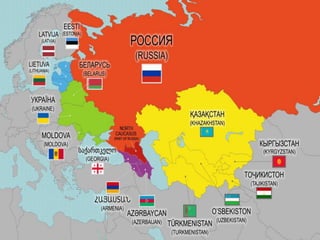
Former Soviet
Nations Declare
Independence
• Lithuania
• Belarus
• Armenia
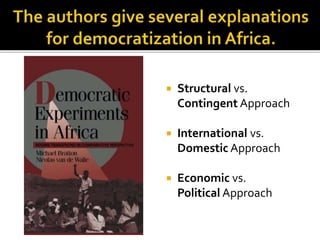
 Structural vs.
Contingent Approach
 International vs.
Domestic Approach
 Economic vs.
Political Approach
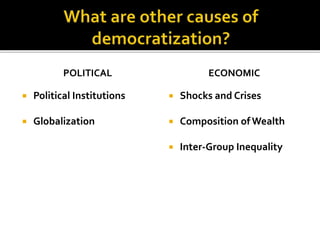
POLITICAL
 Political Institutions
 Globalization
ECONOMIC
 Shocks and Crises
 Composition of Wealth
 Inter-Group Inequality
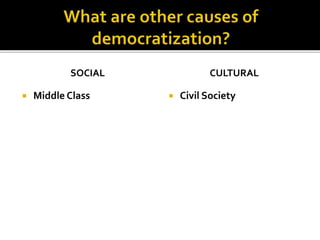
SOCIAL
 Middle Class
CULTURAL
 Civil Society
Democracy and democratization

Democracy and democratization

  • 1.
  • 5.
     “Democracy” isfrom Greek “Demokratia”  “Rule of the People”  “Demos” = “People”  “Kratos” = “Power” The Parthenon in Athens, Greece
  • 7.
    ROBERT DAHL CHARACTERISTICS Effective Participation  Voting Equality  Enlightened Understanding  Control of the Agenda  Inclusion of Adults
  • 8.
    AREND LIJPHART MODELSOF DEMOCRACY  Majoritarian Model  Consensus Model
  • 10.
     Consolidation ofpower in hands of majority  Characterized by:  Exclusiveness  Competititveness  Adversarial Nature  What are the model’s traditional features?
  • 12.
     Sharing ofpower for broader participation and agreement in govt.  Characterized by:  Inclusiveness  Bargaining  Compromise  What are the model’s traditional features?
  • 14.
    ON DEMOCRACY BASICCONDITIONS  Essential  Favorable
  • 16.
     Control ofMilitary & Police by Elected Officials  Impact on Internal Sovereignty Many governments in this region gained power by military coups and other non-democratic means. Costa Rica = Democracy
  • 17.
     Control ofMilitary & Police by ElectedOfficials  Democratic Beliefs and Political Culture  Citizen preference of democracy  Occurs through socialization Reciting the Pledge of Allegiance in elementary school is an early form of political socialization.
  • 18.
     Control ofMilitary and Police by ElectedOfficials  Democratic Beliefs and PoliticalCulture  No Foreign Control Hostile to Democracy  Country cannot be influenced by non-democratic or authoritarian entity
  • 19.
     Limited orNo Cultural Conflict  “Us” vs. “Them”  Democratic Institutions amid Cultural Diversity? ▪ Assimilation ▪ Decision by Consensus ▪ Electoral Systems ▪ Separation  Modern Market Economy and Society
  • 21.
     Democracy-Dictatorship Measure POLITY Measure  Freedom House Measure
  • 22.
     Democracy-Dictatorship Measure Governmental Offices ▪ Chief Executive and Legislature are ELECTED  Contestation ▪ Uncertainty – Outcome NOT known beforehand ▪ Irreversibility –Winner of election actually takes office ▪ Repeatability – Elections occur at regular intervals
  • 24.
     Democracy-Dictatorship Measure POLITY Measure  Competitiveness and Openness of Executive Recruitment ▪ Can anyone run for president? (Restrictions in U.S.)  Regulation and Competitiveness of Political Participation ▪ How many political parties exist?
  • 25.
     Democracy-Dictatorship Measure POLITY Measure  Freedom House Measure  Political Rights ▪ Electoral Process, Participation, Functioning of Govt.  Civil Rights ▪ Freedom of Expression, Rule of Law, Personal Autonomy
  • 27.
    We can arguethat the U.S. became a democracy at different historical points.
  • 30.
    “BOTTOM-UP” PROCESS Popular Uprising Overthrowof Authoritarian Regime Democratization “TOP-DOWN” PROCESS Introduction of Reforms by Elite Increasing Reforms Democratization
  • 32.
     Discusses democratization via threeperiods or “waves”Samuel Huntington
  • 33.
    Roots in Revolutions • American •French Expansion of Franchise • U.S. • Europe Receded by 1930s • Military Coups • Fascism
  • 34.
    Origins inWorld War II •Democracy in Europe • Independence Movements Receded by 1960s • Military Coups and Dictatorships • ColdWar Politics
  • 35.
    Democratic Governments • Latin America •Asia Democracy in Europe • Fall of BerlinWall Former Soviet Nations Declare Independence • Lithuania • Belarus • Armenia
  • 39.
     Structural vs. ContingentApproach  International vs. Domestic Approach  Economic vs. Political Approach
  • 41.
    POLITICAL  Political Institutions Globalization ECONOMIC  Shocks and Crises  Composition of Wealth  Inter-Group Inequality
  • 42.