Oral Communication
Prepared by:
Ma. Luiza S. Ocbina, LPT
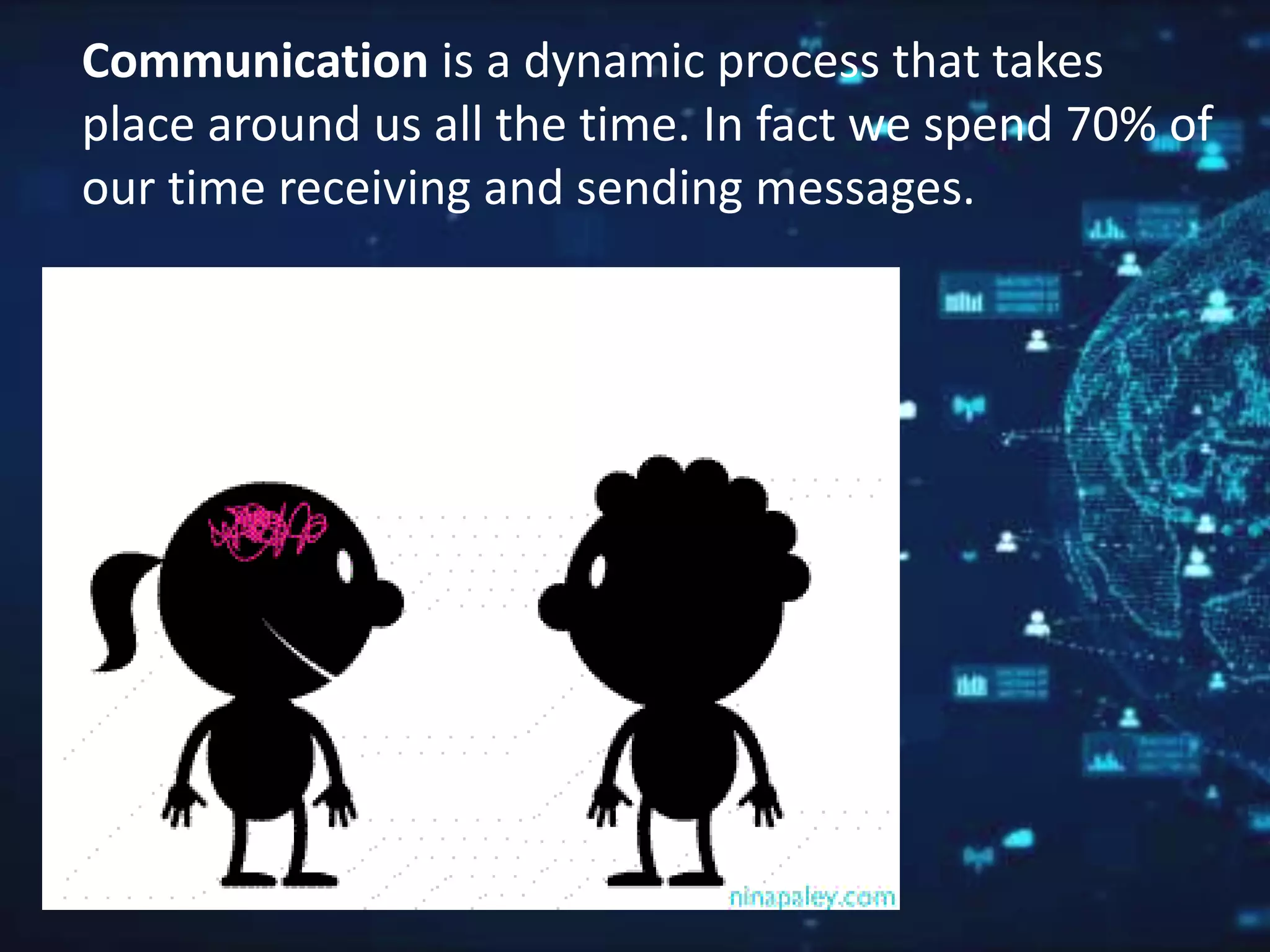
Communication is a dynamic process that takes
place around us all the time. In fact we spend 70% of
our time receiving and sending messages.
The origin of the
word
“communication”
is “communicare”
or “communis”
which means:
“to impart”
“to participate”,
“to share” or
“to make
common.”
Definition of communications:
• John Adair
Communication is
essentially the ability of
one person to make
contact with another
and make himself or
herself understood.
Definition of communications:
• Keith Davis
Communication is a
process of passing
information and
understanding from
one person to
another.
Definition of communications:
• William Newman
Charles Summer
Communication is an
exchange of ideas,
facts, opinions or
emotions of two or
more persons.
Definition of communications:
• Murphy, Hildebrandt, Thomas: Communication
is a process of transmitting and receiving verbal
and non-verbal messages. It is considered
effective when it achieves the desired response
or reaction from the receiver.
Communication may vary from spoken and
written words but also actions, mannerisms, and
style-anything attached to a message that gives
meaning. It can be defined according to its form
and use.
• Communication as a Process
• Communication as an Interaction
• Communication as a Social Context
Communication as a Process
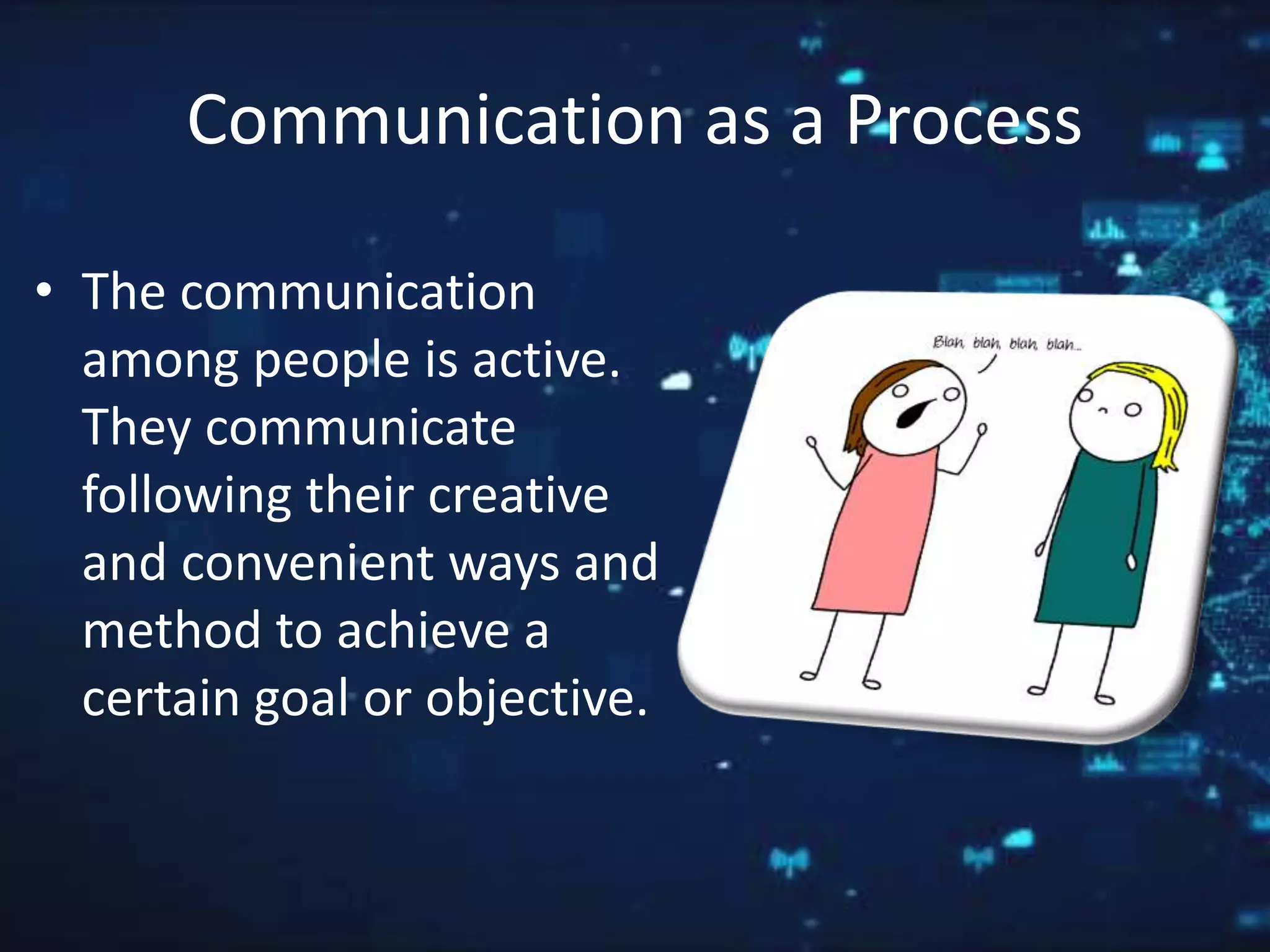
• The communication
among people is active.
They communicate
following their creative
and convenient ways and
method to achieve a
certain goal or objective.
Communication as a Interaction
• Communication can binds two people
together. Their interaction with one another
connects their understanding.
Communication as a Social Context
• The activity of
producing,
transmitting and
receiving meaningful
symbolic messages in
an environment such
as schools, church or
any social gathering is
communication.
Elements of Communication
1. Sender (Speaker)
2. Receiver (Listener)
3. Message
4. Channel
5. Noise
6. Situation
7. feedback
Sender
• The one who conveys the message. (Oral or
written)
• The senders goal is to ensure that his/her
intended message that is actually
communicated.
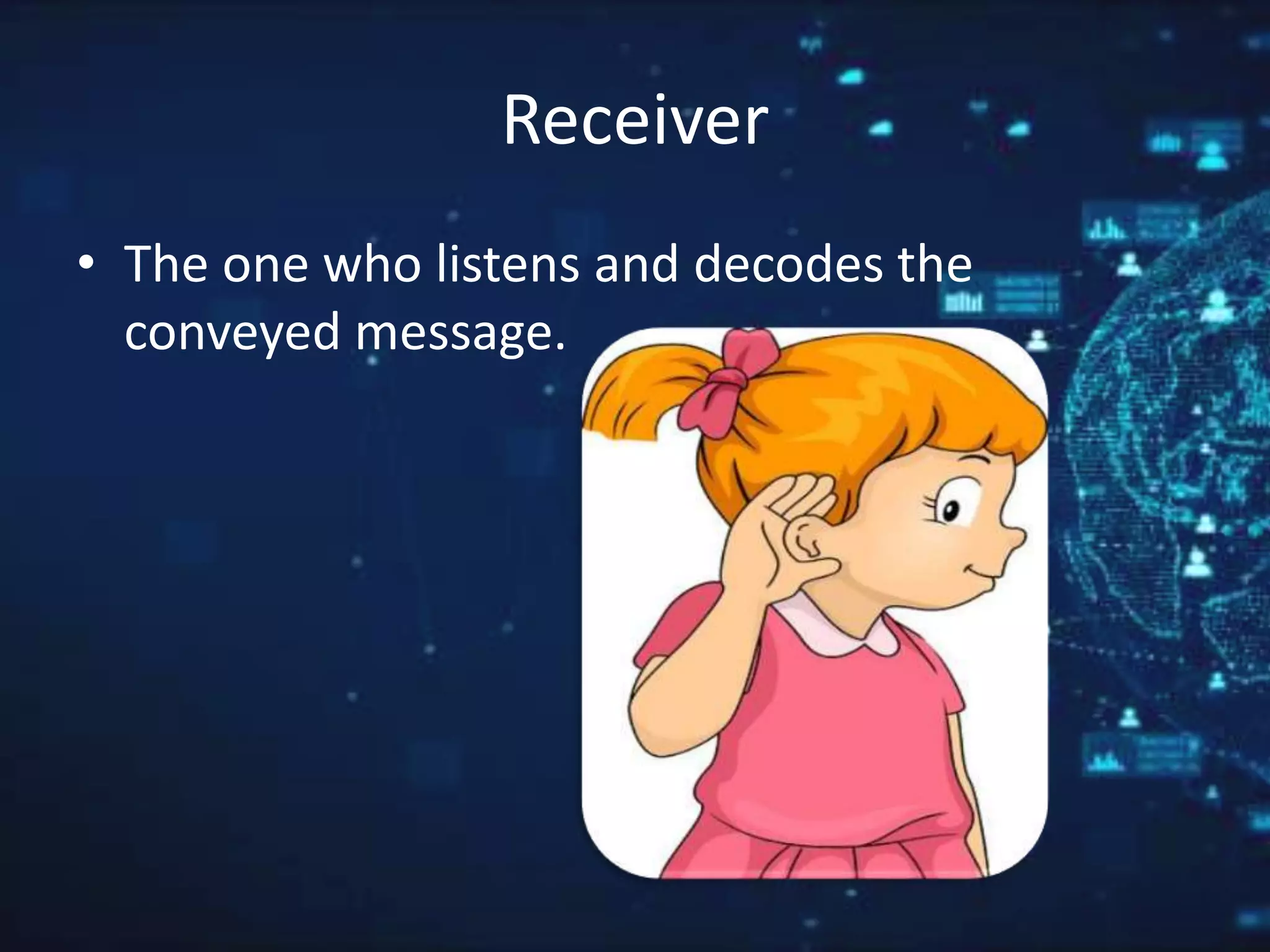
Receiver
• The one who listens and decodes the
conveyed message.
Message
• Is whatever the sender communicates to the
receiver or the information received by the
receiver from the sender.
• These are the ideas and feelings make up the
content of the process of communication.
Channel
• The medium or means through which the
message is transmitted.
Channel
• The channel for oral communication is the
sound waves written through light waves.
• The primary channels in face to face
communication are sound and sight.
• Public announcements and advertisements
are sent through radio waves.
Noise
• It is also known as interference that keeps a
message from being understood or accurately
interpreted.
• It occurs between the sender and receiver.
Two Types of Noise
1. Channel - This refers to static, mechanical
failures, problems in volume, pitch, legibility
of text, etc.
2. Semantic - Here “noise” is generated
internally resulting from errors in the
message itself: ambiguity, grammatical
errors, wrong spellings, incorrect
punctuation, etc.
Situation
• The time and place where communication
occurs.
Feedback
• The receiver’s message that he or she sends to
the source in response to the sender’s
message.
• It can be form of verbal and non-verbal
response.
Feedback may be positive or negative
• Positive feedback occurs when the receiver
receives the desired response based on a clear
understanding of the symbols used in the
message.
• Negative feedback occurs when there is an
undesired response because of
miscommunication.
• Feedback may be either immediate or
delayed. For example, oral responses are
immediately conveyed but in case of written
communication, the feedback may take some
time.
QUIZ 

definition and the process of communication

  • 1.
  • 2.
    Communication is adynamic process that takes place around us all the time. In fact we spend 70% of our time receiving and sending messages.
  • 3.
    The origin ofthe word “communication” is “communicare” or “communis” which means: “to impart” “to participate”, “to share” or “to make common.”
  • 4.
    Definition of communications: •John Adair Communication is essentially the ability of one person to make contact with another and make himself or herself understood.
  • 5.
    Definition of communications: •Keith Davis Communication is a process of passing information and understanding from one person to another.
  • 6.
    Definition of communications: •William Newman Charles Summer Communication is an exchange of ideas, facts, opinions or emotions of two or more persons.
  • 7.
    Definition of communications: •Murphy, Hildebrandt, Thomas: Communication is a process of transmitting and receiving verbal and non-verbal messages. It is considered effective when it achieves the desired response or reaction from the receiver.
  • 8.
    Communication may varyfrom spoken and written words but also actions, mannerisms, and style-anything attached to a message that gives meaning. It can be defined according to its form and use. • Communication as a Process • Communication as an Interaction • Communication as a Social Context
  • 9.
    Communication as aProcess • The communication among people is active. They communicate following their creative and convenient ways and method to achieve a certain goal or objective.
  • 10.
    Communication as aInteraction • Communication can binds two people together. Their interaction with one another connects their understanding.
  • 11.
    Communication as aSocial Context • The activity of producing, transmitting and receiving meaningful symbolic messages in an environment such as schools, church or any social gathering is communication.
  • 12.
    Elements of Communication 1.Sender (Speaker) 2. Receiver (Listener) 3. Message 4. Channel 5. Noise 6. Situation 7. feedback
  • 13.
    Sender • The onewho conveys the message. (Oral or written) • The senders goal is to ensure that his/her intended message that is actually communicated.
  • 14.
    Receiver • The onewho listens and decodes the conveyed message.
  • 15.
    Message • Is whateverthe sender communicates to the receiver or the information received by the receiver from the sender. • These are the ideas and feelings make up the content of the process of communication.
  • 16.
    Channel • The mediumor means through which the message is transmitted.
  • 17.
    Channel • The channelfor oral communication is the sound waves written through light waves. • The primary channels in face to face communication are sound and sight. • Public announcements and advertisements are sent through radio waves.
  • 18.
    Noise • It isalso known as interference that keeps a message from being understood or accurately interpreted. • It occurs between the sender and receiver.
  • 19.
    Two Types ofNoise 1. Channel - This refers to static, mechanical failures, problems in volume, pitch, legibility of text, etc. 2. Semantic - Here “noise” is generated internally resulting from errors in the message itself: ambiguity, grammatical errors, wrong spellings, incorrect punctuation, etc.
  • 20.
    Situation • The timeand place where communication occurs.
  • 21.
    Feedback • The receiver’smessage that he or she sends to the source in response to the sender’s message. • It can be form of verbal and non-verbal response.
  • 22.
    Feedback may bepositive or negative • Positive feedback occurs when the receiver receives the desired response based on a clear understanding of the symbols used in the message. • Negative feedback occurs when there is an undesired response because of miscommunication.
  • 23.
    • Feedback maybe either immediate or delayed. For example, oral responses are immediately conveyed but in case of written communication, the feedback may take some time.
  • 24.