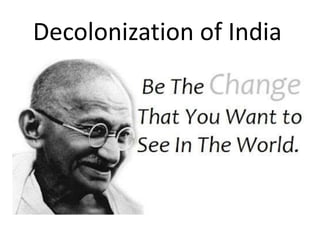
Decolonization of India
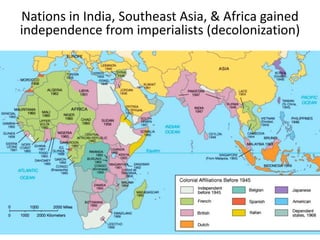
Nations in India, Southeast Asia, & Africa gained
independence from imperialists (decolonization)
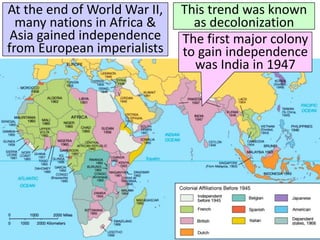
At the end of World War II,
many nations in Africa &
Asia gained independence
from European imperialists
This trend was known
as decolonization
The first major colony
to gain independence
was India in 1947
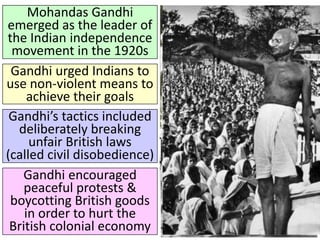
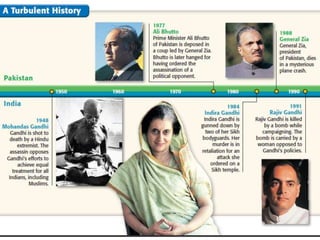
Mohandas Gandhi
emerged as the leader of
the Indian independence
movement in the 1920s
Gandhi urged Indians to
use non-violent means to
achieve their goals
Gandhi’s tactics included
deliberately breaking
unfair British laws
(called civil disobedience)
Gandhi encouraged
peaceful protests &
boycotting British goods
in order to hurt the
British colonial economy
Title
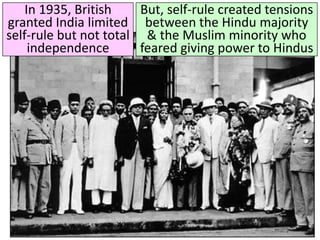
But, self-rule created tensions
between the Hindu majority
& the Muslim minority who
feared giving power to Hindus
In 1935, British
granted India limited
self-rule but not total
independence
Title
■ Text
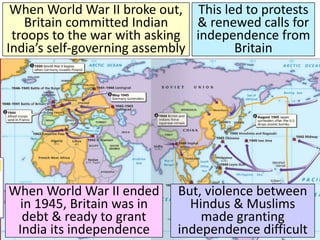
When World War II broke out,
Britain committed Indian
troops to the war with asking
India’s self-governing assembly
This led to protests
& renewed calls for
independence from
Britain
When World War II ended
in 1945, Britain was in
debt & ready to grant
India its independence
But, violence between
Hindus & Muslims
made granting
independence difficult
Title
■ Text
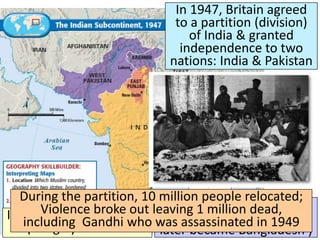
In 1947, Britain agreed
to a partition (division)
of India & granted
independence to two
nations: India & Pakistan
India was a nation made
up largely of Hindus
Pakistan was dominated
by Muslims (East Pakistan
later became Bangladesh )
During the partition, 10 million people relocated;
Violence broke out leaving 1 million dead,
including Gandhi who was assassinated in 1949
Title
■ Text
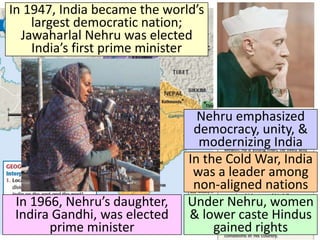
In 1947, India became the world’s
largest democratic nation;
Jawaharlal Nehru was elected
India’s first prime minister
Nehru emphasized
democracy, unity, &
modernizing India
Under Nehru, women
& lower caste Hindus
gained rights
In 1966, Nehru’s daughter,
Indira Gandhi, was elected
prime minister
In the Cold War, India
was a leader among
non-aligned nations
Title
■ Text

decolonization of india

  • 1.
  • 2.
    Nations in India,Southeast Asia, & Africa gained independence from imperialists (decolonization)
  • 3.
    At the endof World War II, many nations in Africa & Asia gained independence from European imperialists This trend was known as decolonization The first major colony to gain independence was India in 1947
  • 4.
    Mohandas Gandhi emerged asthe leader of the Indian independence movement in the 1920s Gandhi urged Indians to use non-violent means to achieve their goals Gandhi’s tactics included deliberately breaking unfair British laws (called civil disobedience) Gandhi encouraged peaceful protests & boycotting British goods in order to hurt the British colonial economy
  • 5.
    Title But, self-rule createdtensions between the Hindu majority & the Muslim minority who feared giving power to Hindus In 1935, British granted India limited self-rule but not total independence
  • 6.
    Title ■ Text When WorldWar II broke out, Britain committed Indian troops to the war with asking India’s self-governing assembly This led to protests & renewed calls for independence from Britain When World War II ended in 1945, Britain was in debt & ready to grant India its independence But, violence between Hindus & Muslims made granting independence difficult
  • 7.
    Title ■ Text In 1947,Britain agreed to a partition (division) of India & granted independence to two nations: India & Pakistan India was a nation made up largely of Hindus Pakistan was dominated by Muslims (East Pakistan later became Bangladesh ) During the partition, 10 million people relocated; Violence broke out leaving 1 million dead, including Gandhi who was assassinated in 1949
  • 8.
    Title ■ Text In 1947,India became the world’s largest democratic nation; Jawaharlal Nehru was elected India’s first prime minister Nehru emphasized democracy, unity, & modernizing India Under Nehru, women & lower caste Hindus gained rights In 1966, Nehru’s daughter, Indira Gandhi, was elected prime minister In the Cold War, India was a leader among non-aligned nations
  • 9.