The Indian
National
Congress
What’s
Inside
1
INTRODUCTION
2
FOUNDATION
3
A.O.HUME
4-
6
OBJECTIVES
7
SWADESHI MOVEMENT
9-
11
LEADERS
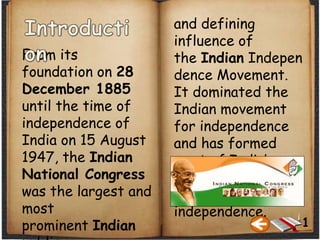
and defining
influence of
the Indian Indepen
dence Movement.
It dominated the
Indian movement
for independence
and has formed
most of India’s
governments from
the time of
independence.
From its
foundation on 28
December 1885
until the time of
independence of
India on 15 August
1947, the Indian
National Congress
was the largest and
most
prominent Indian 1
The Congress
was founded by
Indian and
British
members of
the Theosophic
al Society
movement,
most notably
Scotsman, A.
2
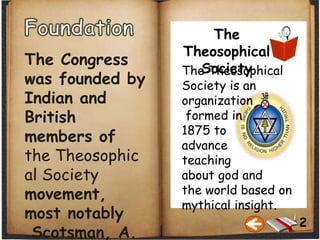
The Theosophical
Society is an
organization
formed in
1875 to
advance
teaching
about god and
the world based on
mythical insight.
The
Theosophical
Society
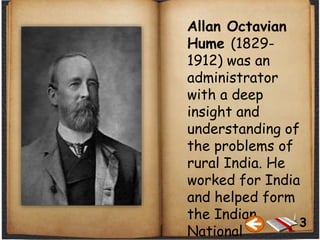
Allan Octavian
Hume (1829-
1912) was an
administrator
with a deep
insight and
understanding of
the problems of
rural India. He
worked for India
and helped form
the Indian
National
3
4
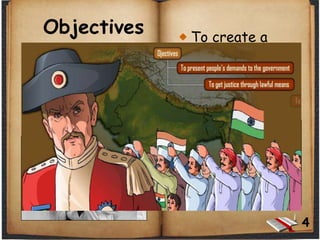
Objectives
The Congress
claimed that it
had the objective
of obtaining a
greater share in
government for
educated Indians
.
To create a
platform for civic
and political
dialogue of
educated Indians
with the British
Raj.
5
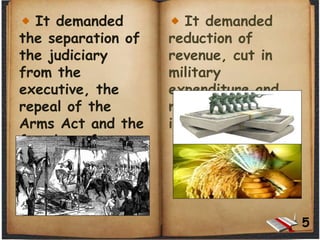
It demanded
the separation of
the judiciary
from the
executive, the
repeal of the
Arms Act and the
freedom of
speech and
expression.
It demanded
reduction of
revenue, cut in
military
expenditure and
more funds for
irrigation.
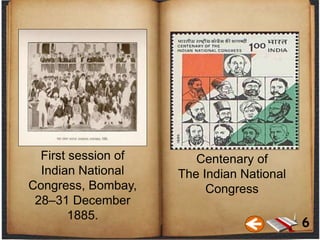
First session of
Indian National
Congress, Bombay,
28–31 December
1885.
Centenary of
The Indian National
Congress
6
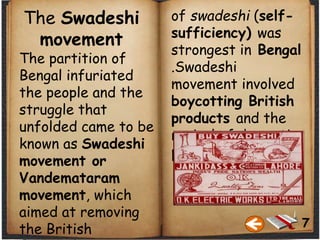
The Swadeshi
movement
The partition of
Bengal infuriated
the people and the
struggle that
unfolded came to be
known as Swadeshi
movement or
Vandemataram
movement, which
aimed at removing
the British
of swadeshi (self-
sufficiency) was
strongest in Bengal
.Swadeshi
movement involved
boycotting British
products and the
revival of domestic
products.
7
In Bengal,
Maharashtra and
Punjab, many
leaders were
beginning to
explore more
radical objectives
and methods. They
criticized the
Moderate leaders
who thought that
the British would
accept the just
LET US
SEE
WHO
THE
LEADER
S WERE. 8
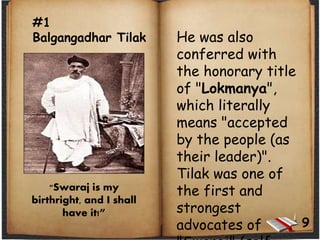
#1
Balgangadhar Tilak He was also
conferred with
the honorary title
of "Lokmanya",
which literally
means "accepted
by the people (as
their leader)".
Tilak was one of
the first and
strongest
advocates of
"Swaraj is my
birthright, and I shall
have it!”
9
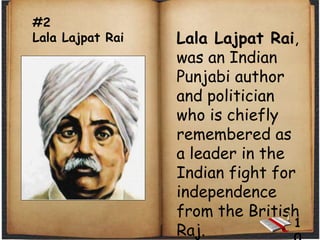
#2
Lala Lajpat Rai Lala Lajpat Rai,
was an Indian
Punjabi author
and politician
who is chiefly
remembered as
a leader in the
Indian fight for
independence
from the British
Raj.
1
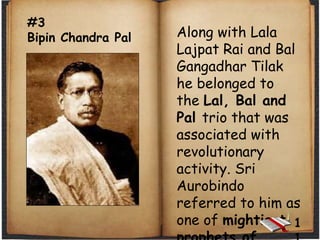
#3
Bipin Chandra Pal Along with Lala
Lajpat Rai and Bal
Gangadhar Tilak
he belonged to
the Lal, Bal and
Pal trio that was
associated with
revolutionary
activity. Sri
Aurobindo
referred to him as
one of mightiest 1
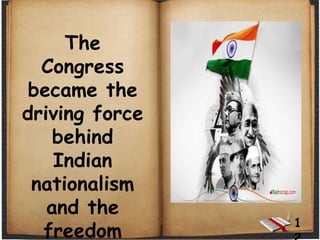
The
Congress
became the
driving force
behind
Indian
nationalism
and the
freedom
1
-Prithi Ramamurti

Indian National Congress

  • 1.
  • 2.
  • 3.
    and defining influence of theIndian Indepen dence Movement. It dominated the Indian movement for independence and has formed most of India’s governments from the time of independence. From its foundation on 28 December 1885 until the time of independence of India on 15 August 1947, the Indian National Congress was the largest and most prominent Indian 1
  • 4.
    The Congress was foundedby Indian and British members of the Theosophic al Society movement, most notably Scotsman, A. 2 The Theosophical Society is an organization formed in 1875 to advance teaching about god and the world based on mythical insight. The Theosophical Society
  • 5.
    Allan Octavian Hume (1829- 1912)was an administrator with a deep insight and understanding of the problems of rural India. He worked for India and helped form the Indian National 3
  • 6.
    4 Objectives The Congress claimed thatit had the objective of obtaining a greater share in government for educated Indians . To create a platform for civic and political dialogue of educated Indians with the British Raj.
  • 7.
    5 It demanded the separationof the judiciary from the executive, the repeal of the Arms Act and the freedom of speech and expression. It demanded reduction of revenue, cut in military expenditure and more funds for irrigation.
  • 8.
    First session of IndianNational Congress, Bombay, 28–31 December 1885. Centenary of The Indian National Congress 6
  • 9.
    The Swadeshi movement The partitionof Bengal infuriated the people and the struggle that unfolded came to be known as Swadeshi movement or Vandemataram movement, which aimed at removing the British of swadeshi (self- sufficiency) was strongest in Bengal .Swadeshi movement involved boycotting British products and the revival of domestic products. 7
  • 10.
    In Bengal, Maharashtra and Punjab,many leaders were beginning to explore more radical objectives and methods. They criticized the Moderate leaders who thought that the British would accept the just LET US SEE WHO THE LEADER S WERE. 8
  • 11.
    #1 Balgangadhar Tilak Hewas also conferred with the honorary title of "Lokmanya", which literally means "accepted by the people (as their leader)". Tilak was one of the first and strongest advocates of "Swaraj is my birthright, and I shall have it!” 9
  • 12.
    #2 Lala Lajpat RaiLala Lajpat Rai, was an Indian Punjabi author and politician who is chiefly remembered as a leader in the Indian fight for independence from the British Raj. 1
  • 13.
    #3 Bipin Chandra PalAlong with Lala Lajpat Rai and Bal Gangadhar Tilak he belonged to the Lal, Bal and Pal trio that was associated with revolutionary activity. Sri Aurobindo referred to him as one of mightiest 1
  • 14.
  • 15.