










1 
“45 % of all our decisions 
are wrong” 
WHY? 
Roger Claessens, Prof. UBI 
www.rogerclaessens.be
2 
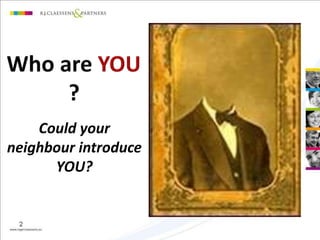
Could your 
neighbour introduce 
YOU?
Why than such a high 
%? 
3
4 
You may 
remember the…
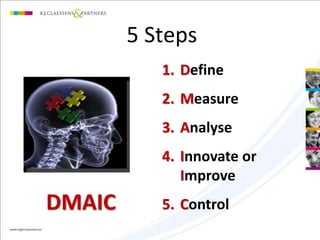
5 Steps 
1. Define 
2. Measure 
3. Analyse 
4. Innovate or 
Improve 
5. Control 
DMAIC
6 
7 Stages 
1 Define 
2 Causes of problem 
3 Possible solutions 
4 Decide 
5 Responsibilities 
6 Evaluate results 
7 Test
7 
3 R’s 
Reflect 
Respond 
Revise
8 
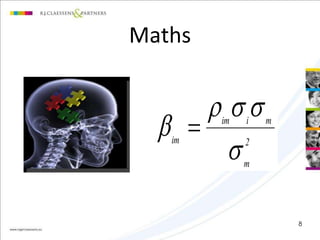
Maths 
   
im i m 
im  
2 
m 
 
9 
We have TOOLS, 
don’t we?
THE COMPLEXITY 
OF DECISION 
MAKING
11
12
MARGIN 
CALL 
13
14
• You are in the Arizona desert in the hottest time of 
the year. You know that you are about 125 km from 
the nearest town. Fortunately you have some pieces 
of equipment and items left that you could use for 
your survival. 
• The decision to make is: either to stay put and wait 
for help or move and walk the 75 miles to the 
nearest town. Whatever the decision it needs to be 
taken unanimously! 
15
• Compass 
• Small transistor radio 
• Shaving mirror 
• Snake repellent 
• 1,5-liter of water per person 
• 4 square meter of plastic 
• Mosquito netting 
• 1 case of rations 
• Maps of the desert 
16 
• Cushions 
• 5 litre of an 
oil/gas mixture 
• 1 bottle of rum 
• Two boxes of 
chocolate 
• 5 meter of ropes 
• One boomerang
17
Decision making 
18
19 
Intuition is the ability to acquire 
knowledge without inference or the 
use of reason
20
Decision Making 
Intuition =Recognition 
We are often wrong, and an objective observer 
is more likely to detect our errors than we are 
21
Decision Making 
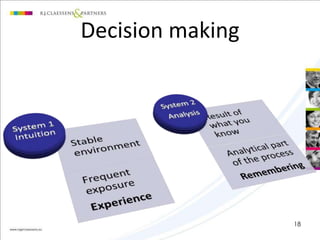
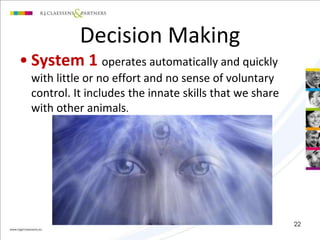
• System 1 operates automatically and quickly 
with little or no effort and no sense of voluntary 
control. It includes the innate skills that we share 
with other animals. 
22
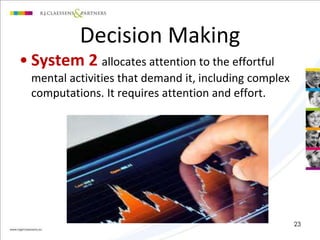
• System 2 allocates attention to the effortful 
mental activities that demand it, including complex 
computations. It requires attention and effort. 
23 
Decision Making
Decision Making 
Overestimation of intuition and underestimation of 
what we need for the analytical part of the decision 
making process will induce: 
IRRATIONAL 
PERSEVERANCE 
24
Decision Making 
When people believe a conclusion is true, 
they are also very likely to believe 
the arguments that appear to support it, 
even when these arguments are unsound. 
25
Decision Making 
High intelligence does not make people immune to 
biases! 
26
Decision Making 
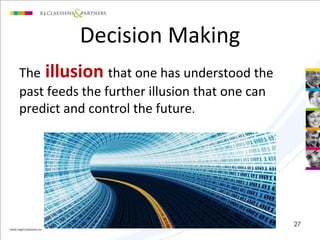
The illusion that one has understood the 
past feeds the further illusion that one can 
predict and control the future. 
27
Decision Making 
• It is natural for System 1 to generate 
overconfident judgements, because 
confidence is determined by the coherence of the 
best story you can tell from the evidence at hand. 
• Therefore your intuitions will deliver predictions that 
are too extreme and you will be inclined to put far 
too much faith in them. 
28
Decision Making 
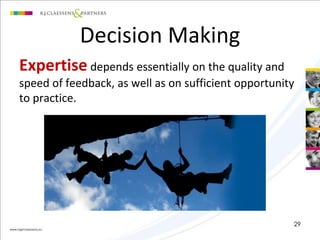
Expertise depends essentially on the quality and 
speed of feedback, as well as on sufficient opportunity 
to practice. 
29
Decision Making 
• When faced with a difficult question, we often 
answer an easier one instead, usually without 
noticing the Substitution 
• There are several ways human choices deviate from 
the rules of Rationality 
30
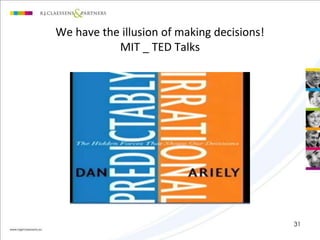
We have the illusion of making decisions! 
MIT _ TED Talks 
31
SO, 
WHAT DO WE DO? 
32
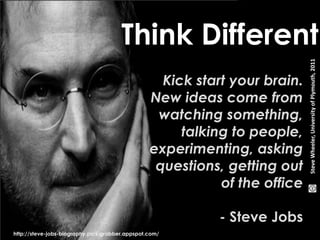
Think Different 
Kick start your brain. 
New ideas come from 
watching something, 
talking to people, 
experimenting, asking 
questions, getting out 
of the office 
- Steve Jobs 
http://steve-jobs-biography.pics-grabber.appspot.com/ 
Steve Wheeler, University of Plymouth, 2011
34
35
36
37
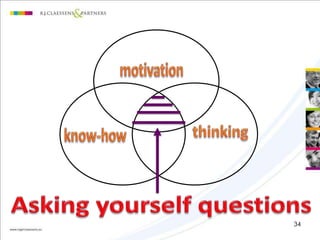
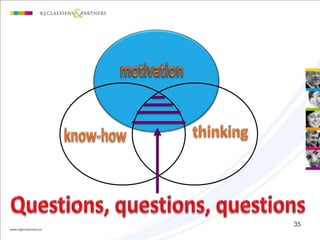
WHAT MOTIVATES YOU? 38
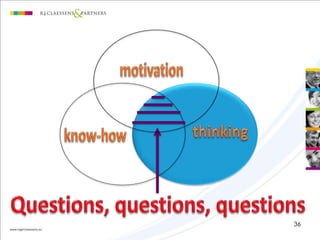
•DO YOU FEEL YOU THINK 
EFFECTIVELY? 39
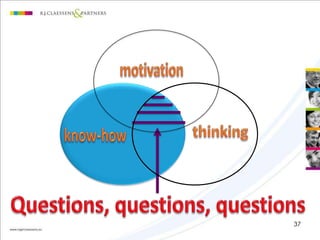
•DO YOU KNOW WHAT YOU NEED 
TO KNOW? 
40
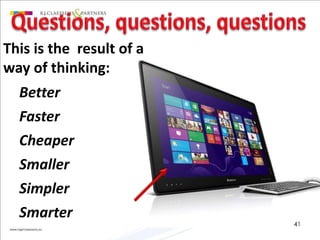
This is the result of a 
way of thinking: 
Better 
Faster 
Cheaper 
Smaller 
Simpler 
Smarter 
41
CONSEQUENCES! 
42
• What were the 
CONSEQUENCES of the 
wrong decisions? 
• What would have been 
CORRECT decisions? 
43 
Discussion
GSM MERCHANT BANK 
44
CAR DEALERSHIP 
45
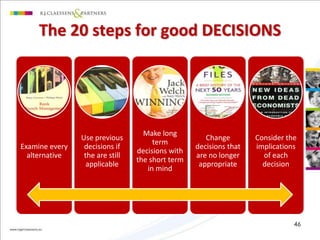
The 20 steps for good DECISIONS 
Examine every 
alternative 
Use previous 
decisions if 
the are still 
applicable 
Make long 
term 
decisions with 
the short term 
in mind 
Change 
decisions that 
are no longer 
appropriate 
Consider the 
implications 
of each 
decision 
46
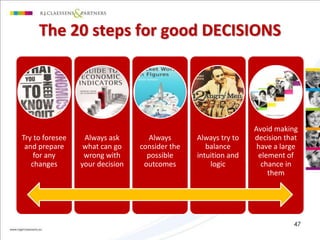
The 20 steps for good DECISIONS 
Try to foresee 
and prepare 
for any 
changes 
Always ask 
what can go 
wrong with 
your decision 
Always 
consider the 
possible 
outcomes 
Always try to 
balance 
intuition and 
logic 
Avoid making 
decision that 
have a large 
element of 
chance in 
them 
47
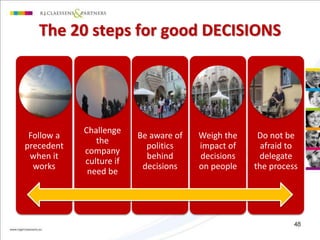
The 20 steps for good DECISIONS 
Follow a 
precedent 
when it 
works 
Challenge 
the 
company 
culture if 
need be 
Be aware of 
politics 
behind 
decisions 
Weigh the 
impact of 
decisions 
on people 
Do not be 
afraid to 
delegate 
the process 
48
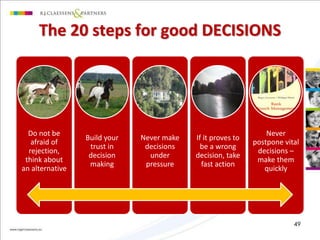
The 20 steps for good DECISIONS 
49 
Do not be 
afraid of 
rejection, 
think about 
an alternative 
Build your 
trust in 
decision 
making 
Never make 
decisions 
under 
pressure 
If it proves to 
be a wrong 
decision, take 
fast action 
Never 
postpone vital 
decisions – 
make them 
quickly
Decisions…, don’t 
forget the 
MYTHS 
50
51 
WHAT YOU WILL BE ABLE TO DO AFTER A 
GOOD DECISION
contact@rogerclaessens.be
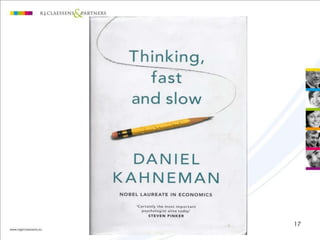
« Thinking, fast and slow, Daniel Kahneman,; Penguin Books, 2011 
« Blink » Malcolm Gladwell, Back Bay Books, 2005 
« Inside Steve’s Brain », Leander Kahney, Atlantic Books, 2008 
« The black swan », N.Taleb, Pinguin 2007 
« Organisational culture and leadership », Edgar H, Schein, Jossey- 
Bass, 2010 
53

La prise de décision

  • 1.
    1 “45 %of all our decisions are wrong” WHY? Roger Claessens, Prof. UBI www.rogerclaessens.be
  • 2.
    2 Could your neighbour introduce YOU?
  • 3.
    Why than sucha high %? 3
  • 4.
    4 You may remember the…
  • 5.
    5 Steps 1.Define 2. Measure 3. Analyse 4. Innovate or Improve 5. Control DMAIC
  • 6.
    6 7 Stages 1 Define 2 Causes of problem 3 Possible solutions 4 Decide 5 Responsibilities 6 Evaluate results 7 Test
  • 7.
    7 3 R’s Reflect Respond Revise
  • 8.
    8 Maths   im i m im  2 m  
  • 9.
    9 We haveTOOLS, don’t we?
  • 10.
    THE COMPLEXITY OFDECISION MAKING
  • 11.
  • 12.
  • 13.
  • 14.
  • 15.
    • You arein the Arizona desert in the hottest time of the year. You know that you are about 125 km from the nearest town. Fortunately you have some pieces of equipment and items left that you could use for your survival. • The decision to make is: either to stay put and wait for help or move and walk the 75 miles to the nearest town. Whatever the decision it needs to be taken unanimously! 15
  • 16.
    • Compass •Small transistor radio • Shaving mirror • Snake repellent • 1,5-liter of water per person • 4 square meter of plastic • Mosquito netting • 1 case of rations • Maps of the desert 16 • Cushions • 5 litre of an oil/gas mixture • 1 bottle of rum • Two boxes of chocolate • 5 meter of ropes • One boomerang
  • 17.
  • 18.
  • 19.
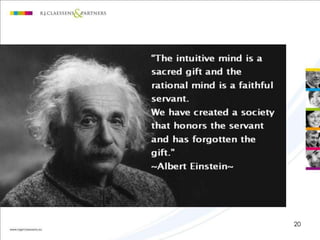
    19 Intuition isthe ability to acquire knowledge without inference or the use of reason
  • 20.
  • 21.
    Decision Making Intuition=Recognition We are often wrong, and an objective observer is more likely to detect our errors than we are 21
  • 22.
    Decision Making •System 1 operates automatically and quickly with little or no effort and no sense of voluntary control. It includes the innate skills that we share with other animals. 22
  • 23.
    • System 2allocates attention to the effortful mental activities that demand it, including complex computations. It requires attention and effort. 23 Decision Making
  • 24.
    Decision Making Overestimationof intuition and underestimation of what we need for the analytical part of the decision making process will induce: IRRATIONAL PERSEVERANCE 24
  • 25.
    Decision Making Whenpeople believe a conclusion is true, they are also very likely to believe the arguments that appear to support it, even when these arguments are unsound. 25
  • 26.
    Decision Making Highintelligence does not make people immune to biases! 26
  • 27.
    Decision Making Theillusion that one has understood the past feeds the further illusion that one can predict and control the future. 27
  • 28.
    Decision Making •It is natural for System 1 to generate overconfident judgements, because confidence is determined by the coherence of the best story you can tell from the evidence at hand. • Therefore your intuitions will deliver predictions that are too extreme and you will be inclined to put far too much faith in them. 28
  • 29.
    Decision Making Expertisedepends essentially on the quality and speed of feedback, as well as on sufficient opportunity to practice. 29
  • 30.
    Decision Making •When faced with a difficult question, we often answer an easier one instead, usually without noticing the Substitution • There are several ways human choices deviate from the rules of Rationality 30
  • 31.
    We have theillusion of making decisions! MIT _ TED Talks 31
  • 32.
    SO, WHAT DOWE DO? 32
  • 33.
    Think Different Kickstart your brain. New ideas come from watching something, talking to people, experimenting, asking questions, getting out of the office - Steve Jobs http://steve-jobs-biography.pics-grabber.appspot.com/ Steve Wheeler, University of Plymouth, 2011
  • 34.
  • 35.
  • 36.
  • 37.
  • 38.
  • 39.
    •DO YOU FEELYOU THINK EFFECTIVELY? 39
  • 40.
    •DO YOU KNOWWHAT YOU NEED TO KNOW? 40
  • 41.
    This is theresult of a way of thinking: Better Faster Cheaper Smaller Simpler Smarter 41
  • 42.
  • 43.
    • What werethe CONSEQUENCES of the wrong decisions? • What would have been CORRECT decisions? 43 Discussion
  • 44.
  • 45.
  • 46.
    The 20 stepsfor good DECISIONS Examine every alternative Use previous decisions if the are still applicable Make long term decisions with the short term in mind Change decisions that are no longer appropriate Consider the implications of each decision 46
  • 47.
    The 20 stepsfor good DECISIONS Try to foresee and prepare for any changes Always ask what can go wrong with your decision Always consider the possible outcomes Always try to balance intuition and logic Avoid making decision that have a large element of chance in them 47
  • 48.
    The 20 stepsfor good DECISIONS Follow a precedent when it works Challenge the company culture if need be Be aware of politics behind decisions Weigh the impact of decisions on people Do not be afraid to delegate the process 48
  • 49.
    The 20 stepsfor good DECISIONS 49 Do not be afraid of rejection, think about an alternative Build your trust in decision making Never make decisions under pressure If it proves to be a wrong decision, take fast action Never postpone vital decisions – make them quickly
  • 50.
  • 51.
    51 WHAT YOUWILL BE ABLE TO DO AFTER A GOOD DECISION
  • 52.
  • 53.
    « Thinking, fastand slow, Daniel Kahneman,; Penguin Books, 2011 « Blink » Malcolm Gladwell, Back Bay Books, 2005 « Inside Steve’s Brain », Leander Kahney, Atlantic Books, 2008 « The black swan », N.Taleb, Pinguin 2007 « Organisational culture and leadership », Edgar H, Schein, Jossey- Bass, 2010 53