Decision Making and Complexity

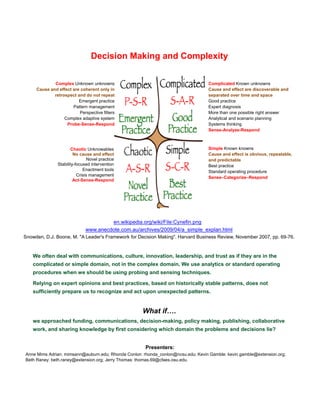
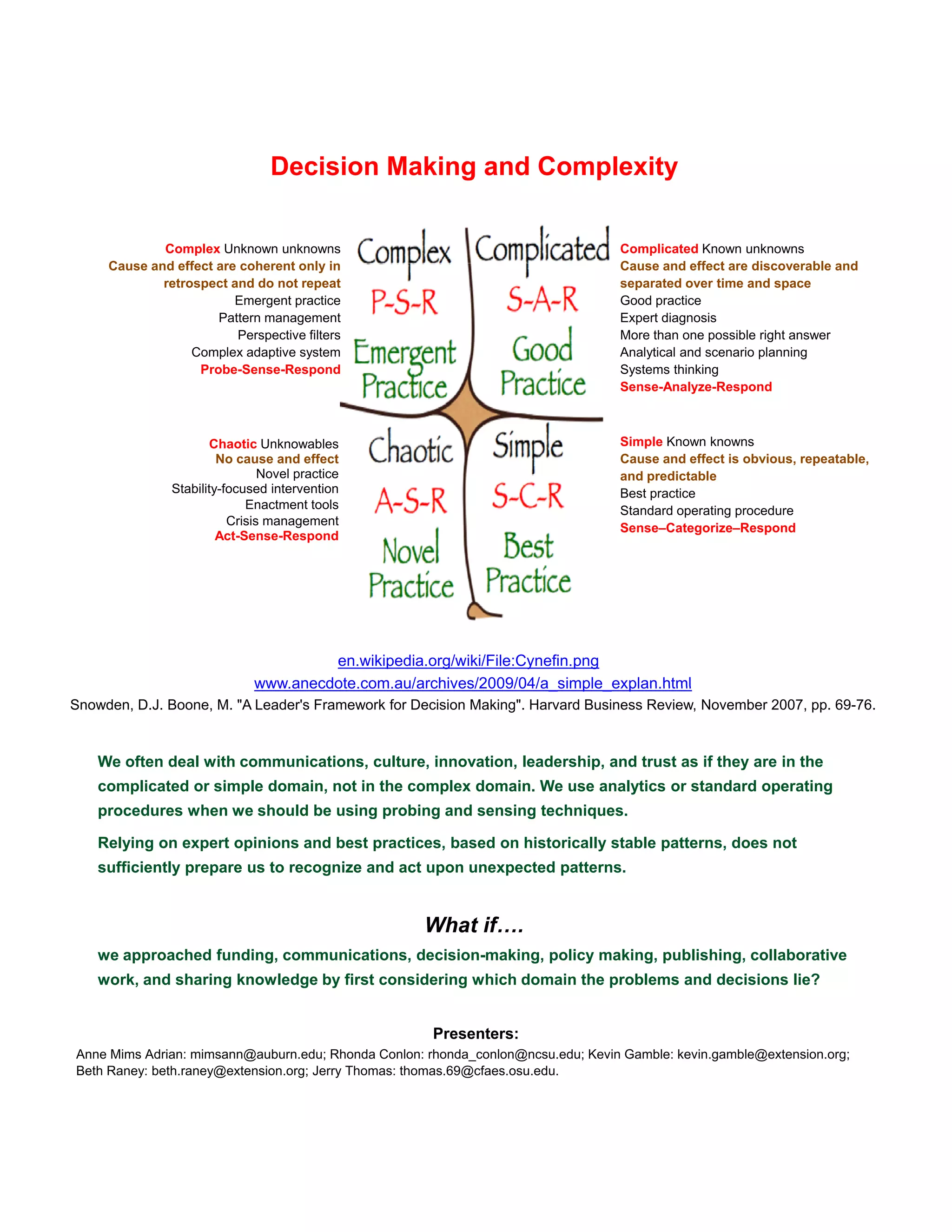
             Complex Unknown unknowns                                             Complicated Known unknowns
     Cause and effect are coherent only in
     C        d ff t        h     t l i                                           Cause and effect are discoverable and
                                                                                  C          d ff t      di        bl d
             retrospect and do not repeat                                         separated over time and space
                         Emergent practice                                        Good practice
                      Pattern management                                          Expert diagnosis
                         Perspective filters                                      More than one possible right answer
                  Complex adaptive system                                         Analytical and scenario planning
                   Probe-Sense-Respond                                            Systems thinking
                                                                                  Sense-Analyze-Respond


                      Chaotic Unknowables                                         Simple Known knowns
                        No cause and effect                                       Cause and effect is obvious, repeatable,
                                Novel practice                                    and predictable
               Stability-focused intervention                                     Best practice
                             Enactment tools                                      Standard operating procedure
                          Crisis management
                                                                                  Sense–Categorize–Respond
                        Act-Sense-Respond


                                       en.wikipedia.org/wiki/File:Cynefin.png
                              www.anecdote.com.au/archives/2009/04/a_simple_explan.html
                              www anecdote com au/archives/2009/04/a simple explan html
Snowden, D.J. Boone, M. "A Leader's Framework for Decision Making". Harvard Business Review, November 2007, pp. 69-76.


    We often deal with communications, culture, innovation, leadership, and trust as if they are in the
    complicated or simple domain, not in the complex domain. We use analytics or standard operating
    procedures when we should be using probing and sensing techniques.

    Relying on expert opinions and best practices, based on historically stable patterns, does not
    sufficiently prepare us to recognize and act upon unexpected patterns.


                                                     What if….
    we approached funding, communications, decision-making, policy making, publishing, collaborative
    work, and sharing knowledge by first considering which domain the problems and decisions lie?


                                                      Presenters:
Anne Mims Adrian: mimsann@auburn.edu; Rhonda Conlon: rhonda_conlon@ncsu.edu; Kevin Gamble: kevin.gamble@extension.org;
Beth Raney: beth.raney@extension.org; Jerry Thomas: thomas.69@cfaes.osu.edu.

Decision Making and Complexity

  • 1.
    Decision Making andComplexity Complex Unknown unknowns Complicated Known unknowns Cause and effect are coherent only in C d ff t h t l i Cause and effect are discoverable and C d ff t di bl d retrospect and do not repeat separated over time and space Emergent practice Good practice Pattern management Expert diagnosis Perspective filters More than one possible right answer Complex adaptive system Analytical and scenario planning Probe-Sense-Respond Systems thinking Sense-Analyze-Respond Chaotic Unknowables Simple Known knowns No cause and effect Cause and effect is obvious, repeatable, Novel practice and predictable Stability-focused intervention Best practice Enactment tools Standard operating procedure Crisis management Sense–Categorize–Respond Act-Sense-Respond en.wikipedia.org/wiki/File:Cynefin.png www.anecdote.com.au/archives/2009/04/a_simple_explan.html www anecdote com au/archives/2009/04/a simple explan html Snowden, D.J. Boone, M. "A Leader's Framework for Decision Making". Harvard Business Review, November 2007, pp. 69-76. We often deal with communications, culture, innovation, leadership, and trust as if they are in the complicated or simple domain, not in the complex domain. We use analytics or standard operating procedures when we should be using probing and sensing techniques. Relying on expert opinions and best practices, based on historically stable patterns, does not sufficiently prepare us to recognize and act upon unexpected patterns. What if…. we approached funding, communications, decision-making, policy making, publishing, collaborative work, and sharing knowledge by first considering which domain the problems and decisions lie? Presenters: Anne Mims Adrian: mimsann@auburn.edu; Rhonda Conlon: rhonda_conlon@ncsu.edu; Kevin Gamble: kevin.gamble@extension.org; Beth Raney: beth.raney@extension.org; Jerry Thomas: thomas.69@cfaes.osu.edu.