APPLICATION OF THE INTERACTION
POTENTIAL MODEL TO STUDIES OF
CENTRALITY, ACCESSIBILITY, AND
IMPEDANCES OF THE TERRITORY:
CASE STUDY OF NOVA LIMA, MINAS
GERAIS, BRAZIL.

Sheyla Aguilar de Santana
Ana Clara Mourão Moura
Danilo Marques
Fernanda Moraes
GOAL

 This work was developed within the context of a
 doctoral tesis that aims to create dynamic models to
 generate indices of urban carrying capacity.

 Nova Lima - Minas Gerais - Brazil is one of the study
 areas.

 This works aimed to understand the historical
 evolution of the position of Nova Lima within that
 network.
This work was made within the apply of GIS
techniques to check the importance of Nova
Lima - MG - Brazil within the urban network.
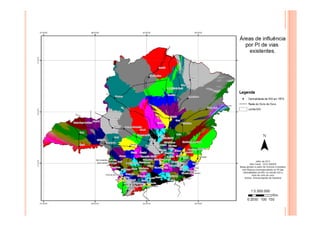
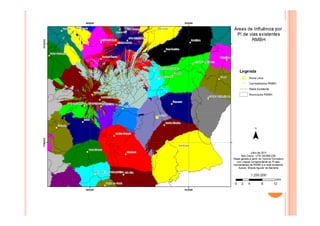
Potencial of Interaction

Voronoi - the thiessen polygons

Analysis Multicriteria
URBAN NETWORKS
 We understand the network from the perspective
 of territorial occupation through towns, or
 more precisely the dynamics of urban networks,
 which       are      articulated    to      an
 organization through a set of centers,
 establishing dependent and hierarchically
 interconnection
POTENCIAL OF INTERATION
 The potential of interaction is a gravity
 model used to identify the accessibility of
 a particular point within a network of multiplies
 points.

 This model allows to define the power of
 attraction and repulsion of each centers, ie, if
 the city has capacity to serve the population that
 is around them.
These potentials are calculated as a function
of relative distance and mass of points. Each
point has an influence over the other, there is the
possibility             of              calculating
the interaction potential due to roads (road
networks) created by the user.
MULTICRITERIA ANALYSIS
 It is a spatial analysis technique that allows the
 crossing     of   maps     from    the    mapping
 of variables, degree of relevance and notes for
 each of the layers to understand the dynamics of
 the studied phenomenon.
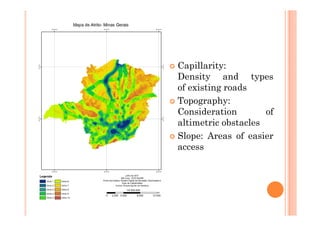
Capillarity:
Density and types
of existing roads
Topography:
Consideration        of
altimetric obstacles
Slope: Areas of easier
access
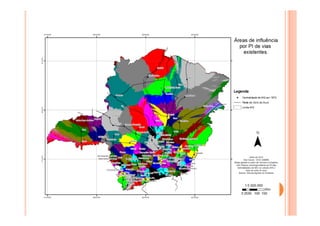
VORONOI
 Model of influence area that divides the territory
 into the influence of a point considering the
 roughness of the social and environmental
 composition .
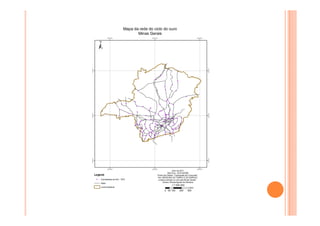
ORE NETWORK
 Minas Gerais is known for its important role in
 the cycle of gold during the discovery in Brazil
 because of its mineral wealth.
MASS: Population, 1872

Centrality: The reference points were towns
and cities that have emerged as important places
interns of providing inputs for mining areas

NETWORK: routes and pathways collected from
old maps.

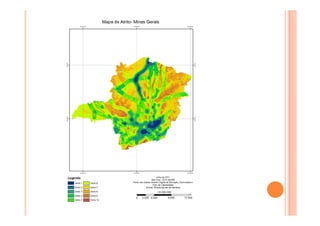
MAP OF FRICTION: capillarity, topography and
slope
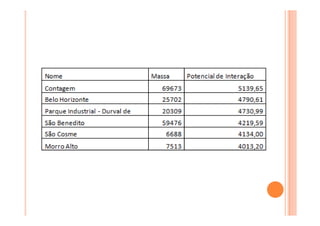
From PI, Nova Lima has established itself
as the fourth largest importance centrality
in         Minas       Gerais.        Expected
result since New Lima has prominence in mining
scenario    due   to   its   mineral    wealth.

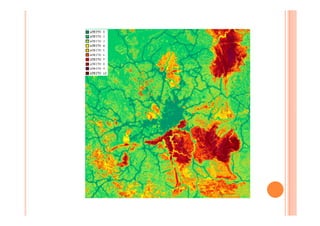
But when crossed with the map of friction
(capillary, slope and topography), it is a location
with low power of attraction and repulsion.
RMBH
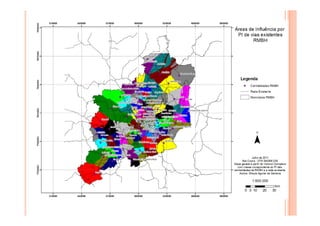
We use, as reference, the results of the work:
"The    Model    Potencial   Interaction       -
studies of network centrality, accessibility and
impedances within the RMBH" - Master Plan
for Integrated Development of the metropolitan
Region of Belo Horizonte (Cedeplar). -
 Ana Clara Mourão and Danilo Marques.
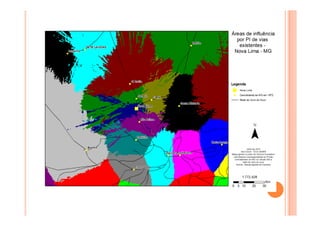
I used this work to investigate the influence that
Nova Lima exercises within the current network

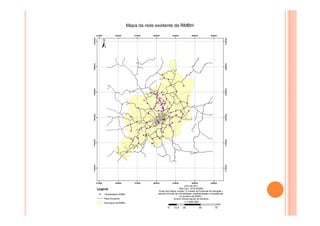
NETWORK: we used the existing roads and
major urban roads
Centralities:                   headquarters
and municipal districts and some areas of
importance.
MASS: population
MAP OF FRICTION: capillarity, topography and
slope
RESULTADOS
 Nova Lima is the edge of the road
 network throughout the evolution process of the
 municipality.

 It only serves your area of direct immediacy.

 Despite its economic importance related to the
 ore, the environmental constraints make it
 difficult to travel to the region.
The                    creation                  of
new     urban       network     would     improve
the accessibility and would torn this centrality in
a location with major attraction rather than
repulsion.

De Santana, Mourão Moura, Marques & Moraes - input2012

  • 1.
    APPLICATION OF THEINTERACTION POTENTIAL MODEL TO STUDIES OF CENTRALITY, ACCESSIBILITY, AND IMPEDANCES OF THE TERRITORY: CASE STUDY OF NOVA LIMA, MINAS GERAIS, BRAZIL. Sheyla Aguilar de Santana Ana Clara Mourão Moura Danilo Marques Fernanda Moraes
  • 2.
    GOAL This workwas developed within the context of a doctoral tesis that aims to create dynamic models to generate indices of urban carrying capacity. Nova Lima - Minas Gerais - Brazil is one of the study areas. This works aimed to understand the historical evolution of the position of Nova Lima within that network.
  • 3.
    This work wasmade within the apply of GIS techniques to check the importance of Nova Lima - MG - Brazil within the urban network.
  • 4.
    Potencial of Interaction Voronoi- the thiessen polygons Analysis Multicriteria
  • 5.
    URBAN NETWORKS Weunderstand the network from the perspective of territorial occupation through towns, or more precisely the dynamics of urban networks, which are articulated to an organization through a set of centers, establishing dependent and hierarchically interconnection
  • 7.
    POTENCIAL OF INTERATION The potential of interaction is a gravity model used to identify the accessibility of a particular point within a network of multiplies points. This model allows to define the power of attraction and repulsion of each centers, ie, if the city has capacity to serve the population that is around them.
  • 8.
    These potentials arecalculated as a function of relative distance and mass of points. Each point has an influence over the other, there is the possibility of calculating the interaction potential due to roads (road networks) created by the user.
  • 10.
    MULTICRITERIA ANALYSIS Itis a spatial analysis technique that allows the crossing of maps from the mapping of variables, degree of relevance and notes for each of the layers to understand the dynamics of the studied phenomenon.
  • 11.
    Capillarity: Density and types ofexisting roads Topography: Consideration of altimetric obstacles Slope: Areas of easier access
  • 12.
    VORONOI Model ofinfluence area that divides the territory into the influence of a point considering the roughness of the social and environmental composition .
  • 14.
    ORE NETWORK MinasGerais is known for its important role in the cycle of gold during the discovery in Brazil because of its mineral wealth.
  • 15.
    MASS: Population, 1872 Centrality:The reference points were towns and cities that have emerged as important places interns of providing inputs for mining areas NETWORK: routes and pathways collected from old maps. MAP OF FRICTION: capillarity, topography and slope
  • 17.
    From PI, NovaLima has established itself as the fourth largest importance centrality in Minas Gerais. Expected result since New Lima has prominence in mining scenario due to its mineral wealth. But when crossed with the map of friction (capillary, slope and topography), it is a location with low power of attraction and repulsion.
  • 21.
    RMBH We use, asreference, the results of the work: "The Model Potencial Interaction - studies of network centrality, accessibility and impedances within the RMBH" - Master Plan for Integrated Development of the metropolitan Region of Belo Horizonte (Cedeplar). - Ana Clara Mourão and Danilo Marques.
  • 22.
    I used thiswork to investigate the influence that Nova Lima exercises within the current network NETWORK: we used the existing roads and major urban roads Centralities: headquarters and municipal districts and some areas of importance. MASS: population MAP OF FRICTION: capillarity, topography and slope
  • 26.
    RESULTADOS Nova Limais the edge of the road network throughout the evolution process of the municipality. It only serves your area of direct immediacy. Despite its economic importance related to the ore, the environmental constraints make it difficult to travel to the region.
  • 27.
    The creation of new urban network would improve the accessibility and would torn this centrality in a location with major attraction rather than repulsion.