“Expert system” for
environmental assessment
         Elisa Valentini - University of Bologna
 Michele Sansoni - Environment Agency Emilia-Romagna

                     INPUT 2012
                Cagliari,11th May 2012
Goals
• Development of a methodology to assess the
environmental sensitivity of energy systems

• Development of sensitivity maps for Emilia-
Romagna Region

• Support tool useful to facilitate the procedures
of Environmental Impact Assessment (EIA) and
Strategic Environmental Assessment (SEA)
Methodology
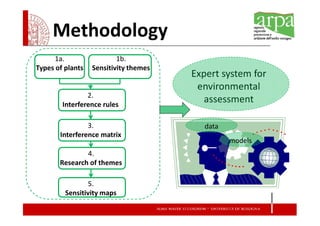
      1a.                 1b.
Types of plants   Sensitivity themes
                                       Expert system for
                                        environmental
                2.
        Interference rules
                                          assessment

                3.                        data
       Interference matrix
                                                 models
               4.
       Research of themes

                5.
         Sensitivity maps
Environmental sensitivity
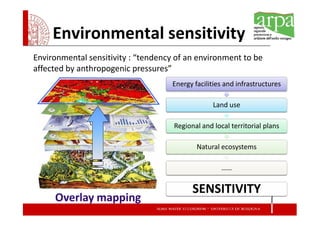
Environmental sensitivity : “tendency of an environment to be
affected by anthropogenic pressures”
                                    Energy facilities and infrastructures

                                                  Land use

                                     Regional and local territorial plans

                                            Natural ecosystems

                                                     ……

                                           SENSITIVITY
     Overlay mapping
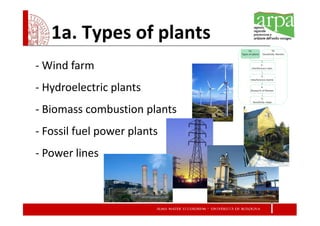
1a. Types of plants
- Wind farm
- Hydroelectric plants
- Biomass combustion plants
- Fossil fuel power plants
- Power lines
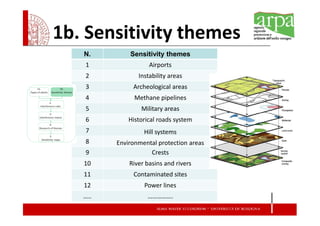
1b. Sensitivity themes
   N.        Sensitivity themes
   1                Airports
   2            Instability areas
   3          Archeological areas
   4           Methane pipelines
   5             Military areas
   6         Historical roads system
   7              Hill systems
   8     Environmental protection areas
   9                Crests
   10        River basins and rivers
   11         Contaminated sites
   12             Power lines
   …..             …………….
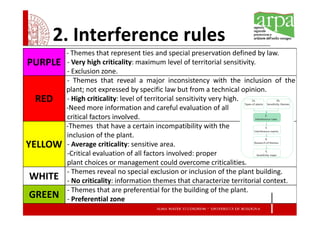
2. Interference rules
         - Themes that represent ties and special preservation defined by law.
PURPLE   - Very high criticality: maximum level of territorial sensitivity.
         - Exclusion zone.
         - Themes that reveal a major inconsistency with the inclusion of the
         plant; not expressed by specific law but from a technical opinion.
 RED     - High criticality: level of territorial sensitivity very high.
         -Need more information and careful evaluation of all
         critical factors involved.
         -Themes that have a certain incompatibility with the
         inclusion of the plant.
YELLOW   - Average criticality: sensitive area.
         -Critical evaluation of all factors involved: proper
         plant choices or management could overcome criticalities.
         - Themes reveal no special exclusion or inclusion of the plant building.
WHITE    - No criticality: information themes that characterize territorial context.
         - Themes that are preferential for the building of the plant.
GREEN    - Preferential zone
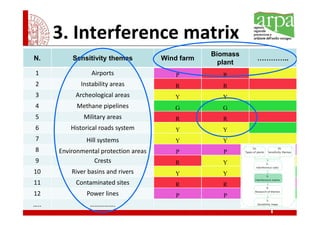
3. Interference matrix
                                                   Biomass
N.        Sensitivity themes           Wind farm             ..
                                                     plant
1                Airports                  P          R
2            Instability areas            R           R
3          Archeological areas            Y          Y
4           Methane pipelines             G          G
5             Military areas              R           R
6         Historical roads system         Y          Y
7              Hill systems               Y          Y
8     Environmental protection areas       P          P
9                Crests                   R          Y
10        River basins and rivers         Y          Y
11         Contaminated sites             R           R
12             Power lines                 P          P
…..             …………….
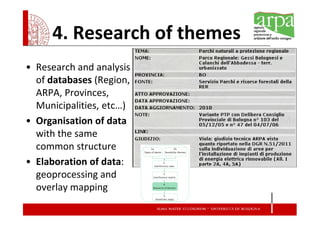
4. Research of themes
• Research and analysis
  of databases (Region,
  ARPA, Provinces,
  Municipalities, etc…)
• Organisation of data
  with the same
  common structure
• Elaboration of data:
  geoprocessing and
  overlay mapping
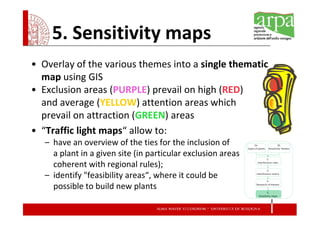
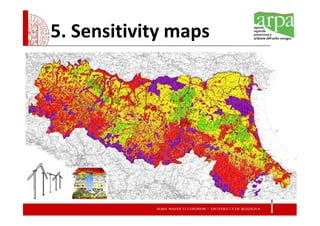
5. Sensitivity maps
• Overlay of the various themes into a single thematic
  map using GIS
• Exclusion areas (PURPLE) prevail on high (RED)
  and average (YELLOW) attention areas which
  prevail on attraction (GREEN) areas
• “Traffic light maps“ allow to:
   – have an overview of the ties for the inclusion of
     a plant in a given site (in particular exclusion areas
     coherent with regional rules);
   – identify "feasibility areas“, where it could be
     possible to build new plants
5. Sensitivity maps
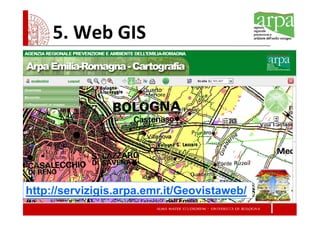
5. Web GIS


http://servizigis.arpa.emr.it/Geovistaweb/
Conclusions
• Analysis of the plan/project area
   – Identification of sensitivity themes (and ties) and related information
• Criticalities framework
   – Useful for simplifying screening and scoping phases (EIA, SEA)
   – Identification of critical issues on which focus the monitoring of
     plan/project
   – Help in planning phases (and writing of environmental report) and
     support in making choices between different alternatives
• Support in building permissions
   – Zoning maps: the traffic-light map shows potential exclusion zones,
     areas of attention and areas which present opportunities for the siting
   – Link between SEA and EIA
Thank you for your attention


      Elisa Valentini              Michele Sansoni
DIEM, University of Bologna      Arpa Emilia-Romagna
    elisa.valentini11@unibo.it   michelesansoni@arpa.emr.it

        www.diem.unibo.it           www.arpa.emr.it/energia

Sansoni & Valentini - input2012

  • 1.
    “Expert system” for environmentalassessment Elisa Valentini - University of Bologna Michele Sansoni - Environment Agency Emilia-Romagna INPUT 2012 Cagliari,11th May 2012
  • 2.
    Goals • Development ofa methodology to assess the environmental sensitivity of energy systems • Development of sensitivity maps for Emilia- Romagna Region • Support tool useful to facilitate the procedures of Environmental Impact Assessment (EIA) and Strategic Environmental Assessment (SEA)
  • 3.
    Methodology 1a. 1b. Types of plants Sensitivity themes Expert system for environmental 2. Interference rules assessment 3. data Interference matrix models 4. Research of themes 5. Sensitivity maps
  • 4.
    Environmental sensitivity Environmental sensitivity: “tendency of an environment to be affected by anthropogenic pressures” Energy facilities and infrastructures Land use Regional and local territorial plans Natural ecosystems …… SENSITIVITY Overlay mapping
  • 5.
    1a. Types ofplants - Wind farm - Hydroelectric plants - Biomass combustion plants - Fossil fuel power plants - Power lines
  • 6.
    1b. Sensitivity themes N. Sensitivity themes 1 Airports 2 Instability areas 3 Archeological areas 4 Methane pipelines 5 Military areas 6 Historical roads system 7 Hill systems 8 Environmental protection areas 9 Crests 10 River basins and rivers 11 Contaminated sites 12 Power lines ….. …………….
  • 7.
    2. Interference rules - Themes that represent ties and special preservation defined by law. PURPLE - Very high criticality: maximum level of territorial sensitivity. - Exclusion zone. - Themes that reveal a major inconsistency with the inclusion of the plant; not expressed by specific law but from a technical opinion. RED - High criticality: level of territorial sensitivity very high. -Need more information and careful evaluation of all critical factors involved. -Themes that have a certain incompatibility with the inclusion of the plant. YELLOW - Average criticality: sensitive area. -Critical evaluation of all factors involved: proper plant choices or management could overcome criticalities. - Themes reveal no special exclusion or inclusion of the plant building. WHITE - No criticality: information themes that characterize territorial context. - Themes that are preferential for the building of the plant. GREEN - Preferential zone
  • 8.
    3. Interference matrix Biomass N. Sensitivity themes Wind farm .. plant 1 Airports P R 2 Instability areas R R 3 Archeological areas Y Y 4 Methane pipelines G G 5 Military areas R R 6 Historical roads system Y Y 7 Hill systems Y Y 8 Environmental protection areas P P 9 Crests R Y 10 River basins and rivers Y Y 11 Contaminated sites R R 12 Power lines P P ….. …………….
  • 9.
    4. Research ofthemes • Research and analysis of databases (Region, ARPA, Provinces, Municipalities, etc…) • Organisation of data with the same common structure • Elaboration of data: geoprocessing and overlay mapping
  • 10.
    5. Sensitivity maps •Overlay of the various themes into a single thematic map using GIS • Exclusion areas (PURPLE) prevail on high (RED) and average (YELLOW) attention areas which prevail on attraction (GREEN) areas • “Traffic light maps“ allow to: – have an overview of the ties for the inclusion of a plant in a given site (in particular exclusion areas coherent with regional rules); – identify "feasibility areas“, where it could be possible to build new plants
  • 11.
  • 12.
  • 13.
    Conclusions • Analysis ofthe plan/project area – Identification of sensitivity themes (and ties) and related information • Criticalities framework – Useful for simplifying screening and scoping phases (EIA, SEA) – Identification of critical issues on which focus the monitoring of plan/project – Help in planning phases (and writing of environmental report) and support in making choices between different alternatives • Support in building permissions – Zoning maps: the traffic-light map shows potential exclusion zones, areas of attention and areas which present opportunities for the siting – Link between SEA and EIA
  • 14.
    Thank you foryour attention Elisa Valentini Michele Sansoni DIEM, University of Bologna Arpa Emilia-Romagna elisa.valentini11@unibo.it michelesansoni@arpa.emr.it www.diem.unibo.it www.arpa.emr.it/energia