DBTG MODEL
RAMKRISHNA BHAGAT
MCA(L)
Content ◎ Introduction
◎ Need
◎ Architecture
◎ Comparison 2
DBTG Model
Data Base Task Group
1
“
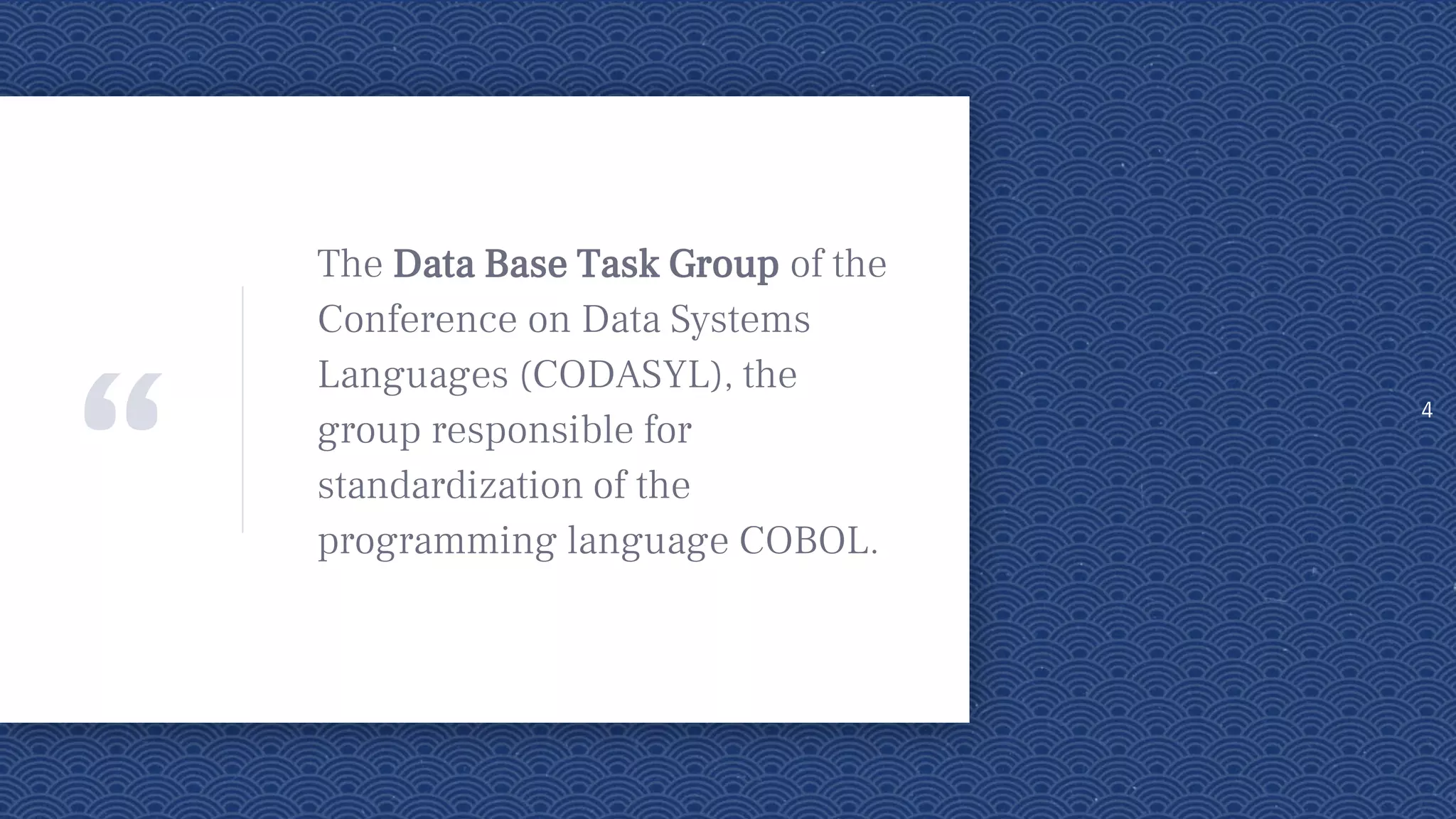
The Data Base Task Group of the
Conference on Data Systems
Languages (CODASYL), the
group responsible for
standardization of the
programming language COBOL.
4
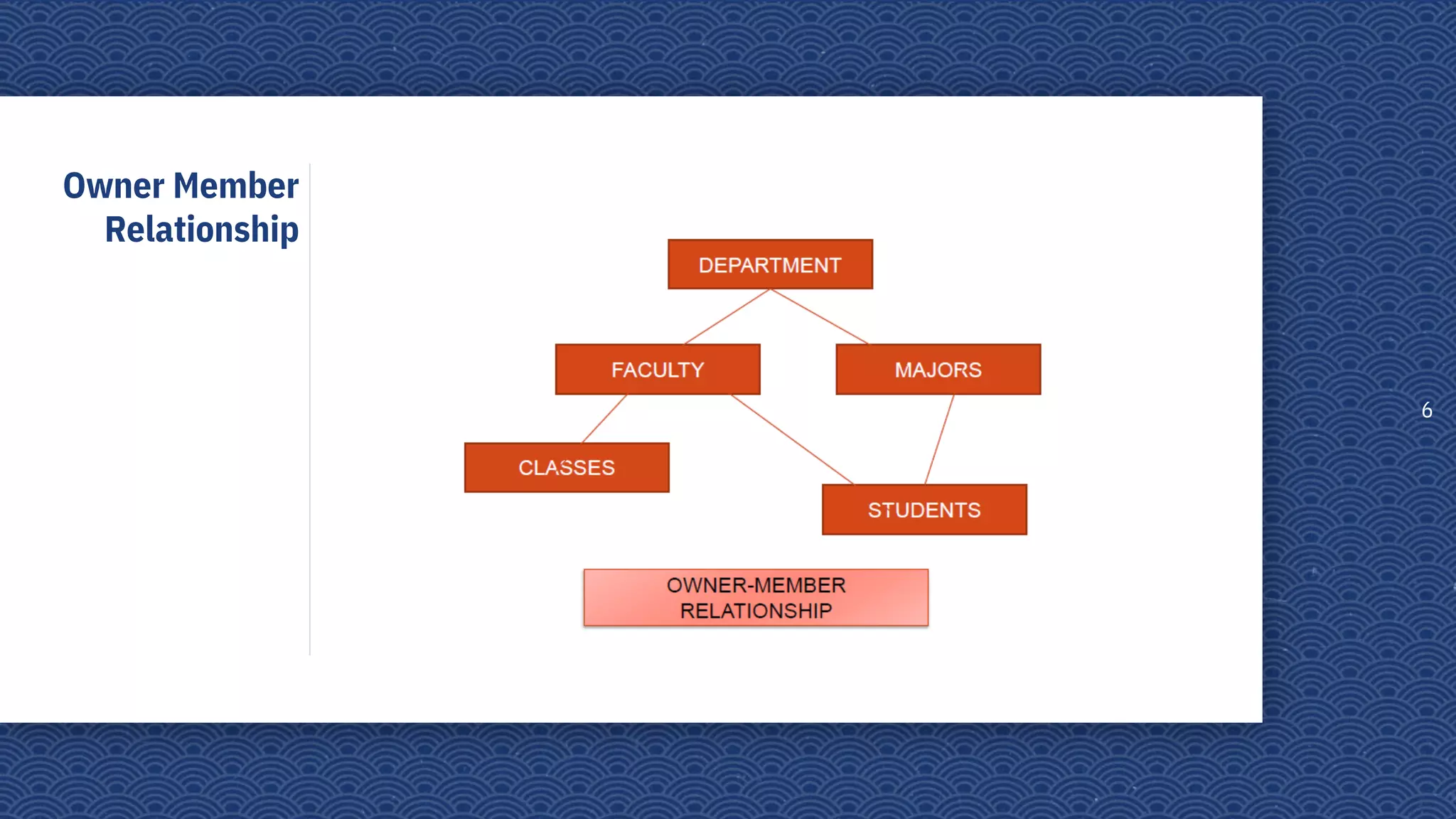
Introduction ◎ The structure consisting of two record types that are linked
together is referred to in the DBTG model as a DBTG set.
◎ In each DBTG set, one record type is designated as the
owner, and the other is designated as the member, of the
set.
◎ Each DBTG set can have any number of set occurrences
(actual instances of linked records).
◎ Since many-to-many links are disallowed, each set
occurrence has precisely one owner, and has zero or more
member records.
5
Owner Member
Relationship
6
Example of
DBTG Model
7
◎ The DBTG is intended to meet the
requirements of many distinct
programming languages.
◎ The DBTG data manipulation language
consists of a number of commands that
are embedded in a host language.
Need
8
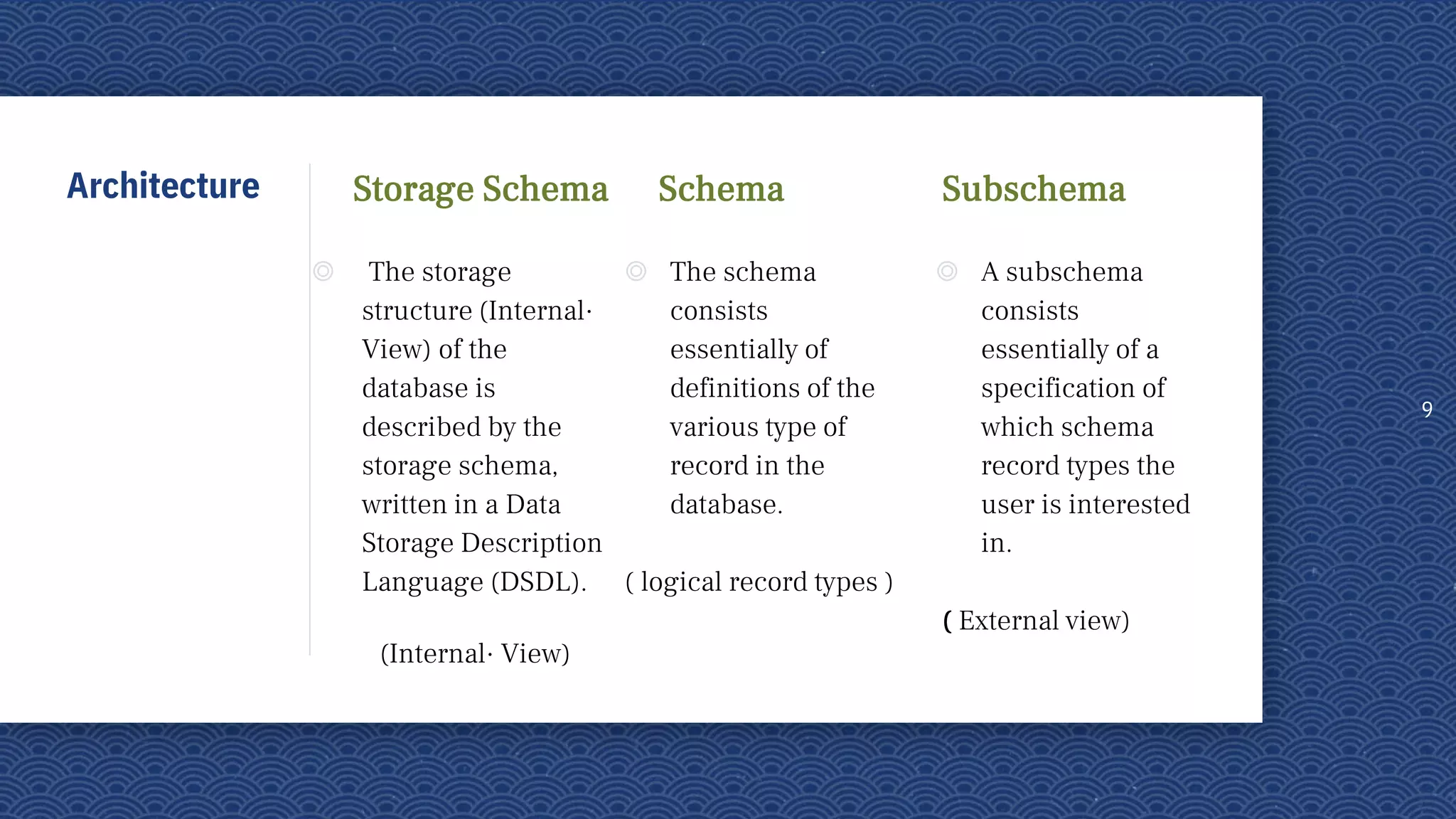
Architecture Storage Schema
◎ The storage
structure (Internal·
View) of the
database is
described by the
storage schema,
written in a Data
Storage Description
Language (DSDL).
(Internal· View)
Schema
◎ The schema
consists
essentially of
definitions of the
various type of
record in the
database.
( logical record types )
Subschema
◎ A subschema
consists
essentially of a
specification of
which schema
record types the
user is interested
in.
( External view)
9
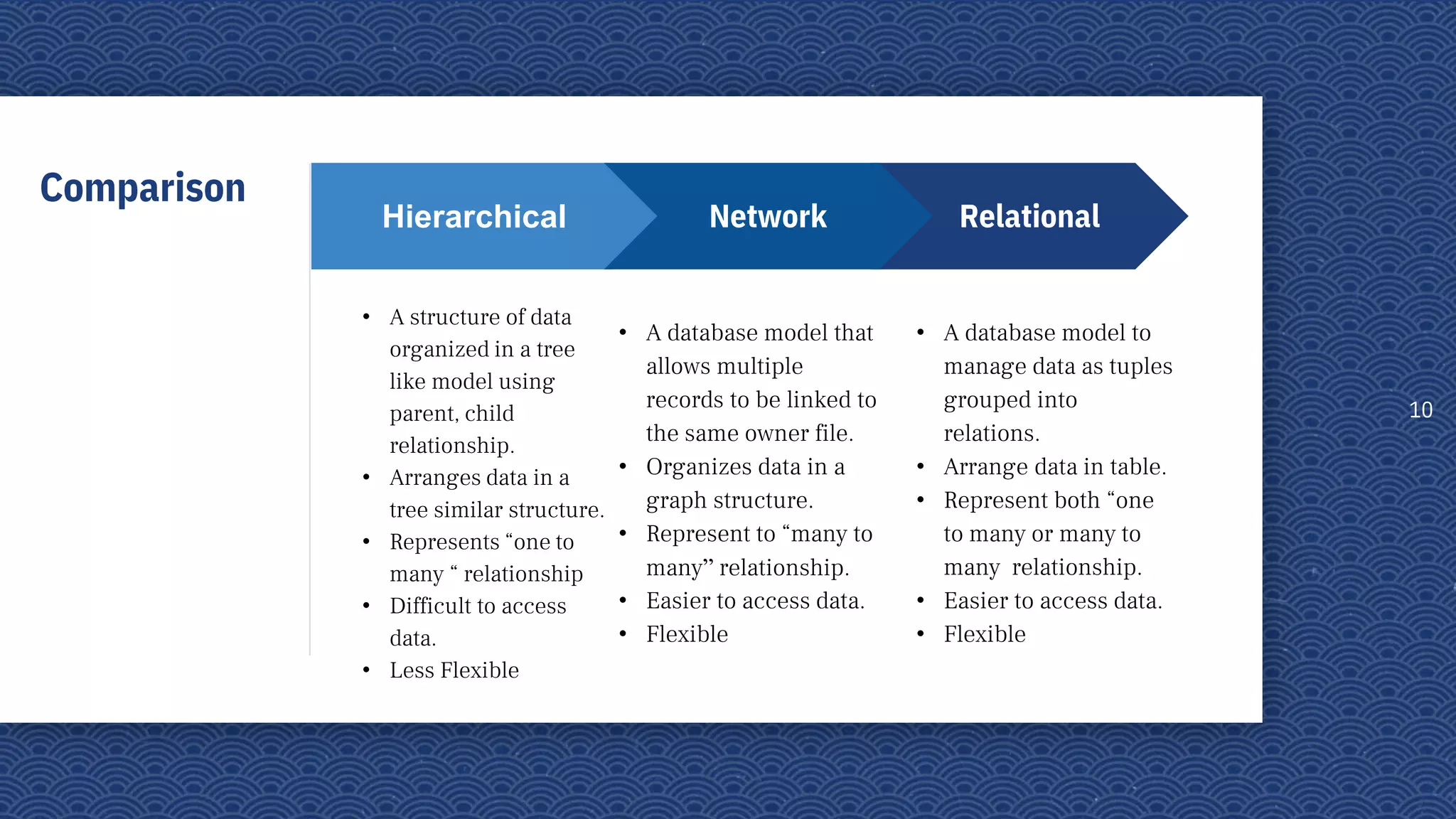
Comparison
10
Relational
• A database model to
manage data as tuples
grouped into
relations.
• Arrange data in table.
• Represent both “one
to many or many to
many relationship.
• Easier to access data.
• Flexible
Hierarchical
• A structure of data
organized in a tree
like model using
parent, child
relationship.
• Arranges data in a
tree similar structure.
• Represents “one to
many “ relationship
• Difficult to access
data.
• Less Flexible
Network
• A database model that
allows multiple
records to be linked to
the same owner file.
• Organizes data in a
graph structure.
• Represent to “many to
many” relationship.
• Easier to access data.
• Flexible
11
THANKS!

DBTG MODEL

  • 1.
  • 2.
    Content ◎ Introduction ◎Need ◎ Architecture ◎ Comparison 2
  • 3.
  • 4.
    “ The Data BaseTask Group of the Conference on Data Systems Languages (CODASYL), the group responsible for standardization of the programming language COBOL. 4
  • 5.
    Introduction ◎ Thestructure consisting of two record types that are linked together is referred to in the DBTG model as a DBTG set. ◎ In each DBTG set, one record type is designated as the owner, and the other is designated as the member, of the set. ◎ Each DBTG set can have any number of set occurrences (actual instances of linked records). ◎ Since many-to-many links are disallowed, each set occurrence has precisely one owner, and has zero or more member records. 5
  • 6.
  • 7.
  • 8.
    ◎ The DBTGis intended to meet the requirements of many distinct programming languages. ◎ The DBTG data manipulation language consists of a number of commands that are embedded in a host language. Need 8
  • 9.
    Architecture Storage Schema ◎The storage structure (Internal· View) of the database is described by the storage schema, written in a Data Storage Description Language (DSDL). (Internal· View) Schema ◎ The schema consists essentially of definitions of the various type of record in the database. ( logical record types ) Subschema ◎ A subschema consists essentially of a specification of which schema record types the user is interested in. ( External view) 9
  • 10.
    Comparison 10 Relational • A databasemodel to manage data as tuples grouped into relations. • Arrange data in table. • Represent both “one to many or many to many relationship. • Easier to access data. • Flexible Hierarchical • A structure of data organized in a tree like model using parent, child relationship. • Arranges data in a tree similar structure. • Represents “one to many “ relationship • Difficult to access data. • Less Flexible Network • A database model that allows multiple records to be linked to the same owner file. • Organizes data in a graph structure. • Represent to “many to many” relationship. • Easier to access data. • Flexible
  • 11.