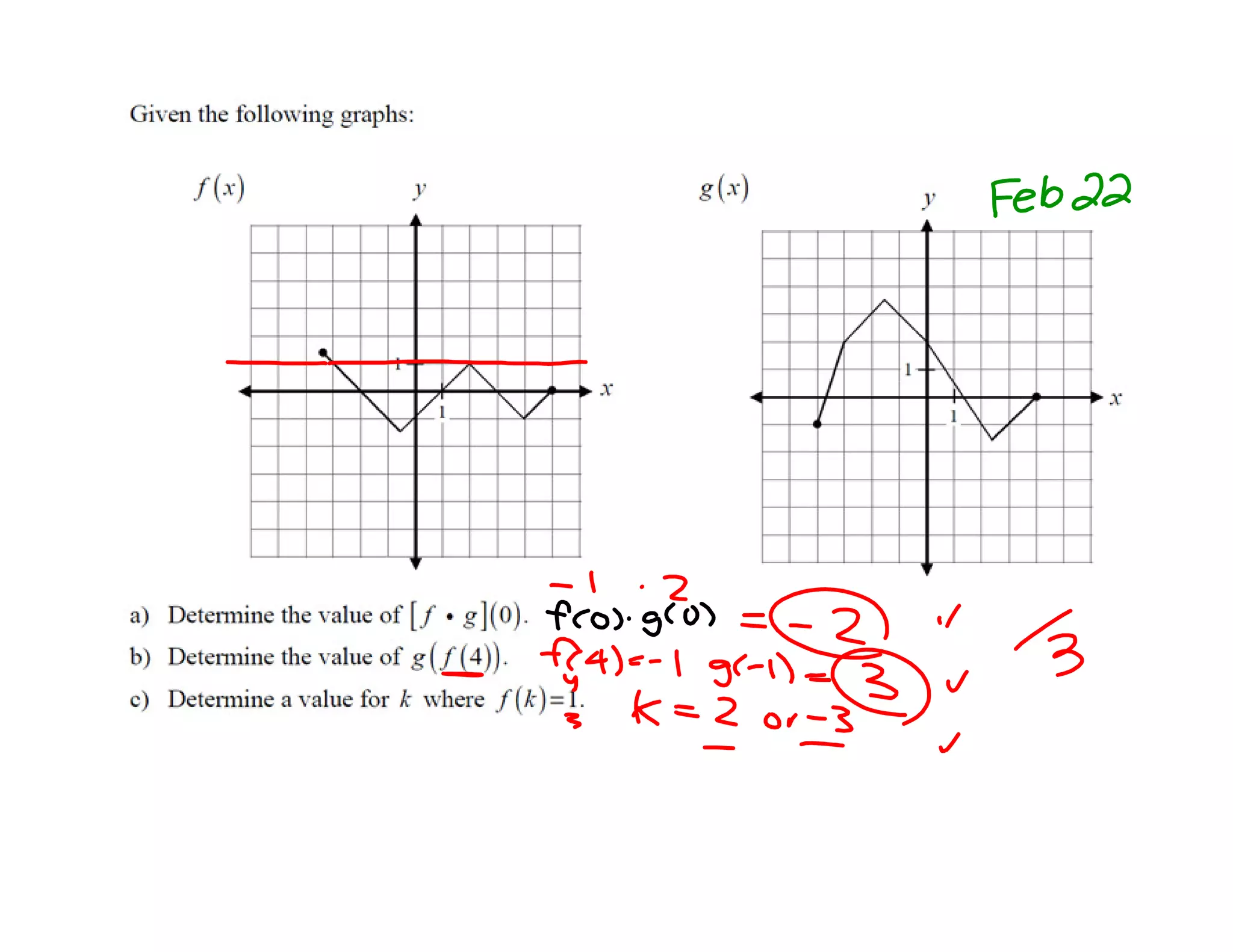
Problem of the Day
Graphing Composite Functions
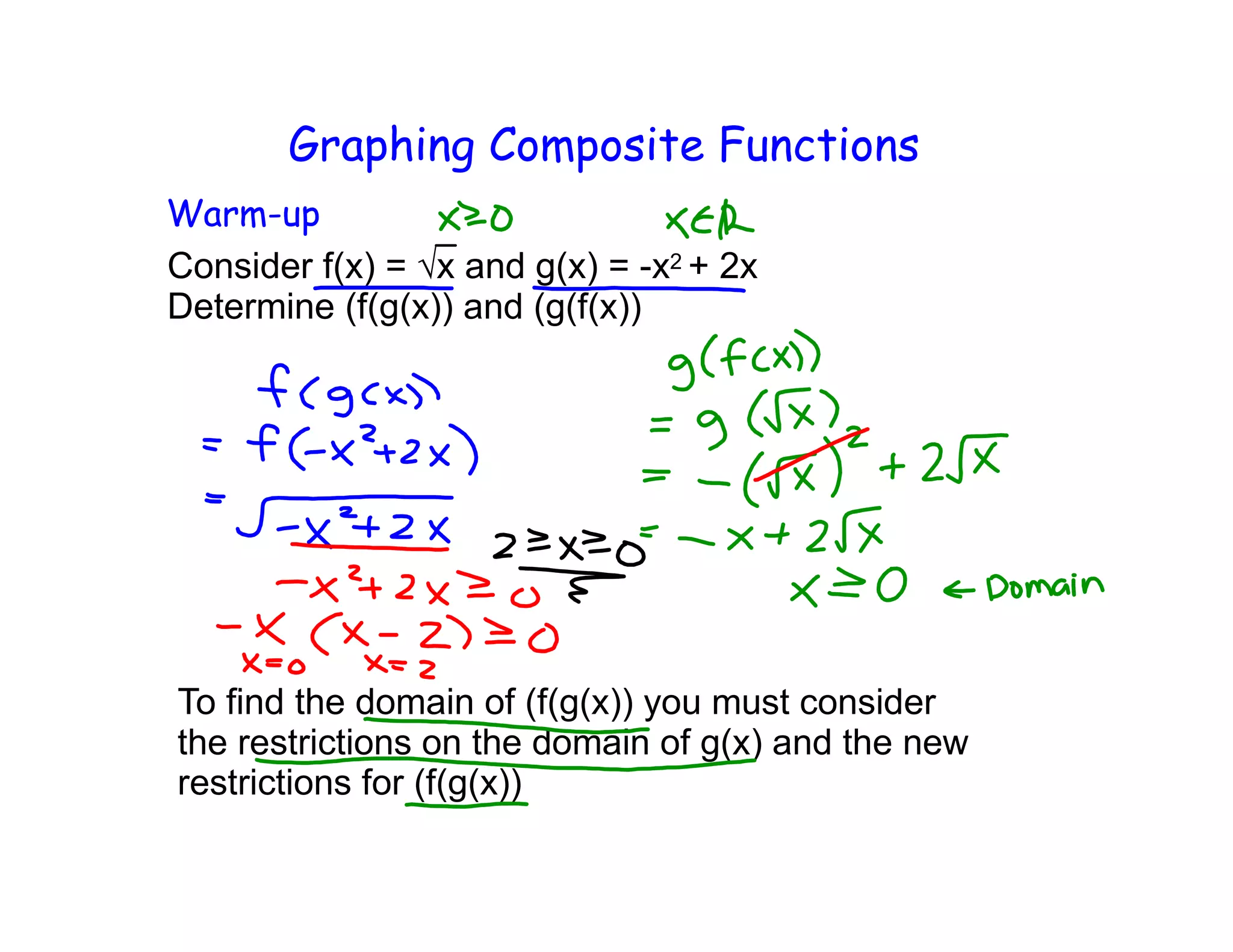
Warm-up
Consider f(x) = √x and g(x) = -x2 + 2x
Determine (f(g(x)) and (g(f(x))


To find the domain of (f(g(x)) you must consider
the restrictions on the domain of g(x) and the new
restrictions for (f(g(x))
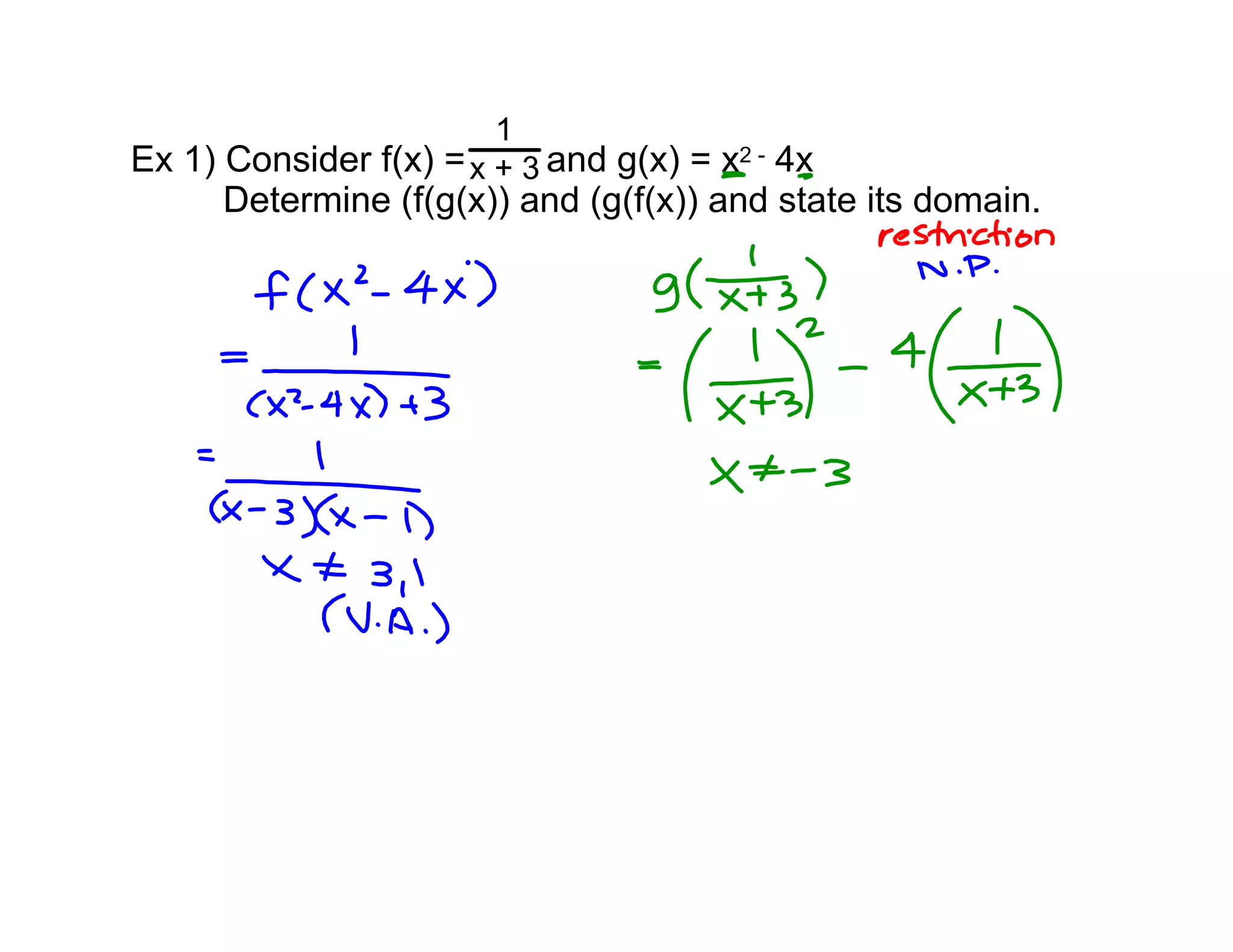
1
Ex 1) Consider f(x) = x + 3 and g(x) = x2 - 4x
      Determine (f(g(x)) and (g(f(x)) and state its domain.
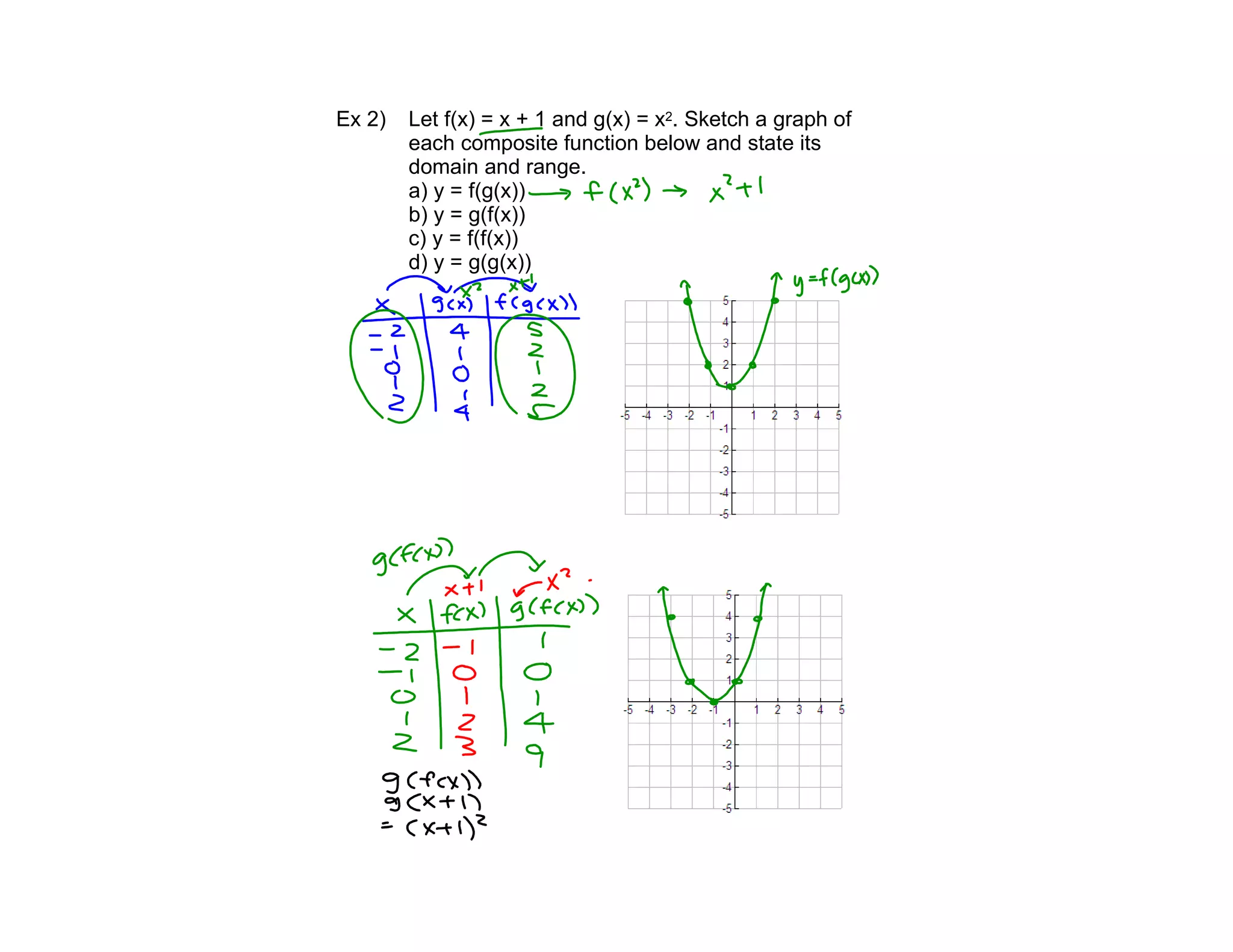
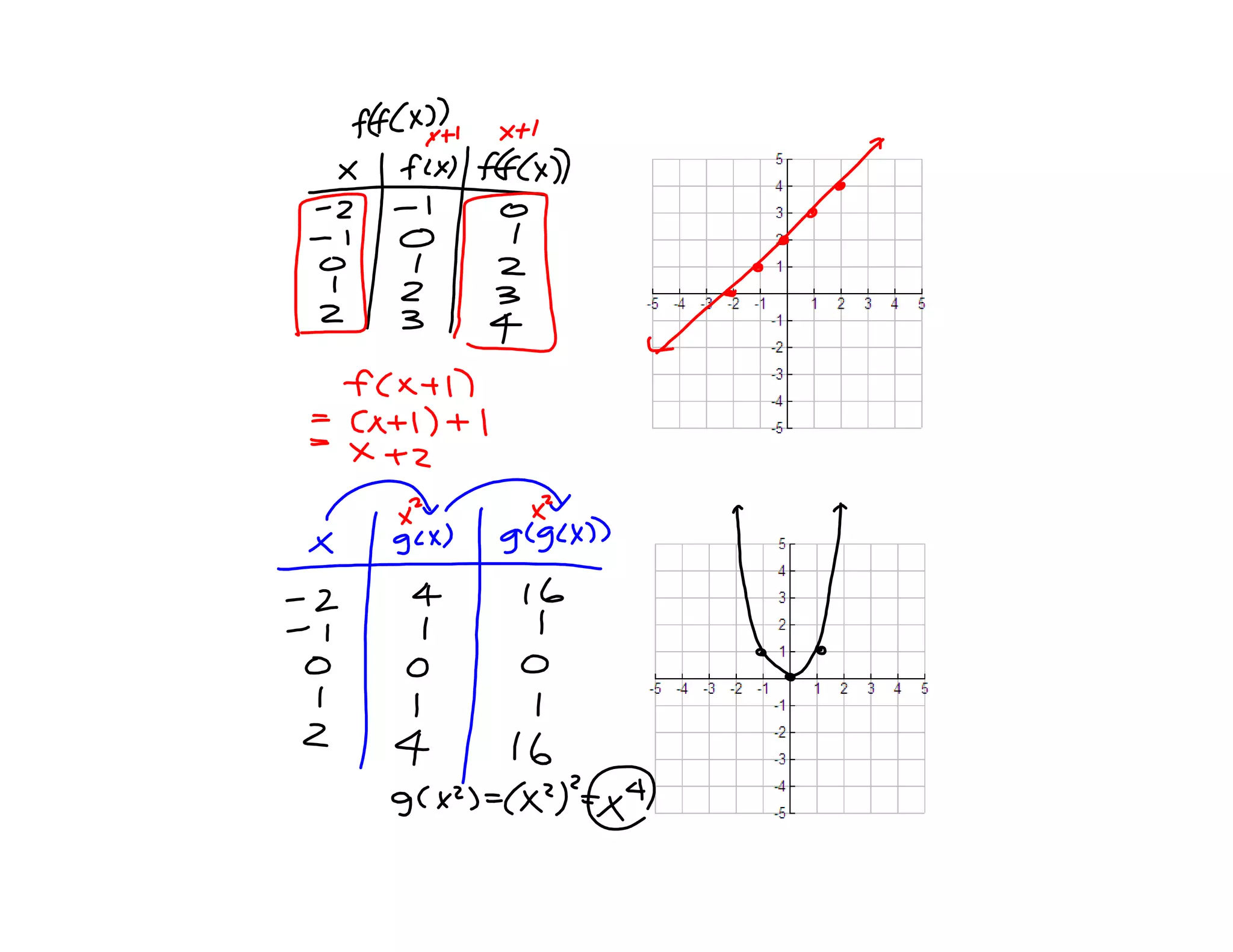
Ex 2)   Let f(x) = x + 1 and g(x) = x2. Sketch a graph of
        each composite function below and state its
        domain and range.
        a) y = f(g(x))
        b) y = g(f(x))
        c) y = f(f(x))
        d) y = g(g(x))
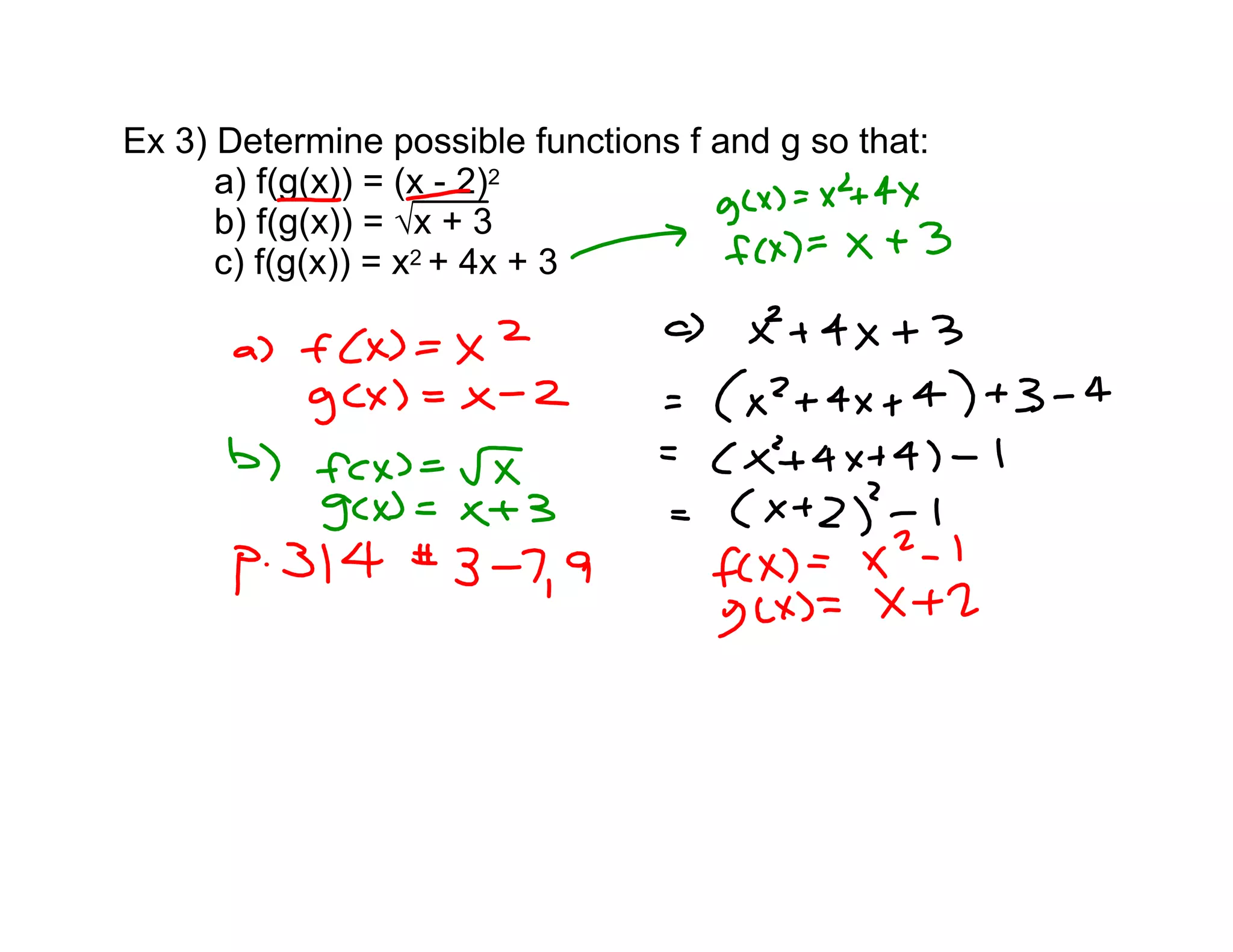
Ex 3) Determine possible functions f and g so that:
      a) f(g(x)) = (x - 2)2
      b) f(g(x)) = √x + 3
      c) f(g(x)) = x2 + 4x + 3
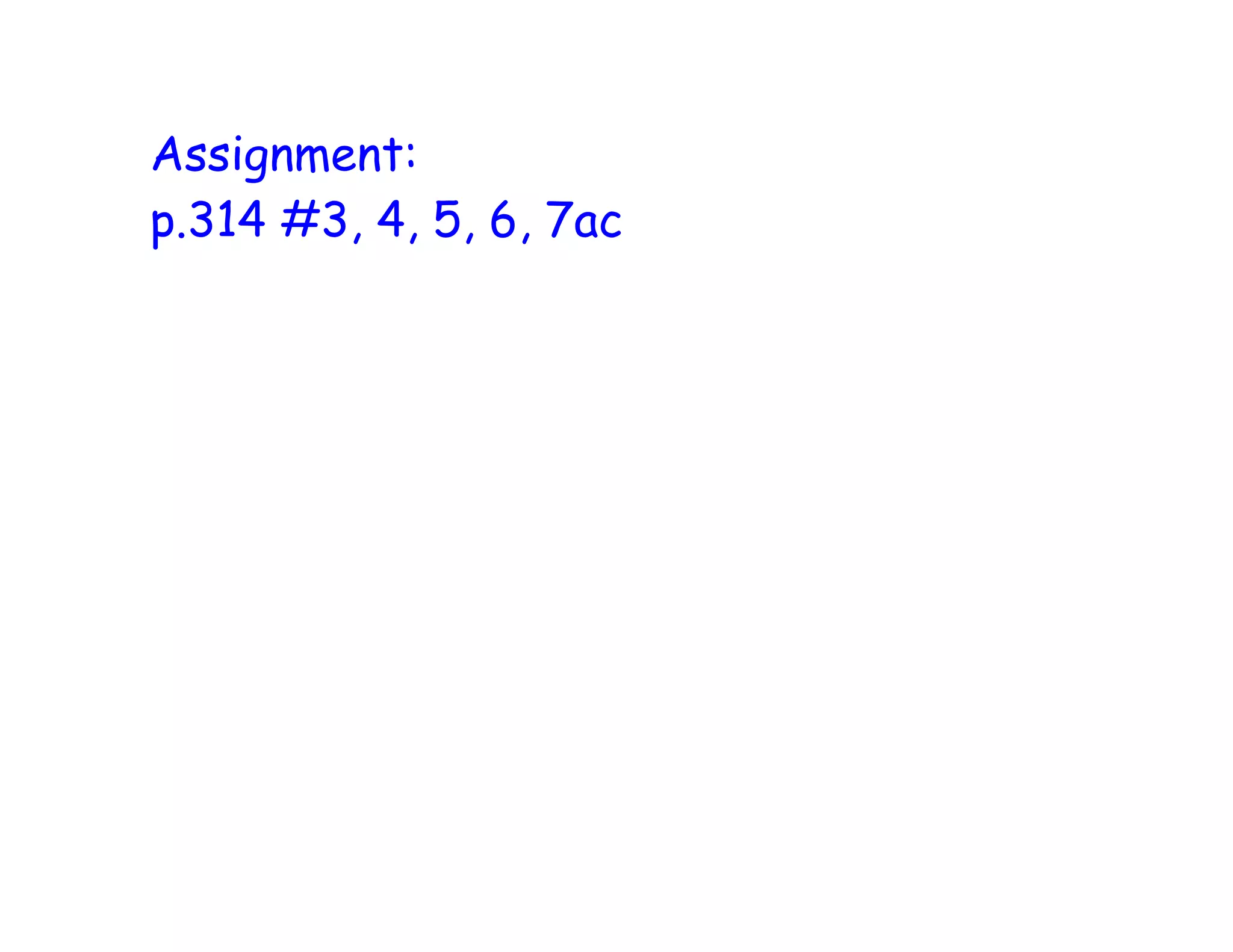
Assignment:
p.314 #3, 4, 5, 6, 7ac

Day 6 examples

  • 1.
  • 2.
    Graphing Composite Functions Warm-up Considerf(x) = √x and g(x) = -x2 + 2x Determine (f(g(x)) and (g(f(x)) To find the domain of (f(g(x)) you must consider the restrictions on the domain of g(x) and the new restrictions for (f(g(x))
  • 3.
    1 Ex 1) Considerf(x) = x + 3 and g(x) = x2 - 4x Determine (f(g(x)) and (g(f(x)) and state its domain.
  • 4.
    Ex 2) Let f(x) = x + 1 and g(x) = x2. Sketch a graph of each composite function below and state its domain and range. a) y = f(g(x)) b) y = g(f(x)) c) y = f(f(x)) d) y = g(g(x))
  • 6.
    Ex 3) Determinepossible functions f and g so that: a) f(g(x)) = (x - 2)2 b) f(g(x)) = √x + 3 c) f(g(x)) = x2 + 4x + 3
  • 7.