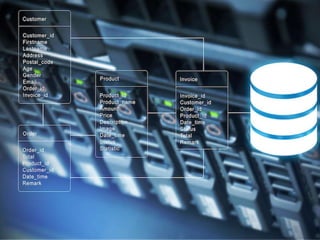
DATABASE
WHAT IN TODAY’S
PRESENTATION???
 VIKAS
 ADITYA
 SHIVAAY
 AMAN
 TANUJ
 SUNNY
 SHIVAAY
 What is database???
 Types of database
 Database concepts
 What is
Relationship????
 Relational Algebra
 Normalization
 SQL
 Designing reports
What is Database ???
A Database is an
organized collection of
data( If Information is
not organized it is not
useful).
Types of Database
FLAT FILE
DATABASE
RELATIONAL
DATABASE
RDBMS
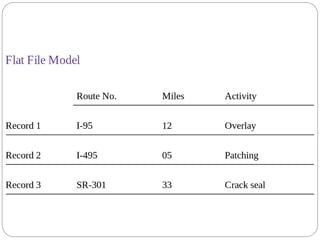
FLAT FILE DATABASE
A flat file database is
a database that stores data in a
plain text file. Each line of the
text file holds one record, with
fields separated by delimiters,
such as commas or tabs.
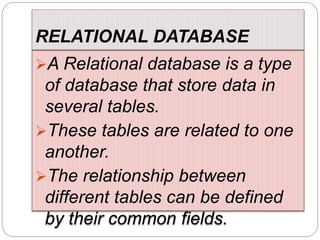
RELATIONAL DATABASE
A Relational database is a type
of database that store data in
several tables.
These tables are related to one
another.
The relationship between
different tables can be defined
by their common fields.
RDBMS
RDBMS Stands for "Relational
Database Management System.
 An RDBMS is a DBMS designed
specifically for relational databases.
 Therefore, RDBMS is a subset of
DBMS.
 A relational database refers to a
database that stores data in a structured
format, using rows and columns.
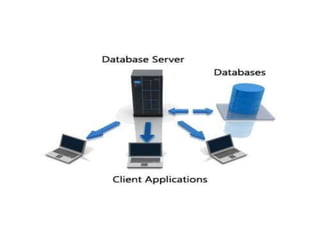
DATABASE SERVER
A database server is a
server which uses a
database application that
provides database services
to other computer programs
or to computers, as defined
by the client–server mode.
DATABASE CONCEPTS
In a relational database,
All data is held
in tables, which are made up of rows
and columns.
Each
table has one or more columns, and
each column is assigned a specific data
type, such as an integer number, a
sequence of characters (for text), or a
date.
BASIC DATABASIC
CONCEPTS
Field(Column)
Record(Row)
Table(File)
Database
Records
Value (Data)
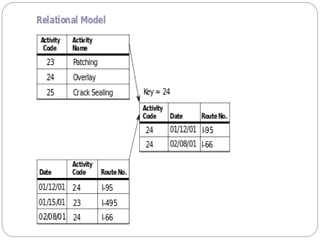
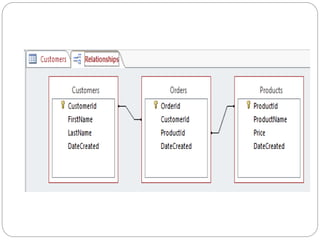
WHAT IS RELATIONSHIP???
A relationship is a situation that
exists between two relational
database tables when one table
has a foreign key that references
the primary key of the other table.
 Relationships allow relational
databases to split and store data in
different tables, while linking
disparate data items.
RELATIONAL
ALGEBRA
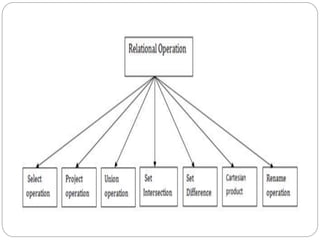
Relational algebra is a procedural
query language, which takes instances
of relations as input and yields instances
of relations as output.
It uses operators to perform queries. An
operator can be either unary or binary.
 They accept relations as their input and
yield relations as their output.
NORMALIZATION
The process of data
analysis used for grouping
entities and data elements
into harmonious relations
is know as Normalization.
TYPES OF POPULAR
NORMALIZATION FORM
First normal
Second normal form
Third normal form
SQL(STRUCTU
RED QUERY
LANGUAGE)
SQL
SQL is the standard language
used for relational databases.
 It is declarative language
where users declare what
they want without having to
write a step by stem
procedure.
 It was first implemented by
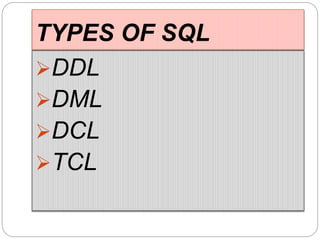
TYPES OF SQL
DDL
DML
DCL
TCL
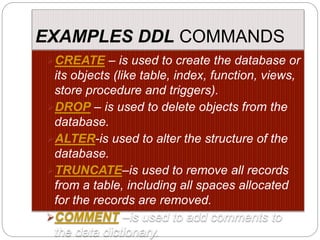
EXAMPLES DDL COMMANDS
CREATE – is used to create the database or
its objects (like table, index, function, views,
store procedure and triggers).
DROP – is used to delete objects from the
database.
ALTER-is used to alter the structure of the
database.
TRUNCATE–is used to remove all records
from a table, including all spaces allocated
for the records are removed.
COMMENT –is used to add comments to
the data dictionary.
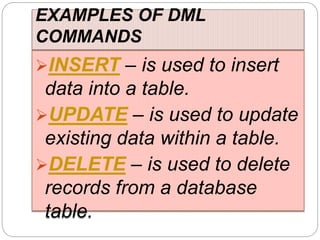
EXAMPLES OF DML
COMMANDS
INSERT – is used to insert
data into a table.
UPDATE – is used to update
existing data within a table.
DELETE – is used to delete
records from a database
table.
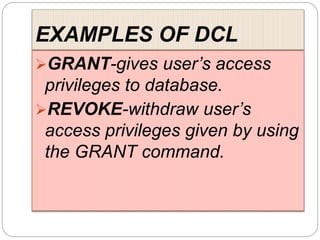
EXAMPLES OF DCL
GRANT-gives user’s access
privileges to database.
REVOKE-withdraw user’s
access privileges given by using
the GRANT command.
EXAMPLES OF TCL
COMMIT– commits a Transaction.
ROLLBACKS-rollbacks a transaction
in case of any error occurs.
SAVEPOINT–sets a save point within
a transaction.
SET TRANSACTION–specify
characteristics for the transaction.
DESIGNING
REPORTS
A Report is the summary of your
database.
It consists of information obtained
from tables or queries and
presented as per user’s
requirement.
Reports are generally prepared and
presented in hard copy.
Reports also provide the facility to
REPORT SECTION
REPORT HEADER
PAGE HEADER
DETAIL
PAGE FOOTER
REPORT FOOTER
THANK
YOU
ANY
QUERY ?

DATABASE PRESENTATION

  • 1.
  • 3.
    WHAT IN TODAY’S PRESENTATION??? VIKAS  ADITYA  SHIVAAY  AMAN  TANUJ  SUNNY  SHIVAAY  What is database???  Types of database  Database concepts  What is Relationship????  Relational Algebra  Normalization  SQL  Designing reports
  • 4.
    What is Database??? A Database is an organized collection of data( If Information is not organized it is not useful).
  • 6.
    Types of Database FLATFILE DATABASE RELATIONAL DATABASE RDBMS
  • 7.
    FLAT FILE DATABASE Aflat file database is a database that stores data in a plain text file. Each line of the text file holds one record, with fields separated by delimiters, such as commas or tabs.
  • 9.
    RELATIONAL DATABASE A Relationaldatabase is a type of database that store data in several tables. These tables are related to one another. The relationship between different tables can be defined by their common fields.
  • 11.
    RDBMS RDBMS Stands for"Relational Database Management System.  An RDBMS is a DBMS designed specifically for relational databases.  Therefore, RDBMS is a subset of DBMS.  A relational database refers to a database that stores data in a structured format, using rows and columns.
  • 13.
    DATABASE SERVER A databaseserver is a server which uses a database application that provides database services to other computer programs or to computers, as defined by the client–server mode.
  • 15.
    DATABASE CONCEPTS In arelational database, All data is held in tables, which are made up of rows and columns. Each table has one or more columns, and each column is assigned a specific data type, such as an integer number, a sequence of characters (for text), or a date.
  • 17.
  • 18.
    WHAT IS RELATIONSHIP??? Arelationship is a situation that exists between two relational database tables when one table has a foreign key that references the primary key of the other table.  Relationships allow relational databases to split and store data in different tables, while linking disparate data items.
  • 19.
    RELATIONAL ALGEBRA Relational algebra isa procedural query language, which takes instances of relations as input and yields instances of relations as output. It uses operators to perform queries. An operator can be either unary or binary.  They accept relations as their input and yield relations as their output.
  • 21.
    NORMALIZATION The process ofdata analysis used for grouping entities and data elements into harmonious relations is know as Normalization.
  • 23.
    TYPES OF POPULAR NORMALIZATIONFORM First normal Second normal form Third normal form
  • 24.
  • 25.
    SQL SQL is thestandard language used for relational databases.  It is declarative language where users declare what they want without having to write a step by stem procedure.  It was first implemented by
  • 26.
  • 27.
    EXAMPLES DDL COMMANDS CREATE– is used to create the database or its objects (like table, index, function, views, store procedure and triggers). DROP – is used to delete objects from the database. ALTER-is used to alter the structure of the database. TRUNCATE–is used to remove all records from a table, including all spaces allocated for the records are removed. COMMENT –is used to add comments to the data dictionary.
  • 28.
    EXAMPLES OF DML COMMANDS INSERT– is used to insert data into a table. UPDATE – is used to update existing data within a table. DELETE – is used to delete records from a database table.
  • 29.
    EXAMPLES OF DCL GRANT-givesuser’s access privileges to database. REVOKE-withdraw user’s access privileges given by using the GRANT command.
  • 30.
    EXAMPLES OF TCL COMMIT–commits a Transaction. ROLLBACKS-rollbacks a transaction in case of any error occurs. SAVEPOINT–sets a save point within a transaction. SET TRANSACTION–specify characteristics for the transaction.
  • 31.
    DESIGNING REPORTS A Report isthe summary of your database. It consists of information obtained from tables or queries and presented as per user’s requirement. Reports are generally prepared and presented in hard copy. Reports also provide the facility to
  • 32.
    REPORT SECTION REPORT HEADER PAGEHEADER DETAIL PAGE FOOTER REPORT FOOTER
  • 33.
  • 34.