Presented By
GOKUL
DATA
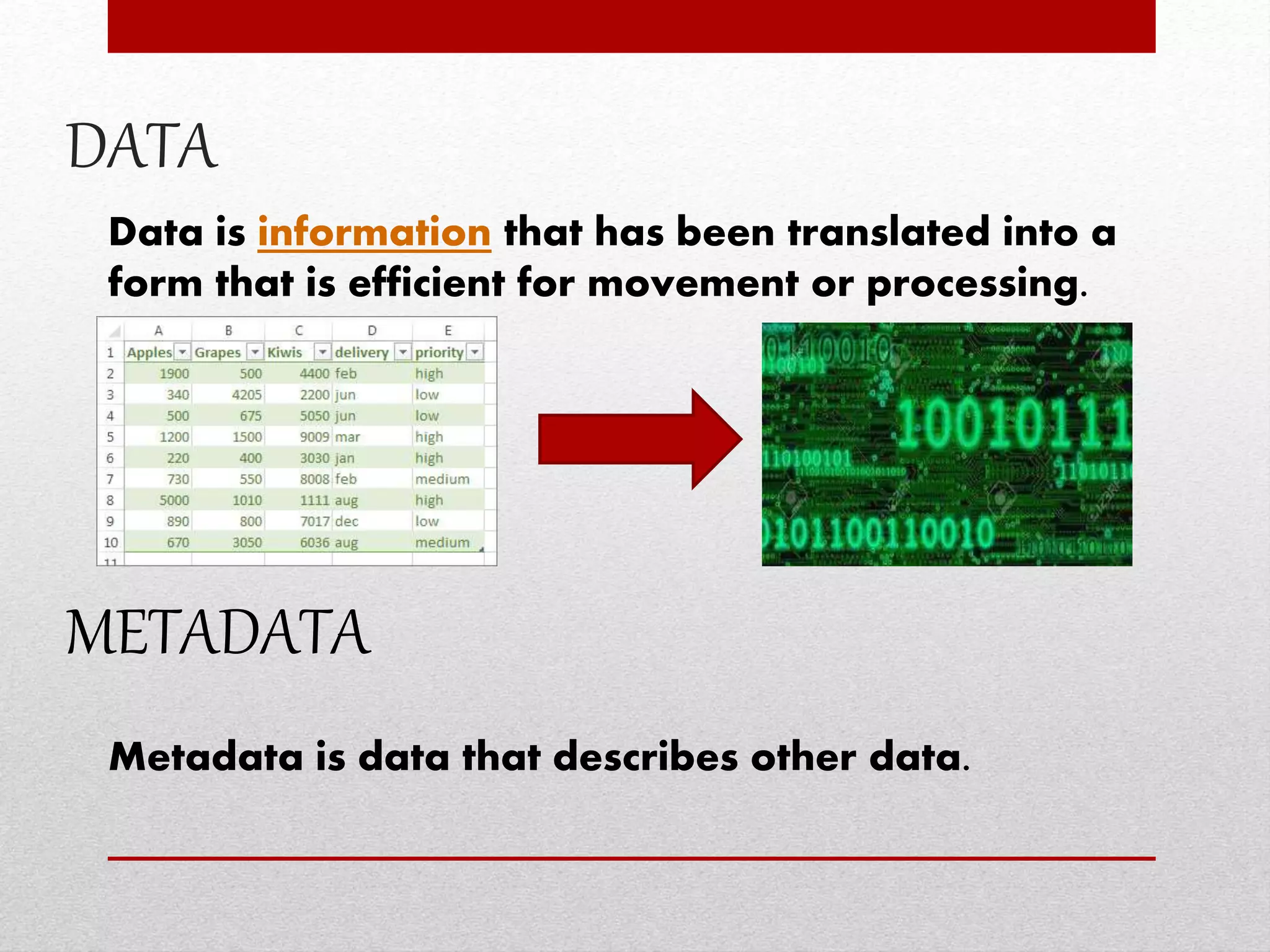
Data is information that has been translated into a
form that is efficient for movement or processing.
Metadata is data that describes other data.
METADATA
What is Data Dictionary?
• Data Dictionary is a central source of
information for the data in a information
management system.
• Its main function is to support the creation and
management of data definitions (or
"metadata").
OVERVIEW
Data Types
• Variables are nothing but reserved memory
locations to store values.
• You may like to store information of various
data types like character, integer, floating
point, etc.
• Based on the data type of a variable, the
operating system allocates memory and
decides what can be stored in the reserved
memory.
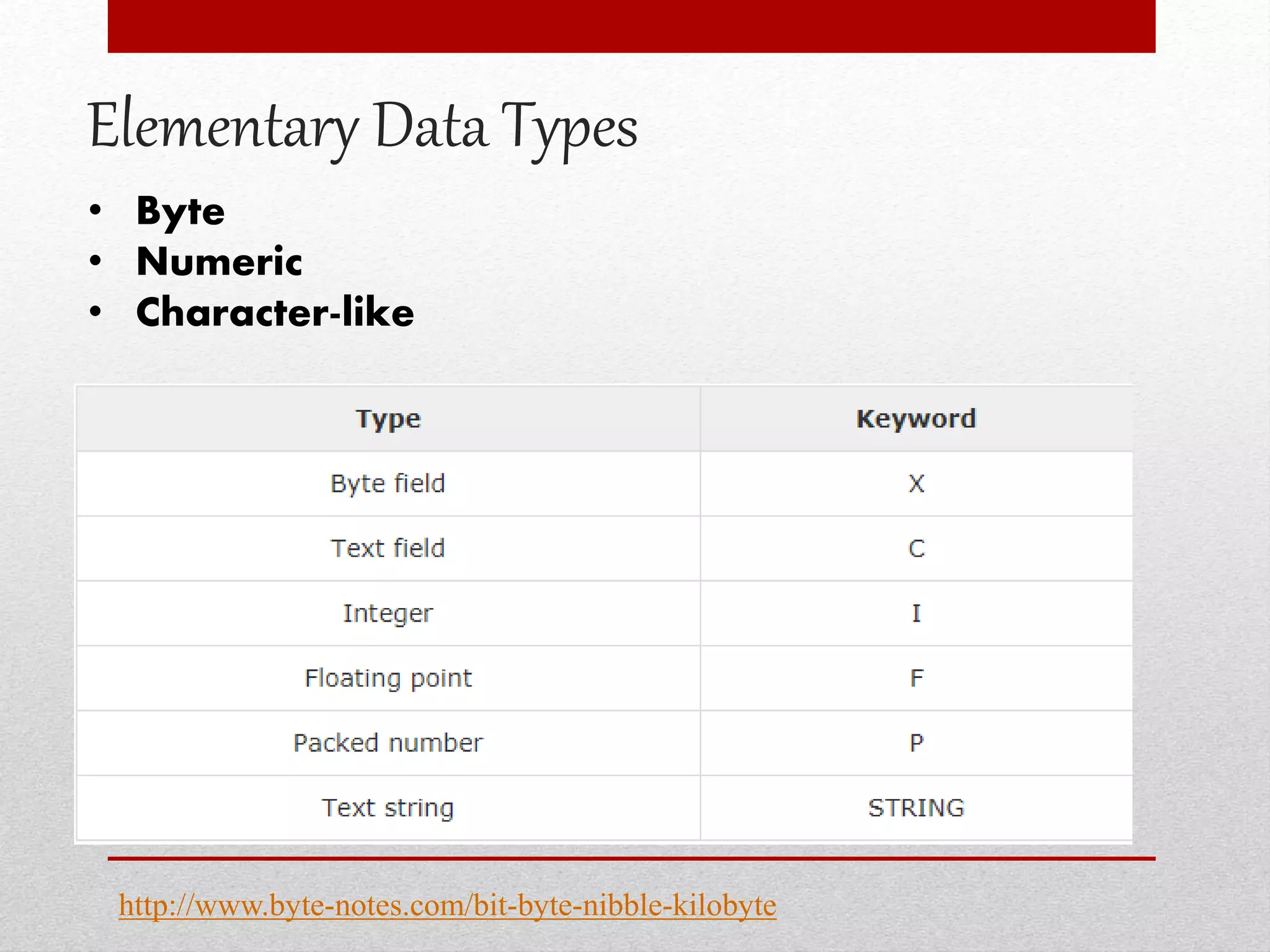
Elementary Data Types
• Byte
• Numeric
• Character-like
http://www.byte-notes.com/bit-byte-nibble-kilobyte
LENGTH & RANGE
• Domains
• Data elements
• Tables and structures
ABAP Dictionary 3 levels
Domains
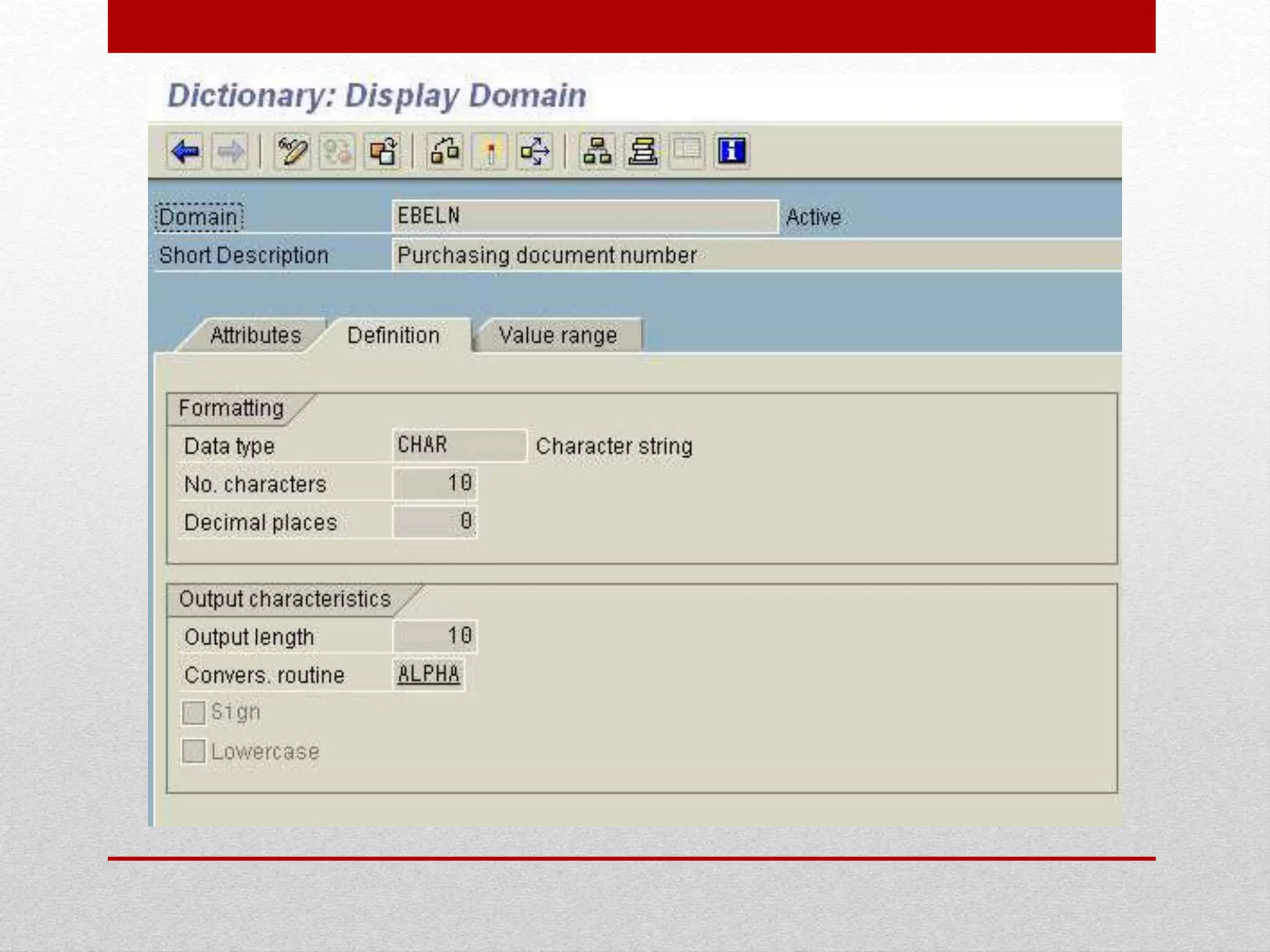
• Describes the technical characteristics of a table
field
• Specifies a value range which describes allowed
data values for the fields
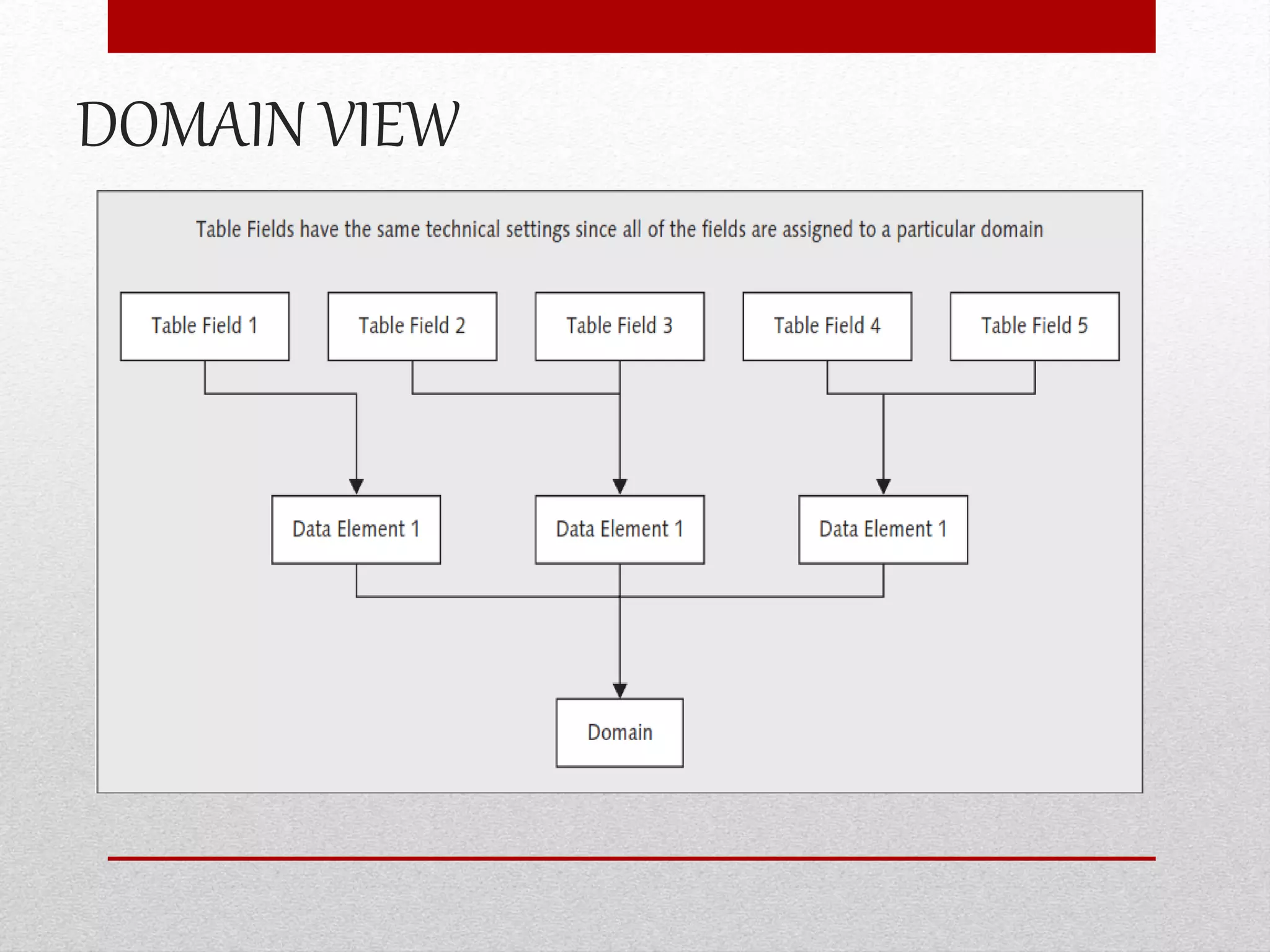
• Fields referring to the same domain (via the data
elements assigned to them) are changed when a
change is made to the domain
• Ensures consistency
DOMAIN VIEW
Data Elements
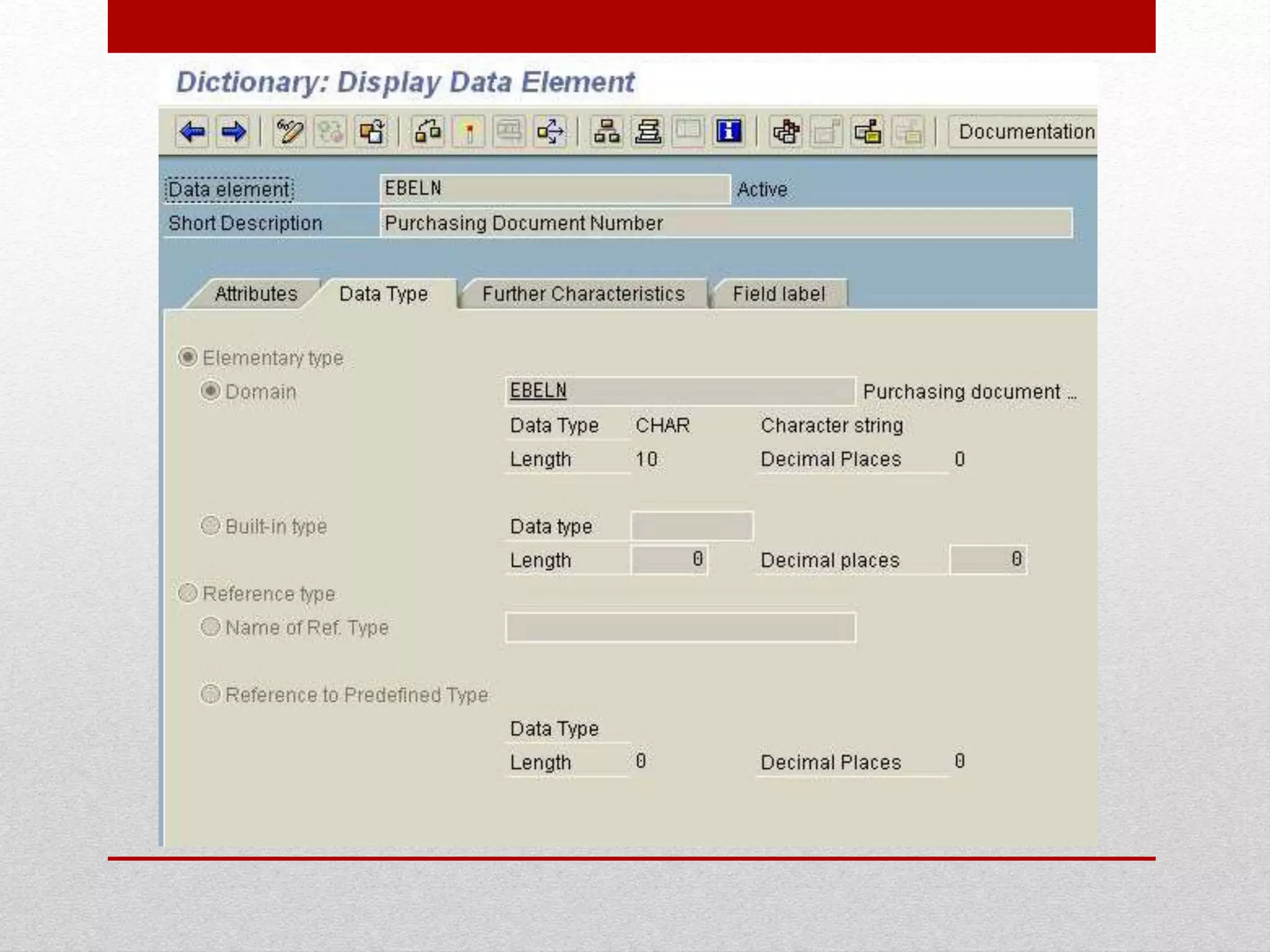
• Describes the role played by a field in a technical
context
• Fields of same semantic meaning can refer to the
same data element
• Contains the field information
Tables
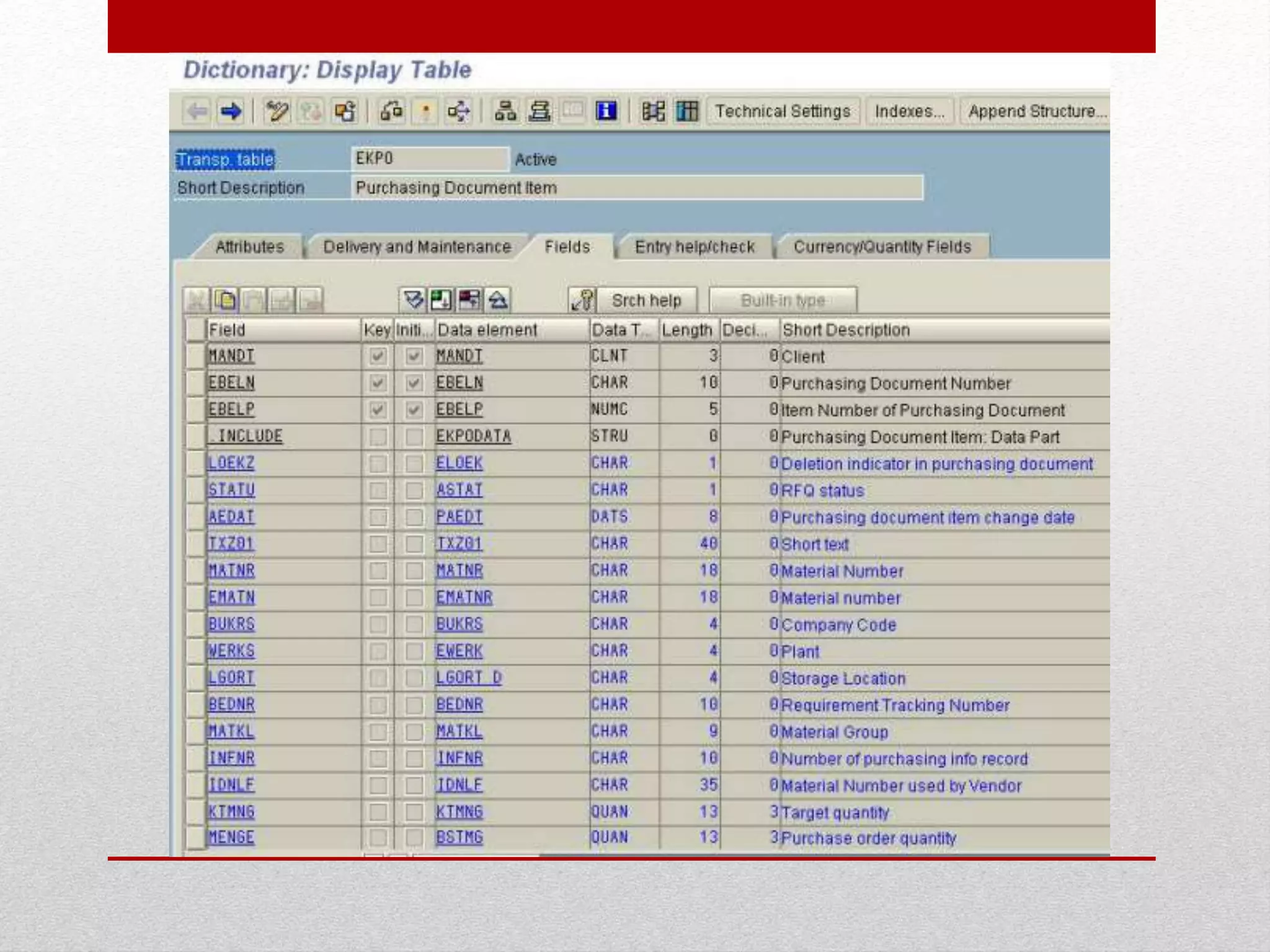
• Represent the Database Tables where data
actually resides.
• Tables can be defined independently of the
database in the ABAP Dictionary.
• The fields of the table are defined with their
(database-independent) SAP ABAP data types
and lengths.
Structures
• Are record declarations that do NOT correspond to
a Database Table.
• Just like user-defined data type.
• Defined like a table and can then be addressed
from ABAP programs.
• Structures contain data only during the runtime of
a program.
Aggregated Objects Of ABAP Dictionary
• Aggregated means consisting of several
components.
• In the ABAP Dictionary, aggregated objects are
objects which come from several different
transparent tables.
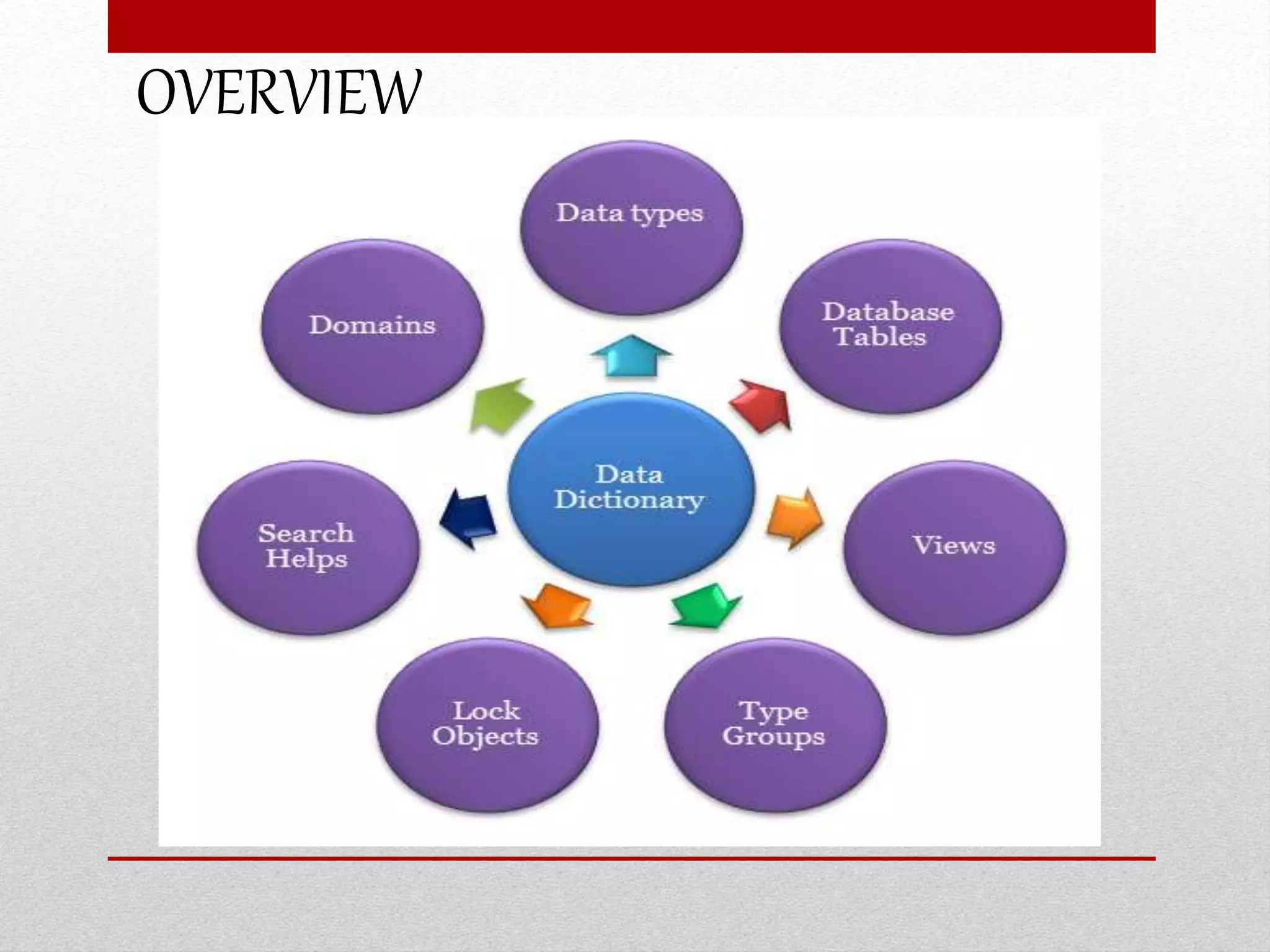
• Views
• Search Help
• Lock Objects
Views
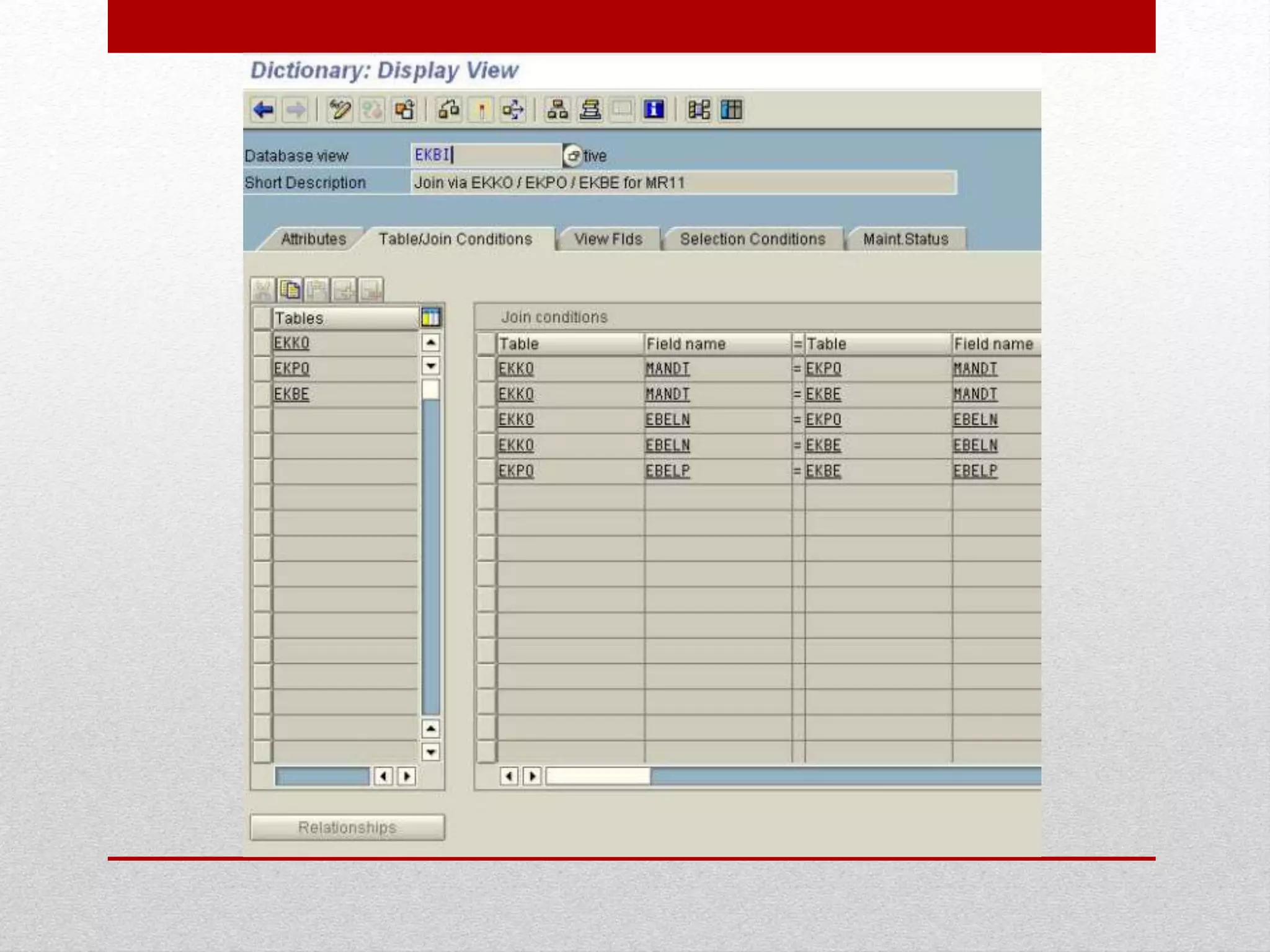
• Views in SAP _ ABAP are used to summarize data
which is distributed among several tables
• The data of a view is not actually physically
stored. The data of a view is instead derived from
one or more other tables
• It is tailored to the needs of a specific application
Search Help
• A Search help is a tool to help you search for data
records in the system
• An efficient and user-friendly search assists users
where the key of a record is unknown
Lock Objects
• Simultaneous accessing of the same data record by two users
in the SAP system is synchronized by a lock mechanism.
• Locks are set and released by calling certain function modules.
These function modules are generated automatically from the
definition of so-called lock objects in the ABAP/4 Dictionary
• Function modules :
Enqueue_<obj name> - to lock the table
dequeue_<obj name> - to release the lock
T-CODES
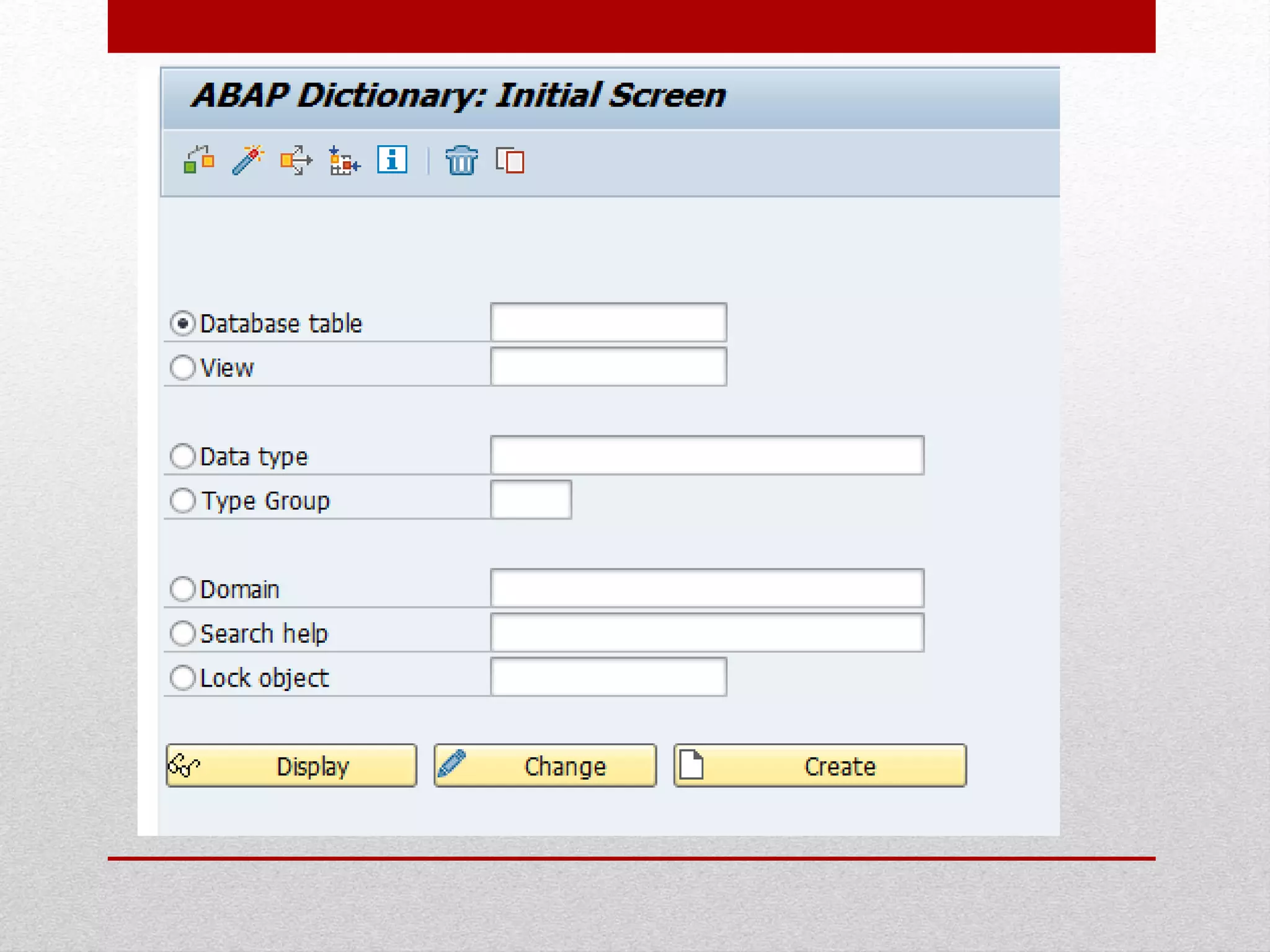
• SE11
• SE16N
• SE38
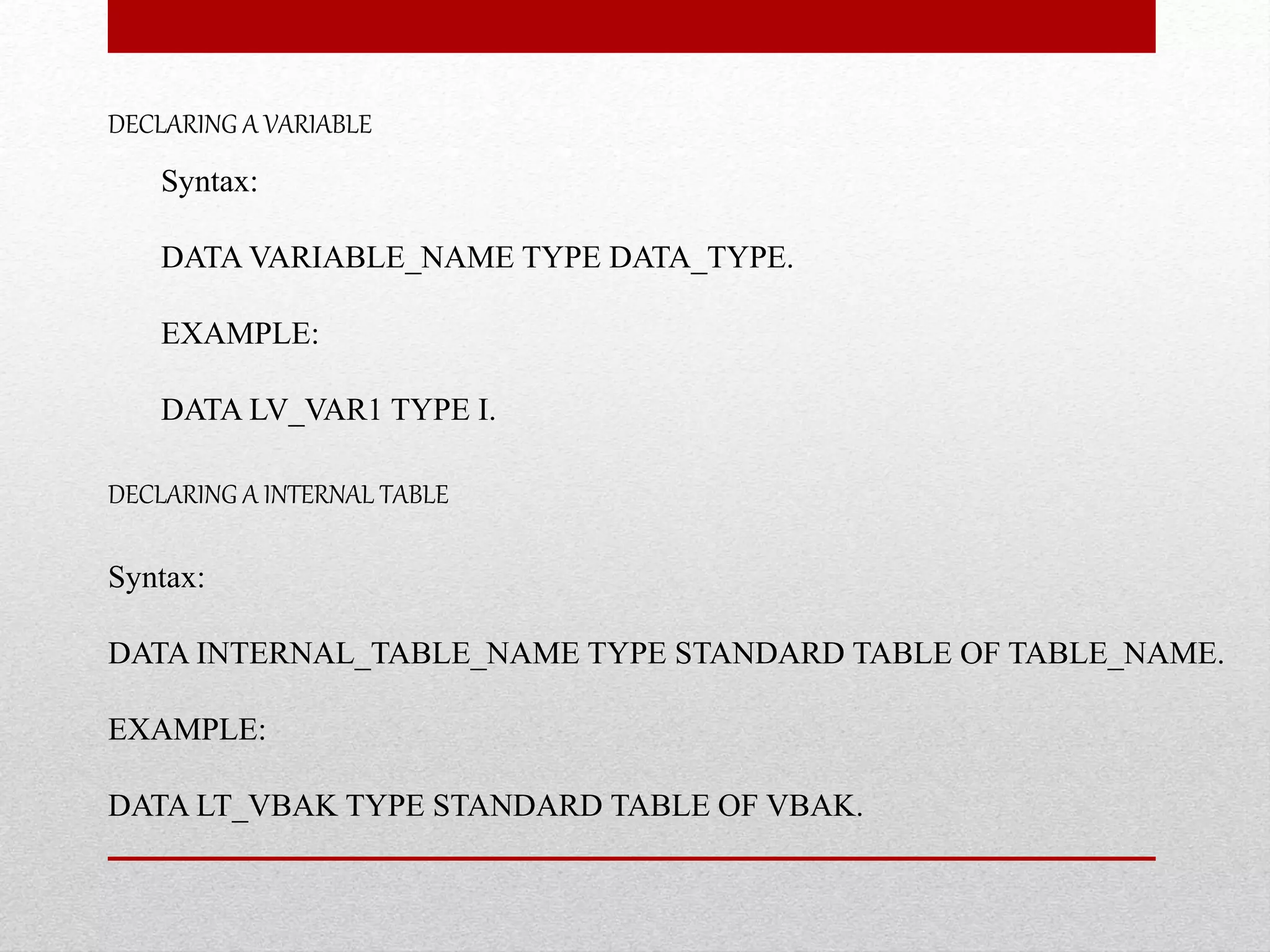
DECLARING A VARIABLE
Syntax:
DATA VARIABLE_NAME TYPE DATA_TYPE.
EXAMPLE:
DATA LV_VAR1 TYPE I.
DECLARING A INTERNAL TABLE
Syntax:
DATA INTERNAL_TABLE_NAME TYPE STANDARD TABLE OF TABLE_NAME.
EXAMPLE:
DATA LT_VBAK TYPE STANDARD TABLE OF VBAK.
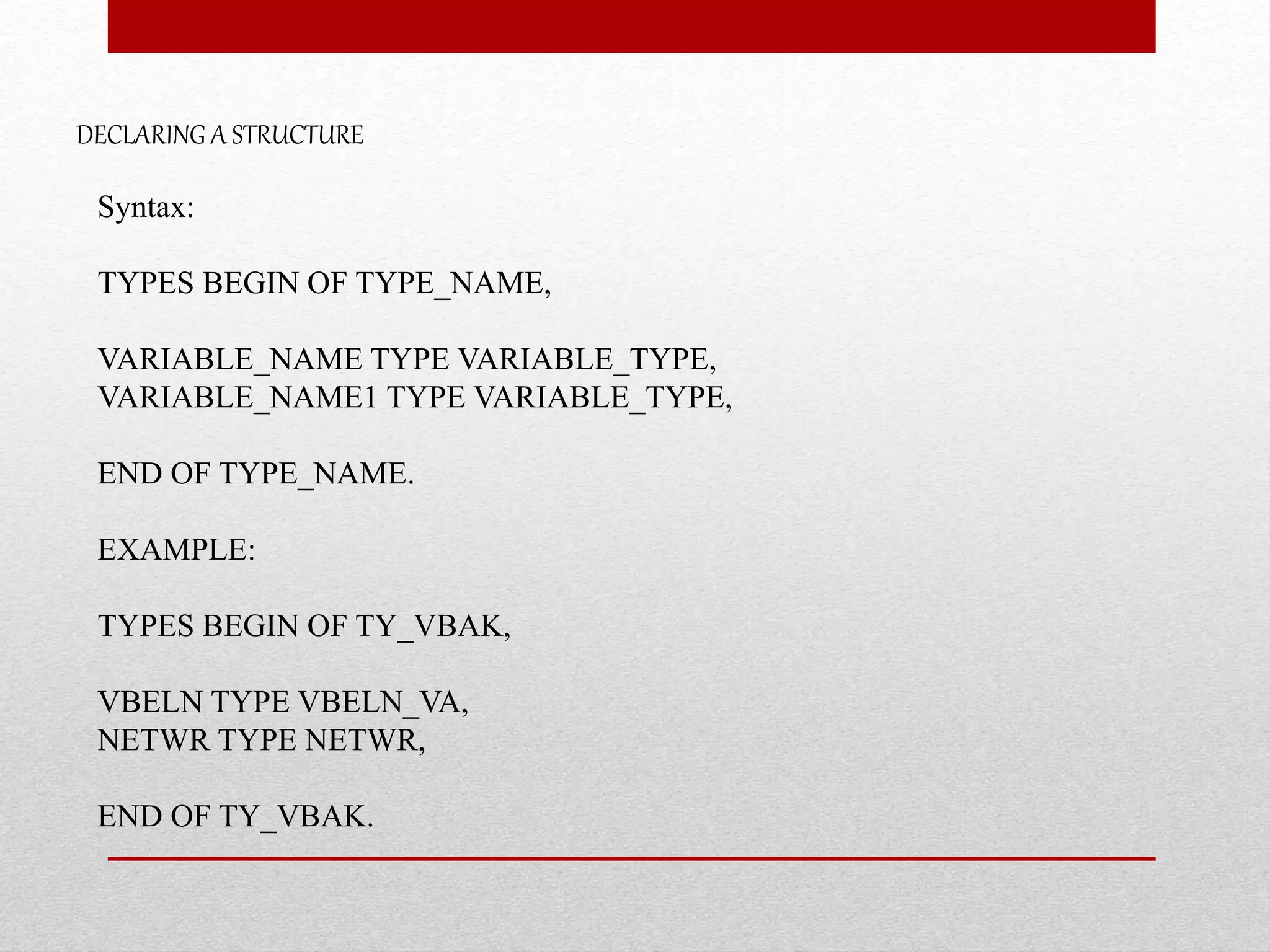
DECLARING A STRUCTURE
Syntax:
TYPES BEGIN OF TYPE_NAME,
VARIABLE_NAME TYPE VARIABLE_TYPE,
VARIABLE_NAME1 TYPE VARIABLE_TYPE,
END OF TYPE_NAME.
EXAMPLE:
TYPES BEGIN OF TY_VBAK,
VBELN TYPE VBELN_VA,
NETWR TYPE NETWR,
END OF TY_VBAK.
THANK YOU

Abap data dictionary

  • 1.
  • 2.
    DATA Data is informationthat has been translated into a form that is efficient for movement or processing. Metadata is data that describes other data. METADATA
  • 3.
    What is DataDictionary? • Data Dictionary is a central source of information for the data in a information management system. • Its main function is to support the creation and management of data definitions (or "metadata").
  • 4.
  • 5.
    Data Types • Variablesare nothing but reserved memory locations to store values. • You may like to store information of various data types like character, integer, floating point, etc. • Based on the data type of a variable, the operating system allocates memory and decides what can be stored in the reserved memory.
  • 6.
    Elementary Data Types •Byte • Numeric • Character-like http://www.byte-notes.com/bit-byte-nibble-kilobyte
  • 7.
  • 9.
    • Domains • Dataelements • Tables and structures ABAP Dictionary 3 levels
  • 10.
    Domains • Describes thetechnical characteristics of a table field • Specifies a value range which describes allowed data values for the fields • Fields referring to the same domain (via the data elements assigned to them) are changed when a change is made to the domain • Ensures consistency
  • 12.
  • 13.
    Data Elements • Describesthe role played by a field in a technical context • Fields of same semantic meaning can refer to the same data element • Contains the field information
  • 15.
    Tables • Represent theDatabase Tables where data actually resides. • Tables can be defined independently of the database in the ABAP Dictionary. • The fields of the table are defined with their (database-independent) SAP ABAP data types and lengths.
  • 17.
    Structures • Are recorddeclarations that do NOT correspond to a Database Table. • Just like user-defined data type. • Defined like a table and can then be addressed from ABAP programs. • Structures contain data only during the runtime of a program.
  • 18.
    Aggregated Objects OfABAP Dictionary • Aggregated means consisting of several components. • In the ABAP Dictionary, aggregated objects are objects which come from several different transparent tables. • Views • Search Help • Lock Objects
  • 19.
    Views • Views inSAP _ ABAP are used to summarize data which is distributed among several tables • The data of a view is not actually physically stored. The data of a view is instead derived from one or more other tables • It is tailored to the needs of a specific application
  • 21.
    Search Help • ASearch help is a tool to help you search for data records in the system • An efficient and user-friendly search assists users where the key of a record is unknown
  • 22.
    Lock Objects • Simultaneousaccessing of the same data record by two users in the SAP system is synchronized by a lock mechanism. • Locks are set and released by calling certain function modules. These function modules are generated automatically from the definition of so-called lock objects in the ABAP/4 Dictionary • Function modules : Enqueue_<obj name> - to lock the table dequeue_<obj name> - to release the lock
  • 23.
  • 24.
    DECLARING A VARIABLE Syntax: DATAVARIABLE_NAME TYPE DATA_TYPE. EXAMPLE: DATA LV_VAR1 TYPE I. DECLARING A INTERNAL TABLE Syntax: DATA INTERNAL_TABLE_NAME TYPE STANDARD TABLE OF TABLE_NAME. EXAMPLE: DATA LT_VBAK TYPE STANDARD TABLE OF VBAK.
  • 25.
    DECLARING A STRUCTURE Syntax: TYPESBEGIN OF TYPE_NAME, VARIABLE_NAME TYPE VARIABLE_TYPE, VARIABLE_NAME1 TYPE VARIABLE_TYPE, END OF TYPE_NAME. EXAMPLE: TYPES BEGIN OF TY_VBAK, VBELN TYPE VBELN_VA, NETWR TYPE NETWR, END OF TY_VBAK.
  • 26.