Building on the past, planning for the future
The ARDC is supported by the Australian Government through the National Collaborative Research Infrastructure Strategy Program
Data Management, Research Integrity and Ethics
• Importance of data management
• Reproducibility crisis
• Code for Responsible Conduct of Research
• National Statement on Ethical Conduct in Human Research
• Funders and Publishers
• What is data management
• Resources for data management and ethics policies
Reproducibility crisis
“the results of many scientific studies are difficult or impossible to replicate
or reproduce on subsequent investigation, either by independent researchers
or by the original researchers themselves.” https://en.wikipedia.org/wiki/Replication_crisis
One of the factors is lack of management, availability or retention of
research data (Nature 533, 452–454 (26 May 2016) doi:10.1038/533452a).
Good management, retention and appropriate sharing of data improves
reproducibility of research
Institutional policies (data management, ethics) – data
storage, management, retention, sharing
Code for Responsible Conduct of Research:
data management
Institutions: R8 Provide access to facilities for the safe and secure storage and
management of research data, records and primary materials and, where possible
and appropriate, allow access and reference.
Researchers: R22 Retain clear, accurate, secure and complete records of all
research including research data and primary materials. Where possible and
appropriate, allow access and reference to these by interested parties.
‘Management of Data and Information in Research’ guide accompanying the Code
R27 Cite and acknowledge other relevant work appropriately and
accurately. Data can also be cited!
https://www.ands.org.au/working-with-data/citation-and-identifiers/data-citation
National Statement on Ethical Conduct in Human
Research: Data management
Element 4: Collection, Use and Management of Data and
Information
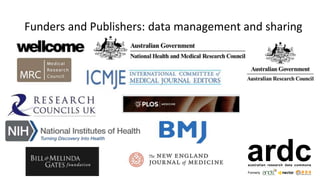
Funders and Publishers: data management and sharing
Data management, Research Integrity and Ethics
Planning for the management of research data early in a research
project can improve research efficiency, guard against data loss,
enhance data security, and ensure research data integrity and
replication.
QUT Library ‘Managing your research data’
https://www.library.qut.edu.au/research/data/
Australian Universities’ data management policies, procedures, training
https://projects.ands.org.au/policy.php
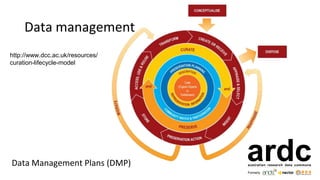
Data management
Data Management Plans (DMP)
http://www.dcc.ac.uk/resources/
curation-lifecycle-model
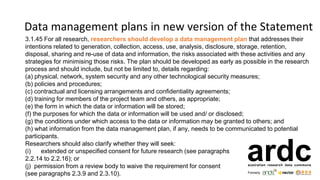
Data management plans in new version of the Statement
3.1.45 For all research, researchers should develop a data management plan that addresses their
intentions related to generation, collection, access, use, analysis, disclosure, storage, retention,
disposal, sharing and re-use of data and information, the risks associated with these activities and any
strategies for minimising those risks. The plan should be developed as early as possible in the research
process and should include, but not be limited to, details regarding:
(a) physical, network, system security and any other technological security measures;
(b) policies and procedures;
(c) contractual and licensing arrangements and confidentiality agreements;
(d) training for members of the project team and others, as appropriate;
(e) the form in which the data or information will be stored;
(f) the purposes for which the data or information will be used and/ or disclosed;
(g) the conditions under which access to the data or information may be granted to others; and
(h) what information from the data management plan, if any, needs to be communicated to potential
participants.
Researchers should also clarify whether they will seek:
(i) extended or unspecified consent for future research (see paragraphs
2.2.14 to 2.2.16); or
(j) permission from a review body to waive the requirement for consent
(see paragraphs 2.3.9 and 2.3.10).
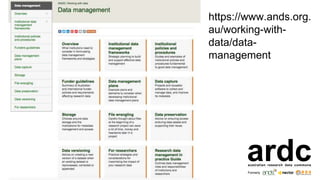
https://www.ands.org.
au/working-with-
data/data-
management
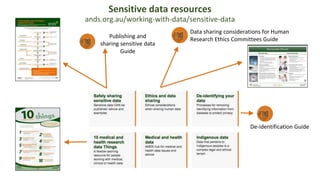
Sensitive data resources
ands.org.au/working-with-data/sensitive-data
Publishing and
sharing sensitive data
Guide
Data sharing considerations for Human
Research Ethics Committees Guide
De-identification Guide
A note on mediated access for sensitive data
• Not all data for sharing has to be open!
• F.A.I.R. data
• Findable
• Accessible
• Interoperable
• Reusable
• Five Safes risk management framework
• Safe projects: is the use of the data appropriate?
• Safe people: can the users be trusted to use it in an appropriate manner?
• Safe settings: does the access facility limit unauthorised use?
• Safe data: is there a disclosure risk in the data itself?
• Safe outputs: are the statistical results non-disclosive?
Data Management, Research Integrity and Ethics
Good data management practice improves
integrity of research
Institutional data management policies and
procedures, and ethics policies can support
data management and appropriate reuse of
research data, and therefore improve
reproducibility and integrity of research
With the exception of third party images or where otherwise indicated, this work is licensed under the Creative Commons 4.0 International Attribution Licence.
Kate LeMay
Senior Research Data Specialist
kate.lemay@ardc.edu.au
@katelemayardc
The ARDC is supported by the
Australian Government through the
National Collaborative Research
Infrastructure Strategy Program

Data Management, Research Integrity and Ethics

  • 1.
    Building on thepast, planning for the future The ARDC is supported by the Australian Government through the National Collaborative Research Infrastructure Strategy Program
  • 2.
    Data Management, ResearchIntegrity and Ethics • Importance of data management • Reproducibility crisis • Code for Responsible Conduct of Research • National Statement on Ethical Conduct in Human Research • Funders and Publishers • What is data management • Resources for data management and ethics policies
  • 3.
    Reproducibility crisis “the resultsof many scientific studies are difficult or impossible to replicate or reproduce on subsequent investigation, either by independent researchers or by the original researchers themselves.” https://en.wikipedia.org/wiki/Replication_crisis One of the factors is lack of management, availability or retention of research data (Nature 533, 452–454 (26 May 2016) doi:10.1038/533452a). Good management, retention and appropriate sharing of data improves reproducibility of research Institutional policies (data management, ethics) – data storage, management, retention, sharing
  • 4.
    Code for ResponsibleConduct of Research: data management Institutions: R8 Provide access to facilities for the safe and secure storage and management of research data, records and primary materials and, where possible and appropriate, allow access and reference. Researchers: R22 Retain clear, accurate, secure and complete records of all research including research data and primary materials. Where possible and appropriate, allow access and reference to these by interested parties. ‘Management of Data and Information in Research’ guide accompanying the Code R27 Cite and acknowledge other relevant work appropriately and accurately. Data can also be cited! https://www.ands.org.au/working-with-data/citation-and-identifiers/data-citation
  • 5.
    National Statement onEthical Conduct in Human Research: Data management Element 4: Collection, Use and Management of Data and Information
  • 6.
    Funders and Publishers:data management and sharing
  • 7.
    Data management, ResearchIntegrity and Ethics Planning for the management of research data early in a research project can improve research efficiency, guard against data loss, enhance data security, and ensure research data integrity and replication. QUT Library ‘Managing your research data’ https://www.library.qut.edu.au/research/data/ Australian Universities’ data management policies, procedures, training https://projects.ands.org.au/policy.php
  • 8.
    Data management Data ManagementPlans (DMP) http://www.dcc.ac.uk/resources/ curation-lifecycle-model
  • 9.
    Data management plansin new version of the Statement 3.1.45 For all research, researchers should develop a data management plan that addresses their intentions related to generation, collection, access, use, analysis, disclosure, storage, retention, disposal, sharing and re-use of data and information, the risks associated with these activities and any strategies for minimising those risks. The plan should be developed as early as possible in the research process and should include, but not be limited to, details regarding: (a) physical, network, system security and any other technological security measures; (b) policies and procedures; (c) contractual and licensing arrangements and confidentiality agreements; (d) training for members of the project team and others, as appropriate; (e) the form in which the data or information will be stored; (f) the purposes for which the data or information will be used and/ or disclosed; (g) the conditions under which access to the data or information may be granted to others; and (h) what information from the data management plan, if any, needs to be communicated to potential participants. Researchers should also clarify whether they will seek: (i) extended or unspecified consent for future research (see paragraphs 2.2.14 to 2.2.16); or (j) permission from a review body to waive the requirement for consent (see paragraphs 2.3.9 and 2.3.10).
  • 10.
  • 11.
    Sensitive data resources ands.org.au/working-with-data/sensitive-data Publishingand sharing sensitive data Guide Data sharing considerations for Human Research Ethics Committees Guide De-identification Guide
  • 12.
    A note onmediated access for sensitive data • Not all data for sharing has to be open! • F.A.I.R. data • Findable • Accessible • Interoperable • Reusable • Five Safes risk management framework • Safe projects: is the use of the data appropriate? • Safe people: can the users be trusted to use it in an appropriate manner? • Safe settings: does the access facility limit unauthorised use? • Safe data: is there a disclosure risk in the data itself? • Safe outputs: are the statistical results non-disclosive?
  • 13.
    Data Management, ResearchIntegrity and Ethics Good data management practice improves integrity of research Institutional data management policies and procedures, and ethics policies can support data management and appropriate reuse of research data, and therefore improve reproducibility and integrity of research
  • 14.
    With the exceptionof third party images or where otherwise indicated, this work is licensed under the Creative Commons 4.0 International Attribution Licence. Kate LeMay Senior Research Data Specialist kate.lemay@ardc.edu.au @katelemayardc The ARDC is supported by the Australian Government through the National Collaborative Research Infrastructure Strategy Program