The ‘right’ data infrastructure can
save a million lives across the
globe, every year.
Every year, more than a million lives are lost, due to misdiagnosis
Misdiagnosis is a resultant of bad decisions which occurs due to
human assumptions based on incomplete data, resulting in death.
Another important factor in the decision cycle is time. Time taken to
diagnose the right condition can be delayed due to wrong
assumptions and iterations rising from incomplete data.
Lack of accuracy and time taken to relevant decision making can
therefore attributed as the primary reasons for these deaths
We believe the right data infrastructure for all medically relevant data
can help solve both lack of accuracy and lost time, both issues critical
to preventing loss of life and death
Today, we are in possession of both the technology and the requisite
knowledge to derive ‘accurate decisions’. By applying analytical
models to a full data set, we can arrive at the most possible scenario
within minutes
Quahog Decision Platform
to address ‘decision’ and ‘time’ related issues to help arrive at the right
solution. The centralized platform acts as the main hub, where data
from various sources is tagged and unified. This unified data becomes
the foundation for learning and analysis.
Browse further to understand the various facets of the platform
Data Infrastructure
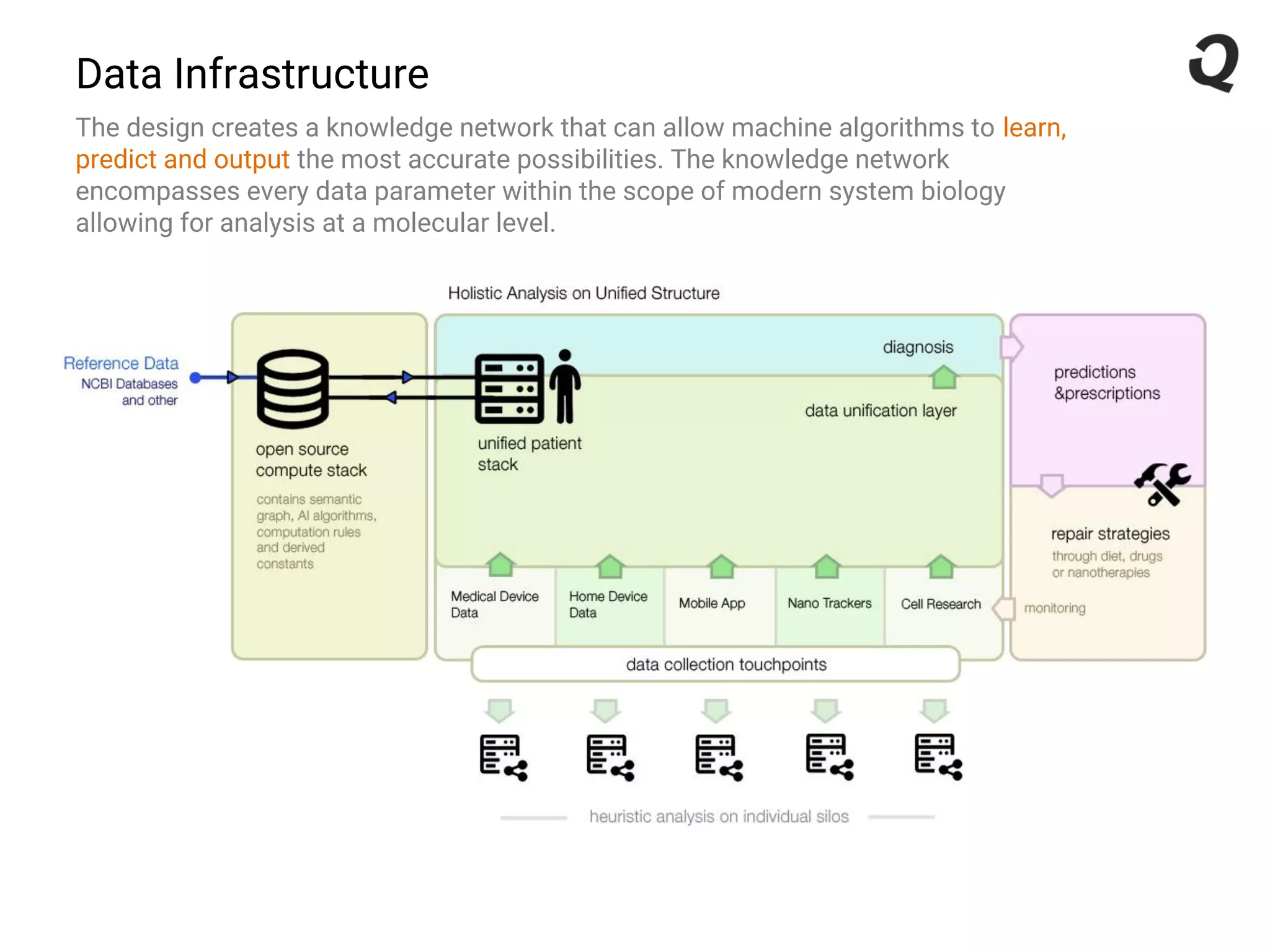
The design creates a knowledge network that can allow machine algorithms to learn,
predict and output the most accurate possibilities. The knowledge network
encompasses every data parameter within the scope of modern system biology
allowing for analysis at a molecular level.
# Compute
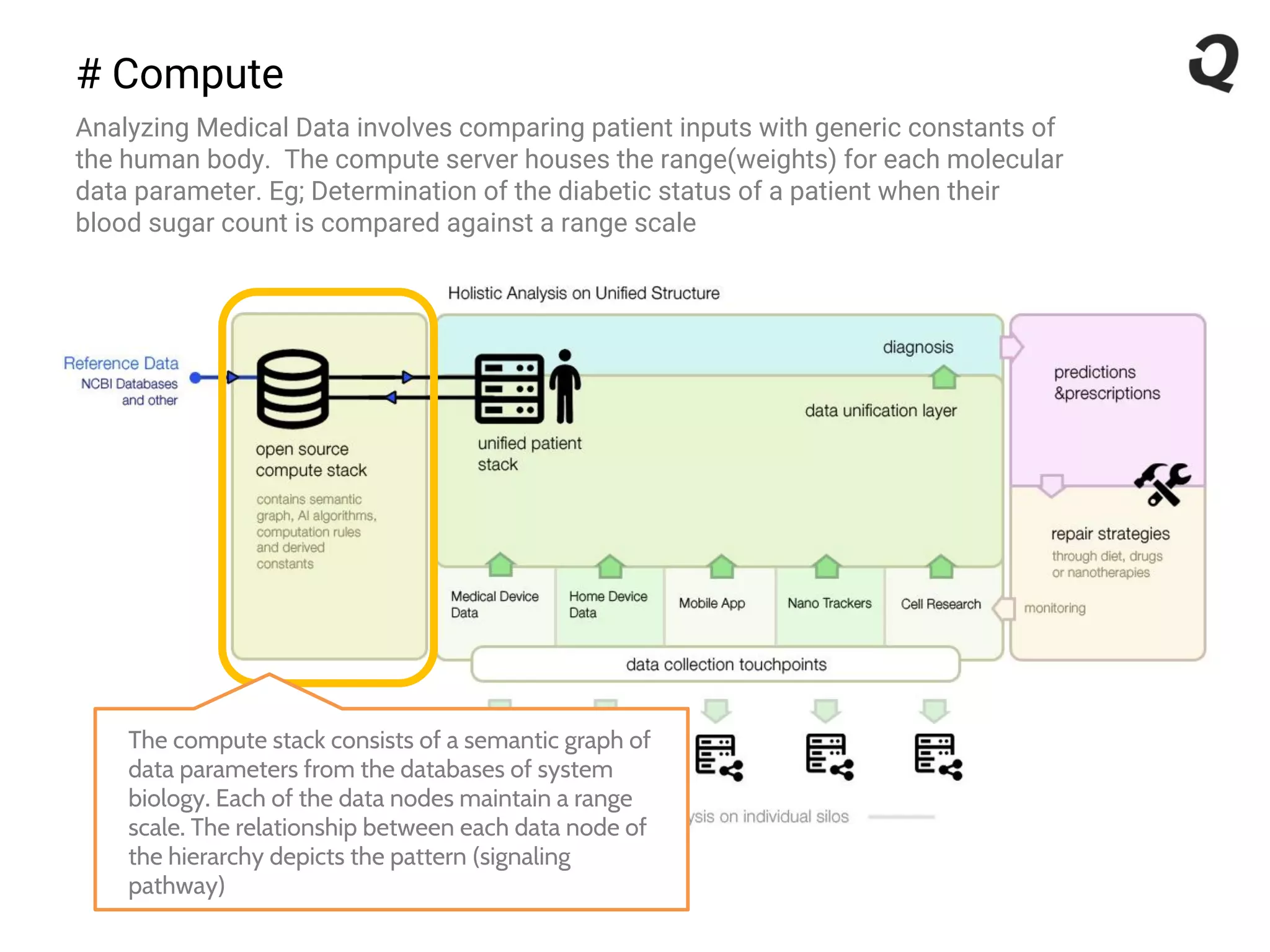
Analyzing Medical Data involves comparing patient inputs with generic constants of
the human body. The compute server houses the range(weights) for each molecular
data parameter. Eg; Determination of the diabetic status of a patient when their
blood sugar count is compared against a range scale
The compute stack consists of a semantic graph of
data parameters from the databases of system
biology. Each of the data nodes maintain a range
scale. The relationship between each data node of
the hierarchy depicts the pattern (signaling
pathway)
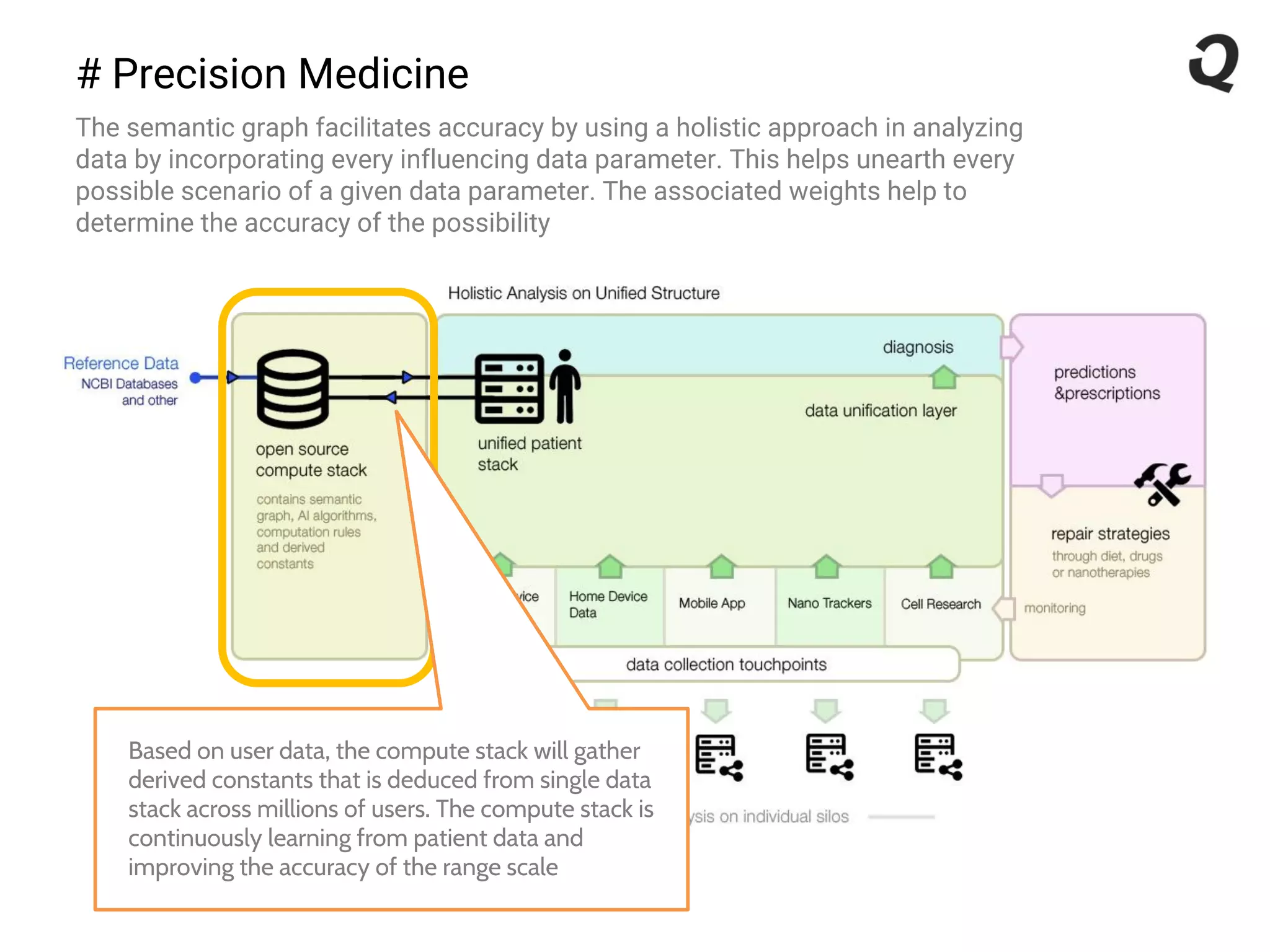
# Precision Medicine
The semantic graph facilitates accuracy by using a holistic approach in analyzing
data by incorporating every influencing data parameter. This helps unearth every
possible scenario of a given data parameter. The associated weights help to
determine the accuracy of the possibility
Based on user data, the compute stack will gather
derived constants that is deduced from single data
stack across millions of users. The compute stack is
continuously learning from patient data and
improving the accuracy of the range scale
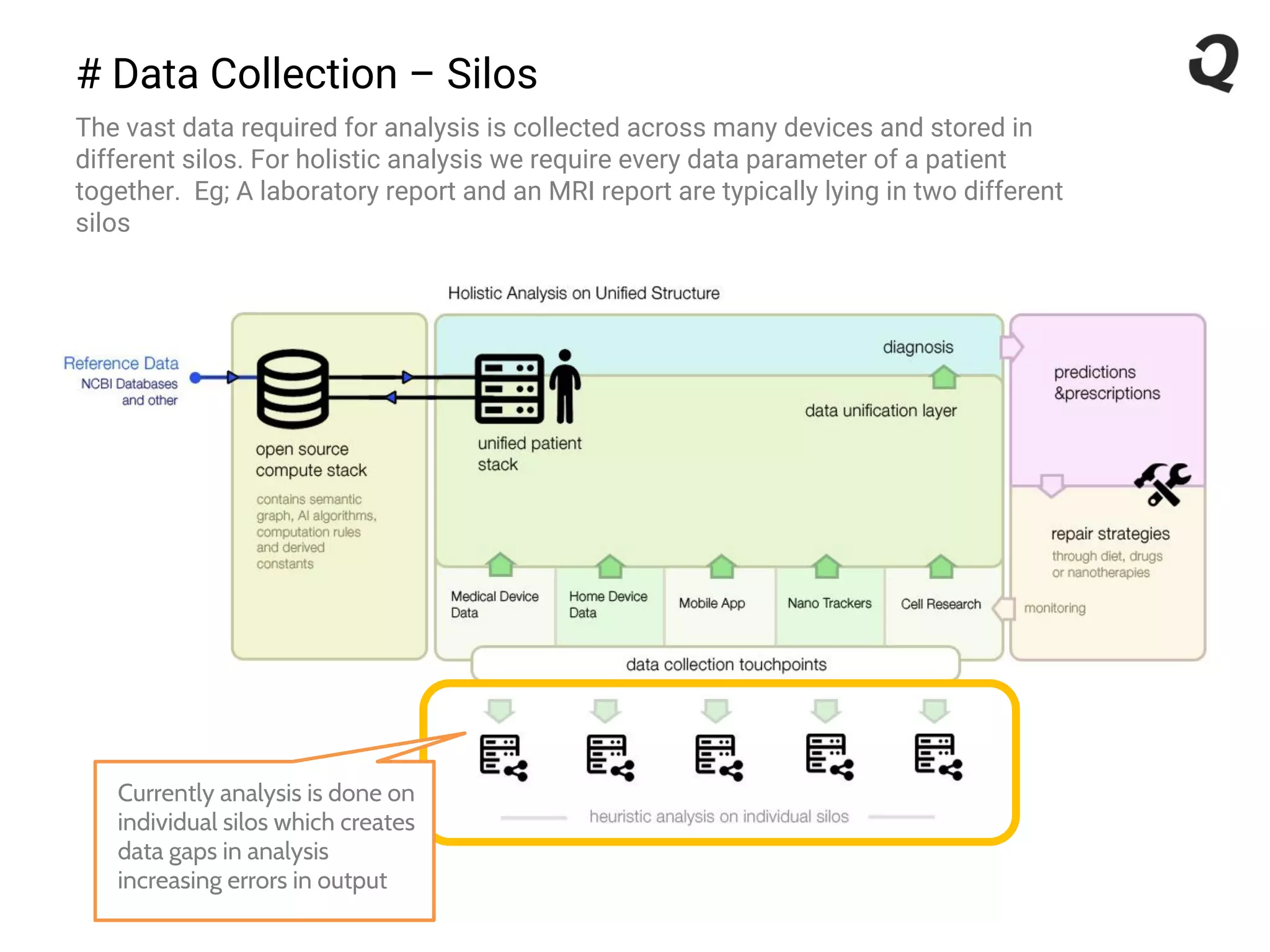
# Data Collection – Silos
The vast data required for analysis is collected across many devices and stored in
different silos. For holistic analysis we require every data parameter of a patient
together. Eg; A laboratory report and an MRI report are typically lying in two different
silos
Currently analysis is done on
individual silos which creates
data gaps in analysis
increasing errors in output
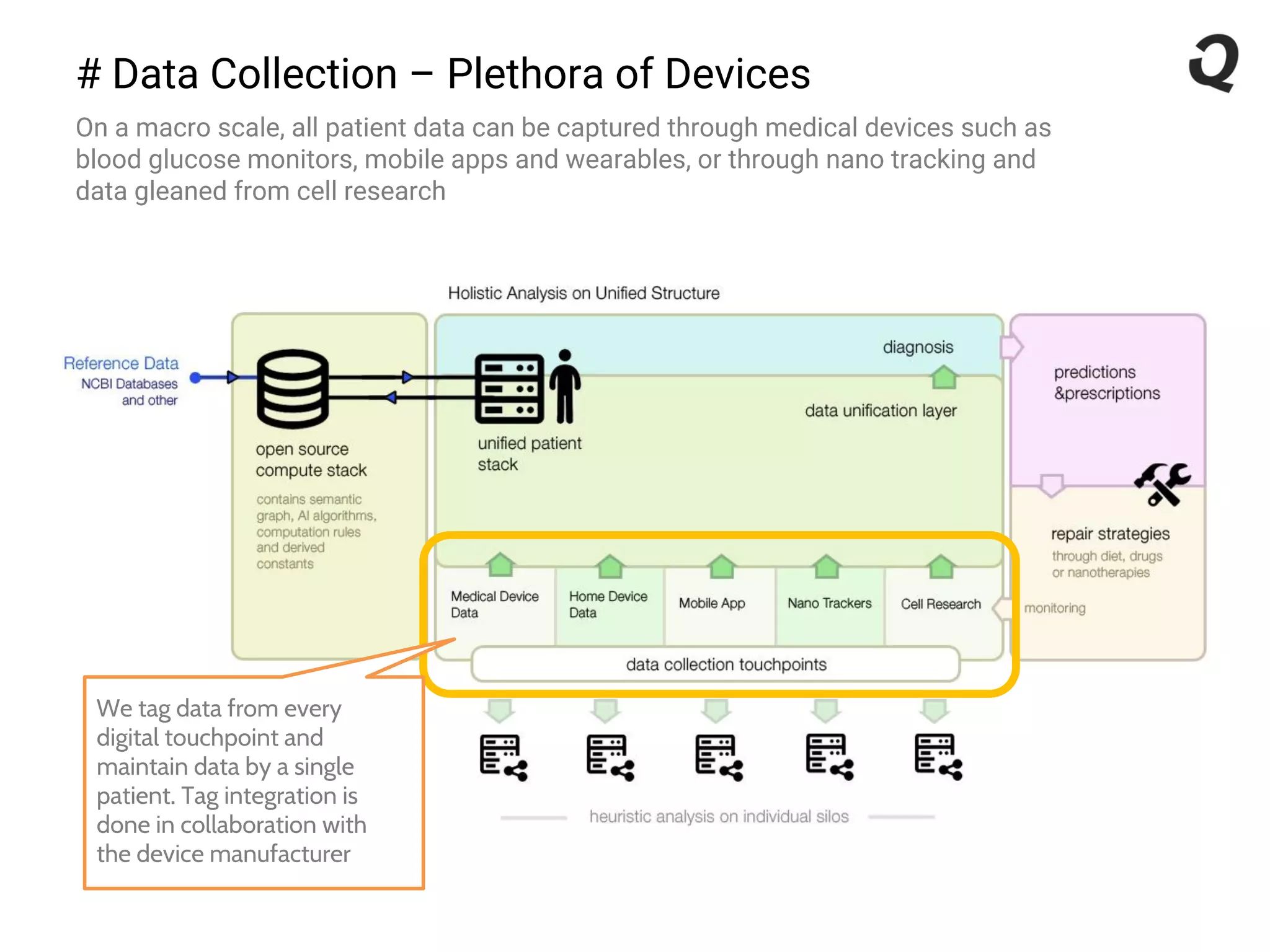
# Data Collection – Plethora of Devices
On a macro scale, all patient data can be captured through medical devices such as
blood glucose monitors, mobile apps and wearables, or through nano tracking and
data gleaned from cell research
We tag data from every
digital touchpoint and
maintain data by a single
patient. Tag integration is
done in collaboration with
the device manufacturer
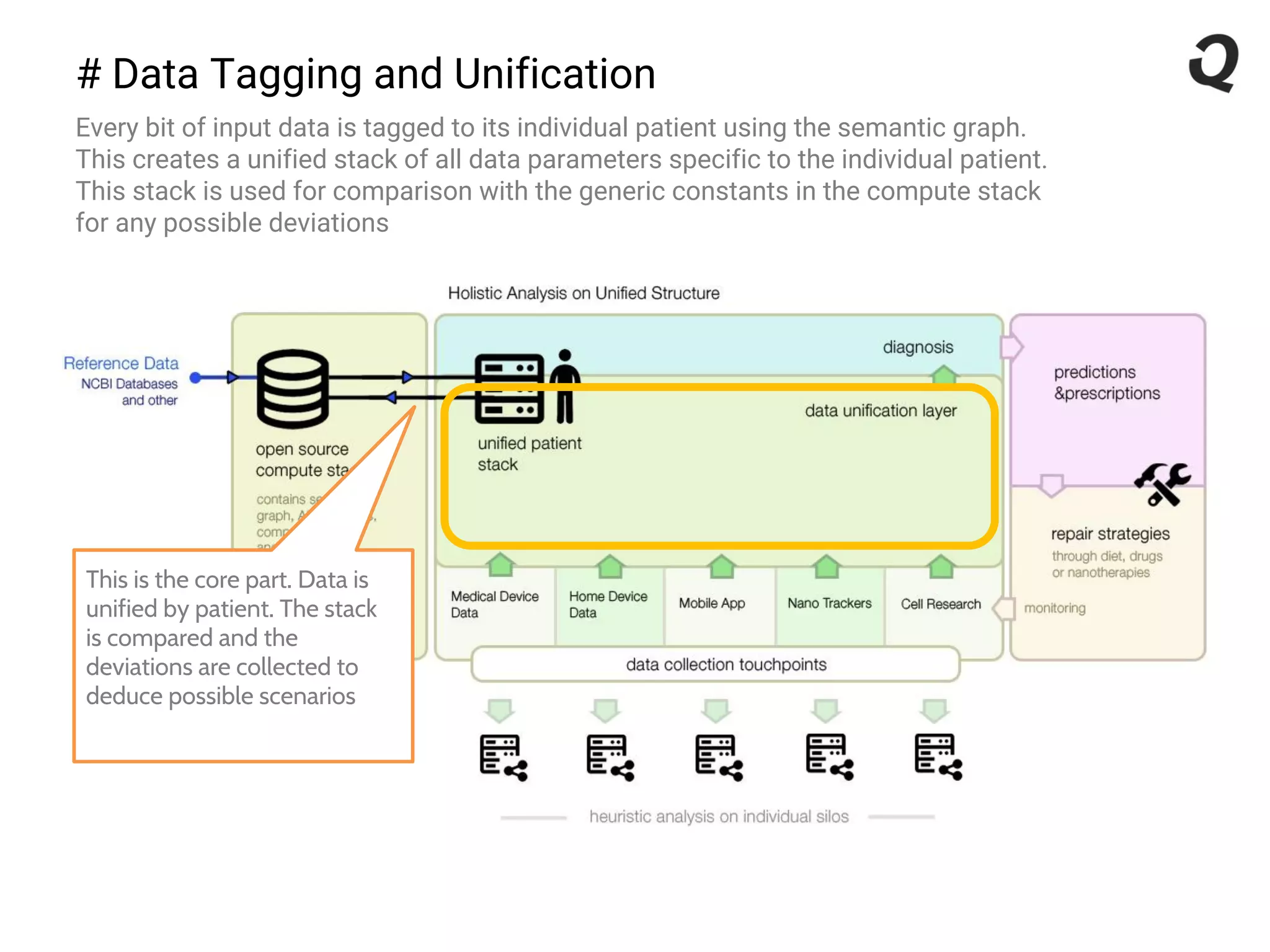
# Data Tagging and Unification
Every bit of input data is tagged to its individual patient using the semantic graph.
This creates a unified stack of all data parameters specific to the individual patient.
This stack is used for comparison with the generic constants in the compute stack
for any possible deviations
This is the core part. Data is
unified by patient. The stack
is compared and the
deviations are collected to
deduce possible scenarios
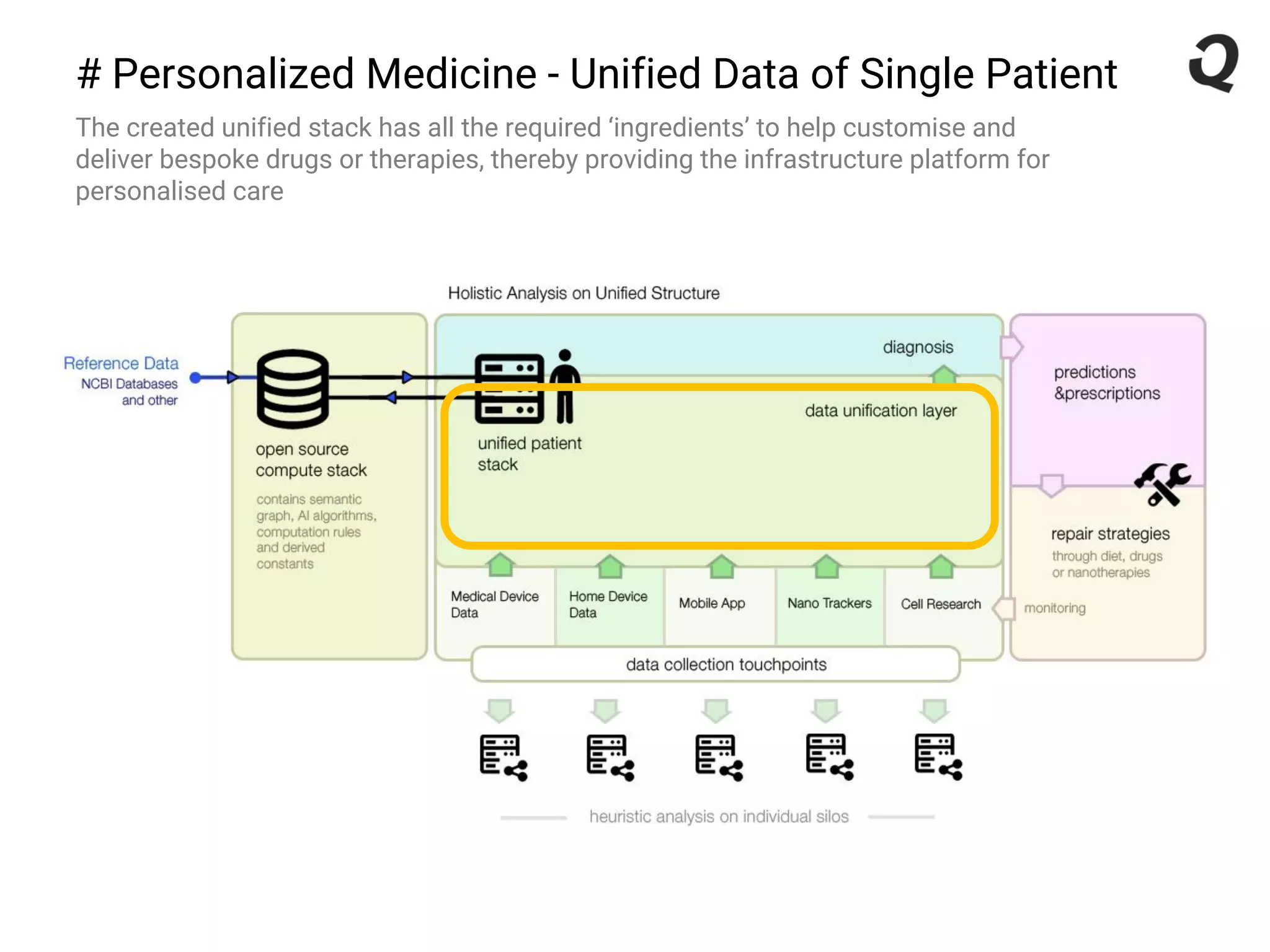
# Personalized Medicine - Unified Data of Single Patient
The created unified stack has all the required ‘ingredients’ to help customise and
deliver bespoke drugs or therapies, thereby providing the infrastructure platform for
personalised care
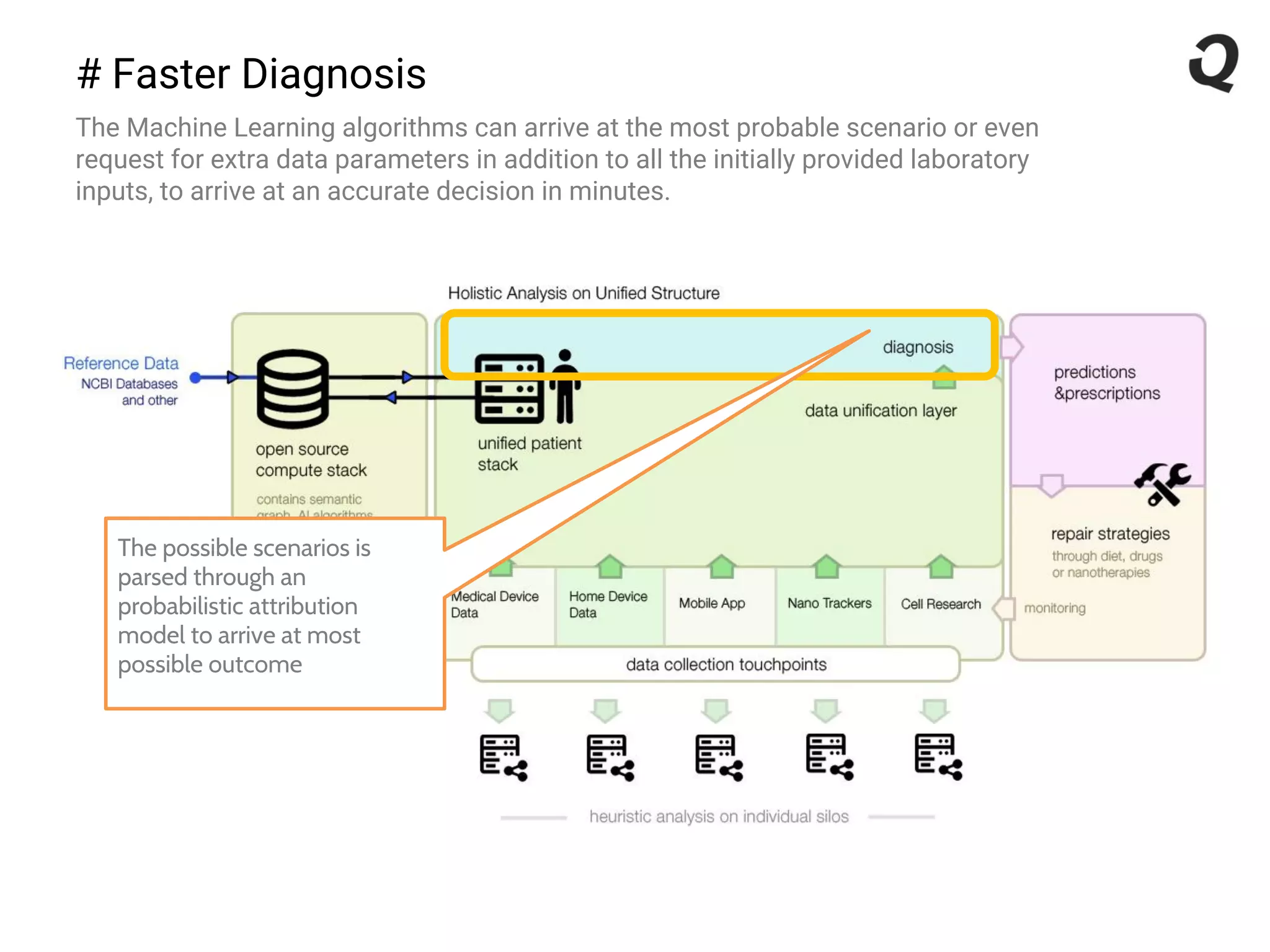
# Faster Diagnosis
The Machine Learning algorithms can arrive at the most probable scenario or even
request for extra data parameters in addition to all the initially provided laboratory
inputs, to arrive at an accurate decision in minutes.
The possible scenarios is
parsed through an
probabilistic attribution
model to arrive at most
possible outcome
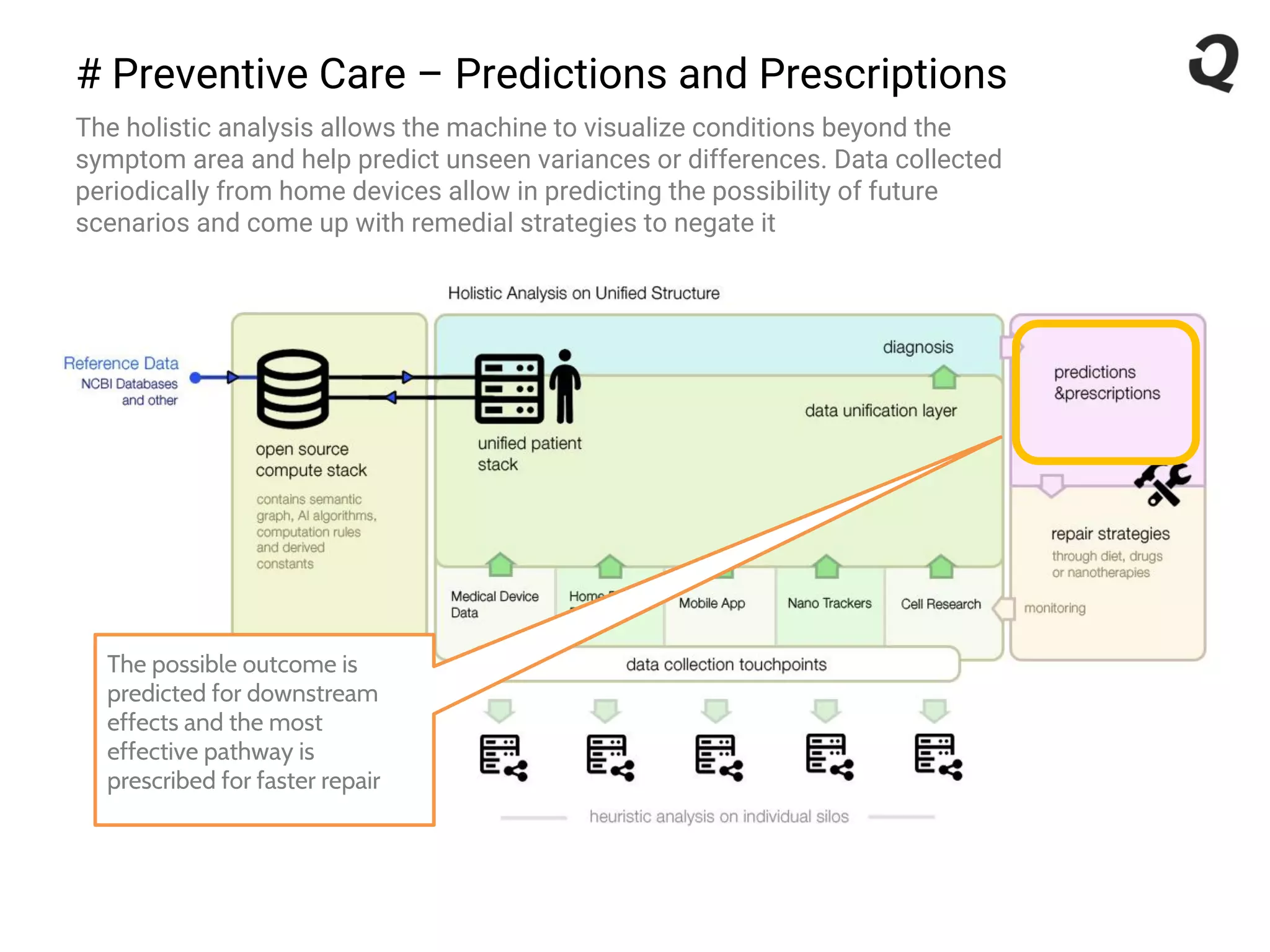
# Preventive Care – Predictions and Prescriptions
The holistic analysis allows the machine to visualize conditions beyond the
symptom area and help predict unseen variances or differences. Data collected
periodically from home devices allow in predicting the possibility of future
scenarios and come up with remedial strategies to negate it
The possible outcome is
predicted for downstream
effects and the most
effective pathway is
prescribed for faster repair
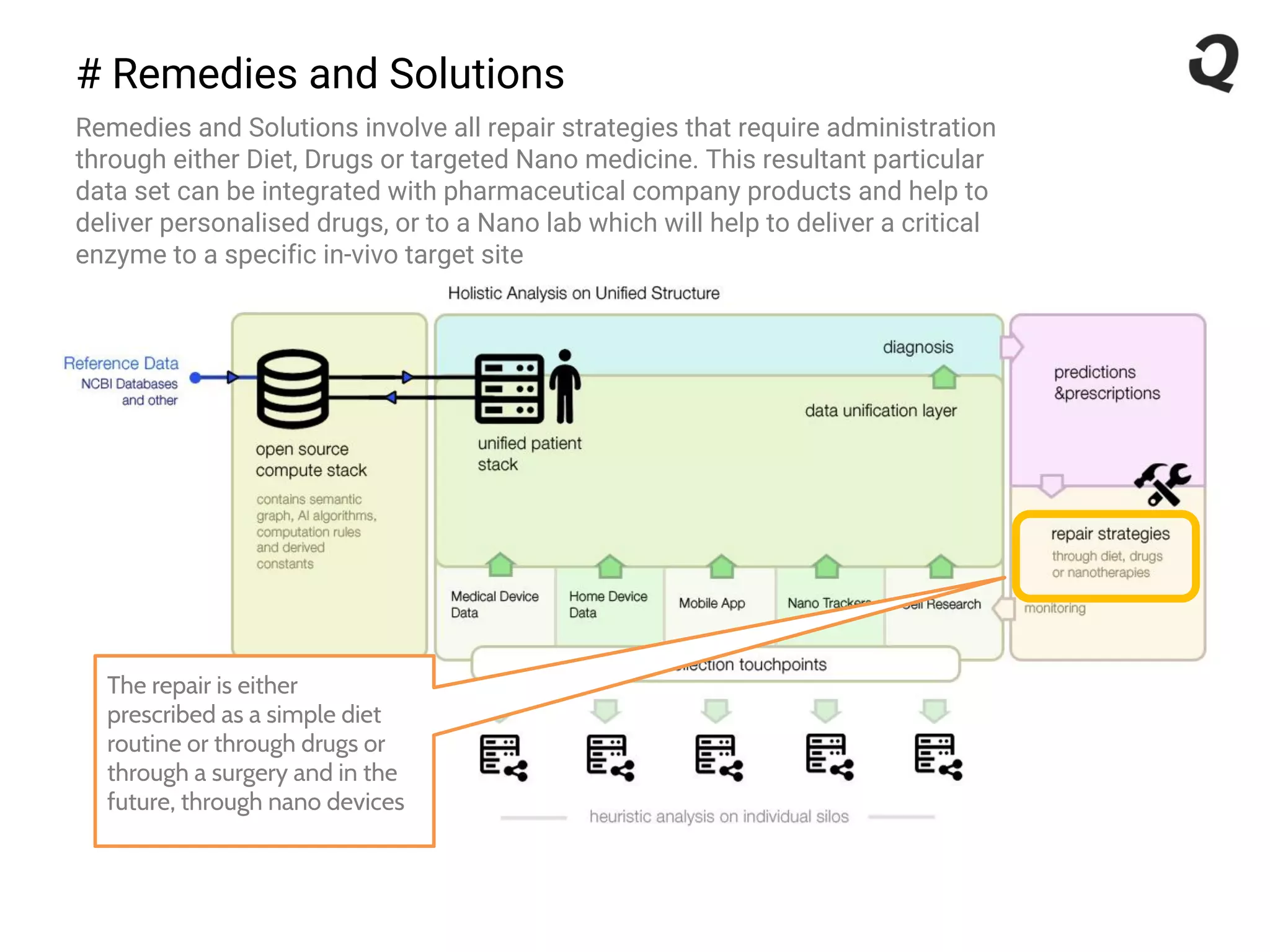
# Remedies and Solutions
Remedies and Solutions involve all repair strategies that require administration
through either Diet, Drugs or targeted Nano medicine. This resultant particular
data set can be integrated with pharmaceutical company products and help to
deliver personalised drugs, or to a Nano lab which will help to deliver a critical
enzyme to a specific in-vivo target site
The repair is either
prescribed as a simple diet
routine or through drugs or
through a surgery and in the
future, through nano devices
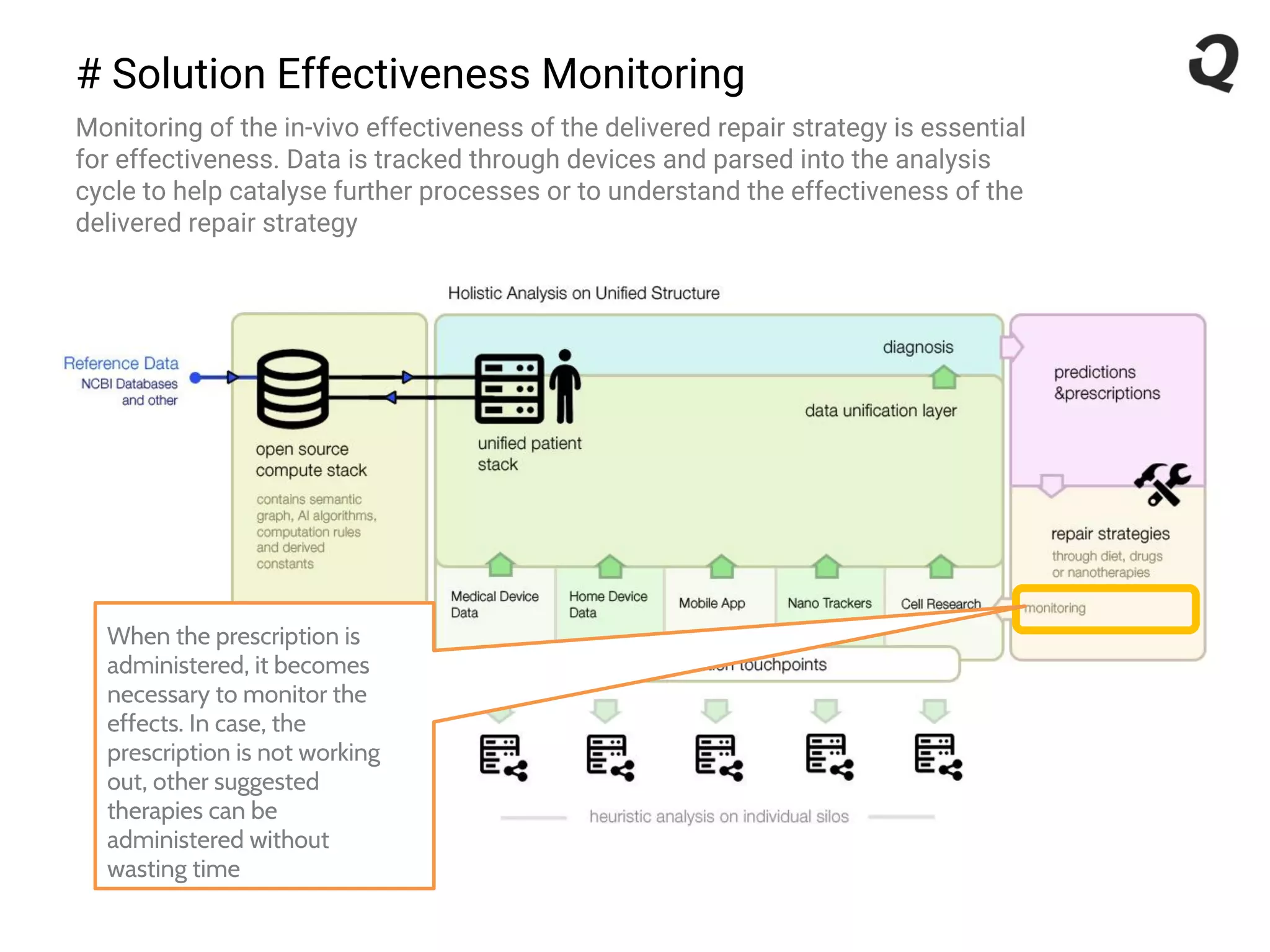
# Solution Effectiveness Monitoring
Monitoring of the in-vivo effectiveness of the delivered repair strategy is essential
for effectiveness. Data is tracked through devices and parsed into the analysis
cycle to help catalyse further processes or to understand the effectiveness of the
delivered repair strategy
When the prescription is
administered, it becomes
necessary to monitor the
effects. In case, the
prescription is not working
out, other suggested
therapies can be
administered without
wasting time
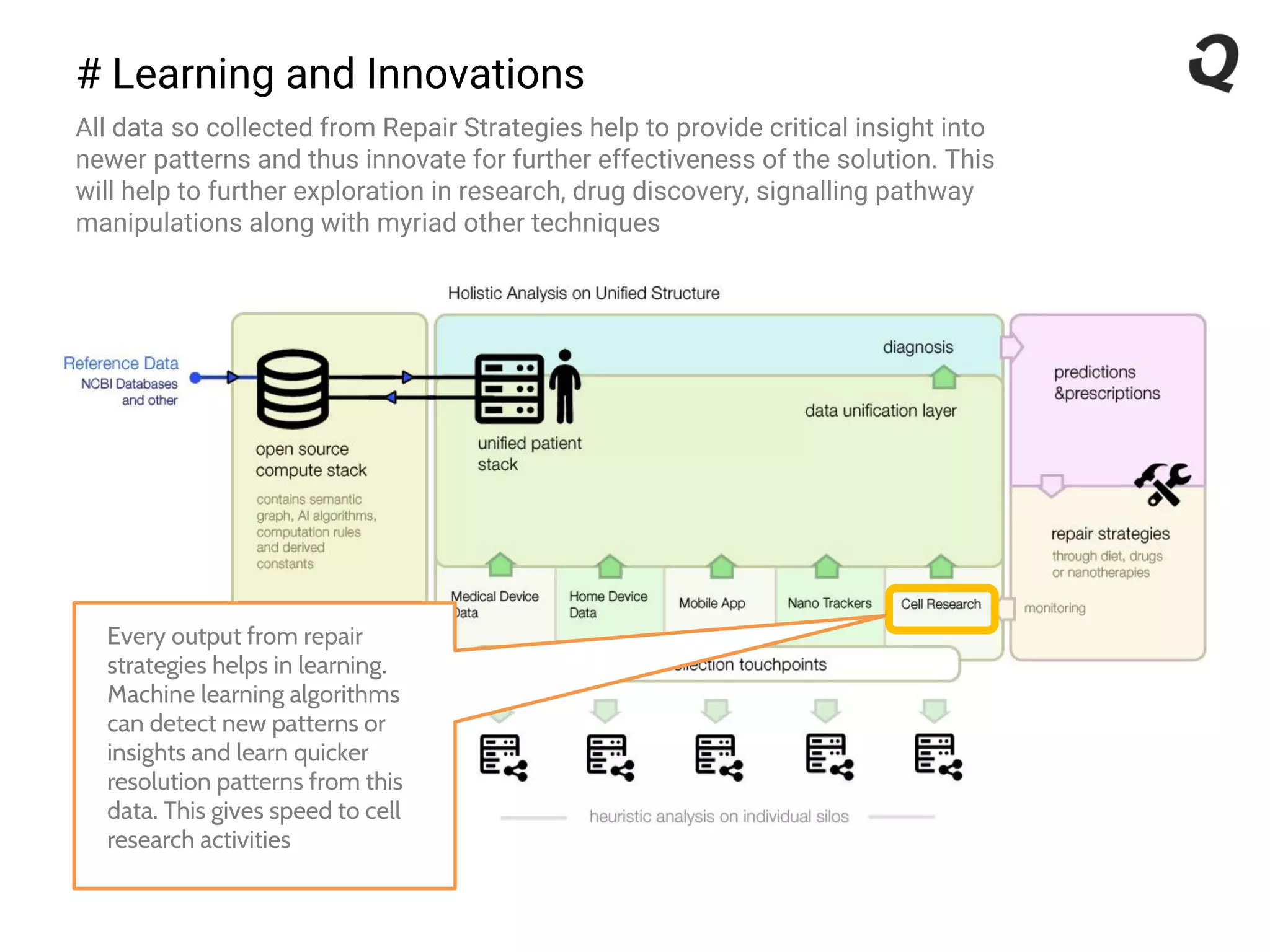
# Learning and Innovations
All data so collected from Repair Strategies help to provide critical insight into
newer patterns and thus innovate for further effectiveness of the solution. This
will help to further exploration in research, drug discovery, signalling pathway
manipulations along with myriad other techniques
Every output from repair
strategies helps in learning.
Machine learning algorithms
can detect new patterns or
insights and learn quicker
resolution patterns from this
data. This gives speed to cell
research activities
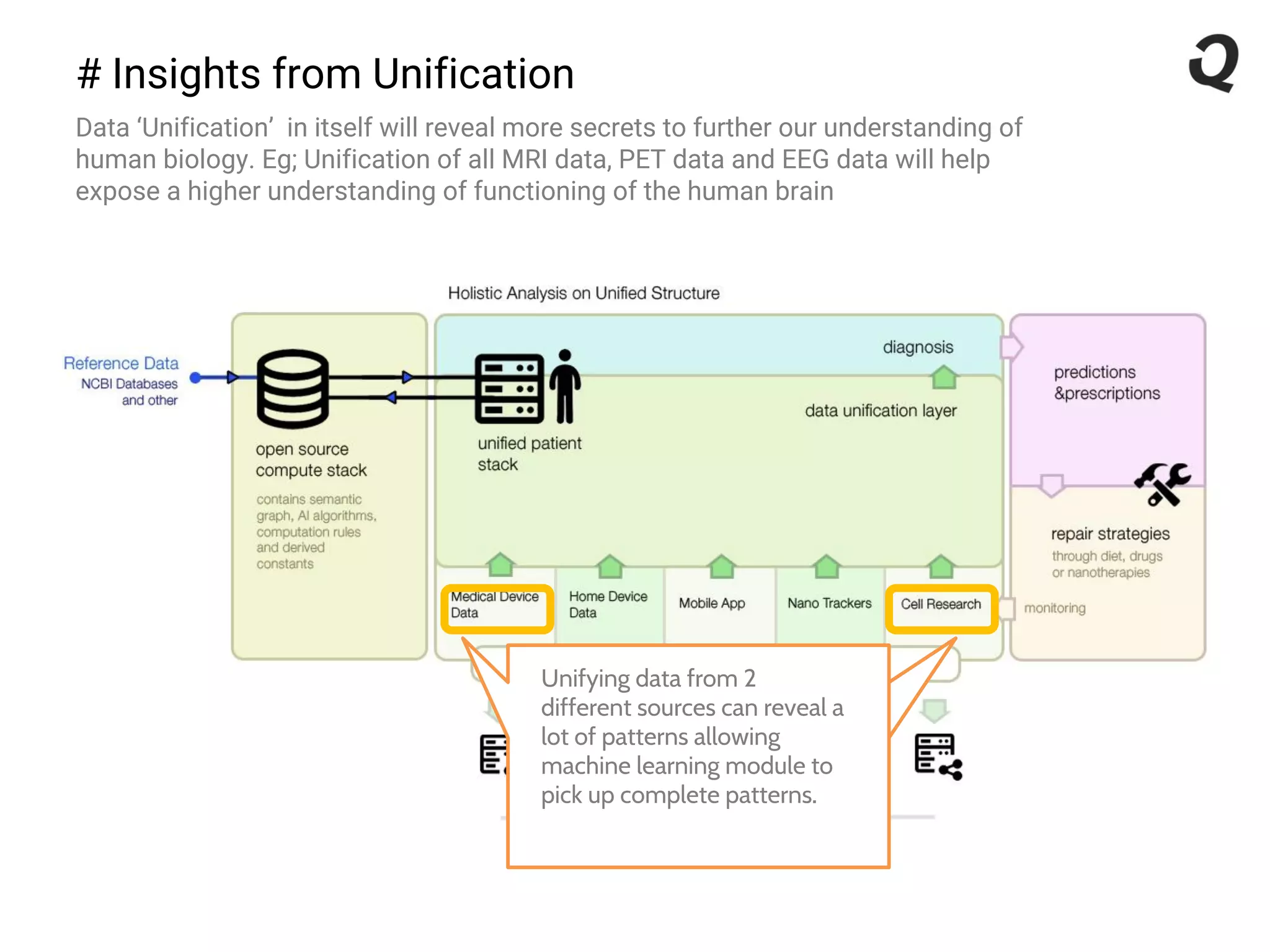
# Insights from Unification
Data ‘Unification’ in itself will reveal more secrets to further our understanding of
human biology. Eg; Unification of all MRI data, PET data and EEG data will help
expose a higher understanding of functioning of the human brain
Unifying data from 2
different sources can reveal a
lot of patterns allowing
machine learning module to
pick up complete patterns.
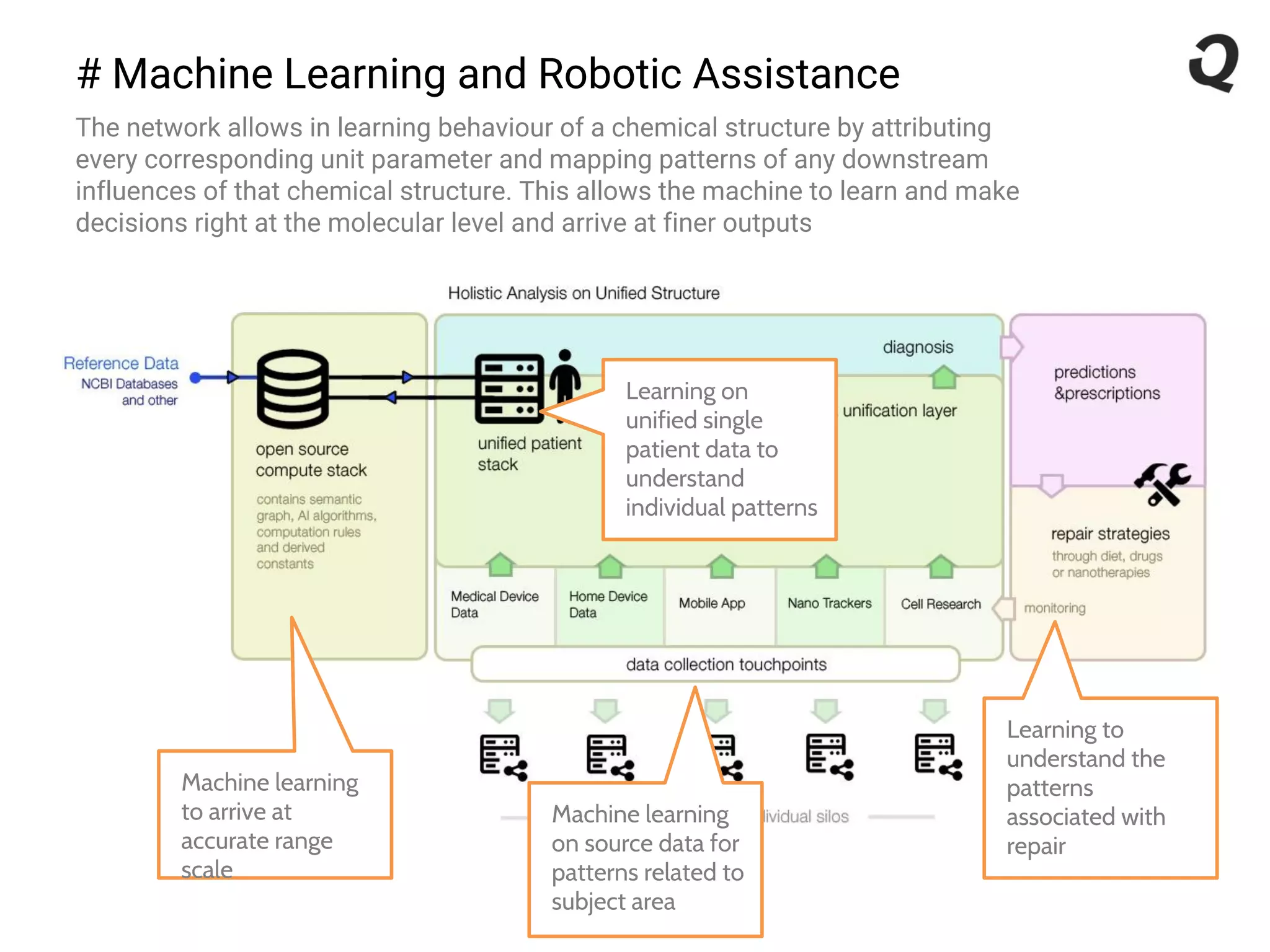
# Machine Learning and Robotic Assistance
The network allows in learning behaviour of a chemical structure by attributing
every corresponding unit parameter and mapping patterns of any downstream
influences of that chemical structure. This allows the machine to learn and make
decisions right at the molecular level and arrive at finer outputs
Machine learning
to arrive at
accurate range
scale
Machine learning
on source data for
patterns related to
subject area
Learning on
unified single
patient data to
understand
individual patterns
Learning to
understand the
patterns
associated with
repair
The Quahog Decision platform can change the way health care is
managed.
● Allow for the patient/ individual to be more aware
● Assist doctors to make the right decision quick and monitor the
effectiveness of that decision
● Allow the many researchers across healthcare to solve the many
problems through a holistic approach
● Helping current cellular researchers work on ‘unified’ cell
parameters, giving better outputs
● Output exacting parameters to allow for personalised drug printing
With this projected accuracy and speed, we will not only save many
otherwise unfortunate lives, but also be able to explore newer paths
such as cellular rejuvenation and energy restoration in delaying the
various problems associated with biologic ageing

Data Infrastructure for Real-time Analysis to provide Health Insights

  • 1.
    The ‘right’ datainfrastructure can save a million lives across the globe, every year.
  • 2.
    Every year, morethan a million lives are lost, due to misdiagnosis Misdiagnosis is a resultant of bad decisions which occurs due to human assumptions based on incomplete data, resulting in death. Another important factor in the decision cycle is time. Time taken to diagnose the right condition can be delayed due to wrong assumptions and iterations rising from incomplete data. Lack of accuracy and time taken to relevant decision making can therefore attributed as the primary reasons for these deaths We believe the right data infrastructure for all medically relevant data can help solve both lack of accuracy and lost time, both issues critical to preventing loss of life and death
  • 3.
    Today, we arein possession of both the technology and the requisite knowledge to derive ‘accurate decisions’. By applying analytical models to a full data set, we can arrive at the most possible scenario within minutes Quahog Decision Platform to address ‘decision’ and ‘time’ related issues to help arrive at the right solution. The centralized platform acts as the main hub, where data from various sources is tagged and unified. This unified data becomes the foundation for learning and analysis. Browse further to understand the various facets of the platform
  • 4.
    Data Infrastructure The designcreates a knowledge network that can allow machine algorithms to learn, predict and output the most accurate possibilities. The knowledge network encompasses every data parameter within the scope of modern system biology allowing for analysis at a molecular level.
  • 5.
    # Compute Analyzing MedicalData involves comparing patient inputs with generic constants of the human body. The compute server houses the range(weights) for each molecular data parameter. Eg; Determination of the diabetic status of a patient when their blood sugar count is compared against a range scale The compute stack consists of a semantic graph of data parameters from the databases of system biology. Each of the data nodes maintain a range scale. The relationship between each data node of the hierarchy depicts the pattern (signaling pathway)
  • 6.
    # Precision Medicine Thesemantic graph facilitates accuracy by using a holistic approach in analyzing data by incorporating every influencing data parameter. This helps unearth every possible scenario of a given data parameter. The associated weights help to determine the accuracy of the possibility Based on user data, the compute stack will gather derived constants that is deduced from single data stack across millions of users. The compute stack is continuously learning from patient data and improving the accuracy of the range scale
  • 7.
    # Data Collection– Silos The vast data required for analysis is collected across many devices and stored in different silos. For holistic analysis we require every data parameter of a patient together. Eg; A laboratory report and an MRI report are typically lying in two different silos Currently analysis is done on individual silos which creates data gaps in analysis increasing errors in output
  • 8.
    # Data Collection– Plethora of Devices On a macro scale, all patient data can be captured through medical devices such as blood glucose monitors, mobile apps and wearables, or through nano tracking and data gleaned from cell research We tag data from every digital touchpoint and maintain data by a single patient. Tag integration is done in collaboration with the device manufacturer
  • 9.
    # Data Taggingand Unification Every bit of input data is tagged to its individual patient using the semantic graph. This creates a unified stack of all data parameters specific to the individual patient. This stack is used for comparison with the generic constants in the compute stack for any possible deviations This is the core part. Data is unified by patient. The stack is compared and the deviations are collected to deduce possible scenarios
  • 10.
    # Personalized Medicine- Unified Data of Single Patient The created unified stack has all the required ‘ingredients’ to help customise and deliver bespoke drugs or therapies, thereby providing the infrastructure platform for personalised care
  • 11.
    # Faster Diagnosis TheMachine Learning algorithms can arrive at the most probable scenario or even request for extra data parameters in addition to all the initially provided laboratory inputs, to arrive at an accurate decision in minutes. The possible scenarios is parsed through an probabilistic attribution model to arrive at most possible outcome
  • 12.
    # Preventive Care– Predictions and Prescriptions The holistic analysis allows the machine to visualize conditions beyond the symptom area and help predict unseen variances or differences. Data collected periodically from home devices allow in predicting the possibility of future scenarios and come up with remedial strategies to negate it The possible outcome is predicted for downstream effects and the most effective pathway is prescribed for faster repair
  • 13.
    # Remedies andSolutions Remedies and Solutions involve all repair strategies that require administration through either Diet, Drugs or targeted Nano medicine. This resultant particular data set can be integrated with pharmaceutical company products and help to deliver personalised drugs, or to a Nano lab which will help to deliver a critical enzyme to a specific in-vivo target site The repair is either prescribed as a simple diet routine or through drugs or through a surgery and in the future, through nano devices
  • 14.
    # Solution EffectivenessMonitoring Monitoring of the in-vivo effectiveness of the delivered repair strategy is essential for effectiveness. Data is tracked through devices and parsed into the analysis cycle to help catalyse further processes or to understand the effectiveness of the delivered repair strategy When the prescription is administered, it becomes necessary to monitor the effects. In case, the prescription is not working out, other suggested therapies can be administered without wasting time
  • 15.
    # Learning andInnovations All data so collected from Repair Strategies help to provide critical insight into newer patterns and thus innovate for further effectiveness of the solution. This will help to further exploration in research, drug discovery, signalling pathway manipulations along with myriad other techniques Every output from repair strategies helps in learning. Machine learning algorithms can detect new patterns or insights and learn quicker resolution patterns from this data. This gives speed to cell research activities
  • 16.
    # Insights fromUnification Data ‘Unification’ in itself will reveal more secrets to further our understanding of human biology. Eg; Unification of all MRI data, PET data and EEG data will help expose a higher understanding of functioning of the human brain Unifying data from 2 different sources can reveal a lot of patterns allowing machine learning module to pick up complete patterns.
  • 17.
    # Machine Learningand Robotic Assistance The network allows in learning behaviour of a chemical structure by attributing every corresponding unit parameter and mapping patterns of any downstream influences of that chemical structure. This allows the machine to learn and make decisions right at the molecular level and arrive at finer outputs Machine learning to arrive at accurate range scale Machine learning on source data for patterns related to subject area Learning on unified single patient data to understand individual patterns Learning to understand the patterns associated with repair
  • 18.
    The Quahog Decisionplatform can change the way health care is managed. ● Allow for the patient/ individual to be more aware ● Assist doctors to make the right decision quick and monitor the effectiveness of that decision ● Allow the many researchers across healthcare to solve the many problems through a holistic approach ● Helping current cellular researchers work on ‘unified’ cell parameters, giving better outputs ● Output exacting parameters to allow for personalised drug printing With this projected accuracy and speed, we will not only save many otherwise unfortunate lives, but also be able to explore newer paths such as cellular rejuvenation and energy restoration in delaying the various problems associated with biologic ageing