







D A TA D I N N E R P A R T I E S
D e s i g n i n g a n d U s i n g
D a t a P l a c e m a t s
Amanda Makulec
JSI Center for Health Information, Monitoring & Evaluation
May 2, 2016
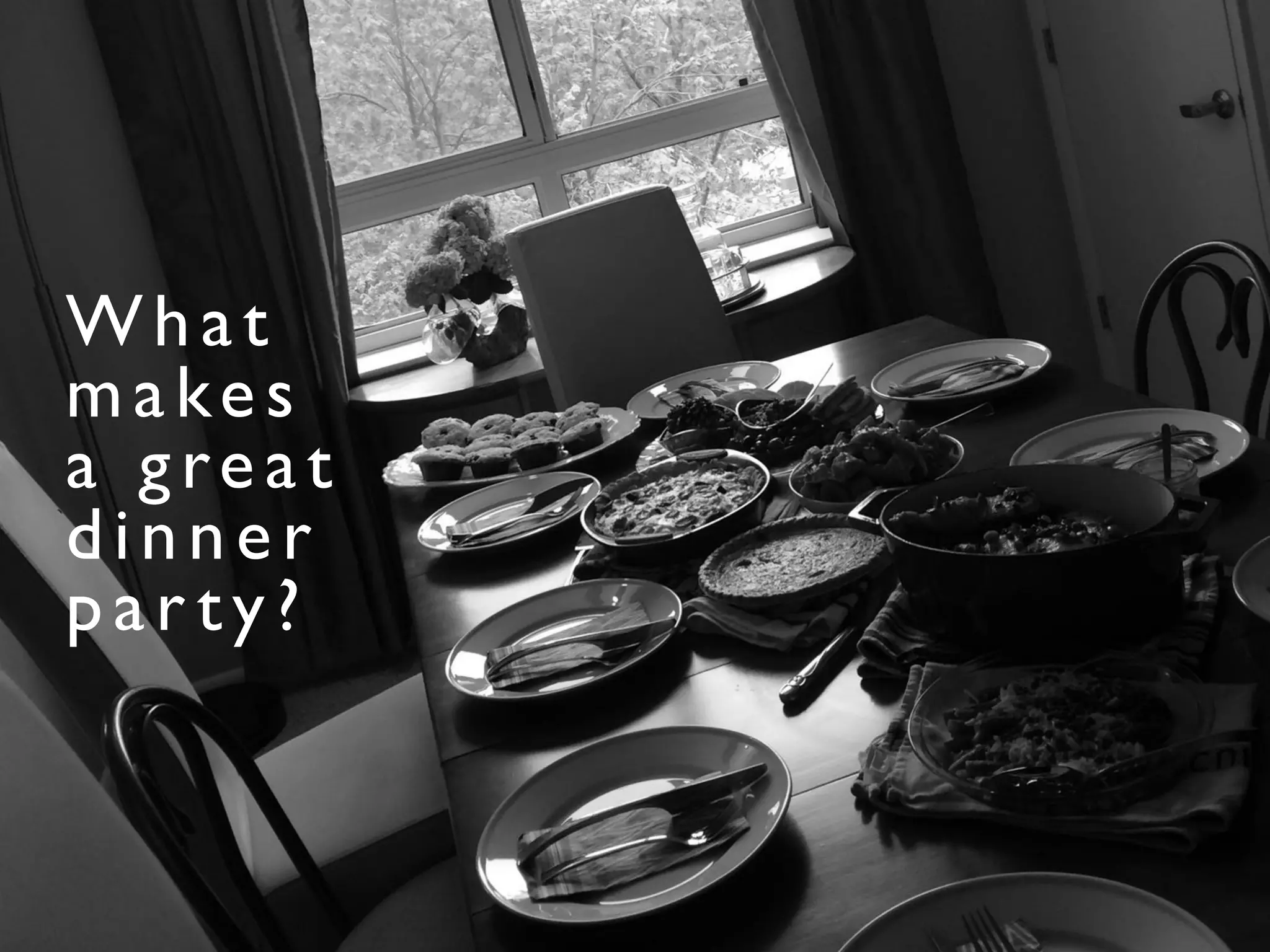
What
makes
a great
dinner
par ty?
Delicious food
Thoughtfully
prepared
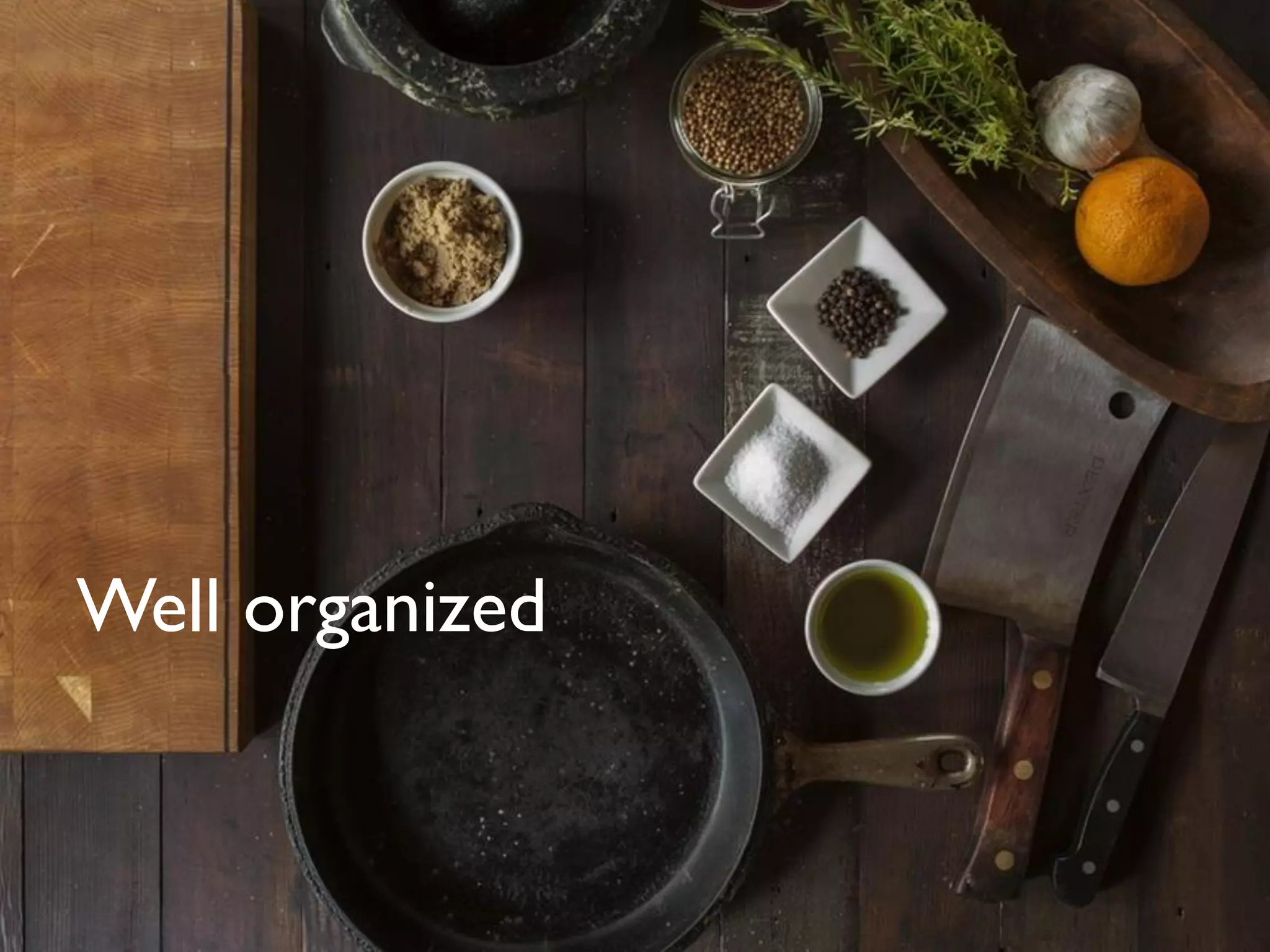
Well organized
With great
conversation
D a t a p l a c e m a t s *
s h a r e i n f o r m a t i o n
i n t h o u g h t f u l l y p r e s e n t e d w a y s
t o s t r i k e u p c o n v e r s a t i o n s a n d
g e n e r a t e n e w i n s i g h t .
*Term originally coined by the
Learn more about their concept: “Data Placemats: A DataViz Technique to Improve Stakeholder Understanding of Evaluation
Results”Veena Pankaj / Presented at Evaluation 2012 http://www.slideshare.net/InnoNet_Eval/data-placemats-22200834
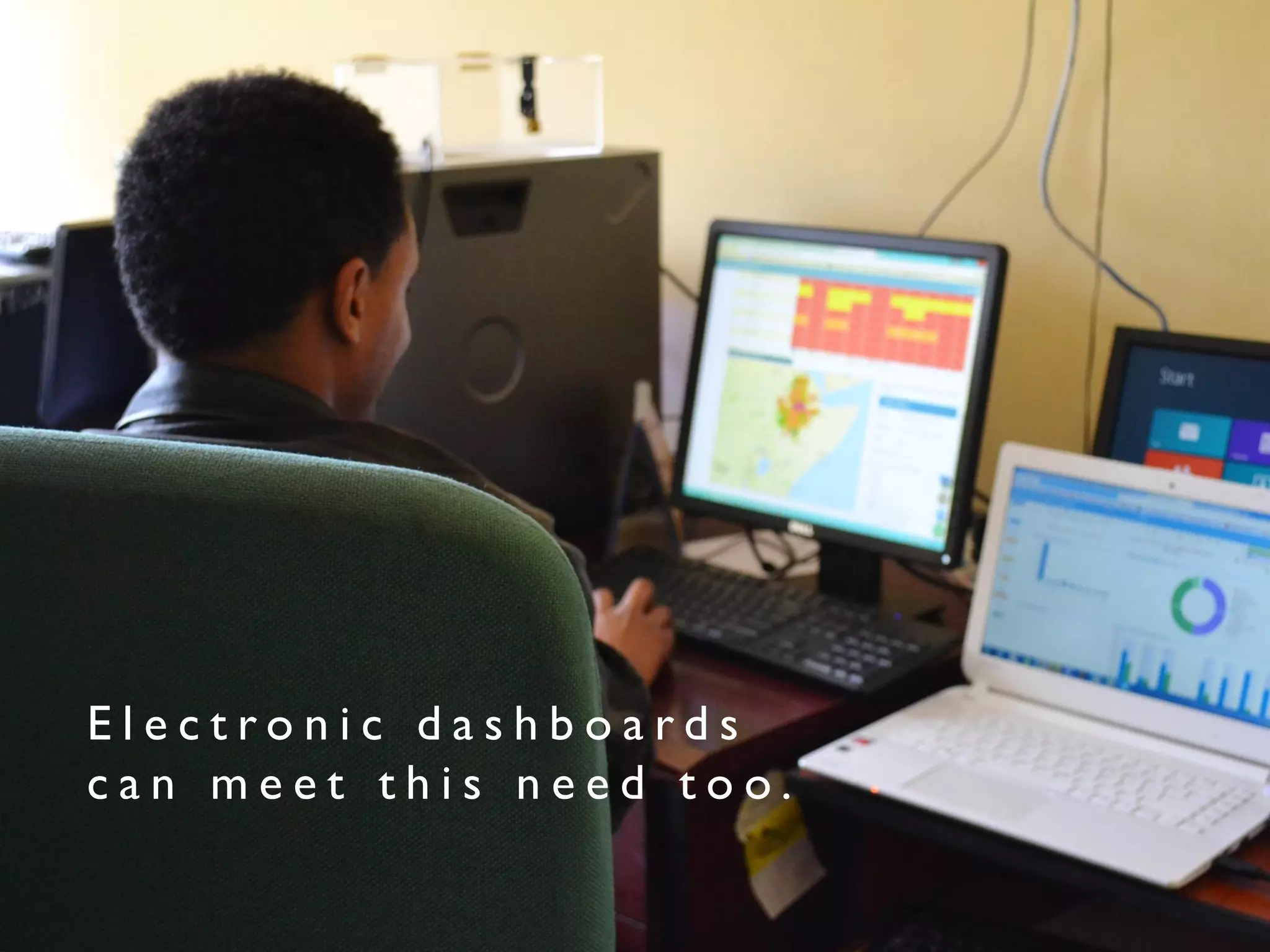
E l e c t r o n i c d a s h b o a r d s
c a n m e e t t h i s n e e d t o o .
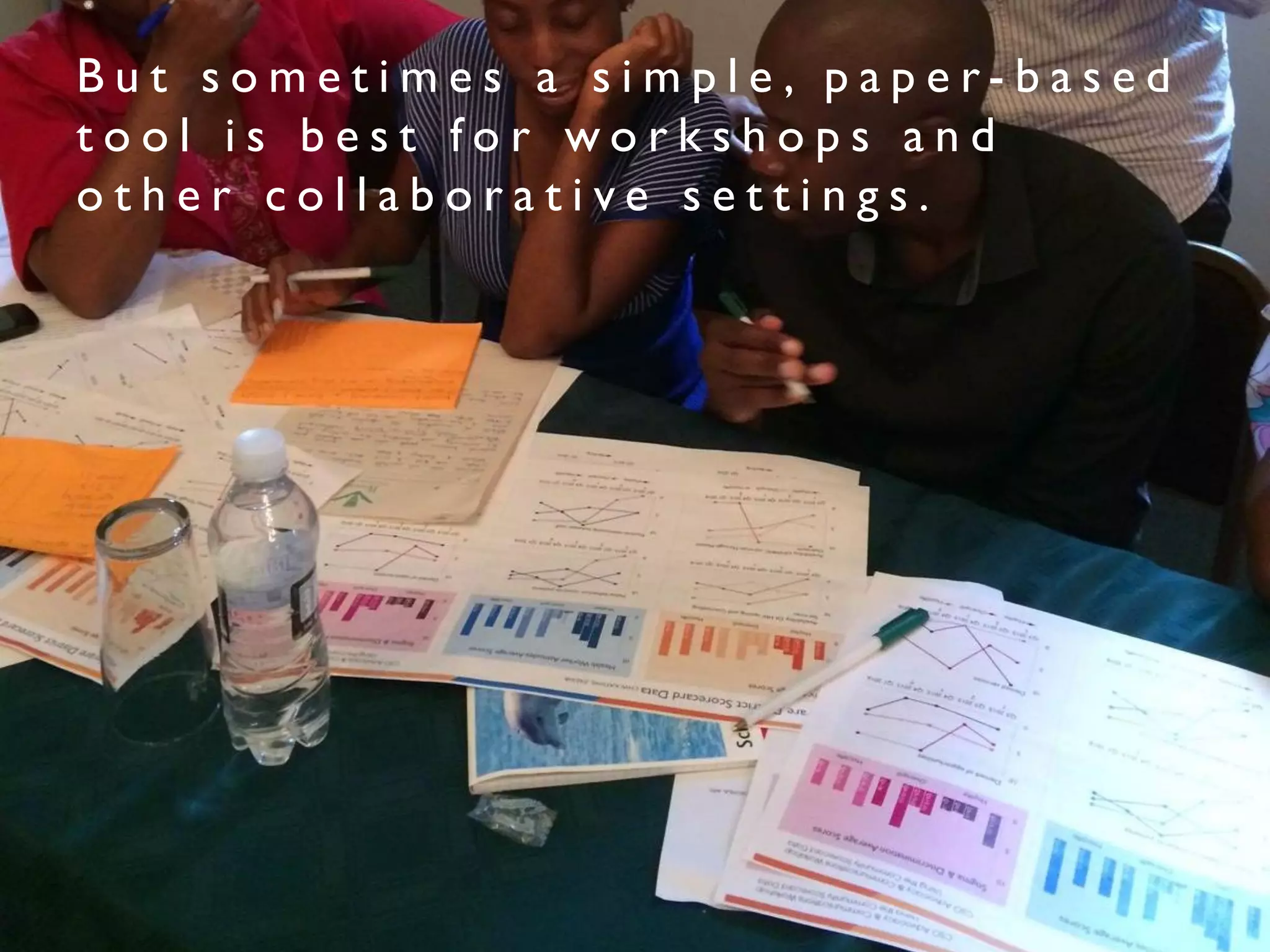
B u t s o m e t i m e s a s i m p l e , p a p e r - b a s e d
t o o l i s b e s t f o r w o r k s h o p s a n d
o t h e r c o l l a b o r a t i v e s e t t i n g s .
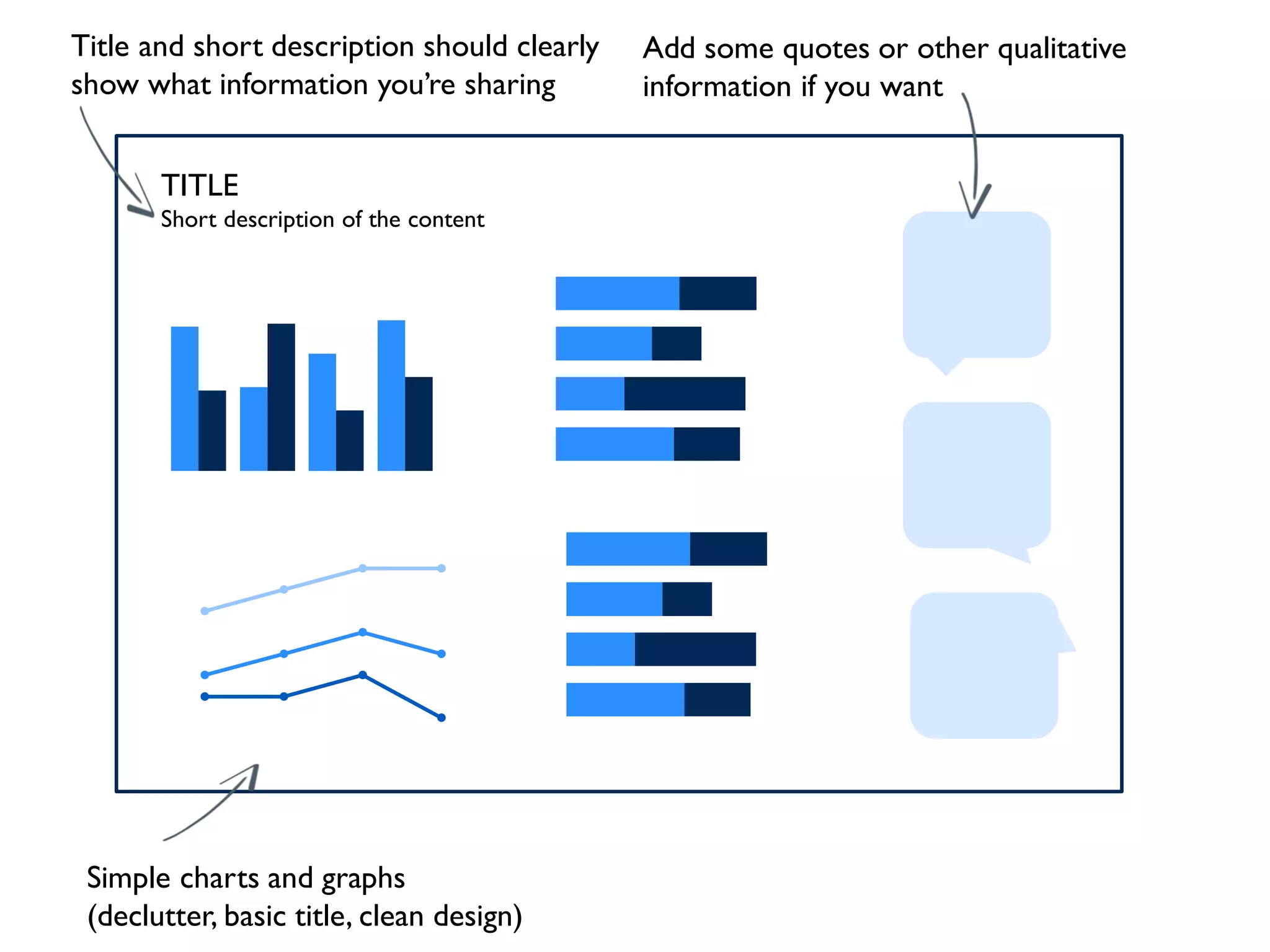
TITLE
Short description of the content
Simple charts and graphs
(declutter, basic title, clean design)
Add some quotes or other qualitative
information if you want
Title and short description should clearly
show what information you’re sharing
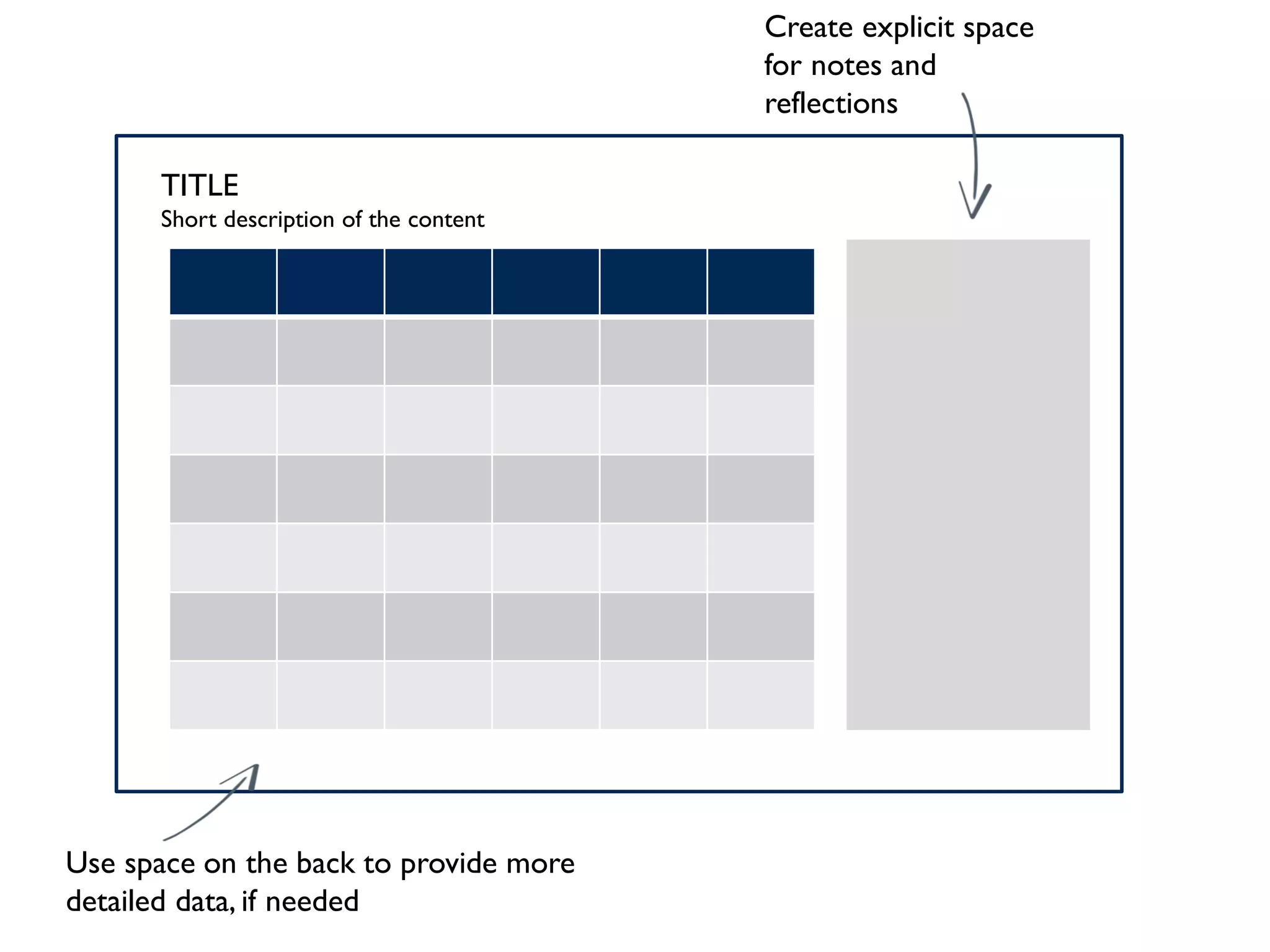
TITLE
Short description of the content
Use space on the back to provide more
detailed data, if needed
Create explicit space
for notes and
reflections
Think of it as an analog
dashboard being used as a
facilitation tool.
(Many of the best practices for
dashboard design also apply here.)
W h o w i l l y o u r p a r t i c i p a n t s b e
a n d w h a t q u e s t i o n s d o t h e y
w a n t t o a n s w e r ?
W h a t d a t a c a n y o u s h a r e
t o h e l p a n s w e r
t h o s e q u e s t i o n s ?
W h a t k i n d s o f ( s i m p l e )
v i s u a l i z a t i o n s s h o u l d y o u
u s e t o f a c i l i t a t e a n a l y s i s ?
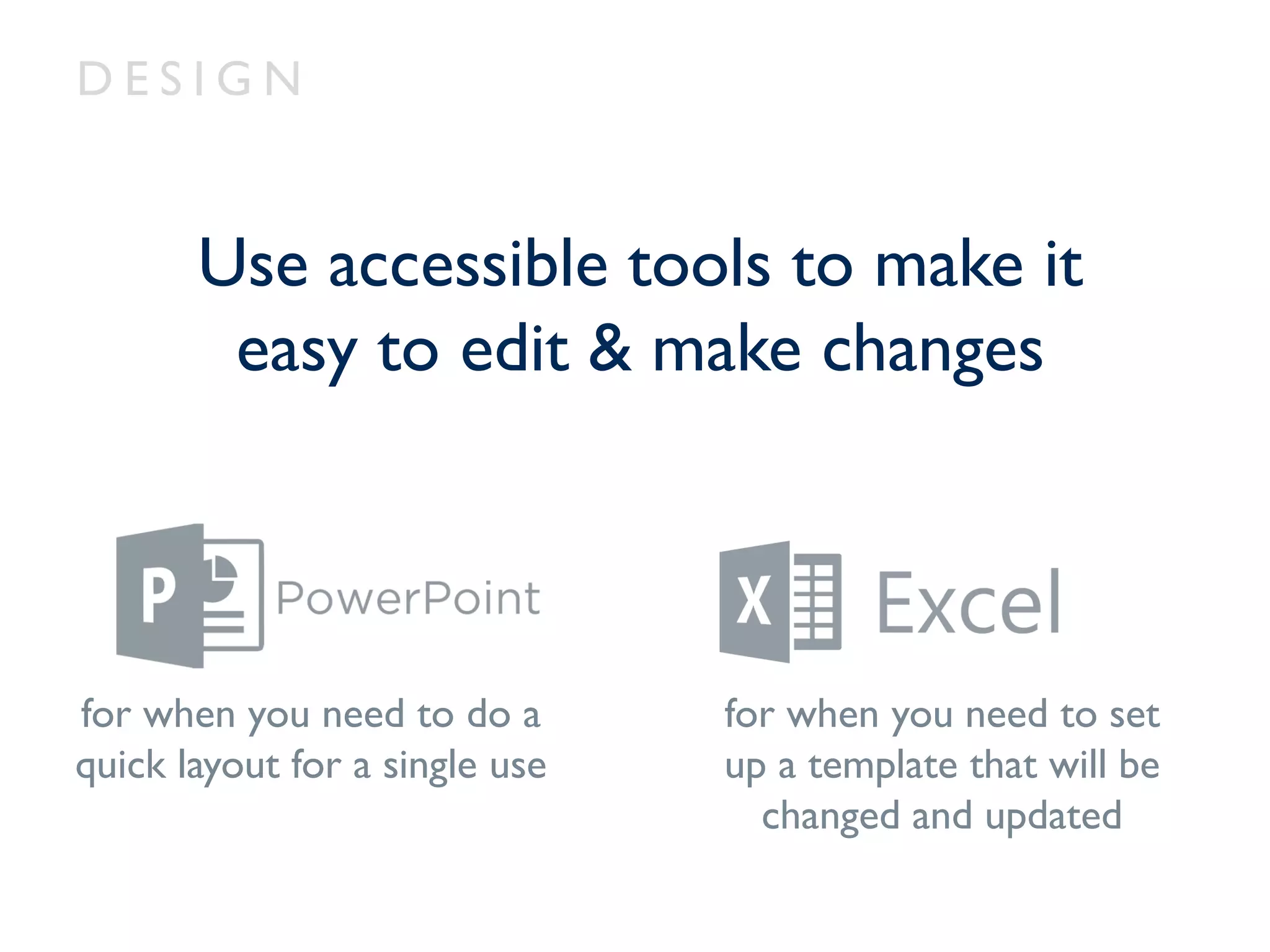
D E S I G N
Use accessible tools to make it
easy to edit & make changes
for when you need to do a
quick layout for a single use
for when you need to set
up a template that will be
changed and updated
Two use cases
for data placemats
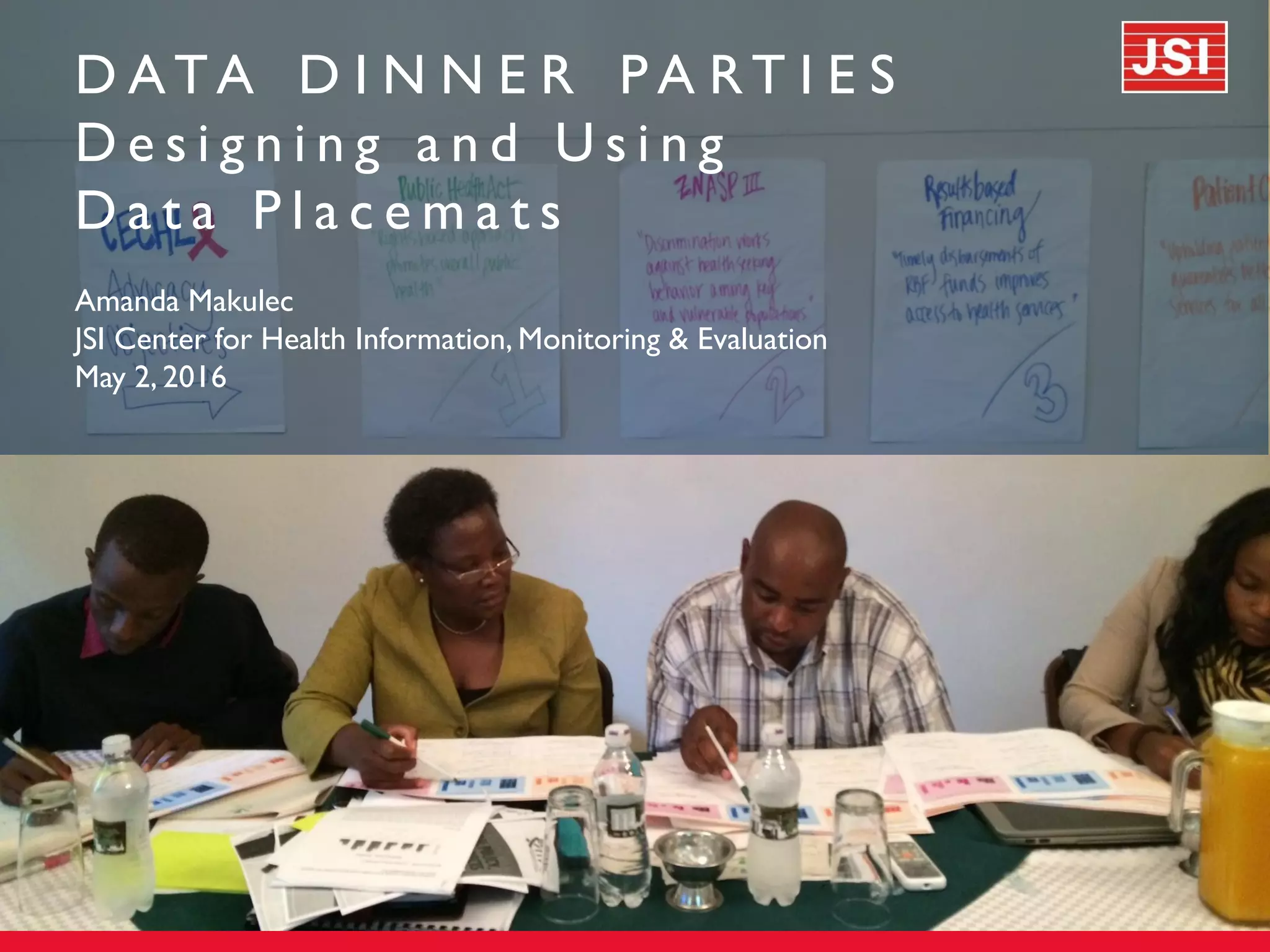
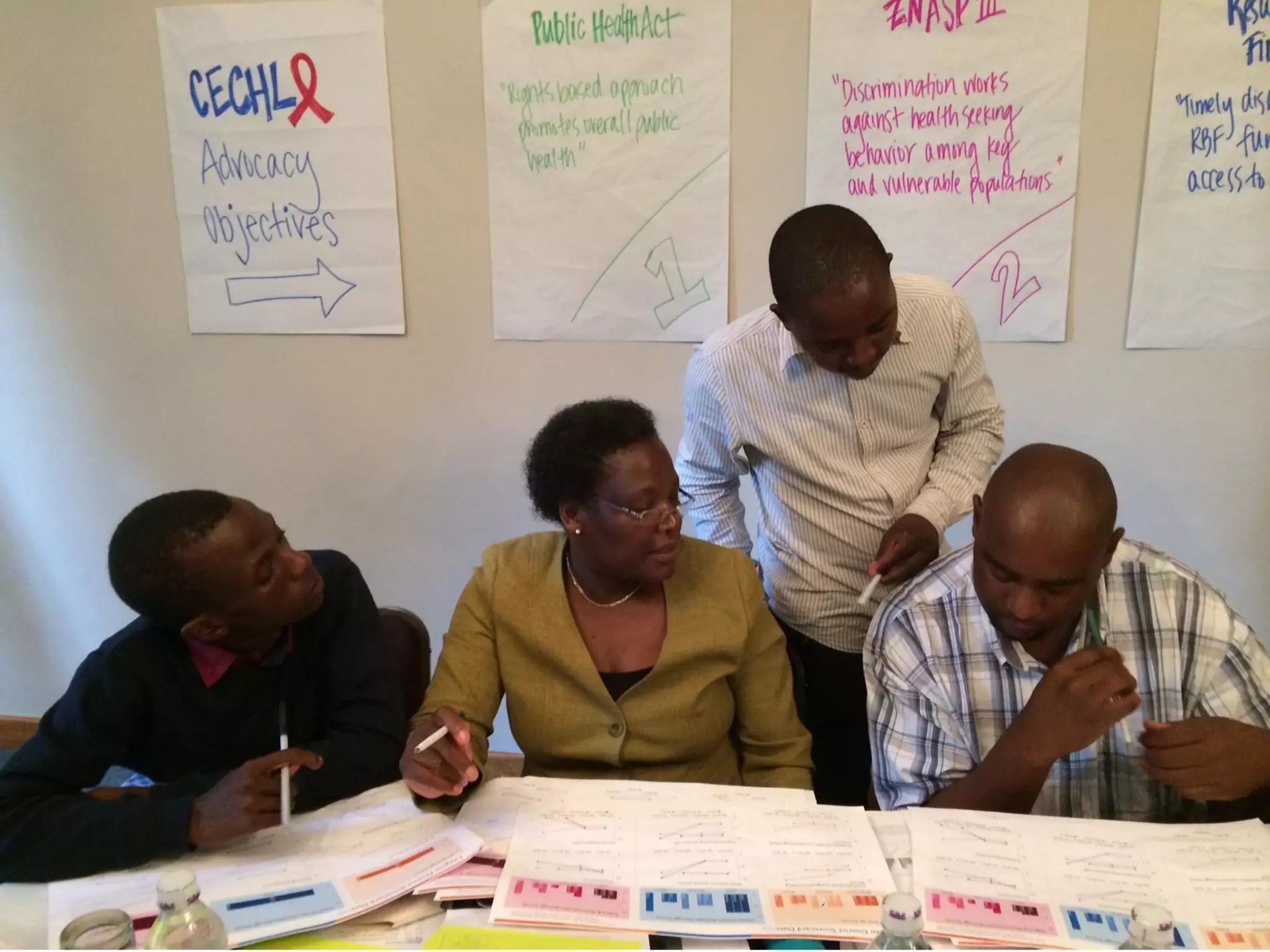
Advocacy Worksh op
Analyizing Community Scorecard Data from CECHLA,
a local consortium working on HIV/AIDS issues
in Zimbabwe
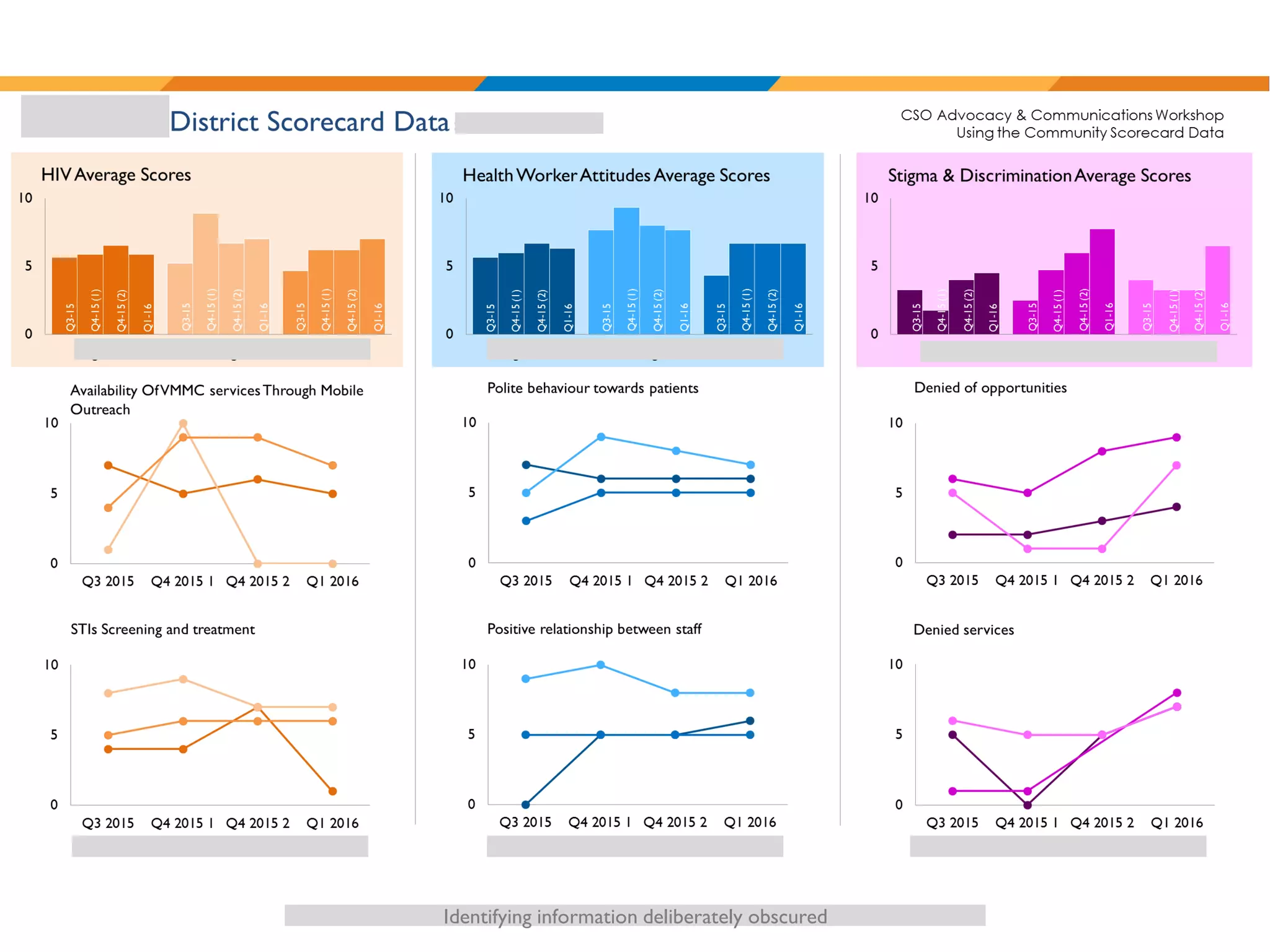
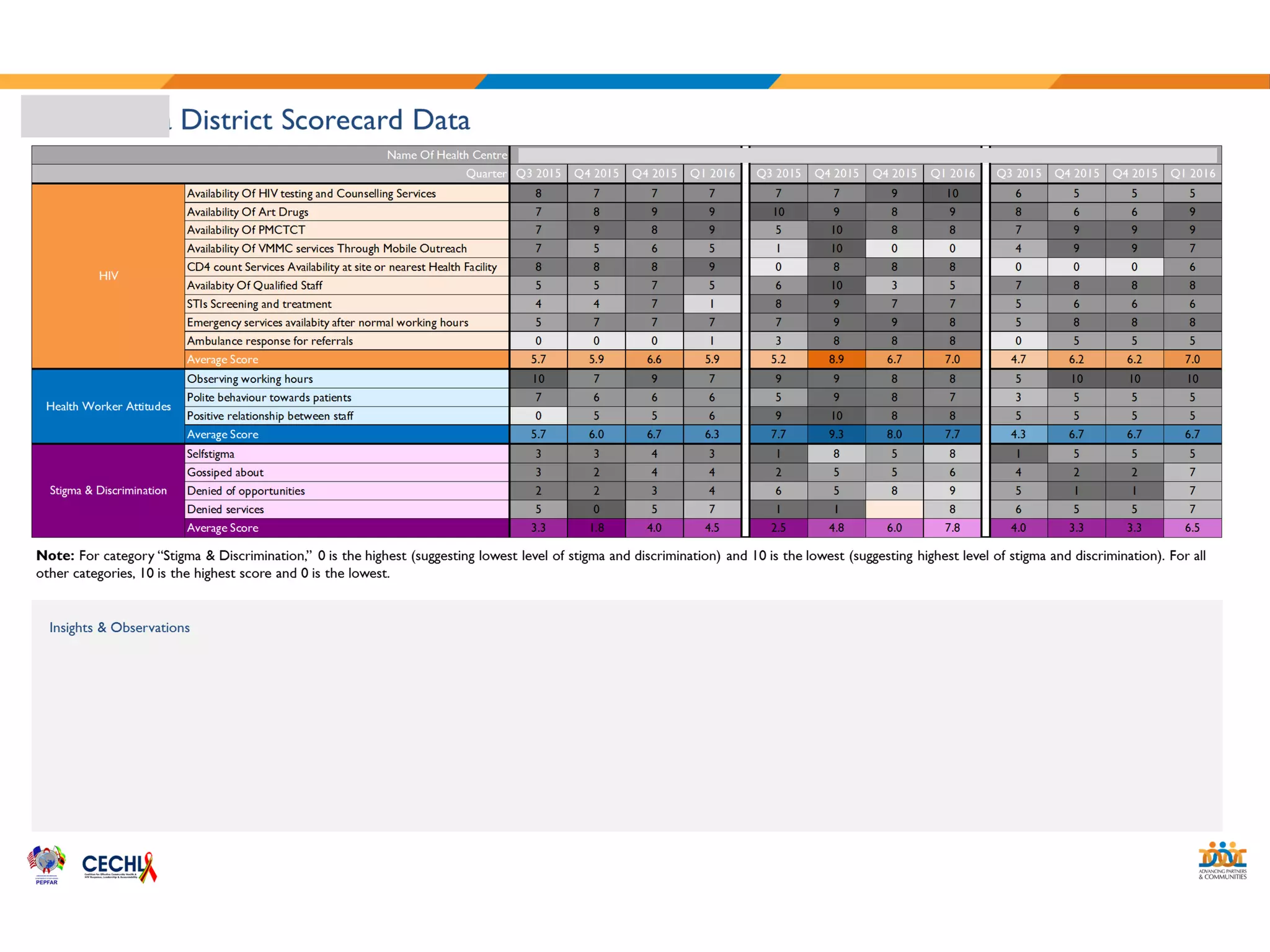
Identifying information deliberately obscured
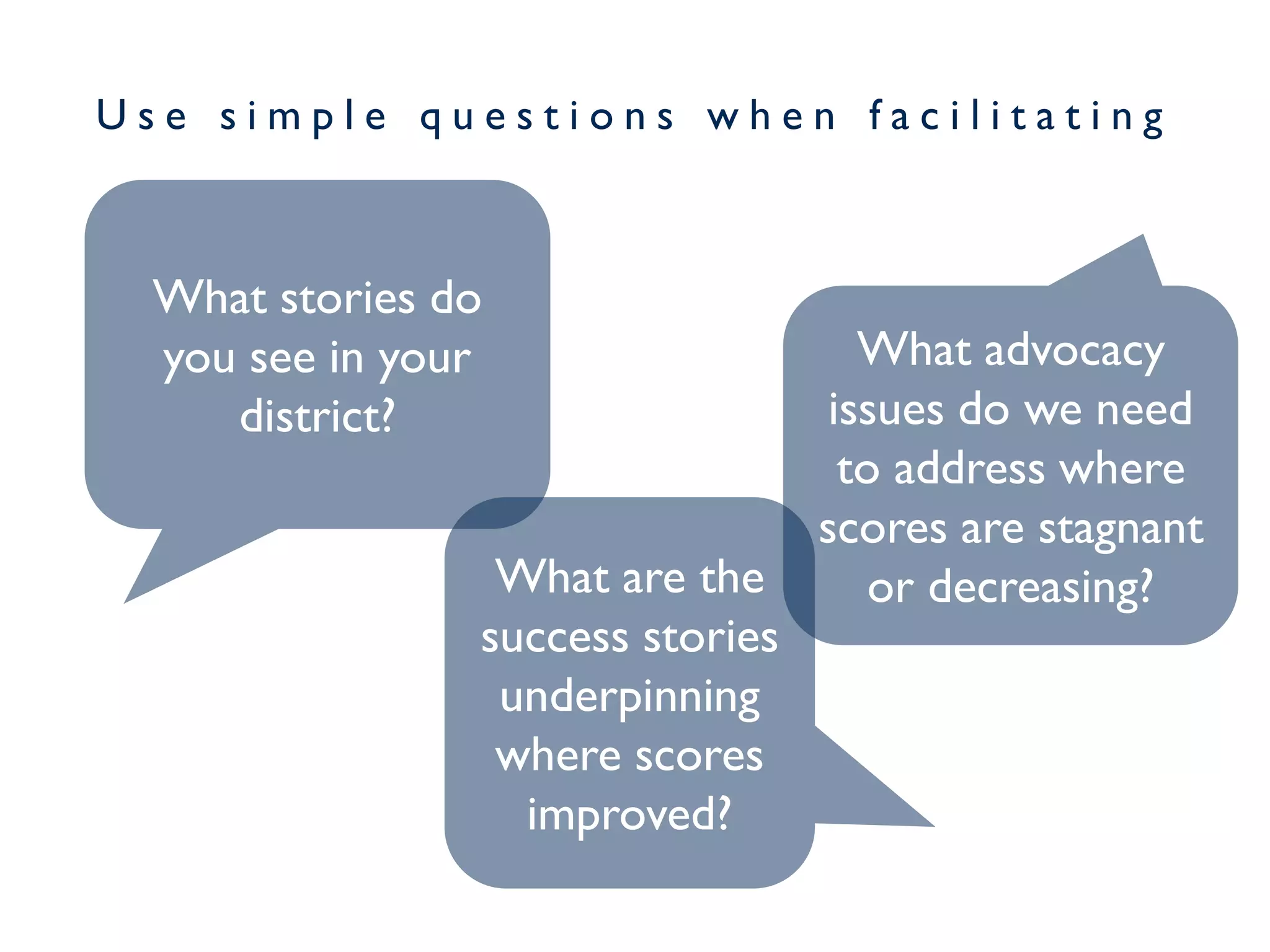
U s e s i m p l e q u e s t i o n s w h e n f a c i l i t a t i n g
What stories do
you see in your
district?
What are the
success stories
underpinning
where scores
improved?
What advocacy
issues do we need
to address where
scores are stagnant
or decreasing?
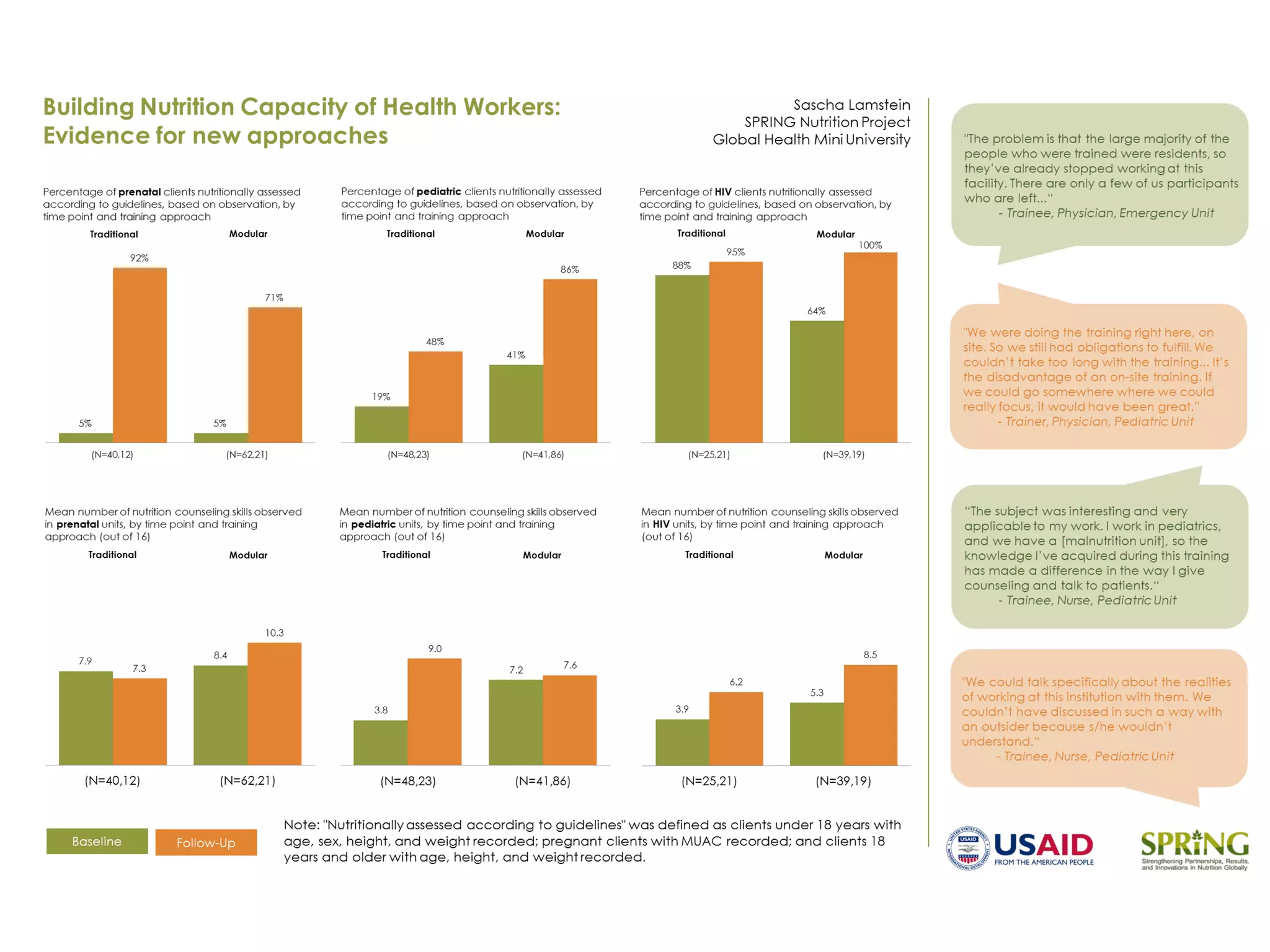
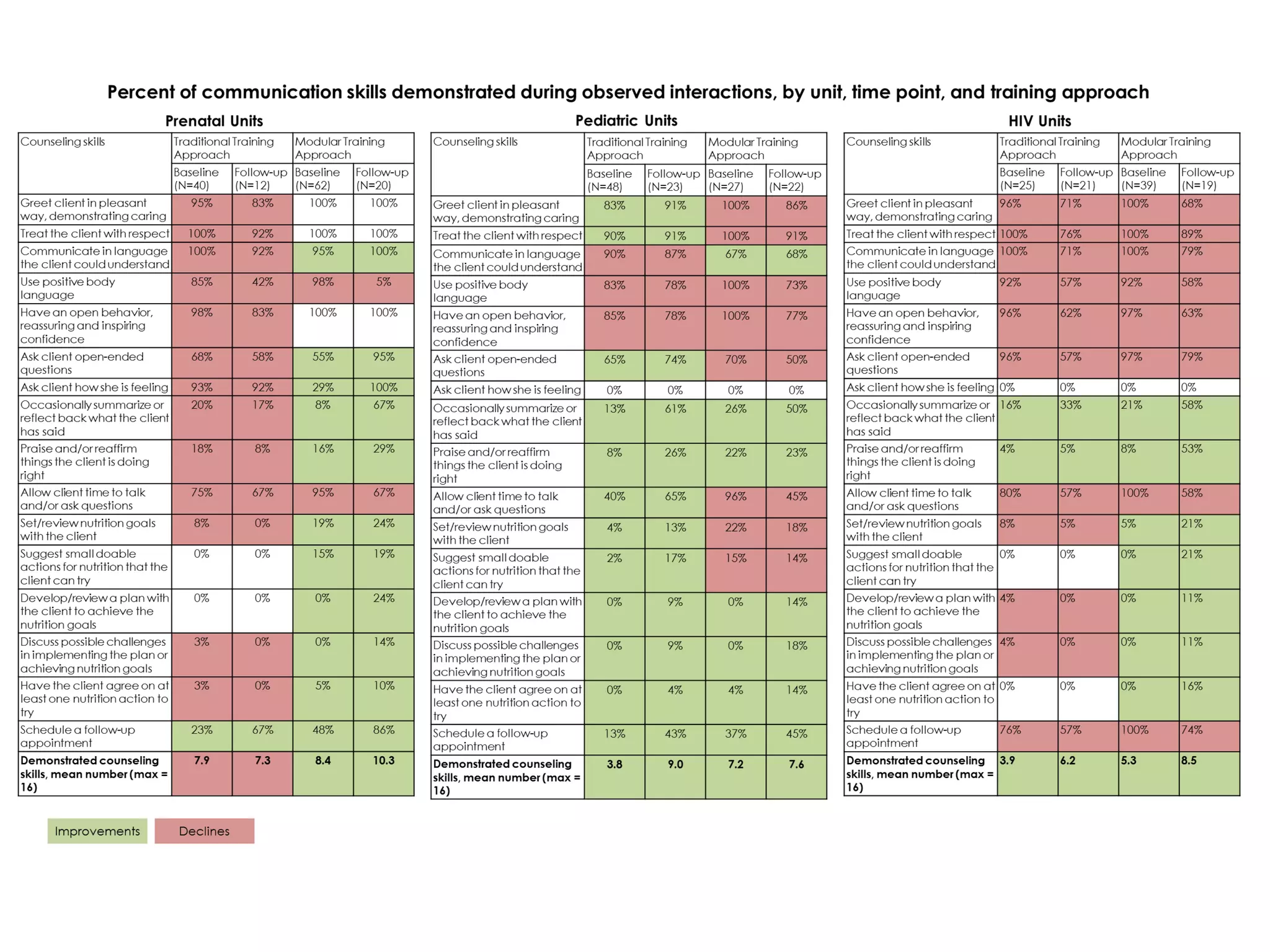
G l ob al Heal t h Mi n i U
SPRING Nutrition Capacity Building
Evaluation Data from Haiti
Considering using data
placemats for…
 Participatory analysis in a
workshop
 Engaging your audience in
an activity during a
presentation
 Helping to surface success
stories with stakeholders
But probably not for…
 A presentation handout or
leave behind on its own
 Engaging teams or
stakeholders with very
limited analytical capabilities
(who may be overwhelmed)
A few key lessons
learned from ou r
ex p eri en ces t o dat e .
Th i n k b i g.
( a s i n , 1 1 x 1 7 b i g )
Keep you r dat a
vi su al i z at i ons si mp l e .
K n ow you r au di en ce .
An t i ci p at e q u est i on s .
Make i t
p erson al .
FormoreinformationaboutJSI’s
research,monitoring,evaluation&health
informationwork,contact
chime@jsi.com
Follow
@jsihealth

Data Dinner Parties

  • 1.
    D A TAD I N N E R P A R T I E S D e s i g n i n g a n d U s i n g D a t a P l a c e m a t s Amanda Makulec JSI Center for Health Information, Monitoring & Evaluation May 2, 2016
  • 2.
  • 3.
  • 4.
  • 5.
  • 6.
  • 8.
    D a ta p l a c e m a t s * s h a r e i n f o r m a t i o n i n t h o u g h t f u l l y p r e s e n t e d w a y s t o s t r i k e u p c o n v e r s a t i o n s a n d g e n e r a t e n e w i n s i g h t . *Term originally coined by the Learn more about their concept: “Data Placemats: A DataViz Technique to Improve Stakeholder Understanding of Evaluation Results”Veena Pankaj / Presented at Evaluation 2012 http://www.slideshare.net/InnoNet_Eval/data-placemats-22200834
  • 9.
    E l ec t r o n i c d a s h b o a r d s c a n m e e t t h i s n e e d t o o .
  • 10.
    B u ts o m e t i m e s a s i m p l e , p a p e r - b a s e d t o o l i s b e s t f o r w o r k s h o p s a n d o t h e r c o l l a b o r a t i v e s e t t i n g s .
  • 11.
    TITLE Short description ofthe content Simple charts and graphs (declutter, basic title, clean design) Add some quotes or other qualitative information if you want Title and short description should clearly show what information you’re sharing
  • 12.
    TITLE Short description ofthe content Use space on the back to provide more detailed data, if needed Create explicit space for notes and reflections
  • 13.
    Think of itas an analog dashboard being used as a facilitation tool. (Many of the best practices for dashboard design also apply here.)
  • 14.
    W h ow i l l y o u r p a r t i c i p a n t s b e a n d w h a t q u e s t i o n s d o t h e y w a n t t o a n s w e r ? W h a t d a t a c a n y o u s h a r e t o h e l p a n s w e r t h o s e q u e s t i o n s ? W h a t k i n d s o f ( s i m p l e ) v i s u a l i z a t i o n s s h o u l d y o u u s e t o f a c i l i t a t e a n a l y s i s ?
  • 15.
    D E SI G N Use accessible tools to make it easy to edit & make changes for when you need to do a quick layout for a single use for when you need to set up a template that will be changed and updated
  • 16.
    Two use cases fordata placemats
  • 17.
    Advocacy Worksh op AnalyizingCommunity Scorecard Data from CECHLA, a local consortium working on HIV/AIDS issues in Zimbabwe
  • 19.
  • 21.
    U s es i m p l e q u e s t i o n s w h e n f a c i l i t a t i n g What stories do you see in your district? What are the success stories underpinning where scores improved? What advocacy issues do we need to address where scores are stagnant or decreasing?
  • 22.
    G l obal Heal t h Mi n i U SPRING Nutrition Capacity Building Evaluation Data from Haiti
  • 25.
    Considering using data placematsfor…  Participatory analysis in a workshop  Engaging your audience in an activity during a presentation  Helping to surface success stories with stakeholders But probably not for…  A presentation handout or leave behind on its own  Engaging teams or stakeholders with very limited analytical capabilities (who may be overwhelmed)
  • 26.
    A few keylessons learned from ou r ex p eri en ces t o dat e .
  • 27.
    Th i nk b i g. ( a s i n , 1 1 x 1 7 b i g )
  • 28.
    Keep you rdat a vi su al i z at i ons si mp l e .
  • 29.
    K n owyou r au di en ce .
  • 30.
    An t ici p at e q u est i on s .
  • 31.
    Make i t person al .
  • 32.