DIGITAL SUBSCRIBER LINE

After traditional modems reached their peak data
rate, telephone companies developed another
technology, Digital subscriber line (DSL), to provide
higher-speed access to the Internet.


 9.1
DSL (Digital Subscriber Line)
 • Use existing telephone lines, DSL integrates regular phone service and
 Internet access by using a DSL hub.
 • “Always Connected" situation.
 • Maximum speed may be limited by the physical distance from a
 telephone company central office (CO) to the computer


(ISDN (Integrated Services Digital Network) is a technology developed in the 1980s that
uses regular telephone lines, and is accessed by a dial-up connection. ISDN is actually
an early implementation of DSL.)


9.2
•Stands for Asymmetric Digital Subsriber Line
 • The most popular version of DSL
 • It is called “Asymmetric” because the bandwidth is not the same :
       Downstream > Upstream
 •Utilizes frequencies that are not used by a voice telephone call, therefore it has
  faster data transmission over copper telephone lines than a conventional
   voiceband modem
 • Reason of popularity – Residential users prefer greater download speed than upload
   speed


9.3
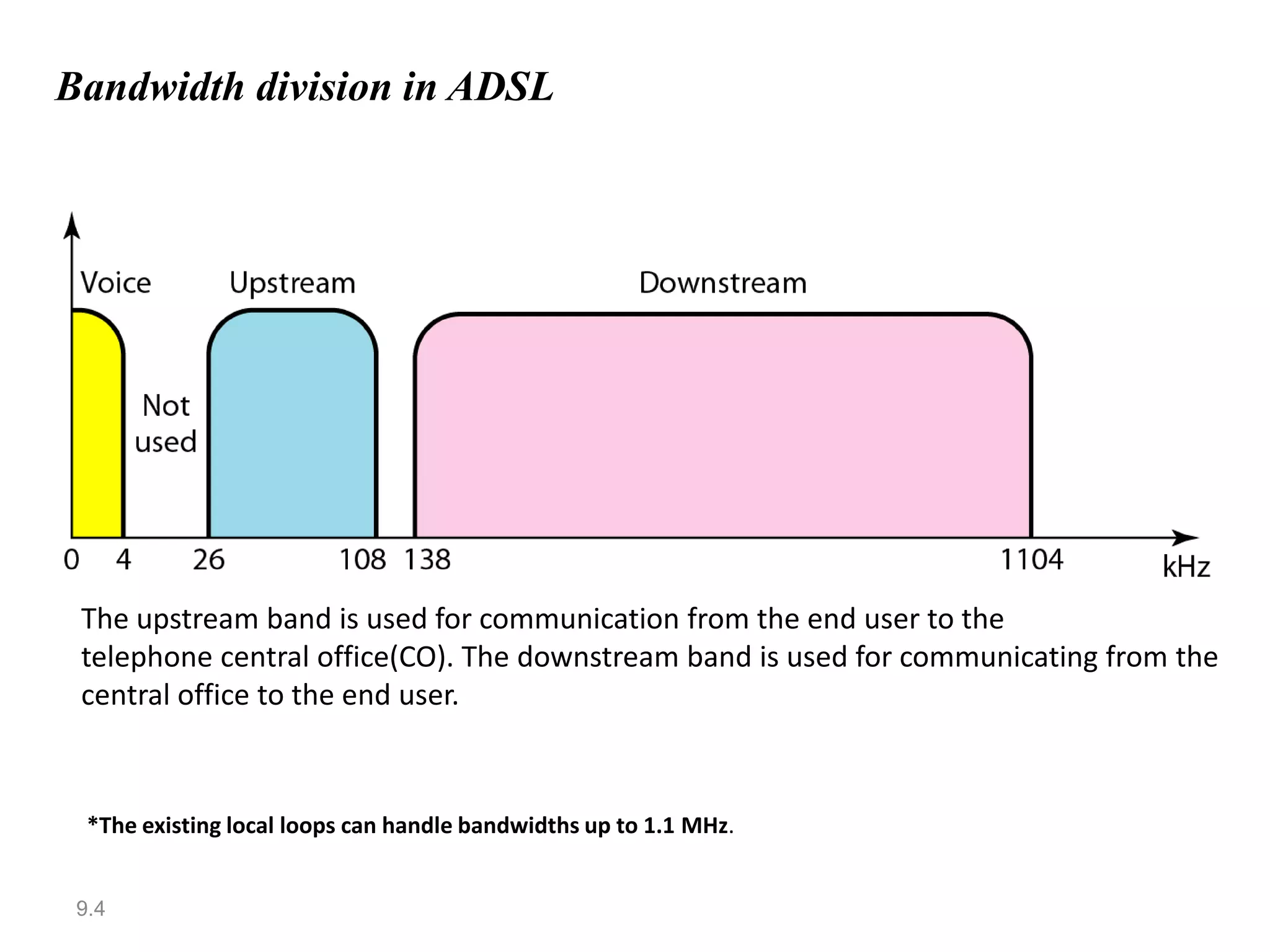
Bandwidth division in ADSL


 The upstream band is used for communication from the end user to the
 telephone central office(CO). The downstream band is used for communicating from the
 central office to the end user.


  *The existing local loops can handle bandwidths up to 1.1 MHz.


 9.4
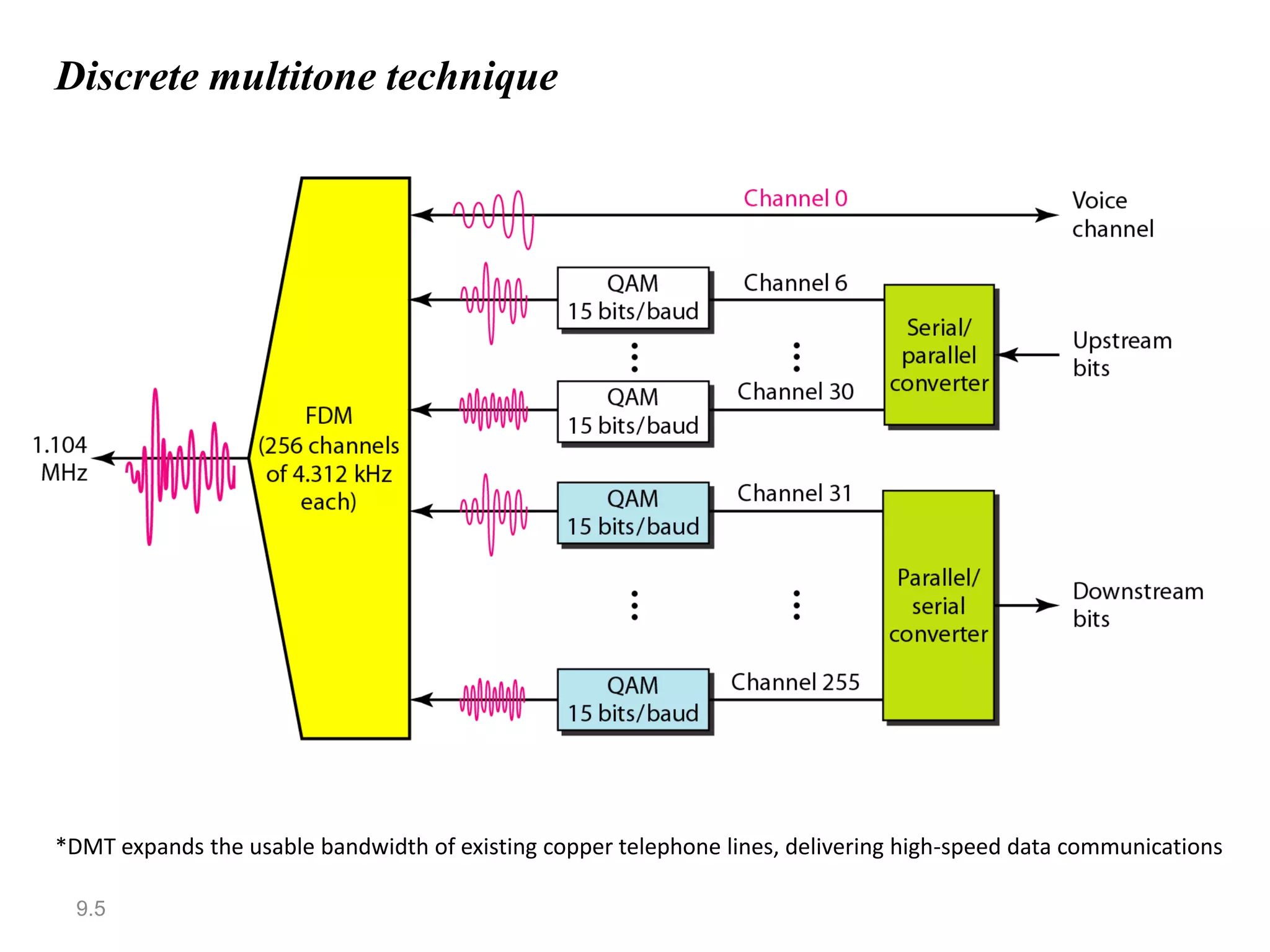
Discrete multitone technique


*DMT expands the usable bandwidth of existing copper telephone lines, delivering high-speed data communications

  9.5
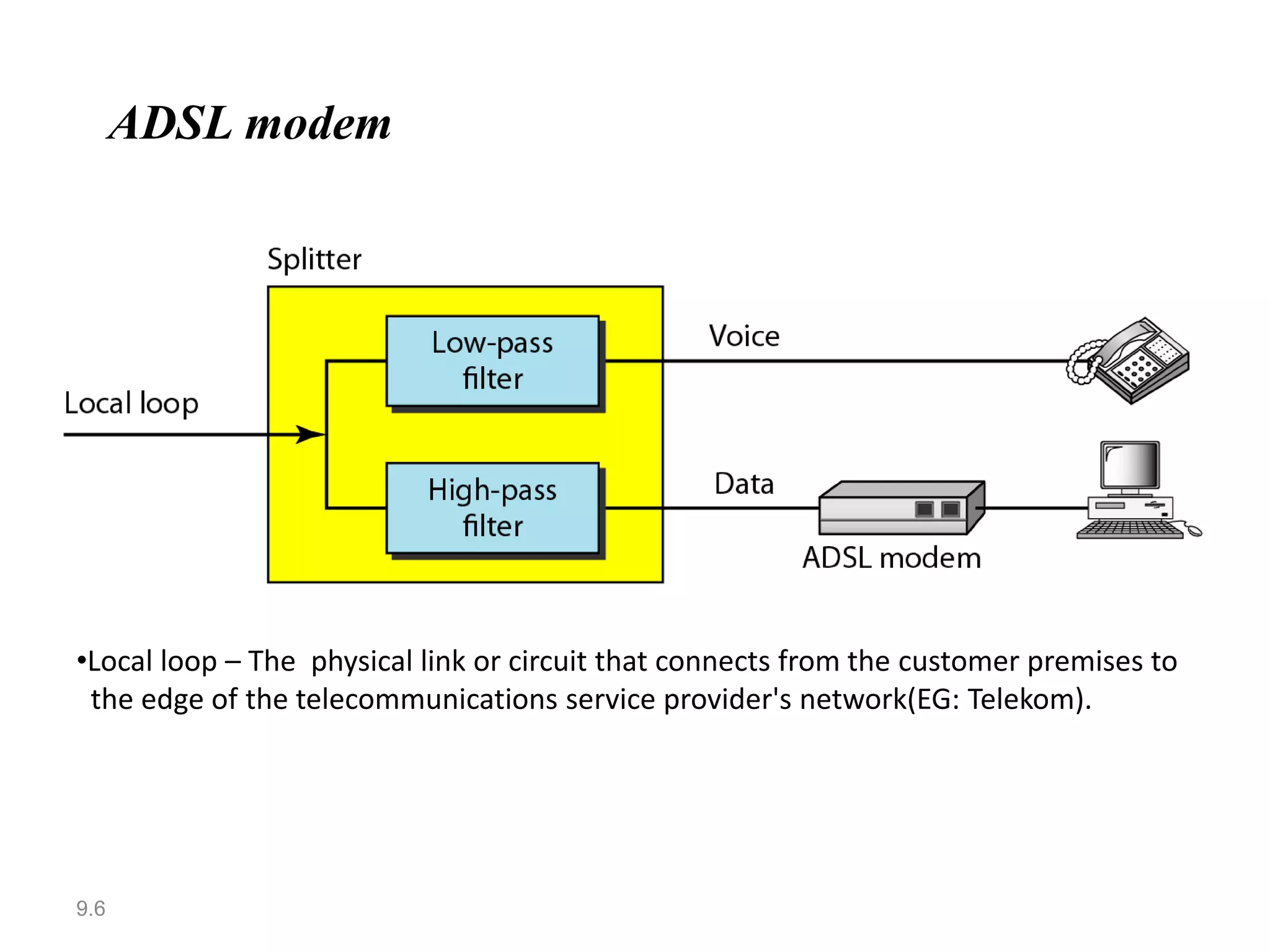
ADSL modem


•Local loop – The physical link or circuit that connects from the customer premises to
 the edge of the telecommunications service provider's network(EG: Telekom).


9.6
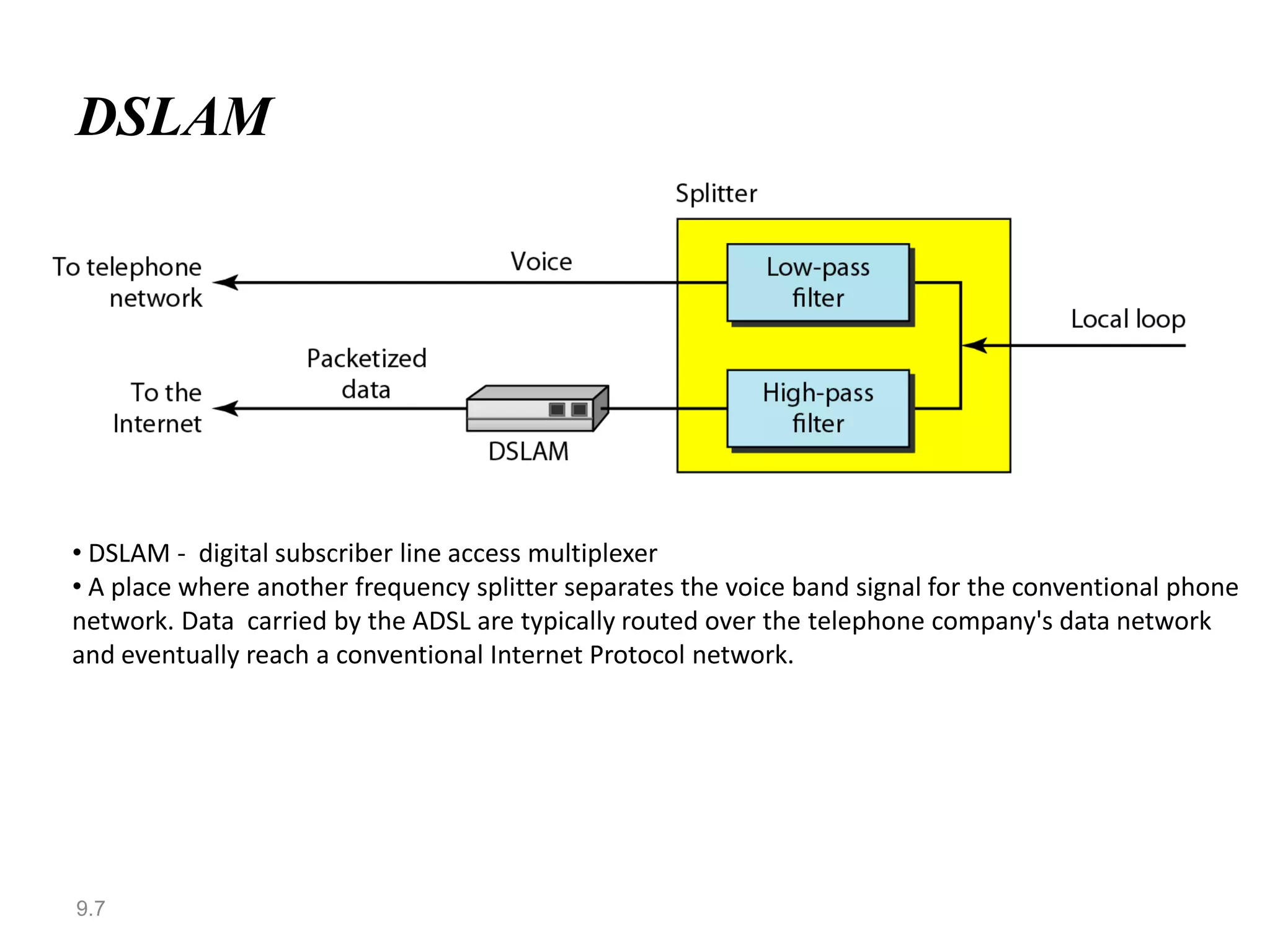
DSLAM


• DSLAM - digital subscriber line access multiplexer
• A place where another frequency splitter separates the voice band signal for the conventional phone
network. Data carried by the ADSL are typically routed over the telephone company's data network
and eventually reach a conventional Internet Protocol network.


9.7
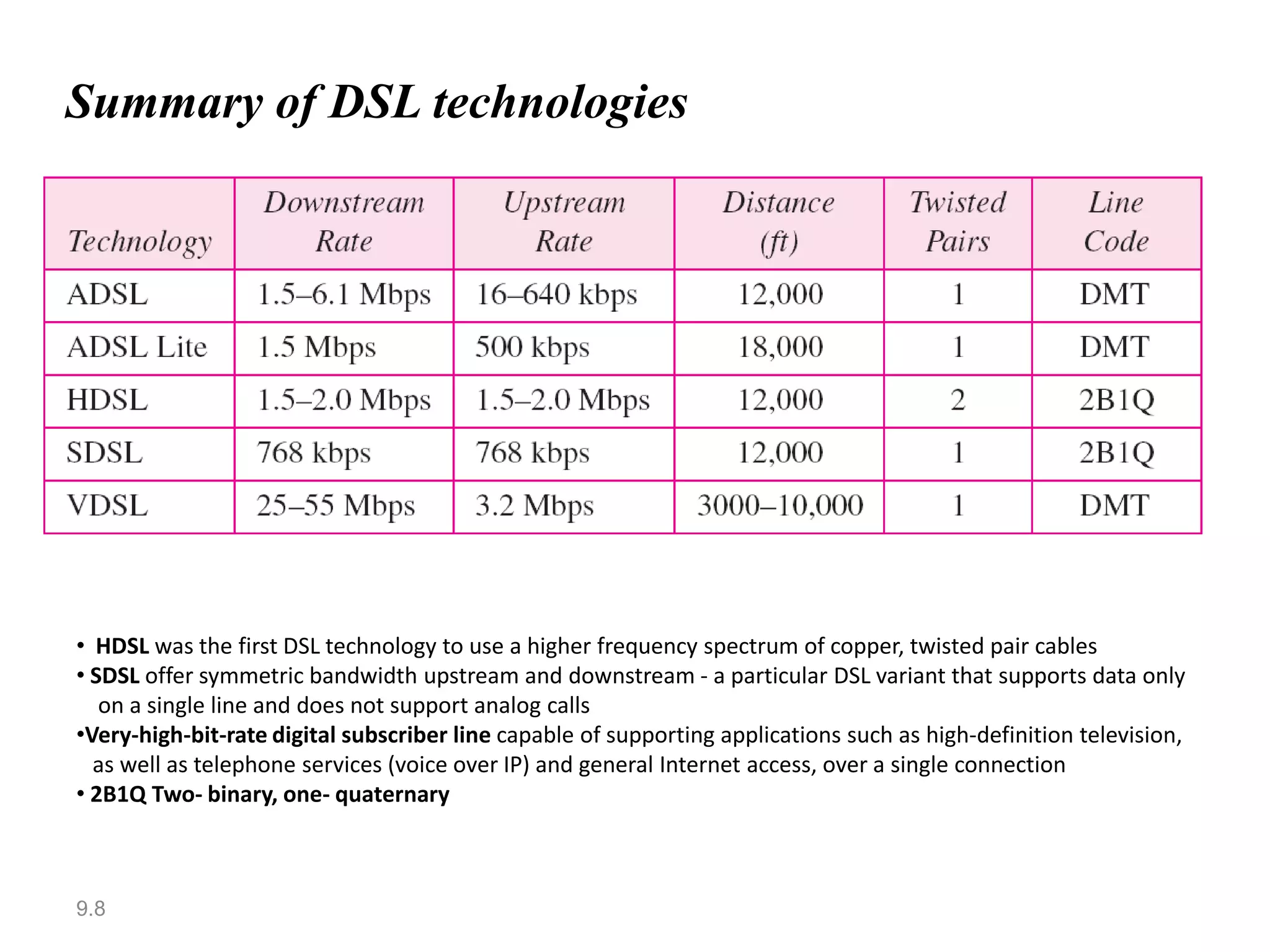
Summary of DSL technologies


• HDSL was the first DSL technology to use a higher frequency spectrum of copper, twisted pair cables
• SDSL offer symmetric bandwidth upstream and downstream - a particular DSL variant that supports data only
   on a single line and does not support analog calls
•Very-high-bit-rate digital subscriber line capable of supporting applications such as high-definition television,
  as well as telephone services (voice over IP) and general Internet access, over a single connection
• 2B1Q Two- binary, one- quaternary


9.8
Data communication & network - ADSL

Data communication & network - ADSL

  • 1.
    DIGITAL SUBSCRIBER LINE Aftertraditional modems reached their peak data rate, telephone companies developed another technology, Digital subscriber line (DSL), to provide higher-speed access to the Internet. 9.1
  • 2.
    DSL (Digital SubscriberLine) • Use existing telephone lines, DSL integrates regular phone service and Internet access by using a DSL hub. • “Always Connected" situation. • Maximum speed may be limited by the physical distance from a telephone company central office (CO) to the computer (ISDN (Integrated Services Digital Network) is a technology developed in the 1980s that uses regular telephone lines, and is accessed by a dial-up connection. ISDN is actually an early implementation of DSL.) 9.2
  • 3.
    •Stands for AsymmetricDigital Subsriber Line • The most popular version of DSL • It is called “Asymmetric” because the bandwidth is not the same : Downstream > Upstream •Utilizes frequencies that are not used by a voice telephone call, therefore it has faster data transmission over copper telephone lines than a conventional voiceband modem • Reason of popularity – Residential users prefer greater download speed than upload speed 9.3
  • 4.
    Bandwidth division inADSL The upstream band is used for communication from the end user to the telephone central office(CO). The downstream band is used for communicating from the central office to the end user. *The existing local loops can handle bandwidths up to 1.1 MHz. 9.4
  • 5.
    Discrete multitone technique *DMTexpands the usable bandwidth of existing copper telephone lines, delivering high-speed data communications 9.5
  • 6.
    ADSL modem •Local loop– The physical link or circuit that connects from the customer premises to the edge of the telecommunications service provider's network(EG: Telekom). 9.6
  • 7.
    DSLAM • DSLAM -digital subscriber line access multiplexer • A place where another frequency splitter separates the voice band signal for the conventional phone network. Data carried by the ADSL are typically routed over the telephone company's data network and eventually reach a conventional Internet Protocol network. 9.7
  • 8.
    Summary of DSLtechnologies • HDSL was the first DSL technology to use a higher frequency spectrum of copper, twisted pair cables • SDSL offer symmetric bandwidth upstream and downstream - a particular DSL variant that supports data only on a single line and does not support analog calls •Very-high-bit-rate digital subscriber line capable of supporting applications such as high-definition television, as well as telephone services (voice over IP) and general Internet access, over a single connection • 2B1Q Two- binary, one- quaternary 9.8