SEGHERS Dano Drum
Waste Pre-Treatment Technology


                  26 Ju ne 201 2
          © Keppel Seghers Group of Companies, 20012
Contents

     •1.   The Keppel Seghers DANO DRUM
            History
            The Key Element
            Process Implementation
            Main Applications
                      -Bulk Reduction
                      -Materials Recovery
                      -Biological treatment
                      -Case Study: Rapid City, SD
     •2.   References
History
     1. DANO Denmark
          Composting since 1939
     2. DANO Switzerland (1972)
          Composting/separation/pulverisation
     3. DANO Motherwell Bridge UK (1986)
          Biological treatment - separation-pulverisation -
          Materials Recycling Facility
     4. DANO (1999)
          Materials Recycling Facility – separation -pulverization -
          Biological treatment – Waste-to-Power
Updating your perceptions


DANO allows a maximum recovery of recyclable
 materials, an ideal pretreatment of the organic
 fraction prior to biological treatment and at the same
 time produces an excellent RDF type of fuel.
What is waste?

• Technical: a product not longer wanted by its producer
  Note: it can still be a valuable raw material to others!


• Economical: a product for which one has to pay to dispose of


• Legal: “each matter or object of which the owner wants , plans or has
  to dispose of”


• Different categories of “waste” according to source, physical &
  chemical composition, size, …
Keppel Seghers Dano Drum
 The core of a waste pre-treatment installation is the
 KEPPEL SEGHERS Dano Drum for waste conditioning.

 The drum is a horizontally mounted, rotating steel
 cylinder which automatically shreds, mixes, conditions
 and sorts the refuse into components for either
 recycling, composting, or incineration with energy
 recovery.
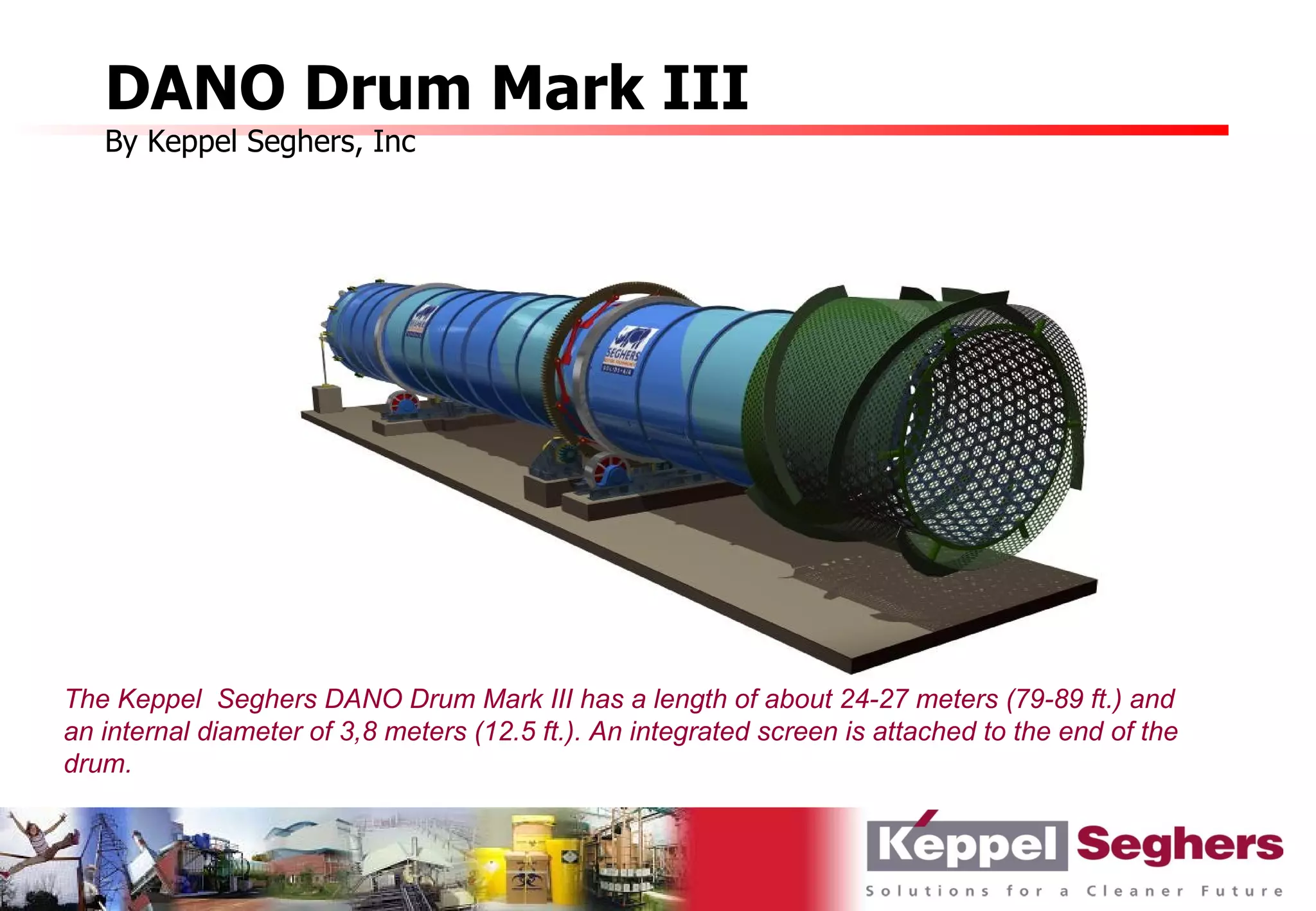
DANO Drum Mark III
   By Keppel Seghers, Inc


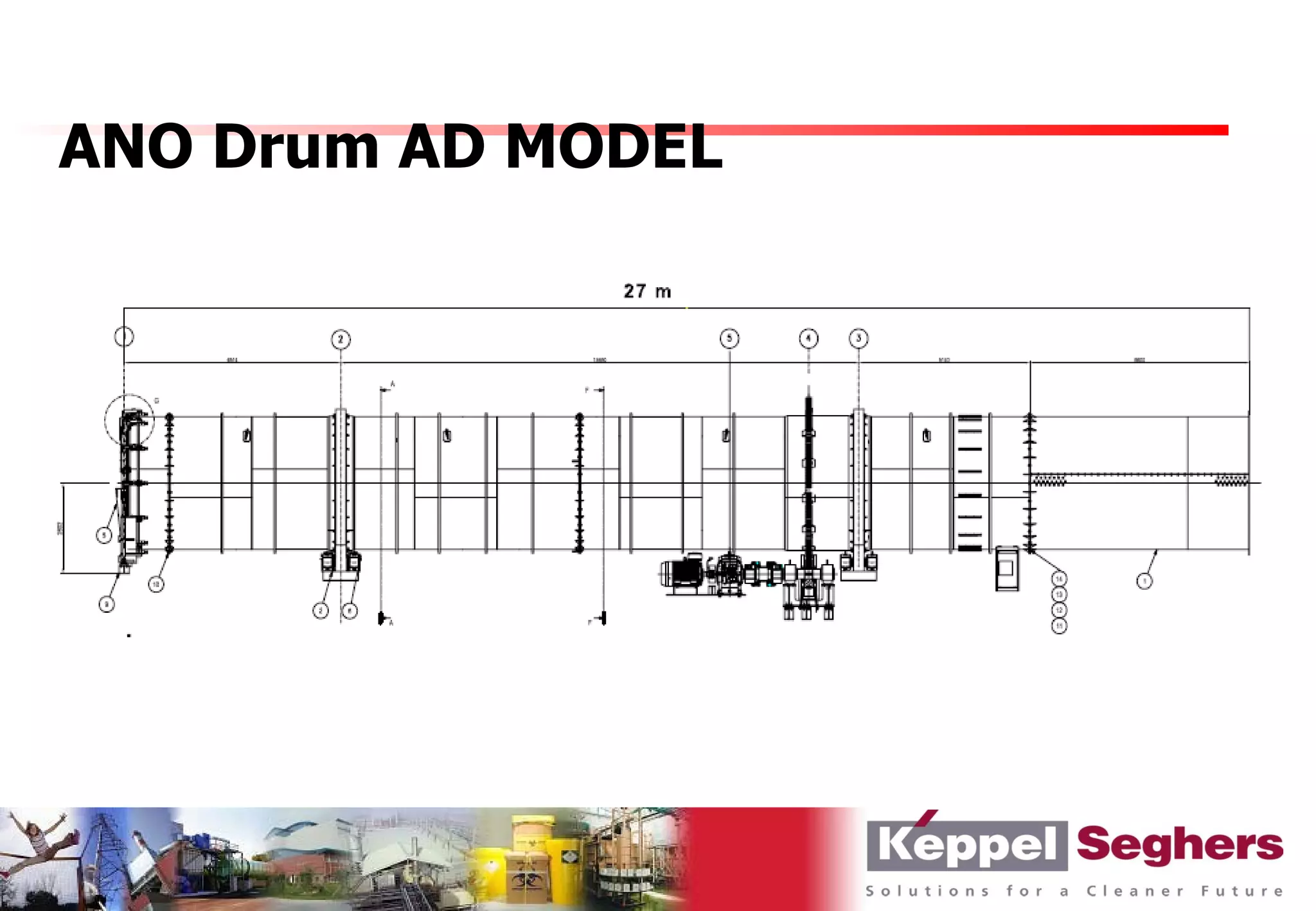
The Keppel Seghers DANO Drum Mark III has a length of about 24-27 meters (79-89 ft.) and
an internal diameter of 3,8 meters (12.5 ft.). An integrated screen is attached to the end of the
drum.
ANO Drum AD MODEL
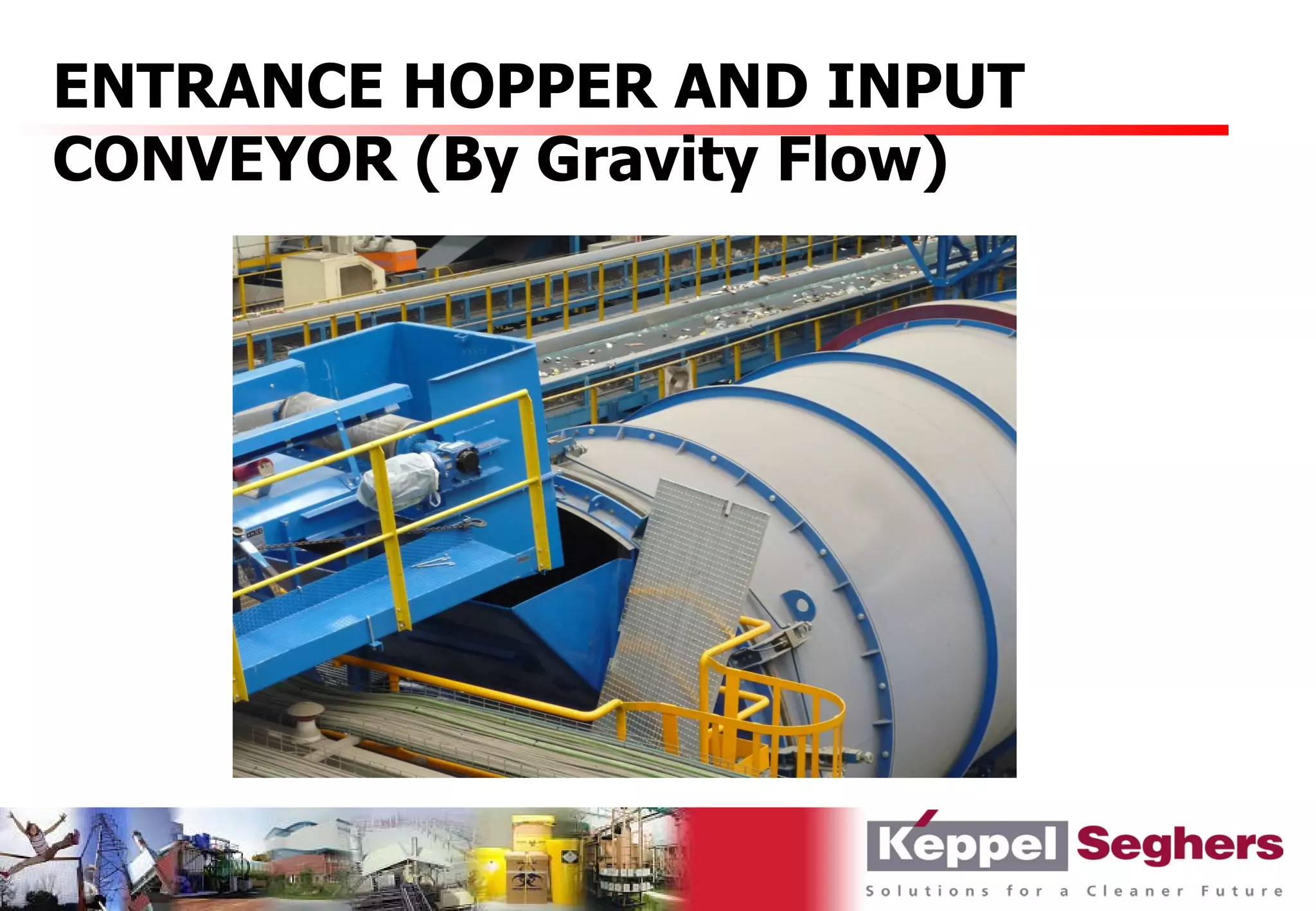
ENTRANCE HOPPER AND INPUT
CONVEYOR (By Gravity Flow)
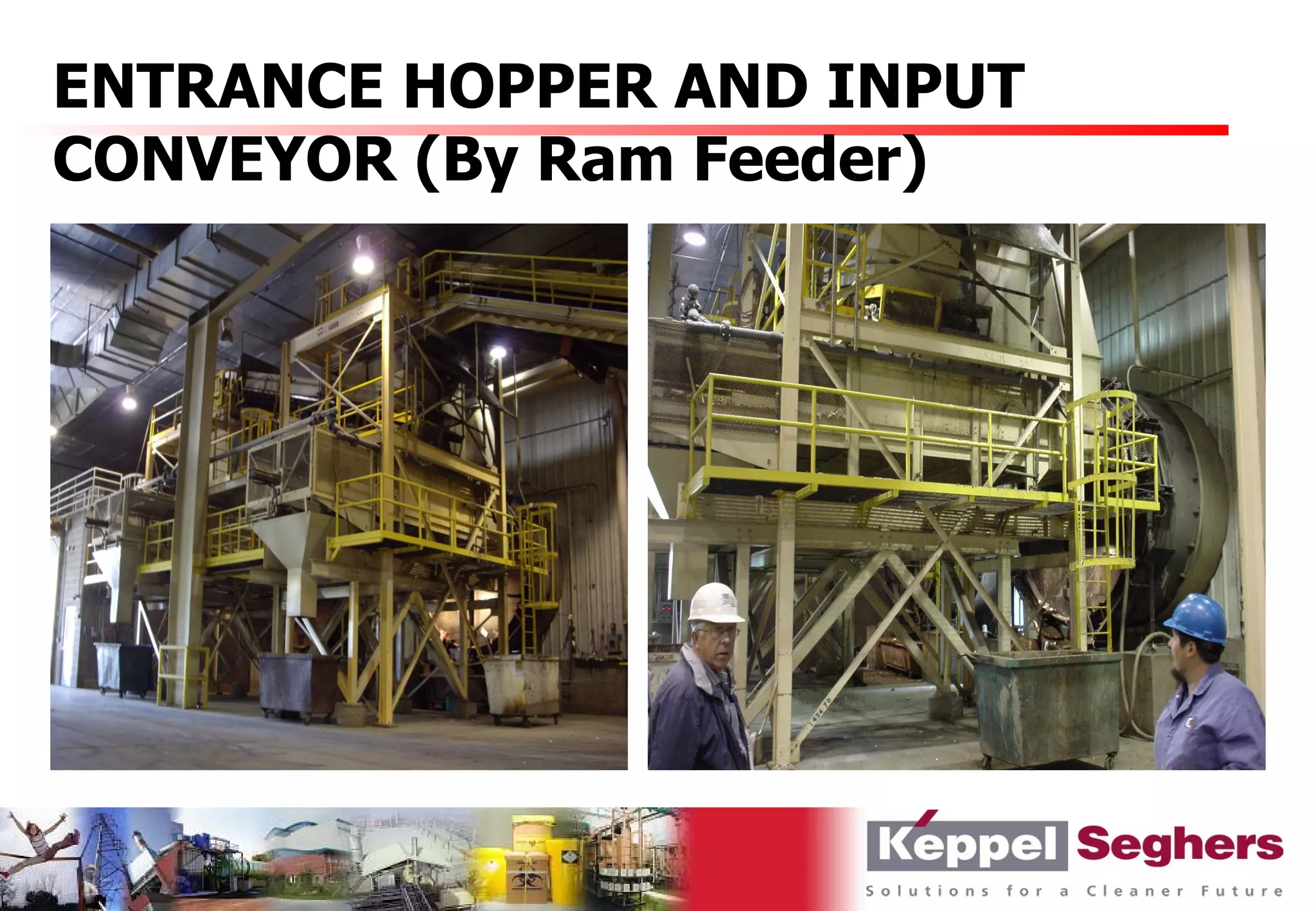
ENTRANCE HOPPER AND INPUT
CONVEYOR (By Ram Feeder)
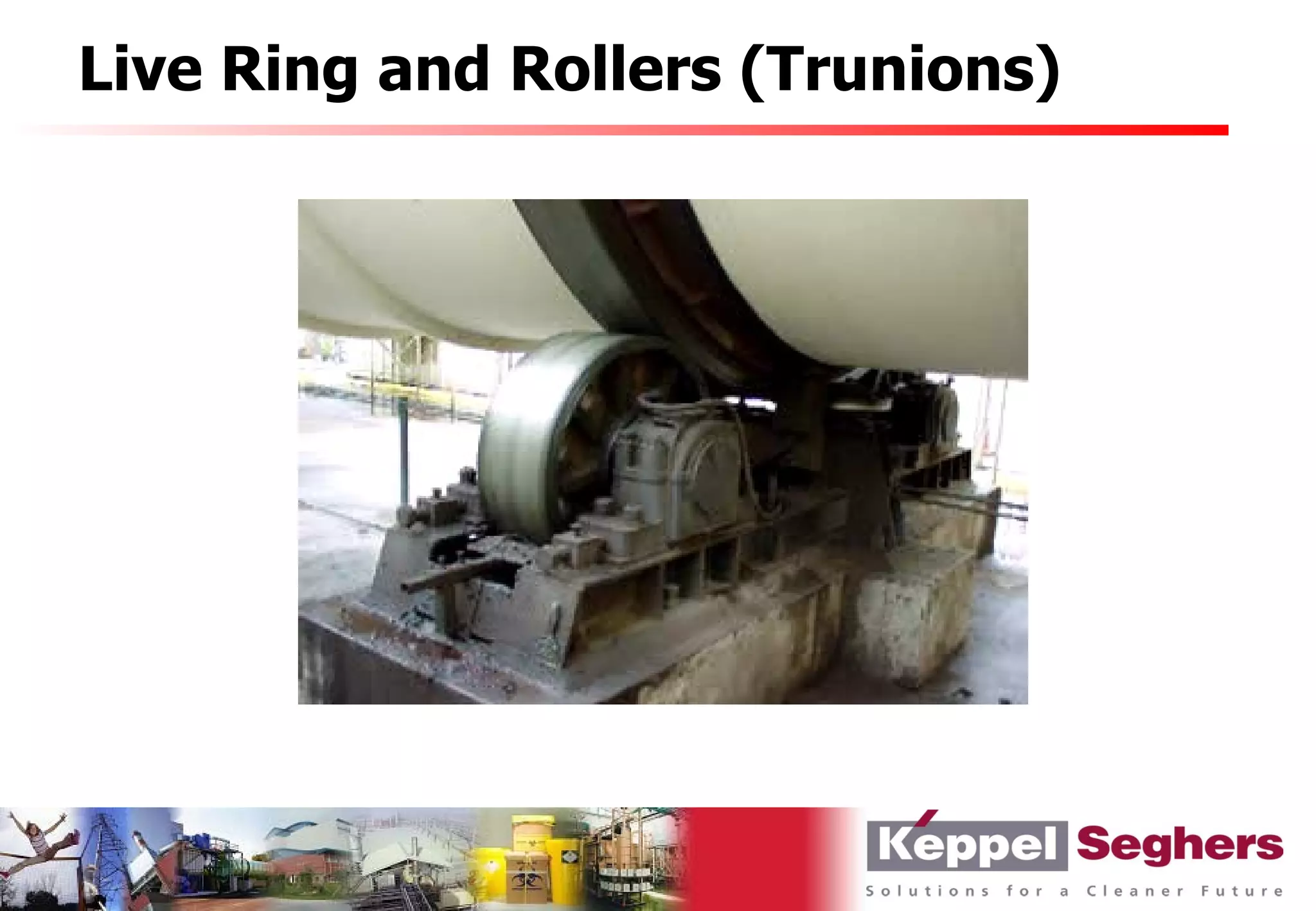
Live Ring and Rollers (Trunions)
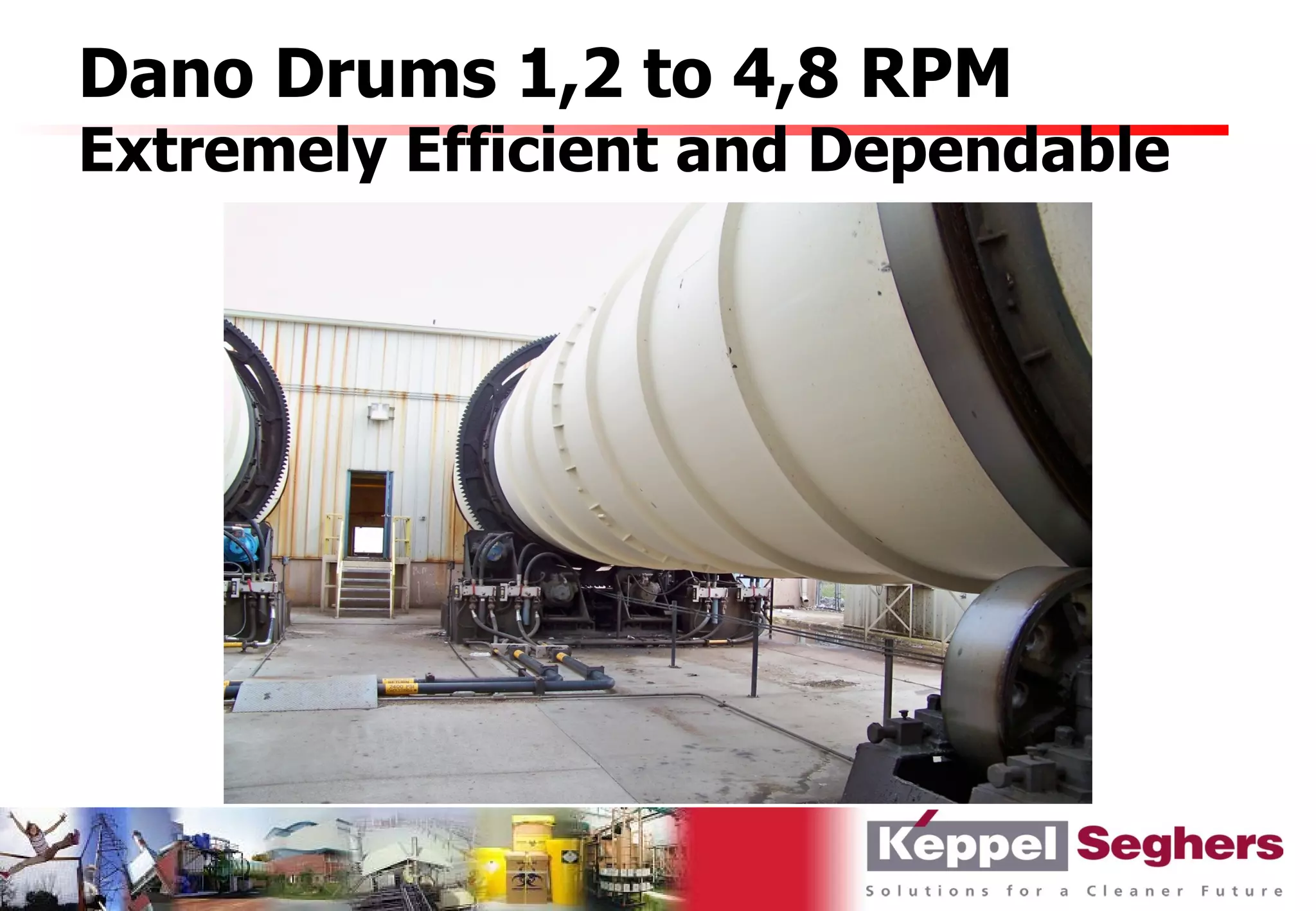
Dano Drums 1,2 to 4,8 RPM
Extremely Efficient and Dependable
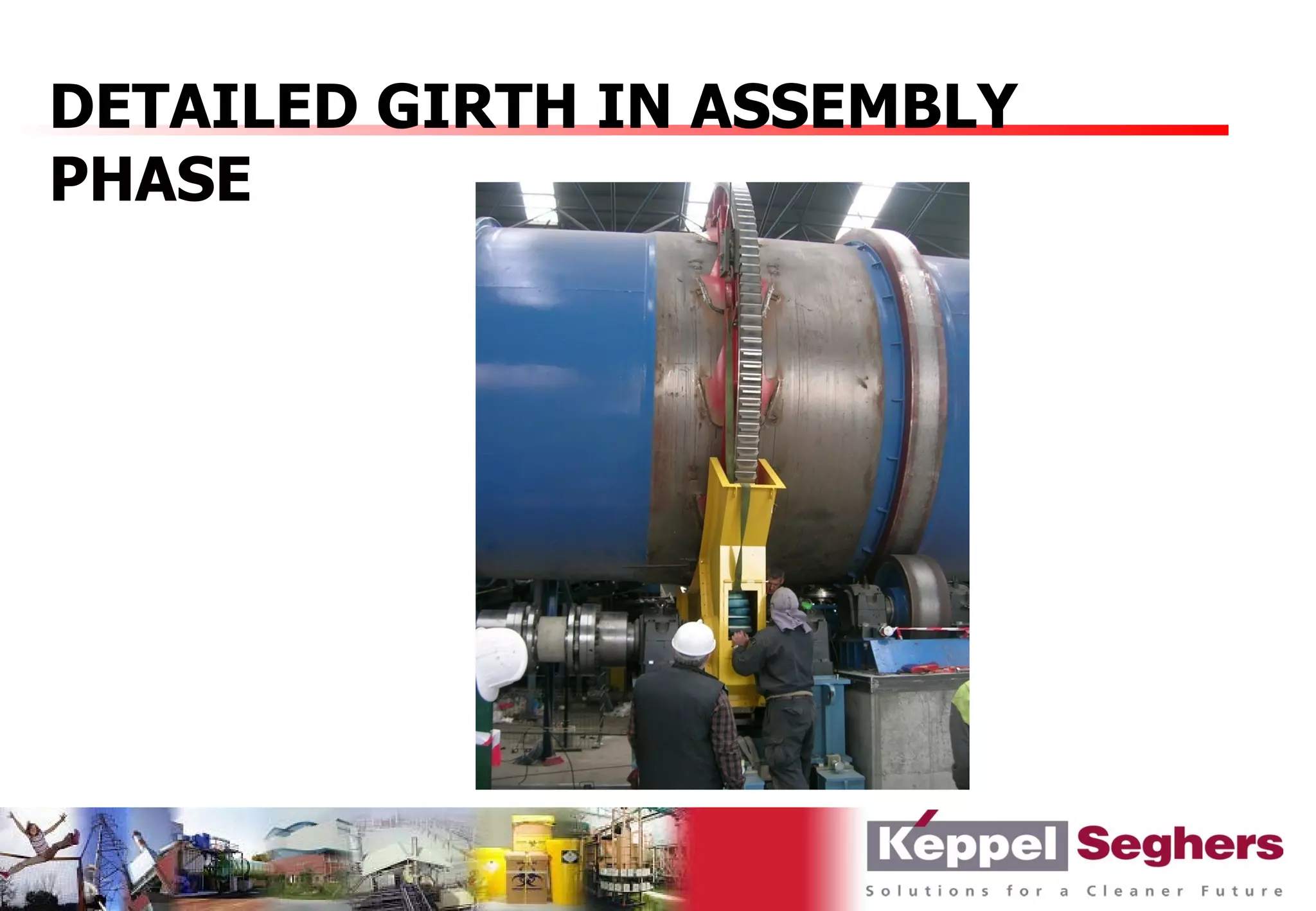
DETAILED GIRTH IN ASSEMBLY
PHASE
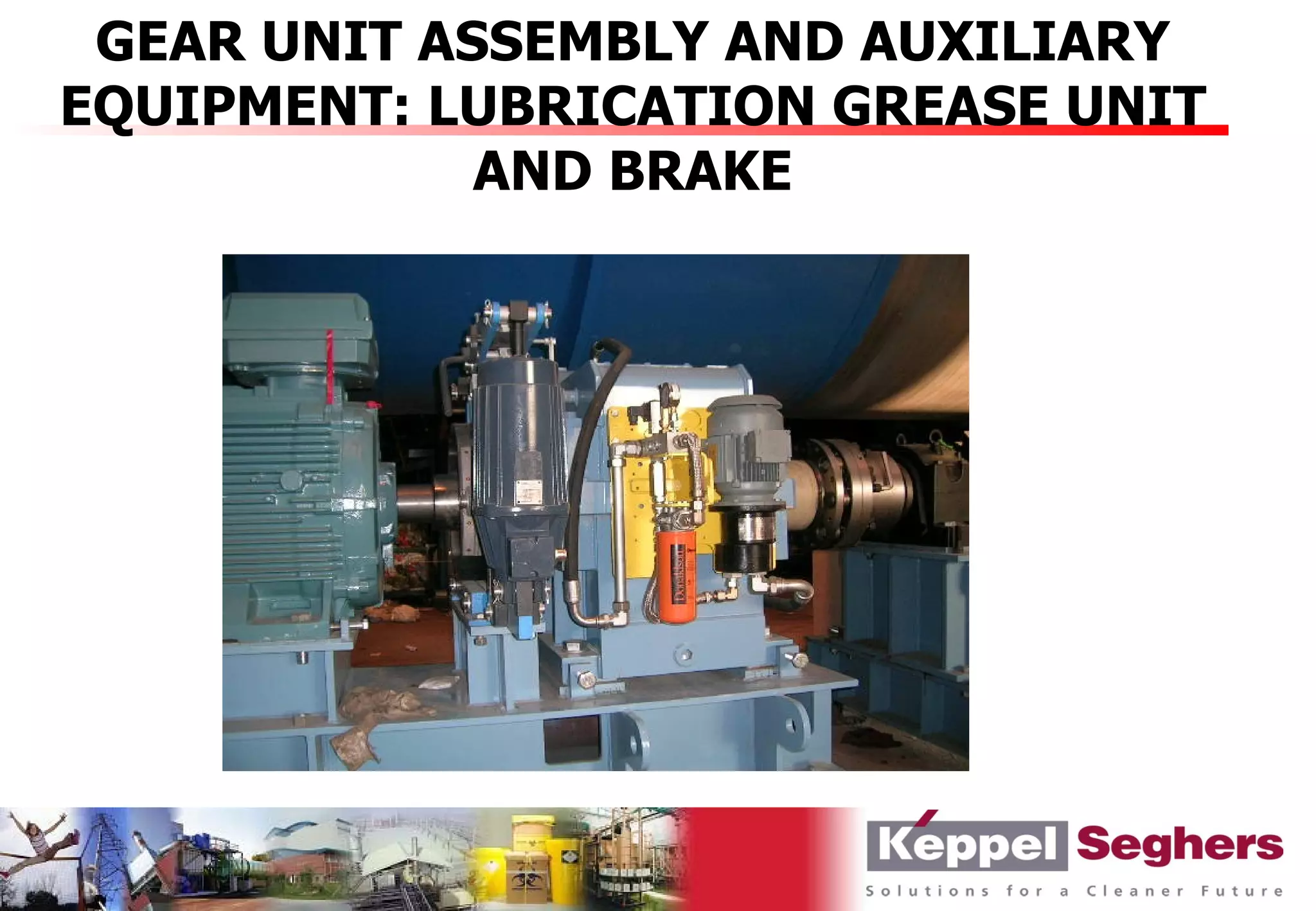
GEAR UNIT ASSEMBLY AND AUXILIARY
EQUIPMENT: LUBRICATION GREASE UNIT
             AND BRAKE
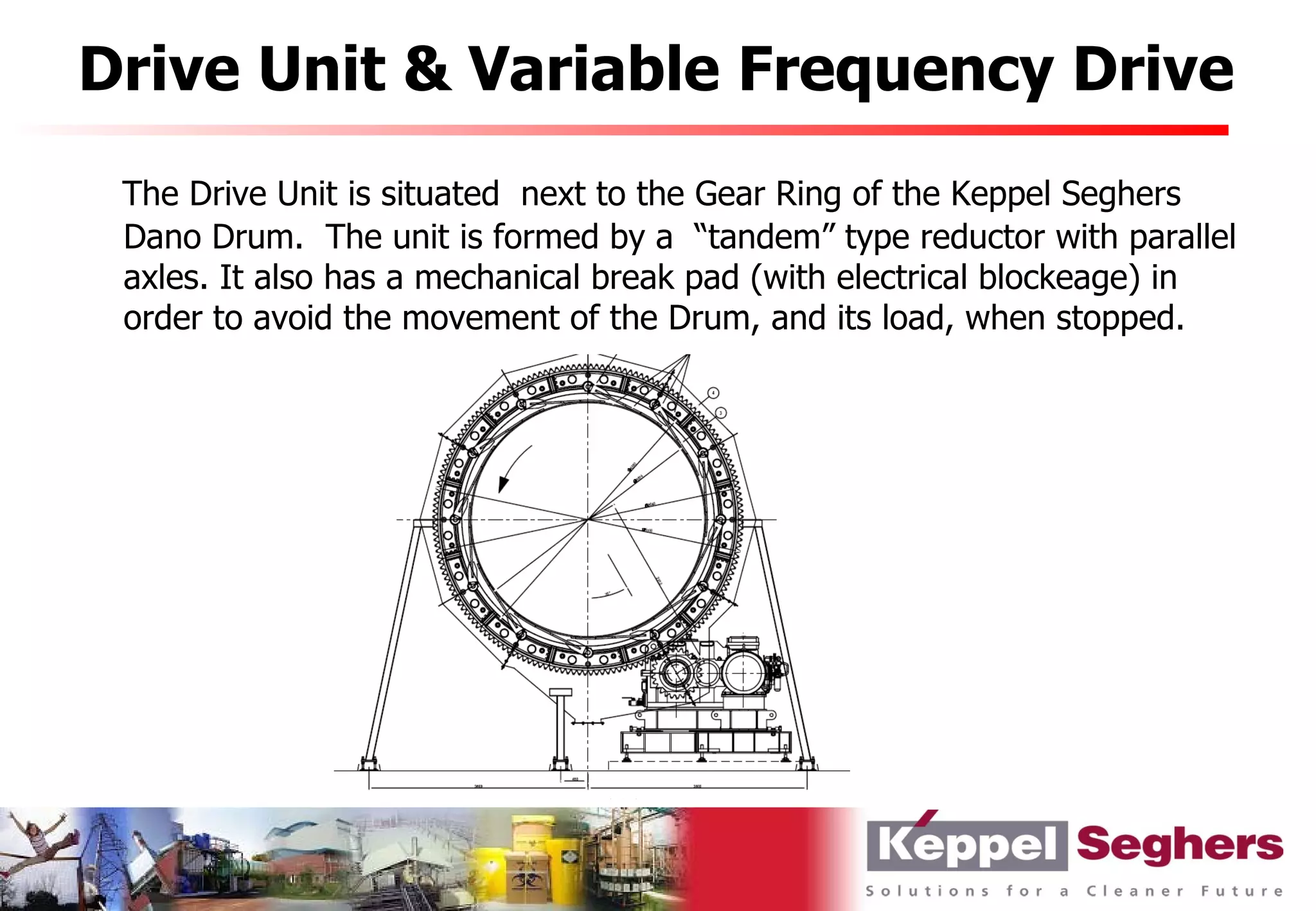
Drive Unit & Variable Frequency Drive
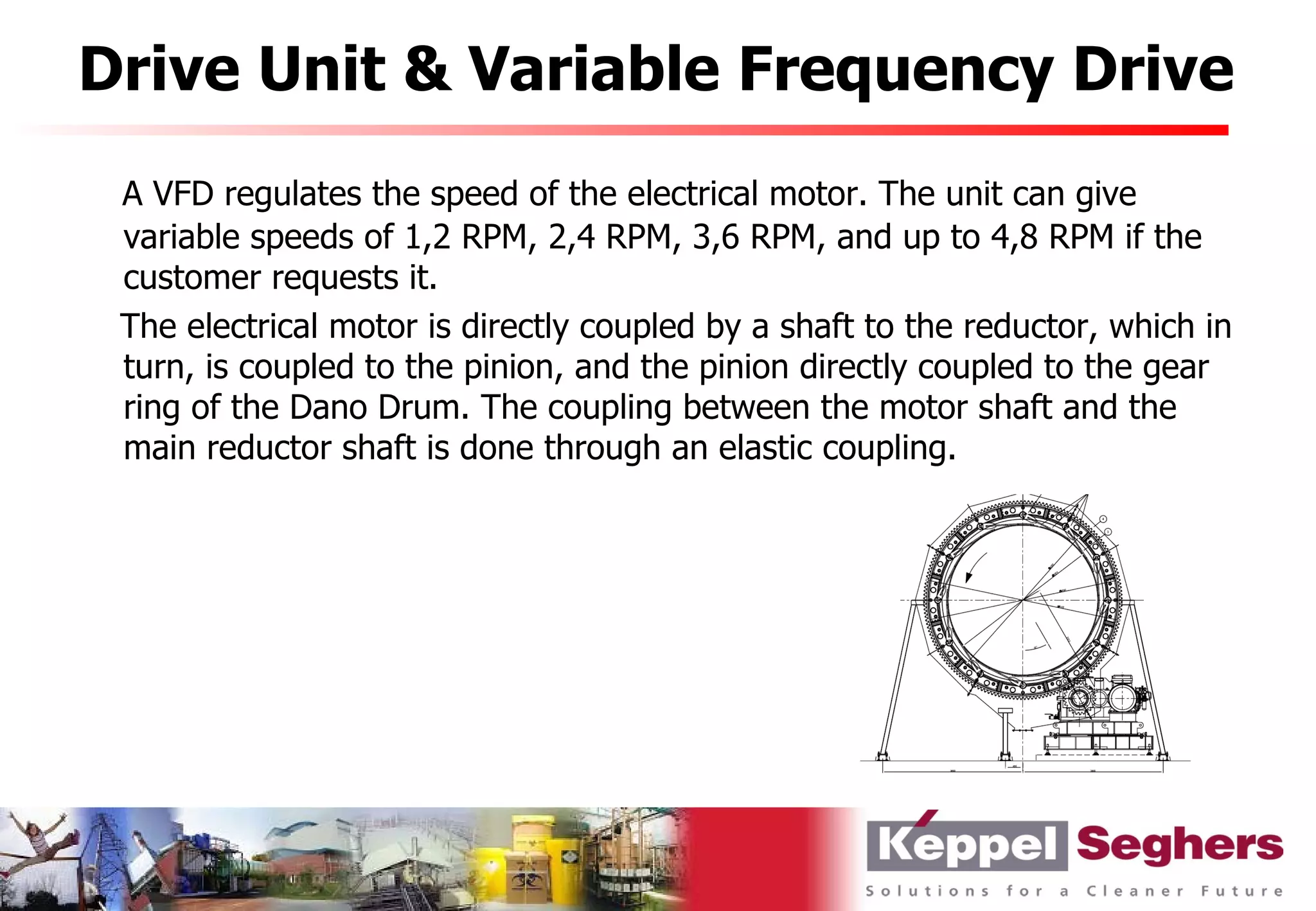
 The Drive Unit is situated next to the Gear Ring of the Keppel Seghers
 Dano Drum. The unit is formed by a “tandem” type reductor with parallel
 axles. It also has a mechanical break pad (with electrical blockeage) in
 order to avoid the movement of the Drum, and its load, when stopped.
Drive Unit & Variable Frequency Drive
 A VFD regulates the speed of the electrical motor. The unit can give
 variable speeds of 1,2 RPM, 2,4 RPM, 3,6 RPM, and up to 4,8 RPM if the
 customer requests it.
 The electrical motor is directly coupled by a shaft to the reductor, which in
 turn, is coupled to the pinion, and the pinion directly coupled to the gear
 ring of the Dano Drum. The coupling between the motor shaft and the
 main reductor shaft is done through an elastic coupling.
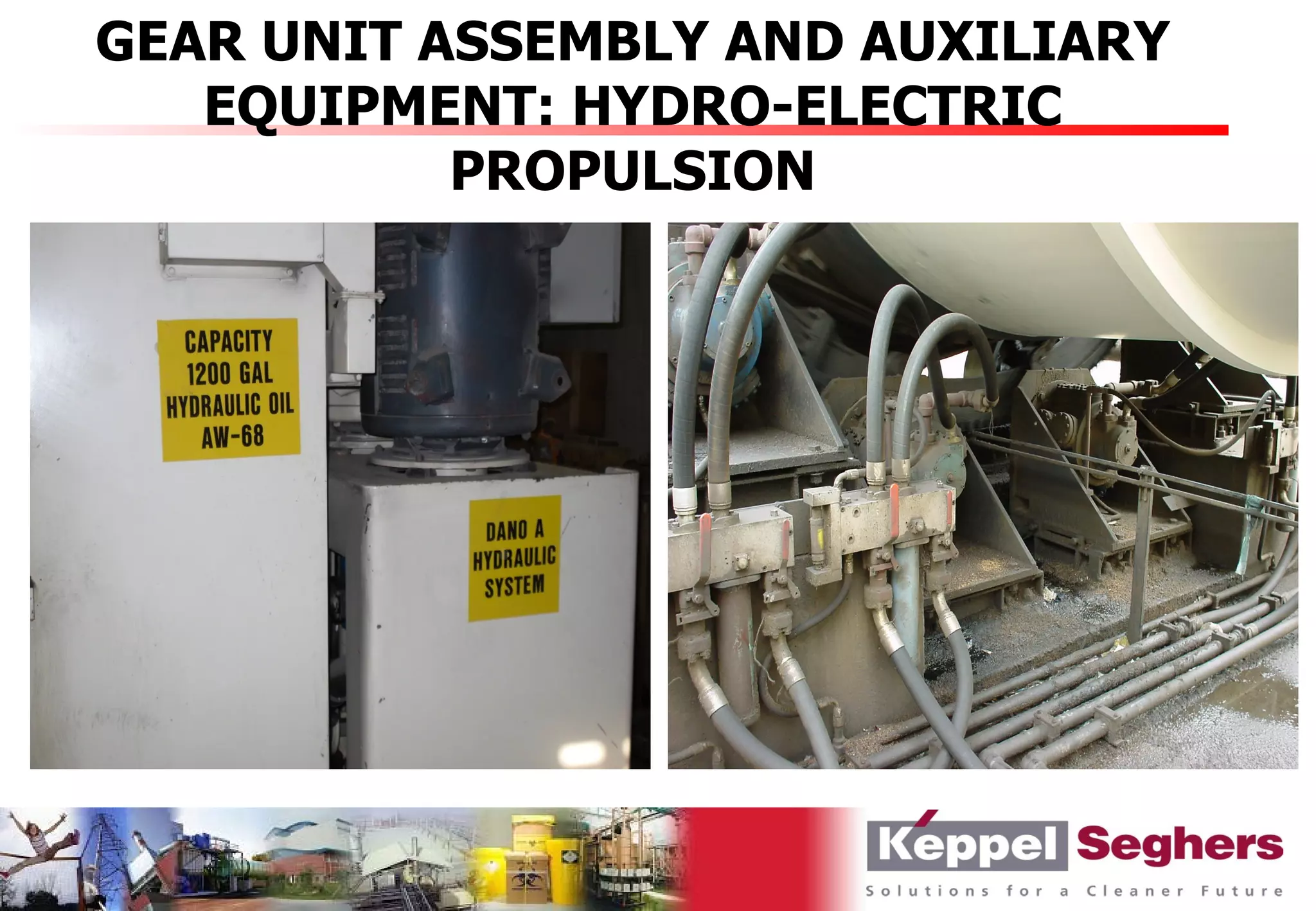
GEAR UNIT ASSEMBLY AND AUXILIARY
   EQUIPMENT: HYDRO-ELECTRIC
           PROPULSION
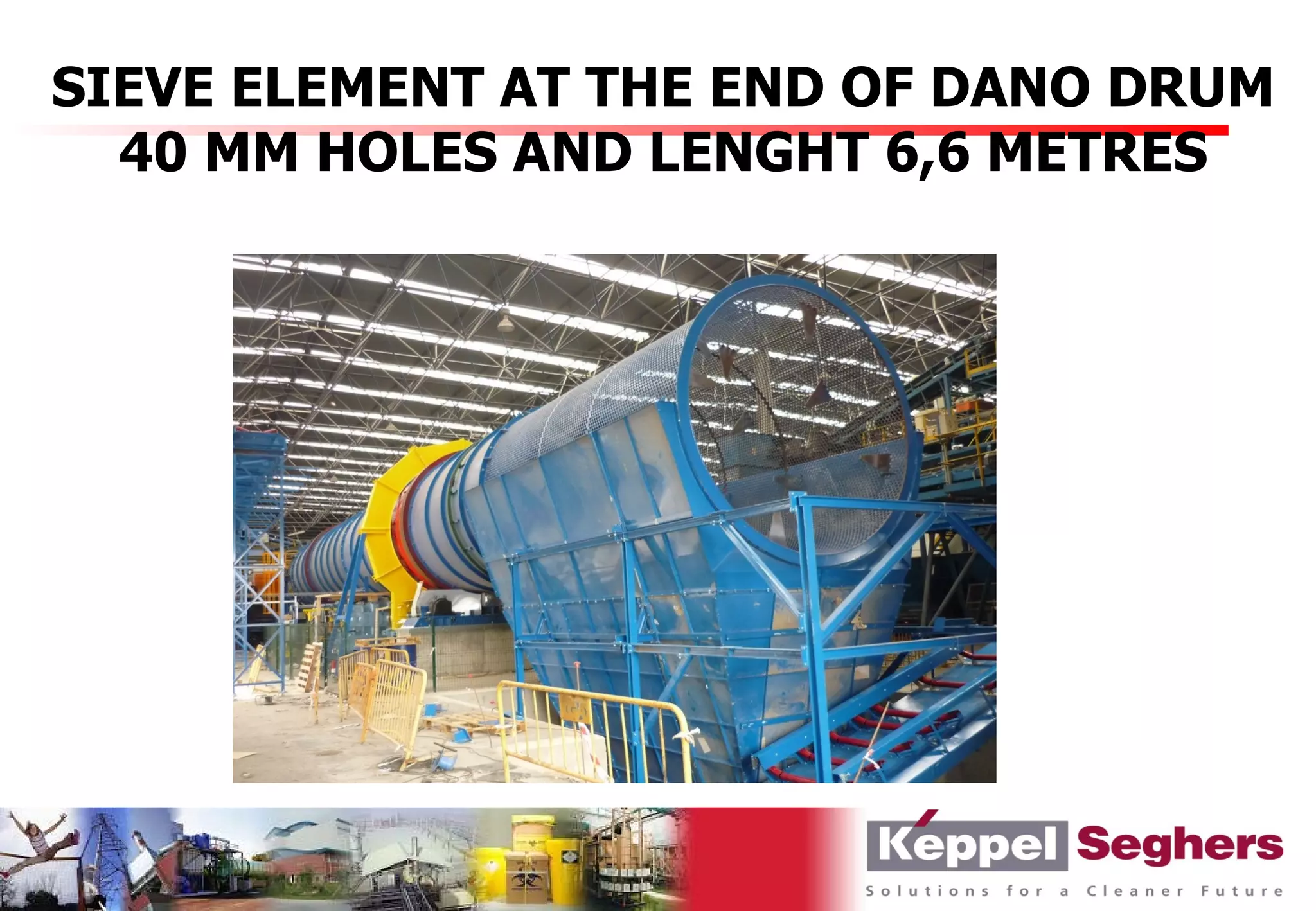
SIEVE ELEMENT AT THE END OF DANO DRUM
  40 MM HOLES AND LENGHT 6,6 METRES
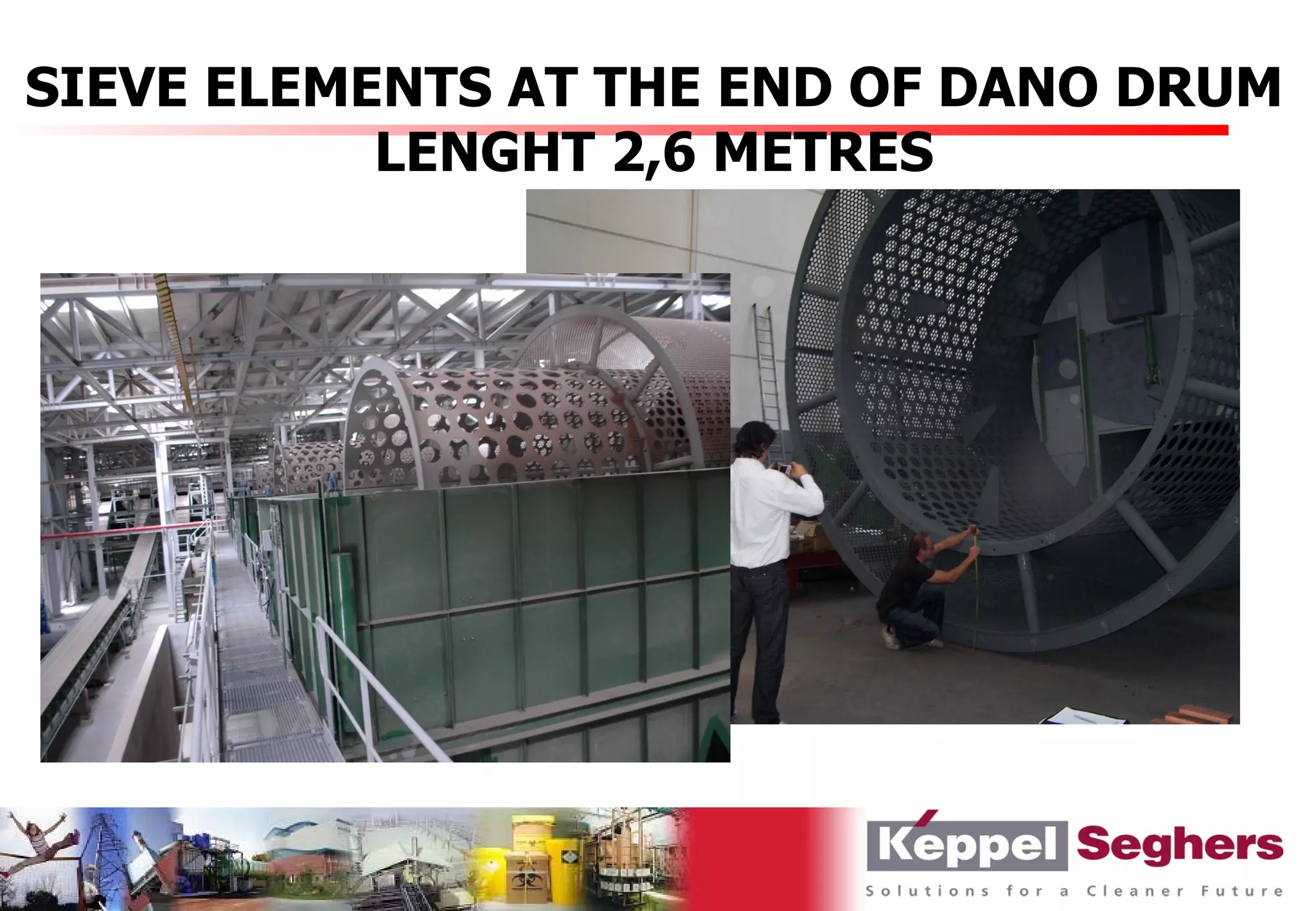
SIEVE ELEMENTS AT THE END OF DANO DRUM
           LENGHT 2,6 METRES
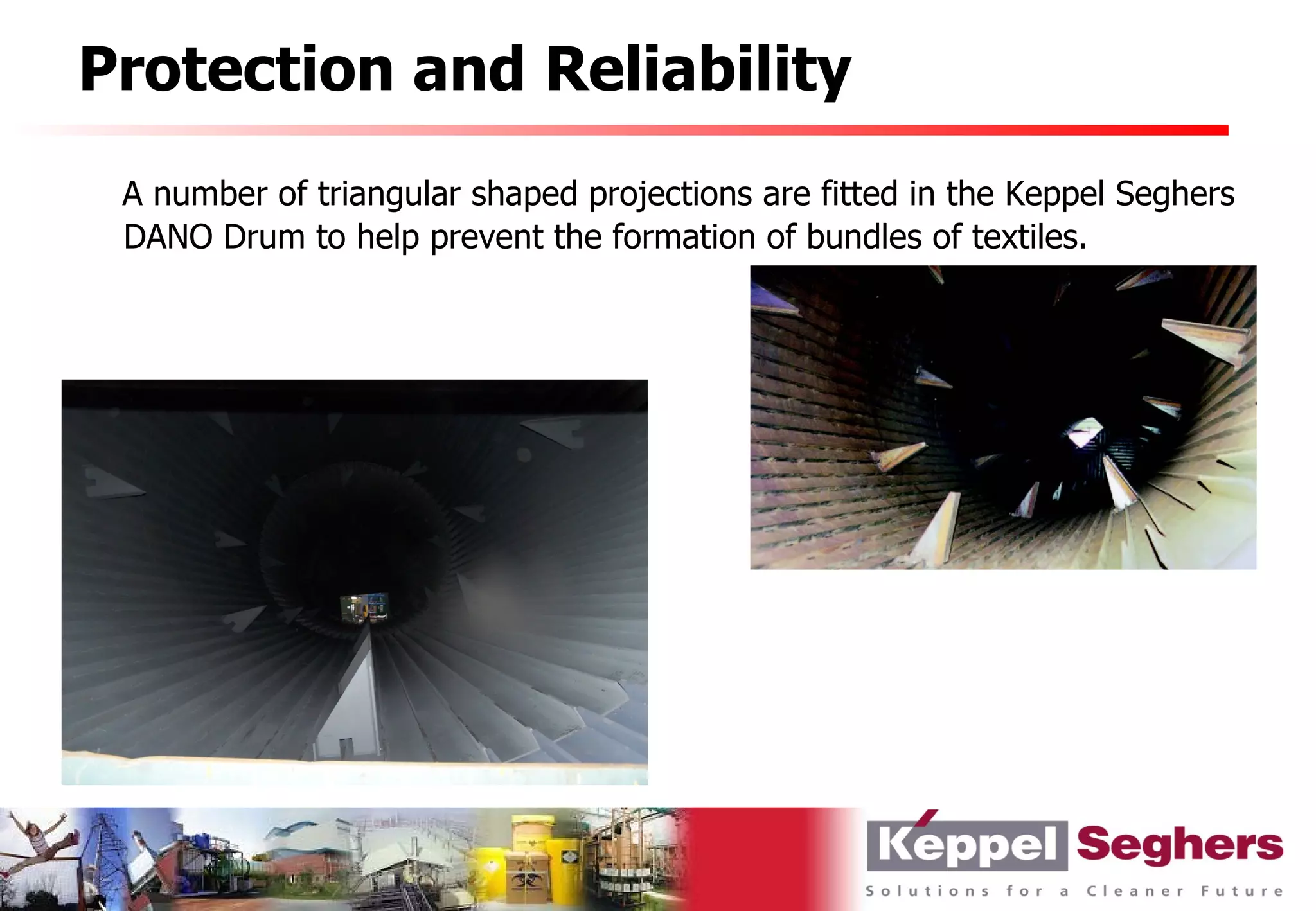
Protection and Reliability
 A number of triangular shaped projections are fitted in the Keppel Seghers
 DANO Drum to help prevent the formation of bundles of textiles.
Contents
    •   1.   The Keppel Seghers DANO DRUM
              History
              The Key Element
              Process Implementation
              Main Applications
                        -Bulk Reduction
                        -Materials Recovery
                        -Biological treatment
                        -Case Study: Rapid City, SD
    •   2.   References
The Key Process Element
  • Waste pretreatment
      – Pulverizing
      – Homogenizing
      – Conditioning
      – Separating
  • Horizontally Mounted, Rotating Steel Cylinder
  • Integrated Rotary Screen option
       – 2 or 3 Fractions readily separated at end of
          drum
The Key Element
  •   Drum size: Mark III drum: 3.8 m (12.5 ft.) diameter. 24-27 m
      (79-89.3 ft.) length
  •   Drum Capacity:
         – MK III: 15-18 tons/hour of Municipal Solid Waste
  •   Rotation of the Drum
         – MK III: 1.2 RPM up to 4.8 RPM.
         – Breakdown of Softer Components by Particle Collision and
            Attrition
         – Repeated Contact With the Drum Wall and Harder
            Elements
The Key Element - Features
 • High quality electro drive system
 • Special Anti-wear system for drum shell
 • Result of decades of construction experience
 • Unique inlet assembly construction
 • Hydraulically operated outlet slide gate
 • Integrated screen
The Key Element - Advantages
  EXTREMELY RELIABLE


  Example in UK: North Ayrshire Council - Irvine, Scotland,
  operation period of 18 years:
  Unscheduled downtime in % of total operating time:
  electrical      0.1%
  mechanical      0.5%
  TOTAL           0.6%
  TOTAL AVAILABILITY = 99.4%
The Key Element - Advantages
   • Increases organic content of fines through
     paper/carton attrition
   • Keeps heating value of oversize
   • Extremely reliable
   • Flexible process implementation
   • Simple operation
   • Low maintenance
Contents
    •   1.   Waste management
    •   2.   The Keppel Seghers DANO DRUM
              History
              The Key Element
              Process Implementation
              Main Applications
                        -Bulk Reduction
                        -Materials Recovery
                        -Biological treatment
                        -Case Study: Rapid City, SD
    •   3.   References
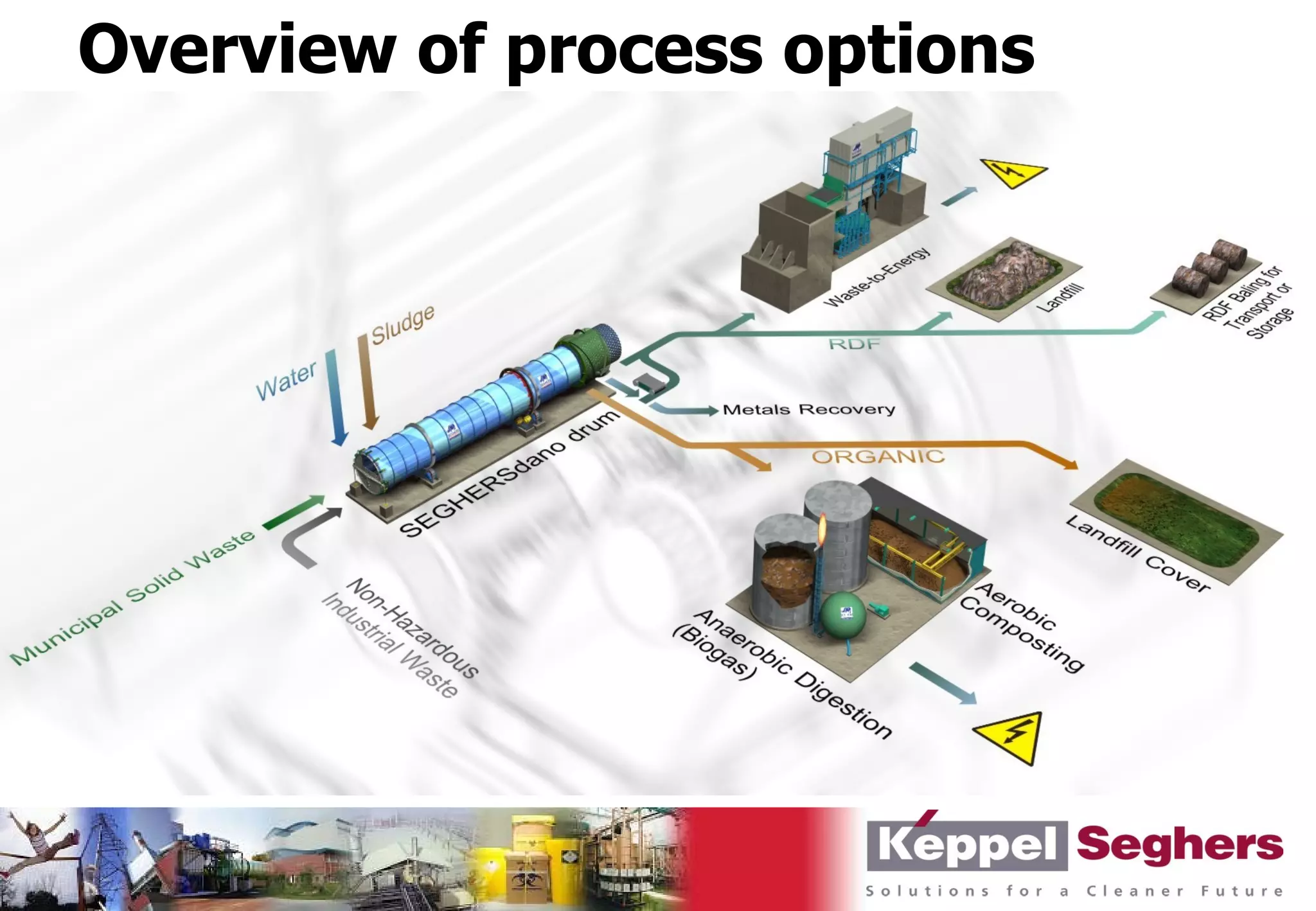
Overview of process options
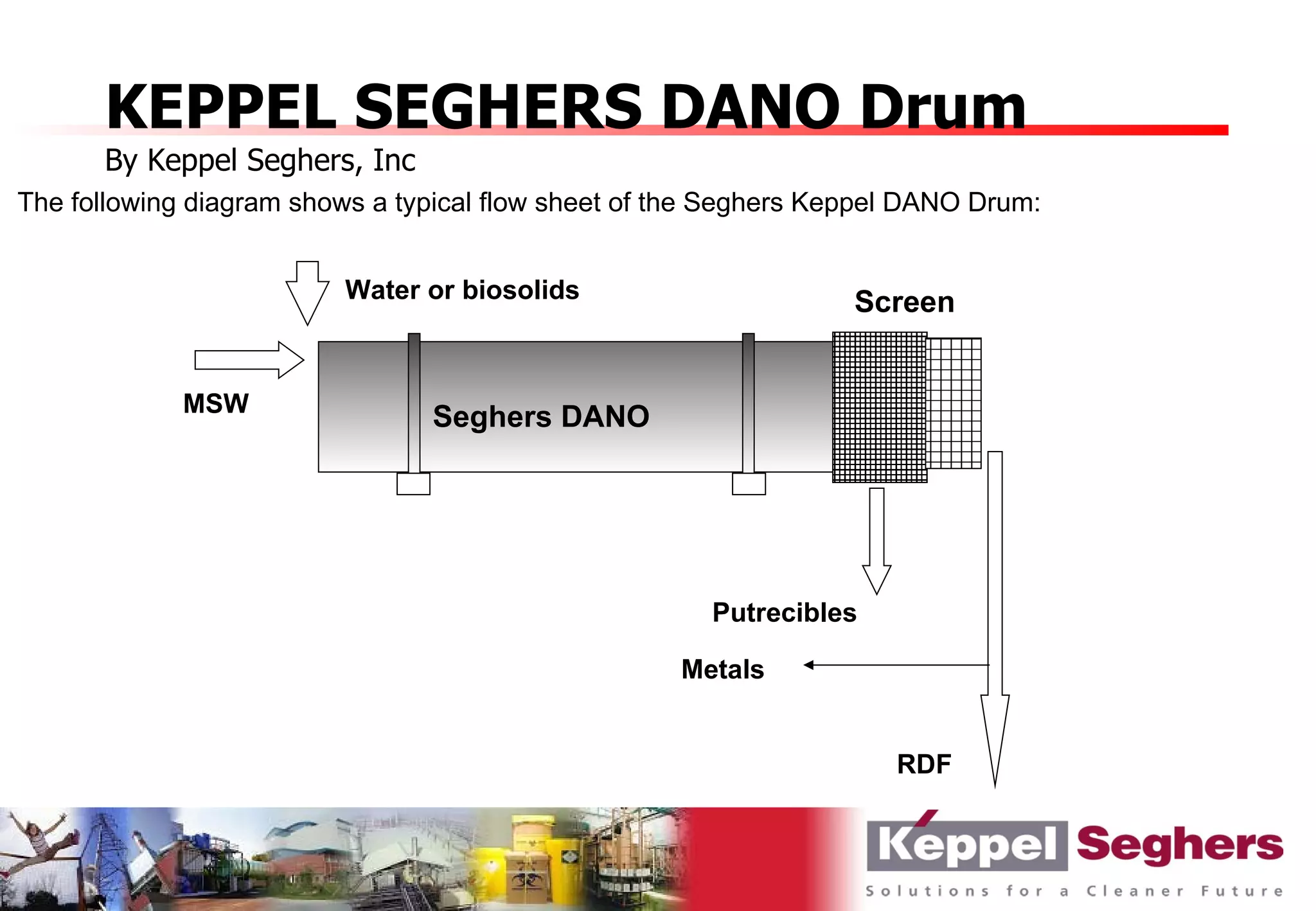
KEPPEL SEGHERS DANO Drum
      By Keppel Seghers, Inc
The following diagram shows a typical flow sheet of the Seghers Keppel DANO Drum:


                         Water or biosolids                       Screen


             MSW
                                Seghers DANO


                                                      Putrecibles

                                                    Metals


                                                                     RDF
Principle & Process Implementation
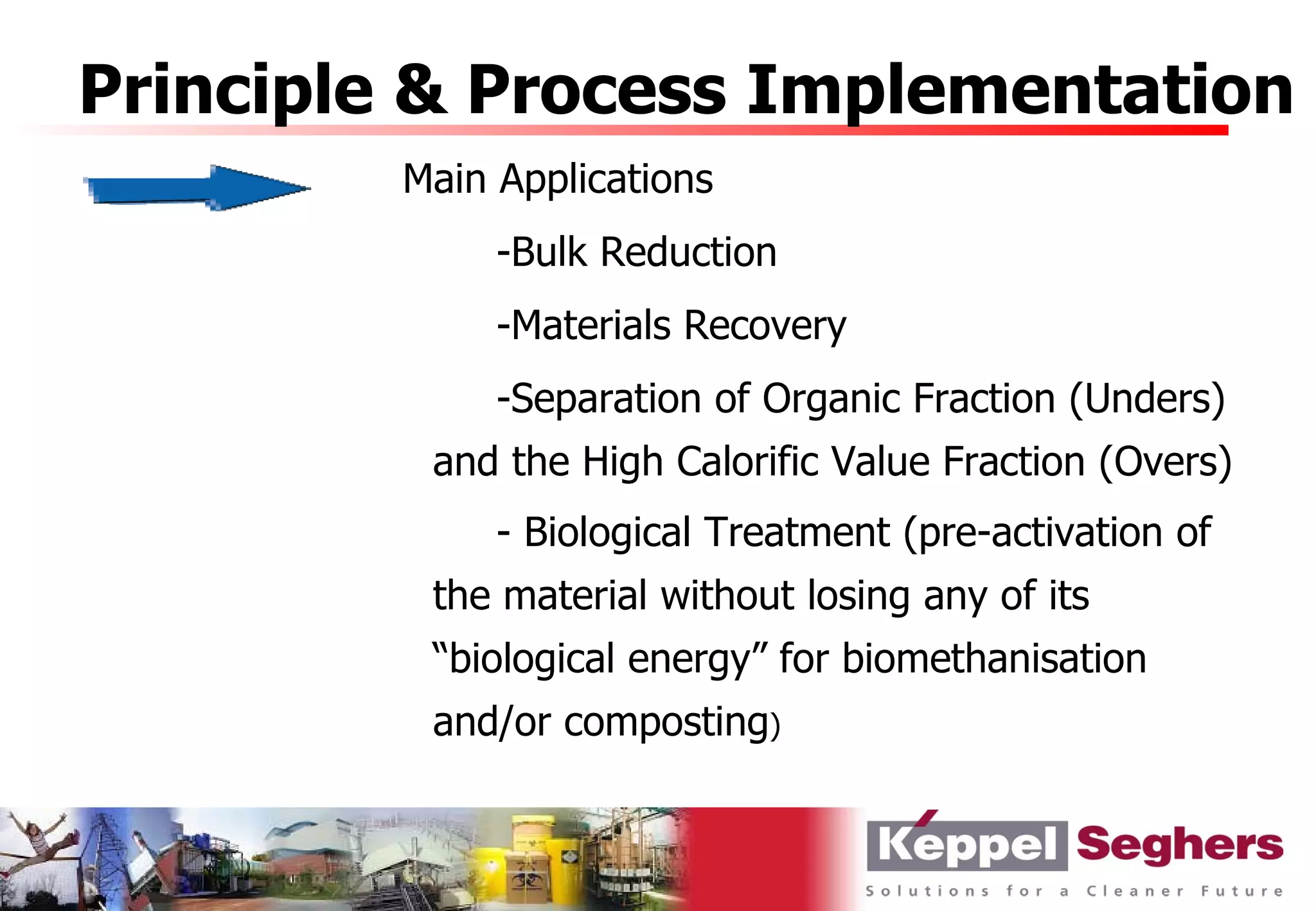
         Main Applications
              -Bulk Reduction
              -Materials Recovery
              -Separation of Organic Fraction (Unders)
          and the High Calorific Value Fraction (Overs)
              - Biological Treatment (pre-activation of
          the material without losing any of its
          “biological energy” for biomethanisation
          and/or composting)
Principle & Process Implementation
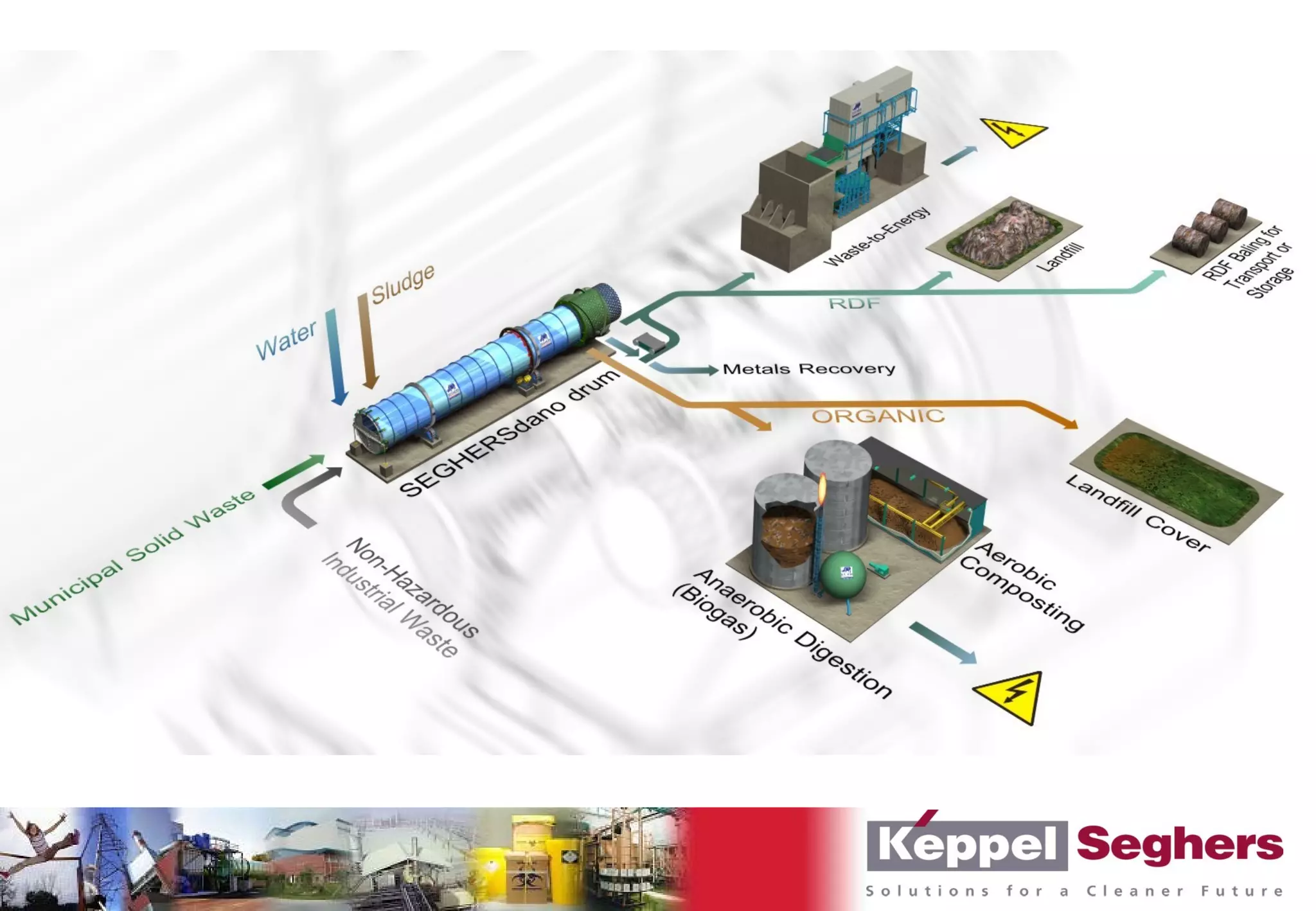
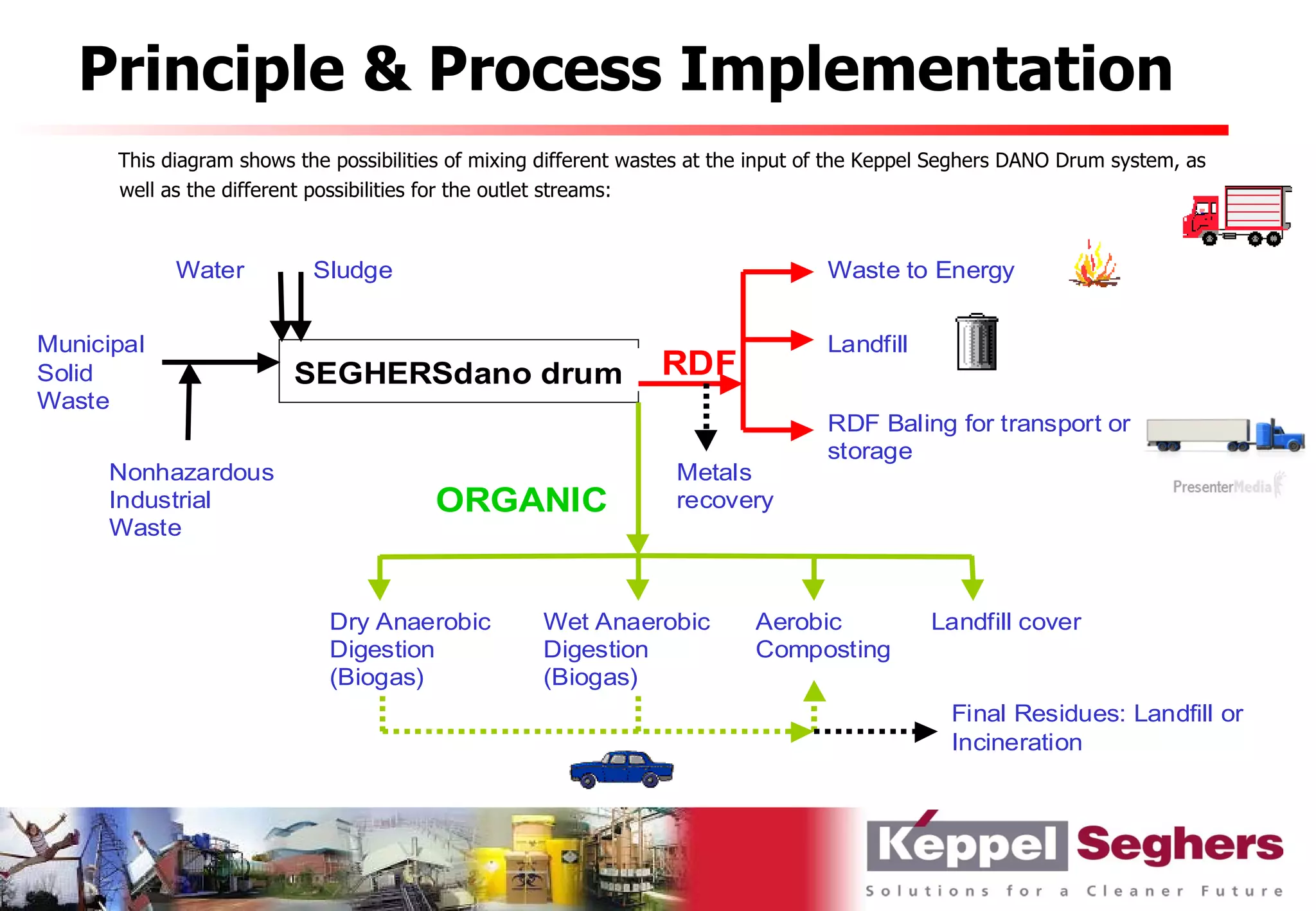
      This diagram shows the possibilities of mixing different wastes at the input of the Keppel Seghers DANO Drum system, as
      well as the different possibilities for the outlet streams:


            Water          Sludge                                                  Waste to Energy


Municipal                                                                          Landfill
Solid                    SEGHERSdano drum                        RDF
Waste
                                                                                   RDF Baling for transport or
                                                                                   storage
      Nonhazardous                                                 Metals
      Industrial                        ORGANIC                    recovery
      Waste


                             Dry Anaerobic          Wet Anaerobic          Aerobic            Landfill cover
                             Digestion              Digestion              Composting
                             (Biogas)               (Biogas)
                                                                                                 Final Residues: Landfill or
                                                                                                 Incineration
KEPPEL SEGHERS DANO Drum
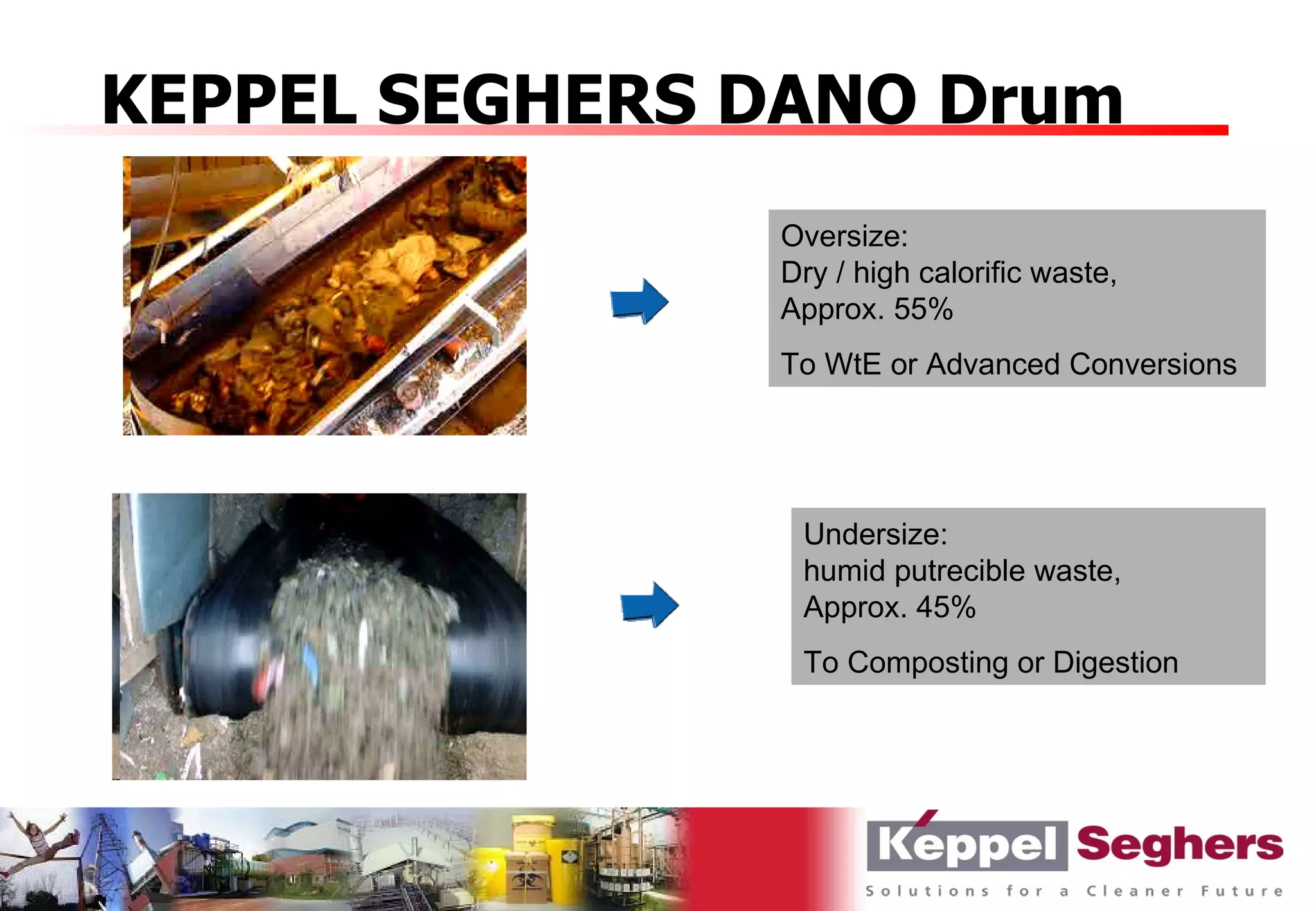
               Oversize:
               Dry / high calorific waste,
               Approx. 55%
               To WtE or Advanced Conversions


                Undersize:
                humid putrecible waste,
                Approx. 45%
                To Composting or Digestion
Biological treatment - Advantages

 • attrition of paper and cardboard increases biogas
   production for anaerobic digestion
 • relatively low contamination of organic waste stream
 • increased digestion feed rate from same amount of
   Municipal Solid Waste with high-organic stream
 • good material handling properties (fibrous material)
 • reduced particle size and homogeneous
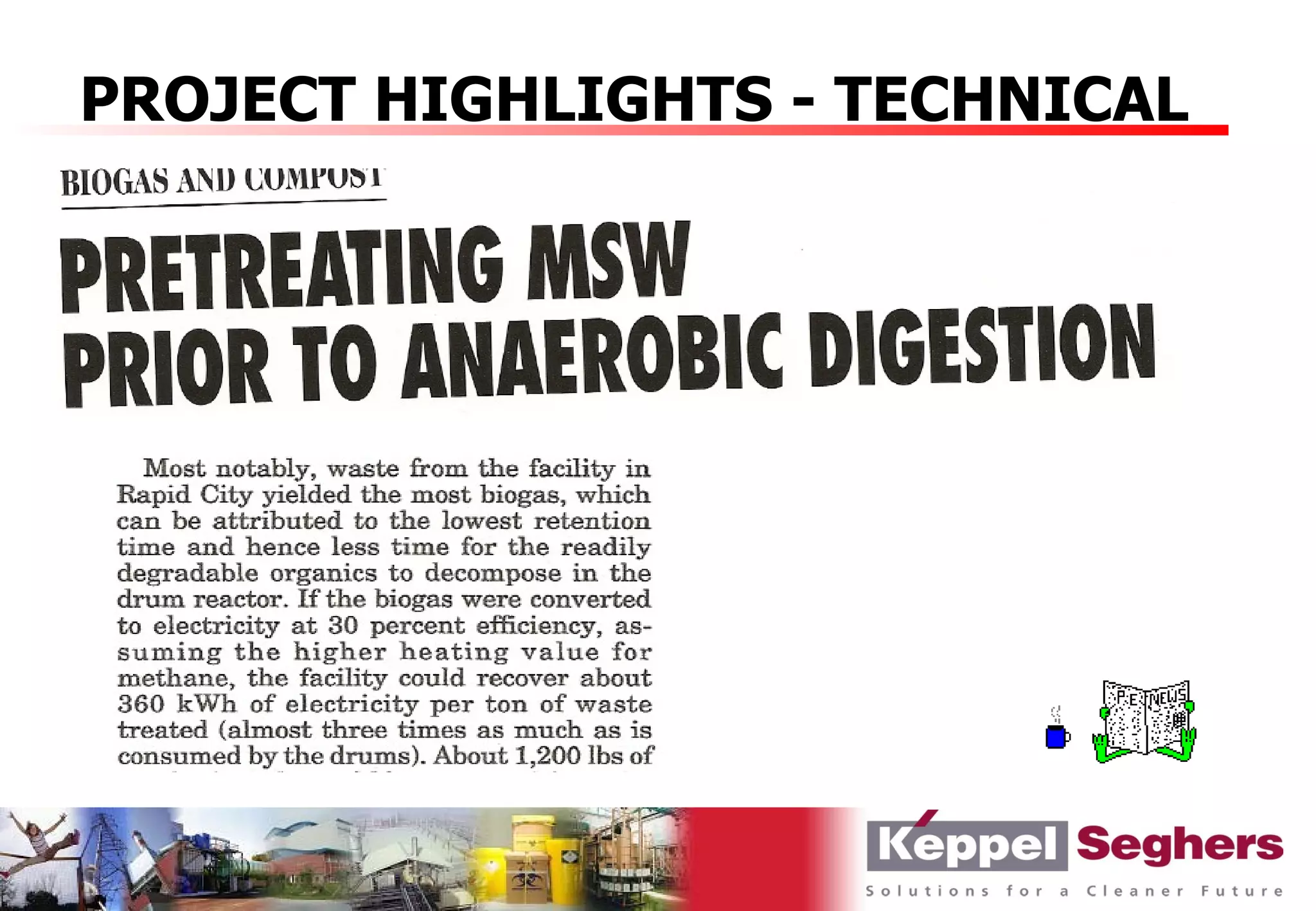
PROJECT HIGHLIGHTS - TECHNICAL
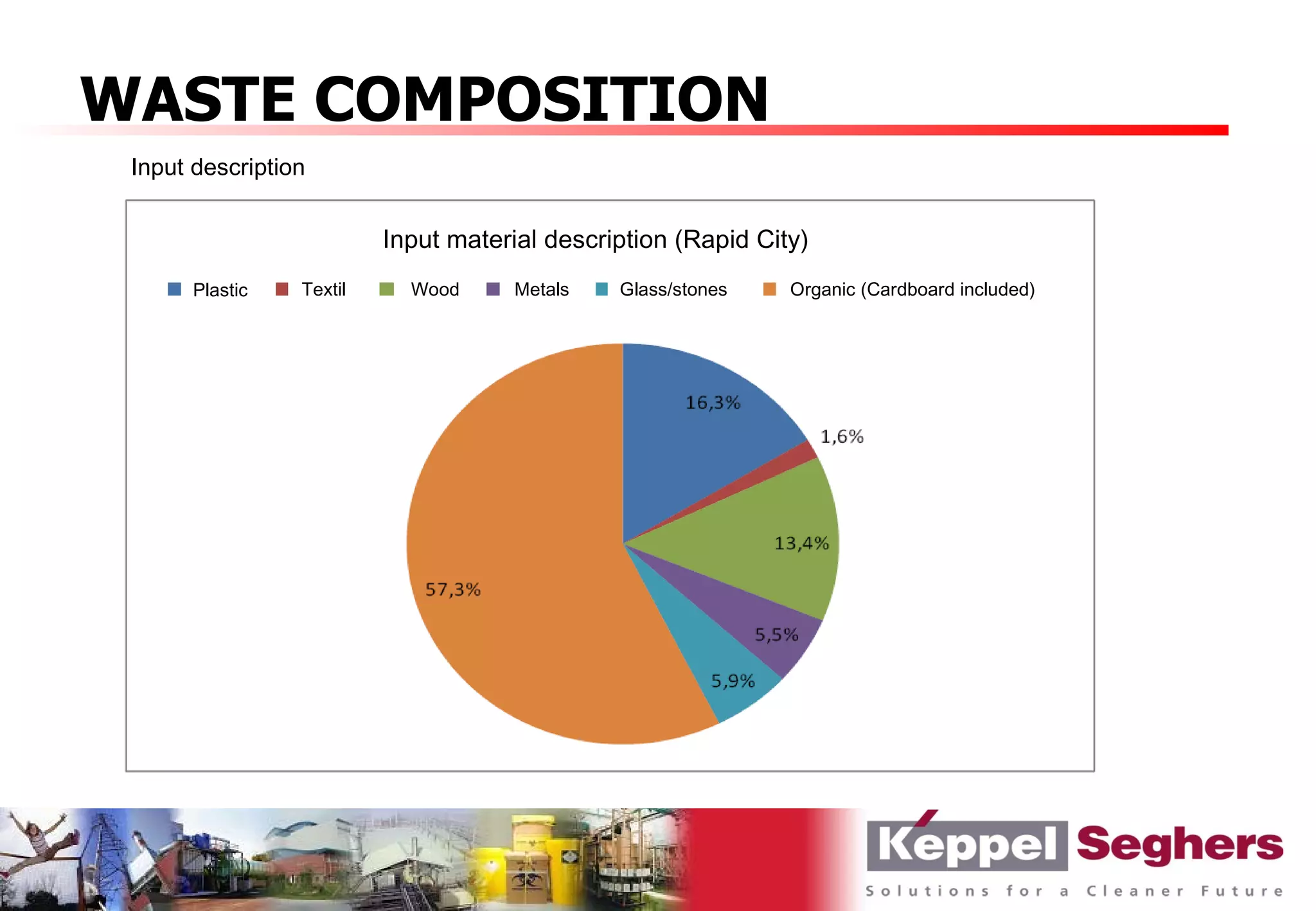
WASTE COMPOSITION
 Input description


                          Input material description (Rapid City)
       Plastic   Textil     Wood      Metals   Glass/stones    Organic (Cardboard included)
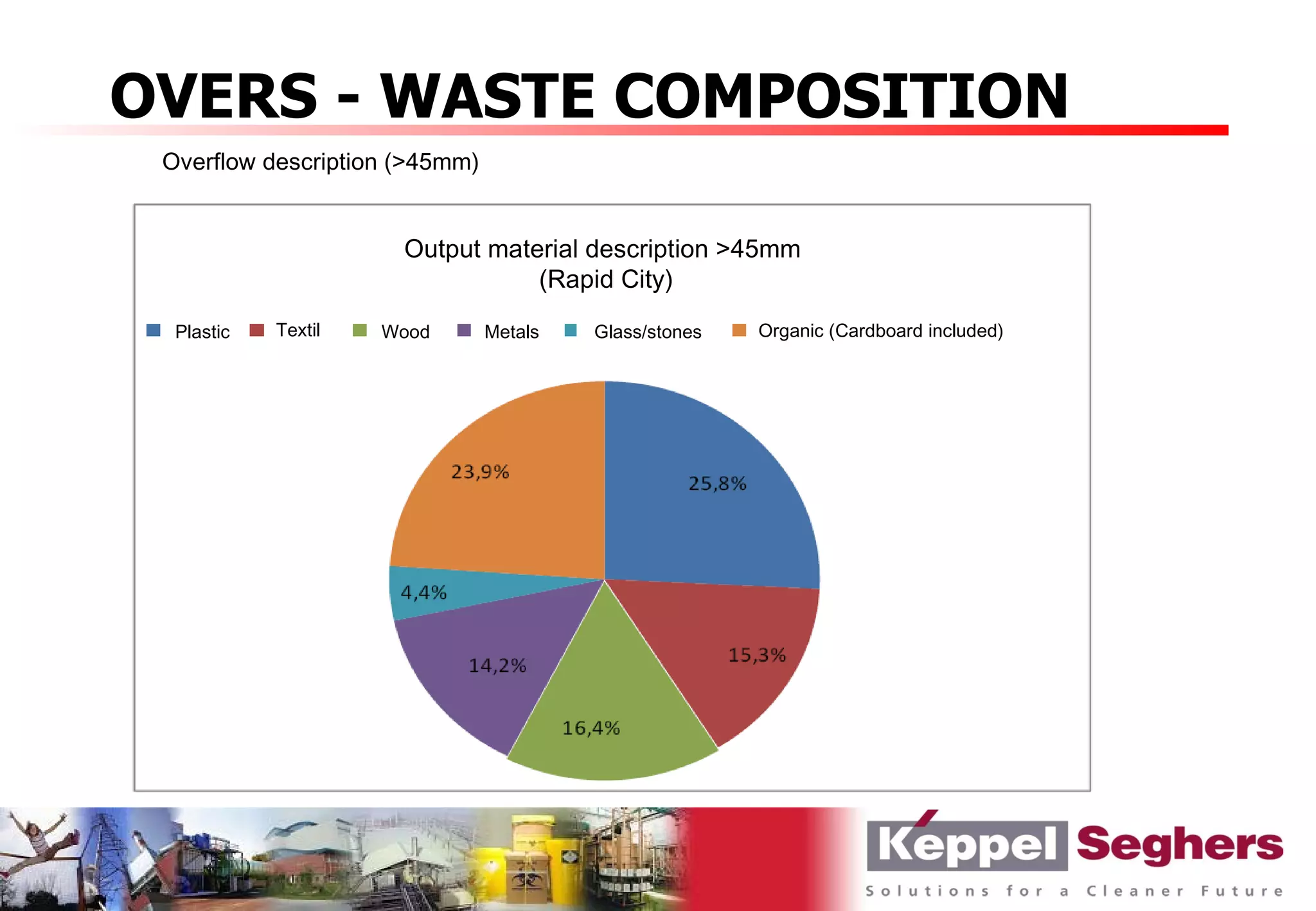
OVERS - WASTE COMPOSITION
 Overflow description (>45mm)


                      Output material description >45mm
                                 (Rapid City)
  Plastic   Textil   Wood       Metals   Glass/stones   Organic (Cardboard included)
OVERS - WASTE COMPOSITION
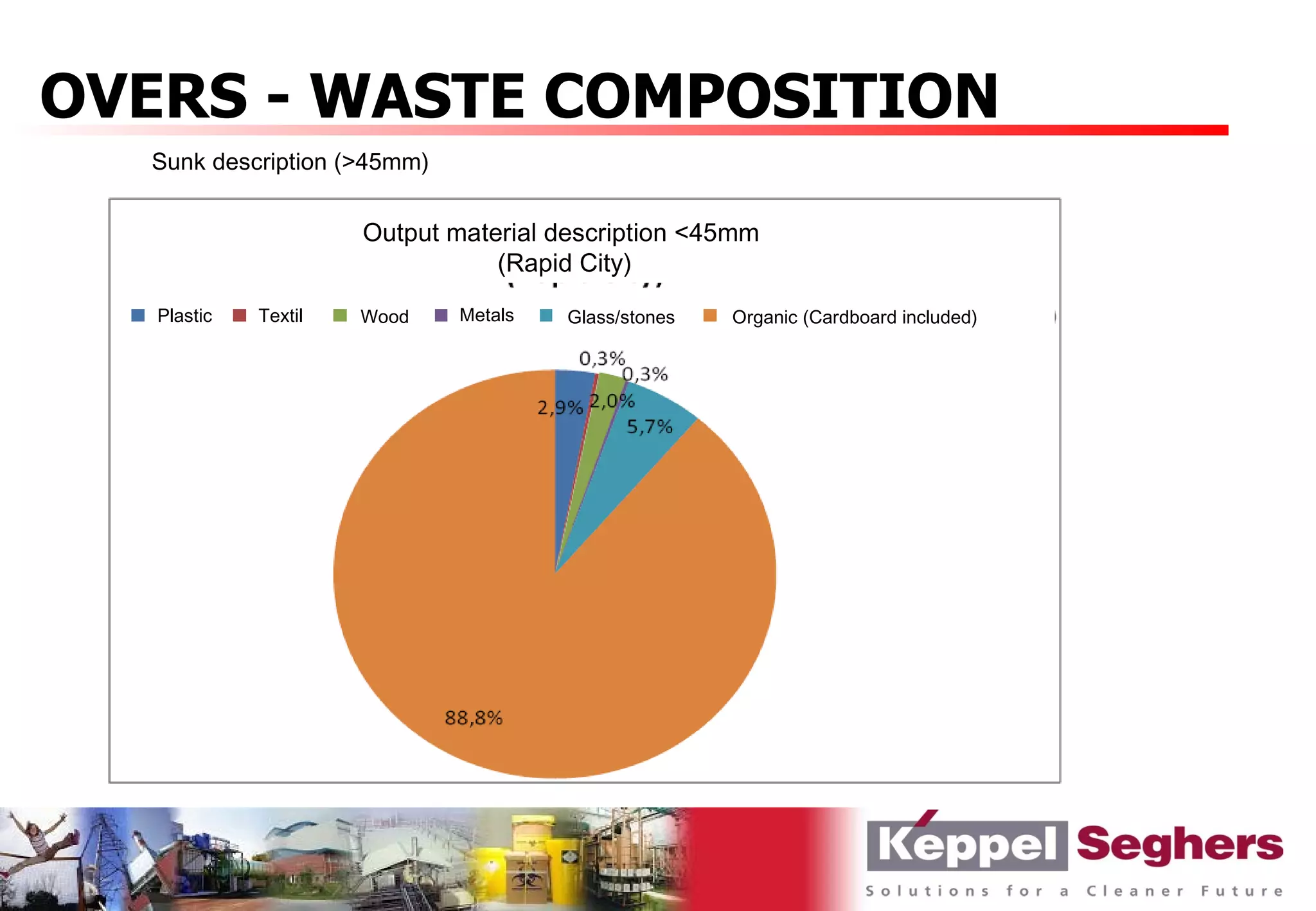
  Sunk description (>45mm)


                      Output material description <45mm
                                 (Rapid City)
   Plastic   Textil   Wood    Metals   Glass/stones   Organic (Cardboard included)
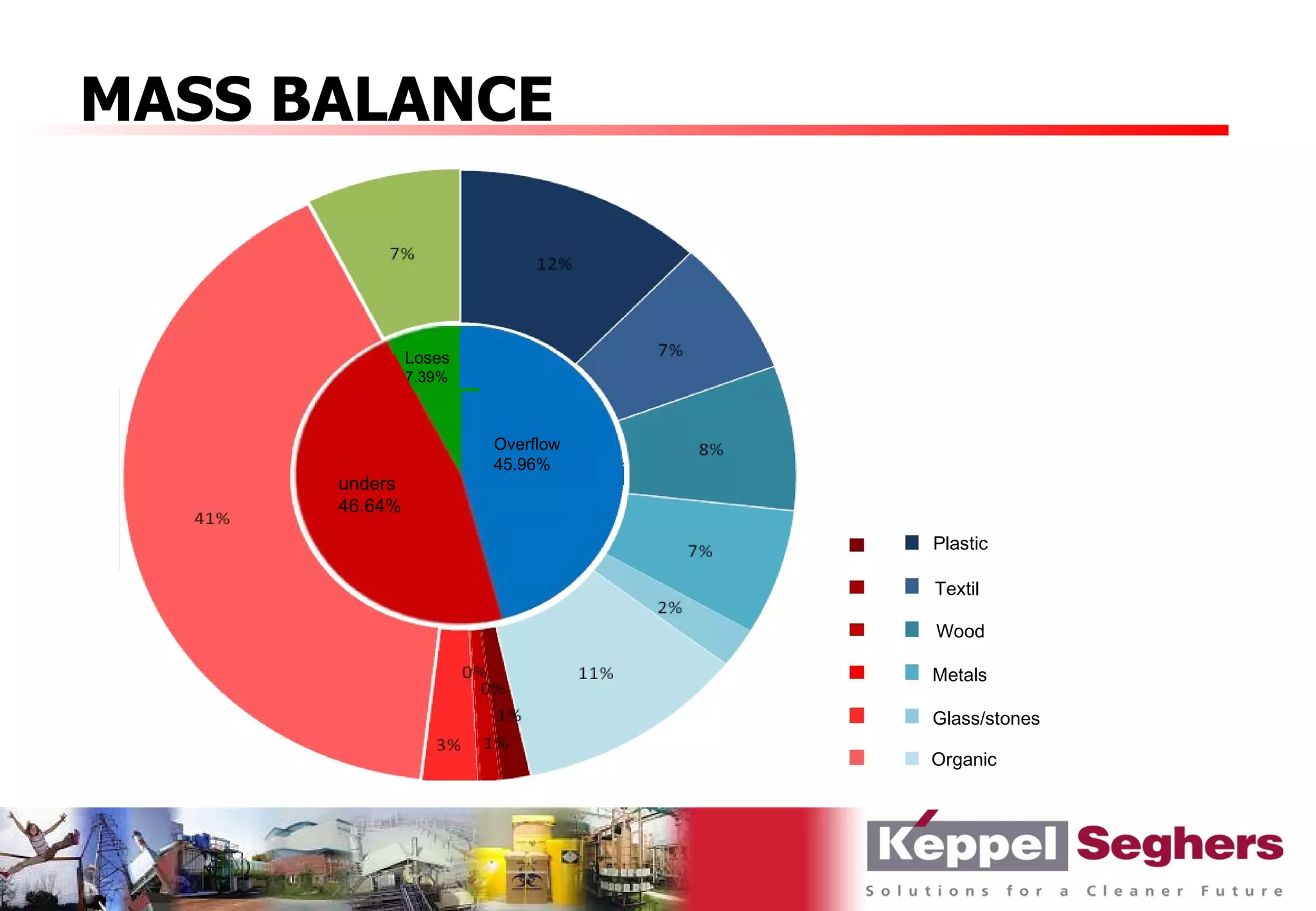
MASS BALANCE


               Loses   .
               7.39%

         .
                           Overflow
                           45.96%
      unders
      Sunk
      46.64%
      46.64%

                                      Plastic

                                      Textil

                                      Wood

                                      Metals

                                      Glass/stones

                                      Organic
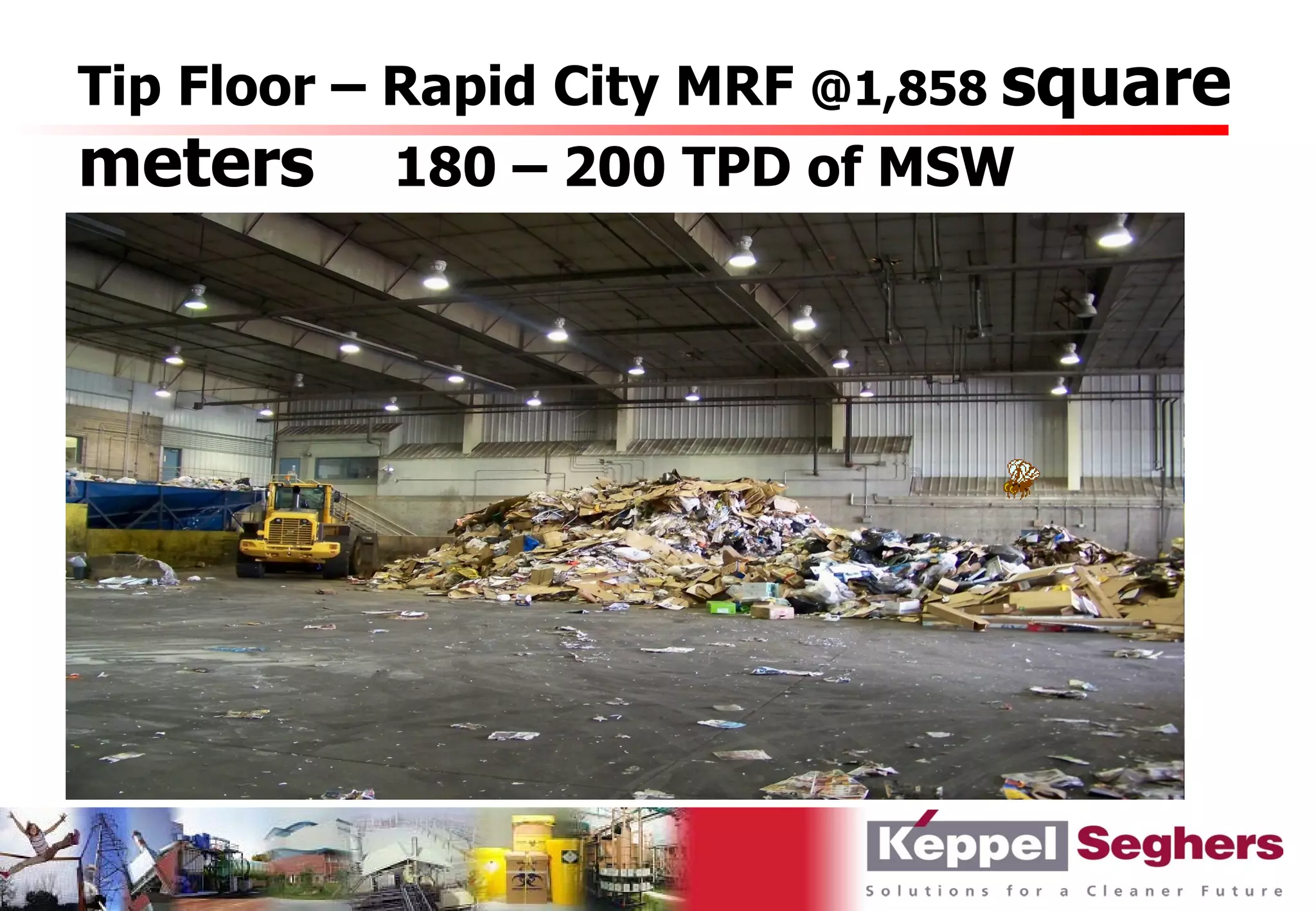
Tip Floor – Rapid City MRF @1,858 square
meters 180 – 200 TPD of MSW
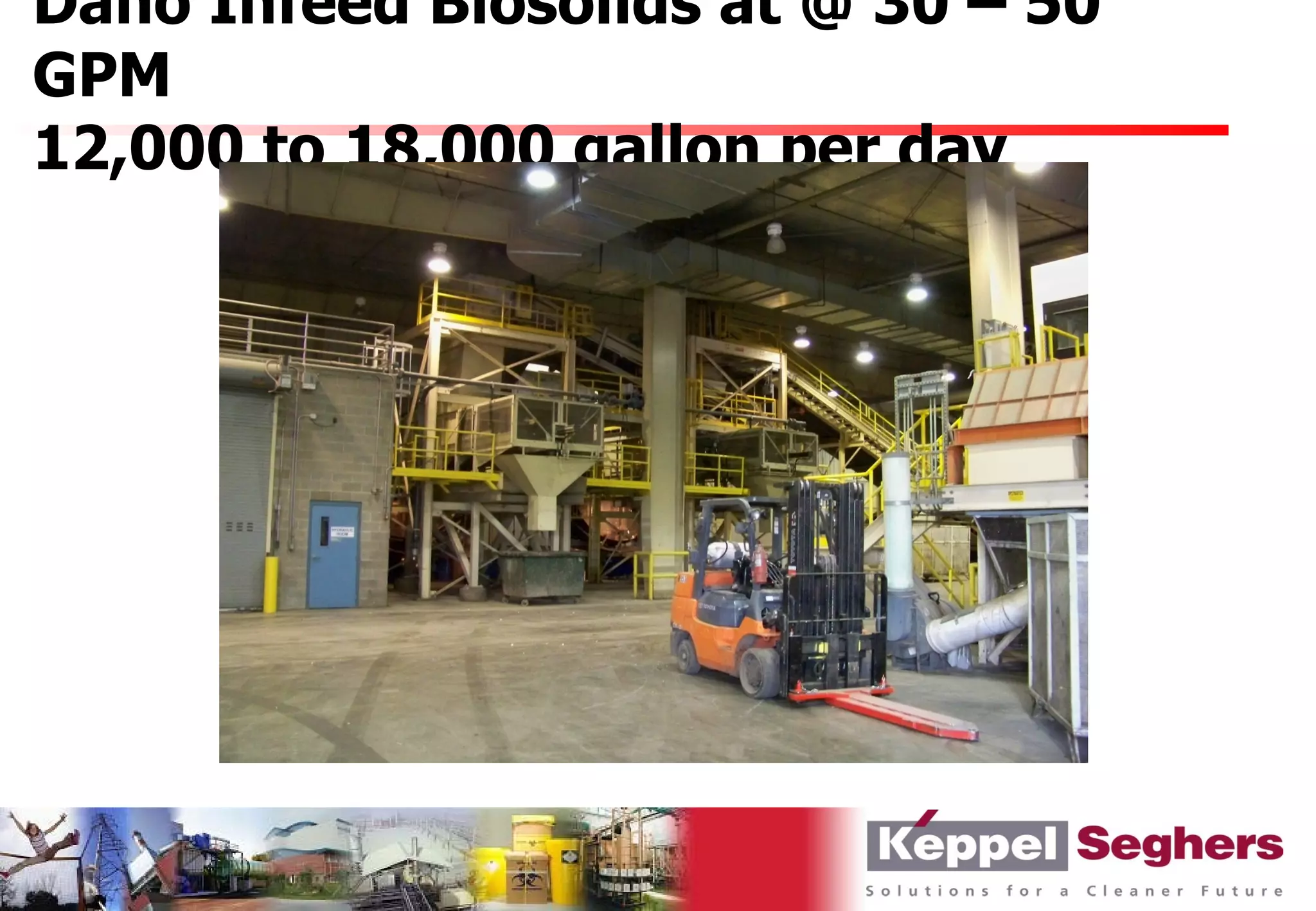
Dano Infeed Biosolids at @ 30 – 50
GPM
12,000 to 18,000 gallon per day
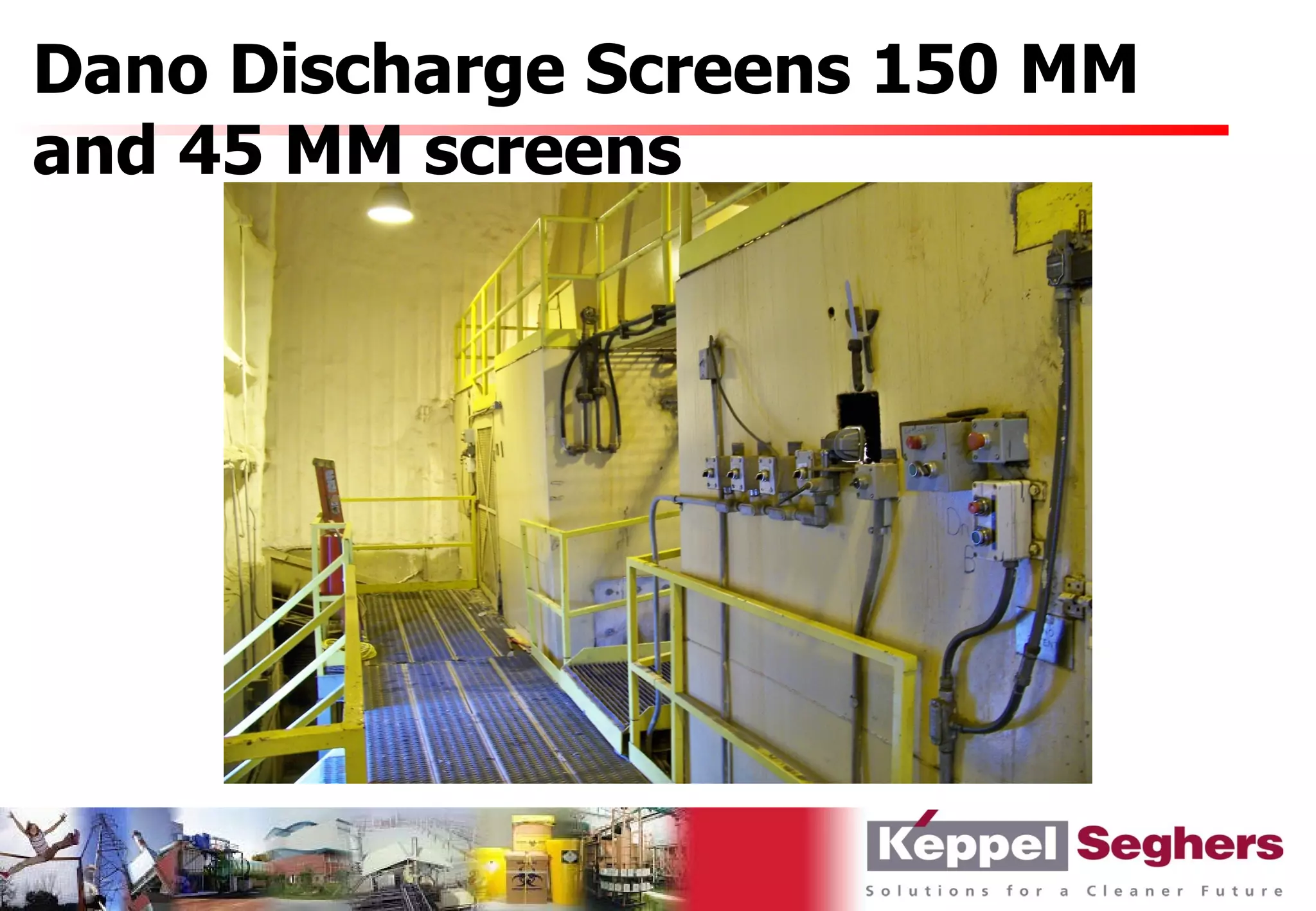
Dano Discharge Screens 150 MM
and 45 MM screens
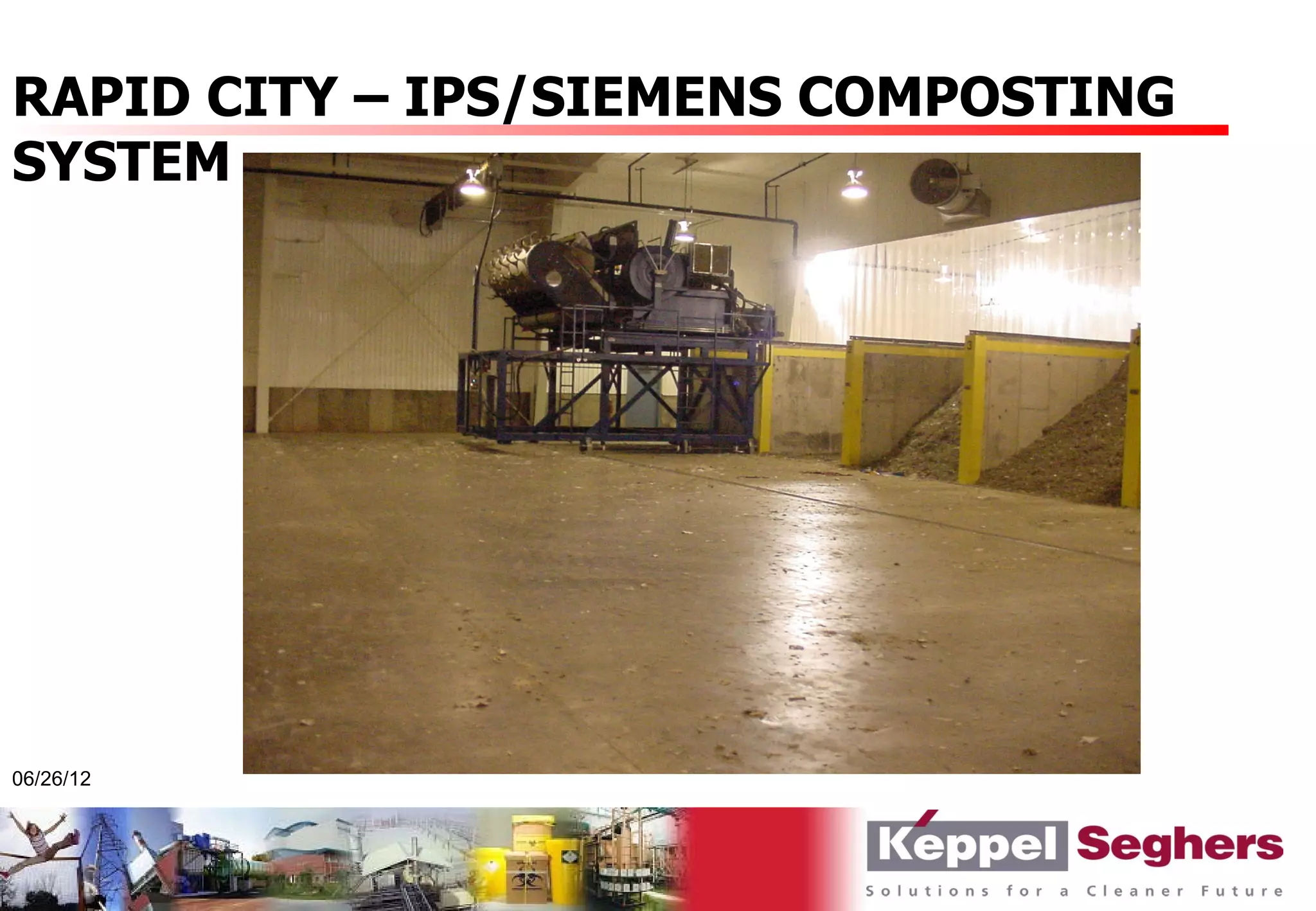
RAPID CITY – IPS/SIEMENS COMPOSTING
SYSTEM


06/26/12
CASE STUDY: Rapid City, SD
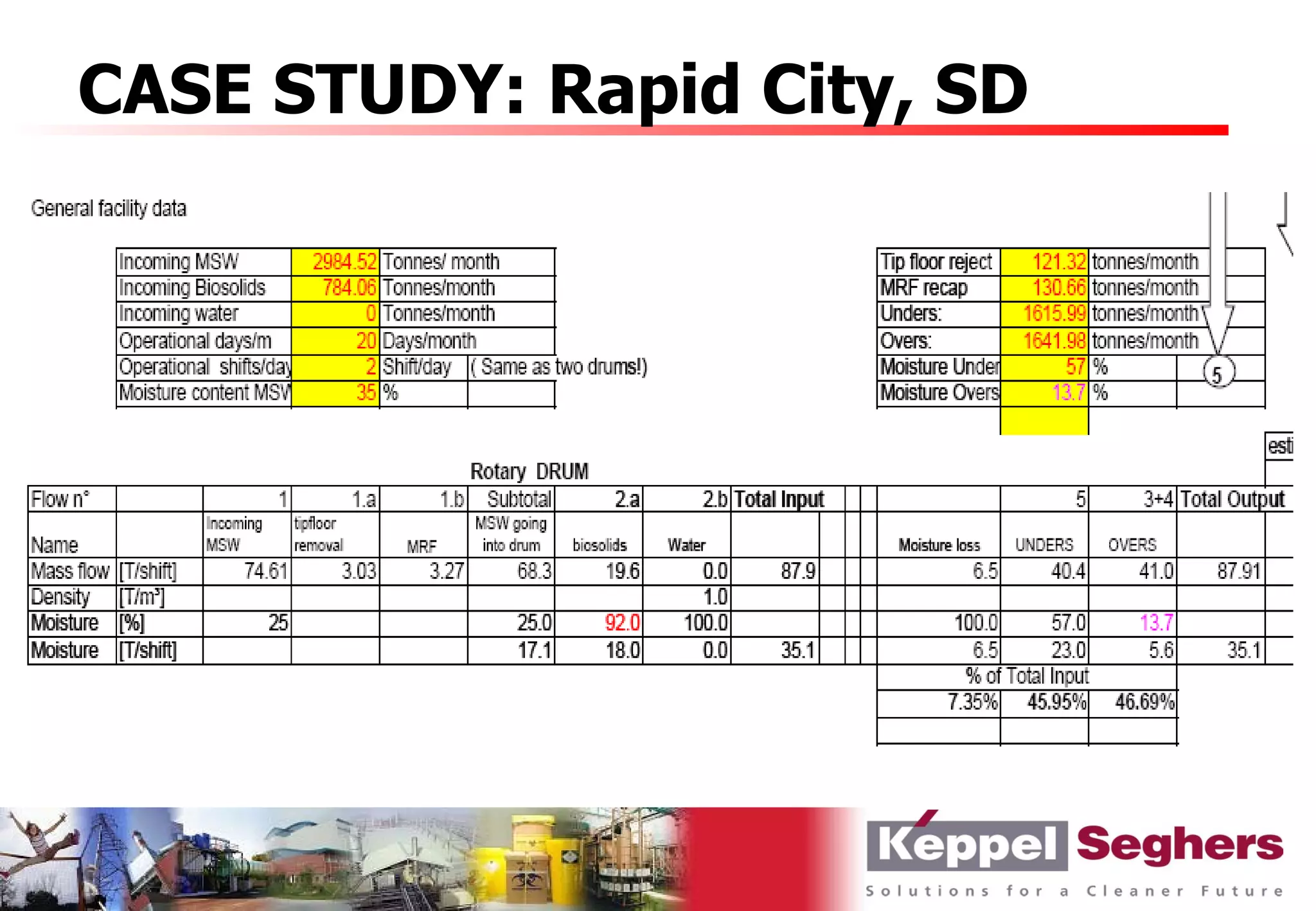
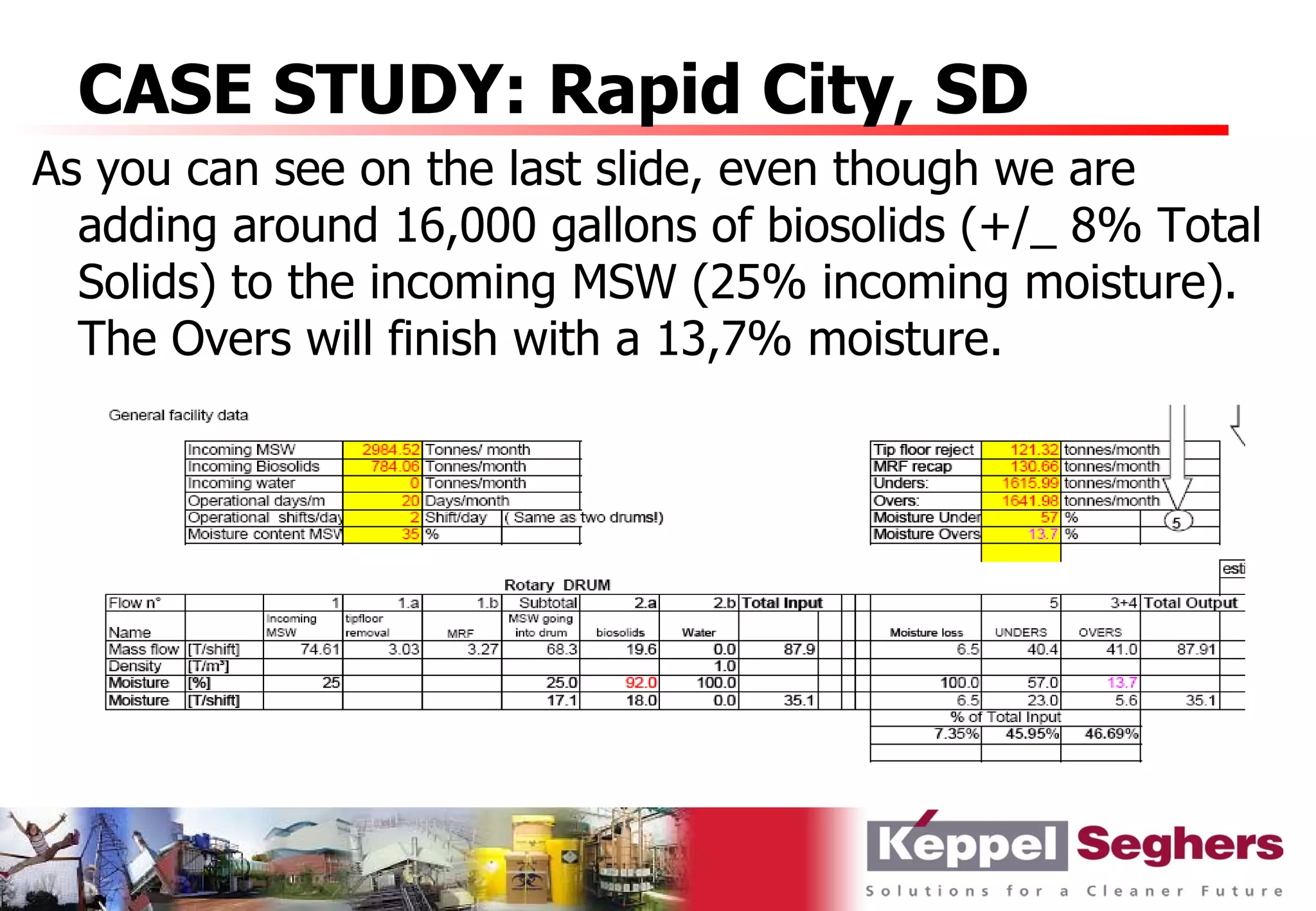
As you can see on the last slide, even though we are
  adding around 16,000 gallons of biosolids (+/_ 8% Total
  Solids) to the incoming MSW (25% incoming moisture).
  The Overs will finish with a 13,7% moisture.
CASE STUDY: Rapid City, SD
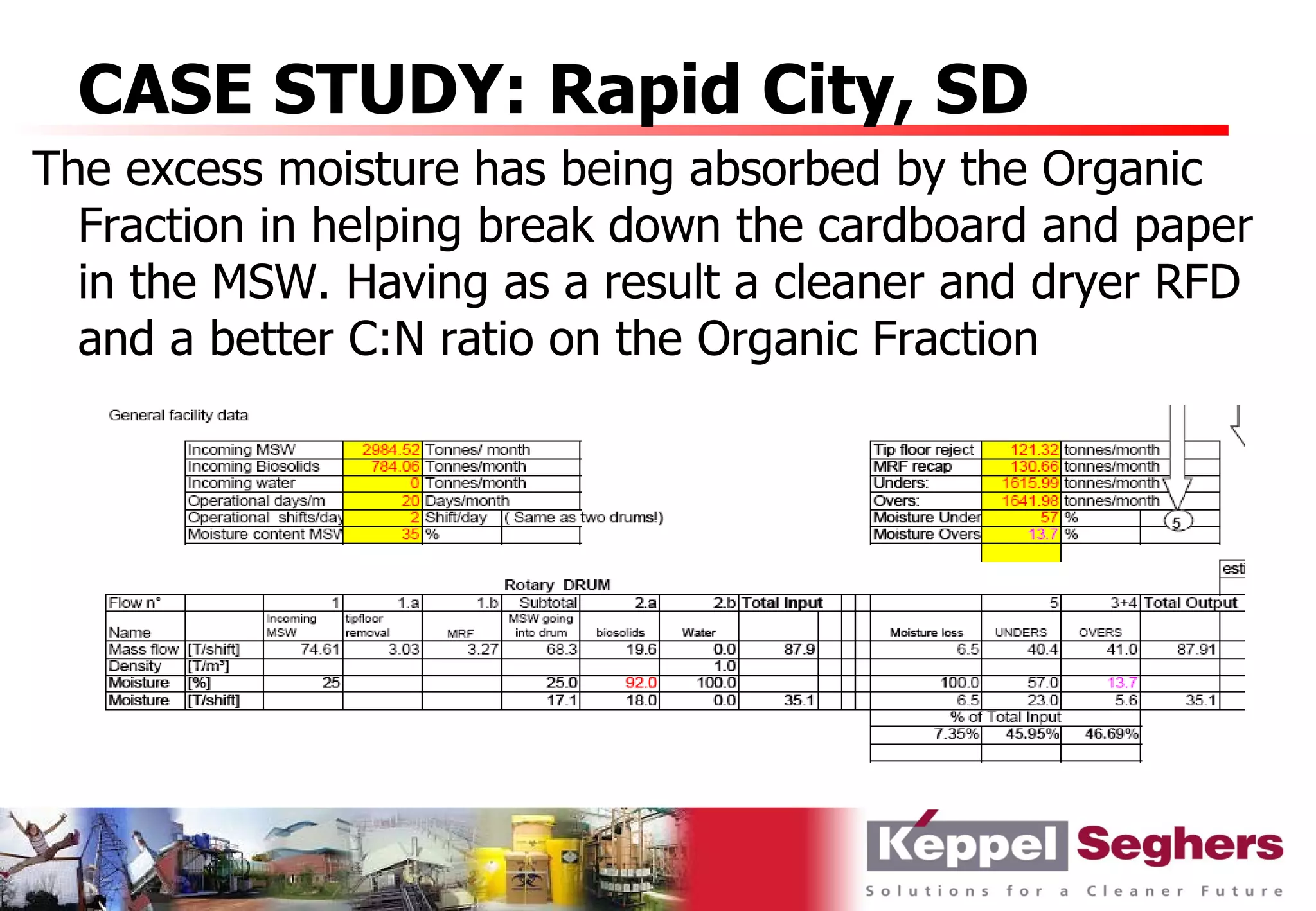
The excess moisture has being absorbed by the Organic
  Fraction in helping break down the cardboard and paper
  in the MSW. Having as a result a cleaner and dryer RFD
  and a better C:N ratio on the Organic Fraction
Rapid City, South Dakota
•   Solid Waste Division, Public Works
•   All revenue from tip fee and sale of recyclables
•   1 plant supervisor
•   1 plant operations chief
•   1 plant engineer
•   3 mechanics
•   7 operators
•   8 laborers
Summary
      • Landfill life extended from the year 2027 to 2053
      • Biosolids issue solved
      • 55% to 65% of what was traditionally landfilled,
        will be reused or recycled
      • We have secured a long term utility that is cost
        effective


06/26/12
Contents
    •   1.   Waste management
    •   2.   The Keppel Seghers DANO DRUM
              History
              The Key Element
              Process Implementation
              Main Applications
                    -Bulk Reduction
                    -Materials Recovery
                    -Biological treatment
                    -Feedstock for WTE Installations
    •   3.   References
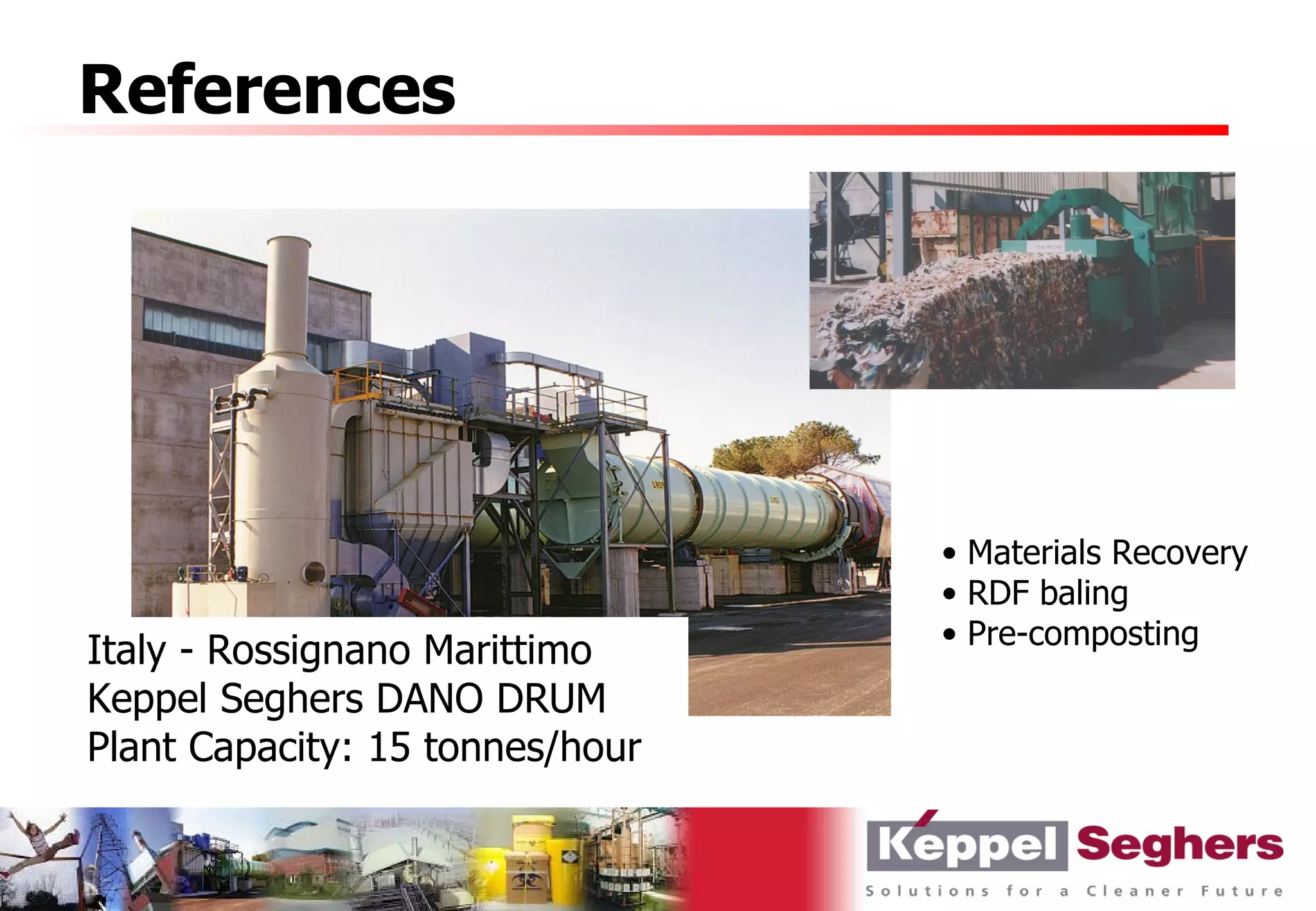
References


                                 • Materials Recovery
                                 • RDF baling
                                 • Pre-composting
Italy - Rossignano Marittimo
Keppel Seghers DANO DRUM
Plant Capacity: 15 tonnes/hour
References

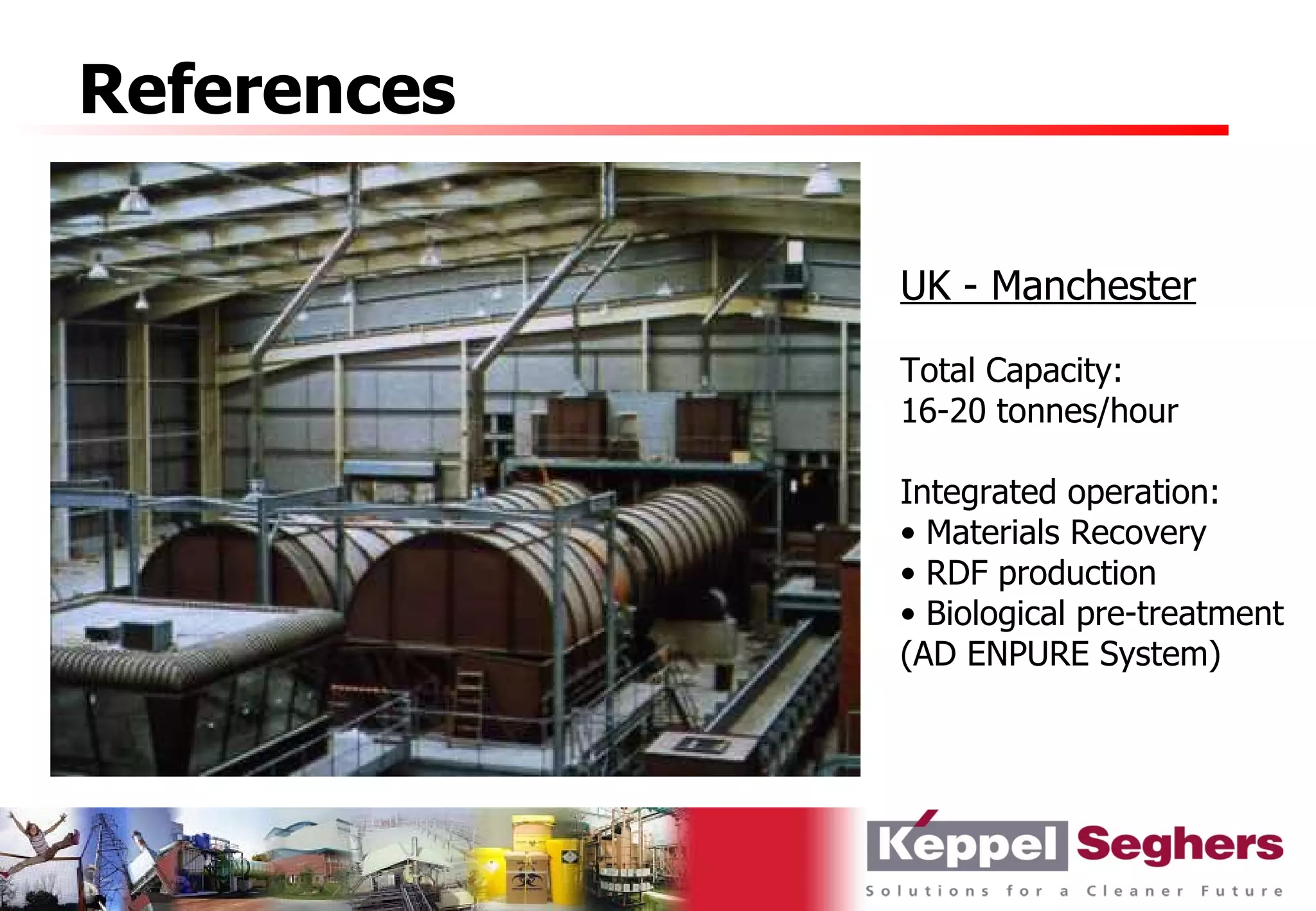
             UK - Manchester

             Total Capacity:
             16-20 tonnes/hour

             Integrated operation:
             • Materials Recovery
             • RDF production
             • Biological pre-treatment
             (AD ENPURE System)
References


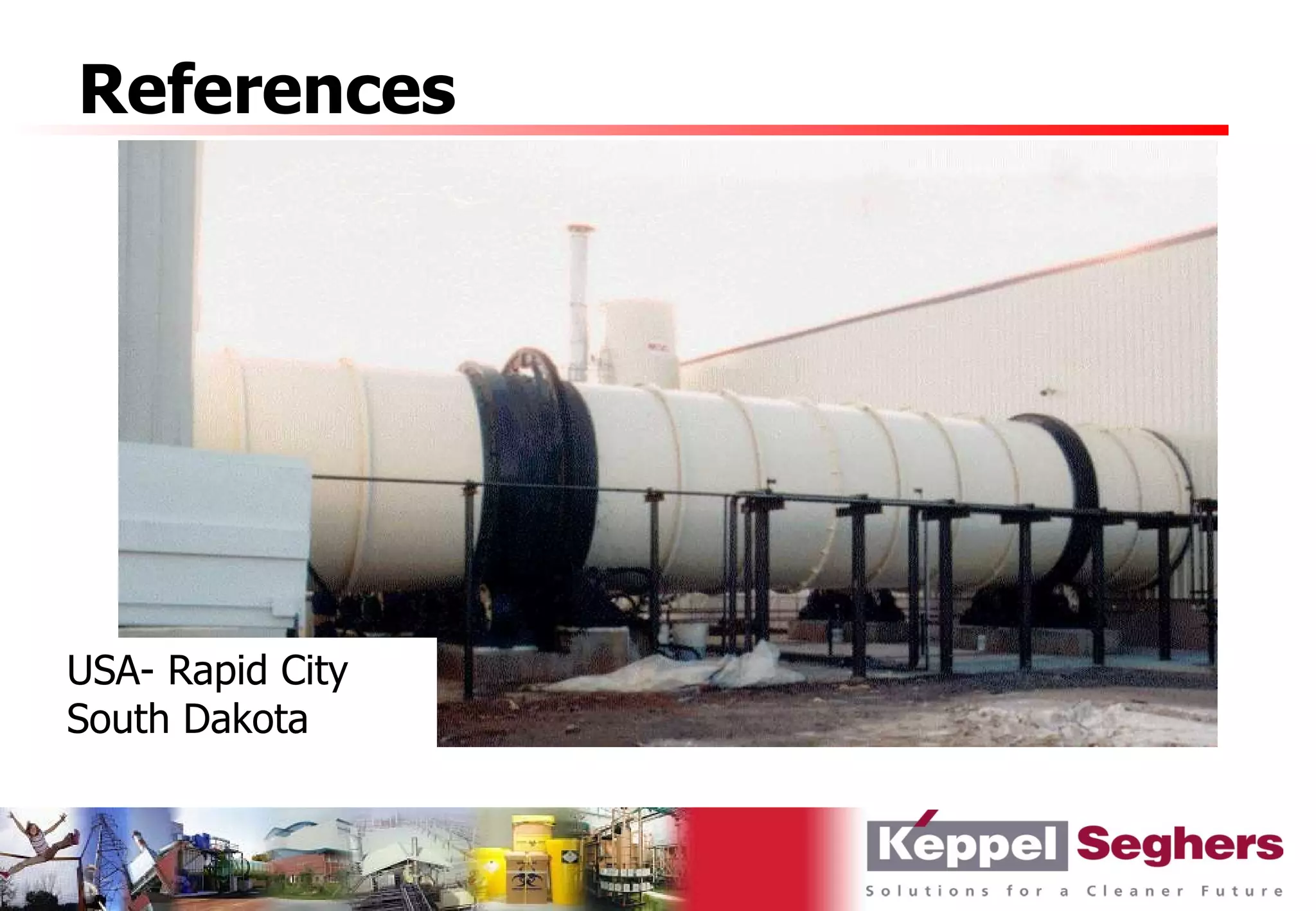
USA- Rapid City
South Dakota
References


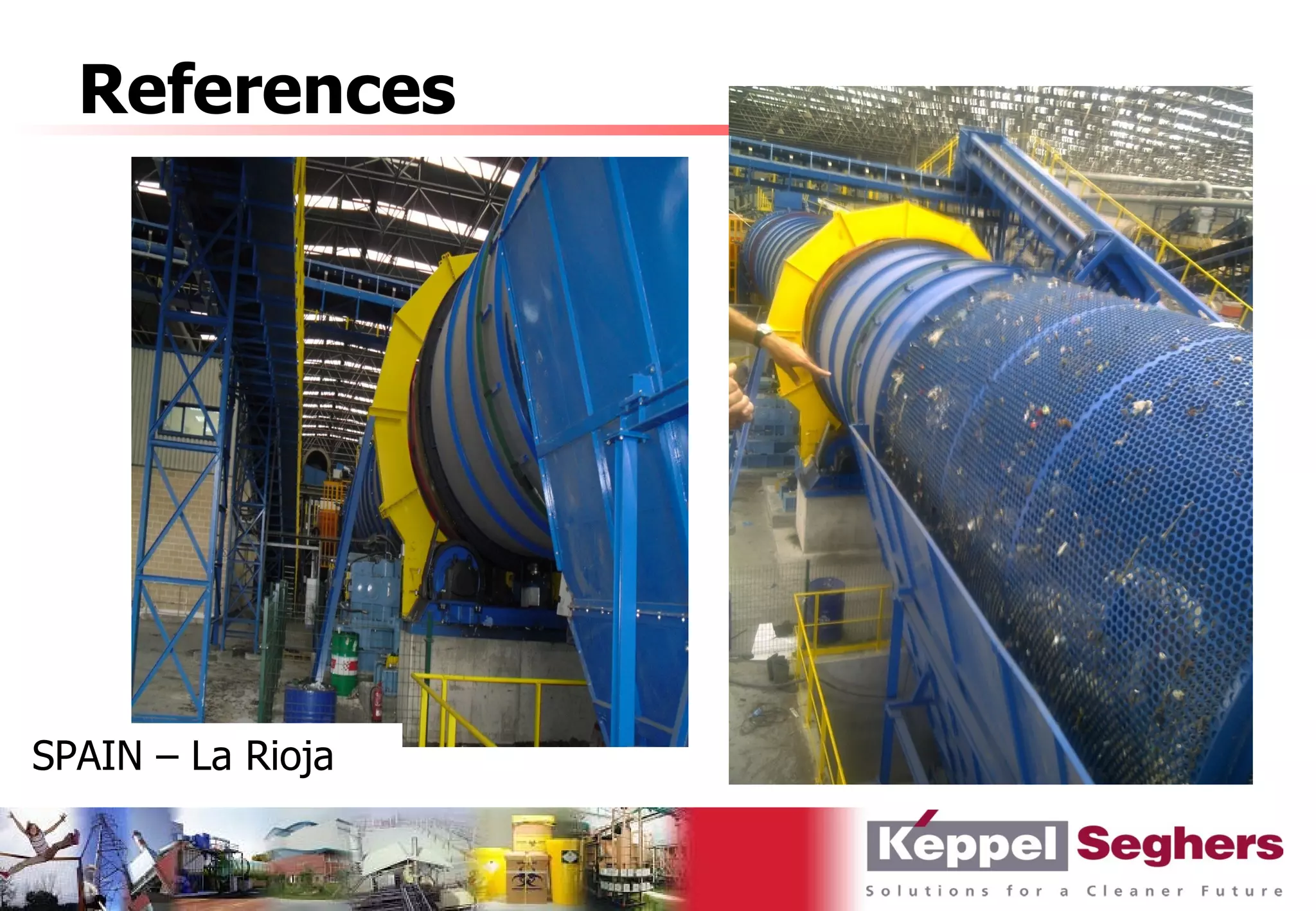
SPAIN – La Rioja
References


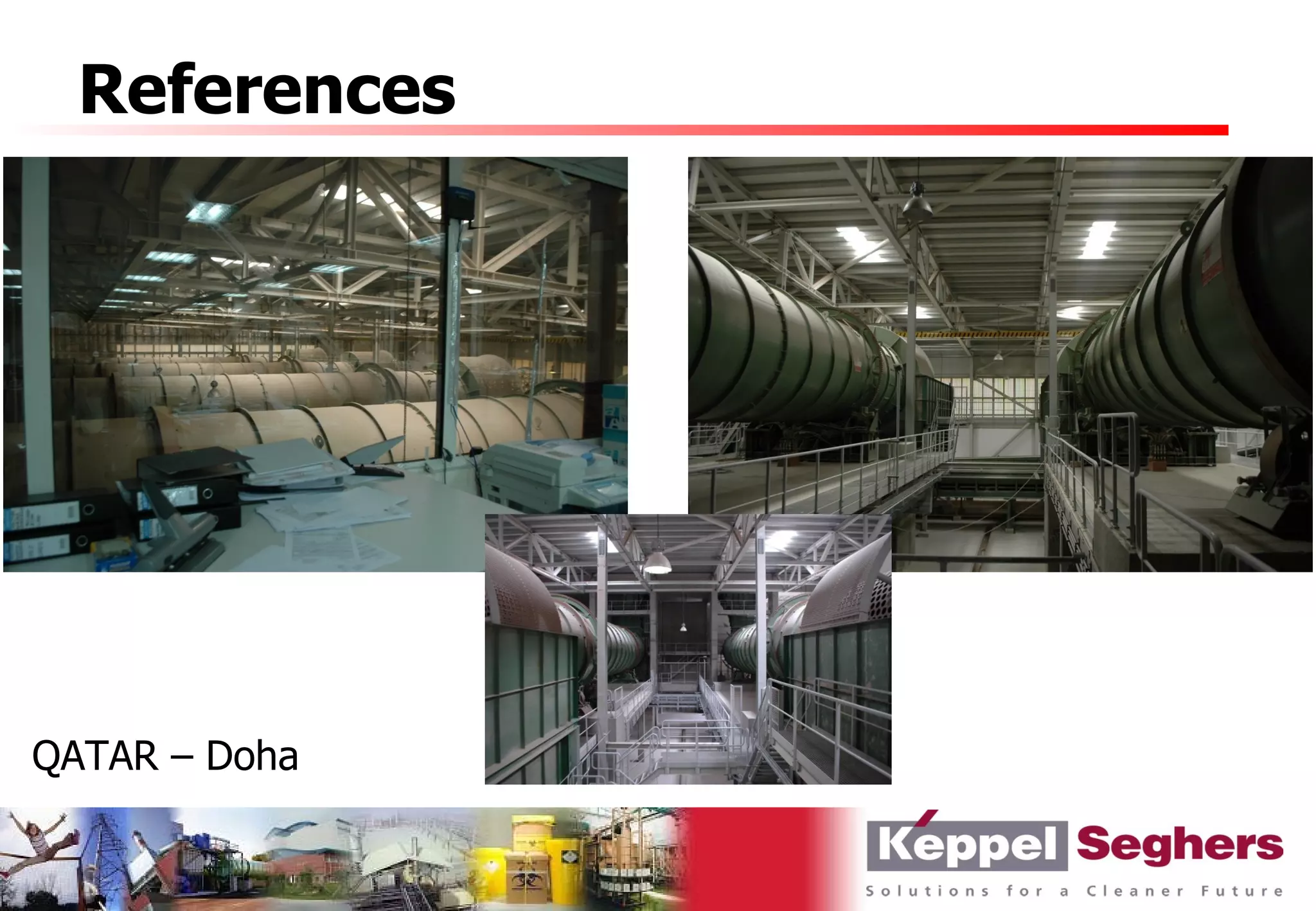
QATAR – Doha
info_USA keppelseghers.com •
www.keppelseghers.com
Keppel Seghers Inc.
1235-F Kennestone Circle
Marietta, Georgia 30066
 phone: (770) 421-1181
 fax: (770) 421-8611
                      © Keppel Seghers Group of Companies, 2012
QUESTIONS?


             © Keppel Seghers Group of Companies, 2012

Dano Drum Presentation 2012

  • 1.
    SEGHERS Dano Drum WastePre-Treatment Technology 26 Ju ne 201 2 © Keppel Seghers Group of Companies, 20012
  • 2.
    Contents •1. The Keppel Seghers DANO DRUM History The Key Element Process Implementation Main Applications -Bulk Reduction -Materials Recovery -Biological treatment -Case Study: Rapid City, SD •2. References
  • 3.
    History 1. DANO Denmark Composting since 1939 2. DANO Switzerland (1972) Composting/separation/pulverisation 3. DANO Motherwell Bridge UK (1986) Biological treatment - separation-pulverisation - Materials Recycling Facility 4. DANO (1999) Materials Recycling Facility – separation -pulverization - Biological treatment – Waste-to-Power
  • 4.
    Updating your perceptions DANOallows a maximum recovery of recyclable materials, an ideal pretreatment of the organic fraction prior to biological treatment and at the same time produces an excellent RDF type of fuel.
  • 5.
    What is waste? •Technical: a product not longer wanted by its producer Note: it can still be a valuable raw material to others! • Economical: a product for which one has to pay to dispose of • Legal: “each matter or object of which the owner wants , plans or has to dispose of” • Different categories of “waste” according to source, physical & chemical composition, size, …
  • 7.
    Keppel Seghers DanoDrum The core of a waste pre-treatment installation is the KEPPEL SEGHERS Dano Drum for waste conditioning. The drum is a horizontally mounted, rotating steel cylinder which automatically shreds, mixes, conditions and sorts the refuse into components for either recycling, composting, or incineration with energy recovery.
  • 8.
    DANO Drum MarkIII By Keppel Seghers, Inc The Keppel Seghers DANO Drum Mark III has a length of about 24-27 meters (79-89 ft.) and an internal diameter of 3,8 meters (12.5 ft.). An integrated screen is attached to the end of the drum.
  • 9.
  • 10.
    ENTRANCE HOPPER ANDINPUT CONVEYOR (By Gravity Flow)
  • 11.
    ENTRANCE HOPPER ANDINPUT CONVEYOR (By Ram Feeder)
  • 12.
    Live Ring andRollers (Trunions)
  • 13.
    Dano Drums 1,2to 4,8 RPM Extremely Efficient and Dependable
  • 14.
    DETAILED GIRTH INASSEMBLY PHASE
  • 15.
    GEAR UNIT ASSEMBLYAND AUXILIARY EQUIPMENT: LUBRICATION GREASE UNIT AND BRAKE
  • 16.
    Drive Unit &Variable Frequency Drive The Drive Unit is situated next to the Gear Ring of the Keppel Seghers Dano Drum. The unit is formed by a “tandem” type reductor with parallel axles. It also has a mechanical break pad (with electrical blockeage) in order to avoid the movement of the Drum, and its load, when stopped.
  • 17.
    Drive Unit &Variable Frequency Drive A VFD regulates the speed of the electrical motor. The unit can give variable speeds of 1,2 RPM, 2,4 RPM, 3,6 RPM, and up to 4,8 RPM if the customer requests it. The electrical motor is directly coupled by a shaft to the reductor, which in turn, is coupled to the pinion, and the pinion directly coupled to the gear ring of the Dano Drum. The coupling between the motor shaft and the main reductor shaft is done through an elastic coupling.
  • 18.
    GEAR UNIT ASSEMBLYAND AUXILIARY EQUIPMENT: HYDRO-ELECTRIC PROPULSION
  • 19.
    SIEVE ELEMENT ATTHE END OF DANO DRUM 40 MM HOLES AND LENGHT 6,6 METRES
  • 20.
    SIEVE ELEMENTS ATTHE END OF DANO DRUM LENGHT 2,6 METRES
  • 21.
    Protection and Reliability A number of triangular shaped projections are fitted in the Keppel Seghers DANO Drum to help prevent the formation of bundles of textiles.
  • 22.
    Contents • 1. The Keppel Seghers DANO DRUM History The Key Element Process Implementation Main Applications -Bulk Reduction -Materials Recovery -Biological treatment -Case Study: Rapid City, SD • 2. References
  • 23.
    The Key ProcessElement • Waste pretreatment – Pulverizing – Homogenizing – Conditioning – Separating • Horizontally Mounted, Rotating Steel Cylinder • Integrated Rotary Screen option – 2 or 3 Fractions readily separated at end of drum
  • 24.
    The Key Element • Drum size: Mark III drum: 3.8 m (12.5 ft.) diameter. 24-27 m (79-89.3 ft.) length • Drum Capacity: – MK III: 15-18 tons/hour of Municipal Solid Waste • Rotation of the Drum – MK III: 1.2 RPM up to 4.8 RPM. – Breakdown of Softer Components by Particle Collision and Attrition – Repeated Contact With the Drum Wall and Harder Elements
  • 25.
    The Key Element- Features • High quality electro drive system • Special Anti-wear system for drum shell • Result of decades of construction experience • Unique inlet assembly construction • Hydraulically operated outlet slide gate • Integrated screen
  • 26.
    The Key Element- Advantages EXTREMELY RELIABLE Example in UK: North Ayrshire Council - Irvine, Scotland, operation period of 18 years: Unscheduled downtime in % of total operating time: electrical 0.1% mechanical 0.5% TOTAL 0.6% TOTAL AVAILABILITY = 99.4%
  • 27.
    The Key Element- Advantages • Increases organic content of fines through paper/carton attrition • Keeps heating value of oversize • Extremely reliable • Flexible process implementation • Simple operation • Low maintenance
  • 28.
    Contents • 1. Waste management • 2. The Keppel Seghers DANO DRUM History The Key Element Process Implementation Main Applications -Bulk Reduction -Materials Recovery -Biological treatment -Case Study: Rapid City, SD • 3. References
  • 29.
  • 30.
    KEPPEL SEGHERS DANODrum By Keppel Seghers, Inc The following diagram shows a typical flow sheet of the Seghers Keppel DANO Drum: Water or biosolids Screen MSW Seghers DANO Putrecibles Metals RDF
  • 31.
    Principle & ProcessImplementation Main Applications -Bulk Reduction -Materials Recovery -Separation of Organic Fraction (Unders) and the High Calorific Value Fraction (Overs) - Biological Treatment (pre-activation of the material without losing any of its “biological energy” for biomethanisation and/or composting)
  • 32.
    Principle & ProcessImplementation This diagram shows the possibilities of mixing different wastes at the input of the Keppel Seghers DANO Drum system, as well as the different possibilities for the outlet streams: Water Sludge Waste to Energy Municipal Landfill Solid SEGHERSdano drum RDF Waste RDF Baling for transport or storage Nonhazardous Metals Industrial ORGANIC recovery Waste Dry Anaerobic Wet Anaerobic Aerobic Landfill cover Digestion Digestion Composting (Biogas) (Biogas) Final Residues: Landfill or Incineration
  • 33.
    KEPPEL SEGHERS DANODrum Oversize: Dry / high calorific waste, Approx. 55% To WtE or Advanced Conversions Undersize: humid putrecible waste, Approx. 45% To Composting or Digestion
  • 34.
    Biological treatment -Advantages • attrition of paper and cardboard increases biogas production for anaerobic digestion • relatively low contamination of organic waste stream • increased digestion feed rate from same amount of Municipal Solid Waste with high-organic stream • good material handling properties (fibrous material) • reduced particle size and homogeneous
  • 35.
  • 36.
    WASTE COMPOSITION Inputdescription Input material description (Rapid City) Plastic Textil Wood Metals Glass/stones Organic (Cardboard included)
  • 37.
    OVERS - WASTECOMPOSITION Overflow description (>45mm) Output material description >45mm (Rapid City) Plastic Textil Wood Metals Glass/stones Organic (Cardboard included)
  • 38.
    OVERS - WASTECOMPOSITION Sunk description (>45mm) Output material description <45mm (Rapid City) Plastic Textil Wood Metals Glass/stones Organic (Cardboard included)
  • 39.
    MASS BALANCE Loses . 7.39% . Overflow 45.96% unders Sunk 46.64% 46.64% Plastic Textil Wood Metals Glass/stones Organic
  • 40.
    Tip Floor –Rapid City MRF @1,858 square meters 180 – 200 TPD of MSW
  • 41.
    Dano Infeed Biosolidsat @ 30 – 50 GPM 12,000 to 18,000 gallon per day
  • 42.
    Dano Discharge Screens150 MM and 45 MM screens
  • 43.
    RAPID CITY –IPS/SIEMENS COMPOSTING SYSTEM 06/26/12
  • 44.
  • 45.
    CASE STUDY: RapidCity, SD As you can see on the last slide, even though we are adding around 16,000 gallons of biosolids (+/_ 8% Total Solids) to the incoming MSW (25% incoming moisture). The Overs will finish with a 13,7% moisture.
  • 46.
    CASE STUDY: RapidCity, SD The excess moisture has being absorbed by the Organic Fraction in helping break down the cardboard and paper in the MSW. Having as a result a cleaner and dryer RFD and a better C:N ratio on the Organic Fraction
  • 47.
    Rapid City, SouthDakota • Solid Waste Division, Public Works • All revenue from tip fee and sale of recyclables • 1 plant supervisor • 1 plant operations chief • 1 plant engineer • 3 mechanics • 7 operators • 8 laborers
  • 48.
    Summary • Landfill life extended from the year 2027 to 2053 • Biosolids issue solved • 55% to 65% of what was traditionally landfilled, will be reused or recycled • We have secured a long term utility that is cost effective 06/26/12
  • 49.
    Contents • 1. Waste management • 2. The Keppel Seghers DANO DRUM History The Key Element Process Implementation Main Applications -Bulk Reduction -Materials Recovery -Biological treatment -Feedstock for WTE Installations • 3. References
  • 50.
    References • Materials Recovery • RDF baling • Pre-composting Italy - Rossignano Marittimo Keppel Seghers DANO DRUM Plant Capacity: 15 tonnes/hour
  • 51.
    References UK - Manchester Total Capacity: 16-20 tonnes/hour Integrated operation: • Materials Recovery • RDF production • Biological pre-treatment (AD ENPURE System)
  • 52.
  • 53.
  • 54.
  • 55.
    info_USA keppelseghers.com • www.keppelseghers.com KeppelSeghers Inc. 1235-F Kennestone Circle Marietta, Georgia 30066 phone: (770) 421-1181 fax: (770) 421-8611 © Keppel Seghers Group of Companies, 2012
  • 56.
    QUESTIONS? © Keppel Seghers Group of Companies, 2012

Editor's Notes

  • #47 - Organic material NEVER looks pulp out. It ALWAYS maintains the fluffy organic characteristics