LASSOUAOUI Sabrina
HEBBACHE Chahrazed
I. INTRODUCTION
II. HISTORY
III. APPLICATIONS
IV. THE COMPONENTS OF THE ROBOT
V. ADVANTAGES AND DISAVANTAGES
VI.CONCLUSION
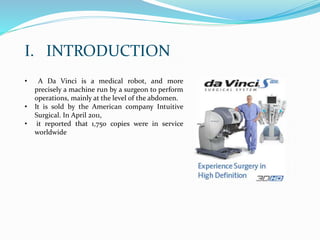
• A Da Vinci is a medical robot, and more
precisely a machine run by a surgeon to perform
operations, mainly at the level of the abdomen.
• It is sold by the American company Intuitive
Surgical. In April 2011,
• it reported that 1,750 copies were in service
worldwide
I. INTRODUCTION
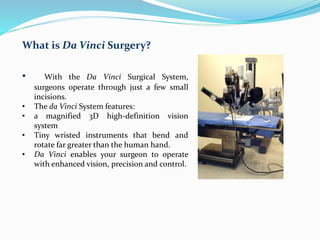
What is Da Vinci Surgery?
• With the Da Vinci Surgical System,
surgeons operate through just a few small
incisions.
• The da Vinci System features:
• a magnified 3D high-definition vision
system
• Tiny wristed instruments that bend and
rotate far greater than the human hand.
• Da Vinci enables your surgeon to operate
with enhanced vision, precision and control.
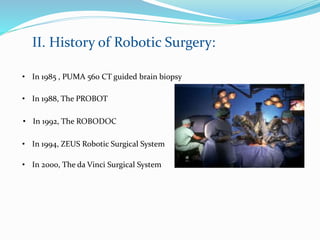
II. History of Robotic Surgery:
• In 1985 , PUMA 560 CT guided brain biopsy
• In 1988, The PROBOT
• In 1992, The ROBODOC
• In 1994, ZEUS Robotic Surgical System
• In 2000, The da Vinci Surgical System
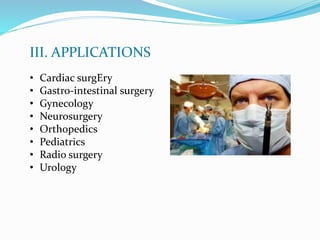
III. APPLICATIONS
• Cardiac surgEry
• Gastro-intestinal surgery
• Gynecology
• Neurosurgery
• Orthopedics
• Pediatrics
• Radio surgery
• Urology
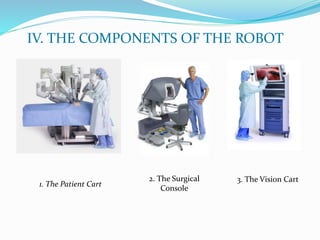
IV. THE COMPONENTS OF THE ROBOT
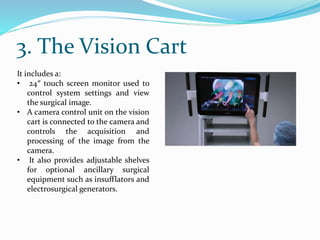
3. The Vision Cart
1. The Patient Cart
2. The Surgical
Console
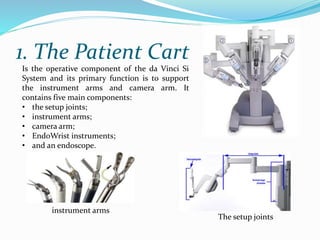
1. The Patient Cart
Is the operative component of the da Vinci Si
System and its primary function is to support
the instrument arms and camera arm. It
contains five main components:
• the setup joints;
• instrument arms;
• camera arm;
• EndoWrist instruments;
• and an endoscope.
instrument arms
The setup joints
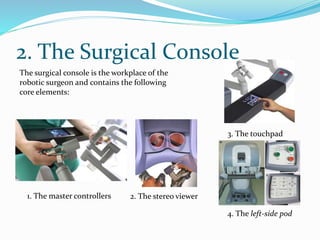
2. The Surgical Console
The surgical console is the workplace of the
robotic surgeon and contains the following
core elements:
1. The master controllers 2. The stereo viewer
3. The touchpad
4. The left-side pod
3. The Vision Cart
It includes a:
• 24″ touch screen monitor used to
control system settings and view
the surgical image.
• A camera control unit on the vision
cart is connected to the camera and
controls the acquisition and
processing of the image from the
camera.
• It also provides adjustable shelves
for optional ancillary surgical
equipment such as insufflators and
electrosurgical generators.
V. ADVANTAGES AND DISAVANTAGES
1. ADVANTAGES:
 Telesurgery
 Having fewer personnel
 Less pain
2. DISAVANTAGES
 Time
 Cost
 Efficiency and Compatibility:
 Size of the system
VI. CONCLUSION
The da Vinci Surgical System is a success story of
visionary concepts brought into wide
clinical adoption to improve clinical outcomes
through the interdisciplinary work of many different
specialties.
da Vinci surgical system presentation

da Vinci surgical system presentation

  • 1.
  • 2.
    I. INTRODUCTION II. HISTORY III.APPLICATIONS IV. THE COMPONENTS OF THE ROBOT V. ADVANTAGES AND DISAVANTAGES VI.CONCLUSION
  • 3.
    • A DaVinci is a medical robot, and more precisely a machine run by a surgeon to perform operations, mainly at the level of the abdomen. • It is sold by the American company Intuitive Surgical. In April 2011, • it reported that 1,750 copies were in service worldwide I. INTRODUCTION
  • 4.
    What is DaVinci Surgery? • With the Da Vinci Surgical System, surgeons operate through just a few small incisions. • The da Vinci System features: • a magnified 3D high-definition vision system • Tiny wristed instruments that bend and rotate far greater than the human hand. • Da Vinci enables your surgeon to operate with enhanced vision, precision and control.
  • 5.
    II. History ofRobotic Surgery: • In 1985 , PUMA 560 CT guided brain biopsy • In 1988, The PROBOT • In 1992, The ROBODOC • In 1994, ZEUS Robotic Surgical System • In 2000, The da Vinci Surgical System
  • 6.
    III. APPLICATIONS • CardiacsurgEry • Gastro-intestinal surgery • Gynecology • Neurosurgery • Orthopedics • Pediatrics • Radio surgery • Urology
  • 7.
    IV. THE COMPONENTSOF THE ROBOT 3. The Vision Cart 1. The Patient Cart 2. The Surgical Console
  • 8.
    1. The PatientCart Is the operative component of the da Vinci Si System and its primary function is to support the instrument arms and camera arm. It contains five main components: • the setup joints; • instrument arms; • camera arm; • EndoWrist instruments; • and an endoscope. instrument arms The setup joints
  • 9.
    2. The SurgicalConsole The surgical console is the workplace of the robotic surgeon and contains the following core elements: 1. The master controllers 2. The stereo viewer 3. The touchpad 4. The left-side pod
  • 10.
    3. The VisionCart It includes a: • 24″ touch screen monitor used to control system settings and view the surgical image. • A camera control unit on the vision cart is connected to the camera and controls the acquisition and processing of the image from the camera. • It also provides adjustable shelves for optional ancillary surgical equipment such as insufflators and electrosurgical generators.
  • 11.
    V. ADVANTAGES ANDDISAVANTAGES 1. ADVANTAGES:  Telesurgery  Having fewer personnel  Less pain
  • 12.
    2. DISAVANTAGES  Time Cost  Efficiency and Compatibility:  Size of the system
  • 13.
    VI. CONCLUSION The daVinci Surgical System is a success story of visionary concepts brought into wide clinical adoption to improve clinical outcomes through the interdisciplinary work of many different specialties.