Cystic fibrosis (CF)
Definition
Cystic fibrosis (CF) is an autosomal recessive
multisytem disease characterised by altered
function of the exocrine glands affecting primarily
the lungs, pancreas and sweat glands.
Etiology
Cystic fibrosis (CF) is caused by mutations in the
CF transmembrane conductance regulator (CFTR)
gene which encodes a protein expressed in the
apical membrane of exocrine epithelial cells.
Autosomal recessive
􀂄 Gene located on chromosome 7
􀂄 Prevalence- varies with ethnic origin
􀂄 1 in 3000 live births in Caucasians in
North America
and Northern Europe
􀂄 1 in 17,000 live births of African
Americans
􀂄 1 in 90,000 live births in Hawaiian
Asians
Protein Structure and Function
•

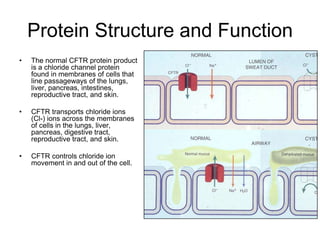
The normal CFTR protein product
is a chloride channel protein
found in membranes of cells that
line passageways of the lungs,
liver, pancreas, intestines,
reproductive tract, and skin.

•

CFTR transports chloride ions
(Cl-) ions across the membranes
of cells in the lungs, liver,
pancreas, digestive tract,
reproductive tract, and skin.

•

CFTR controls chloride ion
movement in and out of the cell.
CF-Pathophysiology – Primary defect
• loss of chloride ion transport.
• This upsets the sodium and chloride ion
balance needed to maintain the normal, thin
mucus layer that is easily removed by cilia
lining the lungs and other organs. The
sodium and chloride ion imbalance creates
a thick, sticky mucus layer that cannot be
removed by cilia and traps bacteria such as
S. aureus and Pseudomonas aeruginosa
resulting in chronic infections.
CF-Manifestations
Common presentations
􀂄 Meconium ileus
􀂄 Failure to thrive
􀂄 Chronic cough
􀂄 Recurrent pulmonary infiltrates
Respiratory tract
􀂄 Chronic sinusitis
􀂄 Nasal obstruction
􀂄 Rhinorrhea
􀂄 Nasal polyps in 25%; often
requires surgery
􀂄 Chronic cough
􀂄 Persistent
􀂄 Viscous, purulent, green sputum
Respiratory tract
􀂄 Lung function
􀂄 Small airway disease is first functional
lung
abnormality
􀂄 Progresses to reversible as well as
irreversible
changes in FEV1
􀂄 Chest x-ray may show hyperinflation,
mucus impaction, bronchial cuffing,
bronchiectasis.
Complications
􀂄 Pneumothorax
~10% of CF patients
􀂄 Hemoptysis
􀂄 Digital clubbing
􀂄 Cor pulmonale
􀂄 Respiratory failure

Mucous in the airways cannot be easily cleared
from the lungs.
Genitourinary
􀂄 Late onset puberty-due to chronic lung disease and
inadequate nutrition
􀂄 >95% of male patients with CF have azospermia due to
obliteration of the vas deferens
􀂄 20% of female patients with CF are infertile
􀂄 nevertheless >90% of completed pregnancies produce
viable infants
Gastrointestinal
􀂄 Exocrine pancreatic insufficiency
􀂄
􀂄
􀂄
􀂄
􀂄
􀂄

Found in >90% of CF patients
Protein and fat malabsorption
Frequent bulky, foul-smelling stools
Vitamin A, D, E, K malabsorption
Sparing of pancreatic beta cells
Beta cell function decreases with age

􀂄 Increased incidence of GI malignancy
Sweat chloride test
The sweat test measures the level of
chloride in the sweat using a small
electric current.
Pilocarpine increases sweating+ Mild
electric current.
The sweat is collected on a gauze for 30
minutes, then weighed in a
weighing jar
Chloride >60 mEq/L- Cystic Fibrosis
Abdominal radiographs in simple Meconium Ileus
Meconium Ileus- Complications
• Volvulus
• 􀂄 Gangrene
• 􀂄 Atresia
• 􀂄 Perforation
• 􀂄 GCMP- Giant Cystic
Meconium Peritonitis
Treatment
•The only way to cure CF would be to use gene therapy to replace the
defective gene or to give the patient the normal form of the protein before
symptoms cause permanent damage.
•The major goal in treating CF is to clear the abnormal and excess
secretions and control infections in the lungs, and to prevent obstruction in
the intestines.
•For patients with advanced stages of the disease, a lung transplant
operation may be necessary.
•Although treating the symptoms does not cure the disease, it can greatly
improve the quality of life for most patients and has, over the years,
increased the average life span of CF patients to 30 years.

Gastrointestinal Treatment
• Modified diet
Due to pancreatic disorders, children with CF require a modified diet, including
vitamin supplements (vitamins A, D, E, and K) and pancreatic enzymes.
Maintaining adequate nutrition is essential. The diet calls for a high-caloric
content (twice what is considered normal for the child's age), which is typically
low in fat and high in protein. Patients or their caregivers should consult with
their health care providers to determine the most appropriate diet.
Gene Therapy
• Gene therapy is the use of
normal DNA to "correct" for
the damaged genes that
cause disease.
• In the case of CF, gene
therapy involves inhaling a
spray that delivers normal
DNA to the lungs.
• The goal is to replace the
defective CF gene in the
lungs to cure CF or slow
the progression of the
disease.

Cystic fibrosis

  • 1.
    Cystic fibrosis (CF) Definition Cysticfibrosis (CF) is an autosomal recessive multisytem disease characterised by altered function of the exocrine glands affecting primarily the lungs, pancreas and sweat glands. Etiology Cystic fibrosis (CF) is caused by mutations in the CF transmembrane conductance regulator (CFTR) gene which encodes a protein expressed in the apical membrane of exocrine epithelial cells.
  • 2.
    Autosomal recessive 􀂄 Genelocated on chromosome 7 􀂄 Prevalence- varies with ethnic origin 􀂄 1 in 3000 live births in Caucasians in North America and Northern Europe 􀂄 1 in 17,000 live births of African Americans 􀂄 1 in 90,000 live births in Hawaiian Asians
  • 3.
    Protein Structure andFunction • The normal CFTR protein product is a chloride channel protein found in membranes of cells that line passageways of the lungs, liver, pancreas, intestines, reproductive tract, and skin. • CFTR transports chloride ions (Cl-) ions across the membranes of cells in the lungs, liver, pancreas, digestive tract, reproductive tract, and skin. • CFTR controls chloride ion movement in and out of the cell.
  • 4.
    CF-Pathophysiology – Primarydefect • loss of chloride ion transport. • This upsets the sodium and chloride ion balance needed to maintain the normal, thin mucus layer that is easily removed by cilia lining the lungs and other organs. The sodium and chloride ion imbalance creates a thick, sticky mucus layer that cannot be removed by cilia and traps bacteria such as S. aureus and Pseudomonas aeruginosa resulting in chronic infections.
  • 5.
    CF-Manifestations Common presentations 􀂄 Meconiumileus 􀂄 Failure to thrive 􀂄 Chronic cough 􀂄 Recurrent pulmonary infiltrates Respiratory tract 􀂄 Chronic sinusitis 􀂄 Nasal obstruction 􀂄 Rhinorrhea 􀂄 Nasal polyps in 25%; often requires surgery 􀂄 Chronic cough 􀂄 Persistent 􀂄 Viscous, purulent, green sputum
  • 6.
    Respiratory tract 􀂄 Lungfunction 􀂄 Small airway disease is first functional lung abnormality 􀂄 Progresses to reversible as well as irreversible changes in FEV1 􀂄 Chest x-ray may show hyperinflation, mucus impaction, bronchial cuffing, bronchiectasis. Complications 􀂄 Pneumothorax ~10% of CF patients 􀂄 Hemoptysis 􀂄 Digital clubbing 􀂄 Cor pulmonale 􀂄 Respiratory failure Mucous in the airways cannot be easily cleared from the lungs.
  • 7.
    Genitourinary 􀂄 Late onsetpuberty-due to chronic lung disease and inadequate nutrition 􀂄 >95% of male patients with CF have azospermia due to obliteration of the vas deferens 􀂄 20% of female patients with CF are infertile 􀂄 nevertheless >90% of completed pregnancies produce viable infants Gastrointestinal 􀂄 Exocrine pancreatic insufficiency 􀂄 􀂄 􀂄 􀂄 􀂄 􀂄 Found in >90% of CF patients Protein and fat malabsorption Frequent bulky, foul-smelling stools Vitamin A, D, E, K malabsorption Sparing of pancreatic beta cells Beta cell function decreases with age 􀂄 Increased incidence of GI malignancy
  • 8.
    Sweat chloride test Thesweat test measures the level of chloride in the sweat using a small electric current. Pilocarpine increases sweating+ Mild electric current. The sweat is collected on a gauze for 30 minutes, then weighed in a weighing jar Chloride >60 mEq/L- Cystic Fibrosis
  • 9.
    Abdominal radiographs insimple Meconium Ileus
  • 10.
    Meconium Ileus- Complications •Volvulus • 􀂄 Gangrene • 􀂄 Atresia • 􀂄 Perforation • 􀂄 GCMP- Giant Cystic Meconium Peritonitis
  • 11.
    Treatment •The only wayto cure CF would be to use gene therapy to replace the defective gene or to give the patient the normal form of the protein before symptoms cause permanent damage. •The major goal in treating CF is to clear the abnormal and excess secretions and control infections in the lungs, and to prevent obstruction in the intestines. •For patients with advanced stages of the disease, a lung transplant operation may be necessary. •Although treating the symptoms does not cure the disease, it can greatly improve the quality of life for most patients and has, over the years, increased the average life span of CF patients to 30 years. Gastrointestinal Treatment • Modified diet Due to pancreatic disorders, children with CF require a modified diet, including vitamin supplements (vitamins A, D, E, and K) and pancreatic enzymes. Maintaining adequate nutrition is essential. The diet calls for a high-caloric content (twice what is considered normal for the child's age), which is typically low in fat and high in protein. Patients or their caregivers should consult with their health care providers to determine the most appropriate diet.
  • 12.
    Gene Therapy • Genetherapy is the use of normal DNA to "correct" for the damaged genes that cause disease. • In the case of CF, gene therapy involves inhaling a spray that delivers normal DNA to the lungs. • The goal is to replace the defective CF gene in the lungs to cure CF or slow the progression of the disease.